The Week The Week
flag of US
US
flag of UK
UK
https://cdn.mos.cms.futurecdn.net/flexiimages/jacafc5zvs1692883516.jpg

SUBSCRIBE & SAVE

Less than $3 per week

Sign in
  • View Profile
  • Sign out
  • The Explainer
  • The Week Recommends
  • Newsletters
  • Cartoons
  • From the Magazine
  • The Week Junior
  • Student Offers
  • More
    • Politics
    • World News
    • Business
    • Health
    • Science
    • Food & Drink
    • Travel
    • Culture
    • History
    • Personal Finance
    • Puzzles
    • Photos
    • The Blend
    • All Categories
  • Newsletter sign up Newsletter
  • WeekDay AM: 10 Things you need to know this morning
    Iran cuts internet, Storm Goretti hits, and the Middle East’s obsession with falcons

     
    today’s international story

    Iran cuts internet as nationwide protests escalate

    What happened
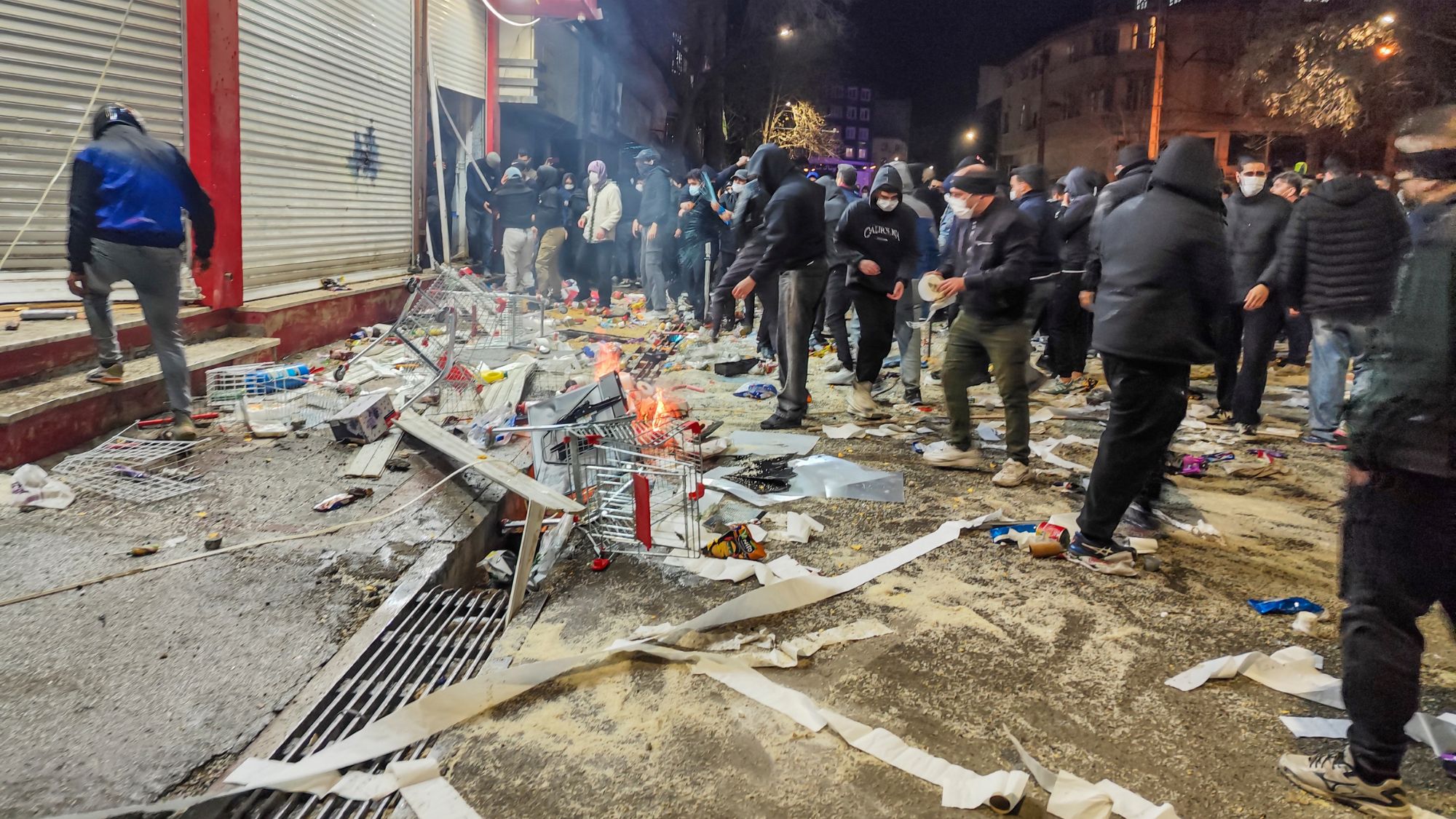
    Iran experienced a nationwide internet shutdown yesterday night as demonstrations over worsening living costs spread to every province. Connectivity monitors detected the blackout after earlier regional outages, amid an expanding security response. “Bolder protests” are being recorded across Iran, said Maziar Motamedi on Al Jazeera, as “the government’s efforts to contain an unravelling economic situation fall flat”. In southern Iran, demonstrators were filmed tearing down a statue of Qassem Suleimani, a powerful symbol of the Islamic Republic. Since the protests began at least 21 people have been killed, including security forces, according to an Agence France-Presse tally.

    Who said what
    The Norway-based NGO Iran Human Rights said repression is escalating, with its director Mahmood Amiry-Moghaddam warning: “The evidence shows that the scope of the crackdown is becoming more violent and more extensive every day.” 

    The protest movement is “the largest in three years”, said William Christou in The Guardian, and while it has not yet reached the scale of demonstrations that took place in 2022, “it has alarmed Iran’s political and security leadership”. The scenes “echo the Islamic Revolution in 1979”, said Kian Sharifi on Radio Free Europe/Radio Liberty. “Only this time, they want the Islamic establishment gone”.

    What next? 
    The unrest is being fuelled by a collapsing currency, as well as rising food and medicine price. The growth of the protests “increases the pressure on Iran’s civilian government and its Supreme Leader Ayatollah Ali Khamenei”, said the Associated Press.


    today’s weather story

    Storm Goretti triggers evacuations

    What happened
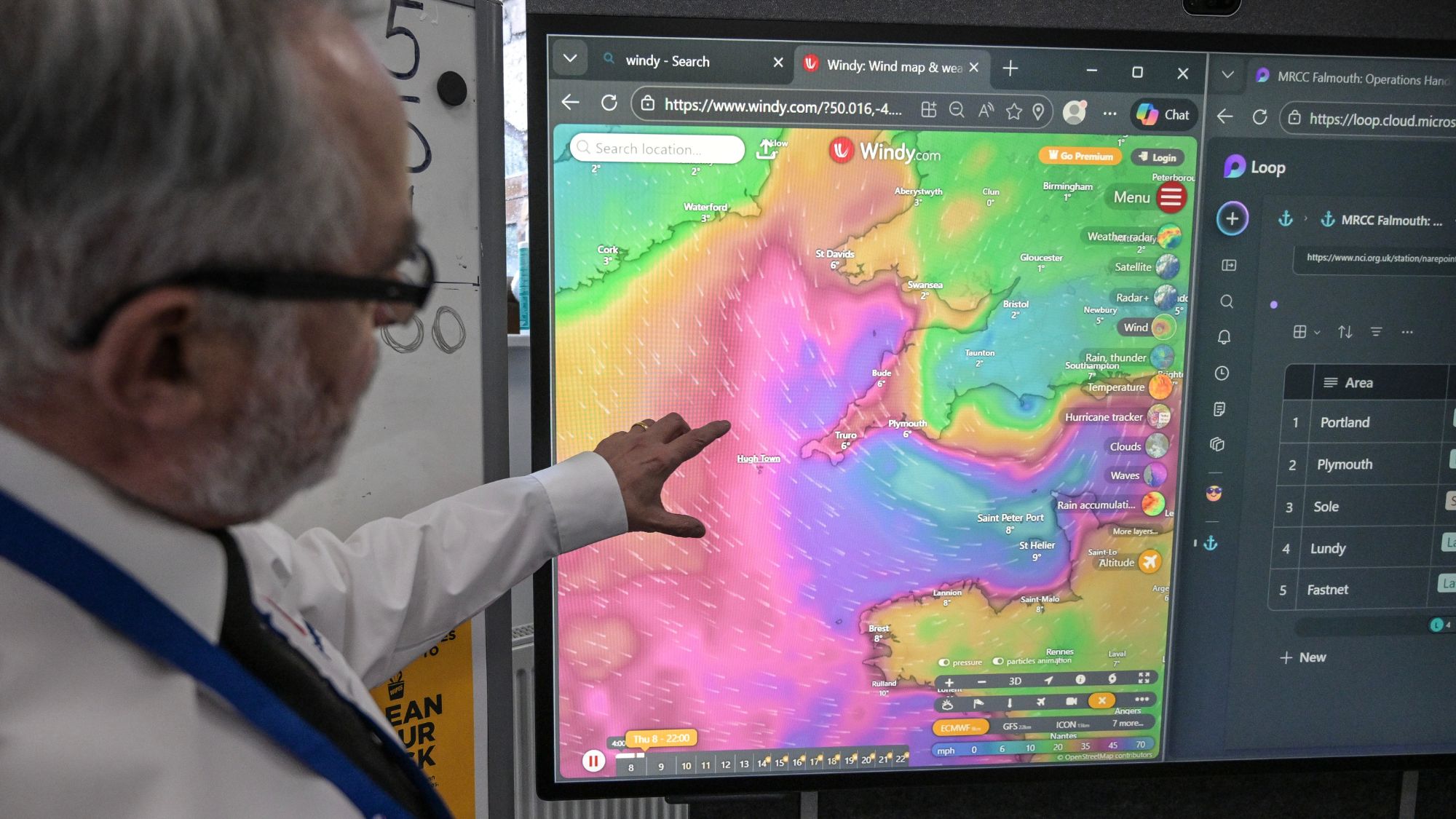
    Residents of clifftop properties in Hemsby, Norfolk, have been ordered to leave their homes as Storm Goretti moves across the UK, bringing severe winds, heavy snow and coastal danger. The storm is forecast to deliver gusts approaching 100mph in exposed southwest locations and significant snowfall in central and northern regions. 

    Who said what
    Given the strength of winds, flying debris could pose “a danger to life”, The Met Office warned. Network Rail said the “scale of the storm” would likely cause widespread disruption.

    The forecasts are “so severe that the Cabinet Office activated its emergency alert system”, said The Times, sending warning messages to all phones in Cornwall and the Isles of Scilly.

    What next?
    The arrival of Storm Goretti comes after a week of freezing temperatures and snow has “caused chaos across Britain”, said The Telegraph. The nation “started to shut down” as the storm made landfall last night. The Met Office has warned of “dangerous stormy winds” today and urged people to stay indoors where possible and avoid unnecessary travel. 


    Today’s cyber-crime story

    Cambodia sends alleged scam kingpin to China

    What happened
    Cambodia says it has arrested and extradited Chen Zhi (pictured above), a billionaire businessman accused of masterminding Southeast Asia’s notorious cyber-fraud factories, to China. The US charged the 37-year-old in October with running internet scams that it said had stolen billions in cryptocurrency, while the UK also sanctioned his global business empire, Prince Group.

    Who said what
    The news of Chen’s arrest “will be bittersweet for the British and American authorities”, said The Times, both of which missed chances of their own to arrest the man “whose name has become synonymous with Southeast Asia’s romance fraud epidemic”.

    Chen reportedly employed at least 300,000 people across the continent who were then “forced to work long shifts scamming billions from people across the world, including by luring them into false romantic relationships”, said The Telegraph.

    What next?
    China's state media confirmed Chen Zhi's extradition, describing him as “the head of a major cross-border gambling and fraud syndicate” and said he was “suspected of multiple crimes, including operating casinos, fraud, illegal business operations and concealing criminal proceeds”. CCTV said he had been “placed under coercive measures in accordance with the law”.


    It’s not all bad

    Some dogs can learn the names of objects simply by overhearing human conversations, according to new research. Scientists studying “gifted word learner” dogs found they could identify new toys even when the names were never spoken directly to them. In tests, the dogs correctly retrieved objects about 80% of the time after only listening in on family members talking. Researchers say the discovery hints at the potential for even richer, more nuanced communication between humans and their pets than previously understood.


    under the radar

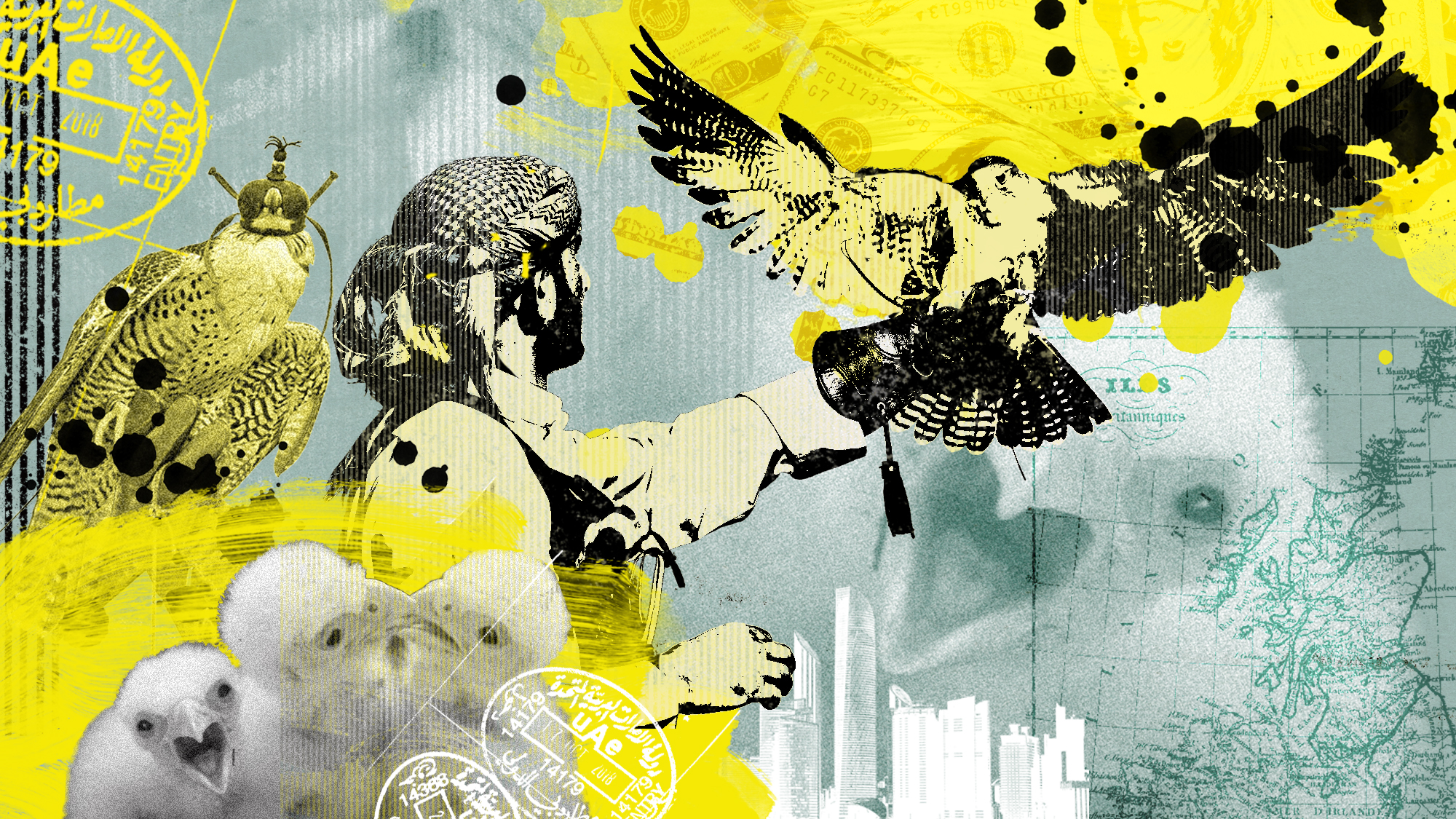
    Why the Middle East is obsessed with falcons 

    The peregrine falcon faced near-extinction in the UK in the 1950s before it was rescued by the banning of the pesticide DDT and stronger legal reinforcements. 

    Today, following booming interest from buyers in the Middle East, modern falconry has taken a darker turn, being “fed by a shadow industry of the smuggling and illegal capture of wild birds”, said The Guardian.

    A “troubling pattern” is emerging in the UK, said The Guardian. Peregrine falcon chicks are “vanishing” from their British cliff-edge nests, which are only accessible to people with “specialist climbing gear”, and turning up in the Middle East with “fabricated” documents. 

    The UK is a lucrative breeding ground for the raptors. The colder climate produces “tough, fast birds”, and those from “established lines carry additional prestige”. Under the Wildlife and Countryside Act, birds cannot be taken from the wild and only falcons bred in captivity can be traded.

    The “cruelly exploitative crime” of nest theft is becoming “more prevalent”, said the Daily Mail. Falcons can reach diving speeds of up to 200mph, and “the only thing faster, seemingly, is the rise in popularity of racing them”. Wild Scottish falcons in particular are “especially prized in the Middle East”. 

    The Middle East’s “appetite for wild falcons risks killing the sport they love”, said The Economist. Buyers and sellers in the Middle East have always “found ways around the rules” and bans, which has already led to the endangered status of the saker falcon. Attempts to curb the market in the region often have the opposite effect, causing “prices to spike”, with the finest birds costing “more per gram than gold”.


    on this day

    9 January 1972

    British coal miners begin a national strike, the first for half a century. This week marked exactly one year since the first Birmingham bin workers strike, beginning with a series of one-day strikes before the announcement of an indefinite, all-out strike on 11 March. The council has ensured household waste collections are still made. But there have been no recycling collections since February.


    Today’s newspapers

    ‘Pub tax’

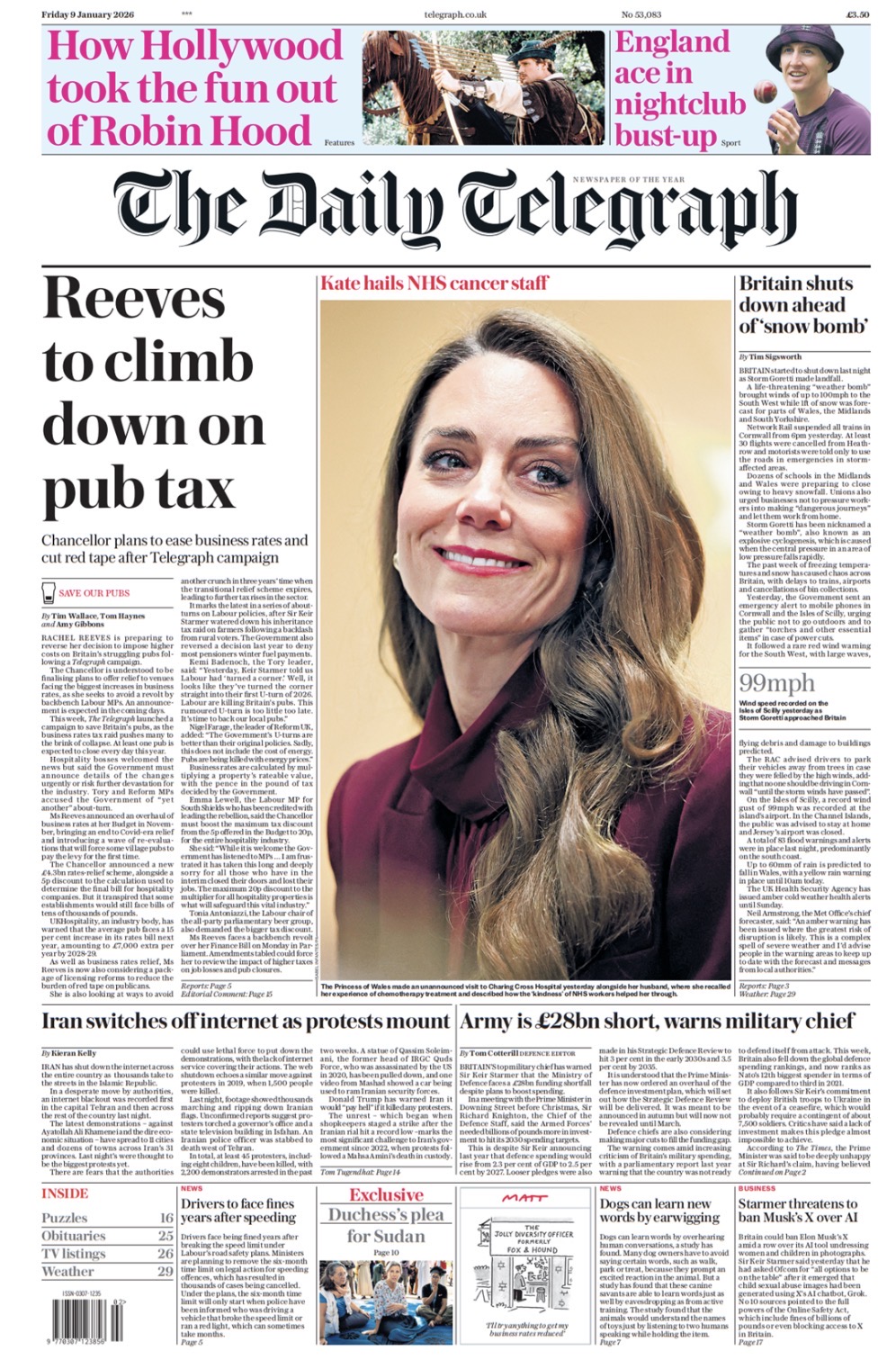
    “Reeves to climb down on pub tax”, The Telegraph says. “Sir Keir starts the year by flip-flopping again to water down pub business rate rises”, says the Daily Express, but his U-turn is “too little too late”, the Daily Mail says. The “push to reset EU ties excludes financial services as City shuns closer alignment”, the Financial Times reports. “Where’s Wally?” asks the Daily Mirror, reporting on anger in Clacton at “freeloader” Nigel Farage. The Guardian reports that more school contemporaries have accused the Reform UK leader of “racist behaviour”.

    See the newspaper front pages


    tall tale

    Baa-rgain hunting

    Dozens of sheep invaded a Bavarian supermarket, knocking over bottles before queuing at the cash tills. The less-than-sheepish shoppers “left a trail of droppings” in the aisles of the budget supermarket in the village of Burgsinn, said The Times. After 20 minutes, the impromptu visitors began filing back out. There had been panic and amusement during the visit, but it could have been worse: the 50-odd sheep had “peeled off” from a herd of 500 that was being led past the store.


    Morning Report was written and edited by Arion McNicoll, Jamie Timson, Will Barker, Ross Couzens, and Chas Newkey-Burden, with illustrations by Marian Femenias-Moratinos.

    Image credits, from top: Kamran / Middle East Images / AFP via Getty Images; Hugh Hastings / Getty Images; Prince Bank website; Illustration by Marian Femenias-Moratinos / Getty Images

    Morning Report and Evening Review were named Newsletter of the Year at the Publisher Newsletter Awards 2025
     

    Recent editions

    • Morning Report

      ICE shoots, Minneapolis reels

    • Evening Review

      Is the Constitution on ‘firm’ ground?

    • Morning Report

      Trump’s NATO threat

    VIEW ALL
    TheWeek
    • About Us
    • Contact Future's experts
    • Terms and Conditions
    • Privacy Policy
    • Cookie Policy
    • Advertise With Us
    • FAQ
    Add as a preferred source on Google

    The Week is part of Future US Inc, an international media group and leading digital publisher. Visit our corporate site.

    © Future US, Inc. Full 7th Floor, 130 West 42nd Street, New York, NY 10036.