The Week The Week
flag of US
US
flag of UK
UK
https://cdn.mos.cms.futurecdn.net/flexiimages/jacafc5zvs1692883516.jpg

SUBSCRIBE & SAVE

Less than $3 per week

Sign in
  • View Profile
  • Sign out
  • The Explainer
  • The Week Recommends
  • Newsletters
  • Cartoons
  • From the Magazine
  • The Week Junior
  • Student Offers
  • More
    • Politics
    • World News
    • Business
    • Health
    • Science
    • Food & Drink
    • Travel
    • Culture
    • History
    • Personal Finance
    • Puzzles
    • Photos
    • The Blend
    • All Categories
  • Newsletter sign up Newsletter
  • WeekDay AM: 10 Things you need to know this morning
    US strikes mine-layers, HMS Dragon sets sail, and the people who identify as animals

     
    today’s international story

    US hits Iranian mine-laying boats in Strait of Hormuz

    What happened
    US forces have destroyed at least 10 boats believed to be used for deploying naval mines after Iran was accused of seeding explosives in the Strait of Hormuz, according to Donald Trump. The US president said the vessels – which he described as “inactive” – were wiped out in strikes carried out yesterday, warning that additional craft could be targeted.

    The narrow channel, through which roughly one-fifth of the world’s crude oil passes, has effectively become inaccessible since the conflict intensified. Analysts say nearly 15 million barrels of crude a day, along with about 4.5 million barrels of refined fuels, are now stranded in the Persian Gulf because exporters such as Iraq and Kuwait rely almost entirely on that passage.

    Who said what
    “I am pleased to report that within the last few hours we have hit, and completely destroyed, 10 inactive mine-laying boats and/or ships, with more to follow!” said Trump. He had earlier warned that Iran would face consequences at a “level never seen before”.

    CNN reported that Iran’s mine-laying operation had only just begun, with only a few dozen deployed in recent days. Iran is “estimated to have between 2,000 and 6,000 mines, having built up its stockpiles with Chinese and Russian models”, said The Telegraph.

    What next?
    Oil markets reacted sharply to the uncertainty, with prices swinging dramatically during yesterday’s trading as governments considered emergency measures to help stabilise supply.


    today’s defence story

    HMS Dragon heads for Mediterranean

    What happened
    The Royal Navy destroyer HMS Dragon has departed Portsmouth and is heading for the eastern Mediterranean, where it will take part in British defensive operations. The Type 45 vessel left harbour yesterday and is expected to arrive in the region in roughly a week, becoming the only UK warship stationed in the area.

    The deployment follows a drone strike this month on RAF Akrotiri in Cyprus. The attack, involving an Iranian-made drone believed to have been launched from Lebanon or Iraq, caused limited damage to a hangar at the base.

    Who said what
    Defence Secretary John Healey said the ship had been readied unusually quickly. “What is normally six weeks of work was completed in just six days – a remarkable effort delivered round the clock.”

    The Royal Fleet Auxiliary vessel RFA Lyme Bay has also been placed on heightened readiness. However, “the MoD would not be drawn on what the primary purpose of the RFA Lyme Bay would be were it to be deployed”, said Aleks Phillips on the BBC, but its facilities as a support ship “make it well-suited for humanitarian and disaster relief missions”.

    What next?
    Additional helicopters have arrived in Cyprus and British aircraft are conducting “defensive missions” across the region.


    Today’s prisons story

    Inmate faces murder charge over death of Huntley

    What happened
    Anthony Russell has been charged with the murder of Soham killer Ian Huntley following an attack at HMP Frankland (pictured above), the high-security prison in Durham where both men were inmates. Huntley was taken to hospital with serious injuries on 26 February and died nine days later.

    Who said what
    Christopher Atkinson, of the Crown Prosecution Service, said it had established “sufficient evidence” to bring the case to trial and that it was “in the public interest to pursue criminal proceedings”.

    Huntley had been serving a life sentence, with a minimum term of 40 years, for murdering schoolgirls Holly Wells and Jessica Chapman in August 2002. The girls’ disappearance “made national headlines and led to tireless searches”, said the BBC.

    Huntley’s daughter Samantha Bryan told The Sun that she felt “glad” when she heard about the attack. “I have always been judged for being his daughter – it has been a very difficult thing to deal with over the years.”

    What next?
    Russell is expected to appear at Newton Aycliffe magistrates’ court via video link today.


    It’s not all bad

    Scientists testing a new climate technology in the Gulf of Maine say their early results are promising. In an experiment, researchers from the Woods Hole Oceanographic Institution released a small amount of alkaline solution into the ocean to boost its natural ability to absorb carbon dioxide. The trial found the treated water absorbed measurable carbon while raising local pH levels without obvious harm to marine life. Scientists say the approach could one day help tackle global warming and ocean acidification if proven safe on a larger scale.


    under the radar

    Therians: the humans who identify as animals

    Humans are living out their animal instincts through the therian movement. A small online subculture, those who identify as therians claim to have a non-human identity – one they embrace in their everyday lives. The movement has gained traction on social media, leading to demonisation and ridicule. Experts warn against openly rejecting the culture, as doing so could cause harm.

    A therian is a person who “identifies as a non-human animal on an integral, personal level”, according to the Therian Guide website. Many also adopt animal-like behaviours or characteristics. The trend has been most popular in Uruguay and Argentina, but has been expanding to other parts of Latin America.

    The term “therian” is a shortening of the Greek term “therianthrope”, meaning half-human, half-animal. The word began to “circulate in the 1990s on internet forums”, said Euronews, but has become more public recently on TikTok, Instagram and YouTube.

    The growing exposure and growth of therians has led to a backlash and judgement. The community’s increasing popularity landed it in the “hands of the far right” and is fuelling “algorithms that reward scandal”, said Spanish newspaper El País. Similar to an “attack against trans people, against LGBTQ+ people”, the assault on therians is “reinforcing the narrative about the decadence of modern society”.

    However, the attraction to therianthropy is not inherently a harmful thing. “If the experience does not affect a young person’s ability to form relationships, attend school or maintain healthy routines,” said the US news website Al Día, “there is no reason to automatically pathologise it.”


    on this day

    11 March 1702

    The Daily Courant, a single-page news sheet edited by London bookseller Elizabeth Mallet, became the UK’s first daily newspaper. Last year Ofcom’s News Consumption Survey found that only 19% of UK adults said they regularly read a print newspaper, with the Daily Mail the most popular choice.


    Today’s newspapers

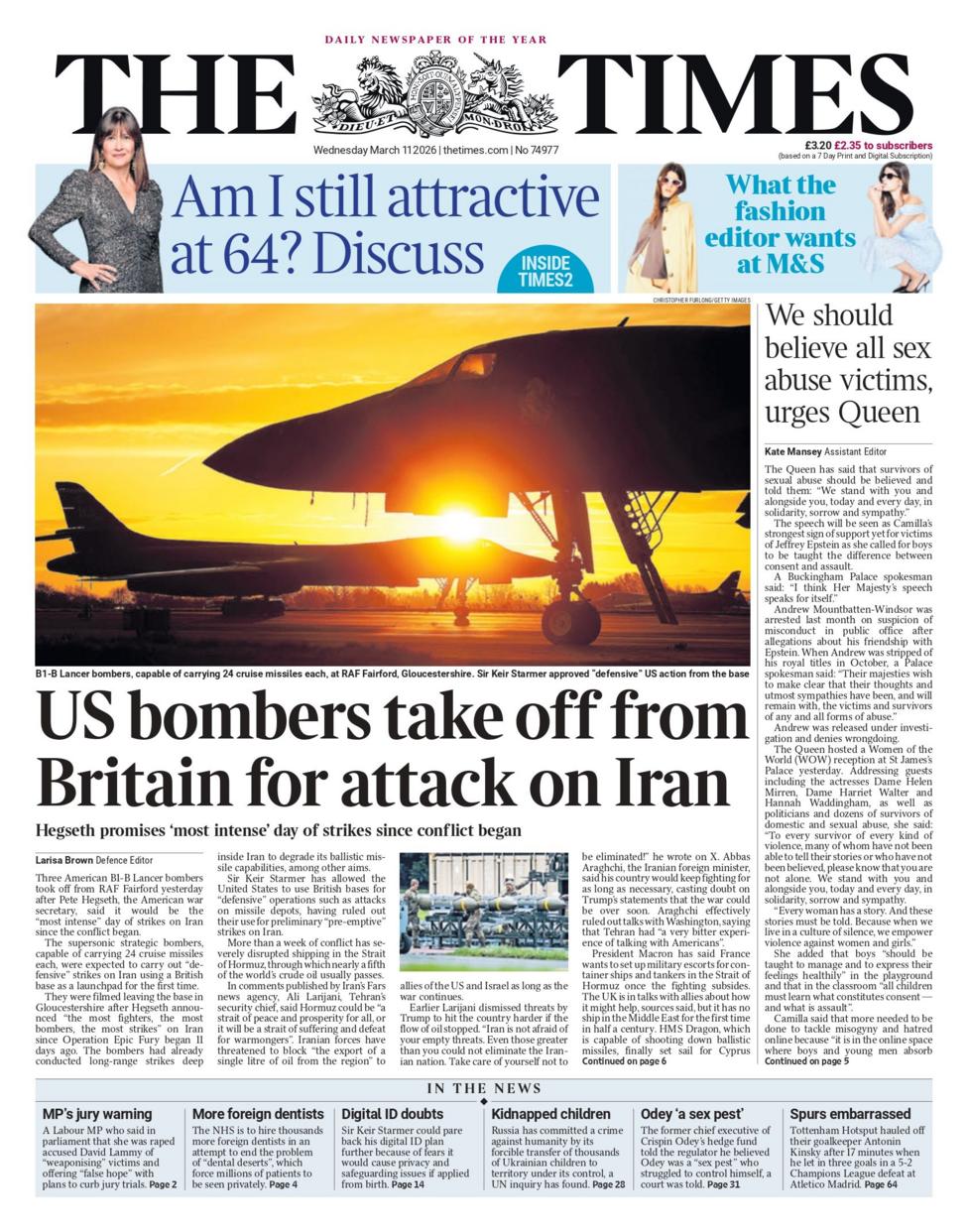
    ‘UK takeoff’

    “US bombers take off from Britain for attack on Iran”, The Times reports. “Trump vows biggest Iran blitz”, says The i Paper. US Defence Secretary Pete Hegseth has promised the “most intense” day of strikes yet, the Financial Times says. Tehran is “the last stop before hell” as US-Israel attacks on Iran intensify, residents tell The Guardian. Meanwhile, the former footballer Joey Barton has been charged with a “horror attack”, says The Mirror.

    See the newspaper front pages


    tall tale

    Gales of laughter

    “Elon Gust” and “David Blowy” are among the storm name suggestions the Met Office has received from the public over the past year, a Freedom of Information request has revealed. Other pun-tastic ideas among the more than 50,000 names put forward included “Keir Stormer” and “Dame Judi Drench”. A Met Office spokesperson said some of the submissions were “really clever and funny”, but that gag names would not make the cut because “naming storms has an important safety purpose”.


    Morning Report was written and edited by Arion McNicoll, Rebecca Messina, Will Barker, Devika Rao, Ross Couzens and Chas Newkey-Burden, with illustrations by Marian Femenias-Moratinos.

    Image credits, from top: US Central Command; Leon Neal / Getty Images; David Goddard / Getty Images; Illustration by Marian Femenias-Moratinos / Getty Images.

    Morning Report and Evening Review were named Newsletter of the Year at the Publisher Newsletter Awards 2025
     

    Recent editions

    • Morning Report

      Anthropic takes Pentagon to court

    • Evening Review

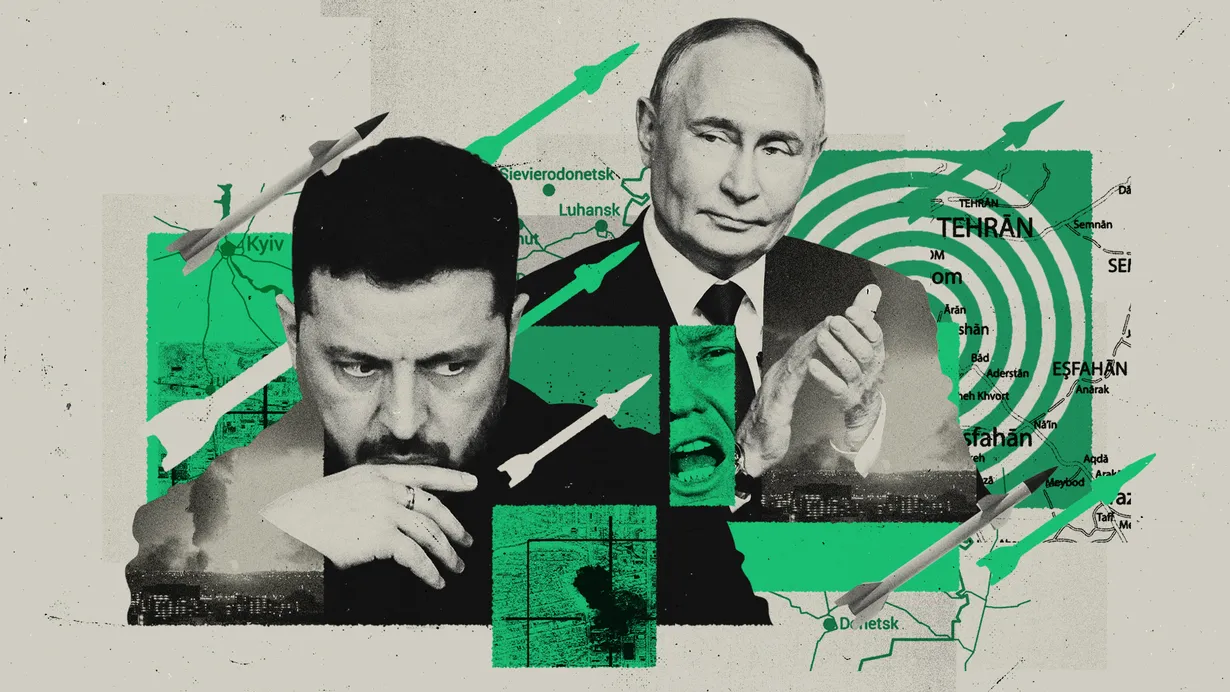
      The Iran war could hurt Ukraine

    • Morning Report

      Iran picks a new leader

    VIEW ALL
    TheWeek
    • About Us
    • Contact Future's experts
    • Terms and Conditions
    • Privacy Policy
    • Cookie Policy
    • Advertise With Us
    • FAQ
    Add as a preferred source on Google Add as a preferred source on Google

    The Week is part of Future US Inc, an international media group and leading digital publisher. Visit our corporate site.

    © Future US, Inc. Full 7th Floor, 130 West 42nd Street, New York, NY 10036.