The Week The Week
flag of US
US
flag of UK
UK
https://cdn.mos.cms.futurecdn.net/flexiimages/jacafc5zvs1692883516.jpg

SUBSCRIBE & SAVE

Less than $3 per week

Sign in
  • View Profile
  • Sign out
  • The Explainer
  • The Week Recommends
  • Newsletters
  • Cartoons
  • From the Magazine
  • The Week Junior
  • Student Offers
  • More
    • Politics
    • World News
    • Business
    • Health
    • Science
    • Food & Drink
    • Travel
    • Culture
    • History
    • Personal Finance
    • Puzzles
    • Photos
    • The Blend
    • All Categories
  • Newsletter sign up Newsletter
  • WeekDay AM: 10 Things you need to know this morning
    Channel deal with France, a bird flu vaccine trial, and how Highland cows became stars

     
    today’s migration story

    UK and France in £662m deal to stop small boats

    What happened
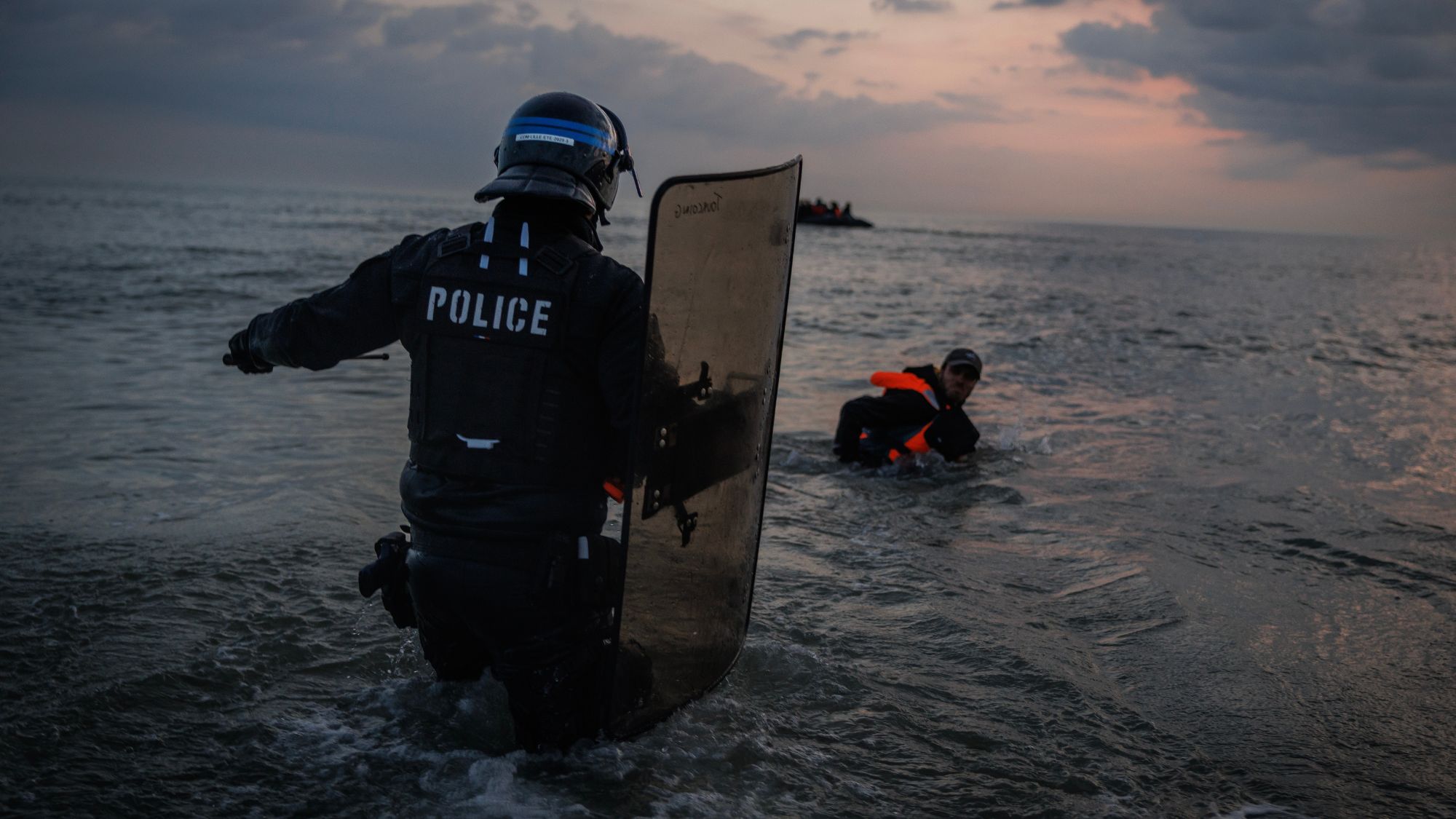
    The UK and France have agreed a three-year arrangement worth £662 million aimed at reducing unauthorised journeys across the English Channel. Under the plan, French authorities will increase their presence along northern coastlines, including a 50-strong riot squad trained in “crowd-control tactics” to “stop illegal migrants in their tracks”, according to the Home Office.  Additional surveillance equipment, aircraft and maritime resources will also be introduced to detect and disrupt smuggling operations.

    Who said what
    “Our work with the French has stopped tens of thousands of illegal migrants boarding boats headed to Britain,” said Home Secretary Shabana Mahmood. “But we must do more.”

    Critics from the Conservative Party argued that the funding lacked adequate safeguards, with one senior figure claiming it handed over substantial sums “with no conditions at all”. Refugee advocates said enforcement alone would not address the reasons why people attempt the journey.

    Labour, which is predicted to lose councils to Nigel Farage’s Reform UK in next month’s local elections, “has come under increasing pressure from political opponents to curb irregular migration”, said Rajeev Syal in The Guardian.

    What next?
    The new measures are due to take effect in the coming months, replacing a previous agreement that expires soon. The deal includes a performance mechanism allowing a portion of British funding to be withheld if crossings are not sufficiently reduced after the first year.


    today’s international story

    Iran’s ship seizures cloud peace prospects

    What happened
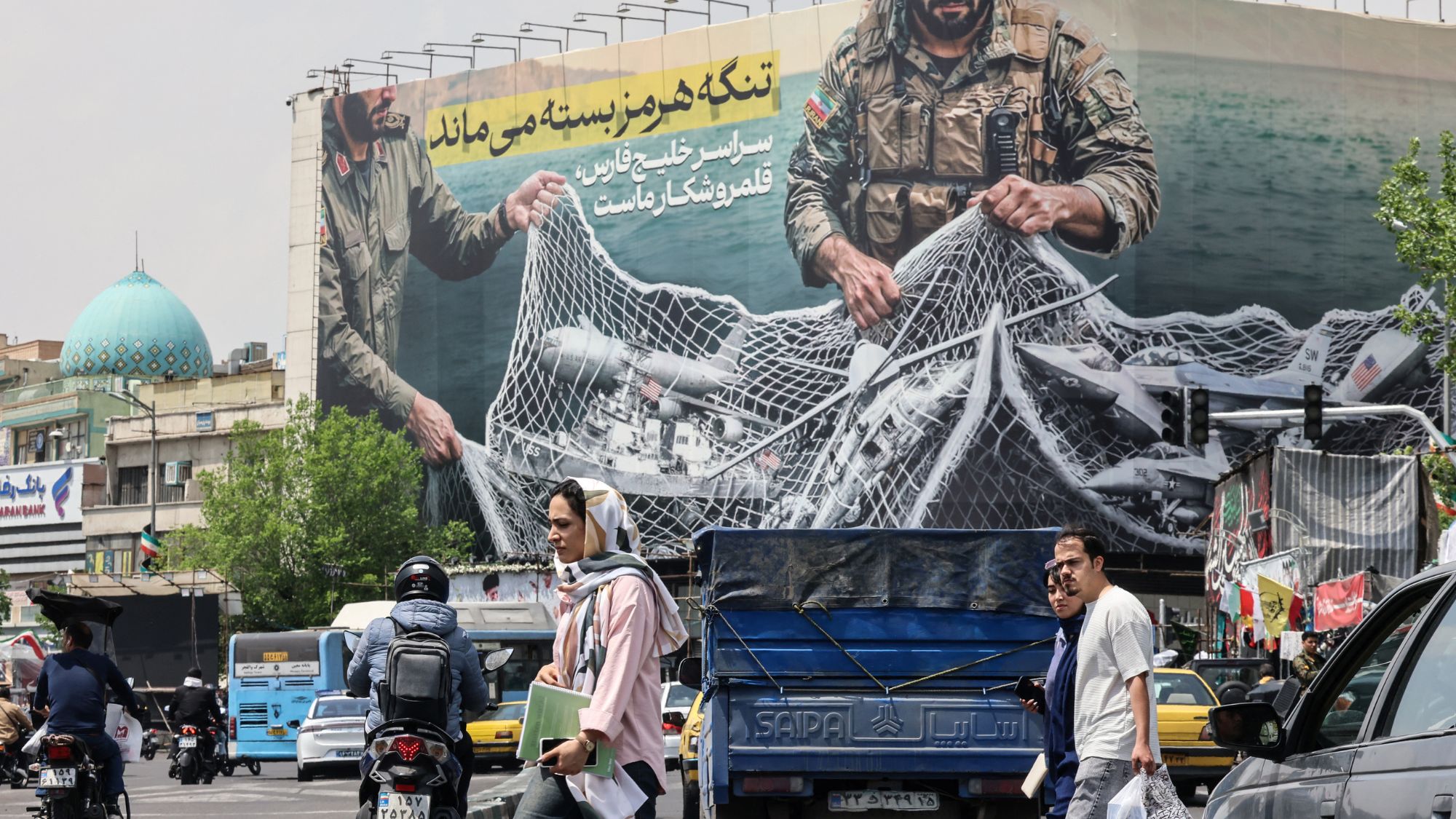
    Iran’s Islamic Revolutionary Guards Corps said it had taken control of two commercial vessels near the Strait of Hormuz, according to state-linked reports. The seizures “add uncertainty” to a ceasefire Donald Trump extended on Tuesday, said The New York Times.

    The seized vessels were identified as the MSC Francesca and the Greek-owned Epaminondas, reportedly targeted for failing to comply with new Iranian transit requirements, including permits for designated routes. Reports also suggested that a third ship, the Euphoria, came under fire and altered its course during the passage.

    Who said what
    White House press secretary Karoline Leavitt accused Iran of acting “like a bunch of pirates”, but said the incident had not breached the ceasefire. “These were not US ships,” she said. “These were not Israeli ships.” Greece’s Foreign Minister Giorgos Gerapetritis said one vessel had suffered “extremely wide damage”.

    What next?
    The Strait of Hormuz has been “one of the main sticking points” preventing a new round of negotiations from commencing in recent days, said Almigdad Alruhaid on Al Jazeera. Iranian President Masoud Pezeshkian said Tehran wanted “dialogue and agreement”, but that “breach of commitments, blockade and threats are the main obstacles to genuine negotiations”.


    Today’s health story

    Major mRNA bird flu vaccine trial begins

    What happened
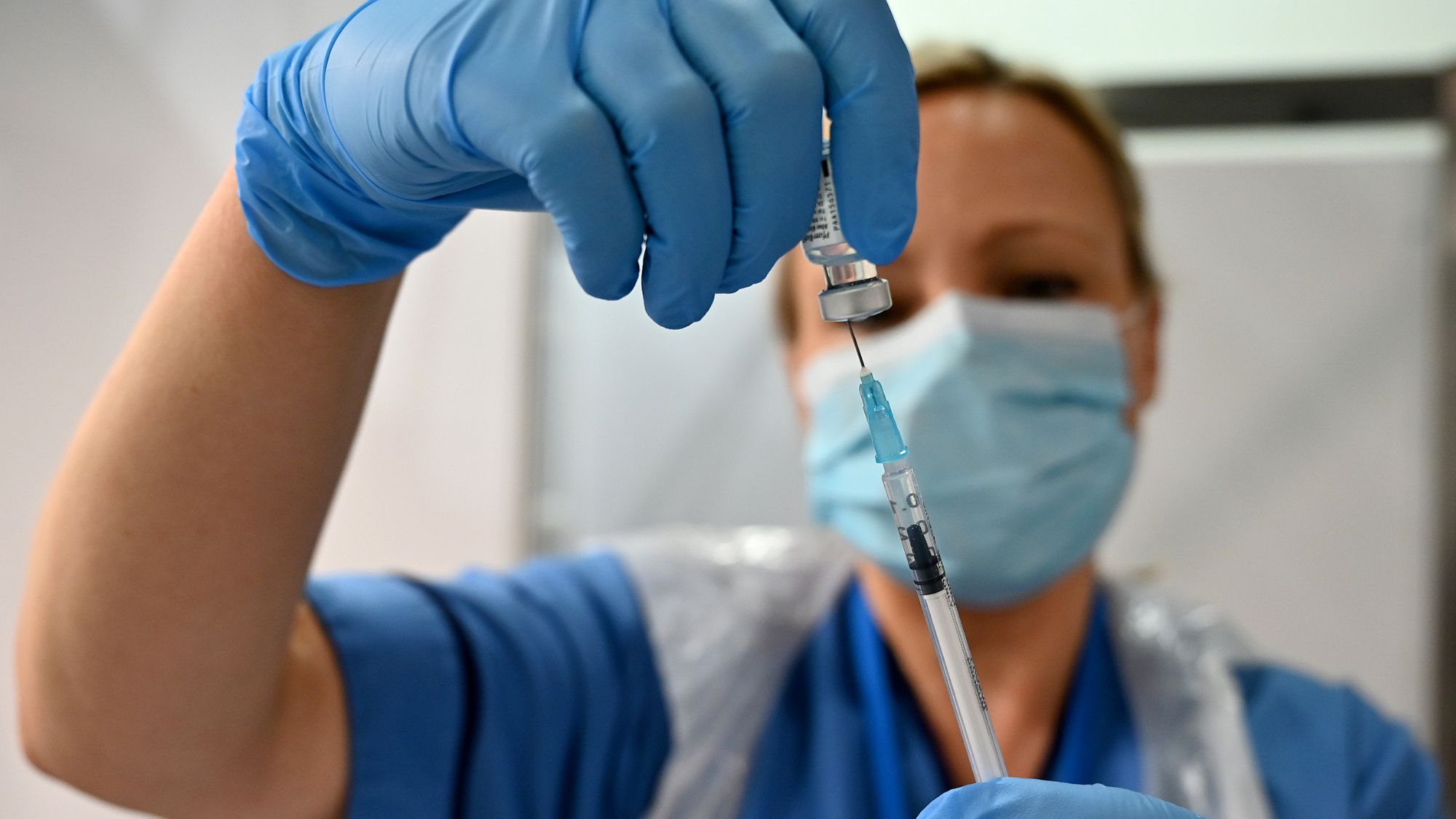
    An extensive clinical trial of an mRNA vaccine against bird flu has been announced, with participants to be recruited at 26 sites across England and Scotland. Half of the expected 3,000-strong UK test group will be over the age of 65, with about 1,000 more people taking part in the US.

    Although the threat to humans from bird flu remains low – with only about 100 global cases since 2024 – using mRNA technology, the same as was used in the Covid immunisation, will allow for a quicker and more changeable vaccine.

    Who said what
    Although bird flu does “not yet move easily between humans, we have to treat human-to-human transmission as a real possibility” in the future, said Dr Rebecca Clark, the trial’s national co-ordinating investigator. The H5N1 strain, which the trial will target, is “evolving and spreading across animal species”, and can affect mammals.

    “A flu pandemic is the most likely future pandemic,” said Richard Pebody at the UK Health Security Agency. “It’s really critical that we ensure we’re properly prepared.”

    What next?
    Backed by the National Institute for Health and Care Research, and sponsored by Moderna, the trial will run for seven months.


    It’s not all bad

    Plans for a one-off, two-day London Marathon next year could see nearly 100,000 runners take part, doubling the usual numbers and delivering a major boost for charities. If approved, organisers say the expanded event could raise more than £130 million for good causes, alongside another estimated £400 million in economic and social benefits for the country.


    under the radar

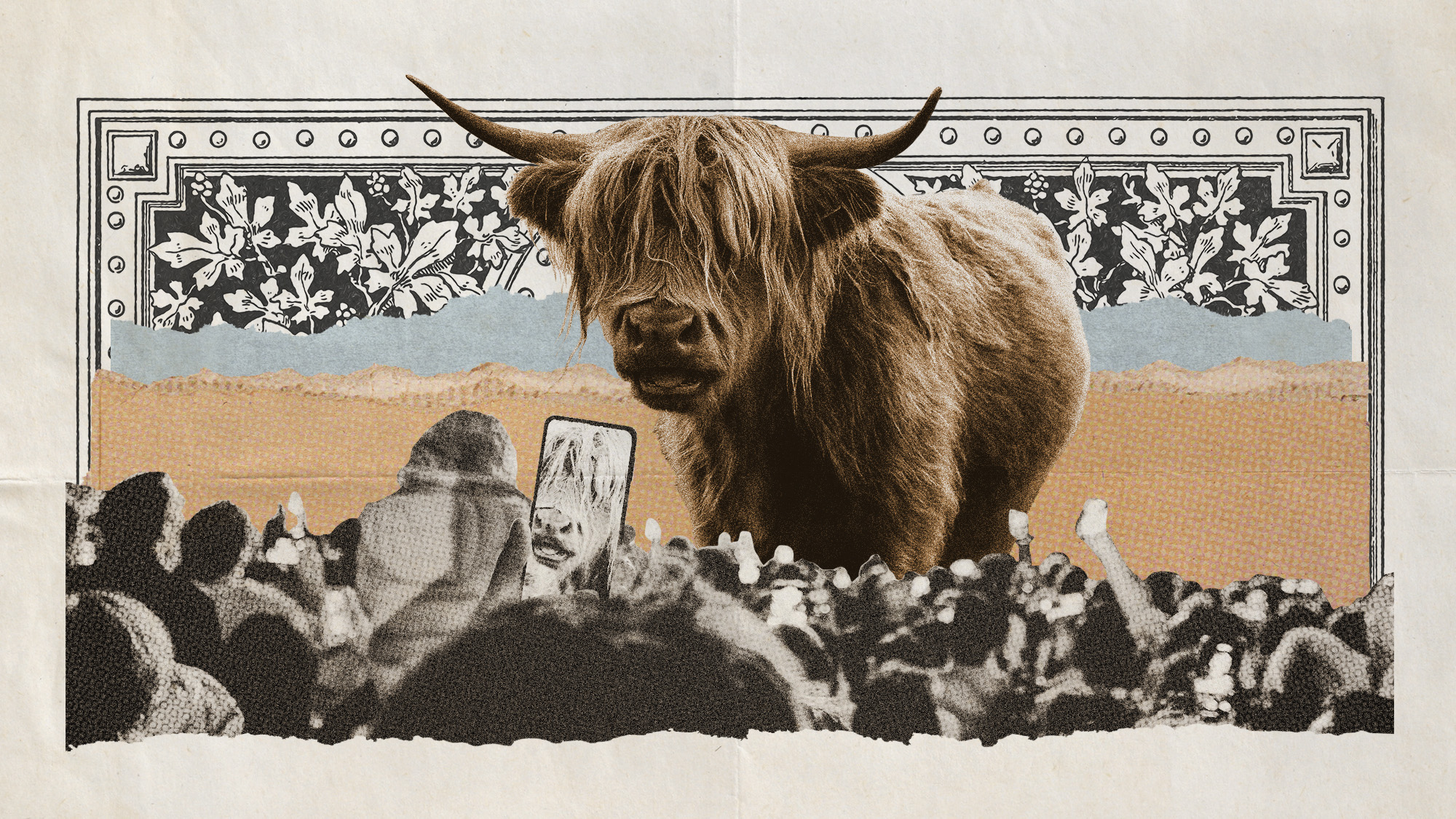
    How Highland cows became unlikely social media stars

    A Derbyshire cattle farmer wants to make his cows look uglier in order to try and stem a tide of social media influencers who have been stampeding across his land to film viral content with the animals.

    Alex Birch is planning to crossbreed his Highland cows to make them “less photogenic”, he told the BBC, as TikTokers’ interest in them means they “don’t get any peace”.

    Highland cows, which look like an “unholy hybrid of Boris Johnson and [a] delivery bicycle”, have also attracted many admirers in Kent, said The Guardian. When they were brought to the Hothfield Heathlands nature reserve near Ashford, videos of the cows went viral on TikTok, prompting a “flood” of camera-wielding visitors.

    Eventually, Kent Wildlife Trust, which manages the site, had to “remove the cows” because they were becoming “distressed” and might “react out of fear”, potentially injuring human interlopers.

    The Highland Cattle Society has told people not to treat cows as “selfie props” and the Scottish Society for the Prevention of Cruelty to Animals told The National that Highland cows, although “often perceived as calm and approachable”, were “still large, powerful livestock animals”. So “like any animal, their behaviour can change if they feel stressed or threatened”.

    With the average UK dairy cow weighing 620kg (98st), “even a gentle knock” can seriously injure a human, said Wayne Owen from the Health and Safety Executive. The best advice, according to The Guardian, is to exercise “extreme caution”.


    on this day

    23 April 2016

    Beyoncé released her ground-braking sixth album “Lemonade” with a one-hour film on HBO. To mark the 10-year anniversary of the album, Rockabye Baby this month released “Lullaby Renditions of Beyoncé’s Lemonade”, with soothing instruments replacing the pop star’s vocals.


    Today’s newspapers

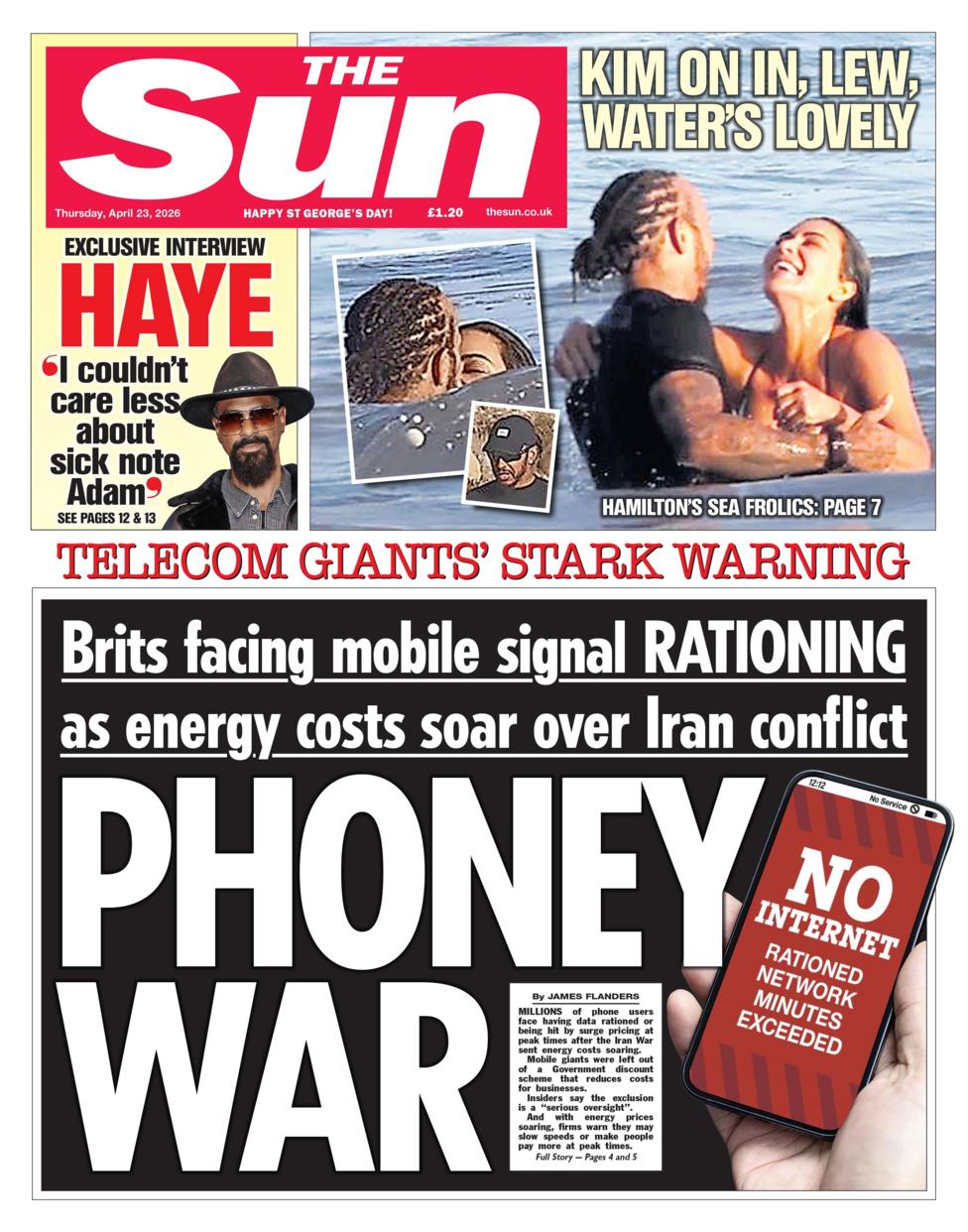
    ‘Phoney war’

    “Phoney war”, says The Sun, with “Brits facing mobile signal rationing as energy costs soar over Iran conflict”. Lord Hermer pursued a “witch hunt against troops despite warnings”, says The Telegraph. Amanda Knox, who was cleared of a killing after four years in jail, says she has written to convicted murderer Lucy Letby in prison, the Daily Mirror reports. There’s a “cancer diagnosis every 80 seconds across the UK”, says The Guardian.

    See the newspaper front pages


    tall tale

    A nude awakening

    A wildlife festival in the North West was forced to issue an “important clarification” for attendees to “dress appropriately” after it was confused with a nudist event. In a recent social media post, the Cumbria Nature Festival stated that the event was “primarily aimed at NATURALISTS … not NATURISTS”. “Whilst we aim to be as inclusive as possible, and certainly do not judge anyone, we are aiming the event at wildlife enthusiasts.” A member of the festival’s organising committee added: “It’s a common misunderstanding, I suppose.”


    Morning Report was written and edited by Arion McNicoll, Jamie Timson, Will Barker, Ross Couzens and Chas Newkey-Burden, with illustrations by Julia Wytrazek.

    Image credits, from top: Dan Kitwood / Getty Images; Atta Kenare / AFP / Getty Images; Jeff J Mitchell – Pool / Getty Images; Illustration by Julia Wytrazek / Getty Images.

    Morning Report and Evening Review were named Newsletter of the Year at the Publisher Newsletter Awards 2025
     

    Recent editions

    • Morning Report

      Virginia boosts Democrats’ congressional hopes

    • Evening Review

      Mamdani’s plan to tax the rich

    • Morning Report

      Labor secretary exits amid brewing scandals

    VIEW ALL
    TheWeek
    • About Us
    • Contact Future's experts
    • Terms and Conditions
    • Privacy Policy
    • Cookie Policy
    • Advertise With Us
    • FAQ
    Add as a preferred source on Google Add as a preferred source on Google

    The Week is part of Future US Inc, an international media group and leading digital publisher. Visit our corporate site.

    © Future US, Inc. Full 7th Floor, 130 West 42nd Street, New York, NY 10036.