The Week The Week
flag of US
US
flag of UK
UK
https://cdn.mos.cms.futurecdn.net/flexiimages/jacafc5zvs1692883516.jpg

SUBSCRIBE & SAVE

Less than $3 per week

Sign in
  • View Profile
  • Sign out
  • The Explainer
  • The Week Recommends
  • Newsletters
  • Cartoons
  • From the Magazine
  • The Week Junior
  • Student Offers
  • More
    • Politics
    • World News
    • Business
    • Health
    • Science
    • Food & Drink
    • Travel
    • Culture
    • History
    • Personal Finance
    • Puzzles
    • Photos
    • The Blend
    • All Categories
  • Newsletter sign up Newsletter
  • WeekDay AM: 10 Things you need to know this morning
    Starmer under siege, Iran ceasefire ‘on life support’, and next year to be ‘hottest ever’

     
    today’s politics story

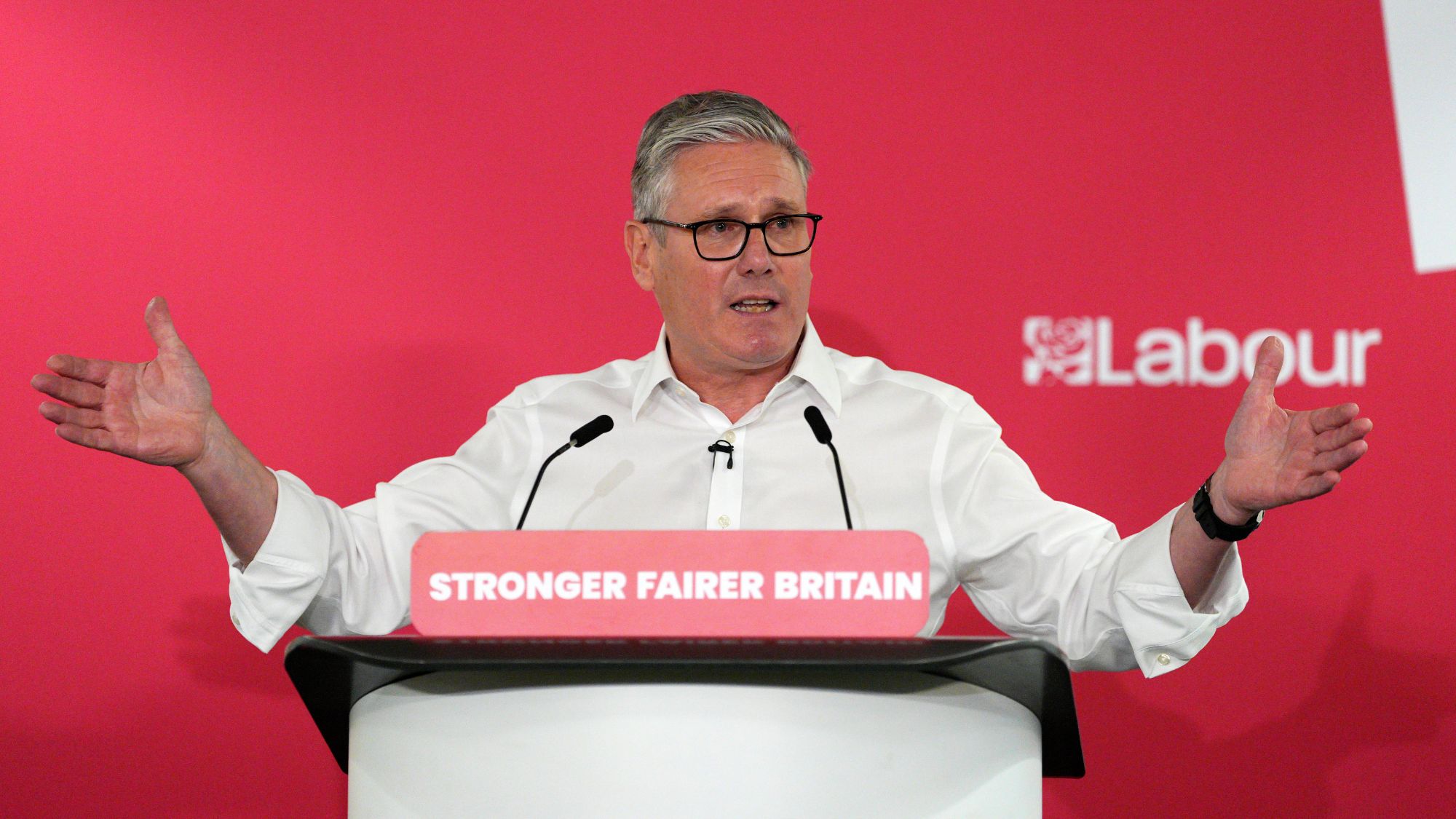
    Time to go, cabinet ministers tell Starmer

    What happened
    Keir Starmer’s hold on the Labour leadership appeared to be increasingly fragile last night as cabinet ministers urged him to consider a timetable for stepping down and more than 70 Labour MPs publicly called for his resignation. Reports suggested that senior ministers including Yvette Cooper and Shabana Mahmood had privately advised Starmer to oversee an “orderly transition” rather than fight on indefinitely. Four junior frontbenchers resigned during the day, while several MPs close to Wes Streeting also publicly called for change at the top.

    Who said what
    Starmer insisted that he would remain at the helm, saying Britain would “never forgive” Labour for descending into internal chaos.

    He has been prime minister for less than two years, which is normally a “honeymoon period for a new government after many years in opposition”, but the PM and Labour Party “find themselves in an existential nightmare; their vote has collapsed and their leader is among the least popular premiers in history”, said The Telegraph’s editorial board.

    What next?
    The pressure is expected to intensify over the coming days as MPs weigh up whether Starmer can realistically survive a formal leadership challenge. At this stage “there should be one thing on Starmer’s mind: not keeping his job, but keeping out Reform”, said Polly Toynbee in The Guardian. “The risk is that the longer he stays in No. 10, the harder it will be to stop Britain’s Trump.”


    today’s international story

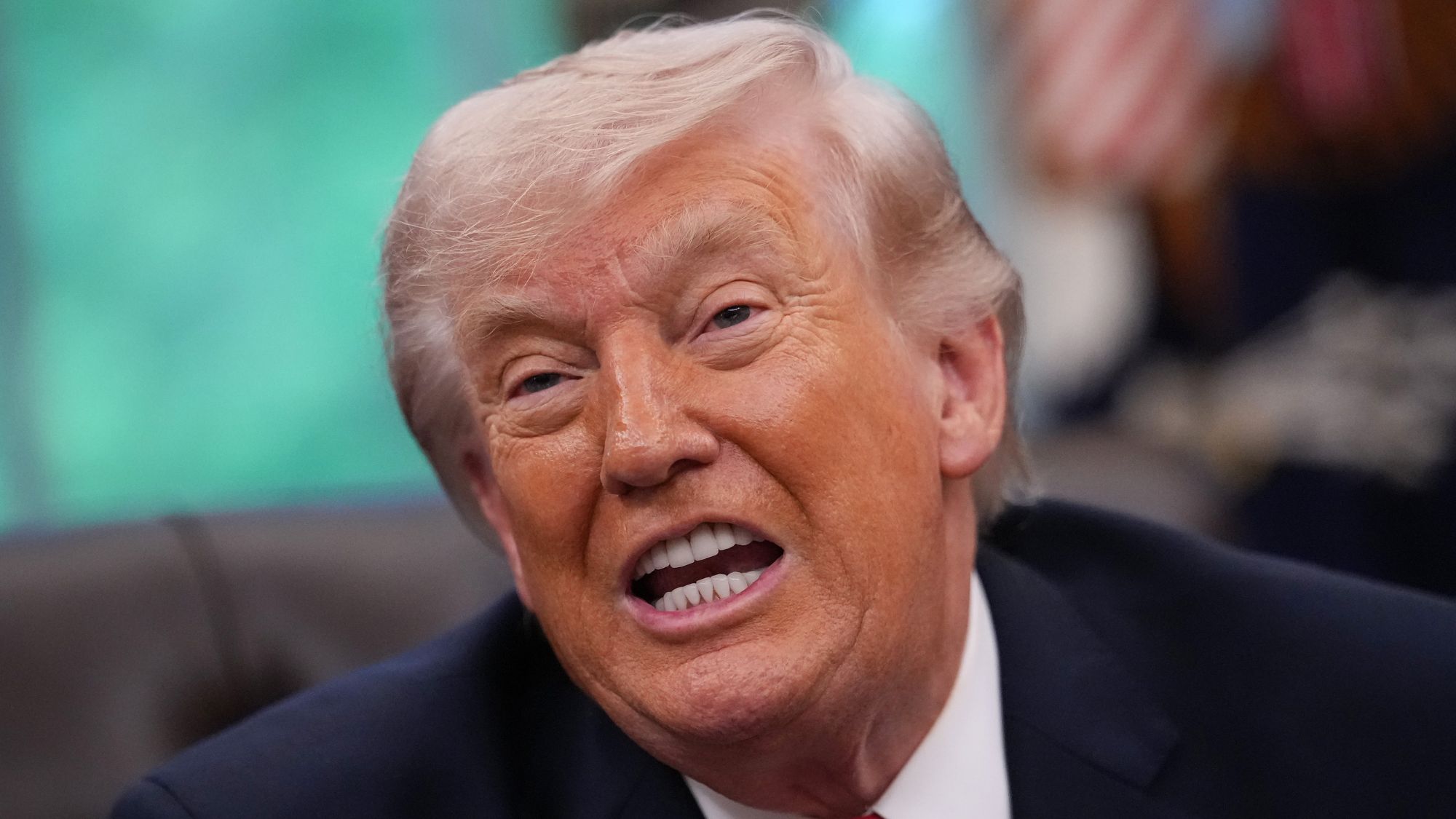
    Trump says Iran ceasefire on ‘massive life support’

    What happened
    Donald Trump warned yesterday that the tenuous ceasefire between Iran, the US and Israel was on “massive life support” as the negotiations between Washington and Tehran faltered again. Iran has reportedly demanded US war reparations, recognition of Iranian control over the Strait of Hormuz and an end to sanctions in exchange for reopening shipping lanes and continuing with peace talks.

    Who said what
    Trump dismissed Iran’s latest proposal as “a piece of garbage” and claimed that Tehran was controlled by “lunatics”. Countries around the world are now “bracing for prolonged economic woes stemming from high energy prices”, said Aaron Boxerman and Max Bearak in The New York Times. The price of oil spiked by more than 4% yesterday before easing. Brent oil futures finished up almost 3% at $104.21 a barrel.

    What next?
    Trump is expected to discuss the conflict with Xi Jinping during a visit to China this week amid growing pressure to stabilise energy markets and secure shipping through Hormuz.

    Meanwhile, United Nations under-secretary-general for humanitarian affairs and emergency relief coordinator Tom Fletcher has called for a “genuine ceasefire” as Israel continues its assault on Lebanon.


    Today’s climate story

    Experts: next year will be hottest ever recorded

    What happened
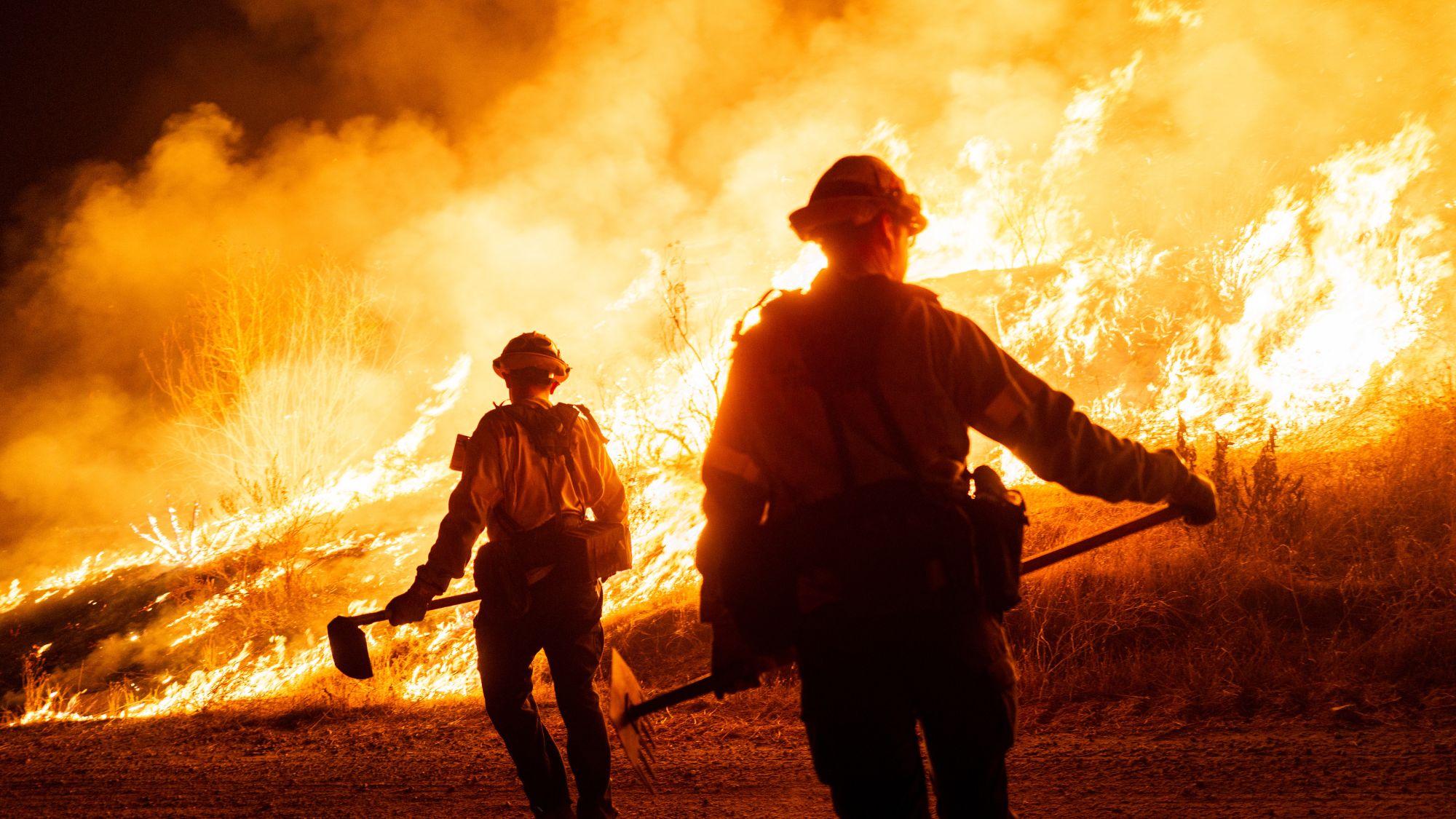
    Scientists have predicted that a “super El Niño” weather pattern will drive up global temperatures over the next few months, and is poised to make 2027 the hottest year on record.

    This shift could bring 40C days to Britain – a temperature only ever before experienced in 2022 – and is likely to cause extreme flooding and droughts around the world.

    Who said what
    “There is growing confidence that this event could sit at the upper end of the historical range,” said the Met Office last month. “This could be the strongest El Niño event so far this century.”

    The weather phenomenon is the equivalent to “pushing the turbo button” on rising global temperatures created by burning fossil fuels, said climate scientist Dr Katharine Hayhoe of Texas Tech University. It will affect food, water and the economy: “We are all connected in ways that we never imagined.”

    What next?
    “Any especially hot weather we have this summer will be just normal climate change,” said Mark Maslin of University College London. “El Niño will really start to bite in the autumn” and beyond.


    It’s not all bad

    Singing in a choir, painting, crafting or visiting museums may help people stay biologically younger, according to new research from University College London. The study found that regular engagement with the arts and culture was linked to slower ageing, with weekly participation producing benefits comparable to major lifestyle improvements. Researchers say creative activities reduce stress and inflammation, adding to growing evidence that the arts can play an important role in healthy ageing and general wellbeing.


    under the radar

    Atmosphere found on celestial body far out in space

    Scientists studying a distant region of the solar system near Pluto have discovered the unexpected: a minuscule object with its own atmosphere. It was previously believed that such small celestial bodies located that far from the Sun were incapable of having their own atmospheres. Now, the new finding could unlock insights into planets in our solar system millions of miles away.

    The 310-mile-wide celestial body, officially named 2002 XV93, is classified as a trans-Neptunian object (TNO) because its distance from the Sun – approximately 3.5 billion miles (5.6 billion kilometres) – lies beyond the outermost planet, Neptune, according to Japanese astronomers in a study published in the journal Nature Astronomy. And although the icy body was identified many years ago, only now has it been observed to be “swaddled in a layer of air”, said The New York Times.

    Because a TNO shouldn’t have one, the discovery of the atmosphere could offer an “unprecedented glimpse” into how one “forms and remains around a small object”, as well as “change how astronomers think about objects”, said CNN. And it suggests that “some small ​icy bodies in the outer solar system may not be completely inactive or unchanging, as previously assumed”, lead study researcher Ko Arimatsu, the head of Japan’s National Astronomical Observatory told Reuters. “Even in a distant, cold world there ​are dynamisms we haven’t imagined,” added study co-author Junichi Watanabe, the director of Japan’s Koyama Space Science Institute.

    The “implications are profound if verified”, Alan Stern, the scientist behind Nasa’s New Horizons mission to Pluto, told AP. The researchers who made the discovery are optimistic. “It changes our view of small worlds in the solar system, not only beyond Neptune,” Arimatsu explained to the outlet. The finding is “genuinely surprising”.


    on this day

    12 May 1994

    “Pulp Fiction”, directed by Quentin Tarantino and starring John Travolta, Uma Thurman and Samuel L. Jackson, premiered at the Cannes Film Festival. US Defense Secretary Pete Hegseth inadvertently quoted a monologue spoken by Jackson in the film, instead of the Bible passage Ezekiel 25:17, during a press conference last month.


    Today’s newspapers

    ‘On the edge’

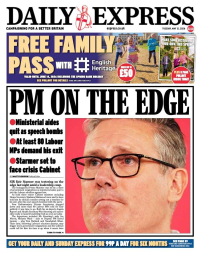
    “PM on the edge”, says the Daily Express. “Starmer’s on the brink”, says The Sun. There is “Starmer mutiny” and an “open revolt against the PM” within the Labour Party, says The i Paper. “Starmer on the brink as Cabinet ministers tell him it’s time to go”, says the Daily Mail. “Dear PM, by order of The Traitors, you have been murdered”, says the Daily Star. “Jet fuel and petrol near ‘critically low’ reserves”, the Financial Times says. 

    See the newspaper front pages


    tall tale

    Going ape

    Russian officials are to investigate a billboard in which an orangutan appears to congratulate onlookers on the anniversary of the country’s victory over Nazi Germany after locals complained that it was inappropriate. Novosibirsk Zoo, which commissioned the billboard of the ape alongside a “Happy Victory Day” message, has defended its decision. “I think it’s actually the right choice,” said its director Andrey Shilo. “We’re a zoo; it makes sense that we’d use animal photos in our congratulatory banners.”


    Morning Report was written and edited by Arion McNicoll, Rebecca Messina, Will Barker, Justin Klawans, Ross Couzens and Chas Newkey-Burden, with illustrations by Stephen P. Kelly.

    Image credits, from top: Carl Court / Getty Images; Andrew Harnik / Getty Images; Brandon Bell / Getty Images; Illustration by Stephen P. Kelly / Getty Images.

    Morning Report and Evening Review were named Newsletter of the Year at the Publisher Newsletter Awards 2025
     

    Recent editions

    • Morning Report

      Republicans pull ahead in the gerrymander war

    • Sunday Shortlist

      A young director's ‘exquisite’ debut

    • Saturday Wrap

      Waging lawfare for Trump

    VIEW ALL
    TheWeek
    • About Us
    • Contact Future's experts
    • Terms and Conditions
    • Privacy Policy
    • Cookie Policy
    • Advertise With Us
    • FAQ
    Add as a preferred source on Google Add as a preferred source on Google

    The Week is part of Future US Inc, an international media group and leading digital publisher. Visit our corporate site.

    © Future US, Inc. Full 7th Floor, 130 West 42nd Street, New York, NY 10036.