The Week The Week
flag of US
US
flag of UK
UK
https://cdn.mos.cms.futurecdn.net/flexiimages/jacafc5zvs1692883516.jpg

SUBSCRIBE & SAVE

Less than $3 per week

Sign in
  • View Profile
  • Sign out
  • The Explainer
  • The Week Recommends
  • Newsletters
  • Cartoons
  • From the Magazine
  • The Week Junior
  • Student Offers
  • More
    • Politics
    • World News
    • Business
    • Health
    • Science
    • Food & Drink
    • Travel
    • Culture
    • History
    • Personal Finance
    • Puzzles
    • Photos
    • The Blend
    • All Categories
  • Newsletter sign up Newsletter
  • WeekDay AM: 10 Things you need to know this morning
    Lebanon evacuations, Mandelson vetting issues, and the threat of ‘Q-Day’

     
    today’s international story

    Israel orders evacuations from swathes of Lebanon

    What happened
    Israel has told residents across large sections of southern Lebanon to leave their homes ahead of further military action against Hezbollah, marking the biggest evacuation directive since a ceasefire began last month. The Israeli military told civilians to move north of the Zahrani River as it prepared for what it described as expanded operations in the region.

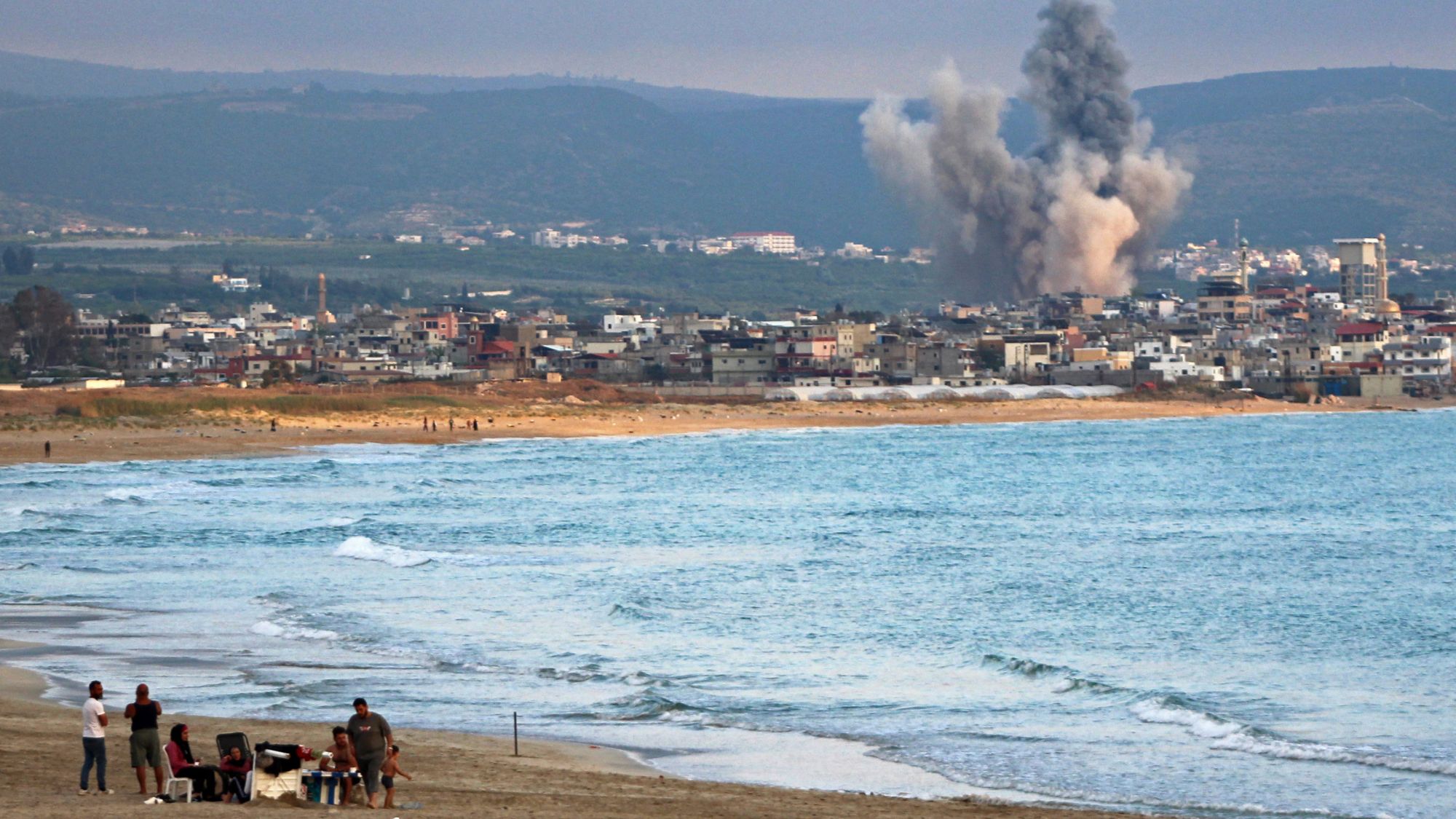
    The warning came after Israeli air strikes hit the coastal city of Tyre (pictured above) and other locations across southern Lebanon and the Bekaa Valley. Lebanese authorities said at least 31 people were killed on Tuesday alone, including 15 in Burj al-Shamali near Tyre.

    Israeli forces have issued multiple evacuation alerts over the past 24 hours, prompting fears of another major displacement crisis.

    Who said what
    Israel’s Prime Minister Benjamin Netanyahu said its troops were “deepening” operations in Lebanon and “fortifying the security zone to protect the communities of the north”.

    Residents of Tyre “watched with horror from balconies, filming on their phones, as Israeli forces hit the city”, said Samantha Granville and David Gritten on the BBC.

    “There is no excuse for this escalation”, said Najat Aoun Saliba, an independent member of the Lebanese Parliament, on Al Jazeera. “What Israel is doing is completely brutal.”

    What next?
    The ceasefire brokered by the US last month “now appears close to total collapse, complicating negotiations to bring a definitive end to the US-Israeli war with Iran”, said Jason Burke in The Guardian.


    today’s politics story

    Details emerge on why Mandelson failed vetting

    What happened
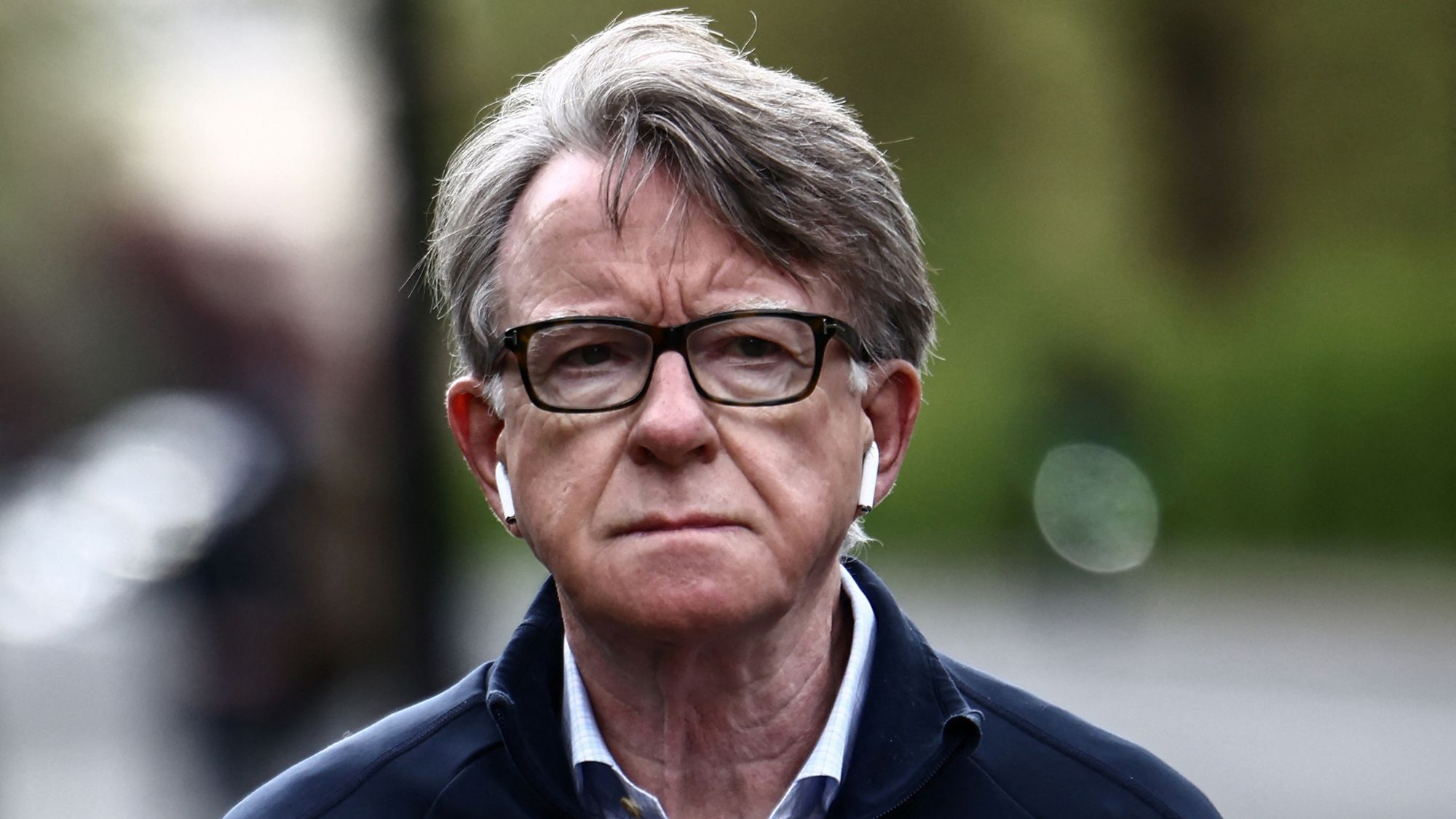
    Labour grandee Peter Mandelson was reportedly denied security clearance for the role of UK ambassador to Washington because of concerns over his international associations, according to sources familiar with the vetting process.

    Security officials said at the time the disgraced Labour peer should be denied clearance for the top Washington role because of his links to Chinese finance minister Lan Fo’an, sanctioned Russian businessman Oleg Deripaska and former Israeli military intelligence chief Tamir Hayman. However, “the decision was overridden by the Foreign Office and he was appointed regardless”, said David Maddox in The Independent.

    Who said what
    The latest claims have intensified a dispute over the release of official papers linked to Mandelson’s appointment. Keir Starmer previously said Downing Street had only recently become aware of the failed vetting.

    The fresh revelations are “likely to add pressure on Sir Keir Starmer over his handling of Mandelson’s appointment and the lack of questions he asked about the peer’s suitability for the role”, said Matt Dathan in The Times.

    What next?
    More documents connected to the affair are expected to be published next week.


    Today’s technology story

    Amazon’s UK tax disclosure fails to clear the air

    What happened
    Amazon announced that it had paid more than £1.3 billion in UK taxes last year, representing a significant increase of at least 20% year-on-year.

    The company said this was due to increases in revenue and higher employment taxes. The online marketplace “is one of the UK’s biggest employers despite making a series of layoffs globally in recent months”, said PA.

    Who said what
    It was notable that the company “did not disclose how much it paid in each levy, but said the amounts had increased”, said The Times.

    Dan Neidle, founder of Tax Policy Associates, told the paper: “If they really want to be open they should publish a proper breakdown of the different taxes.” In refusing to be open they are “mixing together a bunch of different taxes”. This gives us “no idea how much corporation tax they pay. Are they paying a fair amount? Or are they playing tricks? They don’t tell us.”

    What next?
    Amazon said it was in the midst of investing £40 billion in the UK over three years, having launched into a growth plan last year. More than £15 billion has already been spent on developments like new warehouse sites and offices in London, according to the business.


    It’s not all bad

    Learning a musical instrument may help increase attention spans in children and young adults, according to new research from McMaster University in Canada. In tests involving 268 people aged eight to 34, those with musical training responded faster and stayed more focused during lengthy tasks. Lead researcher Rafael Román-Caballero said music practice exercised concentration in the same way physical activity trained the body.


    under the radar

    ‘Q-Day’ could end up being cybersecurity’s Armageddon

    A hypothetical doomsday for quantum computing may be on the horizon, computer scientists have warned for decades. But cybersecurity experts are now racing against the clock after Google announced that this “Q-Day” could arrive much sooner than originally anticipated.

    In theory it is the day that quantum computers will acquire “enough resources and stability to crack conventional cryptography”, said CNN. When that day arrives, it could spell disaster for millions of people’s private information as “every financial transaction, medical file, email, location history and crypto wallet protected by today’s commonly used algorithms could be unlocked”.

    It was previously believed that Q-Day was still far in the future, giving the tech world plenty of time to prepare new safeguards. But Google recently announced that it believes the day could arrive as soon as 2029, and the “new estimate means that governments, companies and other entities may have far less time to prepare”, added CNN. Many are comparing Q-Day with “Y2K or the millennium bug, a computer flaw that programmers thought might cause severe systemic problems after Dec. 31, 1999”.

    Government entities have been weighing in. In 2022, the US National Security Agency (NSA) announced a plan to boost Q-Day readiness by the 2030s. But recently the deadline “has been in flux as both the Biden and Trump administrations have issued executive orders prioritising quantum readiness”, said news site Ars Technica. The NSA is currently “adhering to a 2031 deadline”.

    Despite these plans, experts remain worried as encryption is “not a permanent state of protection”, said Forbes. It is a “time-locked safe that someone may already be holding, waiting for the combination”.​


    on this day

    28 May 1936

    Alan Turing submitted his mathematical paper “On Computable Numbers” for publication, in which he set out the theoretical basis for modern computers. Last week a new study found that artificial intelligence systems such as ChatGPT could now pass the Turing Test, with large language models being perceived as more human than actual people.


    Today’s newspapers

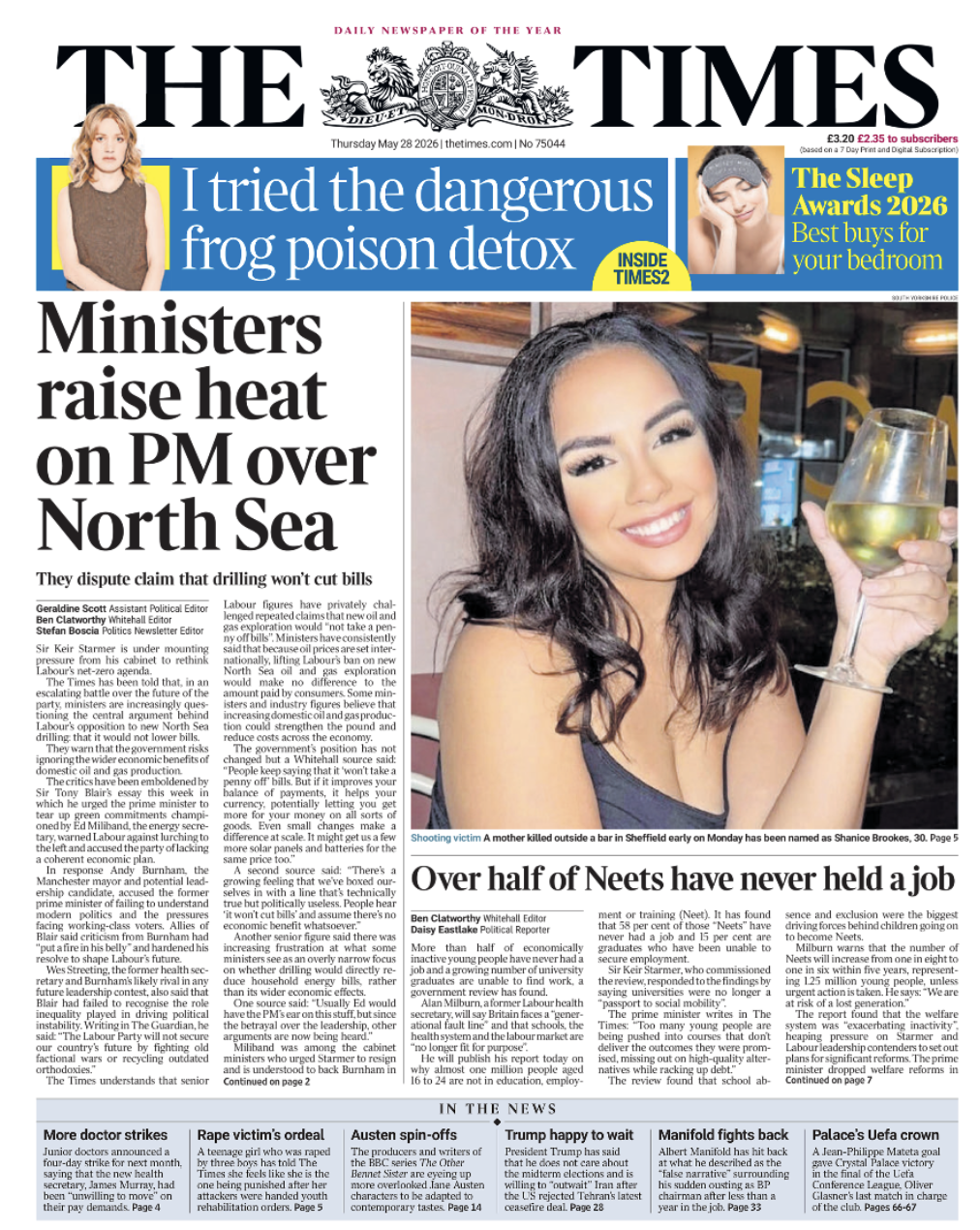
    ‘Raising heat’

    “Ministers raise heat on PM over North Sea”, The Times says. Labour is “risking” a “lost generation of jobless youth”, the Daily Mail reports. The Independent leads on “Trump’s war” and “the rising cost to you”. “Be safe in water… or more will die”, The Mirror says. “Mandelson told Cabinet how to do their jobs”, says The Telegraph. “Mandelson vetting warned of ties to key figures in China and Russia”, says The Guardian. 

    See the newspaper front pages


    tall tale

    Messi business

    A 70-foot-tall statue of Lionel Messi will be taken down after there were reports of it swaying in the wind. The giant monument in Kolkata, India is made of fibreglass and iron, and has been tied down with heavy-duty nylon ropes, while barricades have been erected to keep people and traffic clear of the site. West Bengal state legislator Sharadwat Mukherjee said the proximity of the statue to a busy road and a subway made its removal “easier said than done”, but that officials planned to “remove the statue at the earliest opportunity”. He did not say whether the statue would be re-erected at another site.


    Morning Report was written and edited by Arion McNicoll, Jamie Timson, Justin Klawans, Ross Couzens and Chas Newkey-Burden, with illustrations by Stephen P. Kelly.

    Image credits, from top: Kawant Haju / AFP / Getty Images; Henry Nicholls / AFP / Getty Images; Nathan Stirk / Getty Images; Illustration by Stephen P. Kelly / Getty Images

    Morning Report and Evening Review were named Newsletter of the Year at the Publisher Newsletter Awards 2025
     

    Recent editions

    • Morning Report

      Texas Republicans gamble on Paxton

    • Evening Review

      AI IPO race heats up

    • Morning Report

      Pope sides with humanity over AI

    VIEW ALL
    TheWeek
    • About Us
    • Contact Future's experts
    • Terms and Conditions
    • Privacy Policy
    • Cookie Policy
    • Advertise With Us
    • FAQ
    Add as a preferred source on Google Add as a preferred source on Google

    The Week is part of Future US Inc, an international media group and leading digital publisher. Visit our corporate site.

    © Future US, Inc. Full 7th Floor, 130 West 42nd Street, New York, NY 10036.