The Week The Week
flag of US
US
flag of UK
UK
https://cdn.mos.cms.futurecdn.net/flexiimages/jacafc5zvs1692883516.jpg

SUBSCRIBE & SAVE

Less than $3 per week

Sign in
  • View Profile
  • Sign out
  • The Explainer
  • The Week Recommends
  • Newsletters
  • Cartoons
  • From the Magazine
  • The Week Junior
  • Student Offers
  • More
    • Politics
    • World News
    • Business
    • Health
    • Science
    • Food & Drink
    • Travel
    • Culture
    • History
    • Personal Finance
    • Puzzles
    • Photos
    • The Blend
    • All Categories
  • Newsletter sign up Newsletter
  • WeekDay AM: 10 Things you need to know this morning
    Bond market turmoil, Iranian cyberattacks, and plastic cookies

     
    today’s politics story

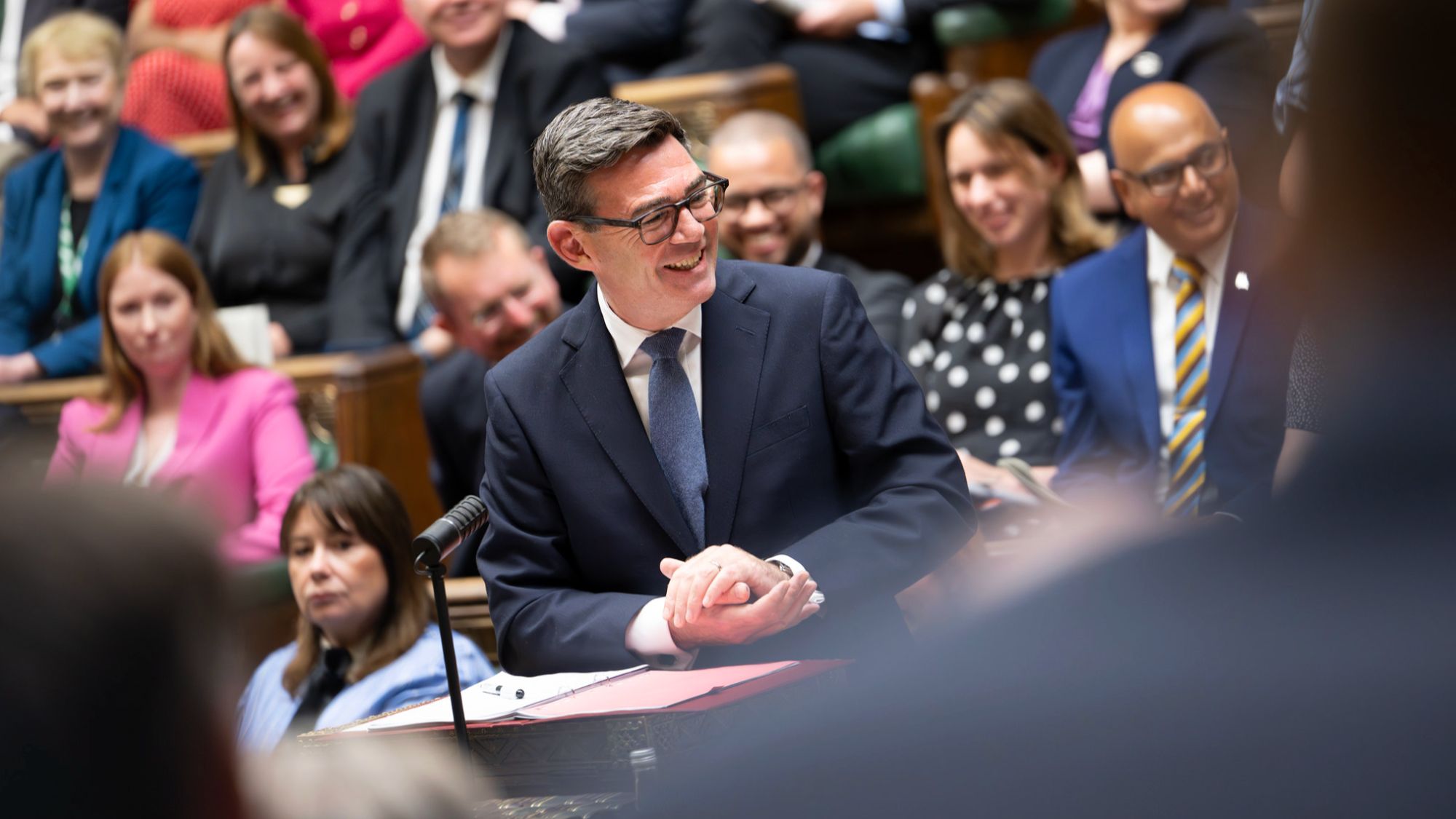
    Burnham moves to reassure markets ahead of Budget

    What happened
    Andy Burnham has sought to calm investors after a sharp rise in UK government borrowing costs that is threatening to squeeze his government’s room to manoeuvre ahead of its first Budget. At yesterday’s Prime Minister’s Questions, Burnham said decisions would be “grounded in fiscal responsibility” and promised that October’s Budget would “stick to the fiscal rules”.

    The comments followed a turbulent period for government debt markets, with the yield on 10-year UK borrowing reaching 5.29% – its highest point since 2008 – before falling back.

    Who said what
    Kemi Badenoch accused Burnham of agreeing to every spending demand, saying: “A prime minister needs to be a leader, not a people pleaser.” And yet his first PMQs “showed a leader who wants to please – but knows how to push back”, said Peter Walker in The Guardian. Mostly, the new PM “simply ignored the attacks, setting out a pledge – dismissed by Badenoch as mere ‘vibes’ – to restore the nation’s ‘sense of positivity, a sense of possibility’”.

    However, the “bond market crisis means Burnham may need to cut, not spend”, said Tim Wallace in The Telegraph. Ahead of his Budget the prime minister “must find a path to reduce borrowing costs”.

    What next?
    Chancellor John Healey will present his budget on 28 October, with higher borrowing costs potentially slicing deeply into the financial buffer available under Labour’s fiscal rules. He is also expected to address increased defence spending and measures aimed at reducing household costs.


    today’s international story

    Iran vows to unleash cyberattacks on US

    What happened
    Iran has threatened to retaliate against the US with cyberattacks that target its foe’s energy, water and telecommunications networks as fighting between the two countries again intensifies. A hacking group linked to Iran warned of “unexpected and critical events” for American communities, although recent attempts to penetrate infrastructure systems have largely failed. US authorities have already investigated attacks on water facilities in several states.

    The threats came as Iran launched missiles and drones at US military positions across the Middle East following American strikes aimed at securing the passage of shipping through the Strait of Hormuz.

    Who said what
    Donald Trump said he would pursue the conflict regardless of November’s mid-term elections, telling reporters: “I’m not affected by the elections.”

    But “Trump doesn’t understand the forever war he’s created with Iran”, said Sam Kiley in The Independent. In concert with Moscow, Tehran’s “long-term intent is to expose the limits of current US power and further weaken its influence across the Middle East”.

    In his “on-again, off-again” war, the US president has “returned to a familiar playbook”, said Erica L. Green in The New York Times. He “went from boasting that Iran was defeated militarily, a ‘failed nation’ in economic disarray, to threatening an apocalyptic attack that would leave ‘very little left’ of the country after it had defied his declarations and demands”.

    What next?
    US cybersecurity officials have urged infrastructure operators to strengthen their defences against hackers.


    Today’s travel story

    Fake No. 10 listing exposes Booking.com failings

    What happened
    Booking.com has been accused of being “unfit” for purpose after the watchdog Which? said it was able to create a bogus rental listing for 10 Downing Street.

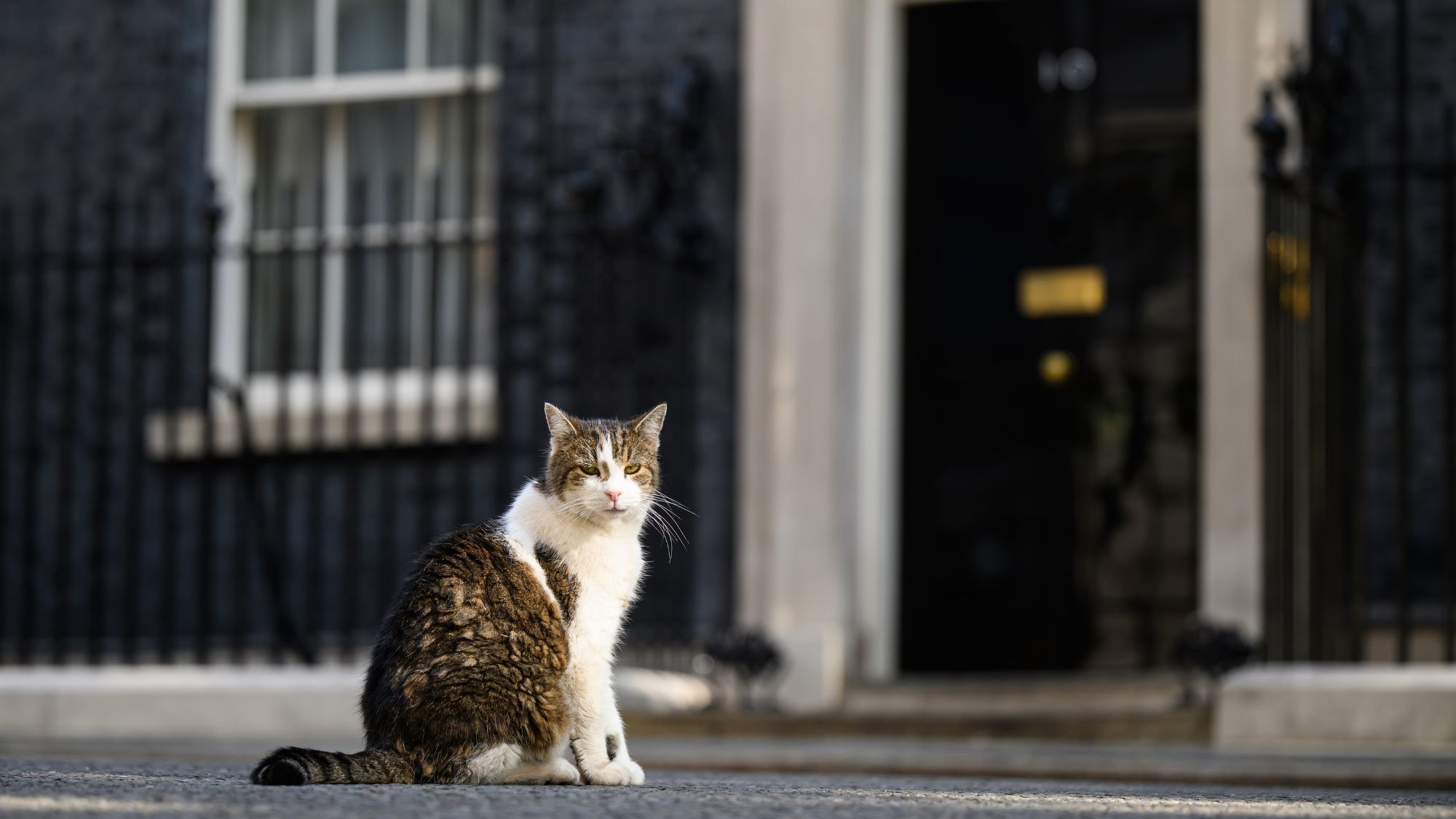
    On June 18, Which? listed a property on the travel site headlined “1 bedroom apartment in the heart of London” – with the exact address and a picture of the prime minister’s home. Which? Travel researchers then tested a reservation for a week at the end of July. They “also added a fake review for the property, mentioning how much they had liked hanging out with Larry the Cat, who lives in 10 Downing Street with the prime minister”, said The Times.

    Who said what
    Rory Boland, editor of Which? Travel, said: “If Booking.com’s so-called sophisticated AI systems can’t spot that 10 Downing Street is not a holiday rental, then it’s no wonder scammers can exploit the platform so easily.”

    A spokesperson for Booking.com said the “limited test” was not a “true reflection of the experience of millions of listings or reviews published on our platform”, adding that because the fake 10 Downing Street listing “was not open and bookable”, its automatic fraud controls were not triggered to remove it.

    What next?
    Booking.com claimed that protocols successfully used AI to spot fake listings and remove them. Meanwhile, Which? said more should be done to force booking sites to swiftly remove false listings under the Online Safety Act.


    It’s not all bad

    Scientists have spotted a tantalising particle in the world’s largest dark matter detector, potentially opening a new window to the mysterious material thought to make up 85% of the universe’s matter. It is far too early to call it a discovery, but the unusual high-energy signal could help physicists rule out existing theories and point towards new ones. The researchers at the LUX-ZEPLIN (LZ) collaboration, an international team of about 250 scientists and engineers from 39 institutions, hope that understanding dark matter could ultimately transform our understanding of the universe – and lead to discoveries that benefit us all.


    under the radar

    Scientists turn plastic bottles into cookies

    The sweet treat of the future could be plastic. Scientists have found a way to transform plastic waste, along with other food additives and ingredients, into edible cookies. The method could combat refuse accumulation and provide sustenance in remote areas or disaster zones – maybe even in space some day. However, many people are understandably unsure about eating plastic and there’s a long road ahead before the cookies can hit shelves.

    According to research that was presented at the autumn meeting of the American Chemical Society (ACS), scientists have “programmed yeasts to turn plastic and agricultural waste into edible proteins and flavoring molecules”, creating a treat dubbed µBites (micro bites), said an ACS news release.

    Polyethylene terephthalate, or PET, from plastic bottles and “discarded sweet corn plant stalks and leaves” were put through a process called “oxidative hydrothermal dissolution”, which “uses heat to break down the materials into components that microbes can digest”, said New Scientist. The components are “fed to yeast that has been genetically altered using CRISPR gene-editing technology”, allowing it to “convert the components into a variety of useful ingredients, including proteins, fats and acids, as well as vanilla flavouring and beta-carotene, which the body can convert into vitamin A”. Then “fibre, starch and sweetener are added, and the paste is extruded through a 3D printer into any desired shape”. Thus µBites are produced.

    Rather than becoming a mainstream treat, the “µBites system is a tunable and portable device that integrates all necessary components” that could be “deployed in submarines or disaster relief vehicles to produce on-demand, on-site food”, Lahiru Jayakody, a microbiologist at Southern Illinois University Carbondale who worked on the study, told ScienceAlert. The process is also “particularly suited for using carbon waste in extreme environments such as deserts, the Arctic or the Antarctic to make food”, and potentially even “on Mars or the lunar surface”.


    on this day

    3 September 301

    San Marino, one of the smallest nations in the world and the oldest republic still in existence, was founded by Saint Marinus. Last month Pope Leo XIV made a pastoral visit to the country, becoming only the third pontiff to visit it after Pope Benedict XVI and Saint John Paul II.


    Today’s newspapers

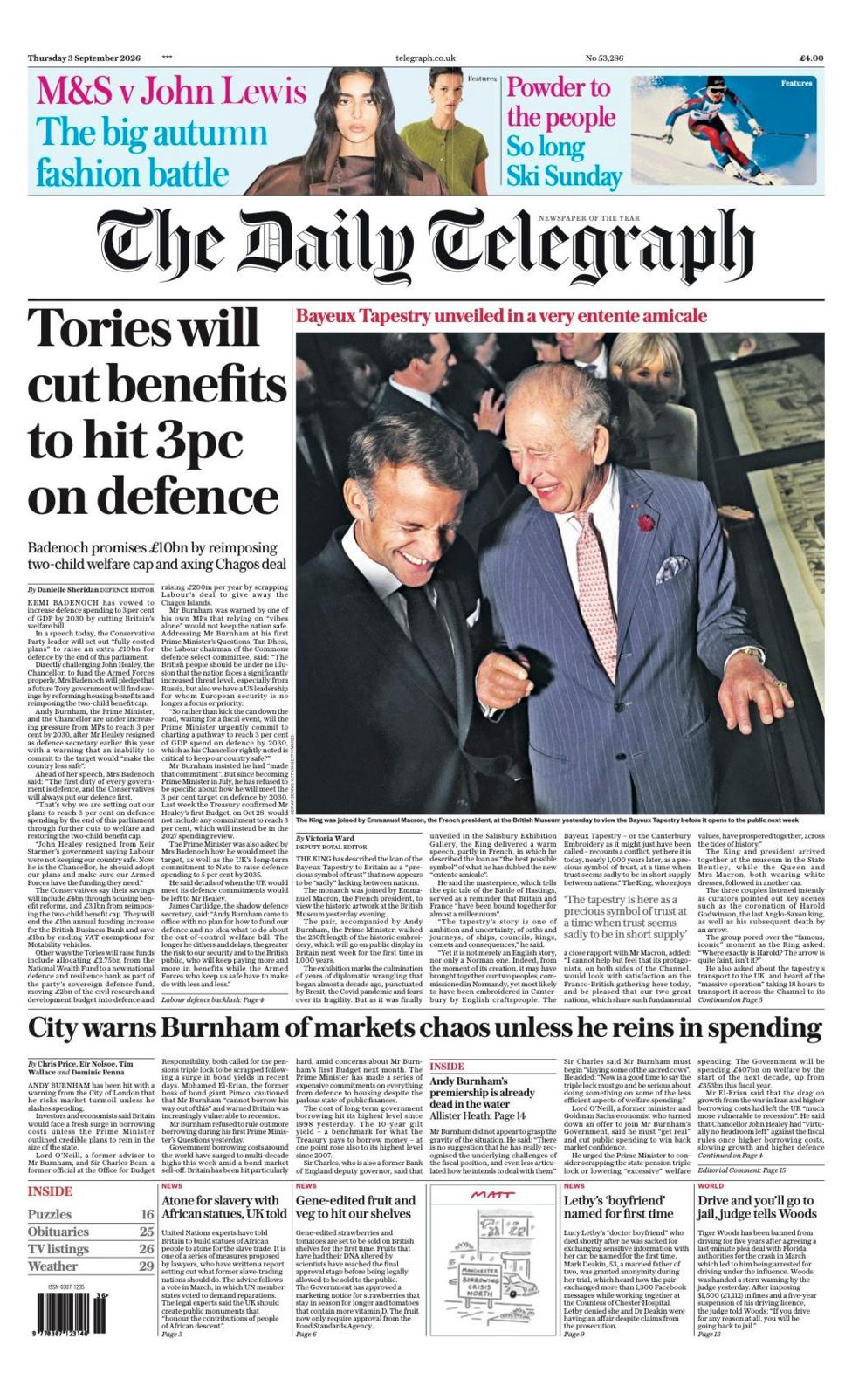
    ‘Benefits cut’

    “Tories will cut benefits to hit 3% on defence”, says The Telegraph. “Britain’s royals face Russian cyber threat in ‘grey war’”, The i Paper says. “PM tried to calm bond markets as sell-off threatens first budget”, says The Guardian. “One in the eye for Andy”, says The Sun, after a meeting between Andy Burnham and Emmanuel Macron at the British Museum. Nigel Farage is a “right whinger”, says The Mirror.

    See the newspaper front pages


    tall tale

    Spin me round (like a record)

    It all comes out in the wash, or at least it certainly does for the latest K-Pop girl group AI-Dol. The five-member virtual girl group from LG Electronics breaks with the traditional K-pop roles of vocals, dance and rap. Instead, each member takes on a role inspired by a key washer-dryer feature – from large capacity and all-in-one washing and drying to artificial intelligence-powered laundry sensing. Sadly, the fun doesn’t stop there as the group has released its own song, “I Wash”, a funky electronic number designed to evoke the washing machine. The track repeatedly drops the product name into its hook alongside laundry-themed lyrics such as “wash and spin”.


    Morning Report was written and edited by Arion McNicoll, Jamie Timson, Devika Rao, Ross Couzens and Chas Newkey-Burden.

    Image credits, from top: House of Commons; Jakub Porzycki / NurPhoto / Getty Images; Leon Neal / Getty Images; Iryna Veklich / Getty Images.

    Morning Report and Evening Review were named Newsletter of the Year at the Publisher Newsletter Awards 2025
     

    Recent editions

    • Morning Report

      USPS ballot tool draws whistleblower warning

    • Evening Review

      Russia tests NATO

    • Morning Report

      Army loses another leader

    VIEW ALL
    TheWeek
    • About Us
    • Contact Future's experts
    • Terms and Conditions
    • Privacy Policy
    • Cookie Policy
    • Advertise With Us
    • FAQ
    Add as a preferred source on Google Add as a preferred source on Google

    The Week is part of Future US Inc, an international media group and leading digital publisher. Visit our corporate site.

    © Future US, Inc. Full 7th Floor, 130 West 42nd Street, New York, NY 10036.