The Week The Week
flag of US
US
flag of UK
UK
https://cdn.mos.cms.futurecdn.net/flexiimages/jacafc5zvs1692883516.jpg

SUBSCRIBE & SAVE

Less than $3 per week

Sign in
  • View Profile
  • Sign out
  • The Explainer
  • The Week Recommends
  • Newsletters
  • Cartoons
  • From the Magazine
  • The Week Junior
  • Student Offers
  • More
    • Politics
    • World News
    • Business
    • Health
    • Science
    • Food & Drink
    • Travel
    • Culture
    • History
    • Personal Finance
    • Puzzles
    • Photos
    • The Blend
    • All Categories
  • Newsletter sign up Newsletter
  • WeekDay AM: 10 Things you need to know this morning
    The Falkland Islands, Steinem’s death, and cyborg cockroaches

     
    today’s INTERNATIONAL story

    Milei ramps up dispute over Falklands

    What happened
    Argentina’s President Javier Milei has said he will impose economic sanctions on firms that exploit oil close to the Falklands Islands. In a national address from the presidential palace in Buenos Aires, he said the Sea Lion oilfield, where a British and an Israeli firm are poised to begin exploration work, was a “clear and present danger”. The “winds of change” are in Argentina’s favour, he added, promising to speed up construction of a new naval base in the province nearest to the British overseas territory.

    Who said what
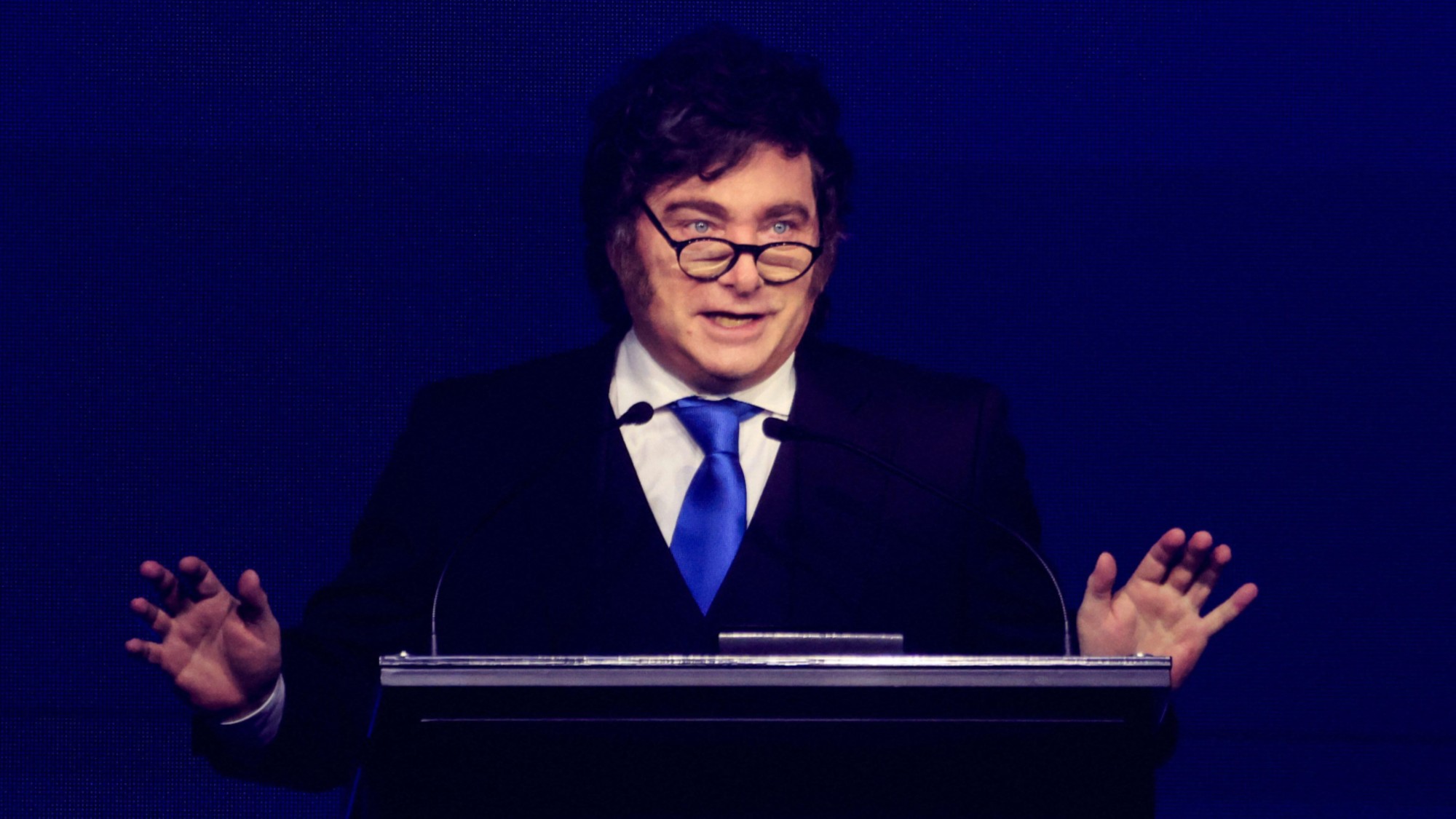
    Milei (pictured above) has been “emboldened by signs” that the US could rethink its “stance of neutrality” on the Falklands, said the BBC. When Donald Trump was asked in an interview with GB News yesterday if America would “come to the UK’s aid” in a territorial dispute, the US president said Britain had “not been there to help me” in the war against Iran.

    With Milei’s “poll numbers sinking”, he is “increasingly playing a long-trusted nationalist card”, said The Wall Street Journal. “Raising the Falklands is a well-tested playbook for Argentine leaders with problems.”

    What next?
    The “wild-haired” leader’s words have “firmly put the dispute right back at the centre of Argentine foreign policy” little more than a year before he seeks re-election, said The Times. His remarks “are sure to raise tensions” with both the authorities on the islands and the British government, said the Buenos Aires Times.


    today’s POLITICS story

    Badenoch hits out at Reform attacks on press

    What happened
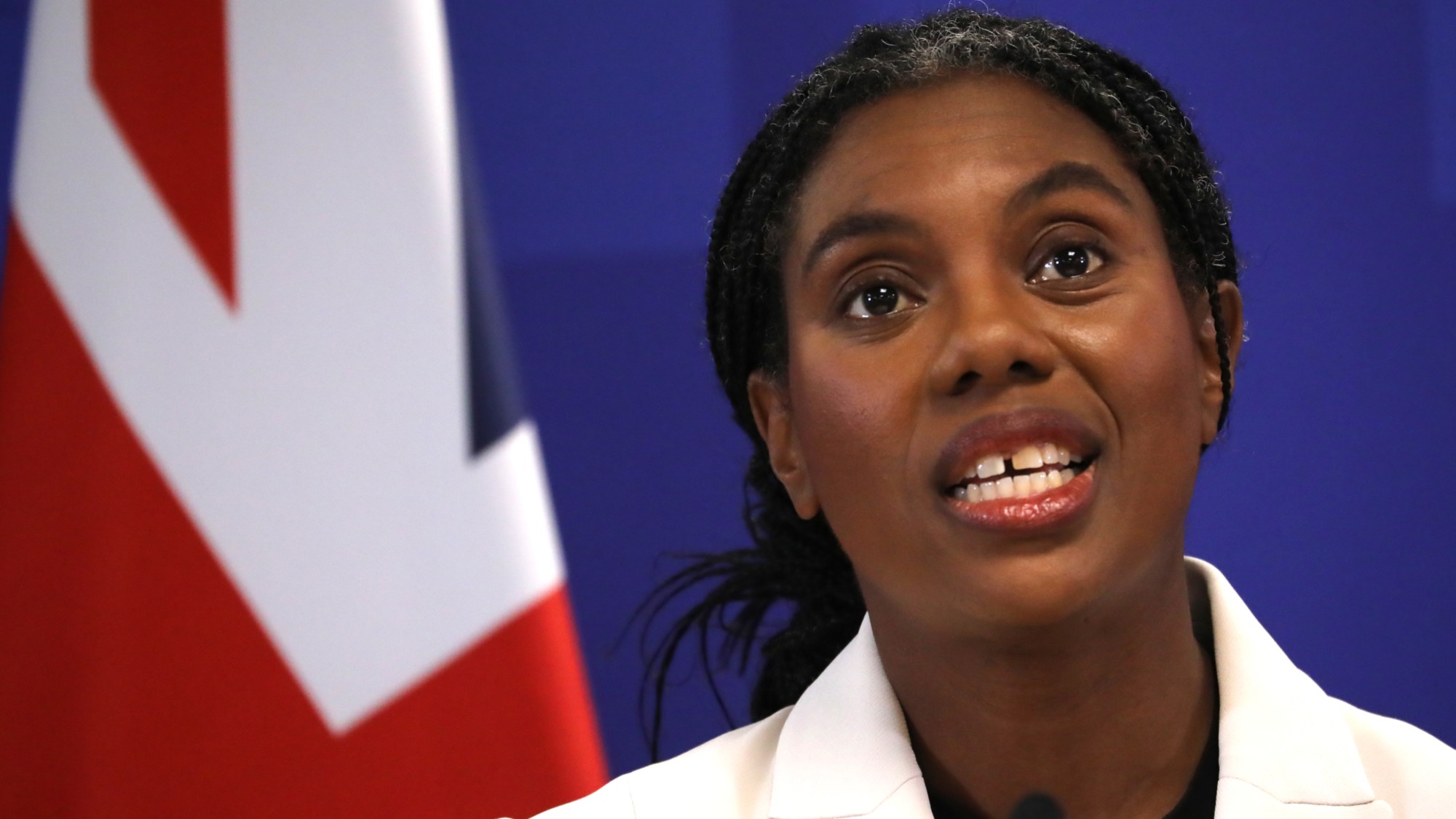
    Kemi Badenoch has condemned Reform UK’s “authoritarian” press bans, saying Nigel Farage shouldn’t be an MP if he “can’t handle difficult questions about his dodgy £5 million”. His party has refused accreditation for a number of reporters for its annual conference – which began yesterday in Birmingham – including the journalist who revealed the undeclared donation from crypto billionaire Christopher Harborne.

    Who said what
    Asked whether the Conservatives would ban reporters from their conference, the Tory leader replied “absolutely not”, adding that Conservatives believe in “a free press”. That might be “painful for us as politicians, but public scrutiny is part of the gig”.

    Yet “Badenoch has not always been comfortable with press scrutiny herself”, said The Guardian. As a minister in the last government she was criticised for her “aggressive response to journalists reporting on her”.

    Parties have “every right” to decide which journalists attend their conferences, wrote Michael Crick, author of an independent biography of Farage and one of the rejected applicants. “But to bar reporters who regularly embarrass them, or ask tough questions, looks thin-skinned, undemocratic and authoritarian.”

    What next?
    Reform’s conference ends tomorrow. The Parliamentary Standards Commissioner continues to investigate the £5 million donation. Farage maintains that there was no need to declare it.


    Today’s PEOPLE story

    Feminist trailblazer Steinem dies at 92

    What happened
    Gloria Steinem, the renowned writer and second-wave feminist activist, has passed away at the age of 92. Born in 1934 in Ohio, she began her career as a journalist in New York City and co-founded Ms. magazine, one of the first publications dedicated to women’s issues. She rose to prominence in the 1970s as a campaigner for women’s reproductive rights and the legalisation of abortion. Steinem also advocated for the legalisation of same-sex marriage and protested against the death penalty.

    Who said what
    Steinem died “peacefully at her home in New York City” on Tuesday, her foundation said in a statement posted on Instagram. “Gloria’s near-century on Earth were years well-lived, and she continued working for equality until the very end.”

    Her activism was “not without a backlash”, said the BBC, “from both men and women”. She was also criticised for an essay she wrote in 1977 on transgender people, but later “clarified her position”.

    She was “one of the architects of the entire structure of women’s equality”, Hillary Clinton told “CBS Mornings”. But “she was at heart an optimist”.

    What next?
    Steinem’s memoir, “An Unexpected Life”, is due out on 22 September.


    It’s not all bad

    An anonymous homeowner in Denmark has discovered the country’s biggest known Viking Age silver collection while building a terrace in their garden. About 700 silver objects were found underground, including bars, jewellery, coins and a small Thor’s hammer. “It should have just been a few hours of hard gardening work removing stubborn grass, stones and gravel for a new tiled terrace,” they said in a statement, “but it turned out to be the biggest surprise of my life.”


    under the radar

    Cyborg cockroaches are coming to the rescue

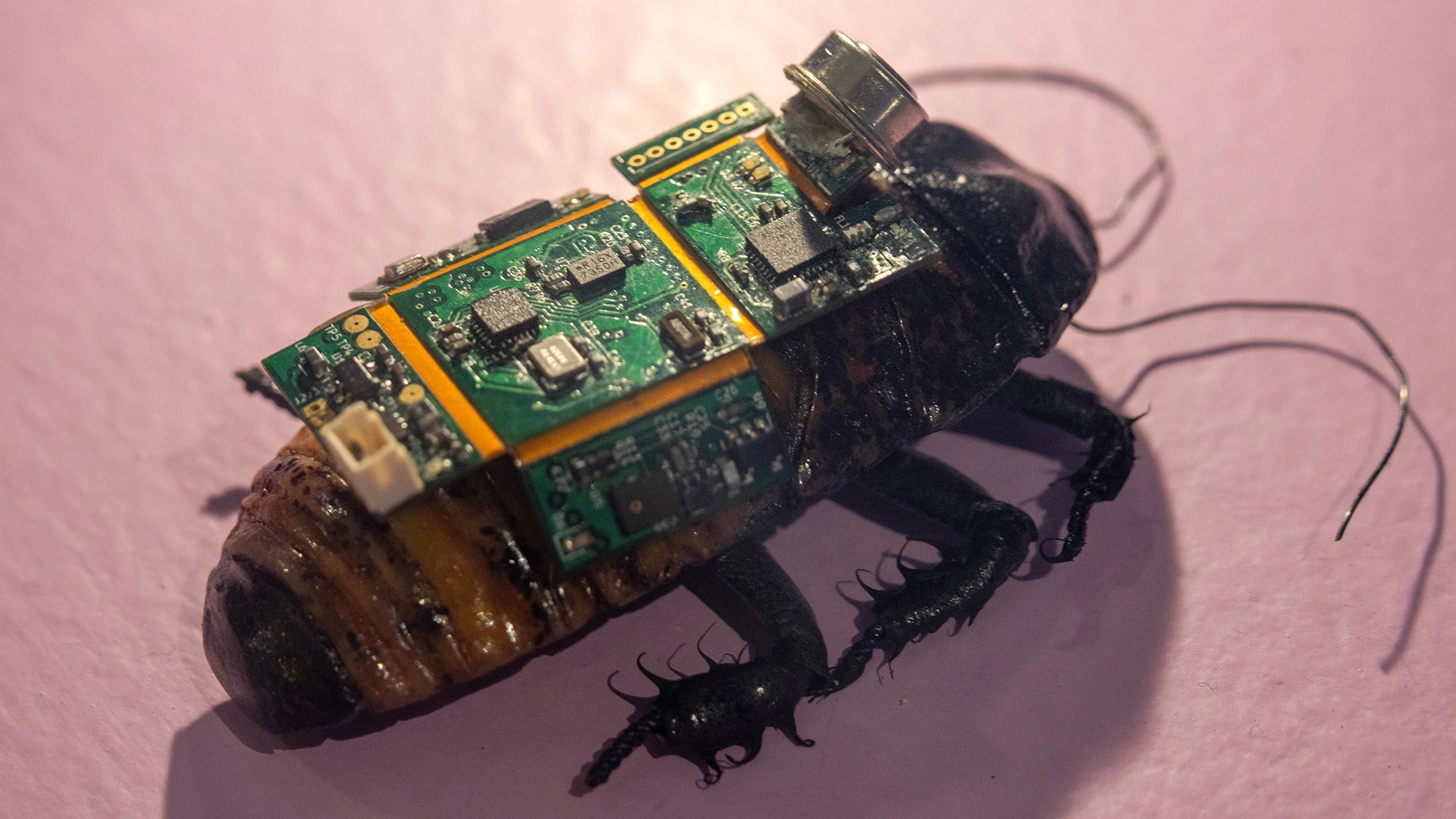
    Scientists have been training promising new search-and-rescue recruits: cockroaches equipped with robotic hardware.

    Biorobotics researchers from the University of Queensland and biomedical engineers at the University of New South Wales have been attaching cameras and tiny medical injectors to the insects in the hope that they could one day deliver emergency care to people stuck in hard-to-reach locations.

    These paramedic cyborg cockroaches, dubbed Paraborgs, “could deliver supervised emergency care to people trapped in collapsed buildings, caves or other places too dangerous for rescuers to reach”, said a press release about the study published in the journal Advanced Science.

    “A lot of people might not like the sight of a giant cockroach scurrying towards them,” said study co-author Hai Nhan Le. “But if you are trapped in rubble or stuck in a cave and need help, it could make a real difference between life and death.”

    To create the cyborgs, scientists fitted North Queensland giant burrowing cockroaches (Macropanesthia rhinoceros), the “heaviest cockroach species in the world that ​measures up to 3.3 inches, with backpacks containing syringe cylinders and cameras”, said Reuters. They anaesthetise the insect so they are immobilised and can’t feel anything before implanting an electrode into them so they can use an electrical signal to activate their nervous system.

    While the progress is promising, “one of the biggest engineering challenges was getting the cockroaches into the correct position for an injection”, according to Interesting Engineering. The good news is that the Paraborgs had a 95% success rate at performing close-range injections in proof-of-concept experiments.

    “Ethical guidelines for invertebrate research are not yet standardised,” added the study. Still, the cockroaches were “provided with a suitable living environment” and “decent nutrition”.


    on this day

    4 September 1888

    George Eastman patented the first roll film camera and registered the brand name “Kodak”. Last year Kodak overtook Fujifilm to become the most used film brand among photographers, according to the latest FilmFocus survey.


    Today’s newspapers

    ‘Foreign donations sting’

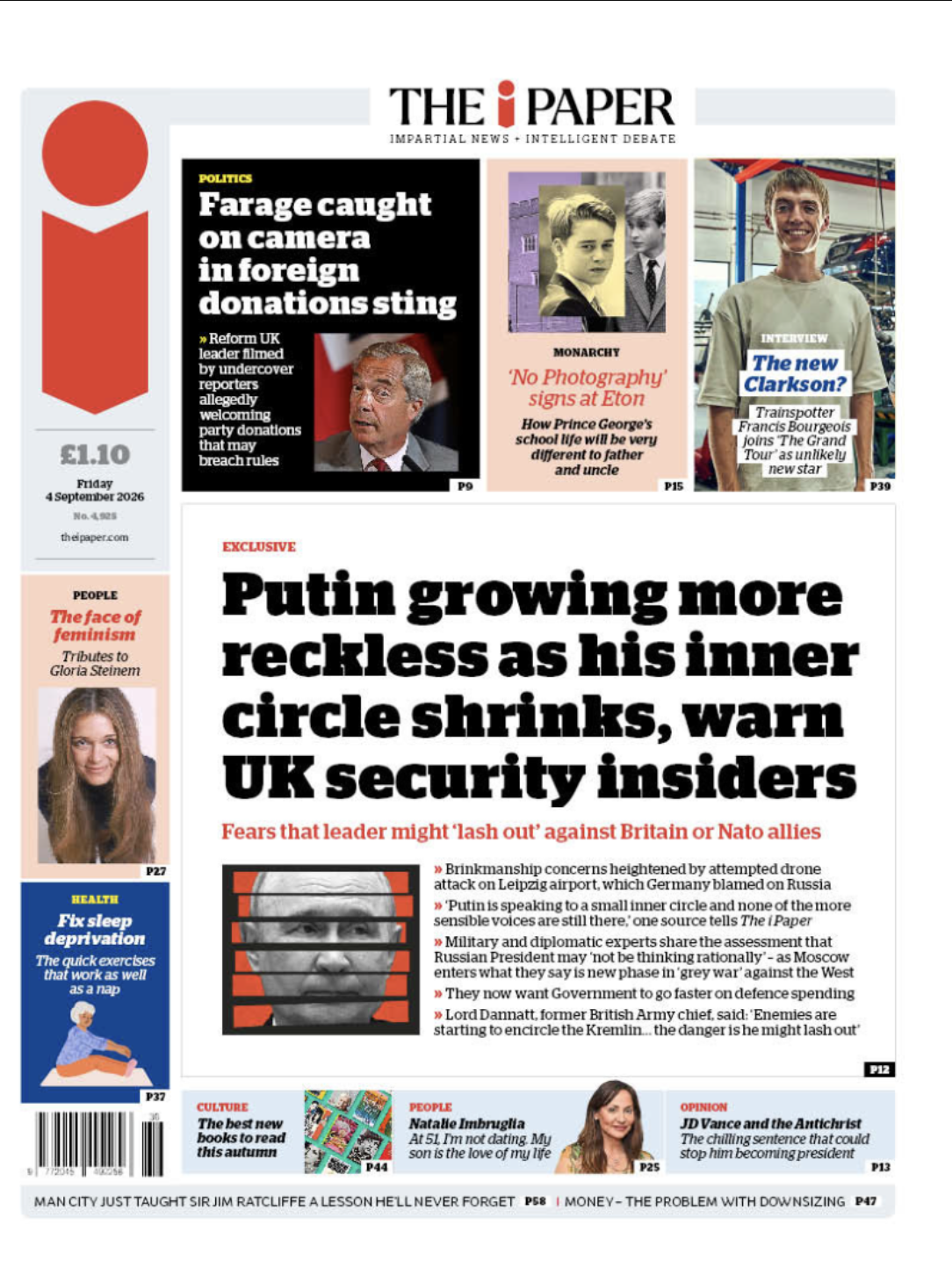
    Reform UK leader Nigel Farage “caught on camera in foreign donations sting”, says The i Paper’s front page. “Britons warned to get ready for biggest El Niño in a millennium”, reports The Guardian. “Argentina threat to Falklands oil fields”, says The Telegraph. The British Army has been “ordered to stop training to save cash”, reports The Times. “Ewedunnit?”, asks The Sun, after a “furious” Jeremy Clarkson said 11 sheep had been stolen from his farm.

    See the newspaper front pages


    tall tale

    More than a wee bit of damage

    Climbers on Everest are contributing to the melting of glaciers with their own urine. Urine is a significant heat source in its own right with climbers and guides drinking large volumes of water at altitude to avoid dehydration and producing an estimated 6,000 litres of urine a day in the process. Researchers from the Regional Environmental Change journal have estimated that this heat alone could melt about 154 tonnes of ice on the Khumbu Glacier over a single climbing season.


    Morning Report was written and edited by Hollie Clemence, Chas Newkey-Burden, Jamie Timson, Harriet Marsden, Devika Rao and Ross Couzens.

    Image credits, from top: Sipa US / Alamy Live News; Alishia Abodunde / Getty Images; John Olson / Getty Images; Tang Yan Song / Shutterstock.

    Morning Report and Evening Review were named Newsletter of the Year at the Publisher Newsletter Awards 2025
     

    Recent editions

    • Morning Report

      Trump enlists DHS in voter fraud crusade

    • Evening Review

      What will decide the midterms?

    • Morning Report

      USPS ballot tool draws whistleblower warning

    VIEW ALL
    TheWeek
    • About Us
    • Contact Future's experts
    • Terms and Conditions
    • Privacy Policy
    • Cookie Policy
    • Advertise With Us
    • FAQ
    Add as a preferred source on Google Add as a preferred source on Google

    The Week is part of Future US Inc, an international media group and leading digital publisher. Visit our corporate site.

    © Future US, Inc. Full 7th Floor, 130 West 42nd Street, New York, NY 10036.