The Week The Week
flag of US
US
flag of UK
UK
https://cdn.mos.cms.futurecdn.net/flexiimages/jacafc5zvs1692883516.jpg

SUBSCRIBE & SAVE

Less than $3 per week

Sign in
  • View Profile
  • Sign out
  • The Explainer
  • The Week Recommends
  • Newsletters
  • Cartoons
  • From the Magazine
  • The Week Junior
  • More
    • Politics
    • World News
    • Business
    • Health
    • Science
    • Food & Drink
    • Travel
    • Culture
    • History
    • Personal Finance
    • Puzzles
    • Photos
    • The Blend
    • All Categories
  • Newsletter sign up Newsletter
  • WeekDay AM: 10 Things you need to know this morning
    Airport misery, renewed fighting in Yemen, and a ‘royal slapdown’ from the King

     
    today’s aviation story

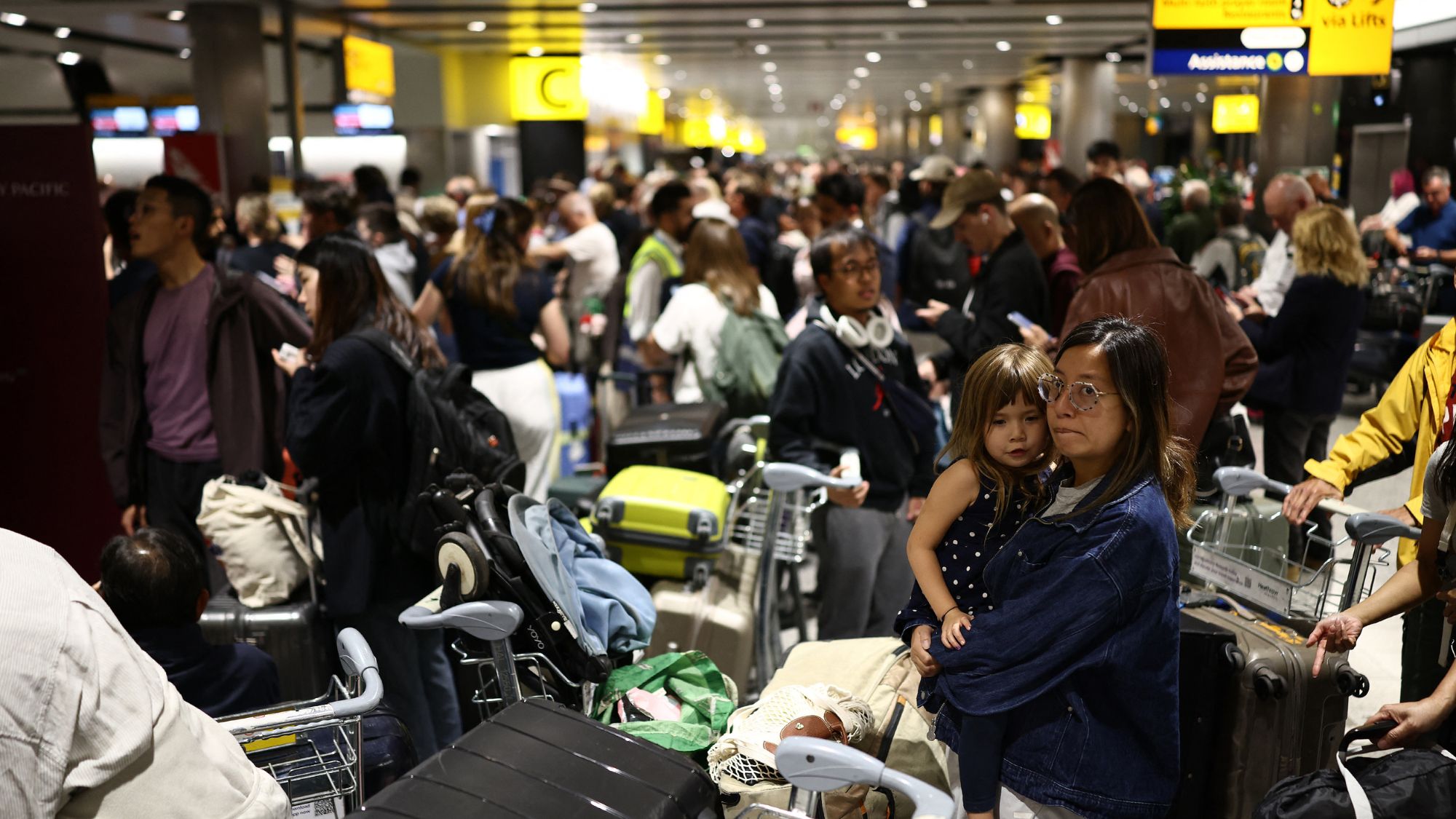
    Air traffic control fault throws flights into chaos

    What happened
    Hundreds of thousands of passengers faced lengthy delays and cancellations after a failure in Britain’s air traffic control system brought flights to a standstill yesterday.

    The disruption began at about 1pm and affected departures at major airports including Heathrow, Gatwick, Manchester and Birmingham. More than 600 flights had been cancelled by late afternoon, while the problems eventually spread to incoming aircraft right across southern England.

    Nats, which manages UK air traffic control, said engineers had identified the fault and introduced a solution nearly four hours after the outage began. However, disruptions continued well into the evening, with airlines warning of further problems today.

    Who said what
    British Airways said it had cancelled or diverted more than 100 services. Ryanair estimated that 65,000 passengers had been affected and called for Nats chief executive Martin Rolfe to go. Nigel Wicking, from Heathrow’s Airline Operators Committee, spoke of a “serious, challenging afternoon”.

    If you are affected, you should know your rights, said The Telegraph’s senior travel writer Greg Dickinson. “If your flight has been cancelled, your airline must offer you either a full refund or a seat on an alternative service.” They must also provide you with food and drink if you are delayed by more than three hours.

    What next?
    Airlines are warning that the flow-on effects will continue to impact today’s services. British Airways is offering affected passengers free rebooking until Friday as the aviation industry again demands changes to Nats.


    today’s international story

    Combat in Yemen spills over the border

    What happened
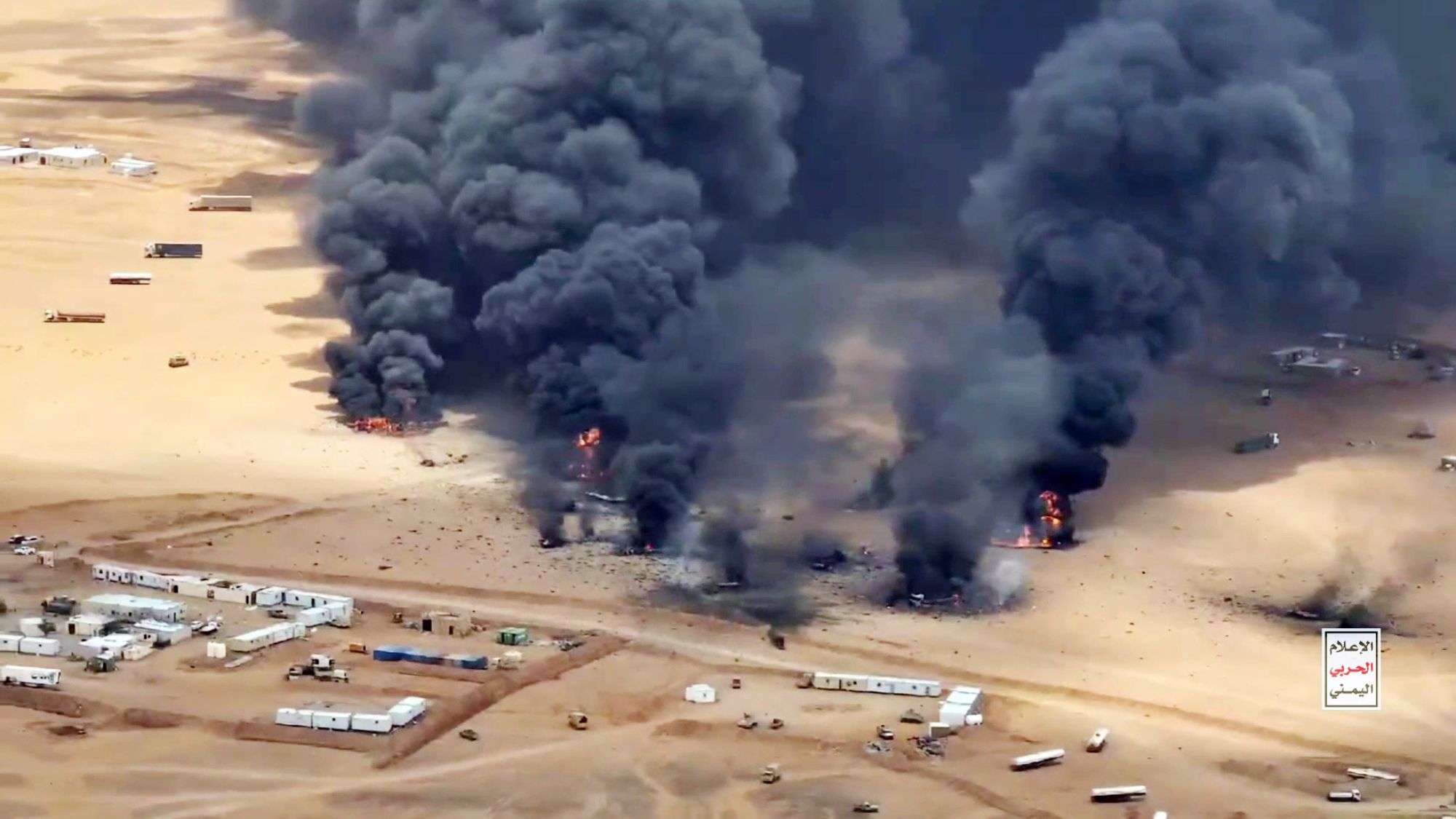
    The fighting in Yemen has intensified sharply, with Houthi forces launching strikes against targets in southern Saudi Arabia as government troops backed by Riyadh press on with their own offensive inside Yemen.

    Saudi authorities said attacks hit Abha, Khamis Mushait, Jazan and Najran, leaving at least 73 people injured. Fires were also reported at several energy and utility facilities. The Houthis said they had used drones and ballistic missiles to target Aramco infrastructure.

    The major escalation follows several days of clashes across Yemen, including government advances in al-Jawf, al-Bayda, Taiz and Hodeidah.

    Who said what
    Houthi spokesperson Yahya Saree described the strikes as retaliation for Saudi attacks on Houthi positions. The renewed hostilities are “the most serious since a United Nations-brokered truce halted large-scale fighting in 2022”, according to Al Jazeera’s Usaid Siddiqui. Saudi Arabia and the Houthis are “edging back to the brink of war”, said Qasim Nauman and Vivian Nereim in The New York Times.

    What next?
    Analysts warn that the conflict could further destabilise the Bab al-Mandeb shipping route. The strategic importance of the passage has increased due to Iran’s effective closure of the Strait of Hormuz.


    Today’s UK story

    Harry and Meghan receive ‘royal slapdown’ from King

    What happened
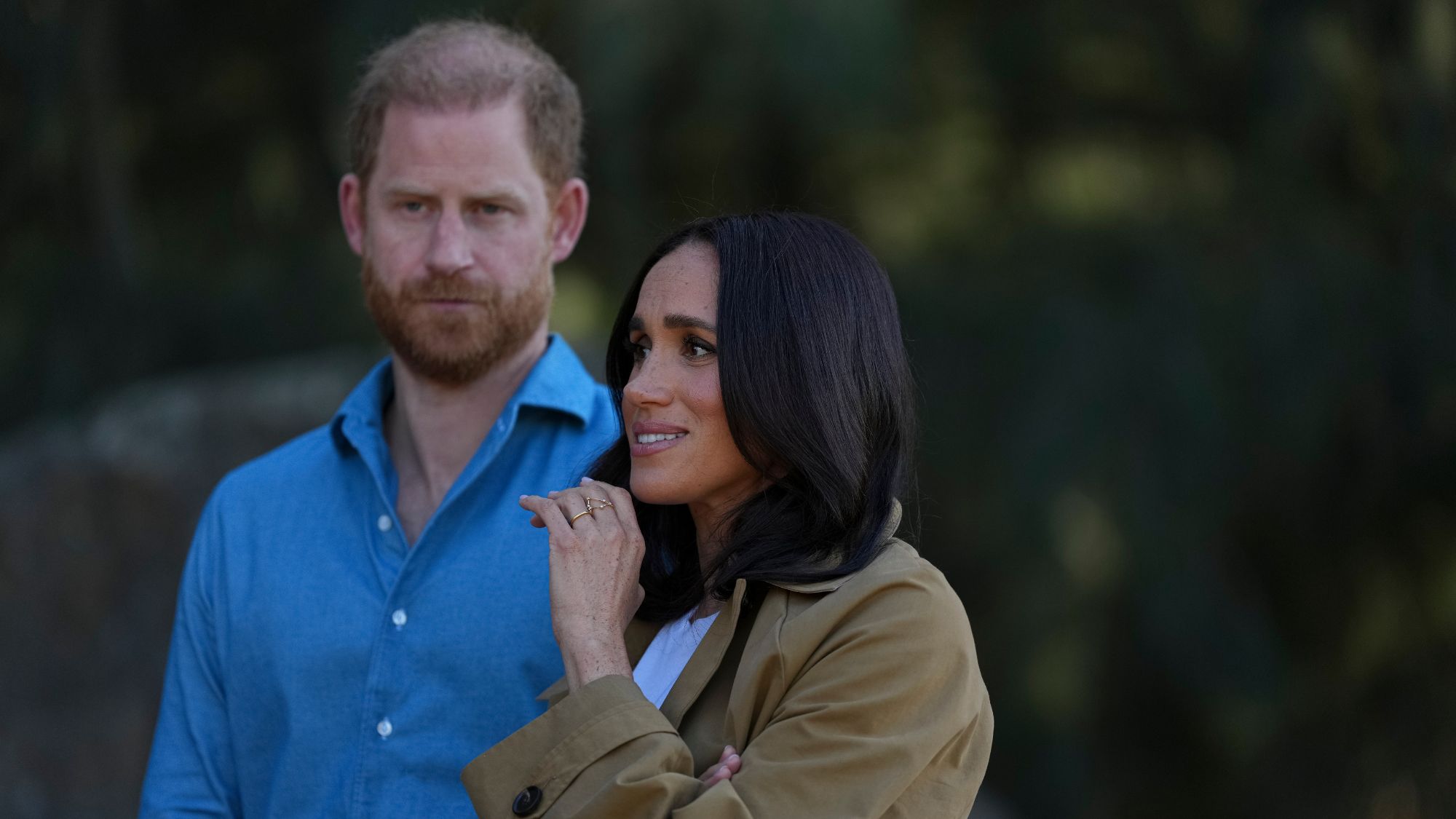
    The Duke and Duchess of Sussex were “surprised” to get a letter from Buckingham Palace stressing that they are no longer working royals and remain private citizens – unable to represent the sovereign – after their return to the UK.

    The missive was met with “some eyebrow-raising, to say the least, from the Sussexes”, said Sky News’s royal correspondent Laura Bundock.

    Who said what
    The King wanted the guidance issued to “help avoid doubt or confusion” about the Sussexes’ status, said Richard Benyon, the Lord Chamberlain. “In short, their position is akin to private citizens with commercial and charitable interests.”

    The letter felt like a “royal slapdown”, said royal commentator Jennie Bond. It “very pointedly” emphasised that they weren’t to use the HRH titles, “not even in a sneaky little Instagram post”. The situation “signals further bad blood” between the King and his youngest son.

    What next?
    The Executive Committee for the Protection of Royalty and Public Figures will meet this week to decide whether Harry and Meghan should be entitled to taxpayer-funded security.


    It’s not all bad

    England’s teenagers are outperforming their peers in most other countries across maths, reading and science, according to an international education study. While results declined across most Organisation for Economic Cooperation and Development nations, England’s scores remained steady, helping it break into the global top 10. Reading was a particular bright spot, with English pupils outperforming students in Australia, the US, Finland and France. Researchers said the results showed that England was bucking a wider decline in academic performance.


    under the radar

    The prince vs abortion reform

    Prince Alois of Liechtenstein is expected to veto an initiative passed by the country’s parliament that would legalise abortion during the first 12 weeks of pregnancy.

    Situated between Switzerland and Austria, Liechtenstein – the majority of whose roughly 42,000 citizens identify as Roman Catholic – has some of the most restrictive abortion laws in Europe. The tiny Alpine principality is also “one of the few places on earth where a royal family still reigns with real political power”, said The Australian Women’s Weekly. Unlike other European monarchies, the constitution allows the ruling prince to dismiss governments, appoint judges, call referendums and veto legislation.

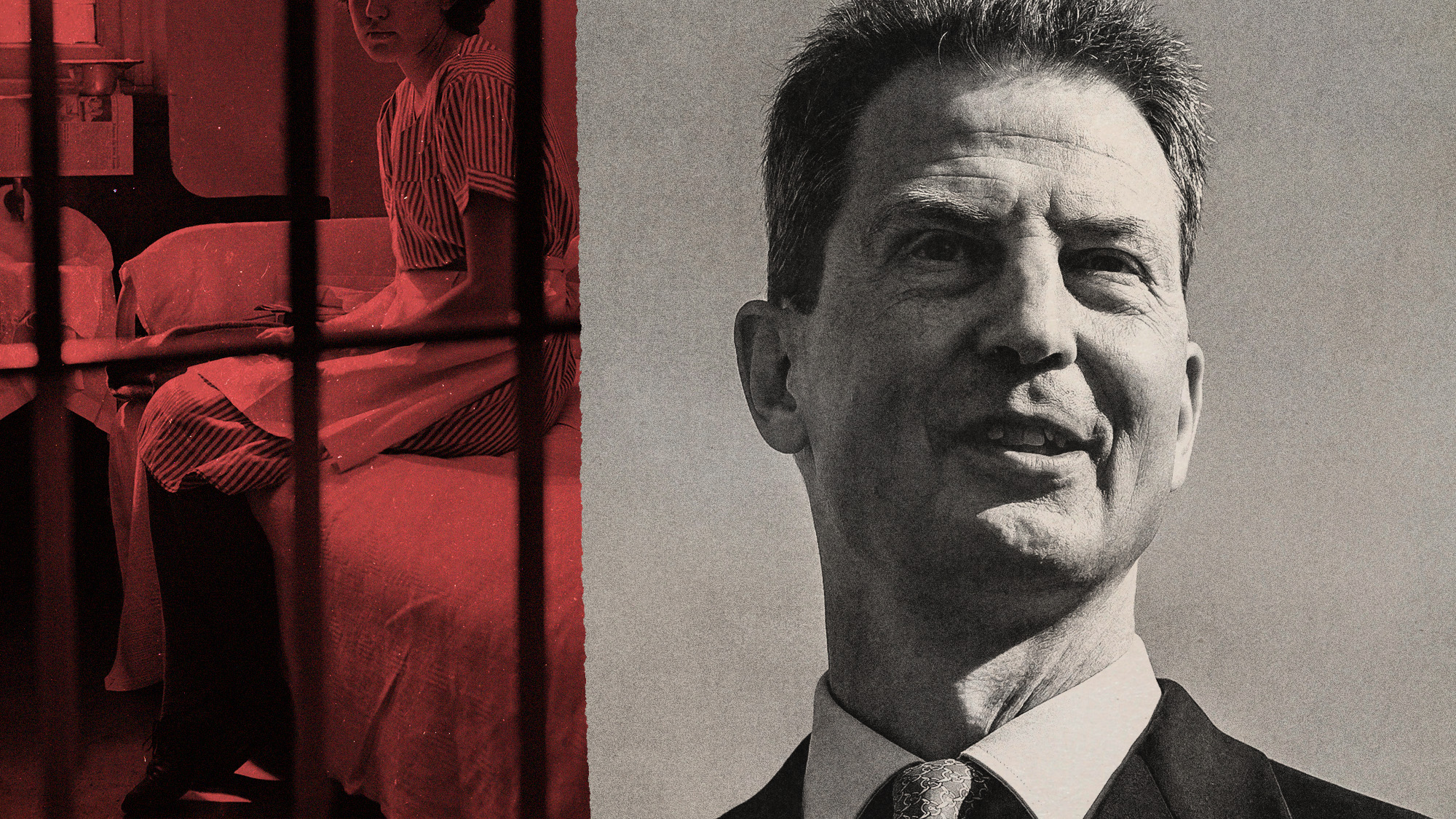
    Last week Liechtenstein’s parliament, the 25-seat Landtag, narrowly backed a citizens’ initiative that would legalise abortion during the first 12 weeks of pregnancy, by 13 votes to 12. However, the initiative is unlikely to become law given that Prince Alois (pictured above, right), who serves as regent for his father Prince Hans-Adam II, indicated to the Liechtensteiner Vaterland newspaper this year that he would veto any legislation of this kind, citing “the central legal interest of the protection of life”.

    The last time the abortion debate was put to a public vote back in 2011, the royal family also threatened to use its power of veto if the result did not go in its favour (the proposal was narrowly rejected by 52.3% of the electorate). Such a step “would have plunged our nation into a severe crisis”, said Gabriella Alvarez-Hummel, a campaigner from Liechtenstein focused on reproductive rights, in The Guardian. More than a decade on, “speaking out in favour of legalising abortion is regarded as speaking out against the monarchy”.


    on this day

    9 September 1947

    Engineers working on the Harvard Mark II computer removed a dead moth trapped inside a system relay, taping it into their log book with the entry: “First actual case of a bug being found.” The incident popularised the term “bug” as computing shorthand for glitches and programming errors.


    Today’s newspapers

    ‘Ethnic cleansing’

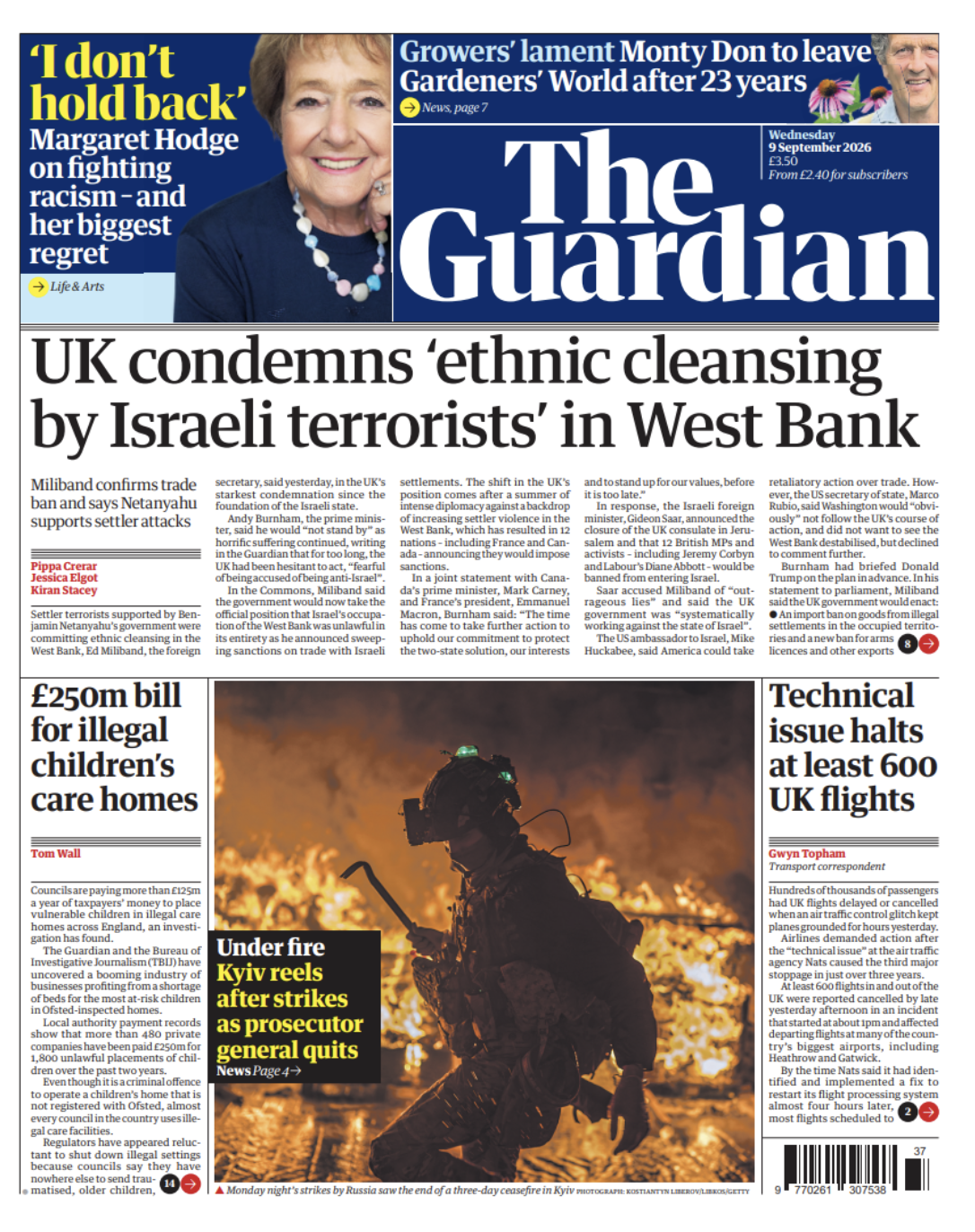
    The UK has condemned “ethnic cleansing by Israeli terrorists” in the West Bank, says The Guardian. Israel has reacted with “fury”, says The Times and Ed Miliband has been “accused of putting Jews” in the UK in “danger”, says the Daily Mail. There’s been “another flyin’ mess”, says The Sun, as “more than 1,000 flights were cancelled across the UK yesterday”. The Duke of Sussex and King Charles “have not spoken” since the prince returned to the UK, says The Mirror.

    See the newspaper front pages


    tall tale

    A grave honour

    Róbert Nagy and László Kiss have been named Hungary’s speediest gravediggers after excavating a perfectly sized burial pit in one hour and 21 minutes. The unusual contest is held every year by the Hungarian Association of Cemetery Maintainers and Operators to shine a light on the skills of the gravedigging trade. This year 19 two-person teams sweated it out for the title at a cemetery in Nyergesújfalu, northern Hungary, battling unusually dry ground after a long, hot summer.


    Morning Report was written and edited by Arion McNicoll, Rebecca Messina, Harriet Marsden, Ross Couzens and Chas Newkey-Burden, with illustrations by Julia Wytrazek.

    Image credits, from top: Henry Nicholls / AFP / Getty Images; Handout / Houthi Media Center / Getty Images; Asanka Ratnayake / Getty Images; Illustration by Julia Wytrazek / Getty Images.
     

    Recent editions

    • Morning Report

      US-Canada trade war ramps up

    • Sunday Shortlist

      A B movie with A-movie polish?

    • Saturday Wrap

      Dolly Parton’s unifying talent

    VIEW ALL
    TheWeek
    • About Us
    • Contact Future's experts
    • Terms and Conditions
    • Privacy Policy
    • Cookie Policy
    • Advertise With Us
    • FAQ
    Add as a preferred source on Google Add as a preferred source on Google

    The Week is part of Future US Inc, an international media group and leading digital publisher. Visit our corporate site.

    © Future US, Inc. Full 7th Floor, 130 West 42nd Street, New York, NY 10036.