The Week The Week
flag of US
US
flag of UK
UK
https://cdn.mos.cms.futurecdn.net/flexiimages/jacafc5zvs1692883516.jpg

SUBSCRIBE & SAVE

Less than $3 per week

Sign in
  • View Profile
  • Sign out
  • The Explainer
  • The Week Recommends
  • Newsletters
  • Cartoons
  • From the Magazine
  • The Week Junior
  • More
    • Politics
    • World News
    • Business
    • Health
    • Science
    • Food & Drink
    • Travel
    • Culture
    • History
    • Personal Finance
    • Puzzles
    • Photos
    • The Blend
    • All Categories
  • Newsletter sign up Newsletter
  • WeekDay AM: 10 Things you need to know this morning
    Huge Reform donations, banning fried school dinners, and Italy’s ‘Devil’s Island’

     
    today’s politics story

    Reform defends £72m in donations amid crackdown

    What happened
    Reform UK says it does not expect that it will have to repay the £72 million donated by cryptocurrency billionaires Ben Delo and Christopher Harborne despite government plans to tighten rules on political funding coming from British citizens living overseas. The pair each gave Reform £36 million within two days, setting a joint record for the biggest donation ever made to a UK political party. Both men have spent time abroad, but are understood to have returned to Britain. The government wants a £100,000 limit on overseas donations, applied retrospectively to contributions made since 25 March.

    Who said what
    The donations “amount to a huge show of force by Reform’s wealthy supporters” and will “turbocharge its attempts to build a party machine to rival the Conservatives and Labour”, said Gordon Rayner in The Telegraph.

    Reform economic spokesman Robert Jenrick said the donations were “entirely in line with the law” and suggested that the government was trying to make fundraising harder for his party. Housing Secretary Angela Rayner said people who fell foul of the new rules would “have to return that money”.

    Labour’s crackdown on Reform donations “is a bid to save democracy – and itself”, said David Maddox in The Independent.

    What next?
    The proposed restrictions are contained in legislation now before Parliament and could hinge on how ministers define UK residency. Reform is also facing scrutiny over alleged breaches of foreign funding rules while Nigel Farage is being investigated over whether he should have declared a prior £5 million gift from Harborne.


    today’s international story

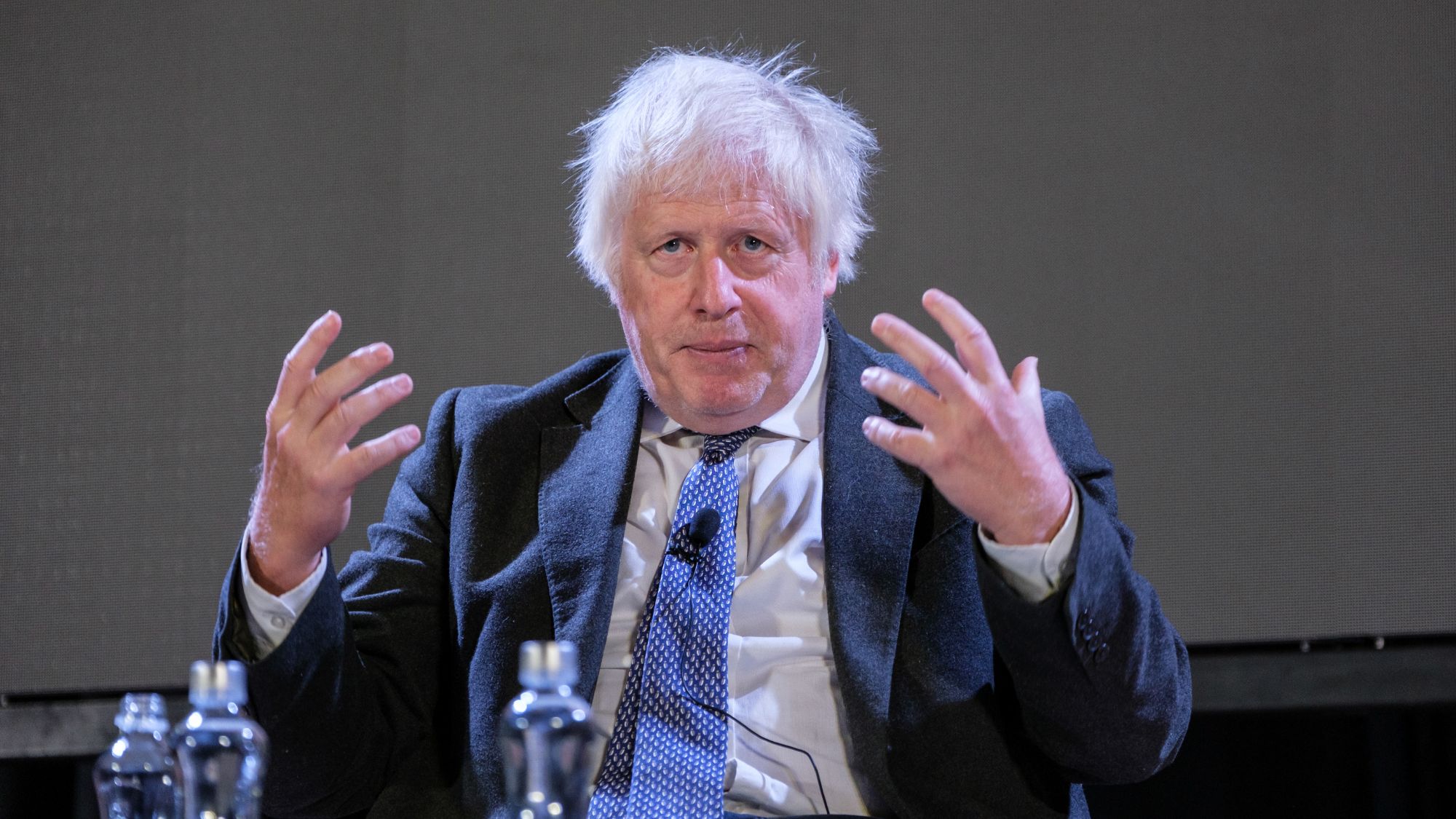
    Johnson furious over drone attack near his train

    What happened
    Boris Johnson has condemned a Russian drone strike on a passenger train near Ukraine’s border with Poland after his own train was placed on evacuation alert during the attack. The former prime minister was travelling from Kyiv to Poland after attending a security conference when guards woke him at 5am yesterday and told him to prepare to leave. The warning came after a train behind his was hit in Volyn, about 2km from the Polish border. None of the 206 passengers on the targeted train were injured.

    Who said what
    Johnson questioned what “warped logic” had prompted Russian President Vladimir Putin to attack a Ukrainian railway, describing the violence as “random and senseless”. He called for Kyiv’s allies to urgently provide Ukrainians with “the air defences they need”.

    Ukraine has made “repeated pleas to its allies – particularly the US – to provide more interceptors to defend against daily Russian attacks that increasingly use fast-moving ballistic missiles and jet-propelled drones”, said Jaroslav Lukiv on the BBC.

    What next?
    Poland scrambled military aircraft following the strikes, which have raised fresh concerns about Russian attacks approaching Nato territory. Despite the escalation, the Kremlin said three-way peace talks involving Russia, Ukraine and the US could still take place next month.


    Today’s health story

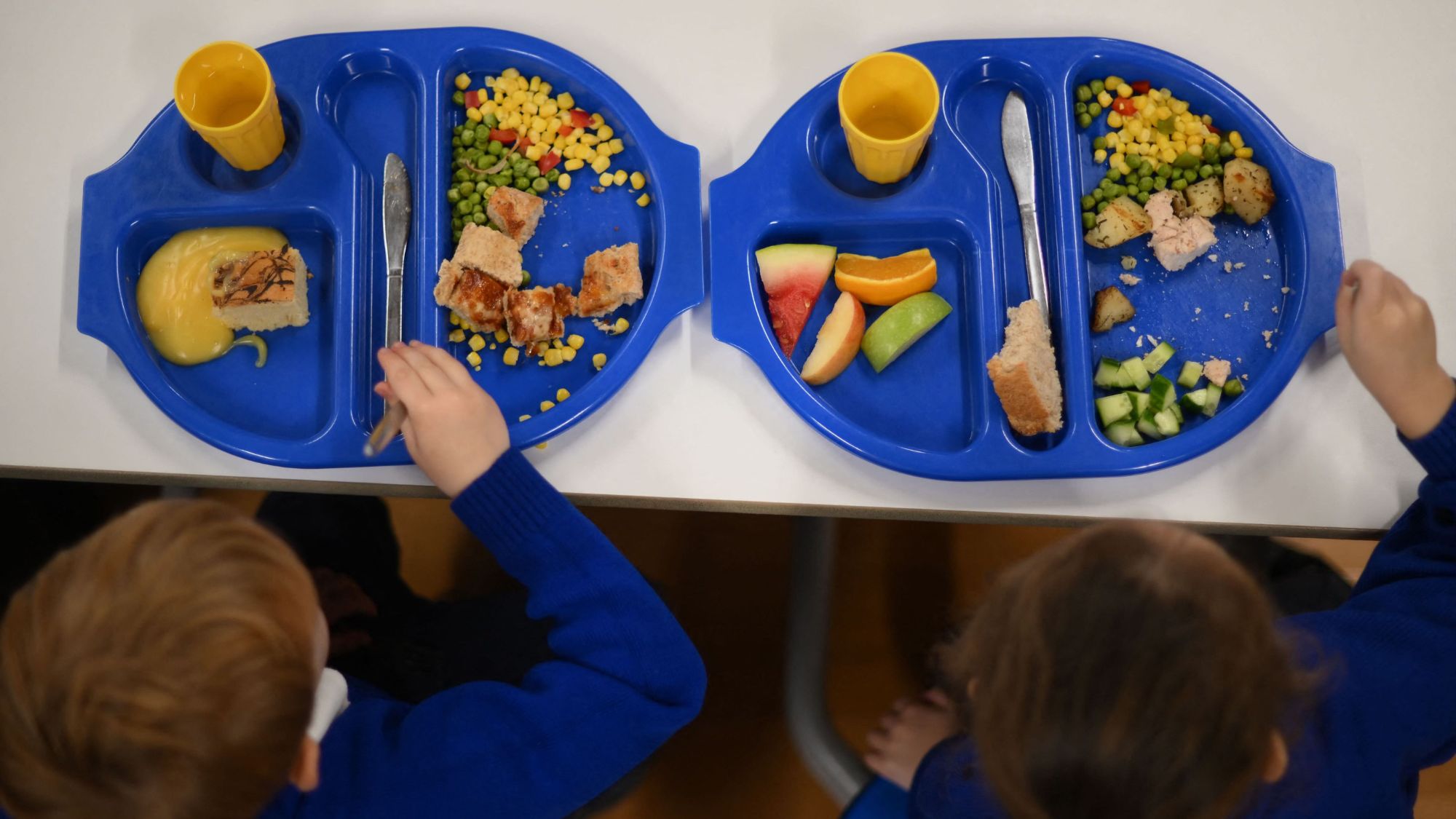
    England bans deep-fried school dinners

    What happened
    School meals in England are set for a huge overhaul, with schools required to serve more fruit, vegetables, fibre and whole grains while removing deep-fried food from their menus. From next year, cakes and other sweet puddings will be restricted to one serve a week in primary schools and offered just twice weekly in secondary schools, while processed meats such as sausages and chicken nuggets will be limited to a single serving each week. Every meal will also have to include fruit or vegetables.

    Who said what
    Education Secretary Lucy Powell described the new guidelines as “once-in-a-generation changes” that would improve children’s health and wellbeing. School leaders have welcomed the reforms, but warned against excessive enforcement.

    This is the “biggest overhaul of food standards in more than a decade”, said Geraldine Scott in The Times, and it addresses a major issue. The Department for Education reports that poor diets are causing significant health issues in young children, with one-third leaving primary school overweight or obese and sugar-driven tooth decay remaining the top cause of hospital admissions for five- to nine-year-olds.

    What next?
    The new standards will also cover breakfast clubs, which will face nutrition requirements for the first time. Pastries and fried eggs will be removed, while cereals will face limits on sugar and chocolate spread will be banned. Schools will have to publish their menus and food policies online, with monitoring arrangements to be developed with the Food Standards Agency.


    It’s not all bad

    Britain’s love affair with pickled onions is back on again, with potential benefits for both health and the environment. Some 8.5 million households bought pickled onions in the past year, while sales rose 12% in the latest 12-week period. Chefs are also embracing pickling as a way to use more of each ingredient and reduce food waste. Fermented foods such as kimchi and sauerkraut are enjoying a similar surge in popularity.


    under the radar

    Is Sardinia turning into Italy’s ‘Devil’s Island’

    The Italian government has “moved in a unilateral and arrogant way, treating Sardinia like the Cayenne of Italy”, said Alessandra Todde, governor of Sardinia.

    The official – referring to the former penal colony off the coast of French Guiana that was nicknamed “Devil’s Island” – has accused the government of ignoring her objections and not permitting her to be “involved in decisions that directly affect” Sardinia, said Il Sole 24 Ore.

    Last weekend 88 high-security prisoners arrived on the island, said The Times. They are among the “746 inmates held under Italy’s toughest solitary confinement rules”, taking Sardinia’s total to 183 – a quarter of the national total.

    Starting with protest flashpoints in February, Sardinians continue to oppose the prisoners’ relocation to the island, but one prison official told the newspaper: “We can’t send them to Sicily because many of them come from there in the first place.”

    Meanwhile, locals fear that as more of the high-security prisoners arrive, mafia clans could “move from mainland Italy to be near jailed relatives”, said The Independent.

    Sardinia already faces one of the country’s highest prisoner-to-inhabitant ratios and increasing that could strain services. Like much of southern Italy, Sardinia has a “fragile healthcare system and an ageing population”. Additionally, islanders face “higher inmate healthcare costs than in other parts of the country”. If a “mobster” in prison were to need hospital treatment, they would require an escort of “dozens of prison guards” and, in order to accommodate them and protect the public, authorities could be forced to “shut entire wards”.


    on this day

    14 September 1939

    The world’s first practical helicopter, the VS-300, designed by Igor Sikorsky, made a short tethered flight in Stratford, Connecticut. This week the US State Department announced a deal to sell four UH-60L Black Hawk helicopters and related equipment to Argentina for $140 million (£104 million) amid the country’s Falklands disagreement with the UK. They will be supplied by Sikorsky, a Lockheed Martin subsidiary, which provides Marine One helicopters to the White House.


    Today’s newspapers

    ‘Slave trade’

    The Guardian reveals the “true scale of Britain’s involvement in the slave trade”. “Bitcon”, says The Mirror, as the House of Lords prepares to debate the government’s donations bill, but Reform has “hit out” at the bid to stop record donations, says The Times. Donald Trump has rejected “industry calls” for a “brake on AI”, says The Times. He “fears” losing the race to China. Meanwhile, says The Telegraph, hospitality chiefs are urging the PM to “cut VAT”.

    See the newspaper front pages


    tall tale

    Marmots driven to drink

    A lust for car radiator fluid might be behind the arrival of a “mystery marmot” in San Francisco, according to UPI. The rodents are “famous” for “climbing inside car undercarriages, drinking radiator fluid, passing out and waking up in far away weird places”, said the Yggdrasil Urban Wildlife Rescue service, which is looking after the marmot. The creatures have a “missing electrolyte that they think is going to be satisfied by this radiator fluid”, but it “just makes them sick”, said a spokesperson.


    Morning Report was written and edited by Arion McNicoll, Will Barker, Ross Couzens and Chas Newkey-Burden, with illustrations by Julia Wytrazek.

    Image credits, from top: Anthony Devlin / Getty Images; Les Kasyanov / Global Images Ukraine / Getty Images; Daniel Leal / AFP / Getty Images; Illustration by Julia Wytrazek / Getty Images.
     

    Recent editions

    • Saturday Wrap

      A new forever war?

    • Evening Review

      Ukraine may be losing the war

    • Morning Report

      Supreme Court settles Missouri map fight

    VIEW ALL
    TheWeek
    • About Us
    • Contact Future's experts
    • Terms and Conditions
    • Privacy Policy
    • Cookie Policy
    • Advertise With Us
    • FAQ
    Add as a preferred source on Google Add as a preferred source on Google

    The Week is part of Future US Inc, an international media group and leading digital publisher. Visit our corporate site.

    © Future US, Inc. Full 7th Floor, 130 West 42nd Street, New York, NY 10036.