The Week US
flag of US
US
flag of UK
UK
https://cdn.mos.cms.futurecdn.net/flexiimages/jacafc5zvs1692883516.jpg

SUBSCRIBE & SAVE

Less than $3 per week

Sign in
  • View Profile
  • Sign out
  • The Explainer
  • The Week Recommends
  • Newsletters
  • Cartoons
  • From the Magazine
  • The Week Junior
  • More
    • Politics
    • World News
    • Business
    • Health
    • Science
    • Food & Drink
    • Travel
    • Culture
    • History
    • Personal Finance
    • Puzzles
    • Photos
    • The Blend
    • All Categories
  • Newsletter sign up Newsletter
  • The Week Evening Review
    Ukraine’s Starlink gap, Katie Zacharia’s ousting, and the leap second’s end

     
    TODAY’S BIG QUESTION

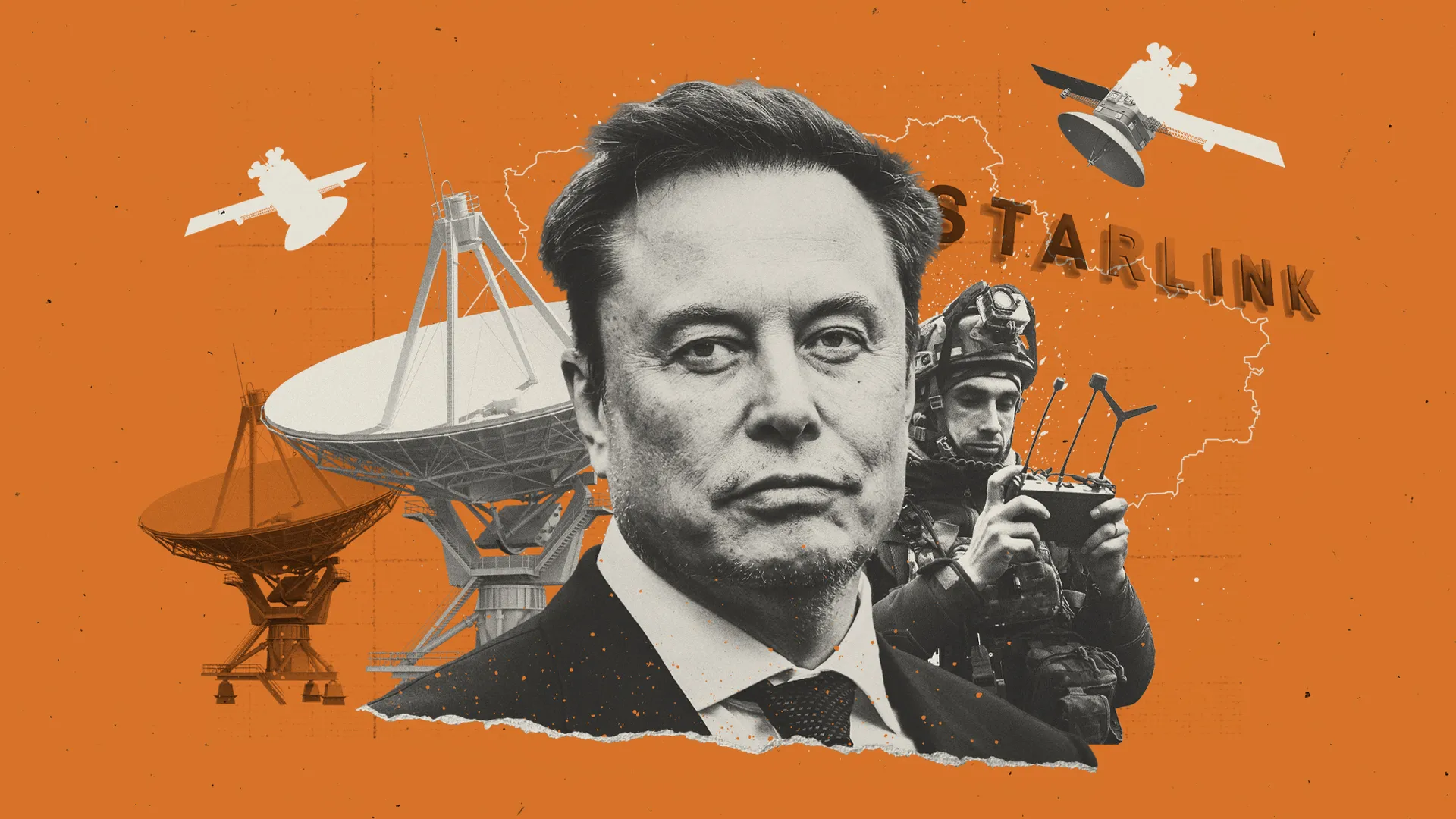
    Is Musk playing politics with Starlink?

    Ukrainian officials are scrambling to address the recent throttling of their crucial Starlink internet connectivity, a major engine of the country’s successful drone operations. While SpaceX CEO Elon Musk and President Donald Trump have blamed each other for directly ordering the outage, a growing number of European leaders see the incident as a worrying sign that Musk's products have undue influence in Ukraine’s theater of war and across the continent as a whole.

    What did the commentators say?
    Europe “must not leave it up” to Musk and Trump to “decide whether Ukraine will be able to defend itself or not,” said Renew Europe, the European Parliament’s liberal group, in a letter to European Union officials obtained by Euronews. This would mean using existing European satellites to “fill the gap” while pivoting away from Musk, said the outlet. The collective effort to respond to Musk comes as French Foreign Minister Jean-Noel Barrot accused the tech oligarch this month of using his X platform to “attempt to influence debate in European democracies,” said Le Monde.

    “Big man, are you playing politics with your products again?” said Polish Foreign Minister Radoslaw Sikorski in a message to Musk on X after Starlink’s latest disruption. “As your European customers, we are watching you.” 

    The minister’s “mocking address” recalled his 2025 clash with Musk, in which he explained that Poland provides millions of dollars for Ukraine’s Starlink access and would “seek another supplier if SpaceX proved unreliable,” said the Kyiv Post. “Be quiet, small man,” said Musk on X at the time, promising later that Starlink “will never turn off its terminals” in Ukraine or “use it ​as a bargaining chip.”

    What next?
    Even before this month’s throttling episode, European leaders were exploring ways to “strengthen collective satellite capacity” and wean themselves off Musk’s service, said Politico. The EU is now “aiming to give speedy antitrust approval” to a new satellite service “seen as the bloc’s answer to SpaceX,” said Bloomberg. The hope is to “help Europe cut its reliance on American satellite providers” while testing a “revamped EU approach” to creating “regional giants to compete with U.S. and Chinese rivals.”


    QUOTE OF THE DAY

    ‘Ohio State owes that boy a refund because he clearly didn’t get anything from his education there.’

    Michigan Democratic Senate candidate Abdul El-Sayed on CNN regarding JD Vance. The vice president had criticized El-Sayed for blaming the Iran war on the Trump administration and said the candidate had no solution.


    IN THE SPOTLIGHT

    What happened to Katie Zacharia?

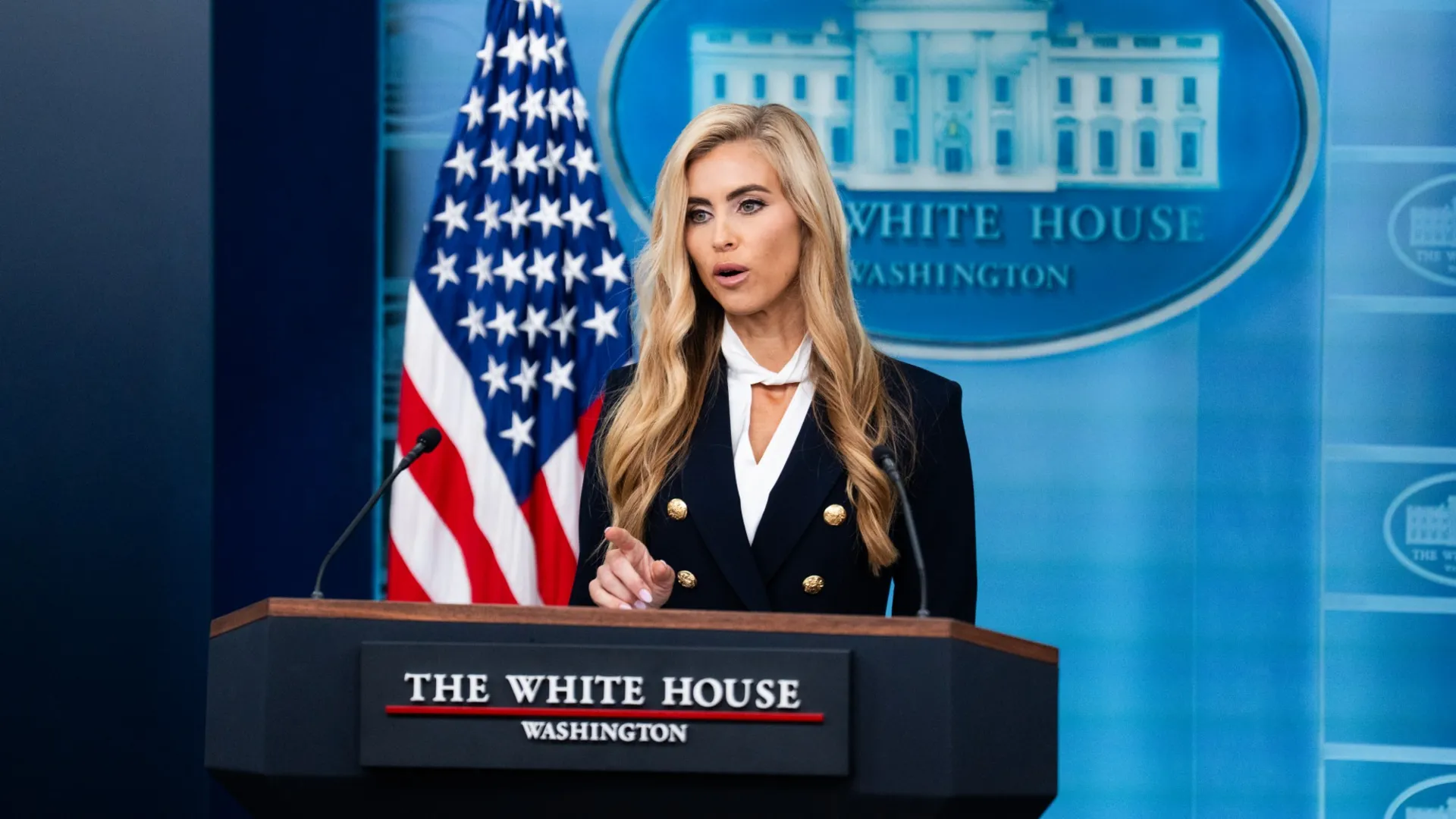
    The White House press briefing room briefly had a news boss. Katie Zacharia ended her tenure as President Donald Trump’s press secretary last week after just five days. And questions were immediately raised about the former television pundit’s qualifications for a position with an infamously high turnover rate.

    ‘Unimpressed’
    The 41-year-old graduate of California’s Pepperdine University appeared to garner favor with Trump after regular appearances on the conservative network Newsmax. But her eligibility for the role of press secretary became a topic of discussion after her first White House press briefing in which she spoke for only 14 minutes, read “pro-Trump talking points” and called on three reporters, said CNN. Fox News host Sean Hannity, among others, sounded “unimpressed with her performance and her answers.”

    Questions have surrounded Zacharia’s murky legal background. She has consistently described herself as a lawyer and did receive a law degree at Pepperdine. But there’s “no evidence that Zacharia ever passed a bar exam or has been admitted to practice law in any state,” said Judd Legum in his Popular Information newsletter. 

    She reportedly lives near Los Angeles but is not listed as an attorney with the State Bar of California. She told reporters she took the bar while living in China, but she “couldn’t have practiced law in China, because foreigners are forbidden to do so,” said The New Republic.

    ‘Even shorter’ than Scaramucci
    After Zacharia’s press conference and botched answers about her professional status, the writing seemed to be on the wall, despite the White House initially standing behind her. She “delivered a commanding inaugural press briefing,” the Trump administration first said in a statement. But five days after she took on the role, several news outlets confirmed that Trump parted ways with her. 

    Zacharia’s time as press secretary was the shortest in U.S. history and “even shorter than Anthony Scaramucci’s as White House communications director” during Trump’s first term, said NBC News. Scaramucci was in the role for just 11 days, and “his name became a descriptor for public officials whose terms were exceedingly brief.”


    Statistic of the day

    254: The number of unresolved IDF internal investigations into “incidents of harm” involving Israeli personnel since the start of the Gaza war, according to BBC Verify. Out of 300 cases involving alleged injuries or deaths, the outcomes of only 28 had been made public, while the statuses of another 18 were unclear.


    THE EXPLAINER

    Time’s up for the ‘leap second’

    The world’s timekeeping body had a gentle phase-out plan for the leap second, but Earth has been rotating unusually rapidly for the past decade. There’s a chance that before the phase-out in 2035 we would need a negative leap second — that is, deleting a second rather than adding one. This could create “mayhem in the digital time-stamped continuum,” said the Financial Times. So the governing body of the International Bureau of Weights and Measures has voted to condemn the leap second to an earlier grave and introduce a leap hour instead. This could take a “millennium or more” to accumulate, and by then life could be so different that there may be no need to adjust the lag at all.

    What are leap seconds?
    “For millennia, a day has been defined as one full rotation of the Earth,” said Vahe Peroomian, a USC physics and astronomy professor, at The Conversation. Ancient Egyptians were the first known civilization to divide day and night into 12 parts each, establishing the 24-hour day. Astronomers then built the system of minutes and seconds that, centuries later, devices such as pendulum clocks and quartz watches were able to measure.

    But because the speed of the Earth’s rotation can fluctuate, defining a second as a fraction of a solar day is imprecise. In 1967, the General Conference on Weights and Measures adopted a new definition of a second based on the steady oscillations of the cesium-133 atom. To keep this new Coordinated Universal Time (UTC) in sync with Earth’s rotation, timekeepers then invented the leap second in 1972.

    Once the lag between astronomical time and UTC reaches a certain point, a leap second is inserted to realign them. This has happened 27 times since 1972, with the most recent leap second inserted in 2016.

    Why are they being phased out?
    Leap seconds have become “increasingly difficult to deal with in the computer age,” said ABC News. They can disrupt computer operating systems, which assume a day is always 86,400 seconds long, resulting in glitches and outages. 

    The prospect of the first negative leap second posed an even greater risk. “Many computer programs assume all leap seconds are positive,” said Setnam Shemar, the U.K.’s principal timekeeping scientist, to the Financial Times. So removing a second could have resulted in a “major technology failure in telecommunications or electricity grid networks or satellite navigation systems.”


    Good day 👂

    … for a good ear. Focusing on how words sound, rather than vocabulary, may help you learn a language better, according to a study published in the American Psychological Association. The “most talented linguists hear foreign terms as random noise, not words,” said The Guardian.


    Bad day 📺

    … for a reality show. An AI agent has deleted the entire upcoming season, slated to air next month, of a Swedish reality show called “The Challenge Sverige,” according to the Swedish newspaper Aftonbladet. The error happened after production company Mastiff let AI agents into its servers. 


    Picture of the day

    A load of rubbish

    A dog costumed as a trash can rolls along New York City’s East Village at the 36th Annual Tompkins Square Halloween Dog Parade. Other costumes included odes to artist Yayoi Kusama, the movie “The Odyssey,” Bad Bunny’s Super Bowl performance, and this year’s winner, New York Knicks MVP Jalen Brunson inside a giant basketball.
    Kyle Stevens / Shutterstock


    Puzzles

    Daily sudoku

    Challenge yourself with The Week’s daily sudoku, part of our puzzles section, which also includes guess the number

    Play here


    The Week recommends

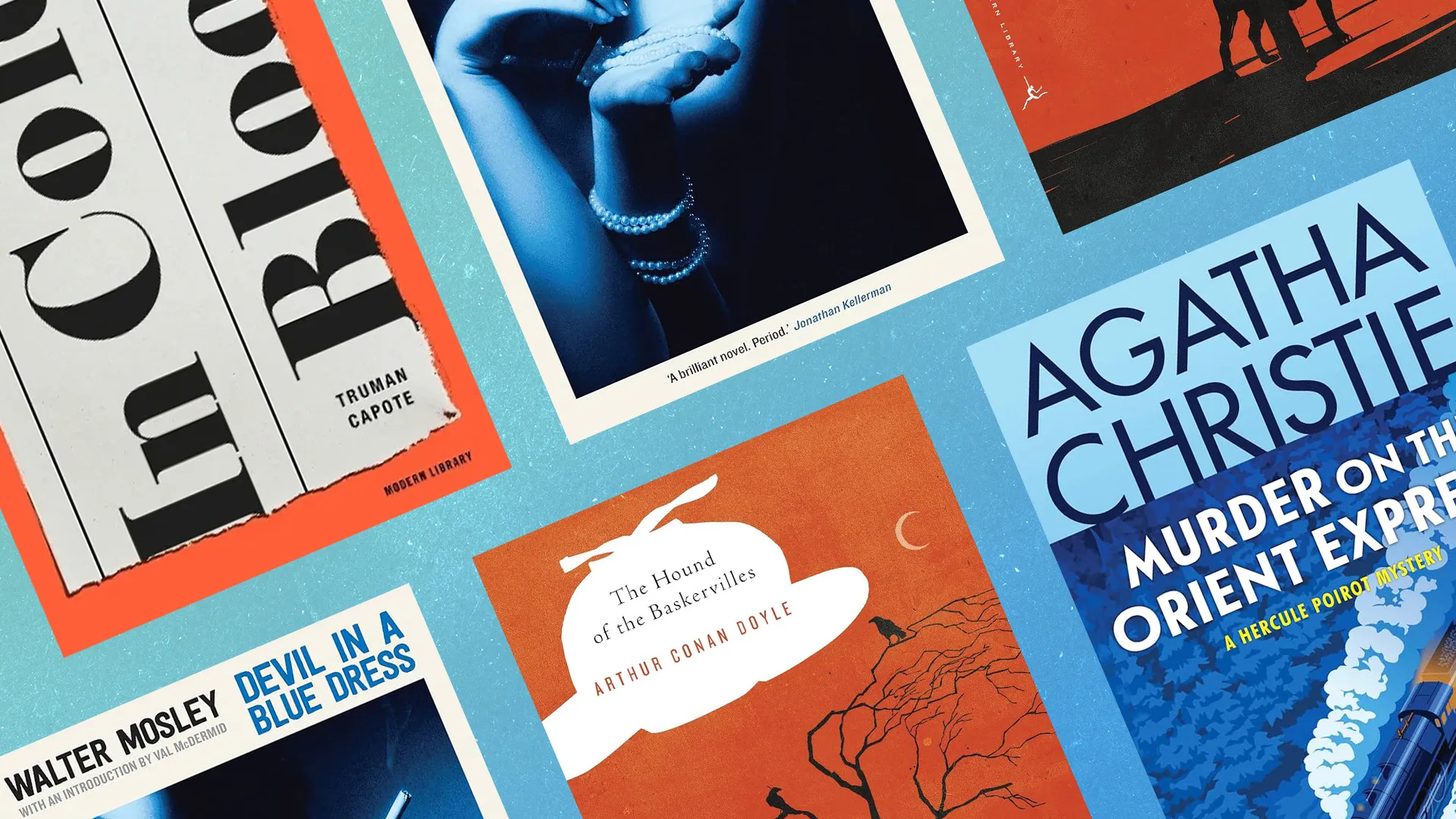
    The best mystery books ever written

    From the classic “whodunit” style to thrilling neonoirs, mystery novels have compelled readers to solve cases alongside detectives like Hercule Poirot. Here are the best, smartest and most revolutionary titles the genre has created.

    ‘The Hound of the Baskervilles’ (1902)
    A roundup of the best mystery novels of all time is “incomplete without mentioning Sir Arthur Conan Doyle’s work,” said Book Riot. Sherlock Holmes is one of the most “recognizable fictional detectives in pop culture.” His iconic novel follows the investigation of an “apparition of a monstrous dog” that purportedly “murdered Sir Charles Baskerville.” ($7, Penguin Random House)

    ‘Murder on the Orient Express’ (1934)
    Sticking all your characters in a “contained bubble” and “throwing away the key” is a great way to “create tension and intrigue,” said thriller writer Hank Phillippi Ryan at The New York Times. Agatha Christie did it with “great panache and sleight of hand.” ($19, HarperCollins)

    ‘In Cold Blood’ (1965)
    Truman Capote’s bestseller “pioneered a new classification of novels”: true crime, said A&E. Capote’s “groundbreaking real-life story” about a terrifying quadruple murder “effortlessly married” the “technique of colorful storytelling” with the “clarity and accuracy of journalism.” ($28, Penguin Random House)

    ‘Devil in a Blue Dress’ (1990)
    The first novel in the Easy Rawlins hardboiled detective series introduced the world to Walter Mosley’s neonoir classic’s World War II veteran protagonist. Strapped for cash, Rawlins accepts a murder case whose resolution necessitates bringing the “superficially submerged tensions” between “Black and white Americans” to the surface, said Time. ($19, Simon & Schuster)


    Poll watch

    Americans view four out of five major Cabinet departments worse than they did a year ago, according to a Gallup survey of 1,000 adults. The executive departments with Gallup’s lowest ratings are Defense (down 8 points to 40%), Homeland Security (down 6 points to 36%) and State (down 7 points to 27%).


    INSTANT OPINION

    Today’s best commentary

    ‘Democrats could win the Senate in 2026 but pay a price in 2028’
    Douglas E. Schoen and Carly Cooperman at The Hill
    Regardless of “which party wins the House and Senate, the impact of next month’s elections will extend beyond November and into the 2028 presidential race,” say Douglas E. Schoen and Carly Cooperman. If Democrats “capture the Senate, four potential new senators” could “provide the decisive votes.” But a “majority built through this group could encourage Democrats to conclude that the party’s progressive wing, not its moderates, offers the clearest path forward.”

    ‘What I learned about my trans daughter changed how I vote’
    Mickey Lopez at USA Today
    “I’m certainly not someone you would look at and expect to be an advocate for transgender rights,” says Mickey Lopez. It was “more difficult for me to get to a place of acceptance” having a transgender daughter. But if “you live in a state threatening to roll back protections for transgender youth or where candidates are running ads attacking transgender people as part of their platform, I ask you to look into your heart and imagine yourself in my shoes.”

    ‘It has been a great romance, but it’s time to rethink our relationship with the California coast’
    Steve Lopez at the Los Angeles Times
    If “you would like to live near the water along the spectacular California coast at some point in your life, you have a number of options,” says Steve Lopez. California is “flush with dumb money, bad judgment and an insatiable romance with an epic 1,200-mile shoreline,” but it’s “time to rethink the relationship.” Some “low-lying communities have been warned for years to prepare for rising sea levels” but have “put off the inevitable.”


    WORD OF THE DAY

    megaraptoran

    A type of carnivorous dinosaur that lived during the Cretaceous Period. Scientists have identified a new species of megaraptoran, Invictibellatrix amberina, that lived 120 million years ago, from a fossil sitting in London’s Natural History Museum for almost 100 years. A relative of the Tyrannosaurus rex, the dinosaur was about the size of a tiger, with long, curved claws. 


    Evening Review was written and edited by Theara Coleman, Nadia Croes, Scott Hocker, Anya Jaremko-Greenwold, Justin Klawans, Harriet Marsden and Rafi Schwartz, with illustrations by Stephen Kelly.

    Image credits, from top: Illustration by Stephen P. Kelly / Getty Images / Shutterstock; Tom Williams / CQ-Roll Call, Inc / Getty Images; Illustration by Stephen P. Kelly / Getty Images / Shutterstock; Penguin Random House / W.W. Norton / William Morrow & Company
     

    Recent editions

    • Morning Report

      Trump faces bipartisan revolt over Russia waiver

    • Sunday Shortlist

      Elizabeth Holmes is ready for her close-up

    • Saturday Wrap

      Could the polls be wrong again?

    VIEW ALL
    TheWeek
    • About Us
    • Contact Future's experts
    • Terms and Conditions
    • Privacy Policy
    • Cookie Policy
    • Advertise With Us
    • FAQ
    Add as a preferred source on Google Add as a preferred source on Google

    The Week US is part of Future US Inc, an international media group and leading digital publisher. Visit our corporate site.

    © Future US, Inc. Full 7th Floor, 130 West 42nd Street, New York, NY 10036.