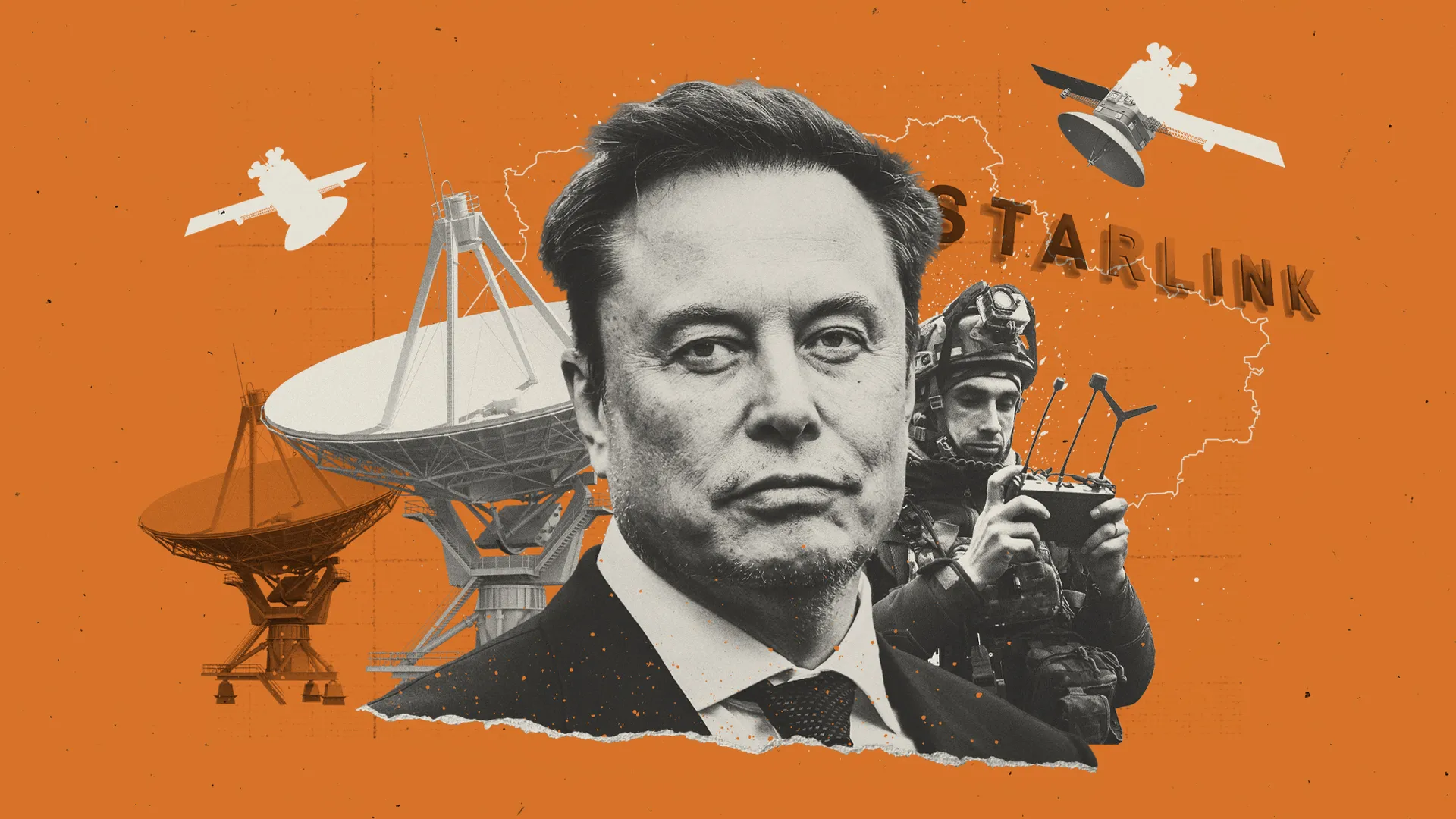
Ukrainian officials are scrambling to address the recent throttling of their crucial Starlink internet connectivity, a major engine of the country’s successful drone operations. While SpaceX CEO Elon Musk and President Donald Trump have blamed each other for directly ordering the outage, a growing number of European leaders see the incident as a worrying sign that Musk's products have undue influence in Ukraine’s theater of war — and across the continent as a whole.
Europe “must not leave it up” to Musk and Trump to “decide whether Ukraine will be able to defend itself or not,” said Renew Europe, the European Parliament’s liberal group, in a letter last week to European Union officials obtained by Euronews. Existing European satellites could instead “fill the gap” while the countries pivot away from Musk, said the outlet. The collective effort to respond to Musk comes as French Foreign Minister Jean-Noel Barrot this month accused the tech oligarch of using his X platform to “attempt to influence debate in European democracies,” said Le Monde.
“Big man, are you playing politics with your products again?” said Polish Foreign Minister Radoslaw Sikorski in a message to Musk on X after Starlink’s latest disruption. “As your European customers, we are watching you.” The minister’s “mocking address” recalled his 2025 clash with Musk, in which he explained that Poland provides millions of dollars for Ukraine’s Starlink access and would “seek another supplier if SpaceX proved unreliable,” said the Kyiv Post. “Be quiet, small man,” said Musk on X at the time, promising later that “Starlink will never turn off its terminals” in Ukraine or “use it as a bargaining chip.”
The Week
Escape your echo chamber. Get the facts behind the news, plus analysis from multiple perspectives.
SUBSCRIBE & SAVE
Sign up for The Week's Free Newsletters
Join more than 350,000 subscribers and keep yourself informed with a selection of The Week’s most interesting, enlightening and entertaining stories - plus daily puzzles.
Join more than 350,000 subscribers and keep yourself informed with a selection of The Week’s most interesting, enlightening and entertaining stories - plus daily puzzles.
Latest Videos FromThe Week US
What next?
Even before this month’s throttling episode, European leaders were exploring ways to “strengthen collective satellite capacity” and wean themselves off Musk’s service, said Politico. The EU is now “aiming to give speedy antitrust approval” to a new satellite service “seen as the bloc’s answer to SpaceX,” said Bloomberg. The hope is to “help Europe cut its reliance on American satellite providers” while testing a “revamped EU approach” to creating “regional giants to compete with U.S. and Chinese rivals.”