The Week The Week
flag of US
US
flag of UK
UK
https://cdn.mos.cms.futurecdn.net/flexiimages/jacafc5zvs1692883516.jpg

SUBSCRIBE & SAVE

Less than $3 per week

Sign in
  • View Profile
  • Sign out
  • The Explainer
  • The Week Recommends
  • Newsletters
  • Cartoons
  • From the Magazine
  • The Week Junior
  • More
    • Politics
    • World News
    • Business
    • Health
    • Science
    • Food & Drink
    • Travel
    • Culture
    • History
    • Personal Finance
    • Puzzles
    • Photos
    • The Blend
    • All Categories
  • Newsletter sign up Newsletter
  • WeekDay AM: 10 Things you need to know this morning
    Iran at the UN, Tories pledge welfare cut, and Argentina’s contested glaciers

     
    today’s international story

    Iranian president attacks Trump, but offers talks

    What happened
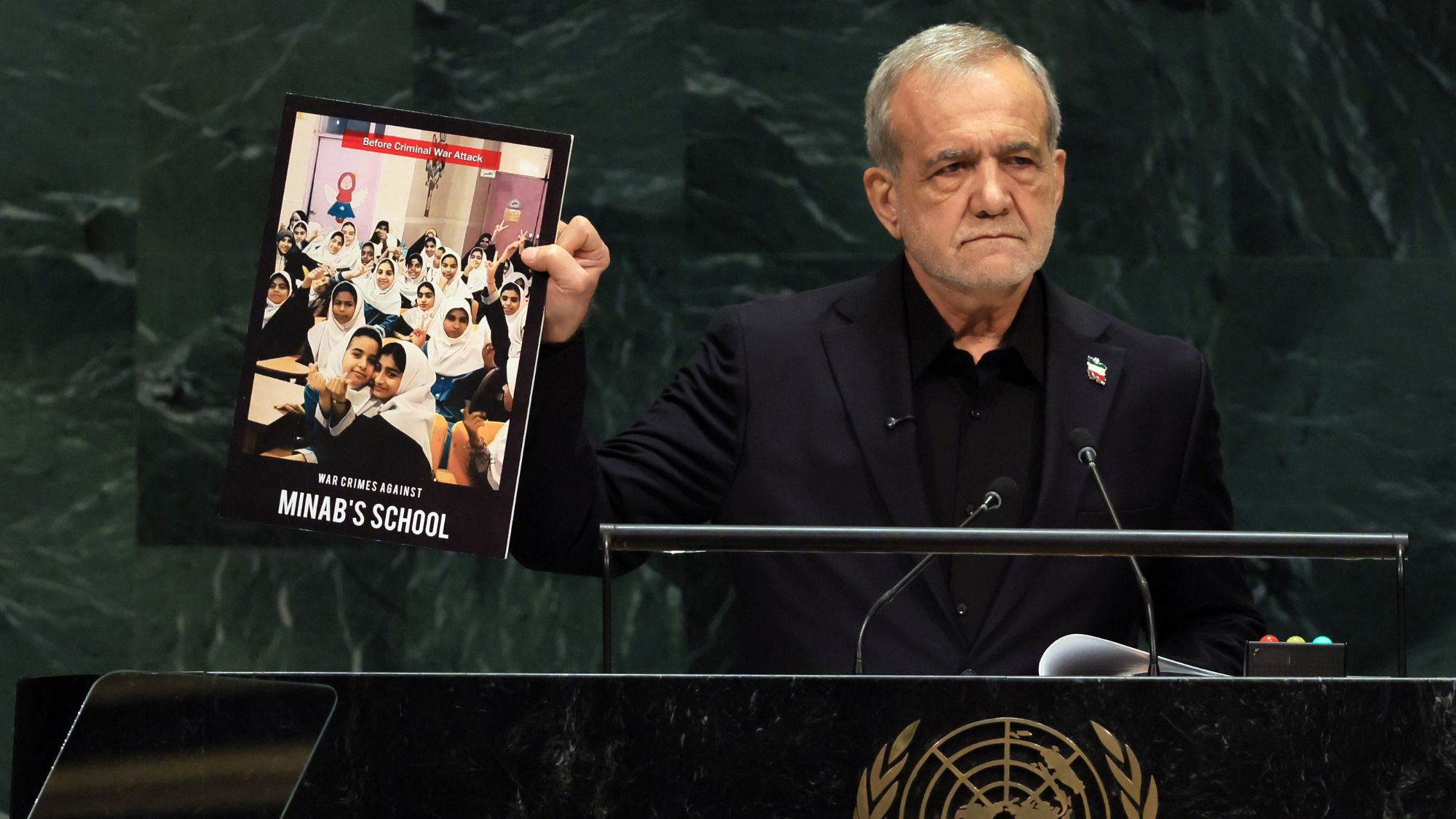
    The president of Iran, Masoud Pezeshkian, has criticised Donald Trump for being a “bully” and accused the US of being the real aggressor in the Middle East, while signalling that Tehran remains open to negotiations. Speaking at the UN General Assembly in New York, Pezeshkian said Iran would not submit to American pressure, but was prepared to pursue diplomacy, provided it was not conducted “with the language of force”.

    Who said what
    Pezeshkian said Iran had consistently shown a willingness to negotiate despite the US and Israel having launched an all-out war against it. His comments came a day after Trump told the UN that he was considering whether to “annihilate” Iran, while also revealing that US and Iranian officials had held a three-hour meeting on the sidelines of the assembly. Trump said the meeting had been “very productive”, suggesting that diplomacy remains possible despite the escalating rhetoric.

    This was an “unprecedented address”, said Sara Jabakhanji on CBC News. Pezeshkian “did not mince words in a rare and defiant speech”. Despite facing its “gravest existential war” and “mounting economic strain at home”, the Iranian president “laid out Tehran’s demands to the world”, said Mostafa Salem on CNN. The speech was “a rare historic moment: a foreign leader holding forth in an enemy country still at war with his own”.

    What next?
    The contrasting speeches leave open the possibility of renewed negotiations between Washington and Tehran following the surprise meeting between Iran’s Foreign Minister Abbas Araghchi and Trump’s Middle East envoy Steve Witkoff.


    today’s politics story

    Tories pledge to cut welfare for long-term unemployed

    What happened
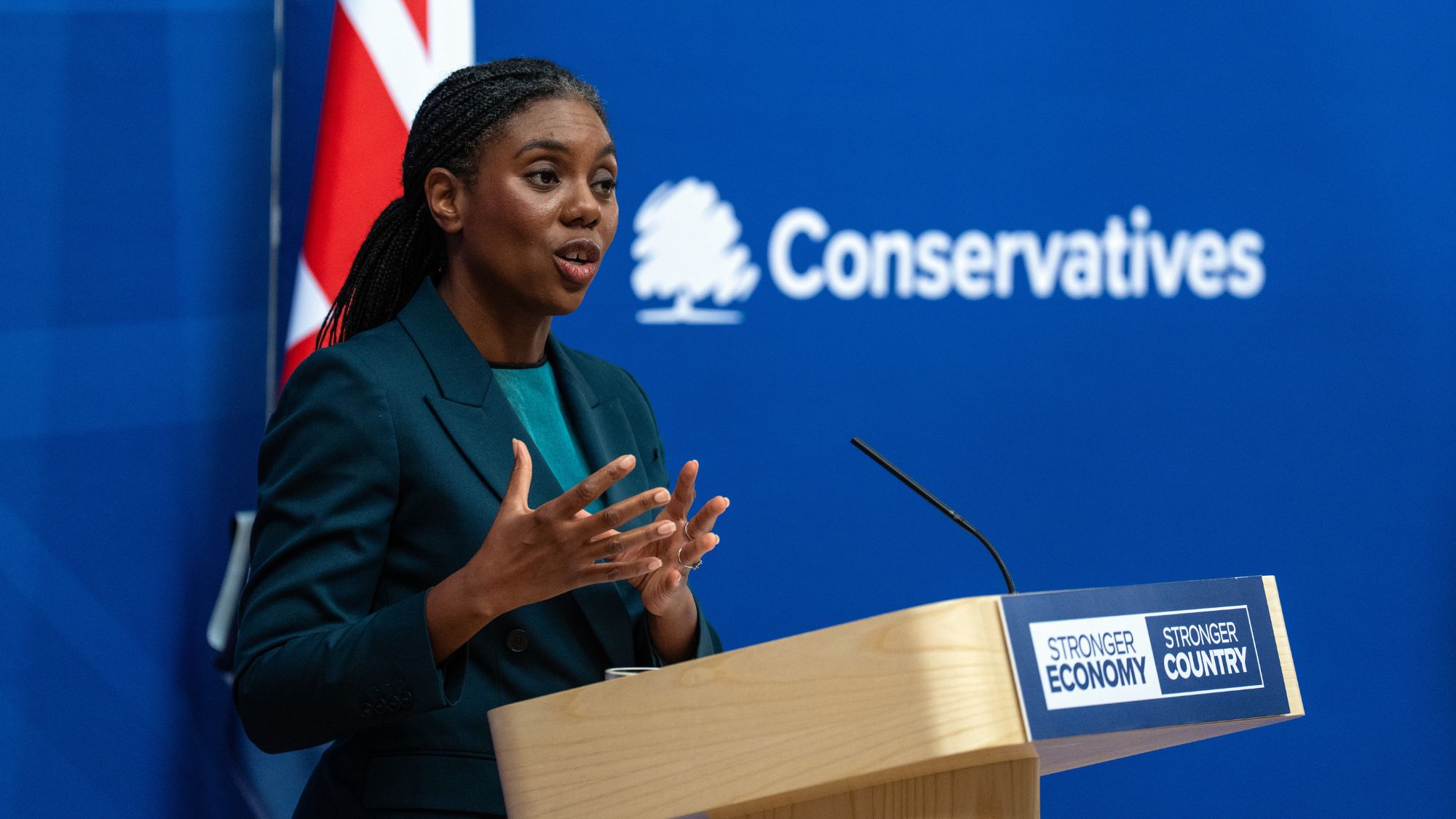
    Kemi Badenoch has unveiled plans to reduce the benefits paid to some long-term unemployed people and restrict how they can spend the money, saying welfare should not become a “lifestyle choice for those who can’t be bothered”. Under the proposed changes, people who have been out of work for more than six months and have not built up enough employment history would receive only 70% of the standard Universal Credit allowance, with payments made through a “back to work” card that could block spending on alcohol, cigarettes, cash withdrawals and betting.

    Who said what
    Badenoch said the system should reward people who had paid into it, arguing that “if you can work, you should work”. The Conservatives estimate that the changes would save £538 million a year and affect up to 1.1 million people in the “searching for work” category. Labour described the proposed card scheme as unworkable.

    “Some Labour MPs had hoped Andy Burnham would use his honeymoon period” to address the “spiralling” issue, said Nick Gutteridge in The Telegraph. But the PM “is thought to be wary of suffering the same fate as Sir Keir Starmer, who was fatally undermined by a welfare rebellion”.

    What next?
    The Conservatives are expected to develop the policy further ahead of their party conference.


    Today’s media story

    BBC planning to reduce sports coverage

    What happened
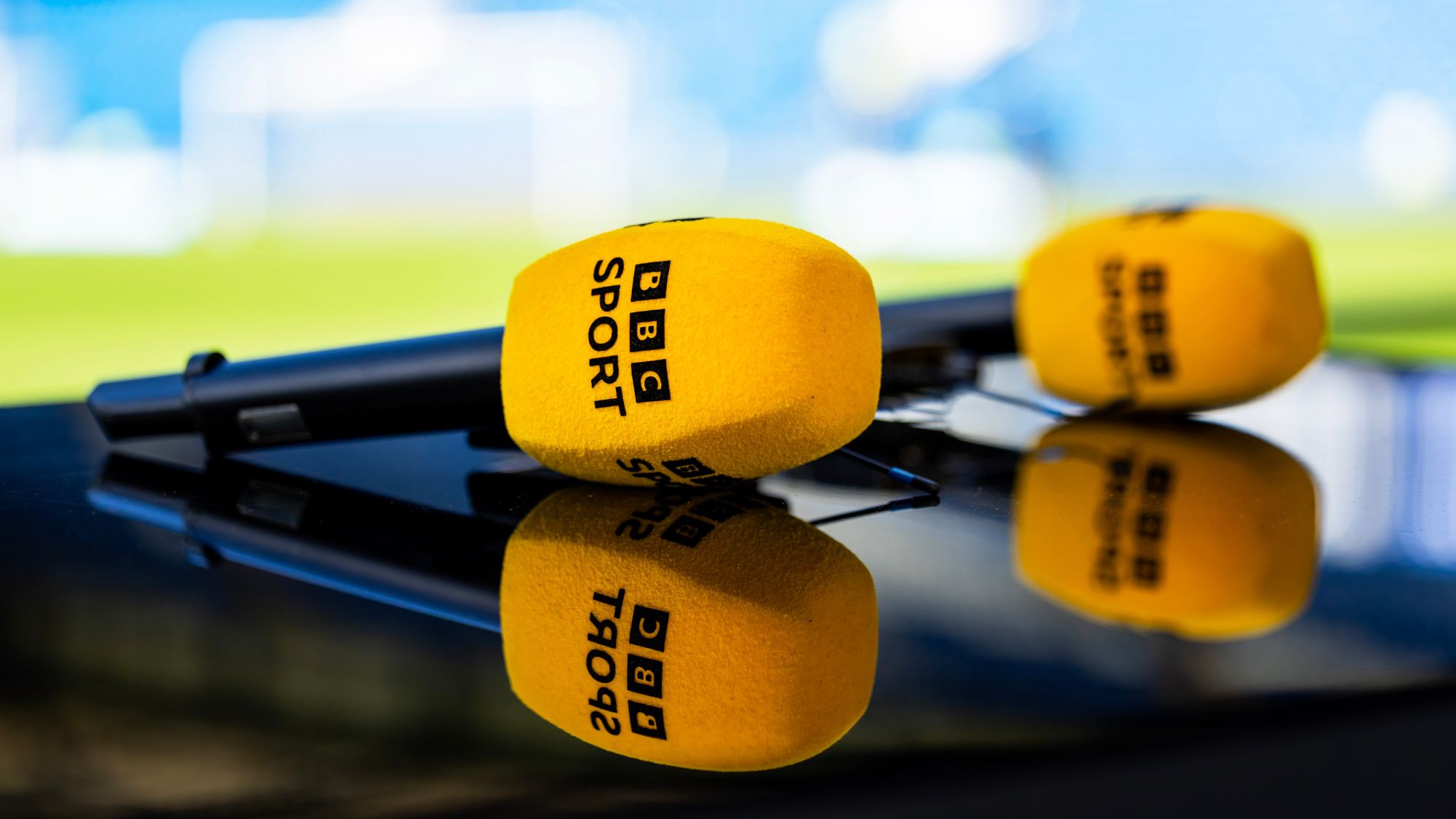
    The BBC is to axe sports bulletins on its news channel and will have to make more senior journalists redundant, the corporation has told its employees.

    BBC Sport workers were told that 41 roles would be scrapped and were warned of the risk of compulsory redundancies. Corporation chiefs confirmed to The Telegraph that five new positions would be created, meaning a net loss of 36 jobs.

    Who said what
    Some departments “face losing up to a third of their staff”, said The Times. Insiders told the newspaper that “as a result of the cuts, the number of fresh stories on the BBC Sport website will drop by about 50%, to somewhere in the region of 20 a day”.

    The axing of sports bulletins “has been seen as part of a wider shift in how sports news is consumed”, said The Guardian. Senior BBC figures “believe that many sports fans have already seen crucial goals and developments on social media long before they appear on bulletins”.

    What next?
    It is believed that strike action “is being considered” by corporation staff, added The Telegraph. The cuts have been imposed as part of wider plans by the broadcaster to lay off 10 per cent of its workforce by 2028.


    It’s not all bad

    Britain is to join a major EU-led ocean science programme aimed at improving forecasts of extreme weather and climate events. The UK will share more data from the Met Office and other agencies with European and Canadian partners through OceanEye, a €92 million (£79 million) initiative to strengthen global ocean monitoring. Scientists say better observations of the seas can help predict floods, droughts, storms and extreme heat, while supporting climate research and marine protection.


    under the radar

    Argentina’s contested glaciers

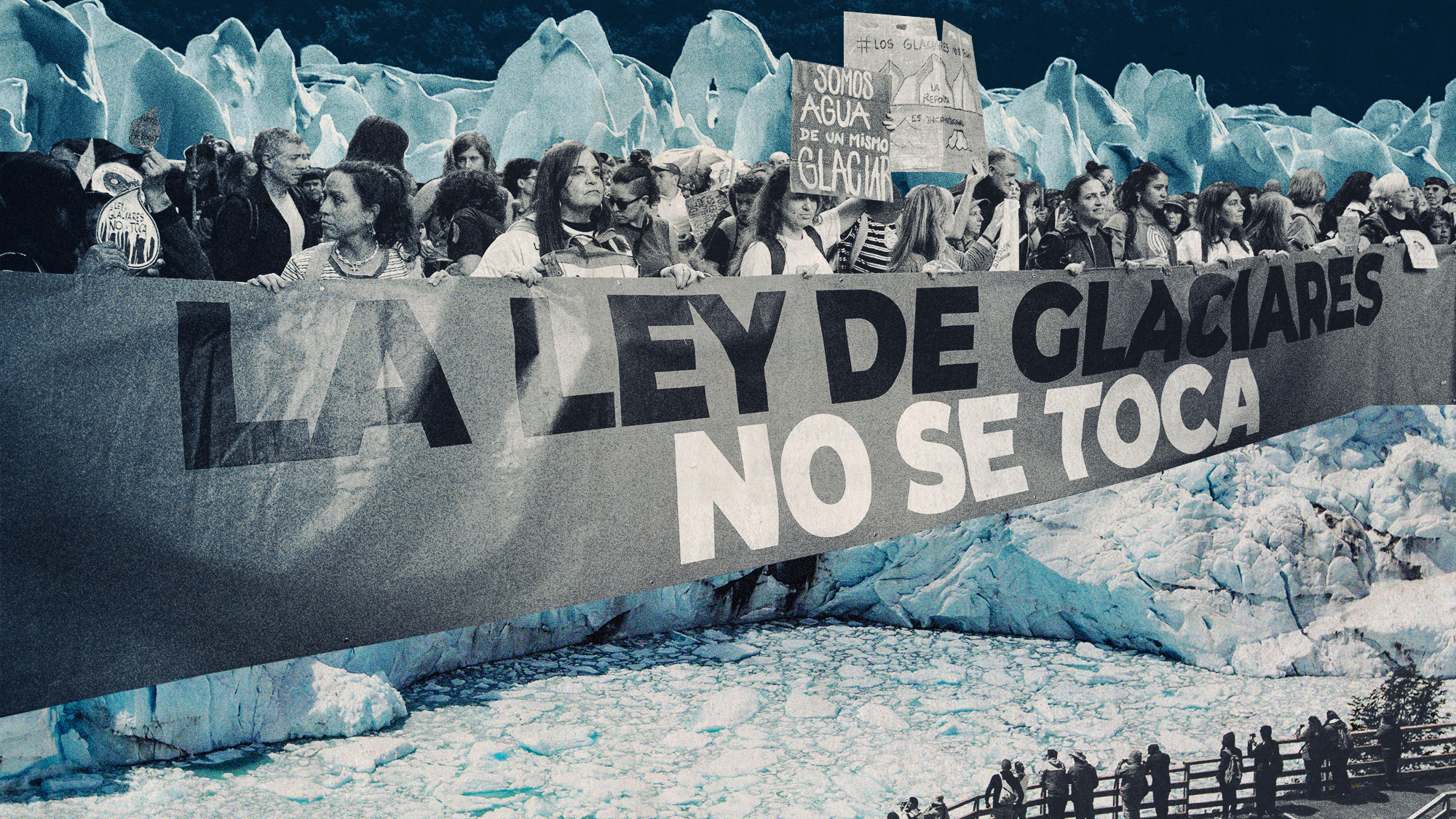
    A war is being waged over the future of Argentina’s Andean glaciers as environmentalists warn of the dangers posed by heavy resource mining and the construction of vast new data centres.

    These might be a boon for the country’s fragile economy, but geologists fear that they could lead to severe water shortages and devastating flash-flooding – similar to the disaster that killed more than a thousand people in Nepal and Tibet last month.

    President Javier Milei has looked to attract major oil ⁠and mining investments to Argentina through tax breaks and regulatory reforms, including changes to the 2010 Glacier Law banning damaging commercial activity on the country’s nearly 17,000 documented glaciers.

    The amendments, passed by MPs in April this year, transferred responsibility for defining protected glacier areas to provincial governments, something Milei said would “empower” them to permit exploitation in glacial zones where they judged there was “nothing to protect”, reported the BBC.

    But the changes to the Glacier Law have sparked widespread public protest in areas reliant on them for water. Scientists and geologists have warned that glacial development will further accelerate the retreat of Andean ice sheets, creating unstable conditions that expose Argentina – as well as neighbouring Chile and Peru – to the risk of catastrophic floods and mudslides.

    In November 2005, the collapse of the Laguna de los Erizos reservoir in San Juan province unleashed a 1.1 billion cubic feet mudslide that stretched for 155 miles, although its remote location prevented any deaths. “What happened in Nepal has already happened in Argentina,” Juan Pablo Milana, a researcher with Argentina’s National Scientific and Technical Research Council, told Argentinian news site Infobae.


    on this day

    24 September 1995

    The BBC mini-series “Pride and Prejudice”, starring Colin Firth and Jennifer Ehle, debuted on British television. It became one of the most acclaimed adaptations of Jane Austen’s classic novel. This year it was announced that Netflix was bringing Pride and Prejudice back to TV screens, with Dolly Alderton writing the script.


    Today’s newspapers

    ‘RAF crash’

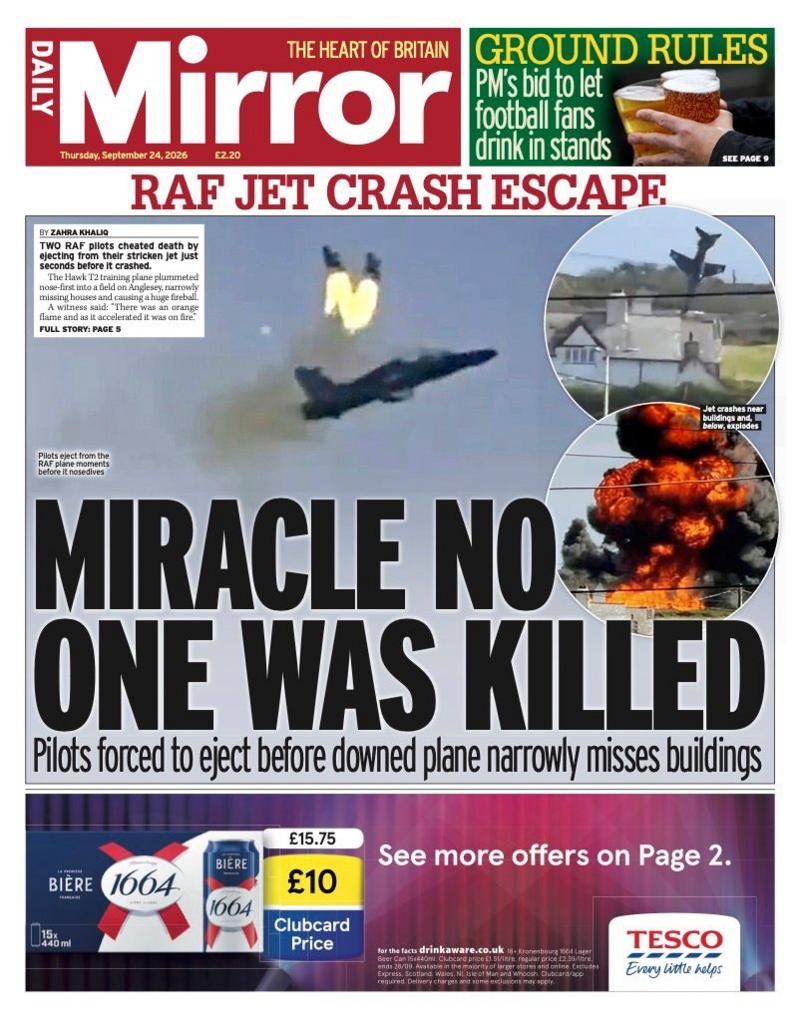
    “Miracle no one was killed”, The Mirror says, after two RAF pilots ejected and parachuted out of their plane moments before it crashed and burst into flames. “Tories to cut benefits for long-term unemployed”, says The Times. It’s “Kemi’s ruthless crackdown on benefits street”, the Daily Mail says. Her party would “ban spending benefits on alcohol”, says The Telegraph. “Iran hits out at ‘bully’ US but says it wants talks”, reports The Guardian.

    See the newspaper front pages


    tall tale

    Aisle be damned

    A former 7-Eleven shop in Seattle has been transformed into an “Inconvenience Store” featuring brilliantly annoying items such as pre-tangled USB cords. The interactive art exhibit features “abstracted interpretations” of objects you would normally find at a convenience store in the US. The shop, created by artists Lilia Deering and Mary Anne Carter, also features a “landline iPhone” that, when answered, only plays “Vertigo” by U2.


    Morning Report was written and edited by Arion McNicoll, Jamie Timson, Ross Couzens and Chas Newkey-Burden, with illustrations by Julia Wytrazek.

    Image credits, from top: Spencer Platt / Getty Images; Carl Court / Getty Images; Leila Coker / WSL Football / Getty Images; Illustration by Julia Wytrazek / Getty Images.
     

    Recent editions

    • Morning Report

      Trump’s Iran indecision lands at UN

    • Evening Review

      Trump’s Greenland deal

    • Morning Report

      Austin DoorDash driver detained with ICE bullet in neck

    VIEW ALL
    TheWeek
    • About Us
    • Contact Future's experts
    • Terms and Conditions
    • Privacy Policy
    • Cookie Policy
    • Advertise With Us
    • FAQ
    Add as a preferred source on Google Add as a preferred source on Google

    The Week is part of Future US Inc, an international media group and leading digital publisher. Visit our corporate site.

    © Future US, Inc. Full 7th Floor, 130 West 42nd Street, New York, NY 10036.