The Week The Week
flag of US
US
flag of UK
UK
https://cdn.mos.cms.futurecdn.net/flexiimages/jacafc5zvs1692883516.jpg

SUBSCRIBE & SAVE

Less than $3 per week

Sign in
  • View Profile
  • Sign out
  • The Explainer
  • The Week Recommends
  • Newsletters
  • Cartoons
  • From the Magazine
  • The Week Junior
  • Student Offers
  • More
    • Politics
    • World News
    • Business
    • Health
    • Science
    • Food & Drink
    • Travel
    • Culture
    • History
    • Personal Finance
    • Puzzles
    • Photos
    • The Blend
    • All Categories
  • Newsletter sign up Newsletter
  • Saturday Wrap, from The Week
    Trump hard power, Iranian protests, and the capture of Nicolás Maduro

     
    Briefing of the week

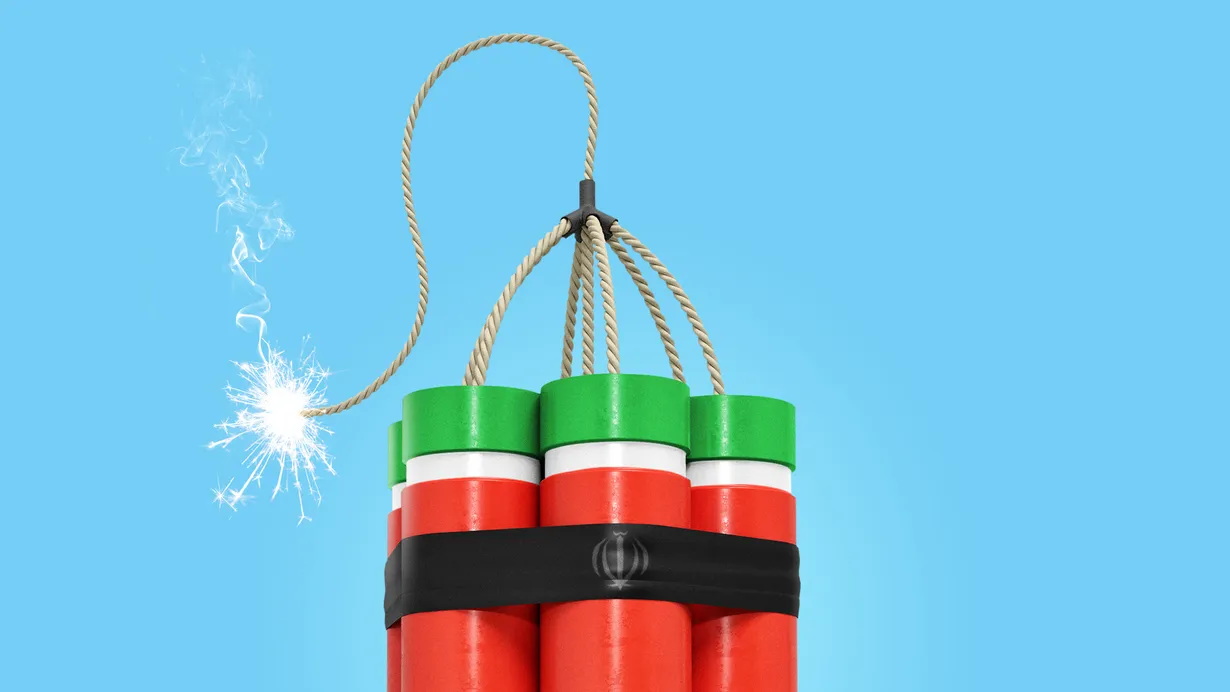
    Unrest in Iran: how the latest protests spread like wildfire

    Deep-rooted discontent at the country’s ‘entire regime’ and economic concerns have sparked widespread protest far beyond Tehran

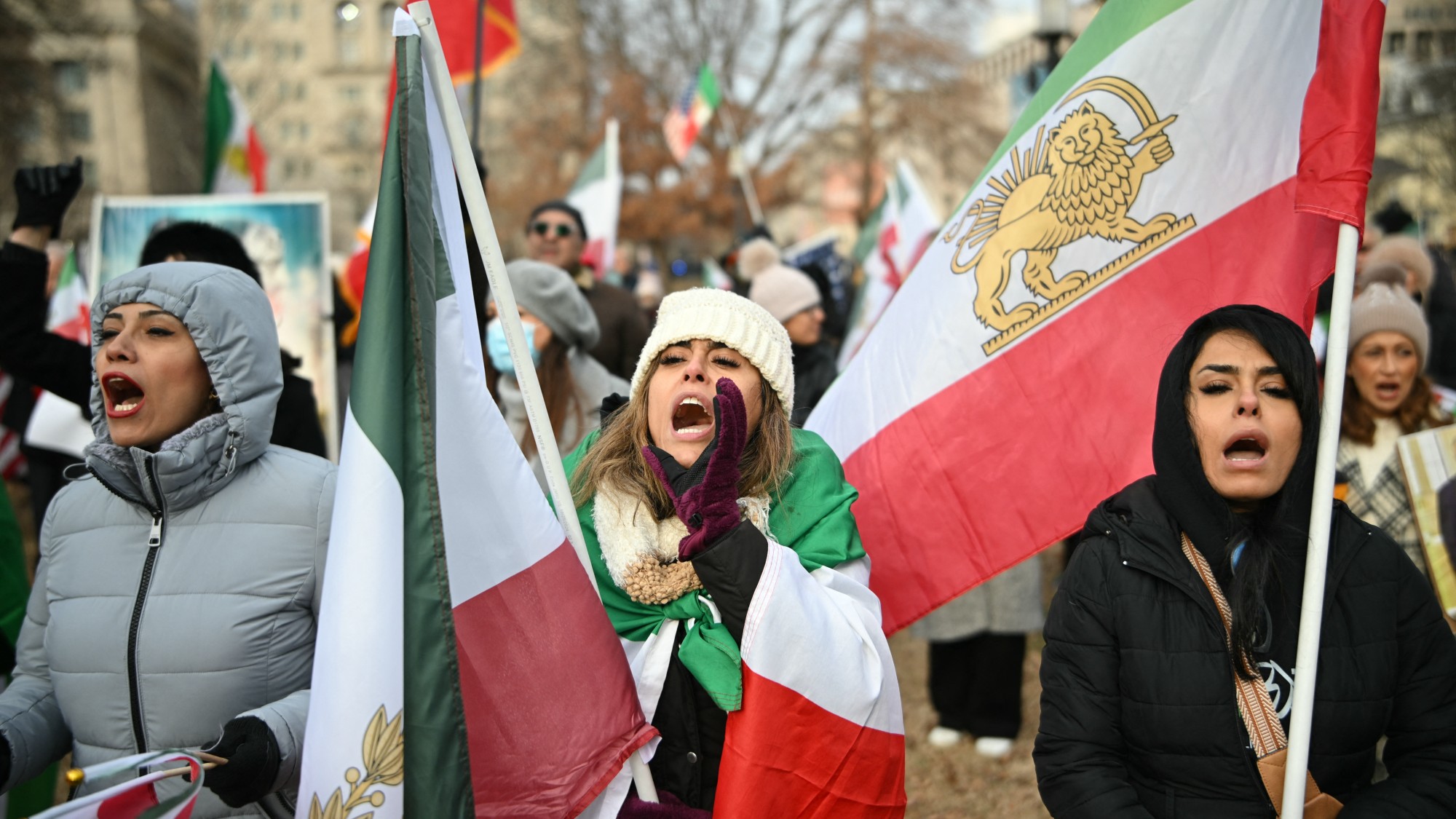
    It’s astonishing how quickly the flames of protest have spread across Iran, said Ara (Barcelona). On Sunday 28 December, a couple of small protests in central Tehran, one outside the Alaeddin mobile phone centre and another by the Sabzeh Meidan currency exchange, led shopkeepers in the grand bazaar to close their doors in solidarity, and in a matter of days the unrest had spread like wildfire across the country. The Islamic Revolutionary Guard Corps (IRGC), the powerful military force that underpins the regime and controls somewhere between 20% and 40% of Iran’s economy, has reacted with severity, using bullets, water cannon and tear gas against the demonstrators; at least 35 people have been killed and some 1,200 protesters arrested. 

    The spark for all this was yet another sharp fall in the exchange rate, said Middle East Eye (London). The depreciation of the rial, the Iranian currency, has been a constant feature of life under Ayatollah Ali Khamenei, but since Israel’s strikes against Iran’s nuclear facilities in June, the rial’s fall has accelerated mightily: it has lost 40% of its value, making it hard for Iranians to import many essential goods. And adding to the hardship has been a hike in petrol prices: Iran has some of the cheapest petrol in the world, but mounting economic pressure has obliged the regime to cut back on the massive subsidy for it. 

    Such setbacks are just the latest reflection of deeper economic woes, brought about partly by international sanctions, but also by the grotesque economic mismanagement and corruption of Khamenei’s theocratic regime, said Sanam Vakil in The Sunday Times. People’s “household savings have been wiped out; real wages have collapsed; large segments of the middle class have been pushed into precarity”. That is why the present unrest shouldn’t be seen as a “simple reaction to the economic crisis”, said Pegah Moshir Pour in La Repubblica (Rome). What we are seeing is an expression of the “political fracture” that for decades has run through Iranian society, but only burst into the open in September 2022, when mass protests broke out over the death in custody of 22-year-old Mahsa Amini, who had been arrested by the morality police for not wearing her hijab properly. 

    Indeed, many Iranians are now expressing their frustration at the “entire system”, said Maryam Sinaiee in Iran International (London). They’ve no faith in the president, Masoud Pezeshkian, and his promises of economic reform. They know he is merely a figurehead, that the real power lies with the 86-year-old Supreme Leader Khamenei, who has been in power since 1989, controls the IRGC and holds billions of dollars worth of Iranian properties and companies. This is why so many of the protesters’ slogans – some have openly chanted “Death to the dictator” – are targeted not at the exchange rate but “at the theocratic system itself, and its supreme leader”. 

    After Israel’s military strikes in June, analysts thought Iranians might “rally behind their regime”, said The Wall Street Journal. They couldn’t have been more wrong. And what makes these protests “all the more remarkable” – protests that have been concentrated not in Tehran but, most unusually, in the smaller cities outside it – is the fact that the authorities have ramped up their repression since the summer. They’ve rounded up 21,000 “suspects” and increased the number of executions: somewhere between 1,500 and 2,000 are believed to have taken place. But let’s not get carried away, said The Economist. The protesting crowds are not nearly as large as those of three years ago; the protest movement itself is “disorganised and leaderless” and the opposition is “adrift”. So the most likely outcome of all this is that the demonstrations “will fizzle out or be crushed, much like past rounds”. But, then again, Donald Trump has told Tehran that it will get “hit hard” if it kills any more protesters, and that the US is “locked and loaded and ready to go”. And given what has happened in Venezuela, you can never be sure.


    Spirit of the age

    In a third of postcode areas in England, dogs now outnumber children, according to an analysis by The Times. It says this is partly due to a rising number of couples who are “dinkwads” – dual income, no kids, with a dog. The UK’s estimated canine population has risen from nine million to 13 million since 2019; the number of children has flatlined lately at around 14.5 million.


    talking point

    Maduro’s capture: two hours that shook the world

    It took US forces less than two-and-a-half hours to snatch President Nicolás Maduro and his wife, Cilia Flores, in the small hours of last Saturday morning, said Dan Sabbagh in The Guardian. But this “extraordinary display of imperial power” – involving 150 US aircraft, including bombers and fighter jets – was the product of months of planning. According to Gen Dan “Raizin” Caine, chair of the US joint chiefs of staff, US intelligence agencies had been working since August to establish Maduro’s “pattern of life”. Using spy drones, and information from one or more agents within the Venezuelan government, they’d discovered “where he lived, where he travelled, what he ate, what he wore, what were his pets”.

    As the US steadily built up its military presence in the Caribbean from August – the deployment ultimately included up to a quarter of all the US navy’s warships – Maduro knew he was in danger. He tightened up his security, stopped trailing his public appearances, and slept in different places; yet the US still managed to achieve “tactical surprise”. 

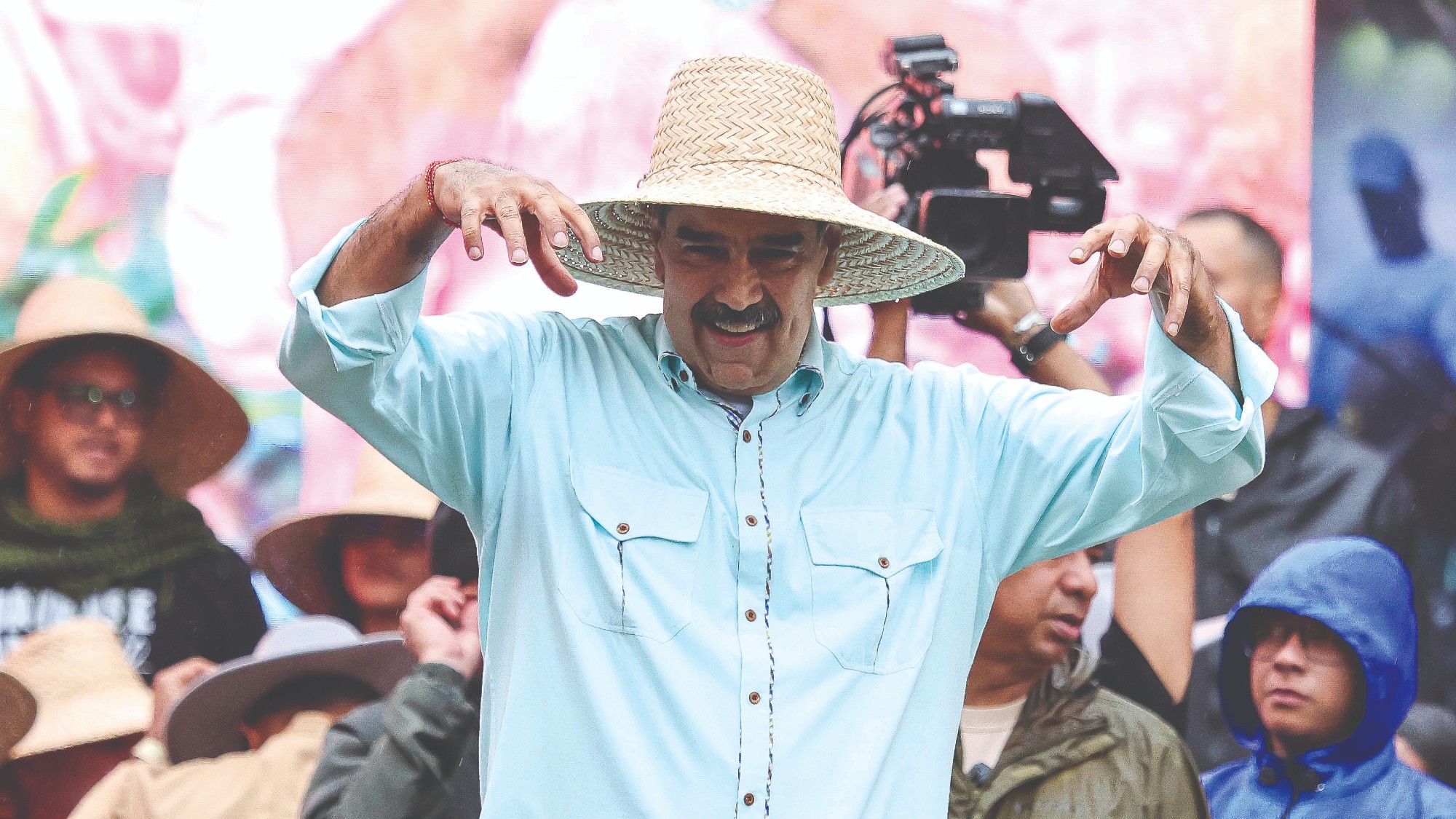
    The Trump administration had hoped that its show of force in the Caribbean would persuade Maduro to stand down; and it seems that, late last month, he was offered a “gilded exile” in Turkey, said The New York Times. Yet he rejected that, and was then seen dancing at rallies – a public display of nonchalance that apparently incensed the White House, and prompted Trump to give the order for Operation Absolute Resolve to proceed. Shortly after 2am on Saturday, residents of Caracas were woken by the sound of huge explosions, as US aircraft disabled Venezuelan air defences; the lights went out across the city (“due to a certain expertise that we have”, Trump would boast later); and a convoy of helicopters then swooped over the capital, carrying Delta Force commandos to the Maduros’ fortified compound.

    As they stormed in, Maduro made it to a safe room, but – said Trump – “he got bum-rushed so fast” he didn’t have time to close its steel door. A number of US troops suffered bullet and shrapnel wounds; according to Havana, 32 members of Maduro’s Cuban security detail were killed. By 4.20am, the couple had been dragged into a helicopter, and were being flown across the ocean, to the warship USS Iwo Jima. 

    The raid evoked memories of the US assault on Panama in 1989, when George H.W. Bush sent in troops to capture another Latin American leader accused of drug-related offences in the US, said The Economist. But that was a "full-fledged invasion, involving more than 27,000 troops”. It was directed at a far smaller country, with a far smaller army – and it was far less impressive. Having initially evaded capture, Manuel Noriega took refuge in the Vatican’s embassy: the US had to flush him out by blasting rock music at it.

    The apparent ease with which US forces entered Caracas backs Trump’s boast that this was one of the most “stunning” displays of American might in history – and that “no [other] nation in the world” could have achieved it.


    controversy of the week

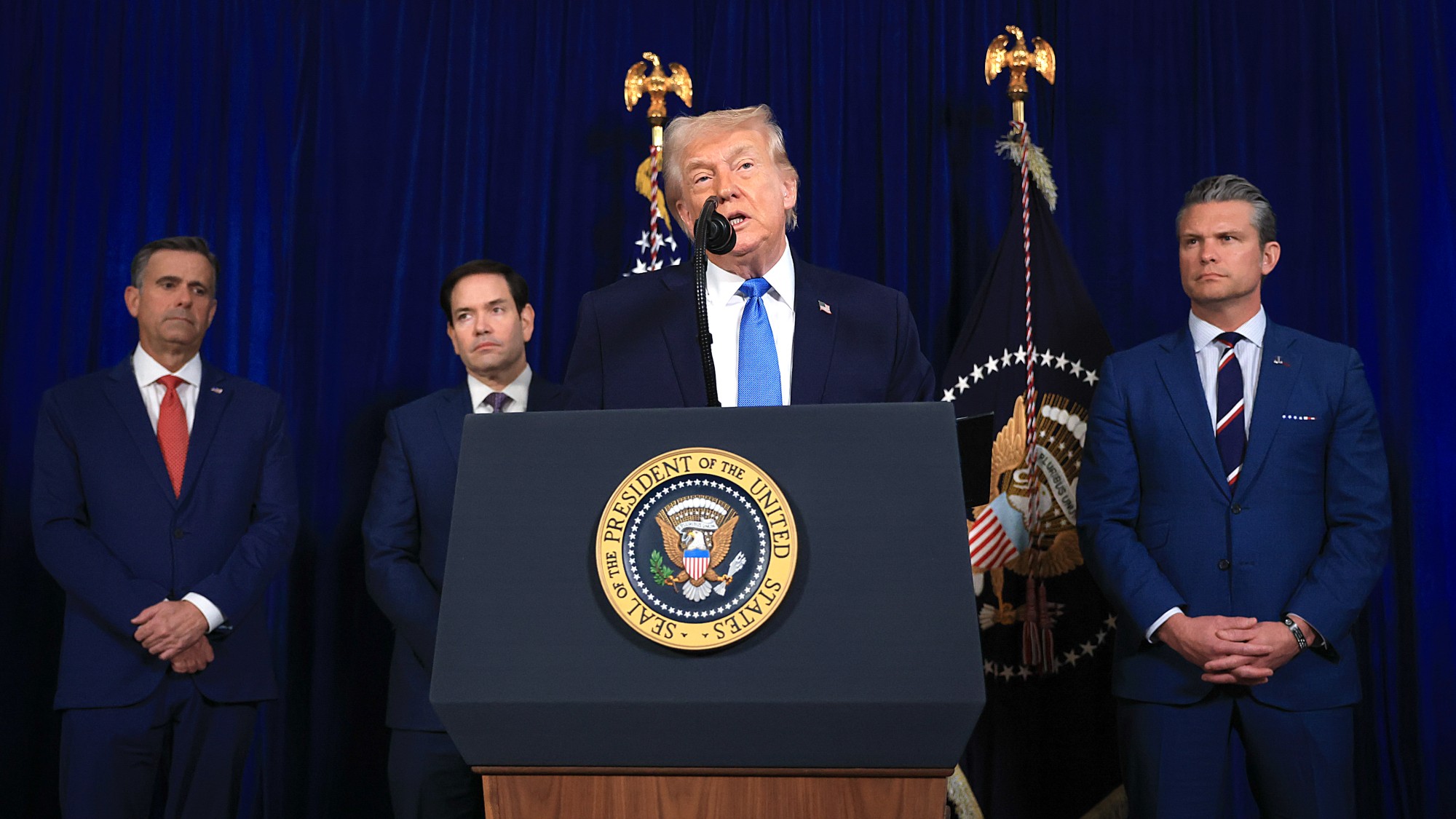
    Trump’s power grab: the start of a new world order?

    I never thought I’d feel nostalgia for the Iraq War, said Nesrine Malik in The Guardian. But it turns out that the run-up to that conflict, when America did at least strive to convince the world of the righteousness of its cause, was the “good old days”. There was no such effort to legitimise the US strike on Venezuela and the abduction of its president, Nicolás Maduro. Nobody sought consent from any international body or Congress. And while a flimsy legal case was made for the coup – a court charged Maduro this week with, inter alia, “narco-terrorism conspiracy” and possession of machine guns – the Trump administration’s predatory objectives were transparent. The US will “run” Venezuela, said Trump; US oil companies will “go in” and take “a tremendous amount of wealth out of the ground”. 

    There’s no disguising the truth about this operation, said Thomas Fazi in The Telegraph: it was a “completely unprovoked and blatantly illegal act of aggression against a country that posed no real threat to the United States”. And Trump is threatening to carry out more such acts of “military adventurism”, said Edward Luce in the Financial Times. He has advertised designs on Panama, Canada and Greenland. On Saturday, he claimed that “something is going to have to be done with Mexico”, lamenting the power of its drug cartels, and warned Gustavo Petro, Colombia’s left-wing president, to “watch his ass”. The US secretary of state, Marco Rubio, said the “incompetent and senile men” running Cuba should be “a little worried”. Trump has talked of reasserting the 19th-century Monroe Doctrine (which he has facetiously recast as “the Donroe doctrine”) to restore US pre-eminence in the Western Hemisphere, said Patrick Cockburn in The i Paper. It seems America is returning to the days of “gunboat diplomacy”. 

    The truth is that it never really left them, said Trevor Phillips in The Times. From Ronald Reagan’s invasion of Grenada to George Bush Sr’s seizure of the Panamanian dictator Manuel Noriega, there’s nothing new about Washington wielding force in Latin America. “The first rule of the rules-based order is that America makes the rules, and it makes them to suit America.” The only difference is that Trump is open about it. Power, not “international law”, is the ultimate guarantor of security, said The Wall Street Journal. Last weekend’s display of “US nerve and military prowess will do more than a thousand UN resolutions to protect the free world and make Russia, China and Iran think twice”. The Caracas raid was primarily about China, said Doug Stokes in The Spectator. Beijing has been quietly increasing its presence in Latin America and the Caribbean: in 2024, its trade with the region hit a “staggering” $515 billion (£383 billion). Maduro’s capture was less about securing oil than about stopping Beijing from “establishing a forward operating base in the Americas”. 

    “No autocrat likes to see one of their own seized, shackled and renditioned,” said Adrian Blomfield in The Telegraph. But China and Russia won’t be that upset about the ousting of their ally Maduro. The lesson they’ll draw from this episode is that the US is withdrawing from a global role in pursuit of regional hegemony. A world carved up into “spheres of influence” – within which powerful states and strongman rulers can do what they like – would suit Moscow and Beijing just fine, agreed Gideon Rachman in the FT. Indeed, back in 2019, Trump’s former Russia adviser Fiona Hill told Congress that the Russians had been, in her words, “signalling very strongly that they wanted to somehow make some very strange swap agreement between Venezuela and Ukraine”. America’s rivals will also be delighted by Trump’s flouting of international law, said Stephen Glover in the Daily Mail. The US may not always have lived up to its high ideals, but by disregarding them entirely, Trump has “recklessly sacrificed America’s moral leadership”. 

    And all for what, asked Mary Dejevsky in The Independent. If Venezuela is successfully restored to a functioning democracy, Trump will be able to claim victory. But if, as is all too likely, the situation descends into chaos, he’ll be “very vulnerable”. After all, he promised to extract the US from intractable conflicts, not start new ones. Venezuelans won’t want to “live in a Trump-backed dictatorship staffed with Maduro cronies”, said Anne Applebaum in The Atlantic. Nor will most Americans want to see their military being used to fight on behalf of oil interests. If the US becomes just a “regional bully”, it will alienate friends and foes alike, eventually leaving it “with no sphere, and no influence, at all”.
     
     
    viewpoint

    The ‘fat pill’

    “While the world’s eyes were on Venezuela, the weight-loss drug Wegovy was released in pill form: Novo Nordisk won the race to launch a semaglutide pill in the US, with the starting price at $149 [£111] a month – far less than the injectable version. I can’t help but see the new, affordable ‘fat pill’ as a Pandora’s box moment. Look back on a century of pill-popping – Valium, Prozac, opiates – and its side effects: humans are driven by animal appetites. If you start interfering with basic drivers such as hunger, it will have consequences; users report feeling as if someone has pressed the ‘mute’ button on life’s pleasures. I’d rather stay hungry, in pursuit of earthly pleasures.”

    Rowan Pelling in The Telegraph


    It wasn’t all bad

    A 23-year-old from Cheshire has cycled 15,534 miles from Derby to Sydney, retracing a route his father took at the same age in 1984. Jamie Hargreaves set off in May, took a ferry to France, then headed across Europe to Turkey. He wasn’t able to follow his father’s path through Iran, and instead cycled through Russia and the “Stans” to re-join the route in Pakistan. He visited Everest Base Camp in Nepal, before cycling through Southeast Asia – arriving in Sydney in mid-December.


    People

    Samantha Morton

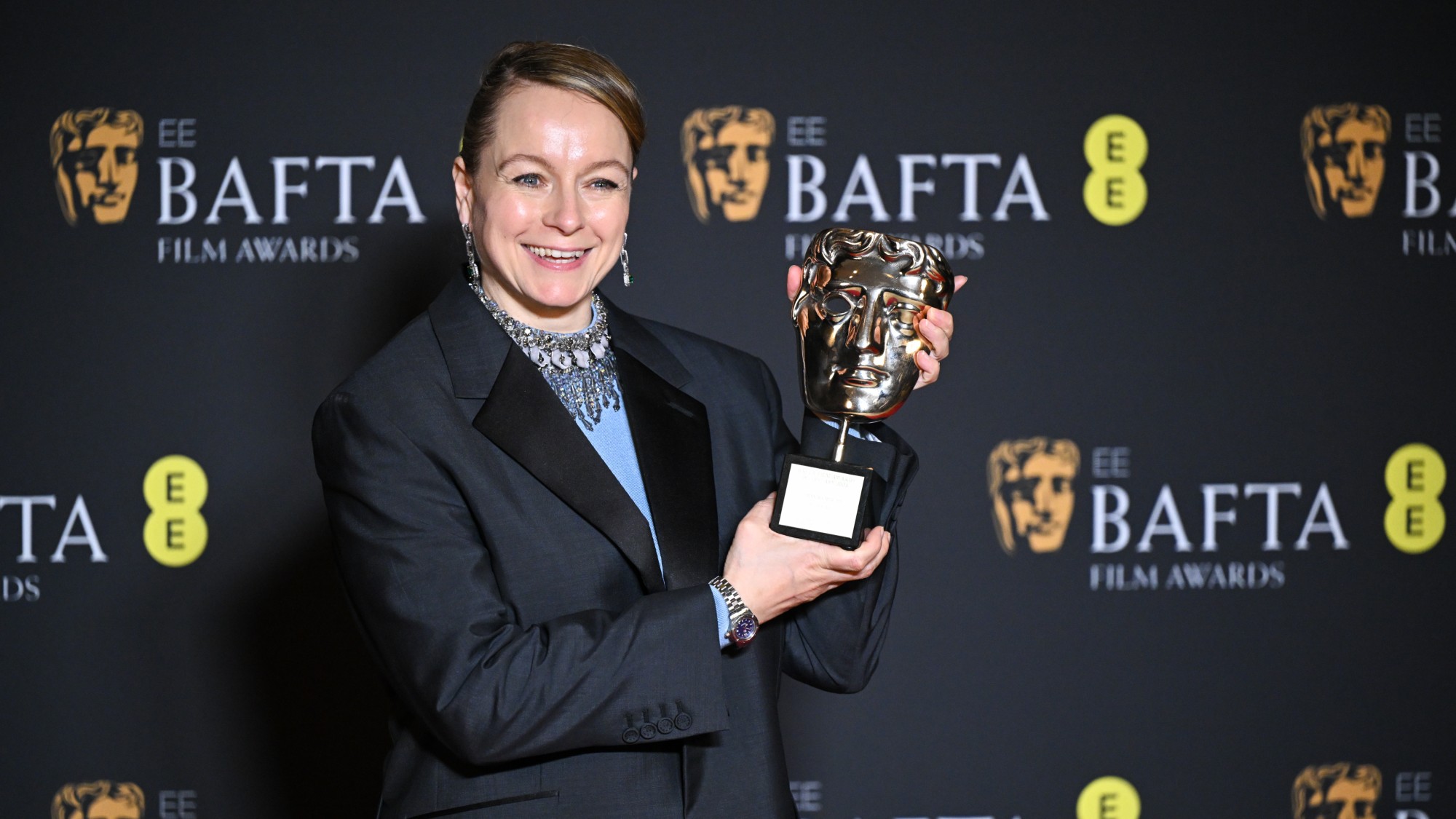
    The twice-Oscar-nominated actress Samantha Morton has had an extraordinary career by any measure – but especially for somebody who spent most of her childhood in care, said Terri White in The Sunday Times. 

    She grew up in Nottingham. Her mother struggled with her mental health, her stepfather with alcoholism. Her father, with whom she lived on and off until she was eight, was violent and spent time in prison. For years, Morton pinged between foster care and children’s homes – a brutal experience made yet worse by the fact that she was sexually abused by residential care workers when she was 13. 

    She took refuge in books and films: she’d “sneak into the ABC” with her sister, and read any book she could get her hands on; and found her vocation at Nottingham’s Television Workshop, which provides free acting classes to disadvantaged children. At 16, she left for London. Her breakout role was in TV’s “Band of Gold”, and before long she was in Hollywood, starring in major films such as “Sweet and Lowdown” and “Minority Report”. 

    Yet rather than leave her past behind, she has for years used her public profile to campaign for better protections for children in care. She thinks it is a “miracle” that she is still alive, given what she went through during her childhood. Many of her friends did not survive. Speaking out on this issue is not, she says, “just my right, it is my duty of care”.


    Image credits, from top: Joe Raedle / Getty Images; Mandel NGAN / AFP / Getty Images; Jesus Vargas / Getty Images; Stephane Cardinale / Corbis / Getty Images
     

    Recent editions

    • Morning Report

      Trump’s GOP grasp slackens

    • Evening Review

      Upside-down eating

    • Morning Report

      ICE shoots, Minneapolis reels

    VIEW ALL
    TheWeek
    • About Us
    • Contact Future's experts
    • Terms and Conditions
    • Privacy Policy
    • Cookie Policy
    • Advertise With Us
    • FAQ
    Add as a preferred source on Google

    The Week is part of Future US Inc, an international media group and leading digital publisher. Visit our corporate site.

    © Future US, Inc. Full 7th Floor, 130 West 42nd Street, New York, NY 10036.