The Week The Week
flag of US
US
flag of UK
UK
https://cdn.mos.cms.futurecdn.net/flexiimages/jacafc5zvs1692883516.jpg

SUBSCRIBE & SAVE

Less than $3 per week

Sign in
  • View Profile
  • Sign out
  • The Explainer
  • The Week Recommends
  • Newsletters
  • Cartoons
  • From the Magazine
  • The Week Junior
  • Student Offers
  • More
    • Politics
    • World News
    • Business
    • Health
    • Science
    • Food & Drink
    • Travel
    • Culture
    • History
    • Personal Finance
    • Puzzles
    • Photos
    • The Blend
    • All Categories
  • Newsletter sign up Newsletter
  • Saturday Wrap, from The Week
    Polymarket profits, upcoming Hungary elections, and McSweeney’s stolen phone

     
    controversy of the week

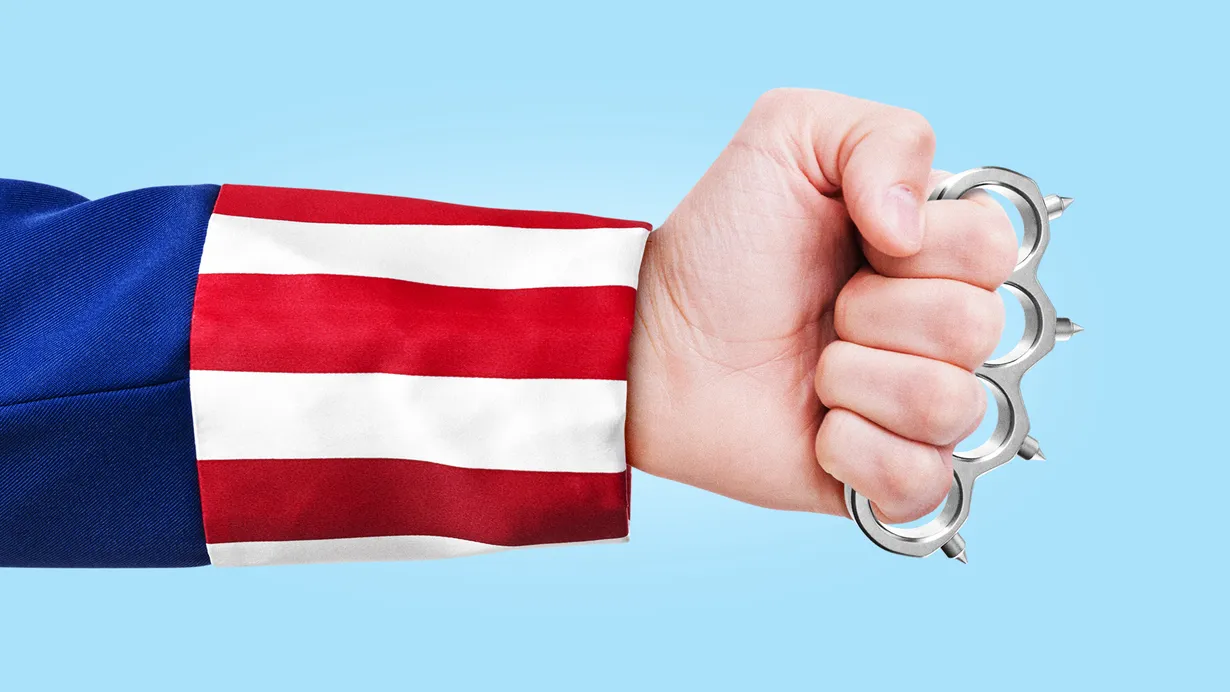
    Gambling on war: corruption in the White House?

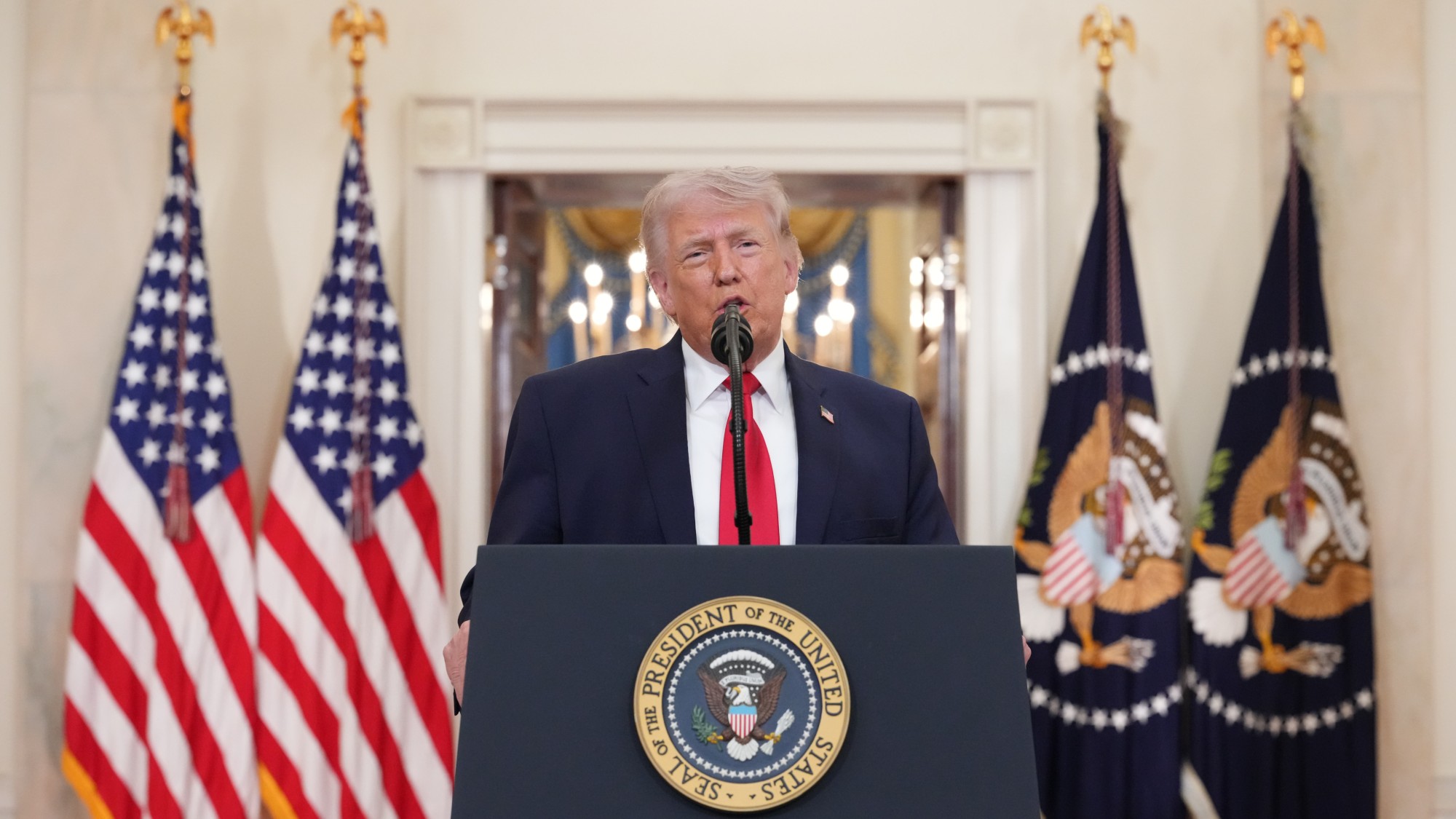
    At the end of February, as US forces gathered in the Middle East, you could have made a small fortune betting on the exact day the bombing of Iran would begin, said David Wallace-Wells in The New York Times. And indeed, someone did. A user named “Magamyman” made $553,000 on the wager they placed on the prediction website Polymarket just hours before the first bomb landed. It was part of “an epidemic of suspicious trading” related to President Trump’s big decisions, said Zachary Basu on Axios. Last Monday morning, at a usually quiet time, traders made bets on oil futures worth $580 million, anticipating oil prices would drop. Just 16 minutes later, Trump announced a pause in strikes on Iranian power plants – and oil prices duly fell. In January, a trader turned $32,000 into more than $400,000 by betting that Venezuela’s Nicolás Maduro would be captured, shortly before it was announced. One trader has made nearly $1 million since 2024 from dozens of well-timed Polymarket bets on Iran, said Marshall Cohen on CNN. “The bettor won a staggering 93% of their five-figure wagers.” 

    It would be nice to believe that our political leaders would never get involved in such shady dealing, “which would amount to making money off the lives of our troops”, said Heather Digby Parton on Slate. But considering that the administration is “led by a man convicted of 34 felony counts of business fraud”, a man whose family has made some $4 billion since January 2025, “that would be unforgivably naive”. Certainly, many are suspicious. “Who was it? Trump? A family member? A White House staffer? This is corruption. Mind-blowing corruption,” said the Democratic Senator Chris Murphy. The White House called any suggestions of impropriety “baseless”. But members of Congress of both parties are poised to act, said Megan Mineiro in The New York Times – not least because such bets are potentially a national security risk, warning of impending action. They are now pressing to enact laws that would “crack down on policymakers placing wagers on prediction markets”. 

    Obviously, we don’t want people profiting from insider trading, said Max Raskin in The Washington Post. But there are already laws against that, and prediction sites are well placed to police manipulation; besides, if markets “feel rigged”, users will stop using them. At their best, the prediction markets are extraordinary forecasting tools, “combining trillions of points of localised, ever-changing knowledge and data” into a “single actionable price”, which can help businesses and others to plan for the future. Maybe so, said Derek Thompson on Substack, but the new trend of gambling on everything seems insidious, and dangerous in a range of different ways. “There is more to life than the efficiency of information networks.”


    Briefing of the week

    Hungary’s illiberal democracy

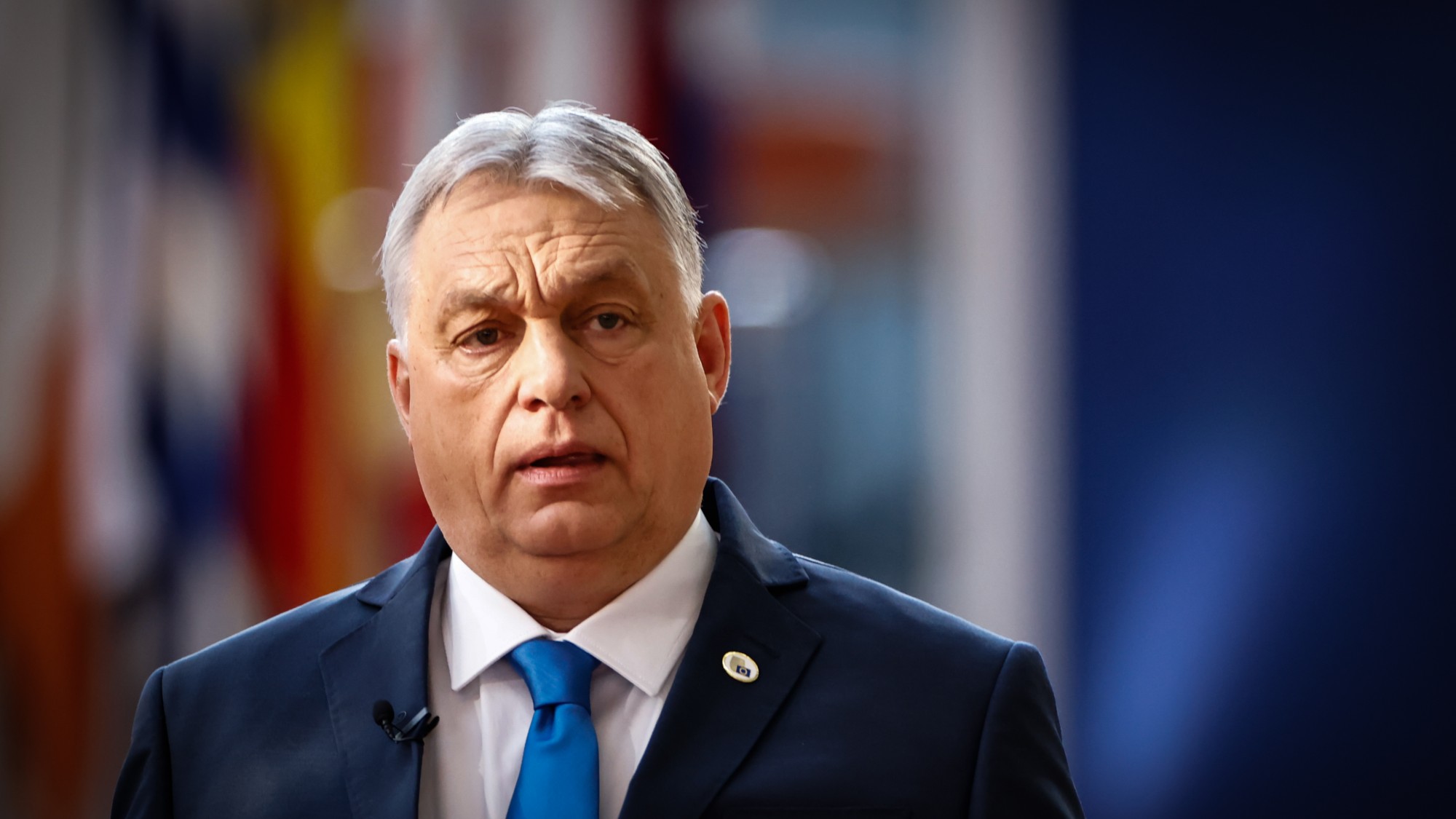
    Viktor Orbán has led Hungary since 2010, and has remade its political institutions. But elections this month pose a major challenge

    How has Orbán changed Hungary? 
    The EU’s longest-serving current head of government has turned his country from a liberal democracy into something quite different. Orbán has been variously described as a populist strongman, an authoritarian capitalist, a “soft autocrat” and a “21st-century dictator”. He himself announced in 2014 that he was building an “illiberal state”, parting from “Western European dogmas” and learning from Turkey, Russia and China. By then his Fidesz party had already rewritten Hungary’s constitution, modified its electoral system, and packed the courts and other institutions with party loyalists. Orbán’s Hungary is seen as an inspiration to the populist right across Europe and in the US, particularly to Donald Trump. 

    What is Orbán’s background? 
    Born in 1963, in a village some 35 miles west of Budapest where his father worked on a collective farm, he went on to study law in Budapest, and political philosophy at Oxford, on a scholarship. A former member of the Young Communists, he became a fierce critic of communist rule, co-founding Fidesz – originally a liberal centre-left youth movement – which demanded free elections and the withdrawal of Soviet troops. In 1998, he led Fidesz to electoral victory, becoming Europe’s youngest prime minister. A year later, Hungary joined Nato. By then, Orbán had already set about transforming Fidesz into a conservative nationalist party; but in 2002, he lost his re-election campaign to a socialist coalition. According to his biographer, he resolved to return to power and change “the rules of the game” so that he’d never lose again. 

    How did he do that?
    Fidesz was elected in 2010 with 53% of the vote, but quirks of seat distribution gave it a two-thirds majority – giving Orbán, as PM, considerable power to reshape the country. Ahead of the 2014 election, Fidesz passed a new electoral law that cut the number of seats from 386 to 199; districts were redrawn behind closed doors to favour Fidesz’s rural strongholds. Voting rights were granted to ethnic Hungarians living in neighbouring countries, who voted over 95% for Fidesz. He quickly muzzled the free press. In 2010, a new law created a media council with the power to levy heavy fines on outlets for “unbalanced” anti-government reporting. The biggest opposition newspaper, Népszabadság, was bought then shuttered in 2016 by a company linked to one of the PM’s allies; TV and radio stations and websites also came under the control of friendly oligarchs. It’s estimated that today, Fidesz directly or indirectly controls 80% to 90% of the media. 

    Did Hungarians approve of this? 
    To a large extent, yes. Elections are free, if not fair, in the sense that opposition politicians are allowed to run, and ballots are counted correctly. And Fidesz has won three more general elections since 2010, never gaining less than 49% of the vote. Orbán has tried to unite the nation against perceived enemies, external and internal: refugees, particularly during the 2015 migrant crisis; the EU, with its “oppressive”, “imperial” system; gay people; “globalists” such as George Soros, the Hungarian-born US financier who has funded liberal causes across the world (and who paid for Orbán’s Oxford scholarship); and, more recently, Ukraine. Orbán portrays Hungary as a “Christian democracy” under continual, existential threat – a canny policy in a country with a long history of foreign domination at the hands of Ottomans, Habsburgs and Soviets. Fidesz ideology is based on the pillars of “God, Nation and Family”: LGBTQ+ rights have been curtailed, and pro-natal tax breaks have been given to incentivise women to have children. 

    How are his relations with the EU? 
    Orbán’s flouting of democratic norms has meant constant conflict with Brussels. In 2022, the EU parliament passed a symbolic resolution declaring Hungary to be a “hybrid regime of electoral autocracy”. Brussels has frozen billions of euros in EU funding, and has launched legal challenges against laws passed by Fidesz; but has so far stopped short of invoking the “nuclear option” of suspending its voting rights in the European Council. Orbán has continually sought to hobble EU action against Russia, a close ally that provides nuclear technology, and low-priced oil and gas to Hungary. In February, Orbán used veto powers to block a €90 billion EU aid package to Ukraine, which he blames for disrupting oil supplies, and also claims to view as a military threat. He said this month that Hungarians should “fear the EU more than Russia”. 

    Why is his rule under threat now? 
    In the elections on 12 April, Orbán faces a challenge from Tisza, the centre-right opposition party led by Péter Magyar, formerly of Fidesz. The “Orbán model” relied on delivering rising living standards in return for political dominance; but the economy has stagnated and living standards have declined. Magyar’s politics are not dissimilar to Orbán’s, but he paints the PM’s rule as corrupt and “feudalistic” – with some justification. Hungary is often described as a kleptocracy. A circle of oligarchs tied to Orbán dominates the economy and lucrative public contracts. Orbán’s son-in-law is one of Hungary’s richest men. A recent scandal concerns György Matolcsy, the former national bank chief, who spent €210 million renovating the bank, and had a deluxe bathroom made for himself, complete with a golden toilet brush. The golden toilet brush has become a symbol of Orbán’s elite. 

    Will Orbán lose? 
    Tisza is leading by at least 10 percentage points in independent polls, probably enough to offset Fidesz’s structural advantages. However, while Orbán and Fidesz retain control of much of the media and the machinery of state, the outcome, and the PM’s willingness to accept defeat, are far from certain.

    Maga: “watching the Hungarians” 
    “He’s a fantastic guy,” Trump said of Orbán last month. “I hope he wins, and I hope he wins big.” Hungary, with a population of just 9.5 million – about the same as New Jersey – holds a powerful fascination for right-wing Republicans.

    In 2021, Tucker Carlson hosted his Fox News show from Budapest, praising Orbán as a defender of Western civilisation, and for being “hated by the right people”. In 2022, the Florida governor Ron DeSantis passed his divisive “Don’t Say Gay” bill – similar anti-LGBTQ+ laws had already been passed in Hungary. “We were watching the Hungarians,” DeSantis’ press secretary was reported as saying. “Modern Hungary is not just a model for conservative statecraft, but the model,” said Kevin Roberts, head of the influential Heritage Foundation think tank. Vice-president J.D. Vance, who has repeatedly criticised European states for suppressing free speech and allowing uncontrolled immigration, has often expressed his admiration for Orbán, and his promotion of Christianity, marriage and childbearing. Maga leaders regard Hungary as a “proof of concept” that a disciplined populist-nationalist party can successfully capture state institutions, dismantle liberal influence – and rule without interruption.



    Spirit of the age

    A secondary school in Greater Manchester has reportedly been purging books from its library on the basis of decisions made by AI. According to a report by Index on Censorship, which did not name the school, the head teacher had wanted to strip the library of books that weren’t for children or had upsetting themes. AI software scanned all the titles, and rejected 193. They included Michelle Obama’s memoir, Stephenie Meyer’s “Twilight” series – and a graphic novel version of George Orwell’s “1984”.


    VIEWPOINT

    Selling AI

    “AI has the worst sales pitch I’ve ever seen: ‘Our product will make you economically useless, and may possibly destroy the entire human race.’ If a door-to-door salesman said this to me, I’d quickly call the FBI. But this is only a modestly exaggerated version of the pitch that the big AI labs are making to the world. Sam Altman, head of OpenAI, once said that he believes the risk of human extinction from AI to be about 2%. Anthropic’s Dario Amodei has put it at 25%. Let’s step back for a second and ask a basic question: why on earth would you make something that you thought had a 25% chance of wiping out your entire species?” 

    Noah Smith on Substack


    talking point

    McSweeney’s phone: a murky business?

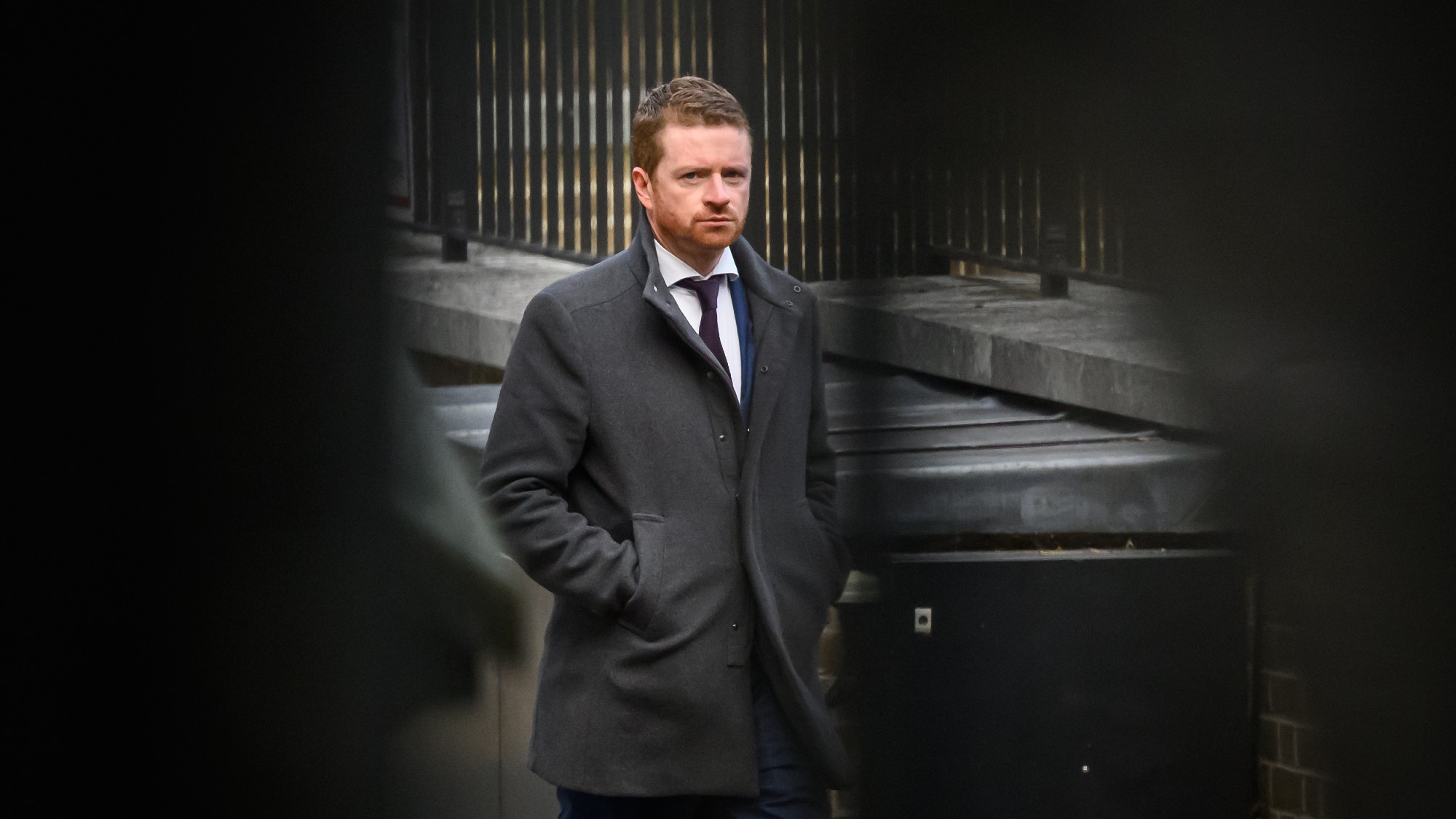
    “This is gutter politics,” was Armed Forces Minister Al Carns’ reply when quizzed about the theft. “We’ve got two wars on, one in the Middle East, one in Ukraine, and we’re talking about someone’s phone.” But like it or not, the theft of Morgan McSweeney’s work phone is a big political issue, said Alex Glover in The Spectator. In October, when he was still Keir Starmer’s chief of staff, McSweeney was walking down a street in Pimlico, phone to his ear, when a man on a bicycle snatched it from his hand and pedalled off with it. Or so McSweeney told the police. But that phone held text messages to his friend Lord Mandelson, messages that could have cast light on how the latter got to be appointed our US ambassador, and which would now have to be disclosed as part of the inquiry into the Mandelson/Epstein scandal. To many, the theft sounds too convenient to be true. Not to Starmer, though. As he puts it: “The idea that somehow everybody could have seen that some time in the future there would be a request for the phone is, to my mind, a little bit far-fetched.” 

    I don’t know the exact fate of the “stolen” phone, said Dan Hodges in the Daily Mail, but I know this: “Starmer is lying his posterior off about what happened.” The phone was reported stolen over a month after Mandelson was sacked as ambassador, by which time everyone, Starmer included, knew the huge significance of his chief of staff’s phone messages. Indeed, meetings were held in Downing Street to “game-out” how to proceed should the government be forced, as it now has been, to release documents relating to Mandelson. And there are huge holes in the tale McSweeney told police, said Amy Gibbons in The Telegraph. He did say that it was a “government phone”, but he never mentioned that he worked for Starmer and that it contained sensitive information. He even gave them confusing details about where the theft took place. Amazingly, the stolen phone wasn’t reported to the intelligence services, nor did No. 10 make any attempt to recover it. 

    I’m confused, said John Crace in The Guardian. For years, right-wing hacks have been going on about London being “a hellscape … where simply using your phone is an invitation to be mugged”. Yet instead of cutting McSweeney some slack, they’ve convinced themselves that his is “the only phone in London not to have been nicked”. Not getting details right just after you’ve been mugged is understandable behaviour for anyone in shock, but not in McSweeney’s case it seems. “After all, it’s a well-known fact that men with ginger hair and a beard can’t be trusted.”


    It wasn’t all bad

    An “incredibly rare” Bronze Age shield found in a peat bog in North Ayrshire has been returned to Scotland for the first time in 235 years. The shield was uncovered by labourers in 1779. Twelve years later, it was presented to the Society of Antiquaries of London, where it has remained until now. It is being lent to the National Museum of Scotland in Edinburgh, where it will be displayed with other shields, found in the 19th century, at an exhibition this summer.


    People

    Harry Styles

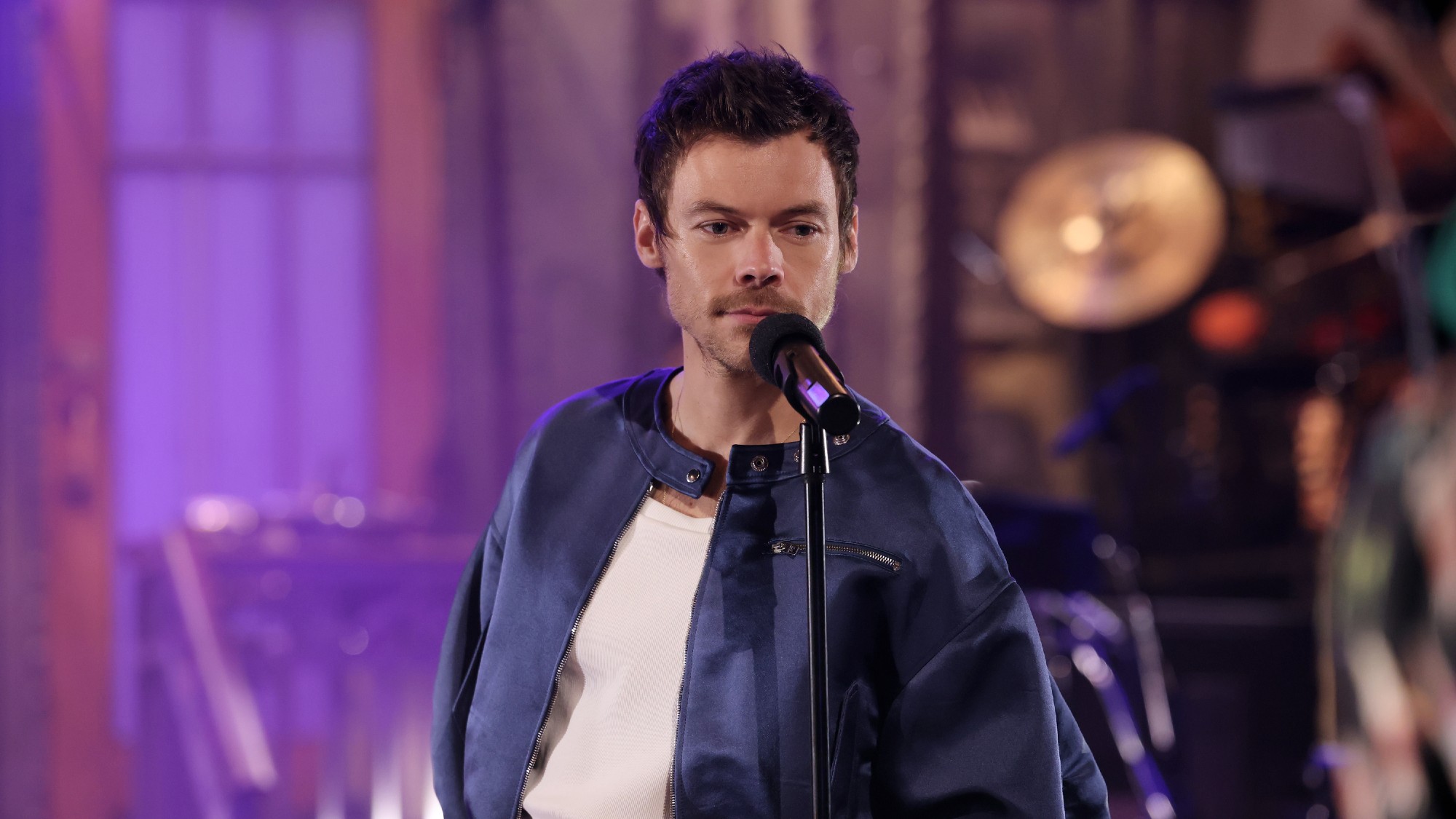
    It is 16 years since Harry Styles stood “baby-faced and floppyhaired” on “The X Factor” stage, describing his plans to read law and sociology at university, says Sophie Heawood in Runner’s World. Of course, his life didn’t work out quite that way. 

    Today, at 32, he is one of the most famous people in the world – which has thrown up some complicated feelings. “Something I’ve often struggled with, in the middle of a tour, is feeling like I’m not sure what I’m giving, not sure what I’m adding to the world,” he says. “Especially when the reward system and the kind of … adulation that you can receive feels so loud.” He gets a lot out of it, he says. “But what am I contributing?” 

    Two years ago, he decided to take a break – his first, really. During that time, he took up running – and found that it gave him time to himself, to process his thoughts. In March, he ran his first marathon; six months later, he ran another, in under three hours. In his career, so much of what he does and what he achieves depends on producers, his team, the fans who respond to his music. But with running, “it’s just you, alone, moving through the world. You don’t need anything, just a pair of shoes.” 

    Now, he runs every day, and though he’s often recognised as he pounds the streets, it doesn’t bother him. “You’re always moving,” he points out. “I think with people who see me, it’s a bit more ‘Was that...?’ rather than, ‘Oh look, it’s him!’ And by that time, you’re already gone.”


    Image credits, from top: Alex Brandon-Pool / Getty Images; Simon Wohlfahrt / Bloomberg / Getty Images; Leon Neal / Getty Images; Rosalind O'Connor / NBC / Getty Images
     

    Recent editions

    • Morning Report

      Bondi benched

    • Evening Review

      The US goes rogue

    • Morning Report

      NASA shoots for the moon

    VIEW ALL
    TheWeek
    • About Us
    • Contact Future's experts
    • Terms and Conditions
    • Privacy Policy
    • Cookie Policy
    • Advertise With Us
    • FAQ
    Add as a preferred source on Google Add as a preferred source on Google

    The Week is part of Future US Inc, an international media group and leading digital publisher. Visit our corporate site.

    © Future US, Inc. Full 7th Floor, 130 West 42nd Street, New York, NY 10036.