The Week The Week
flag of US
US
flag of UK
UK
https://cdn.mos.cms.futurecdn.net/flexiimages/jacafc5zvs1692883516.jpg

SUBSCRIBE & SAVE

Less than $3 per week

Sign in
  • View Profile
  • Sign out
  • The Explainer
  • The Week Recommends
  • Newsletters
  • Cartoons
  • From the Magazine
  • The Week Junior
  • Student Offers
  • More
    • Politics
    • World News
    • Business
    • Health
    • Science
    • Food & Drink
    • Travel
    • Culture
    • History
    • Personal Finance
    • Puzzles
    • Photos
    • The Blend
    • All Categories
  • Newsletter sign up Newsletter
  • Saturday Wrap, from The Week
    BJP dominance, Illuminati conspiracies, and the Andes strain

     
    controversy of the week

    The BJP takes West Bengal: is India a one-party state?

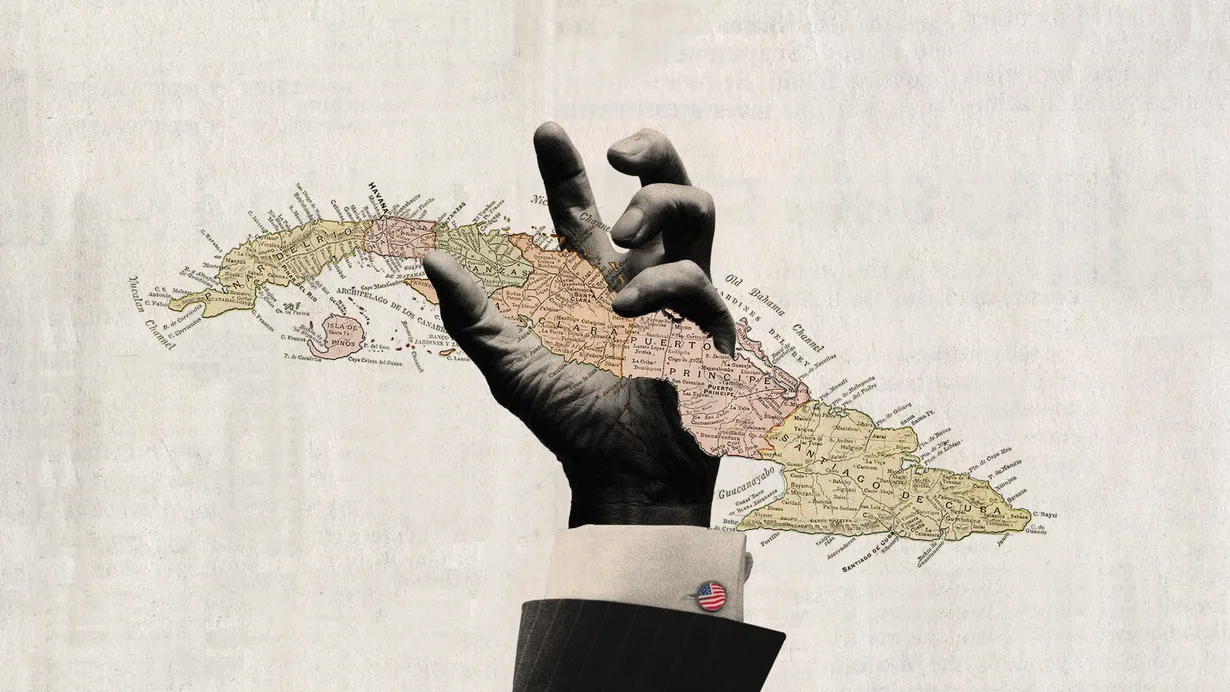
    Since it swept to power in 2014, little has stood in the way of India’s ruling Bharatiya Janata Party, the party of Prime Minister Narendra Modi. But West Bengal – India’s fourth most populous state – was a rare exception, said Nadim Asrar on Al Jazeera. Well over 25% of its 105 million population is Muslim, and for the past 15 years its voters have spurned the Hindu nationalist BJP in favour of the centrist Trinamool Congress (TMC), whose leader, Mamata Banerjee, has sought to appeal to Muslims and Hindus alike. But all that changed last week, when the BJP won a “stunning” majority of 207 seats in the state’s 294-member assembly. 

    It’s hard to exaggerate just how stunning this victory is, said Sadanand Dhume in The Wall Street Journal. It’s a bit like the Democrats winning the governorship of Texas for the first time in a landslide. The 71-year-old Banerjee is India’s fiercest female politician and one of Modi’s toughest critics. Her supporters refer to her as “Didi” (older sister), and love her for her disdain of luxury – she wears “simple” saris and flip-flops. But her detractors regard her as a petty despot who has “pandered to fundamentalist Muslims”. And the BJP was determined to dislodge her, said Robin Jeffrey on Inside Story. West Bengal is a prize they’ve hungered for. Its capital, Kolkata, was once “the intellectual centre of India” and home to many of the heroic events and figures revered by the BJP. So Modi’s people “threw a kitchen full of sinks at Banerjee and her party”. 

    That they did, said the Deccan Herald. In the run-up to last month’s vote, the election commission – a supposedly independent body often accused of doing the BJP’s bidding – stripped more than nine million names, nearly 12% of the total, from the state’s electoral register under a process called Special Intensive Revision. The ostensible aim was to remove alleged illegal migrants from neighbouring Bangladesh from the rolls. And at least 2.7 million people, mostly Muslims, were thus excluded from voting. 

    In dozens of constituencies, the BJP’s margin of victory was smaller than the number of voters removed, said Aparna Bhattacharya on The Wire. But, in fairness, the BJP would probably have prevailed in any case. “Didi” had been in power too long: her TMC had grown increasingly unpopular over issues such as high unemployment. 

    With “Didi” gone, Modi is close to “his dream of an opposition-free India”, said Alex Travelli in The New York Times. The BJP now controls 20 of the 28 state governments, a dominance not seen since Congress Party rule in the 1960s. And as the BJP’s income is six times that of its nearest rival, it will be hard for other parties to compete, said Nadim Asrar. It’s “a race between a Ferrari and a bicycle”, as the writer Arundhati Roy once put it. Good for Modi, maybe, but perhaps not so good for India.


    Briefing of the week

    The Illuminati and the New World Order

    A short-lived secret society founded 250 years ago this month lives on to this day in the fevered minds of conspiracy theorists

    Who were the Illuminati? 
    They were a group of republican freethinkers founded in Bavaria on 1 May 1776 by Adam Weishaupt, a former Jesuit and professor of canon law at the University of Ingolstadt. He had initially been attracted to the Freemasons, but had found the order expensive and hostile to his ideas. The group was originally called “Bund der Perfektibilisten”, or Covenant of Perfectibility, but eventually settled on “Illuminatenorden”, or Order of Illuminati, Latin for “enlightened”. Their aims were grandiose, utopian and vague. Inspired by the “philosophes” of the French Enlightenment, they aimed to replace Christianity with a religion of reason; and to infiltrate governments, influencing policy from within to end despotism. To this end, they recruited influential people. 

    How did the organisation grow? 
    They established cells across southern Germany. Recruitment focused on rich young men sympathetic to the group’s ideology, often using Freemasons’ networks and their lodges. Goethe was a member; so, some argue, were Mozart and Schiller. (Jews, women, monks and “pagans” were barred from joining.) The Illuminati used aliases – Weishaupt’s was Spartacus – and corresponded in cipher. The society was hierarchical, with three grades: Novice, Minerval and Illuminated Minerval. As in Scientology, recruits progressed through the grades, marked with initiation rituals, and as they did so gained access to secret knowledge – including the identities of other members. Weishaupt ensured all members spied on each other and sent reports to him on their activities and character. His favourite recruits became members of the group’s ruling council, the Areopagus. At its peak, around the mid-1780s, Weishaupt’s Illuminati probably had upwards of 1,500 members, and it stretched from Paris to Warsaw, from Denmark to Italy. 

    What became of the Illuminati? 
    Despite their attempts at secrecy, loose talk meant the Illuminati’s radical plans caught the attention of Bavaria’s absolute monarchy, which was resolutely Catholic. The Elector of Bavaria, Charles Theodore, banned all secret societies in 1785. The Illuminati had unwisely kept extensive archives of their correspondence, which were discovered during a raid. The order was dismantled. Weishaupt was stripped of his chair at Ingolstadt and banished from Bavaria. Some members were imprisoned, others were driven into exile. By 1790, the real Illuminati had disappeared from the historical record. 

    And the conspiracy theories? 
    Accusations about the Illuminati’s nefarious activities spread across Europe in the late 1780s. In 1797, the father of the modern conspiracy theory, the Jesuit priest Abbé Augustin Barruel, wrote a vastly popular history of the French Revolution, which attributed it to the work of the Knights Templar, the Freemasons, and particularly the Illuminati – “enemies of the human race, sons of Satan”, who were trying to destroy monarchy, Christianity and the social order. (This thesis was also proposed by the Scottish scientist John Robison at the time, but Barruel’s book sold better.) “Illuminati fever” spread to the US, where the Federalists (led by John Adams) accused the Republicans (led by Thomas Jefferson) of trying to overthrow the government and Christianity there. Later versions roped in the Jews too. “The Protocols of the Elders of Zion”, a 1903 forgery, purported to describe a Judeo-Masonic plot for world domination. In the 1920s, the theory was modified to suggest the Jews had used the Illuminati to infiltrate European society. Such theories helped to justify Nazi atrocities. 

    Why are such theories still around? 
    “Illuminist” conspiracism remained a strain in American thinking into the 20th century. During the “Red Scare” of the 1940s and 1950s, Freemasons, Illuminati and Jews were said to be behind an “international communist conspiracy”. The idea that liberals were plotting to turn the world into a socialistic global collective became one of the enduring beliefs on the extremes of the US right. The term “New World Order” was first heard in the 1970s. (George H.W. Bush used the actual phrase in a 1990 speech about the post-Cold War world, electrifying conspiracists.)

    However, it may be that a pair of countercultural pranksters did more than anyone to popularise the Illuminati myth. In the 1960s, Robert Anton Wilson and Kerry Thornley began a project they called “Operation Mindf**k” to shake up a world they felt had become too comfortable and orderly. They wrote letters to the press in which they discussed a secret society of elites called the Illuminati. Wilson and another writer published “The Illuminatus! Trilogy”, a 1975 sci-fi satire that claimed the Illuminati were behind many global events, such as the assassination of John F. Kennedy. 

    And are the Illuminati still going strong? 
    Apparently. Illuminist theories were some of the first to go viral on the early internet in the 1990s; they have since absorbed lore about, among other things, UFOs, Satanism, Davos “globalists” and Covid, which the Illuminati are said to have engineered. They have remained a fixture in fiction – they are the antagonists in Dan Brown’s 2000 thriller novel “Angels & Demons” – and in pop culture. It survives on the political fringes, too. In 2018, the former Canadian defence minister, Paul Hellyer, blamed the Illuminati for suppressing alien technology that could end our reliance on fossil fuels. 

    Why do people believe this? 
    The historian Michael Taylor, author of a forthcoming book about the Illuminati, argues that when major upheavals occur, from revolutions to the Covid pandemic, we want “an emotionally satisfying comprehensible explanation”. People prefer to blame woes on a shadowy enemy than on complex social factors and incidental triggers. “It’s really unsatisfying and unpalatable,” he says, “to accept that sometimes shit just happens.”

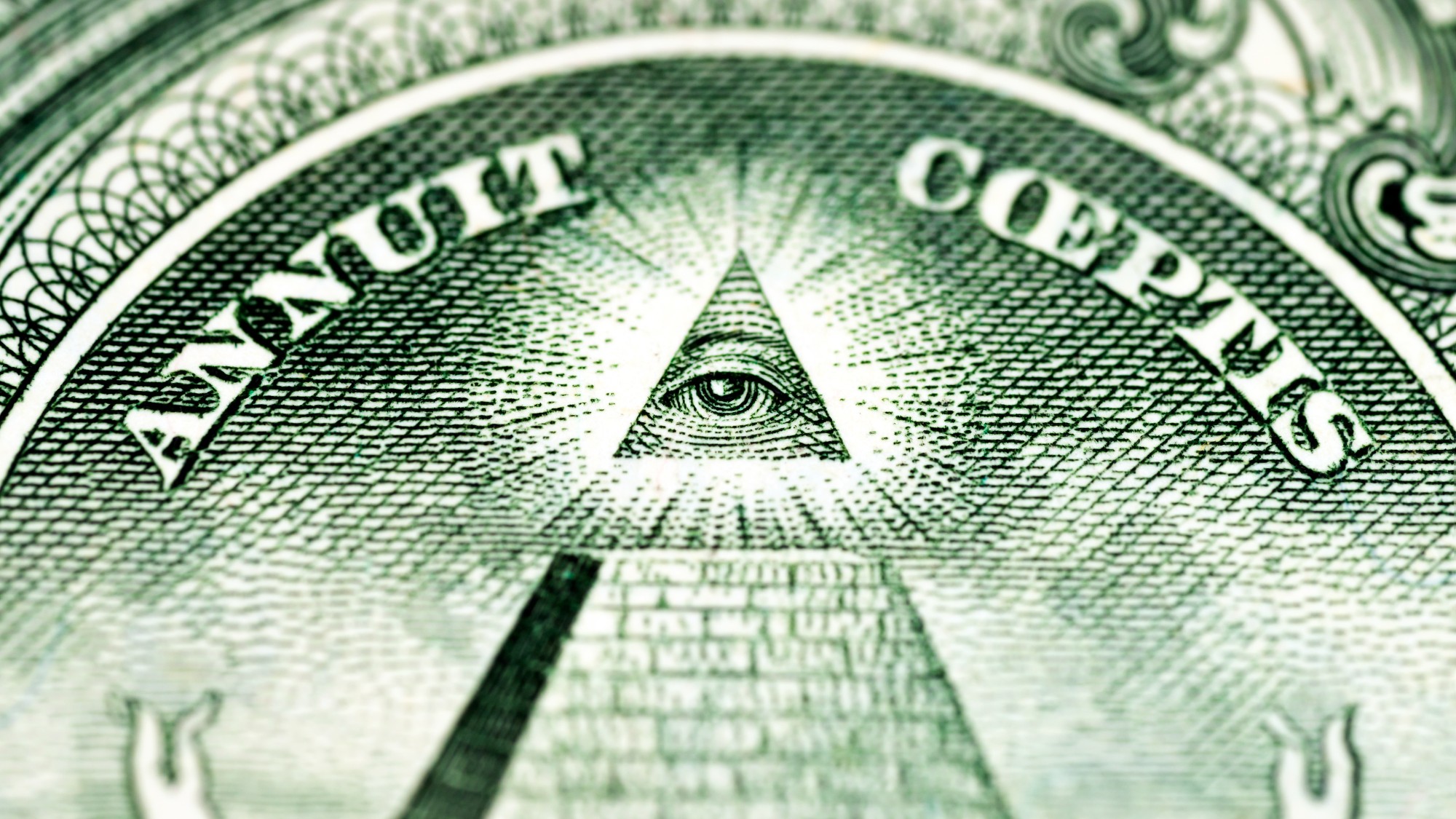
    The Eye of Providence 
     Conspiracy theories thrive on cryptic symbols. The “Eye of Providence”, suggesting both surveillance and esoteric ritual, is a favourite. It’s a Christian symbol – maybe descended from the Egyptian Eye of Horus – representing divine providence and oversight, which appears on many buildings and in paintings. In Freemasonry, it was used as a symbol of the Supreme Architect (God). In 1782, it was adopted for the reverse of the Great Seal of the United States, with the words “Novus ordo seclorum” (“New order of the ages”); it also features on the back of the dollar bill. The seal’s designer, Charles Thomson, said the pyramid “signifies strength and duration”, and the eye, providence. In 1789, it was printed on France’s “Declaration of the Rights of Man and of the Citizen”, symbolising paternalistic watchfulness over the new nation. 

    The “Illuminatus! Trilogy” popularised the idea that it is a symbol of Illuminati control. In 2013, Beyoncé made a triangular hand gesture when singing at the Super Bowl; she was accused of being one of the Illuminati. Madonna, Jay-Z and other celebrities have used the symbol ironically, feeding the conspiracists. The far-right radio host Alex Jones claimed in 2014 that the singer Katy Perry was an “Illuminati priestess”.




    Spirit of the age

    Lift manufacturers have been criticised for failing to adapt to ever heavier passengers. According to a new study, assumptions about the weight of the average person in Europe altered between 1972 and 2004. But signs regarding the maximum number of passengers that lifts can safely carry haven’t changed much since 2004 – though men have become nearly two stone heavier, on average, and women more than one stone.


    VIEWPOINT

    Why small is best

    “The happiest countries, such as Finland, Costa Rica, Israel and New Zealand, are geographically dispersed. Some have lots of immigrants. Some are homogeneous. The one throughline, besides high-ish incomes, is that they are small. No doubt, eight million people are easier to govern well than 80 million. But perhaps something else is at work: small countries don’t expect to be able to shape reality. Change – demographic, technological – is less traumatic for those who are used to being takers not makers of world trends. So much Anglo-French gloom is disbelief that such countries, once dominant on Earth, are impotent in the face of events.” 

    Janan Ganesh in the Financial Times


    talking point

    The Andes strain: can it be contained?

    In the early 1950s, thousands of UN troops in Korea fell ill with a mysterious fever, said Chris Smith in The Spectator. Doctors suspected that a virus might be to blame – but it wasn’t until 1978 that a Korean scientist isolated the culprit in a mouse, and named it after a nearby river, the Hantan. He also showed that hantaviruses, which are carried by rodents, can be inhaled by humans in dust contaminated by droppings or urine. The troops had likely kicked the virus up as they dug foxholes. 

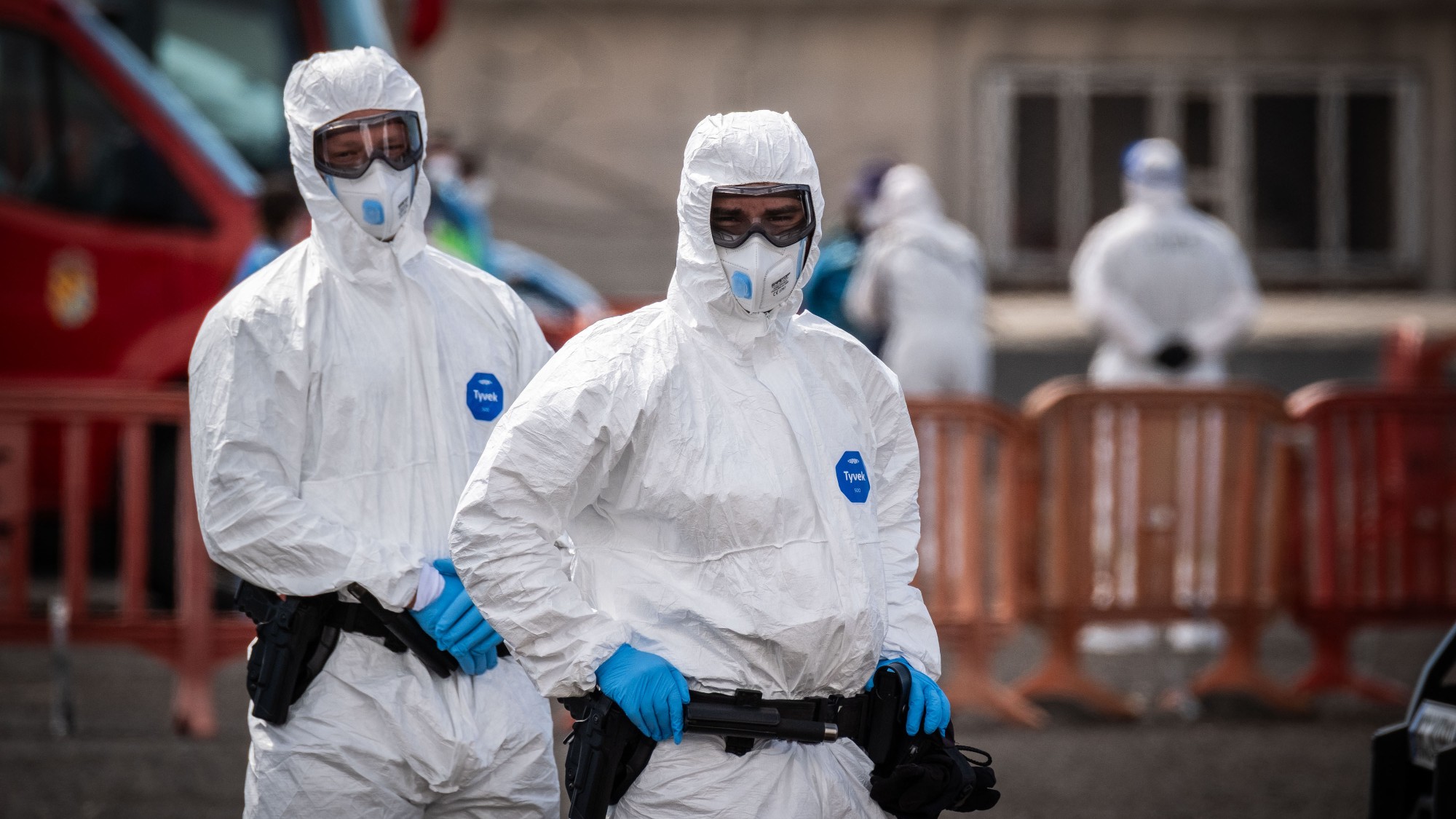
    Since then, numerous strains that can be transmitted to humans have been identified. They divide into two groups: Old World hantaviruses, in Europe and Asia, cause kidney dysfunction and have a mortality rate of 1% to 15%; New World ones, in the Americas, lead to severe lung infections and are fatal in around 40% of cases. It was the latter group that caused the outbreak on the cruise ship MV Hondius, and specifically the Andes strain, the only hantavirus that – in very rare cases – can pass from human to human. It is not yet clear how this outbreak started, said Esther Addley in The Guardian, but it is thought that one, or possibly two, passengers were carrying the virus, which has an incubation period of up to 42 days, when they boarded the ship in Argentina on 1 April. A Dutch ornithologist who fell ill on 6 April and died five days later has been identified as “patient zero”. He had spent months travelling in South America with his wife – who died on 26 April. A German woman then died on 2 May. By 10 May, seven others had fallen ill. 

    This week, 20 British nationals on board flew home to the UK, and were bussed to an isolation facility on the Wirral, said Sarah Knapton in The Telegraph. Described as healthy, they were assessed for 72 hours and then asked to self-isolate at home for 42 days. Health officials have stressed that we are not facing a pandemic. The Andes strain does not spread easily: it requires intimate or very close contact. And though many passengers left the ship weeks ago, there have so far been no “third-generation” cases – among people who were not on board. Given the virus’ incubation period, clinicians say that 21 June is the date to watch: if there have been no third-generation cases by then, it means the outbreak has run its course.


    It wasn’t all bad

    A French DJ is bringing new life to France’s traditional bakeries by setting up behind their counters and treating their customers to an energising mix of electro-punk and 1980s rock anthems. Dorian Gamon, aka DJ Baguette, said he had wanted to play in places where people of all ages and from all walks of life mix, in order to reach new audiences. “In France, that’s bakeries,” he told The Times. So he posted on social media, asking if any would like to host him. He has since been inundated by requests from independent bakeries across the country, who see his lively and festive early morning sets as a way of encouraging customers back to their shops. “DJ Baguette transforms the atmosphere,” said one owner.


    People

    Barack Obama

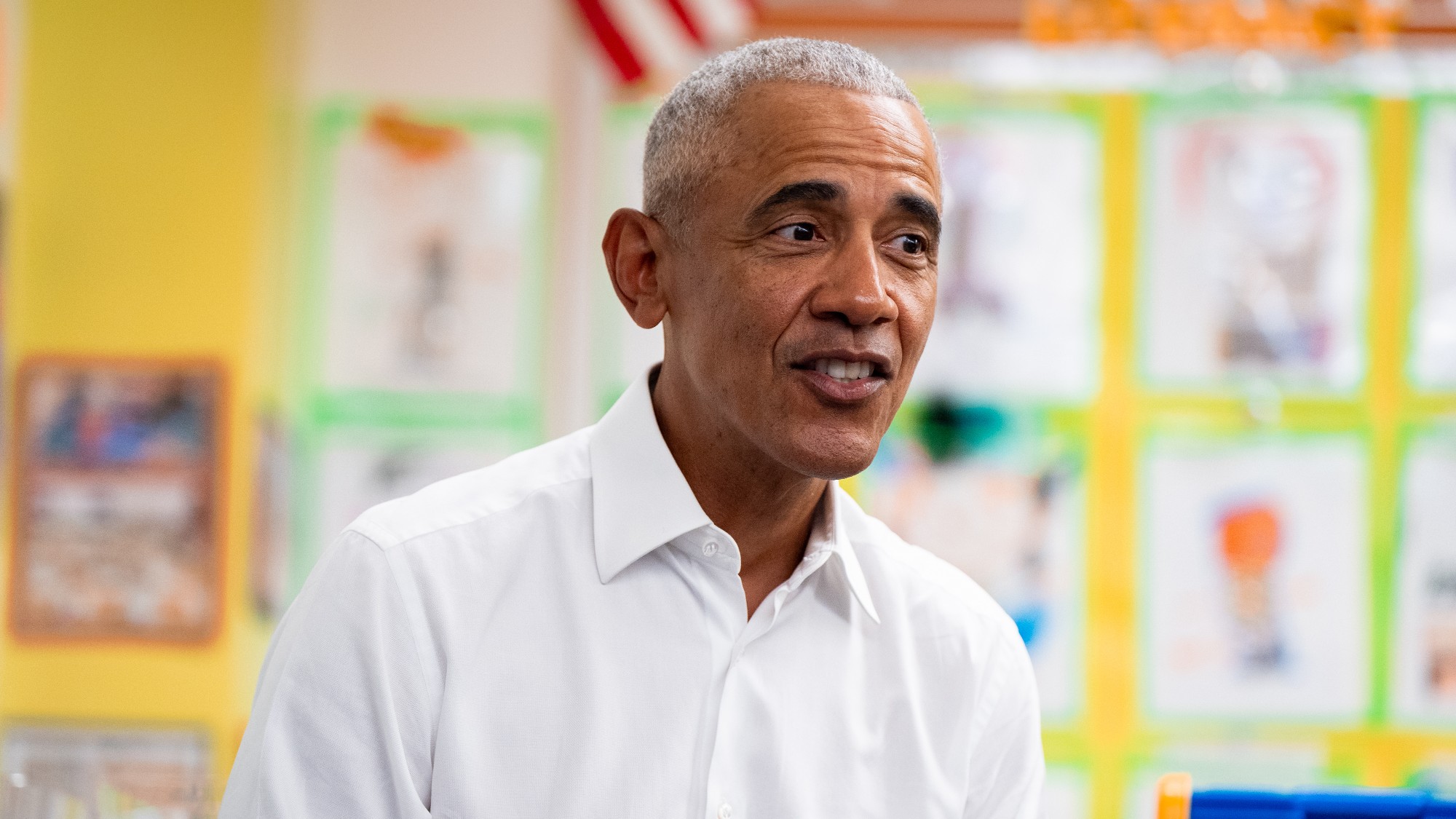
    During his eight years as president, Barack Obama had a recurring dream about sitting on a park bench unattended, or stopping by a corner shop unrecognised. “Captivity,” he told Peter Slevin in The New Yorker, was the hardest part of the job. “That loss of anonymity is profound, and you don’t get it back.” 

    Since leaving the White House, he has spent time with his family, written books, made money, set up his foundation, taken luxurious vacations. But he keeps getting pulled back into frontline politics. He is painfully aware that his legacy has been rolled back by Donald Trump. It’s been worse than he thought it would be; his confidence has been shaken. And many liberals think he should be doing more. They often ask: “Where is Obama?” “I think about it every day,” he says. 

    He’s doing more than people think: he has campaigned across the US in each election since leaving office; he hosts fundraisers; he records ads. But he doesn’t want to fight weekly battles with Trump, “going off” over each new outrage. And he parcels out his time with care. Michelle wants him to spend “more time with her, enjoying what remains of our lives”. The pressure creates “a genuine tension in our household”, he says. But ultimately, as he recently put it to a heckler: “Sir, I’m not the president of the United States currently. So there’s no point in shouting at me.”


    Image credits, from top: Debajyoti Chakraborty / NurPhoto / Getty Images; Iana Miroshnichenko / Getty Images;  Andres Gutierrez / Anadolu / Getty Images; Angelina Katsanis / Pool / Getty Images
     

    Recent editions

    • Morning Report

      What happened at Trump’s China summit

    • Evening Review

      Will Trump invade Cuba?

    • Morning Report

      The Fed’s Warsh era begins with soaring inflation

    VIEW ALL
    TheWeek
    • About Us
    • Contact Future's experts
    • Terms and Conditions
    • Privacy Policy
    • Cookie Policy
    • Advertise With Us
    • FAQ
    Add as a preferred source on Google Add as a preferred source on Google

    The Week is part of Future US Inc, an international media group and leading digital publisher. Visit our corporate site.

    © Future US, Inc. Full 7th Floor, 130 West 42nd Street, New York, NY 10036.