The Week The Week
flag of US
US
flag of UK
UK
https://cdn.mos.cms.futurecdn.net/flexiimages/jacafc5zvs1692883516.jpg

SUBSCRIBE & SAVE

Less than $3 per week

Sign in
  • View Profile
  • Sign out
  • The Explainer
  • The Week Recommends
  • Newsletters
  • Cartoons
  • From the Magazine
  • The Week Junior
  • Student Offers
  • More
    • Politics
    • World News
    • Business
    • Health
    • Science
    • Food & Drink
    • Travel
    • Culture
    • History
    • Personal Finance
    • Puzzles
    • Photos
    • The Blend
    • All Categories
  • Newsletter sign up Newsletter
  • Saturday Wrap, from The Week
    An Islamic Nato, the birth of punk, and Burnham’s North Sea dilemma

     
    controversy of the week

    The Mecca accord: an Islamic Nato for the Middle East?

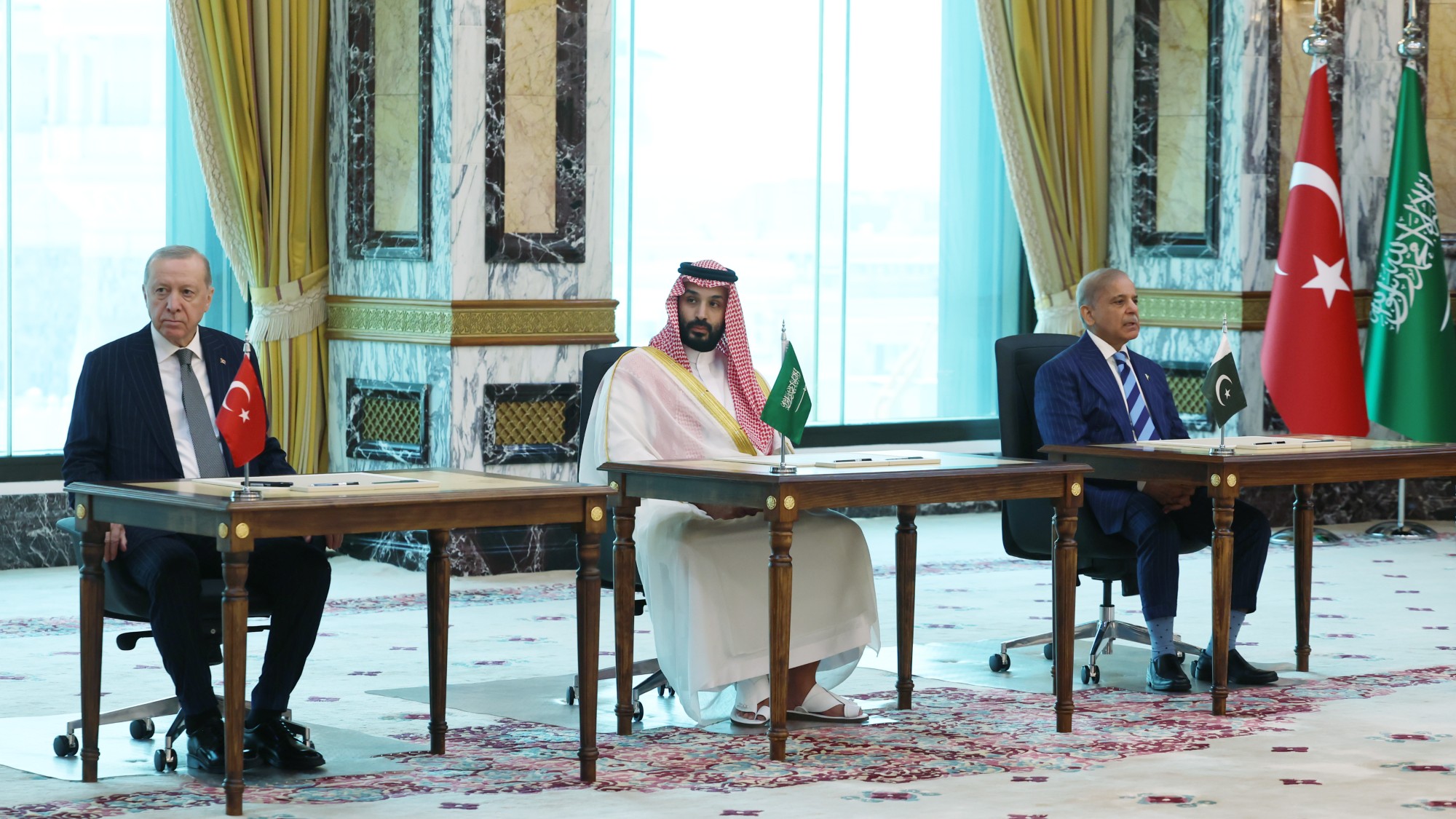
    A “tectonic shift” has taken place in the geopolitics of the Middle East, said Ilker Sezer in Türkiye Today. On 7 August, Saudi Arabia, Turkey and Pakistan formed “the holy grail of military alliances”, with the three Sunni Muslim nations vowing that “an armed attack against any one of the three states shall be regarded as an attack against them all”. That clause of the Mecca Joint Defence Agreement, named after the holy city where the treaty was signed, is the “Islamic equivalent of Nato’s Article 5”.

    Hitherto, Saudi Arabia had been wary of entering into any kind of multilateral pact: it had previously opted for bilateral deals like the one it reached with Pakistan in September, while continuing to rely on the US for its security. But the Iran war, during which Riyadh’s territory has been attacked by both Tehran and its regional proxies, has altered its thinking. The new alliance has a three-pronged advantage: it will benefit from Saudi Arabia’s financial might; from Turkey’s formidable army (the second largest in Nato) and arms industry; and from Pakistan’s battle-tested military and nuclear arsenal, the only one in the Muslim world. Together, these powerful resources are bound to affect “the strategic calculus of every adversary”. 

    Still, though highly symbolic, it’s “a thousand leagues away from being a new Nato”, said The Times. There’ll be “no integrated command structure, no joint doctrine, no integrated air defence network and no joint operational commands”. And no budget either. The pact simply provides a framework for closer military and political cooperation: it’s an attempt by the trio to free themselves from their “vassal-like dependence on the American security umbrella”. Such hedging makes sense in an increasingly volatile region in which the US has been unable, or unwilling, to protect its allies.

    Washington doesn’t seem overly concerned by the arrangement for now, said Umair Jamal on The Diplomat. It maintains close relations with all of them, and has long been keen for other nations to assume more responsibility in the Middle East. But in the long term, the US could lose leverage as a result of it, “particularly with respect to arms sales, negotiation of military-basing rights and the management of regional crises”. The effect will be all the greater if Egypt, Jordan and some additional Gulf states also jump on board. 

    With US influence receding in the Middle East, Iran and Israel have looked set to exert more control over the region, said Khalid Al-Jaber on Al Jazeera. That’s where this pact comes in: to counter Iranian and Israeli dominance, Riyadh, Ankara and Islamabad seek “to build a third pole” to ensure neither achieves hegemony. And one key step in that direction will be the co-development of Turkish and Pakistani weapons systems, including advanced drones and armoured vehicles, on Saudi soil.

    For Israel, this alliance marks a dangerous “turning point”, said Oshrit Birvadker in Israel Hayom. Turkey has morphed from an ally into a “major threat to Israel, no less significant than Iran”, while Saudi Arabia has pivoted from its intention to join the Abraham Accords to recognise Israel. 

    The alliance’s first test could well be in Yemen, said Mohammed Nail Abdulqader on Responsible Statecraft. The Houthis, an Iran-aligned group battling the Riyadh-backed Yemeni government, have recently renewed hostilities with Saudi Arabia following the collapse of a 2022 ceasefire. As part of a maritime blockade against Riyadh, they have fired missiles at a refinery in the Saudi city of Jazan and attacked vessels in the Red Sea. A major future attack by the Houthis could test the “grey area” that has not been publicly defined by the Mecca accord.

    If the alliance’s response is weak, the Houthis may become emboldened; if it’s too strong, there’s the risk of a wider conflagration. Carving a middle path between these two extremes will be mightily hard. But that’s the only way to build a “credible deterrence without opening the door to a new war”.


    Briefing of the week

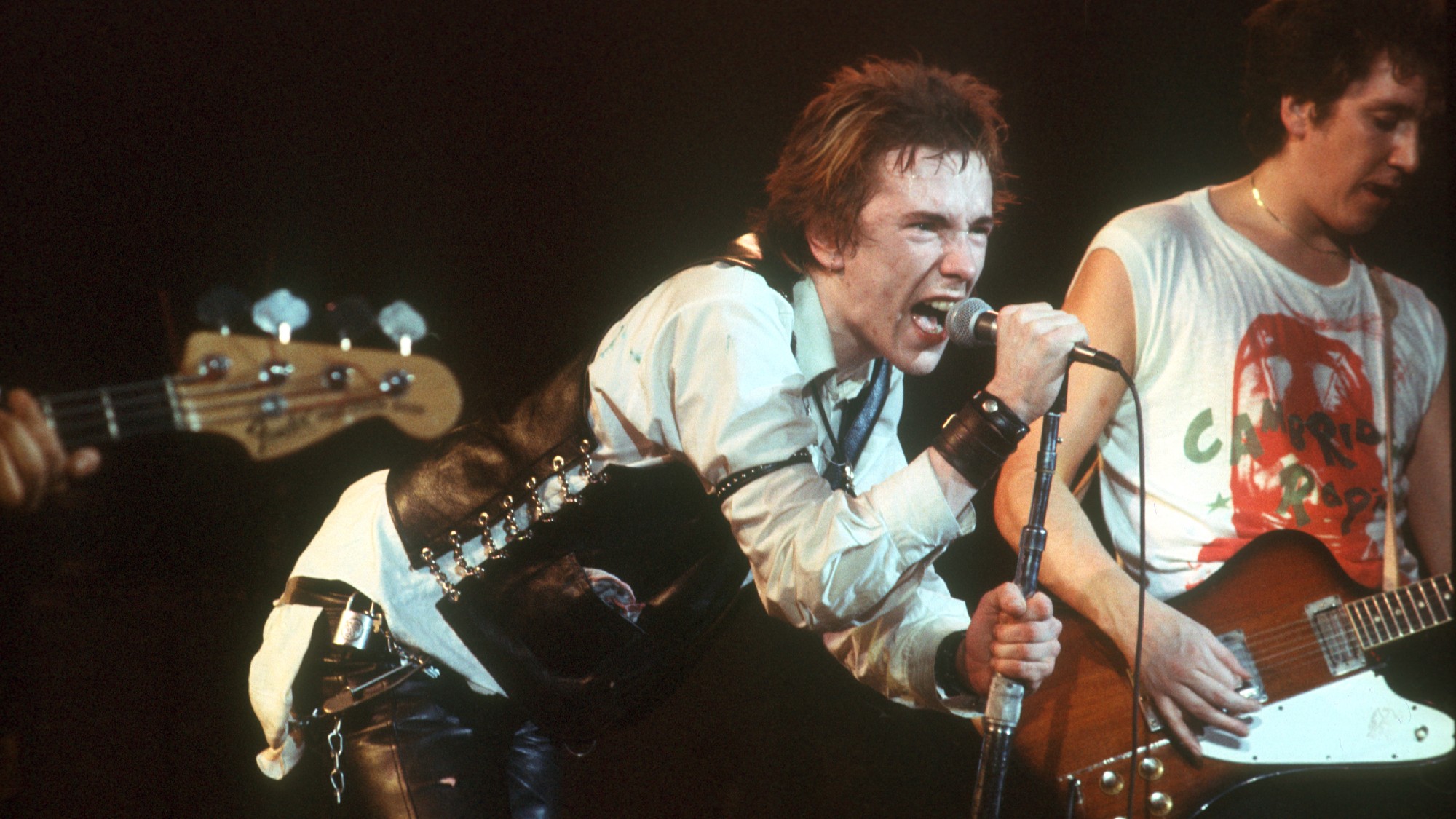
    Punk’s ‘year zero’

    Fifty years ago, punk rock – noisy, anarchic, rude and dressed to shock – erupted on to Britain’s streets and stages

    What happened in summer 1976? 
    There was a record-breaking heatwave, inflation and youth unemployment were worryingly high, a Labour prime minister had recently resigned – and a new subculture known as “punk” was spreading rapidly among the young. Its seed was the Sex Pistols, a band formed only the previous winter, who wouldn’t release their first single, “Anarchy in the UK”, until 26 November. But their early gigs inspired the formation of The Clash, The Damned, Buzzcocks and many other punk bands.

    Plenty of adults were appalled, but punk had a powerful influence on fashion, filmmaking and graphic design as well as rock music – well beyond punk itself. Members of the tiny audiences at two shows the Pistols played that summer – in Manchester in June and July – went on to found The Fall, Joy Division, The Smiths, Simply Red and the Creation and Factory record labels.

    What even is a punk?
    In Shakespeare’s time, the word meant a prostitute. In American-English it became a put-down for an inept youngster and/or petty criminal, as in 1971’s “Dirty Harry”: “Well, do ya, punk?” At around the same time, US music critics were starting to use the term “punk rock” for the amateurish, shouty garage rock bands that appeared in the 1960s. It was also applied to various New York acts – the Ramones, the New York Dolls, Richard Hell – who experimented with outlandish outfits, back-to-basics songwriting, and themes of teenage alienation. But “punk rock” didn’t become a media phenomenon until it crossed the Atlantic. 

    Why did it take off in Britain?
    Britain, at the time, had a hyperactive music press and an entertainment industry with an appetite for eccentricity and theatricality. As American record companies had long understood, these made London an ideal launchpad for pop-culture trends. (The Ramones, who drew crowds of about 150 in New York, were astonished to find themselves in front of thousands of people when they played in Camden Town in July 1976.)

    The Sex Pistols crystallised punk into an easily imitated package, striking every pop musician who encountered them as “shock troops from the future”, as one critic put it. “It just blew all the other rubbish away,” said Joe Strummer, who joined The Clash after seeing the Pistols play in April. They were the hottest band in London by March 1976, and by 2 December they were household names in the UK. 

    How did they manage that? 
    John Lydon (aka “Johnny Rotten”), Steve Jones, Paul Cook and Glen Matlock were bolshy, in their late teens or early 20s, and from deprived backgrounds. (Jones, the guitarist, was functionally illiterate until his 40s.) Lydon, the singer, was smart, gobby and gleefully provocative, which endeared him to the band’s manager, Malcolm McLaren, a fashion designer who’d briefly managed the New York Dolls. Armed with a look provided by McLaren and his then girlfriend, Vivienne Westwood – ripped clothes, safety pins, bondage gear, spiky, dyed hair – they swiftly outraged respectable opinion. People had used rude words on television before, but never in such uncouth tones as Lydon and Jones in a regional ITV interview on 1 December 1976. The next morning they were on the front page of every newspaper (“The FILTH and the FURY!” splashed the Daily Mirror). 

    Was that really ground-breaking? 
    The Pistols’ cartoon-yob image was an important part of their confrontational, anti-establishment appeal: spitting, pogoing, fighting and vandalism were rife at punk gigs. Their raw, confrontational attitude and do-it-yourself musicianship were a reaction against expensively produced “progressive” outfits such as Pink Floyd, “hippies” and over-dressed stadium rockers such as Elton John. “Up to that point, we’d all been singing about bowling along California highways,” one Northern Irish rocker recalled of punk’s impact. Many found it intensely liberating: female-fronted bands such as Siouxsie and the Banshees, The Slits and X-Ray Spex got a leg-up from the movement. Jamie Reid’s iconic cut-out designs for the Sex Pistols’ record covers, with their “ransom note” lettering, inspired countless posters and fanzines, helping to democratise graphic design. Westwood became one of the UK’s leading fashion designers. 

    How authentic was punk really? 
    McLaren, who’d been to art school, liked to say that the Pistols were “my sculpture, my painting, my little artful dodgers” – an artwork inspired by the French situationists, who aimed to shock people out of their complacency with unexpected spectacles. Lydon rejected this furiously, but McLaren certainly did mould the band. He chose their name (probably), selected band members and planned their media stunts; and they did record their only album, “Never Mind the Bollocks”, in a state-of-the-art studio with a producer who’d played keyboards on The Beatles’ “White Album”.

    While The Clash later made it big in America, sales figures for 1976 suggest that punk was largely a hipster and media preoccupation. No punk single made the year’s UK top 50; Abba, Rod Stewart and Demis Roussos dominated the album charts. 

    What became of the first punks? 
    The Sex Pistols reached new heights of controversy by releasing “God Save the Queen” (“She ain’t no human bein’”) during the Silver Jubilee in 1977, then broke up in chaotic circumstances the following January. The Clash’s original line-up soldiered on until 1982, by which time punk rock had mutated into post-punk and new wave. Countless noisy American guitar bands with an outsider ethos have been inspired by punk, and more purist scenes still exist across the Americas, Europe, Asia and Australia. More importantly, whenever someone with no training or credentials picks up a guitar, a brush or a pen, the spirit of punk lives on.

    Bill Grundy meets the Sex Pistols 
    Queen were meant to go on Thames Television’s “Today” to be interviewed by Bill Grundy early on the evening of 1 December 1976, but Freddie Mercury had an emergency dental appointment. The Sex Pistols, promoting “Anarchy in the UK”, were a last-minute replacement. Grundy – an affable presenter with old-fashioned elocution and, it later emerged, a serious drink problem – was visibly disconcerted by the four oddly barbered young men and their even more oddly dressed hangers-on (the “Bromley Contingent”), one of whom wore a swastika armband.

    Under Grundy’s needling questioning, Johnny Rotten muttered the word “shit”, then repeated it like a naughty schoolboy when challenged to speak up. Next, Grundy tried to flirt with Siouxsie Sioux. Steve Jones responded as he would to a dirty old man in a pub, calling Grundy a “dirty sod”, a “dirty fucker” and “a fucking rotter”. Grundy visibly mouthed “Oh shit” as the credits rolled. 

    After a national outcry, “Today” was cancelled two months later, and Grundy’s career never recovered. (He died at 69 in 1993.) However, in 2008 Fremantle Media, which owns the rights to the Thames TV back catalogue, found that the Sex Pistols incident was the most-requested TV clip of all time in Britain up to that point.


    Spirit of the age

    More than a third of Britons say they kiss less often than they did five years ago, with one in five saying they had not been kissed in more than a year. The trend is worse among 18- to 24-year-olds, with the survey finding almost a third avoided kissing owing to a lack of confidence. 40% said they were likely to overthink the moment, while 28% worried they were not good kissers.


    VIEWPOINT

    Against silence

    “Are we becoming too quiet? A recent study in The Atlantic found that daily spoken word counts declined by around 300 every year between 2005 and 2019. Silence is now seen as a desirable self-improvement tool; healthy even. ‘Silent walking’ is a wellness hack. We’re noise-cancelling like never before – and Hilton Hotels’ trends report this year has introduced me to the horrid concept of ‘hushpitality’ (‘sometimes the best travel companion is silence’). Spending time with other people is good for our brains, health and mood; social isolation is bad for us. We seem convinced we need quieter lives, but maybe we actually need more chat?” 

    Emma Beddington in The Guardian


    talking point

    North Sea oil and gas: Burnham’s dilemma

    There’s no mistaking the message of this summer’s wildfires, said Rebecca McQuillan in The Herald. It’s that we need “to stop procrastinating and cut emissions, fast”. But is Britain ready to accept this fact of life and act on it?

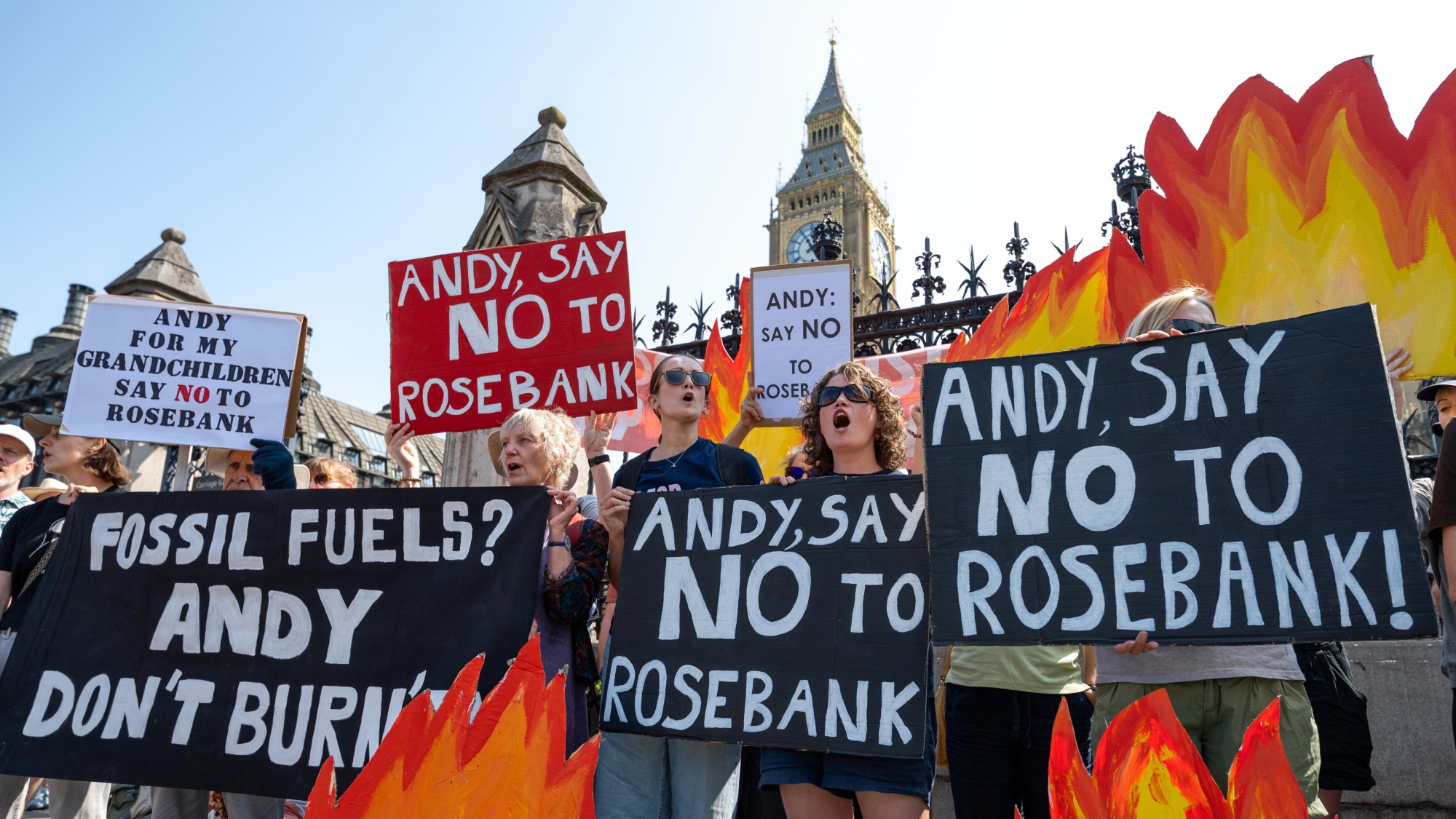
    We’ll soon get an answer to that question when the government announces whether or not it’s giving the go-ahead to the development of two oil and gas fields in the North Sea. Both projects – the Jackdaw gas field off Aberdeen and the larger Rosebank oil and gas field west of Shetland – were approved by the previous Tory government. But they had to reapply for development consent after a court ruled that ministers had to consider the lifetime carbon costs of the developments, not just the emissions generated during extraction. Consultations on that issue have now closed, leaving the final decision in the hands of Andy Burnham and his energy secretary, Miatta Fahnbulleh. 

    Reports suggest that a decision is expected next month, said Kathryn Porter on UnHerd. Climate campaigners have presented it as a choice between exploiting new fossil fuel reserves or stopping using oil and gas, but that’s misleading. Given that the UK is still many years away from being able to rely purely on clean energy, it’s really a choice between developing these North Sea resources during the transition to net zero or just relying on imported oil and gas, which generally involves higher emissions. Burnham can allow new oil and gas production to protect jobs and the UK tax base. “Or he can cave in to the hysterics, harming the economy and the planet in the process.” 

    The prime minister is pitching himself as a “pragmatist” on this issue, said Gaby Hinsliff in The Guardian. He “isn’t swayed by expensive fossil fuel lobbyists”, but he is sensitive to the arguments of oil rig workers, car manufacturers and those like the eco-entrepreneur Dale Vince, who say that if we need oil and gas from somewhere, we might as well get it from our own backyard.

    But Labour voters are looking for more from Burnham than mere pragmatism. They want him to be the sort of leader who can face up to the challenge posed by climate change and “sell difficult answers”. If Burnham gives the go-ahead to developing one or both of these North Sea fields, he’ll do a lot of damage to his reputation and lose many of the voters Labour has won back from the Greens, said Hannah Martin on LabourList. And for what? The new fields wouldn’t generate huge amounts of tax, and Jackdaw would “only create 27 direct full-time jobs in total”. The economics of new North Sea drilling is questionable. The politics is even worse.


    It wasn’t all bad

    An 11-year-old girl from Harrow in northwest London has been crowned Britain’s youngest-ever women’s chess champion. Bodhana Sivanandan only took up the game in 2020, but won three golds at the European Schools Championship two years later, and in 2024, became the youngest person to represent England internationally in any sport. In claiming the women’s title, she has broken a record set by Elaine Pritchard in 1939, when she was 13. Chess-watchers have described Sivanandan as Britain’s greatest ever chess prodigy; the schoolgirl says she is focusing on becoming a grandmaster “as soon as possible”.


    People

    Lee Child

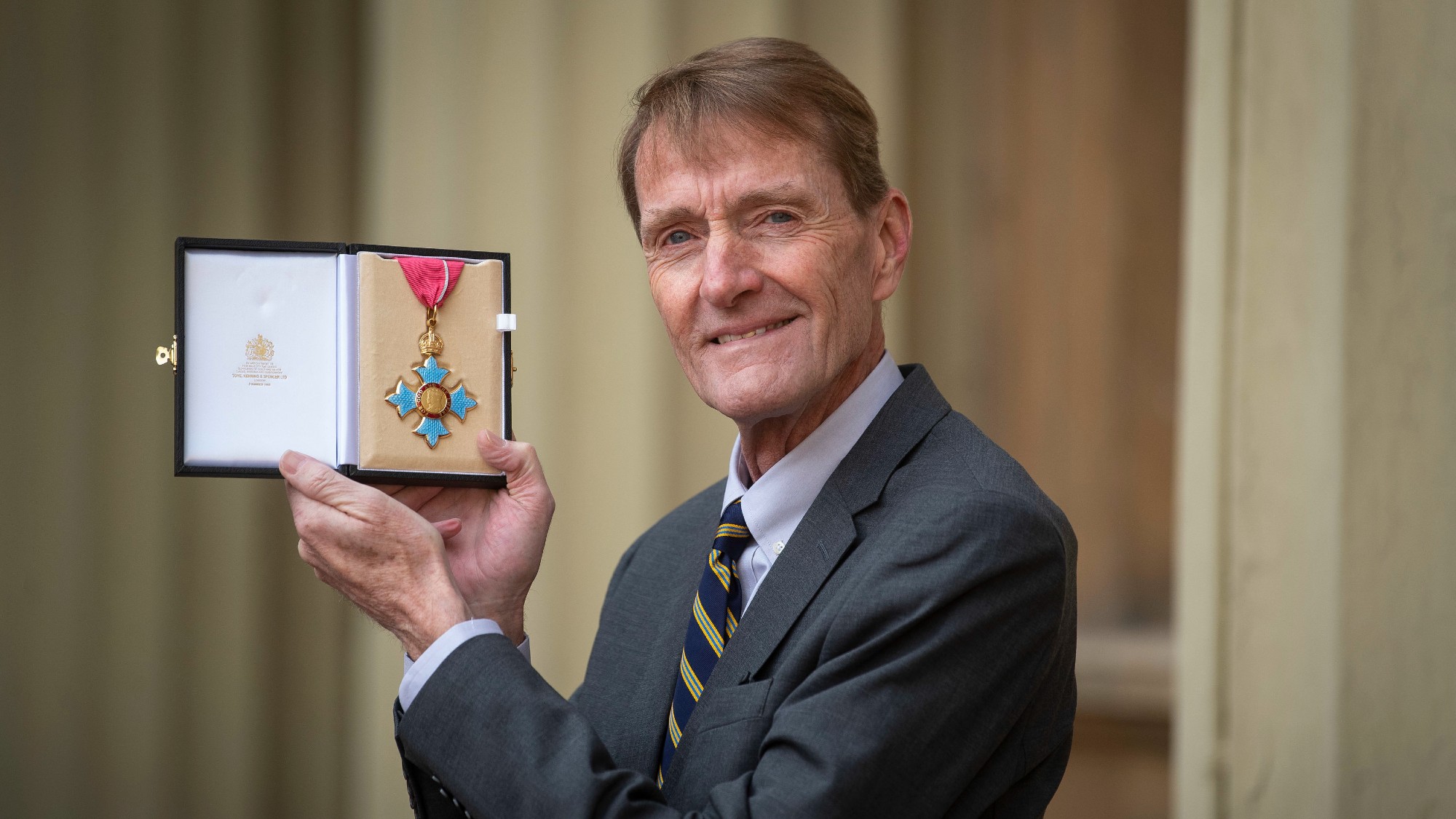
    Lee Child has spent most of the past three decades in America; but when Donald Trump won a second term in 2024, the thriller writer decided it was time to head back to the UK. He still loves the US, he told Nick Rufford in The Sunday Times, but the political culture there “wore me down” and Trump’s “dehumanising language” about immigrants made him feel “unwelcome”. 

    Trouble was, having decided to leave, he wasn’t sure where in Britain to settle. “If you don’t have to live in a particular place for work, then you’ve got an infinite choice, and that’s bewildering,” he says. The Cotswolds, Warwickshire, the Yorkshire Dales – all were possibilities; but eventually, he and his wife chose the Lake District, a place they’d visited often in the past. 

    “It was always a kind of magic spot for us,” he says. “As a national park it never changes. You never get development. And so we thought, yeah, it’ll be peaceful, it’ll be quiet, it’ll be beautiful and it has personal significance. It’s like we’ve come full circle.”


    Image credits, from top: Turkish Presidency / Murat Cetinmuhurdar / Handout / Anadolu / Getty Images; Michael Ochs Archives / Getty Images; Andrea Domeniconi / SOPA Images / LightRocket / Getty Images; Victoria Jones / WPA Pool / Getty Images
     

    Recent editions

    • Morning Report

      Trump deportations reach new frontiers

    • Evening Review

      Rising bond yields

    • Morning Report

      U.S. national debt hits ‘ominous’ new milestone

    VIEW ALL
    TheWeek
    • About Us
    • Contact Future's experts
    • Terms and Conditions
    • Privacy Policy
    • Cookie Policy
    • Advertise With Us
    • FAQ
    Add as a preferred source on Google Add as a preferred source on Google

    The Week is part of Future US Inc, an international media group and leading digital publisher. Visit our corporate site.

    © Future US, Inc. Full 7th Floor, 130 West 42nd Street, New York, NY 10036.