The Week The Week
flag of US
US
flag of UK
UK
https://cdn.mos.cms.futurecdn.net/flexiimages/jacafc5zvs1692883516.jpg

SUBSCRIBE & SAVE

Less than $3 per week

Sign in
  • View Profile
  • Sign out
  • The Explainer
  • The Week Recommends
  • Newsletters
  • Cartoons
  • From the Magazine
  • The Week Junior
  • More
    • Politics
    • World News
    • Business
    • Health
    • Science
    • Food & Drink
    • Travel
    • Culture
    • History
    • Personal Finance
    • Puzzles
    • Photos
    • The Blend
    • All Categories
  • Newsletter sign up Newsletter
  • Saturday Wrap, from The Week
    Houthi victories, local government overhaul, and a Maltese scandal

     
    controversy of the week

    The Houthis: a new threat to oil supplies

    “The Iran war is metastasising,” said Adrian Blomfield in The Telegraph. Having evolved into a struggle for control of the Strait of Hormuz, the conflict is now threatening another key oil-shipping route. One of the reasons that global oil prices haven’t risen higher in recent months is that Saudi Arabia has still been able to export large amounts of Gulf oil via the Red Sea instead. But this lifeline is now in peril.

    Last week, Houthi rebels in Yemen launched a lightning offensive against Yemeni government forces, seizing control of the country’s entire Red Sea coast, including the towns and islands around the strategic Bab al-Mandeb Strait. On Friday, another militia group aligned with Iran – this one based in Iraq – launched drone attacks on Saudi Arabia’s vital east–west oil pipeline to the coast, forcing its closure. The combined assault pushed oil prices above $110 a barrel. 

    Until the middle of last week, the Houthi forces had appeared to be on the back foot, said Mark Urban in The Sunday Times. But they achieved a sudden breakthrough against divided government factions, reportedly with the help of an AI-generated spoof message that purported to be from a Yemeni government commander and ordered a general troop withdrawal.

    It has produced a “nightmare scenario” for Saudi Arabia, which faces a threat to its vital national interests but also knows from “bitter experience” how hard it is to defeat the Houthis in Yemen, having tried and failed to do so for over a decade. Turkey and Pakistan, with whom Riyadh signed a much-vaunted defence pact last month, aren’t rushing to help the Saudis out. 

    Nor is the White House, which already has enough on its plate with Iran and “is increasingly aware of the limits of what it can achieve through military force”, said Gideon Rachman in the Financial Times. Yet the US administration is also in a bind. Until the Houthis’ intervention, the oil situation had appeared just about manageable, thanks to Red Sea exports and the US shepherding vessels through Hormuz; oil shipments there are now at roughly a third of pre-war levels.

    Enough oil was reaching the global market to keep prices safely below the $100 a barrel level. But supplies of Gulf energy to the West are now looking much more precarious. This is a global crisis requiring a “global solution”, said The Times. President Trump needs to work with China and other consumers of Middle Eastern oil to help stabilise the situation in Yemen and remove the Houthis’ threat to these crucial sea lanes. “Otherwise, the Bab al-Mandeb will continue to live up to its name: the Gate of Tears.”


    Briefing of the week

    The great local government shake-up

    Last week, plans to overhaul England’s system of county councils and local authorities were abruptly paused. What’s going on?

    What was meant to be happening?
    At present, in much of England outside major cities, county councils provide one set of services, and district and borough councils another. County councils cover education, transport and roads, town planning, fire and public safety, social care, and services such as libraries; while district and borough councils, covering smaller geographical areas within the counties, look after more locally focused services such as rubbish collection and recycling, council tax collections, council housing and planning. 

    The government’s plan, known as local government reorganisation (LGR), was to replace this two-tier system with “unitary authorities”, bringing all responsibilities together into one body, by early 2028. In five authorities – Surrey, Essex, Hampshire, Norfolk and Suffolk – this process was launched in 2025. In one of the last announcements of Keir Starmer’s government, Steve Reed, then then secretary of state in the Ministry of Housing, Communities and Local Government (MHCLG), said 14 other councils would also be reorganised.

    Why were they being merged?
    The two-tier system, which dates back to the 1970s, was brought in to ensure a balance of central services designed to cover a large geographical area, and local responsiveness on smaller-scale matters. But according to Reed, when setting out these plans in December 2024, the system leads to “outdated and misaligned structures that slow down delivery, fragmenting public services, hampering housebuilding and slowing down important decision making”.

    Unitary authorities already cover much of England. In 1986, 32 London boroughs and 36 other metropolitan districts became unitary authorities. Since the mid-1990s, 62 other unitary authorities have been created, most recently North Yorkshire, Somerset and Cumbria; over 65% of England’s population already lives in one. The hope was that consolidation would produce major savings, reducing management, back-office operations and other kinds of duplication – and that it would help give more efficient services to residents.

    So what happened?
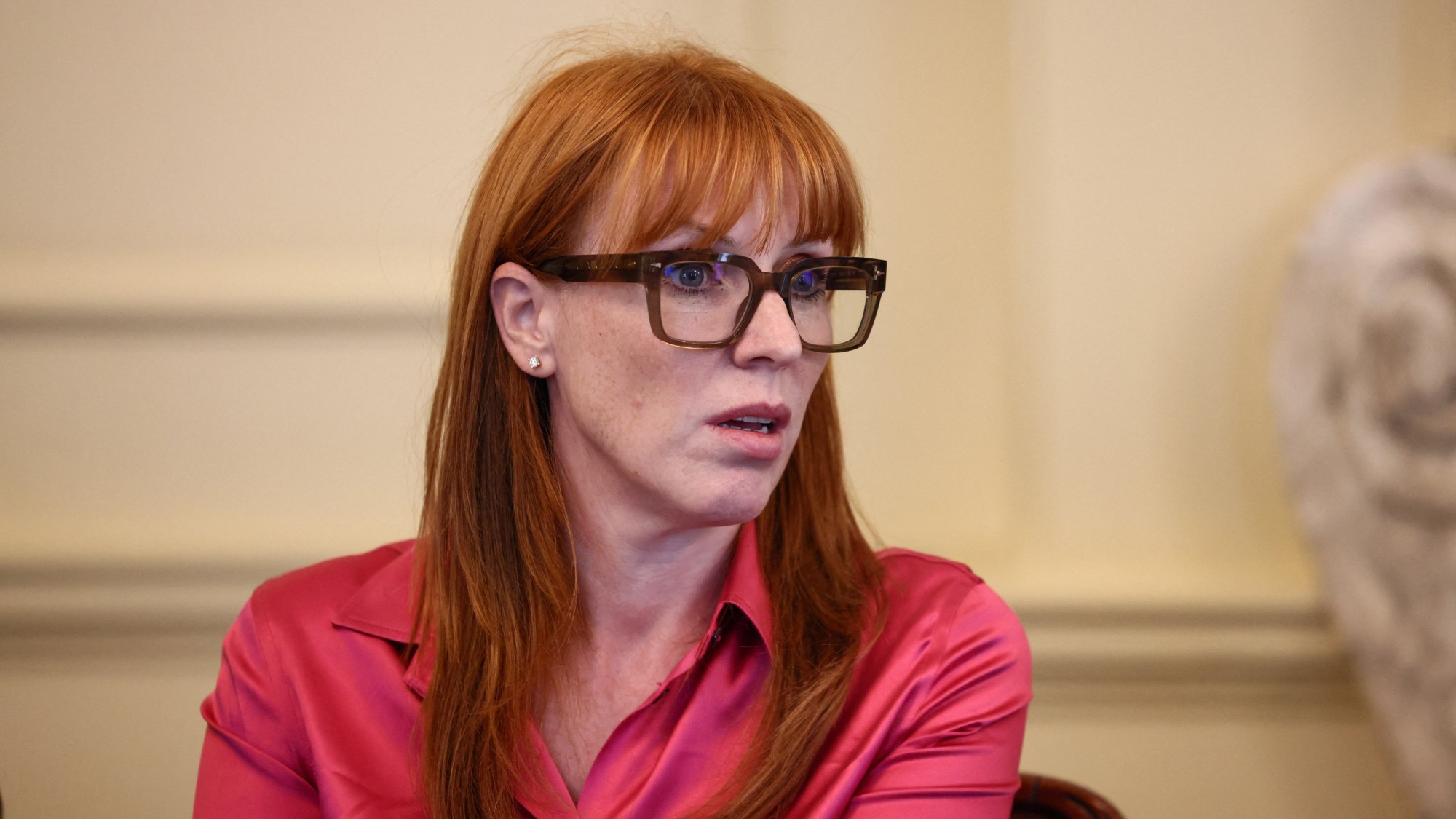
    LGR has triggered fierce resistance across England. Essex County Council, now led by Reform UK, challenged the government’s proposals in court; Norfolk, Suffolk and Hampshire were following suit. There were objections from Devon to Rutland. Last Monday, the new MHCLG minister, Angela Rayner, officially announced the withdrawal of all LGR proposals for Essex, Norfolk, Suffolk and Hampshire. A further 14 council reorganisations were paused pending a “rapid review”. The only LGR process now going ahead is in Surrey. 

    Why were the plans opposed?
    Many council leaders were furious that central government was choosing to “rearrange the deckchairs”, when they are already facing so many challenges: debt, social care, special educational needs, housebuilding. 

    The proposed reorganisations were often highly complex. For Essex, the plan was to turn one county council, 12 low-tier councils and two existing unitary councils into five streamlined unitaries by 2028. This would have greatly reduced the number of councillors (from about 700 to perhaps 430), a deliberate policy to reduce costs. The plans, complained Peter Harris, Reform leader of Essex County Council, are “ill-thought, expensive, purely ideological in nature and seek to create further democratic distance between the people of Essex and their elected local politicians”. 

    What other objections were there?
    In some cases, the issue was whether the new authority would be financially viable: the proposed East Norfolk Council would have been one of Britain’s poorest. In Devon, the plan was to merge eight existing second-tier authorities and one county council into four unitary authorities: three based on Plymouth, Exeter and Torbay, and one covering the very large, impoverished “rural rump”, with a vast road network.

    The residents of Rutland, England’s smallest county, home to 41,000 East Midlanders, objected that their small unitary authority was to be subsumed into a bigger unitary in neighbouring Leicestershire. The county’s MP, Tory Alicia Kearns, said Rutlanders would “have our identity stripped from us”. Several historic UK cities were also cited as being at risk of being legally demoted to “towns”: Canterbury City Council was to be absorbed into East Kent Authority, perhaps losing its city status.

    Is there still a case for going through with LGR?
    Yes. North Yorkshire Council, for instance, is an advocate for the process. It has achieved £68 million in recurring annual savings, since it merged seven district councils and one county council into one in 2023 – by removing duplicated senior executives, using smarter central procurement, pruning unneeded offices, and so on. 

    But the overall financial benefits and costs of LGR are disputed. A PwC report commissioned by the County Councils Network found, in 2020, that savings of £2.9 billion could be made. But this is contested: the BBC found that the government had failed to do “its own analysis of the costs”. The transition itself would be costly: the PwC report found that it could cost £850 million. Norfolk County Council said it would cost it £96 million. 

    What’s happening now?
    It’s unclear whether this is just a pause, or the end of the LGR process. Rayner said: “In light of legal advice, I want to satisfy myself firstly that the right process is in place, that it is robust, and of course complies with the law.” She added that she wanted to be sure it met “the priorities of a new administration”. There was satisfaction in local authorities, but also anger. “The most ambitious change to local government in a generation now looks in danger of becoming a colossal white elephant – a huge drain on time, resources and goodwill,” said the Local Government Intelligence Unit, a think tank.

    Surrey divided, Middlesex reborn
    In Surrey County Council, the LGR process is so far advanced that it is going ahead. It is being split on 1 April 2027 – “Vesting Day” – to form two unitaries called East and West Surrey. Surrey has already held elections to its new “shadow authorities” – councils-in-waiting, ready to go into action next April. Surrey County Council and 12 district councils will be replaced with two unitary authorities, and 13 chief executives reduced to two. As part of the reorganisation, a central government initial £500 million payout has been made to cover a £2 billion debt racked up by Woking County Council. 

    During this process, a famous name from the past may return. Middlesex, one of the smallest historic counties of England, the homeland of the Middle Saxons, once covered all of what is now London north of the Thames. It was gradually eaten up by the capital, and in 1965, the Greater London Council was created, and Middlesex County Council abolished. Some areas north of the river, such as Shepperton and Staines, were added to Surrey County Council. Local councillors have asked Rayner to approve its renaming as West Surrey and South Middlesex. “We are putting a historic wrong right,” said Liberal Democrat councillor Harry Boparai.




    Spirit of the Age

    Nearly half of office workers are bringing in packed lunches more regularly than they did a year ago, as the cost of buying lunch continues to rise. A “Pret at your desk” can now easily exceed £10: a smoked salmon sandwich from Pret a Manger is now £6.25; a drink and a packet of crisps will add another £4. Even at low-budget Greggs, a meal deal is £5.25. The polling found that 69% of workers think buying lunch has got too expensive, but many respondents also said that they brought in packed lunches for health reasons.


    VIEWPOINT

    ‘Warm handovers’

    “Exciting news from Sussex Health and Care, which has recommended that patients should no longer be called ‘patients’. They should be referred to as ‘customers’, ‘clients’, or, my favourite, ‘experts by experience’. Brilliant. Congratulations, sir. That heart attack you had? It makes you an ‘expert by experience’ on myocardial infarction. Please assist with this coronary angioplasty. And when you leave the hospital you are not being ‘discharged’, because that sounds too ‘final’. No, you are being given a ‘warm handover’. This sounds like an office grope, but shush. It’s ‘relatable’ language, being used to stop you feeling ‘alienated’ or ‘intimidated’.” 

    Carol Midgley in The Times


    talking point

    The scandal rocking Malta: getting away with murder?

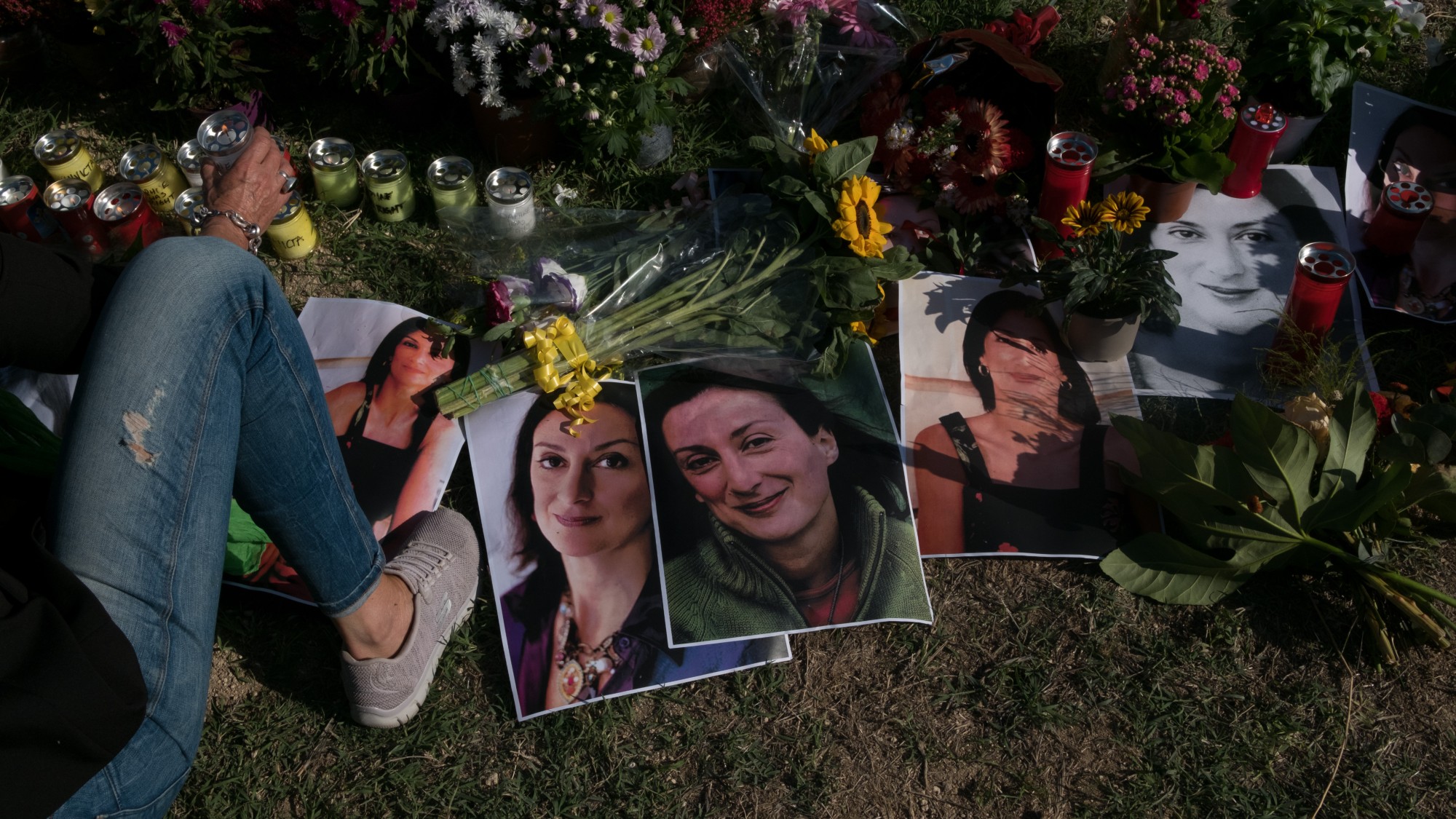
    Nine years have passed since Malta’s pre-eminent investigative journalist, Daphne Caruana Galizia, was killed by a car bomb near her home, said Jurgen Balzan in Newsbook Malta. The three men who carried out the assassination are now behind bars, and this month, after a tortuous nine-year investigation and a dramatic two-month trial, the man accused of commissioning the murder finally looked set to pay for his alleged crime. 

    The Maltese millionaire Yorgen Fenech, a close friend of the chief of staff of Malta’s then prime minister, Joseph Muscat, had admitted, in a police interrogation, that he had given €50,000 to the middleman who’d recruited the killers. So it came as a tremendous shock to the people of Malta that, despite this and other damning bits of evidence, the jury last week acquitted him. 

    What’s happened in Malta is a “hammer blow to justice, press freedom and the EU”, said The Observer. Given that Fenech’s confession was “never seriously rebutted” at the trial, it’s absurd for the jurors to have cleared him of conspiracy to murder, by a margin of eight votes to one. The rule of law in the EU’s smallest member state is “hanging by a thread”. 

    It’s extraordinary what a seismic transformation this small island nation of 550,000 people has undergone since Malta’s Labour Party came to power in 2013, nine years after the former British colony joined the EU, said Ben Munster on Politico. Since then it has achieved an “astonishing economic boom, fuelled by a no-holds-barred drive to court the world’s wealthy”. Between 2013 and 2024, Malta’s stock of foreign direct investment ballooned from €9.6 billion to €460 billion; its GDP increased by 70%. But all that gold has brought with it deep corruption and moral decay. 

    And that was what made Caruana Galizia’s fearless reporting so essential, said Joanna Demarco on the Global Investigative Journalism Network. She delved, like nobody else, into the “eyebrow-raising schemes” of Muscat, the PM who resigned in 2020 as a result of the political upheaval sparked by her assassination. At the time of her death, she was investigating allegations of high-level state corruption at a power plant run by Electrogas, a firm owned by, among others, the Azerbaijani state energy company Socar and
    … Yorgen Fenech. 

    Rumours are now rife about the jurors’ verdict, said Malta Today. Was fear the cause of their decision to acquit? Or was it something more noble? Perhaps they just didn’t trust a police investigation that was riddled by leaks, missing evidence and delayed action, and that failed in particular to conduct a proper investigation of the other chief suspect, Keith Schembri, prime minister Muscat’s former chief of staff, whom the defence accused of being the true mastermind. 

    Don’t you believe it, said Anna Marie Galea in the Times of Malta. Responsibility for this “shit show” lies with “what has always been this country’s greatest downfall: its people”. Despite the mountains of evidence, they still chase after rumour and wild conspiracy theories – “why did Daphne’s son park where he did the night before?” – and display a total absence of logic and considered thought. “If anyone needed any excuse to banish juries in this country”, this is surely it. 

    But Caruana Galizia “was and remains right” about the real scandal here, said Andrew Borg Cardona on The Shift. There truly is a “suffocating intimacy” between big business and politics in Malta. The public inquiry commissioned by Labour in 2021 concluded that the state itself had created “a climate of impunity, generated from the highest levels at the core of the administration” in which her murder became possible. Yet none of the inquiry’s suggested reforms – criminalising the hindrance of investigations, introducing Italian-style anti-mafia laws – has been implemented by today’s Labour government. It just keeps explaining away its own complicity in the scandal “and we, the Great Unwashed, have to grin and bear it”.


    It wasn’t all bad

    Sixteen volunteers from a Cornwall-based marine charity have cleared 1.3 tonnes of plastic, fishing gear and other waste from the remote shores of the Scilly Isles. Ocean currents carry debris from across the North Atlantic to the islands and deposit it on their coastlines. The team from Clean Ocean Sailing – which is funded by donations from individuals, groups and businesses – spent three weeks on the project, which follows several previous such efforts. The waste they collected was taken on the charity’s 118-year-old sailing boat “Annette” back to Cornwall, for sorting and, where possible, recycling.


    People

    Paul Smith

    Paul Smith is one of the biggest names in British fashion, but his career might never have started had it not been for his wife. He was 21 when he met Pauline. Having left school at 15, he was still living with his parents in Nottingham while he worked in a clothes shop. By contrast Pauline, his senior by six years, had studied at the Royal College of Art and worked for a fashion company in London. She introduced him to art and interesting people, urged him to take tailoring classes and, in 1970, encouraged him to open his own shop, in a back room. 

    He grandly named it Paul Smith Vêtements Pour Homme. He was, he told Emine Saner in The Guardian, lucky with his timing: it was an era of experimentation and, before mass tourism and globalisation, even the rag rugs he bought on holiday in Greece felt like a discovery. Slowly, he built Paul Smith into a multimillion-pound brand. But there remains a modesty about him. He accepts that his label is “not as relevant” as it was; yet at 80, he is still excited about design, and still loves going into work – including on the shop floor. He doesn’t need the money; but there again, money was never his main driver. 

    He and Pauline live in a house in a smart part of west London that they bought in the 1980s; but they never craved “grand things”. So what did they want? “This sounds crass and stupid, but just a nice life, a nice day. Pauline and I were in love, we are in love still. And luckily we’ve done well.”


    Image credits, from top: Mohammed Hamoud / Getty Images; Jack Taylor / WPA Pool / Getty Images; Joanna Demarco / Getty Images; Victor Virgile / Gamma-Rapho / Getty Images
     

    Recent editions

    • Morning Report

      RFK Jr pivots back to vaccines

    • Evening Review

      Will you get $5K from Trump?

    • Morning Report

      Fed puts inflation above Trump

    VIEW ALL
    TheWeek
    • About Us
    • Contact Future's experts
    • Terms and Conditions
    • Privacy Policy
    • Cookie Policy
    • Advertise With Us
    • FAQ
    Add as a preferred source on Google Add as a preferred source on Google

    The Week is part of Future US Inc, an international media group and leading digital publisher. Visit our corporate site.

    © Future US, Inc. Full 7th Floor, 130 West 42nd Street, New York, NY 10036.