The Week The Week
flag of US
US
flag of UK
UK
https://cdn.mos.cms.futurecdn.net/flexiimages/jacafc5zvs1692883516.jpg

SUBSCRIBE & SAVE

Less than $3 per week

Sign in
  • View Profile
  • Sign out
  • The Explainer
  • The Week Recommends
  • Newsletters
  • Cartoons
  • From the Magazine
  • The Week Junior
  • Student Offers
  • More
    • Politics
    • World News
    • Business
    • Health
    • Science
    • Food & Drink
    • Travel
    • Culture
    • History
    • Personal Finance
    • Puzzles
    • Photos
    • The Blend
    • All Categories
  • Newsletter sign up Newsletter
  • Sunday Shortlist, from The Week
    A ‘superbly well-crafted’ novel and a ‘stylish’ production

     
    THEATRE REVIEW

    Gentleman Jack

    Northern Ballet’s show ‘sets out to break the mould of traditional gender roles in dance’

    In her lifetime, Anne Lister was mocked for her masculine appearance and dress, and unkindly nicknamed Gentleman Jack, said Allan Radcliffe in The Times. But more than 180 years after her death, the Yorkshire landowner and polymath has “acquired the status of national treasure”. Her secret encrypted diaries, discovered in the 1980s, revealed that she’d had numerous same-sex affairs and a symbolic marriage to a woman – leading to her being described as the “first modern lesbian”.

    A recent BBC TV drama based on her life introduced her story to a far wider audience. But Northern Ballet’s impressive new narrative ballet is “more than an attempt to ride the coat-tails of Lister’s celebrity”. Choreographed by Annabelle Lopez Ochoa, it “sets out to break the mould of traditional gender roles in dance”; with ingenious and novel touches, and clear, compelling storytelling, it is a sensuous success.

    Although its subject matter is “progressive”, this is a formally “conventional” work with a tight narrative, long arabesques and great fluency, said Lyndsey Winship in The Guardian. Think of it as an “accessible, stylish production that happens to put the love between two women (three, actually) centre stage”. Gemma Coutts is a self-confident Lister, with a top hat, a frock coat and a “cocky motif” – a flick of the hip and the leg. But we also see the character’s romantic side, not least in an “erotically charged pas de deux on a dining table” with her great love Mariana (Saeka Shirai). Coutts, Shirai, and Rachael Gillespie – who plays Lister’s future wife, Ann Walker – are strong actors as well as dancers, and vividly convey the drama of the tale.

    In truth, Lister’s is “not an obvious story to adapt”, said Holly Williams in The Telegraph. Her business interests included canals, railways, collieries and quarries; her story is also about being an outsider in the “boys’ club of business”. It’s tricky to fit fraught discussions about coal mines into a ballet, and fans of the TV show may miss its snappy dialogue. The evening is on far firmer ground when it comes to her love life. All told, this is a crisp, refreshing, contemporary ballet – and, at times, a “sexy delight”.

    Lyceum, Sheffield, from 31 March to 4 April, then touring 


    FILM REVIEW

    Louis Theroux: Inside the Manosphere

    The documentary maker meets ‘extremely unpleasant’ misogynistic male influencers in latest film

    “I like horror films,” said Benji Wilson in The Telegraph, but, as the father of two teenage boys, I was left “quivering behind the sofa” by Louis Theroux’s latest documentary for Netflix. In it, he travels to Marbella, Miami and New York to meet content creators operating at the extreme end of the “manosphere” – a loosely connected network of misogynistic male influencers. What he finds, “as you can imagine”, is “extremely unpleasant”.

    Among the figures Theroux meets, said John Nugent in Empire, are Myron Gaines (author of the charmingly titled tome “Why Women Deserve Less”) and Harrison Sullivan, a 24-year-old Brit known as HSTikkyTokky, who refers to his girlfriend as his “dishwasher” and who openly professes to being “racist and homophobic”.

    Theroux takes a “serious approach” to these encounters, but sometimes his trademark neutral tone “falls short”. There is “disgusting rhetoric” that he fails to call out, and though he is supposed to be skewering the influencers’ views, they quickly start farming him for content, asking their followers to pitch in with questions for him, and then livestreaming his responses.

    In some ways, the film is “classic Theroux”, said Rebecca Nicholson in the Financial Times: “he holds unpleasant truths up to the light” by adopting a “faux-naive curiosity”. But, towards the end, Sullivan’s mother asks him why, if he so disapproves of what her son is doing, he is making money by publicising it. “It’s the documentarian’s age-old dilemma, but it feels particularly pertinent here, and is never quite resolved.”


    BOOK OF THE WEEK

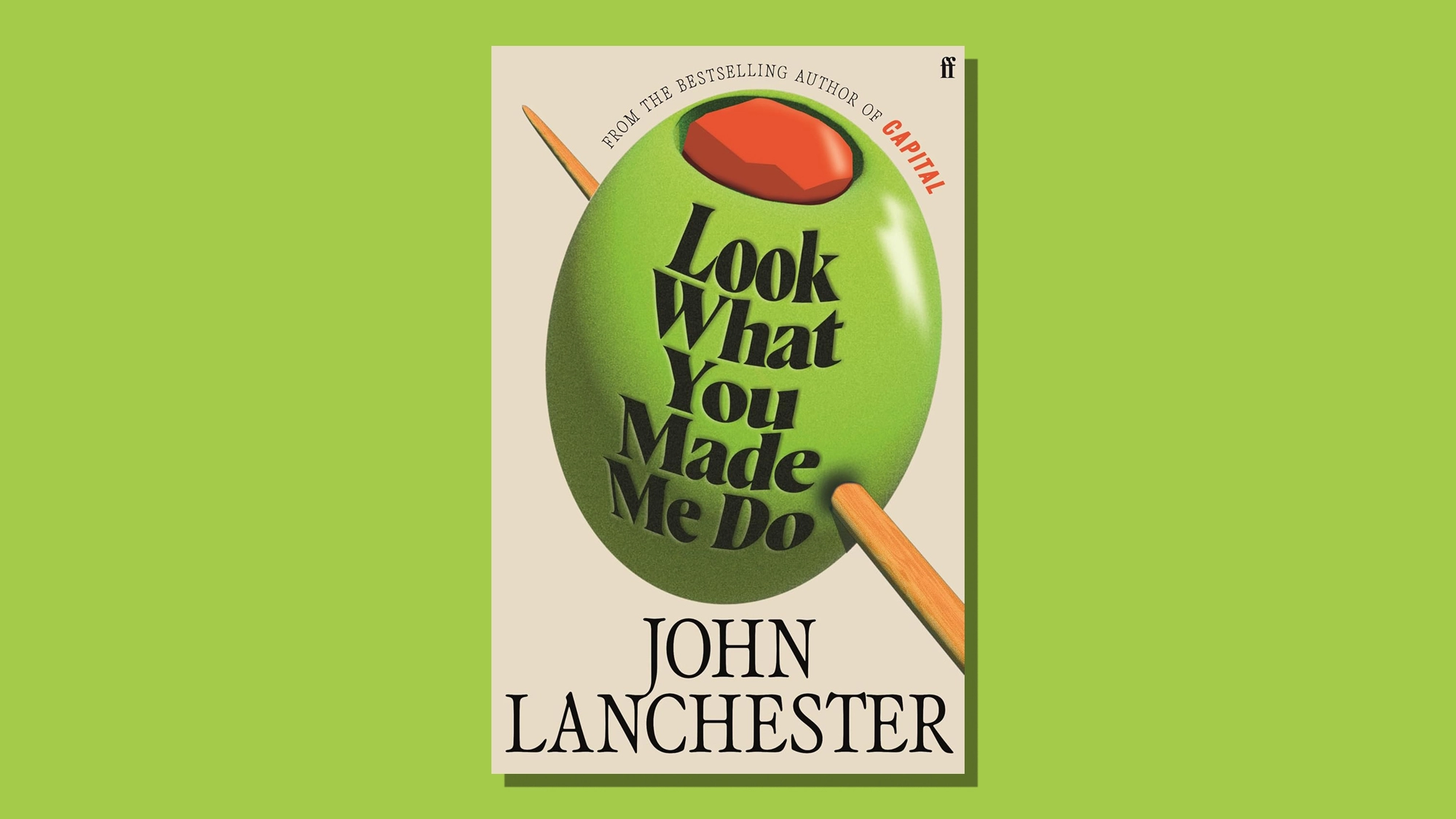
    Look What You Made Me Do

    by John Lanchester  

    In his “superb non-fiction” and in his media appearances, John Lanchester “comes across as a thoroughly decent chap”, said James Walton in The Times. Yet his fiction has often hinted at “something darker” – a capacity for “almost gleeful nastiness”. That side was to the fore in his brilliant debut, “The Debt to Pleasure”; and it’s here again in his latest novel, the “bracingly satisfying” “Look What You Made Me Do”.

    Fifty-something Kate enjoys a “comfortable life” as part of the “Oxbridge-educated middle class”, said Amanda Craig in The Spectator. Long married to Jack, a successful architect, she’s an “almost stereotypical” baby boomer. Yet when she watches the latest “hit TV series”, “Cheating”, her life is “cast into turmoil”. For the show, about a younger woman’s affair with a west London architect, contains details that make it clear that Jack has been unfaithful. As Kate plots her revenge upon its scriptwriter, what had seemed “perilously close” to being “that dread thing, a Hampstead novel”, morphs into a gripping “high-wire act between literary and commercial fiction”.

    Many of the set pieces are “tremendous fun”, and “Lanchester gleefully skewers the chattering classes, from the ubiquity of Ottolenghi to the faux-rural money bubble of Soho Farmhouse”, said Clare Clark in The Guardian. Yet the novel is let down by its plotting, which is “variously implausible and clunkingly predictable”. I disagree, said Peter Kemp in Literary Review. Lanchester has written of his admiration for Agatha Christie, and she would have applauded the many “ingenious” twists on display here. “Superbly well-crafted and immensely funny”, this is a “gleamingly accomplished black comedy”.


    OBITUARY

    Jane Lapotaire

    Classical actress who won an Olivier and a Tony

    Jane Lapotaire, who has died aged 81, will be forever remembered for her title role in Pam Gems’ 1978 play “Piaf”, said Michael Billington in The Guardian. Although she had never sung a note on stage before, her renditions of Édith Piaf’s repertoire dazzled audiences, as did the way she seemed to embody the chanteuse. But this was no mere act of mimicry. With her wide smile, she captured Piaf’s troubled spirit, her “emotional generosity and invincible good nature”. Having opened at Stratford, the play transferred to the West End then ran for two years on Broadway. Lapotaire won an Olivier and a Tony. But her success in this role masked the fact that she was that rare thing: “a genuinely classical actor, most at home in Shakespeare, Sophocles, Ibsen or Chekhov”.

    Jane Burgess was born in Ipswich in 1944. Her mother, a half-French orphan, was only 19 when she had her. Her father may have been an American GI. Unable to cope with a baby, her mother handed Jane into the care of her own foster mother, Grace Chisnall. Jane described Chisnall as a “kind”, uneducated woman, with whiskers and false teeth, who – if she saw Jane reading a book – would ask if she was ill. When she won a place at the local grammar school, Chisnall was appalled: she hadn’t the money for the uniform or hockey stick. Nevertheless, when her birth mother tried to regain custody of her, Jane fought to stay in Ipswich. Eventually, it was decided that she’d live in Chisnall’s modest home in term-time, and spend holidays with her mother and her husband – a wealthy French industrialist – in their grand house with servants in Libya.
     
    Aged 17, she appeared in a school production of “Romeo and Juliet”. “I knew then that I wanted to act,” she recalled. “I wanted it more than walking or breathing.” From school, she failed to get into Rada but won a place at the Bristol Old Vic Theatre School. Her mother was against it; her stepfather (whose surname she adopted) told her she wasn’t “attractive enough” to be an actress. She had never got over being abandoned by her mother, and their disdain galvanised her. “Like all children who were rejected by their parents, you either say, ‘OK, I’m a reject, I’ll f**king be a drug addict,’ or you go, ‘I’ll show you.’ I remember clearly walking down the street on my first night on Broadway. I was 34 and I realised that for the whole of my working life up to that moment I’d been saying, ‘I’ll show you I’m worth loving, I’ll show you I can make something of my life, I’ll show you you were wrong when you said you never thought I’d become an actress.’”

    She made her professional debut in Bristol in 1965 and, after a happy and fruitful stint at Laurence Olivier’s National Theatre, she joined the RSC, where, among other roles, she played Viola in “Twelfth Night” and Rosalind in “As You Like It”. After her run on Broadway, she tried to break Hollywood, to no avail. “At 40, I was suddenly very aware of not being ‘glamorous’ in the accepted sense,” she said. In 2000, she suffered a massive brain haemorrhage. After intensive treatment, she “re-entered the world terrified and alone”, said The Guardian, with her personality changed. She had become, she said, “like a combination of a helpless child and an obnoxious adult”. She wept at the thought that she might not act again. She used the time to write a memoir, and was eventually able to return to the RSC in 2013, in “Richard II”. Later, she appeared in “Downton Abbey” and “The Crown”. She is survived by her son Rowan Joffé, whom she brought up alone following her divorce from his father, the film director Roland Joffé, in 1980.

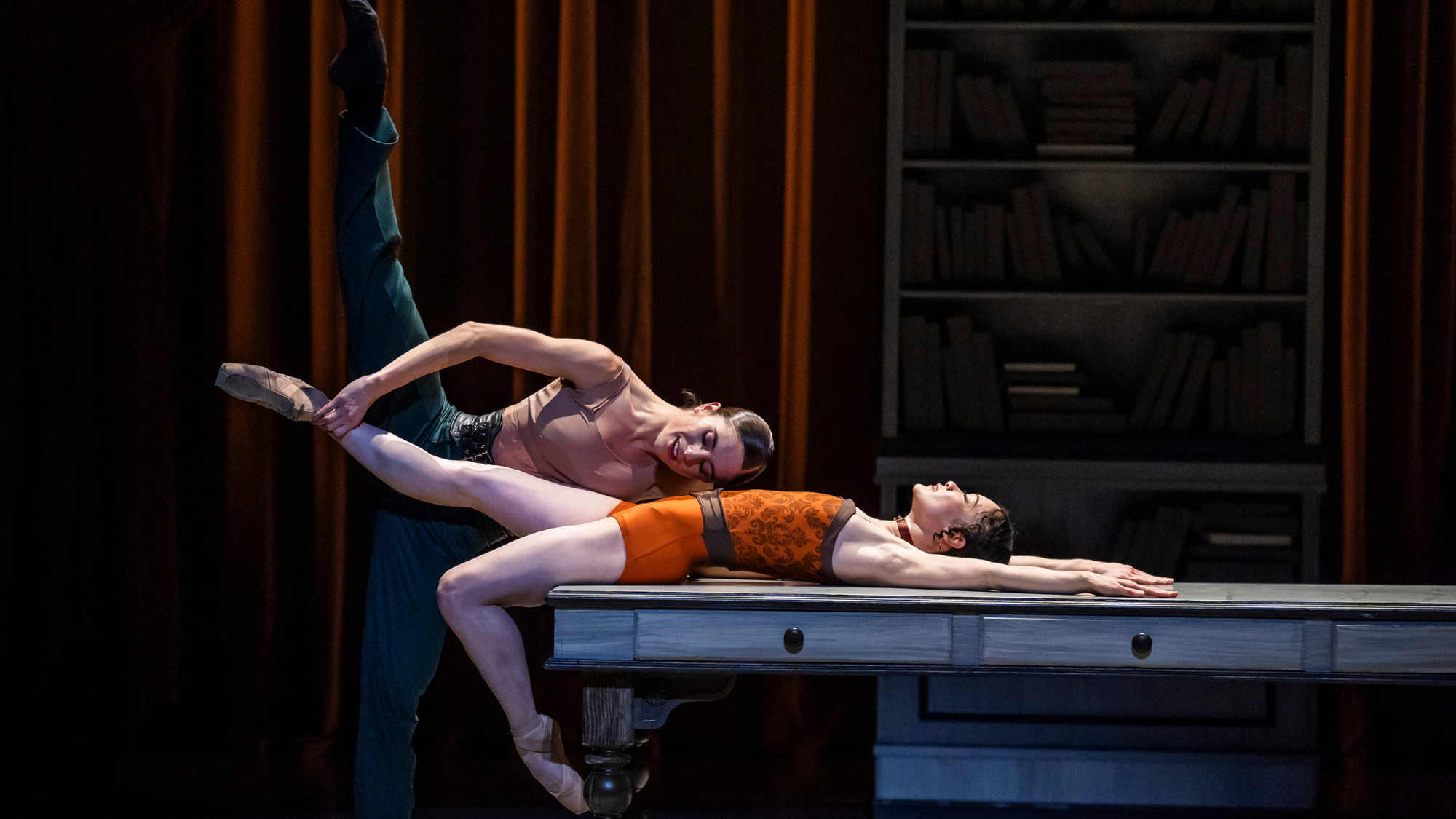


    Image credits, from top: Tristram Kenton; Netflix; Faber & Faber; Evening Standard / Getty
     

    Recent editions

    • Evening Review

      Are the US and Israel fighting the same war?

    • Morning Report

      Congress flinches at Iran war cost

    • Evening Review

      Iran war threatens China peace

    VIEW ALL
    TheWeek
    • About Us
    • Contact Future's experts
    • Terms and Conditions
    • Privacy Policy
    • Cookie Policy
    • Advertise With Us
    • FAQ
    Add as a preferred source on Google Add as a preferred source on Google

    The Week is part of Future US Inc, an international media group and leading digital publisher. Visit our corporate site.

    © Future US, Inc. Full 7th Floor, 130 West 42nd Street, New York, NY 10036.