The Week The Week
flag of US
US
flag of UK
UK
https://cdn.mos.cms.futurecdn.net/flexiimages/jacafc5zvs1692883516.jpg

SUBSCRIBE & SAVE

Less than $3 per week

Sign in
  • View Profile
  • Sign out
  • The Explainer
  • The Week Recommends
  • Newsletters
  • Cartoons
  • From the Magazine
  • The Week Junior
  • Student Offers
  • More
    • Politics
    • World News
    • Business
    • Health
    • Science
    • Food & Drink
    • Travel
    • Culture
    • History
    • Personal Finance
    • Puzzles
    • Photos
    • The Blend
    • All Categories
  • Newsletter sign up Newsletter
  • Sunday Shortlist, from The Week
    A ‘spellbindingly sleek’ film and a ‘magical’ exhibition

     
    FILM REVIEW

    The Stranger   

    A ‘masterful’ take on Albert Camus’ classic book

    Consisting of “two dreamlike, black-and-white hours of murder, sex and existential brooding”, “The Stranger” is “the Frenchest film I’ve seen in years”, said Robbie Collin in The Telegraph. 

    A “spellbindingly sleek” adaptation of Albert Camus’ novella “L’Étranger”, it is about a young French settler in 1930s Algiers who – shortly after his mother’s funeral – kills an Arab man on a beach. The rising French star Benjamin Voisin plays the character of Meursault with “mesmerising Alain Delon-like sangfroid and a shard of ice through his soul”, and the scene of the killing is “masterful”. This is a film with “the suspended horror and cruel, glinting beauty of a guillotine blade”.

    The film is faithful to the book, but it has “a subtle revisionist slant”, said Jonathan Romney in Sight and Sound. In recent years, much has been made of “the erasure of the Algerian identity” in Camus’ story. The book does not name Meursault’s victim: he is referred to only as “the Arab”. In 2013, the Algerian novelist Kamel Daoud published “The Meursault Investigation”, as a critical response to Camus’ work, and this film seems to have been made in the spirit of that work. Here, the victim has a name (Musa) and a personal history, and Algerians and their country are introduced as a dominant presence. Director François Ozon fleshes out the female characters too, said Jessica Kiang in Variety: Meursault’s girlfriend Marie (Rebecca Marder) in particular is given more depth than Camus’ first-person narration allowed. Yet crucially, in this “confounding, disturbing” and “icily compelling” film, Meursault himself “remains magnificently resistant to diagnosis or psychologising”.


    EXHIBITION REVIEW

    David Hockney  

    New show proves the 88-year-old’s ‘powers haven’t deserted him’

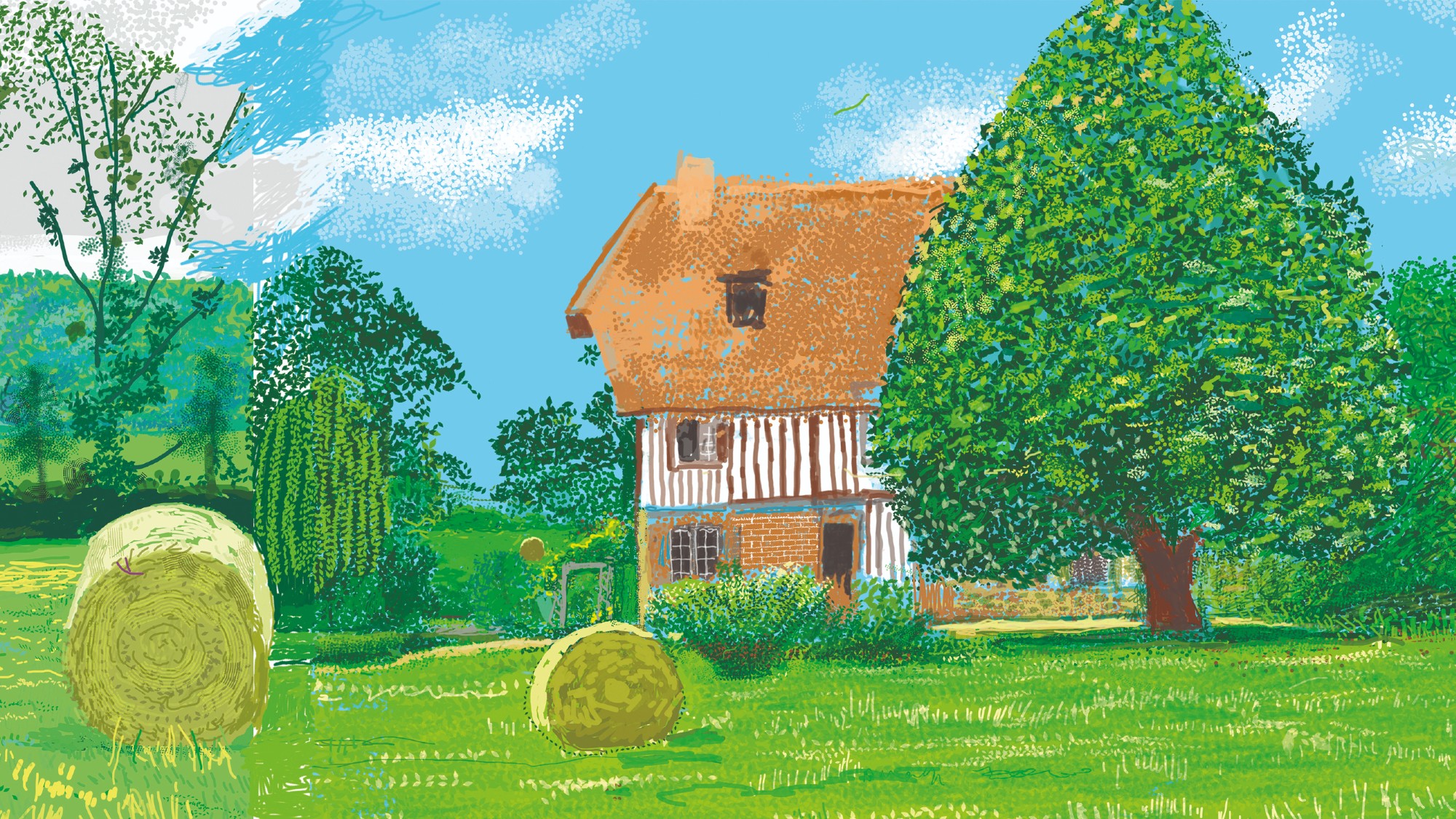
    “If you didn’t know that David Hockney was 88, you might think he was in his prime,” said Alastair Sooke in The Telegraph. The veteran artist has lately been producing and exhibiting work at a prodigious rate, and less than a year after his “colossal” retrospective in Paris, he has returned to the UK for a “magical, moving” exhibition, “A Year in Normandie and Some Other Thoughts about Painting”, at London’s Serpentine North Gallery.

    The show, which is free, consists of 10 new acrylic paintings – five portraits and five still lifes – and “A Year in Normandie”, a vast, 265ft-long frieze depicting the change of seasons observed in the countryside around his studio during the pandemic. Created on his iPad and printed on paper, it is a collage of dozens of images the artist dashed off in 2020 and 2021. While it contains traces of human presence – some garden furniture, a treehouse, various images of Hockney’s half-timbered farmhouse – “the prevailing impression is of nature’s unhurried, inexorable rhythms”, gradually moving from “bare-branched trees” to the “flaring blossom of spring” to summer’s “shaggy greenery”. It’s beautiful, “transporting” and “unexpectedly emotional” – irrefutable proof that Hockney’s “artistic powers haven’t deserted him”.

    Hockney has never shied away from celebrating “conventional forms of beauty”, said Ben Eastham in The Guardian. Back in the 1960s, he disproved the lie that great art had to be “difficult”, specialising in paintings that were as immediately accessible as they were clever. In this show, the curators have made an “impressive” spectacle of the main frieze, which “will reproduce well on phone screens”. This was “a smart decision, because in reality it is underwhelming”. The work is “undone by the details”: the messy joins, the “clangorous” colours, the confected “painterly” atmosphere. The best things here are portraits. One depicts Hockney’s partner looking up from his phone, his expression “at once ironical and indulgent”. Another, of the artist’s nephew, is a fine example of his ability to “conjure character”.

    I wasn’t previously a fan of Hockney’s iPad pictures, said Jackie Wullschläger in the Financial Times. Yet this show changed my mind. Here, he uses his device with the “confidence and nuance of experience”: placing a thin film over its screen, he has discovered, gives its surface “a resistance like paper” and produces sharper effects. “A Year in Normandie” is a thrilling hymn to the seasons, “rooted in French history and landscape”: it cites everything from the Bayeux Tapestry to Monet’s “Water Lilies”. Trees are the main protagonists, “in their prime or decaying, stark silhouettes, majestic crowns, or felled”; poplars fizz “like pop art”. It’s the “masterwork” of Hockney’s old age, and the show is “a generous celebration of contemporary art’s longest-lived, most irrepressible pleasure-giver”.

    Serpentine North, London W2. Until 23 August


    PODCAST REVIEW

    The Idiot

    The New Yorker journalist M. Gessen (who identifies as non-binary) has made a wildly entertaining romp of a podcast about their cousin called The Idiot, said James Marriott in The Times. In the opening few minutes, Gessen calls Allen Gessen “a clown”, “a blowhard”, and “a pompous ass” with a “giant protruding belly”. There’s no love lost there, then – and with good reason, it turns out: Allen hired someone to murder his ex-wife, the mother of his children, Gessen explains. The story takes us from literary New York to Zimbabwean diamond mines; and features Russian mobsters and international child custody disputes. It’s very convoluted but “engagingly mad, and full of atmosphere. With its endlessly dysfunctional starring family and broad social scope, it has something of the atmosphere of a Jonathan Franzen novel.”


    BOOK OF THE WEEK

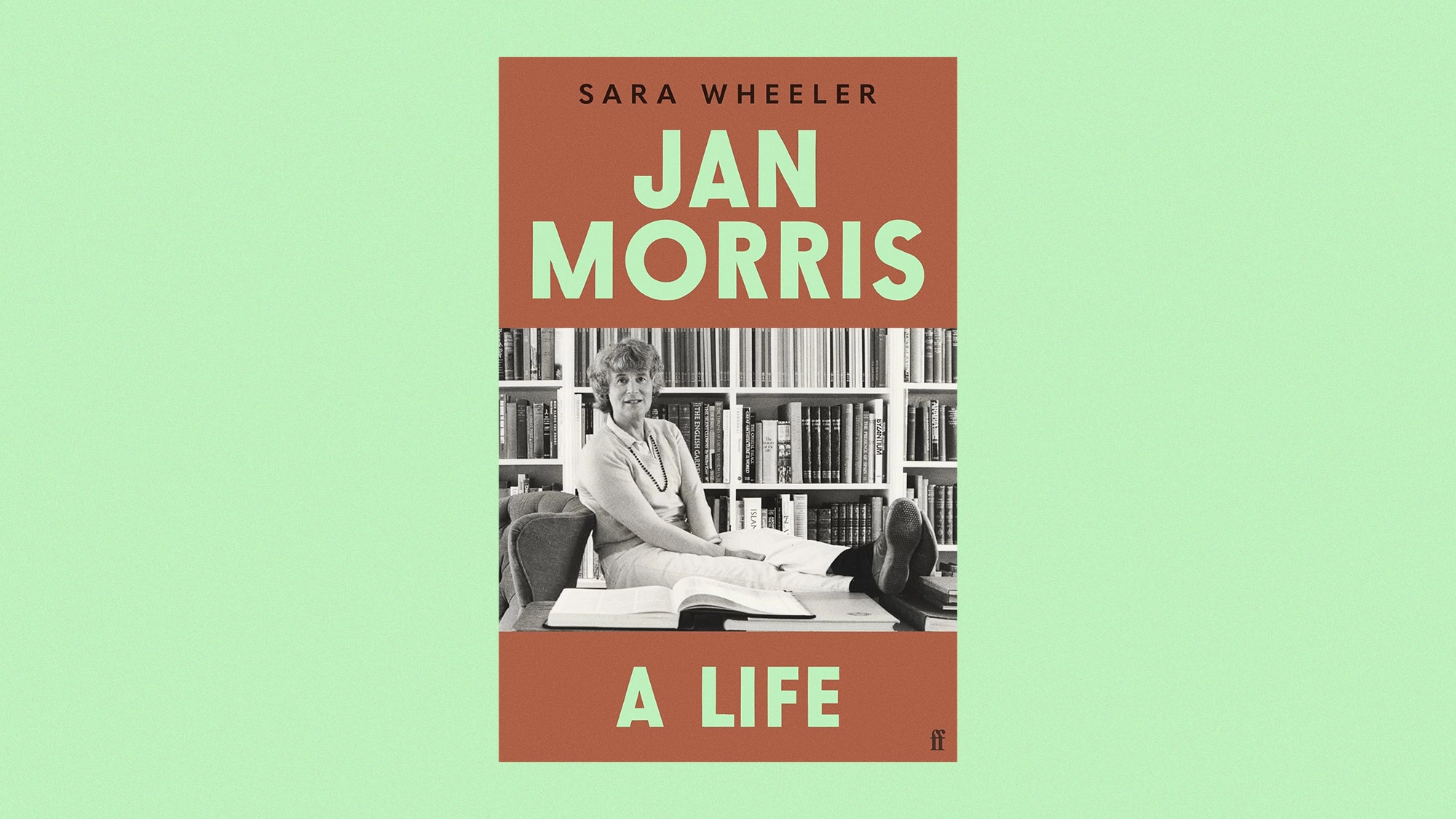
    Jan Morris: A Life 

    by Jan Morris 

    Jan Morris’ life “seems impossibly rich”, said Charlie Gilmour in The Guardian. As James Morris, he experienced the world first from inside the British elite, “with all the opportunities that entailed”. After winning a scholarship to Lancing College, he joined the Army, and was sent on “plum postwar deployments to Venice and Trieste. Oxford followed, then The Times, where he became a star foreign correspondent.”

    Morris scooped the world in 1953 with the news of the British expedition’s conquest of Everest. He interviewed Che Guevara, and watched Adolf Eichmann “trembling” in the dock. He wrote a great many books – travel, history, biography, memoir – which were mainly popular and often critically acclaimed. “And, over the next two decades, he transitioned from James to Jan.” But whether James or Jan, Morris was, above all, a writer. “It will make an excellent and not unentertaining piece of memoir!” she wrote, after her vaginoplasty at a clinic in Casablanca in 1972. Sara Wheeler’s biography is “sensitive, beautifully written and masterly”, and makes space for all the complexities.

    “In her later years, Morris liked to say kindness was the most important thing in life,” said Justin Marozzi in The Times.  “Yet kindness is not the quality that lingers most in the mind after reading this stunning portrait” – certainly not on the evidence of four of Morris’ children. “Monumental selfishness would be closer to the mark.” (Her eldest son, Mark, called her “a narcissist in her inability to empathise”.) “The rock” to which Jan always returned, from her “ego-driven peregrinations”, was her partner of 70 years, Elizabeth. What it all cost Elizabeth, Wheeler writes, “no one can know”. Wheeler, an admired travel writer, was “the perfect choice to write this biography ... she is as fierce and flinty as her subject”, and takes no prisoners. “Why did she dress like a Walmart version of the Queen?” she asks.

    Morris “was an elusive, self-contradictory person who makes a terrific subject for a biography”, said Lucy Hughes-Hallett in The New Statesman: a woman who was once a man; a brilliant writer who was also a shamelessly lazy hack; a loyal friend who was an “aloof and unhelpful parent”. Wheeler, “brisk and sardonic”, lays out the facts as she finds them. She has exactly the right blend of sympathy and critical detachment, said Piers Brendon in Literary Review. And “she does not pretend to omniscience, leaving some things up in the air”, such as whether Morris’ transition gave her fulfilment. “Seldom have I read such an enthralling biography.”


    OBITUARY

    Chuck Norris 

    Former policeman who became an action star

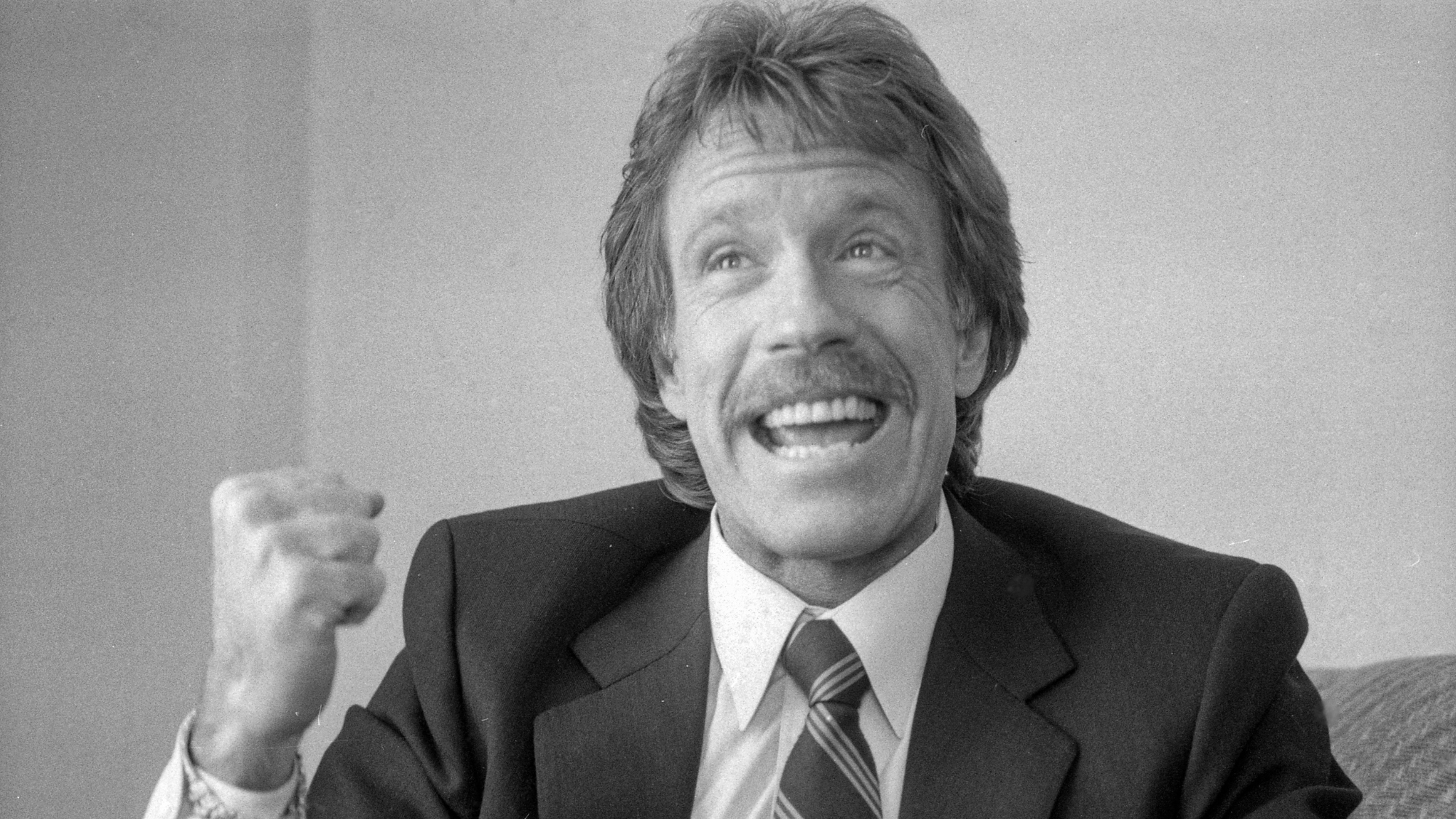
    On the champions’ podium of 1980s action cinema, Arnold Schwarzenegger and Sylvester Stallone “fought over gold and silver position”, said Ryan Gilbey in The Guardian. “Bronze belonged indisputably to Chuck Norris, who has died aged 86.” He was an expert martial artist, a six-time world middleweight karate champion who ran his own chain of dojos in California. Among his pupils in the mid-1960s was Steve McQueen, who suggested that he should pursue a screen career. A spectacular fight sequence with Bruce Lee in “The Way of the Dragon” in 1972 – in which he played a rare villainous role – led to a series of “gung-ho” action pictures, such as “Missing in Action” (1984) and “Invasion U.S.A.” (1985). Violent and unsophisticated they may have been, but Norris insisted on the soundness of the philosophy behind them. “I don’t initiate violence, I retaliate,” he said.

    He was born Carlos Ray Norris in Ryan, Oklahoma, in 1940, to parents of mixed Irish and Cherokee descent. His father, Ray, who had fought in the Battle of the Bulge, was an alcoholic, “and his long binges crippled the family finances and burdened his waitress wife, Wilma”, said The Times. She moved with her three sons – one of whom, Wieland, was later killed in Vietnam – to LA. There Carlos attended Torrance High School, but was bullied for being mixed race, unathletic and cripplingly shy. At 18 he joined the US air force as a policeman, and in 1958 was sent to Osan, South Korea, where he acquired the nickname Chuck, and became interested in martial arts such as tae kwon do and tang soo do, a version of karate. Back at home, while on the waiting list to join the Los Angeles police, he opened a martial arts school in his mother’s backyard, and found that it fulfilled him. His first acting role was a small part as a heavy in Dean Martin’s “The Wrecking Crew” (1968); his first starring vehicle came a decade later.

    What took him into the mainstream was the 1980s vogue for films “that chimed with the national mood of wanting a resurgent America to hit back after its humiliation in Vietnam”. In “Missing in Action”, he rescued PoWs from Vietnam while showcasing his martial arts prowess. An even bigger hit was “The Delta Force” (1986), in which he and Lee Marvin fought terrorists in the Middle East. McQueen had reputedly advised Norris after seeing his first films that he should aim for “less dialogue”, and this approach won out, particularly in his best-known success, the TV drama “Walker, Texas Ranger”. For eight seasons from 1993, he played a lone-wolf lawman with “a black belt and an iron will”. At the peak of his fame, two men tried to mug him in Dallas. When the police arrived, they found the men with broken arms, knives on the ground and Norris, then 54, waiting quietly. “We knew who he was,” the men said. “We just figured that all that stuff on television was fake.”

    “The transformation of his life often awed him,” said The Economist. Born into miserable poverty in the Oklahoma backwoods, he was now in a place where the public, “half-joking, thought he could do anything”. By the early 2000s, his hardman persona had made him an ironic cult hero, and a long trail of “Chuck Norris facts” started appearing online: claiming that he made onions cry; that Superman wore Chuck Norris pyjamas; that he was the only person who could slam a revolving door. Norris had always been on the conservative, evangelical Right, said The Telegraph; he was a staunch Reaganite in the 1980s. In 2008, he published “Black Belt Patriotism: How to Reawaken America”. In 2016, he endorsed Donald Trump. Norris married Dianne Kay Holechek in 1958; they had two sons but divorced in 1989. In 1998, he married Gena O’Kelley; they had twin daughters. He also had a daughter from another relationship.

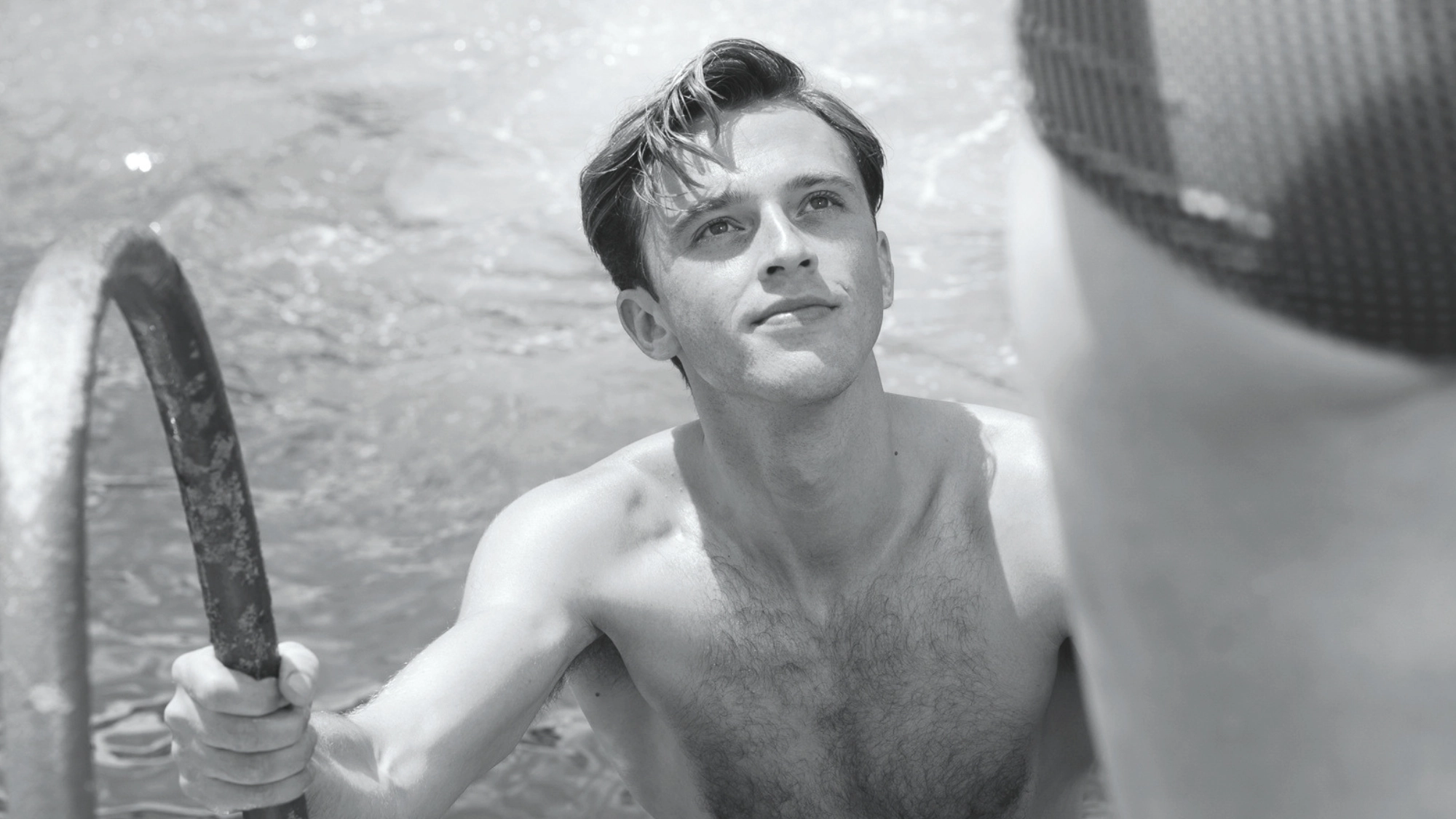


    Image credits, from top: Music Box Films / Carole Bethuel; David Hockney; Faber & Faber; Steve Ringman / San Francisco Chronicle Getty
     

    Recent editions

    • Evening Review

      JD Vance’s fall from grace

    • Morning Report

      Israel and Lebanon begin ceasefire

    • Evening Review

      China’s ‘electrostate’ power grows

    VIEW ALL
    TheWeek
    • About Us
    • Contact Future's experts
    • Terms and Conditions
    • Privacy Policy
    • Cookie Policy
    • Advertise With Us
    • FAQ
    Add as a preferred source on Google Add as a preferred source on Google

    The Week is part of Future US Inc, an international media group and leading digital publisher. Visit our corporate site.

    © Future US, Inc. Full 7th Floor, 130 West 42nd Street, New York, NY 10036.