The Week The Week
flag of US
US
flag of UK
UK
https://cdn.mos.cms.futurecdn.net/flexiimages/jacafc5zvs1692883516.jpg

SUBSCRIBE & SAVE

Less than $3 per week

Sign in
  • View Profile
  • Sign out
  • The Explainer
  • The Week Recommends
  • Newsletters
  • Cartoons
  • From the Magazine
  • The Week Junior
  • Student Offers
  • More
    • Politics
    • World News
    • Business
    • Health
    • Science
    • Food & Drink
    • Travel
    • Culture
    • History
    • Personal Finance
    • Puzzles
    • Photos
    • The Blend
    • All Categories
  • Newsletter sign up Newsletter
  • The Week Evening Review
    Trump’s heir apparent, a major airline merger, and the fate of LIV Golf

     
    talking points

    JD Vance: the vice president of diminishing returns

    It has been a busy spring for JD Vance. The diplomatically untested VP was tapped for wartime negotiations with Iran, became the administration’s mouthpiece in a doctrinal feud with Pope Leo and led the White House in a last-ditch effort to salvage now-ousted Hungarian autocrat Victor Orbán. It has hardly been an auspicious season for someone positioning themselves to carry the MAGA torch post-Trump. 

    String of public flops
    Despite entering office as a “man full of ideas” just over a year ago, Vance and his opinions “matter less and less” within the Trump administration, said Idrees Kahloon at The Atlantic. Vance’s shrinking footprint is a “major comedown from the role he once seemed likely to fill” — that of “Trumpism after Trump.”

    Being Trump’s number two is a “unique discomfort,” said Edward Luce at the Financial Times. Vance is “flailing” in backing policies that “often turn 180 degrees overnight.” The past few weeks saw him bring his “noncharisma to bear” on Orbán’s behalf before he jetted off to “screw up the Iran peace talks,” said Charles Pierce at Esquire. He’s also playing “both sides” on the Iran war to maintain his “viability in 2028.” And Vance has “cast himself as the chief ideologist” of a movement with no ideology beyond the “instincts, impulses and glory of one man,” said The Economist. 

    Well-positioned ‘heir apparent’
    The vice president may still be well-positioned ahead of 2028. His “unusual second job” serving as the Republican National Committee’s finance chair is “exactly” what a “presidential aspirant might dream up,” said Theodore Schleifer and Shane Goldmacher at The New York Times. While he has done “some good for the party,” Vance has also done “some good for himself” by “wooing” the GOP’s “richest and most influential patrons.”

    Last month, Vance attended a summit of the Rockbridge Network, a “secretive donor group” he cofounded in 2019, said Gabe Kaminsky at CBS News. The question “looming” over the confab was whether he had 2028 plans. Given Rockbridge’s reach within the MAGA coalition, Vance seems “poised to stand at the crossroads” of varying GOP interests that, one attendee said to the outlet, “want JD to be the heir apparent.”


    Statistic of the day

    $30 million: The amount per hour that the world’s 100 biggest oil and gas companies made in unearned profit in the first month of the Iran war, according to The Guardian. The excess profits come from the “pockets of ordinary people” as they pay “high prices to fill up their vehicles and power their homes” and businesses. 


    today’s big question

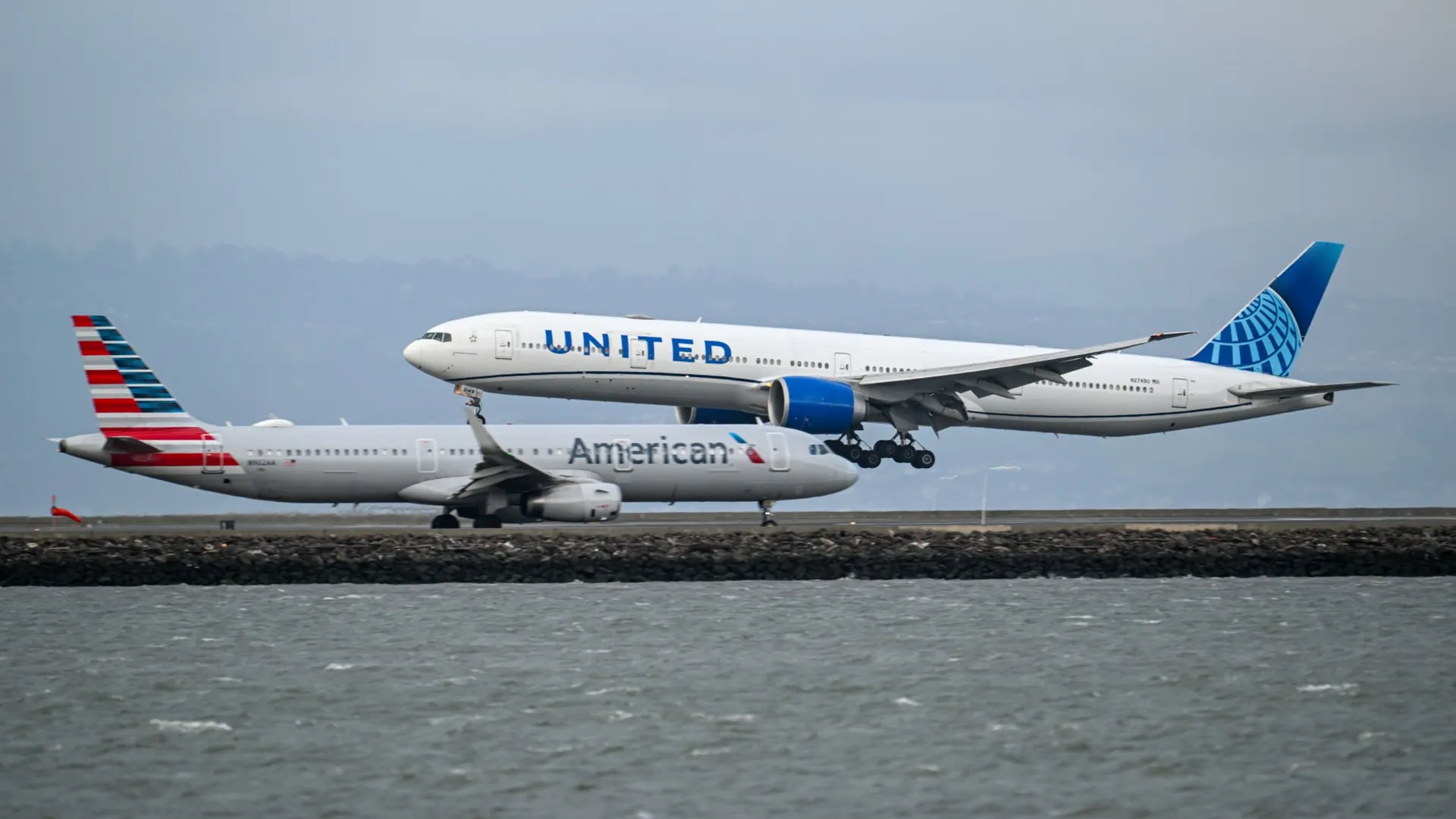
    What would an airline merger mean for flyers?

    American Airlines and United Airlines have reportedly discussed merging into one company. But experts say this move is likely to face antitrust scrutiny, and many are concerned about what a merger could do to airfares in a market already seeing rising prices.

    What did the commentators say?
    United CEO Scott Kirby has allegedly spoken with Trump administration officials about getting clearance for a merger. If the airlines combine, it would “create an unprecedented concentration of power in the commercial aviation industry,” said CNN. The joint company would “control roughly 40% of U.S. capacity when the available seats are adjusted for miles flown.” This has aviation analysts worried about a potential monopoly.

    The idea that “we would have one airline responsible for four out of 10 flights every day is beyond horrific,” said William McGee, an aviation and travel fellow at the American Economic Liberties Project, to CNN. But airline consolidation has long been a part of the aviation business, and the White House has “shown a warmth toward mergers in the industry,” said CNBC. 

    The potential deal may create a problem for customers, with the “main concern” being “higher fares,” said MarketWatch. Fares have already been climbing due to fuel shortages from the war in Iran, and “your next plane ticket and the pile of unused miles sitting in your account could both take a beating” if United and American joined, said Money Talks News. When airlines merge, the “combining loyalty programs almost always end up repricing awards upward.”

    What next?
    The details of the new proposed company are not yet clear. But any deal will “invite extraordinary scrutiny from regulators, labor unions and consumer advocates,” said Reuters. Prior governments have stopped smaller mergers. The Biden administration “blocked JetBlue’s attempt to acquire Spirit Airlines, arguing it would eliminate ‌a low-cost ⁠competitor.”

    The talks are also coming at a time when the Trump administration is “concerned about affordability issues,” said antitrust ⁠lawyer Andre Barlow to Reuters. “I would think this would get a rigorous review.”


    QUOTE OF THE DAY

    ‘As a Republican, when I think of what USAID does in global health, I assumed it was just, you know, abortions.’

    USAID Chief of Staff Joel Borkert in a February 2025 meeting at which Trump officials learned about the agency they were dismantling. The meeting is described in former USAID administrator Nicholas Enrich’s book released this week, “Into the Wood Chipper: A Whistleblower’s Account of How the Trump Administration Shredded USAID.”


    in the spotlight

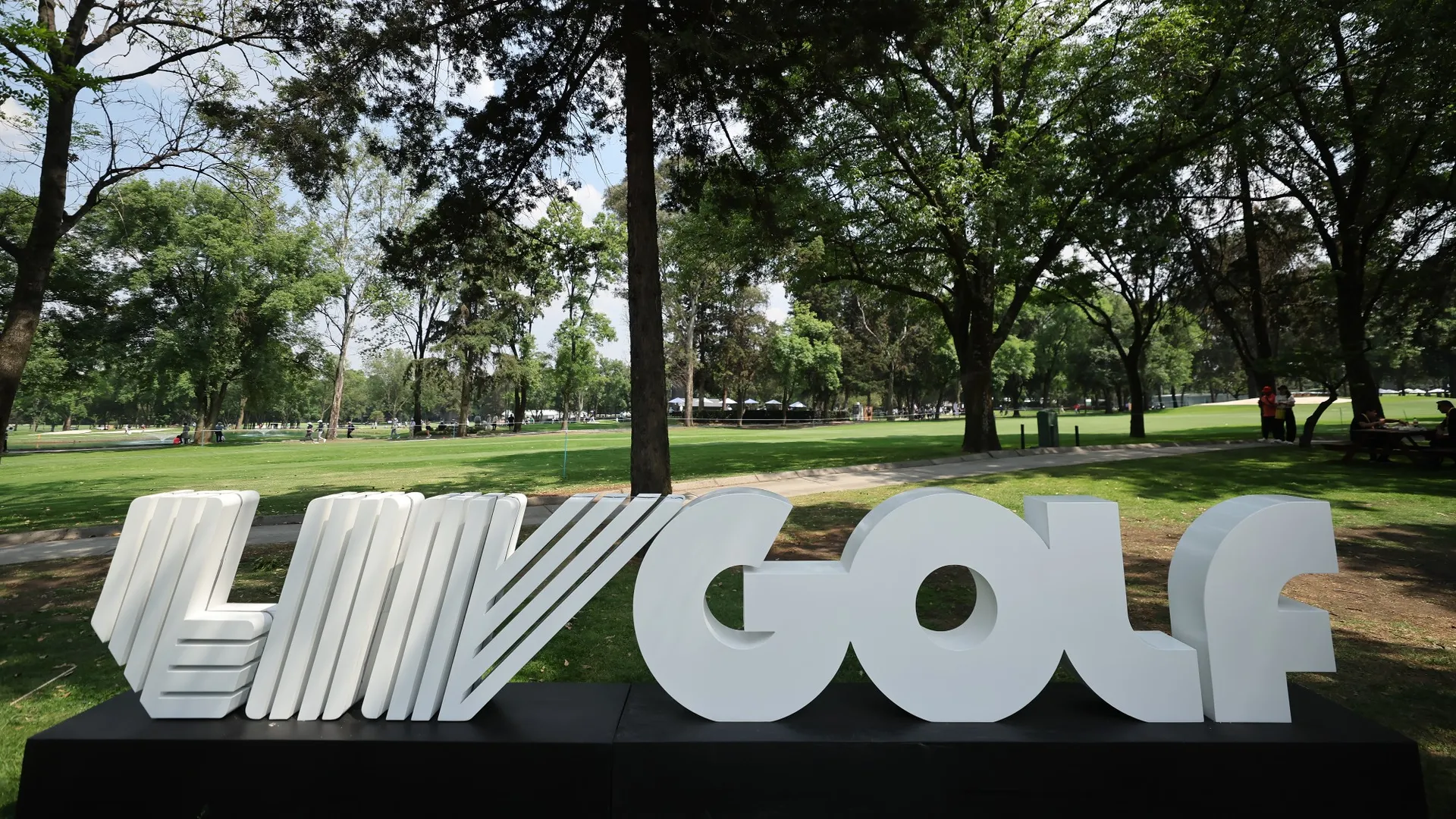
    Is LIV Golf on course for collapse?

    “Our season continues exactly as planned, uninterrupted and at full throttle,” said Scott O’Neil, the CEO of men’s golf tour LIV Golf, in an email to staff on Wednesday night, hours after an emergency meeting in New York. “But what about beyond this season?” said The Telegraph. O’Neil’s message was an “attempt to calm ferocious speculation” that the Kingdom of Saudi Arabia’s Public Investment Fund (PIF) is “pulling the plug” on the controversial franchise, into which it has already sunk $5 billion.

    ‘Dying days’
    LIV Golf was “supposed to be the breakaway tour that changed golf as we know it,” said BBC Sport. It “certainly managed to disrupt the status quo,” with the help of the “eye-watering” amount of PIF funding. But the tour’s net losses have totaled more than $1.1 billion since it was established in 2021.

    If they ever make a documentary about LIV, it will “look a lot like the one about that calamitous Fyre Festival,” said Sean O’Brien at talkSPORT. Some of the game’s big names who rejected offers to join the tour, including Tiger Woods and recent Masters winner Rory McIlroy, are on the “right side of history.” The tour’s only purpose was to “make rich men absurdly richer.”

    Changing world
    PIF announced a new five-year strategy on Wednesday to make up a budget deficit of $73 billion. The fund is set to “narrow” its funding focus and take stock of a “decade-long spending splurge,” said the Financial Times.

    For a while, the soft power of sport was a “critical driver” in Saudi Arabia’s repositioning, but the “world has changed since then,” said The i Paper. Criticism of the country’s approach to human rights has, “if not washed clean off,” at least “shunted down the list of global concerns.” 

    The Kingdom is still a major investor in F1 and football, including as hosts of the 2034 men’s World Cup. But for now, Riyadh will focus on events that “serve a PR purpose” or “promise a return on investment,” said the outlet. Golf “falls outside both metrics.”


    Good day 🔤

    … for animal communication. Sperm whales have a form of “alphabet” and form vowels in their vocalizations that behave the same way as human speech, according to a study published in the Proceedings B journal. The structure of the marine mammal’s communication has “close parallels in the phonetics and phonology of human languages, suggesting independent evolution,” said researchers.


    Bad day 🚸

    … for Catholic charities. The Trump administration has canceled an $11 million contract with Catholic Charities to care for migrant children who enter the U.S. alone. The move marks the end of a relationship between the church and the government “dating back to the first arrivals of Cuban exiles in South Florida,” said the Miami Herald. 


    Picture of the day

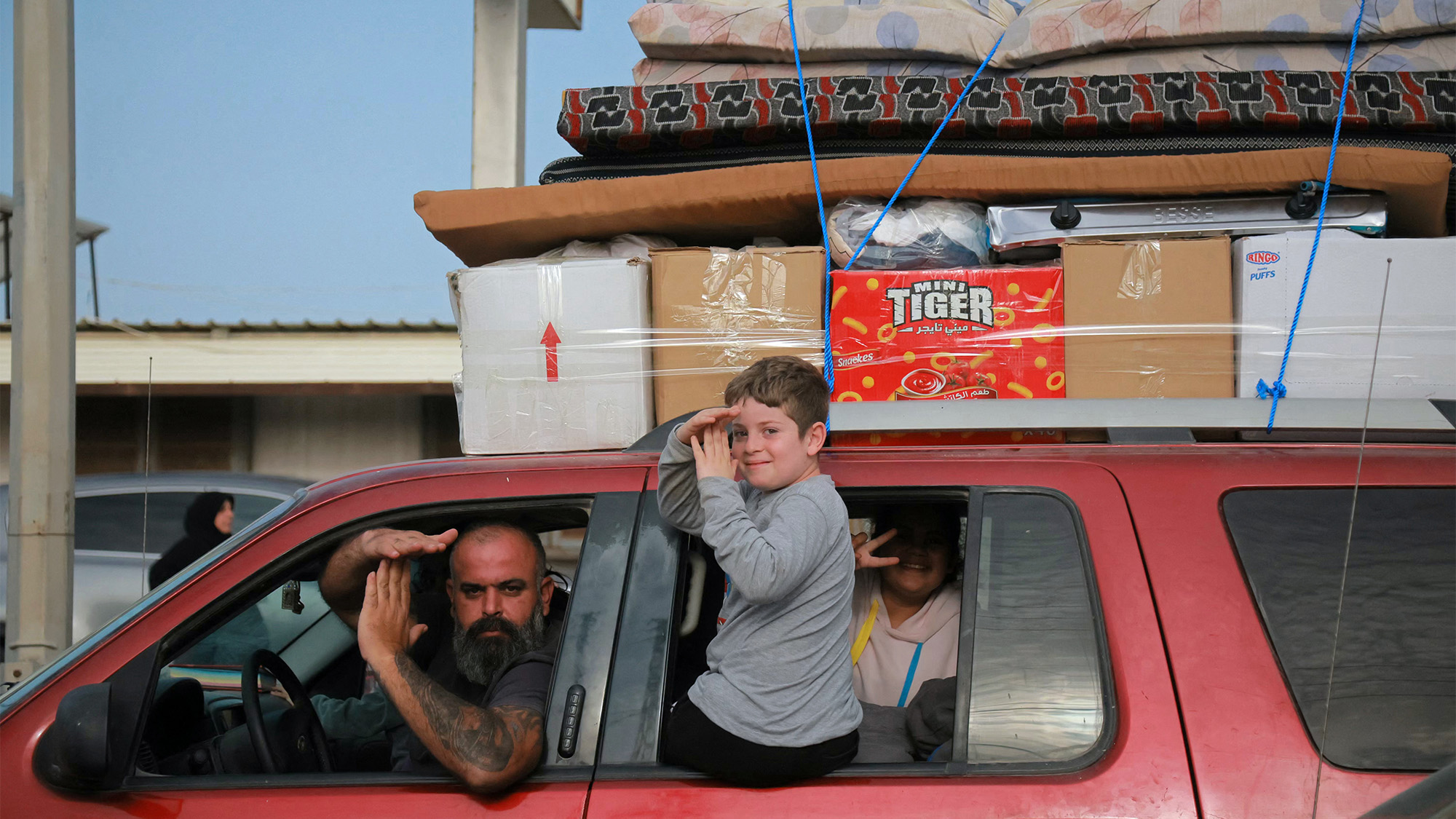
    Hopeful return

    Displaced residents gesture the “time out” signal as they drive back to their homes in southern Lebanon. Families returned amid a “tentative ceasefire” today following “six weeks of Israeli bombardment that has killed more than 2,100 people across the country,” said The Washington Post.
    Ibrahim Amro / AFP / Getty Images


    Puzzles

    Daily sudoku

    Challenge yourself with The Week’s daily sudoku, part of our puzzles section, which also includes guess the number

    Play here


    The Week recommends

    The most beautiful beaches in the South

    The South’s gorgeous and diverse beaches offer nearly every type of seaside experience. You can feel the white sand between your toes in Georgia, watch turtles nest in Texas and ride the waves in South Carolina. Whatever you are seeking, you will find it at one of these wash-your-cares-away beaches.

    Folly Beach, South Carolina
    You will find an “eclectic mix of Southern charm and seaside cool” that sets it apart from other coastal destinations, said Outside. It’s only 12 miles from downtown Charleston, with warm water “ideal for sunbathing, swimming and, of course, surfing.” 

    Jekyll Island, Georgia
    This barrier island boasts 10 miles of unspoiled shoreline, with each beach different from the next. Driftwood Beach, for example, is “scattered with huge, twisted sea-weathered branches and tree trunks” ideal for “fun scampering and a dramatic photo op,” said Atlanta Magazine. The island is “relatively flat,” and walking and biking trails “meander” through salt marshes and live oaks.

    South Padre Island, Texas
    This is party central for college students on spring break, but during the rest of the year, a “more mellow vibe prevails,” said Condé Nast Traveler. A visit to the South Padre Island Birding, Nature Center & Alligator Sanctuary, home to “stilt-legged birds, colorful butterflies and about 50 rescued ’gators,” is downright relaxing. And it’s not only beachgoers who flock here. The island is popular with nesting turtles, who arrive between April and August.

    Read more


    WORD OF THE DAY

    garakei

    A portmanteau for “Galapagos” and “keitai denwa,” which is Japanese for “mobile flip phone,” also called a Gala-phone. Only available in Japan, garakeis are popular with the elderly. But at the end of last month, NTT Docomo became the last carrier to shut down its 3G network, making garakeis on 3G inoperable and sending the senior community to classes on smartphones.


    INSTANT OPINION

    Today’s best commentary


    ‘History is running backwards’
    David Brooks at The Atlantic
    Many thought that the “world would get more democratic as it modernized, but for the past quarter century, we have seen a reversion to authoritarian strongmen,” says David Brooks. People “used to have a clear idea of where modernity was heading — toward greater autonomy and equality, secularism, stronger individual rights, cultural openness and liberal democracy.” Science and reason “would prosper while superstition and conspiracy-mongering would wither away.” But it “turns out that was yesterday’s vision of the future.”

    ‘Polio has no cure. The vaccine is the only way to save lives.’
    Simone Blaser at USA Today
    Making polio vaccines “optional is a bad idea. It’s also a dangerous one,” says Simone Blaser. There’s “no cure for polio, but there’s a way to prevent this terrible illness.” If the polio vaccine becomes optional, it “becomes a mathematical certainty that we will see a resurgence.” You may “believe your choice doesn’t affect others, but there’s no way to know who in a community is unvaccinated, whose immune system is shoddy or who is particularly vulnerable.”

    ‘Our longing for inconvenience’
    Hanif Abdurraqib at The New Yorker
    Longing for “Walkmans and VCRs is, of course, an offshoot of a larger obsession with the not-so-distant past,” says Hanif Abdurraqib. There’s a “longing for some previous era, if not actually a desire to return to it.” The “yearning for the past often lands us on the somewhat hollow nostalgia of ephemera: If we can’t have the ’90s back, we can build a life of things that might feel transportative,” and “convenience and inaction are often bedfellows.”


    Poll watch

    Among 20 “international luminaries,” country legend Dolly Parton has the most “favorable impression” among 1,000 U.S. adults, with a 65% net favorability, according to a poll from the University of Massachusetts and YouGov. Former President Obama has the second-highest net favorability at 14%. And Russian President Vladimir Putin has a -65% net favorability.


    Evening Review was written and edited by Will Barker, Theara Coleman, Nadia Croes, Scott Hocker, Anya Jaremko-Greenwold, Justin Klawans, Joel Mathis and Rafi Schwartz, with illustrations by Julia Wytrazek.

    Image credits, from top: Illustration by Julia Wytrazek / Getty Images; Tayfun Coskun / Anadolu / Getty Images; Hector Vivas / Getty Images; Malcolm MacGregor / Getty Images
     

    Recent editions

    • Morning Report

      Israel and Lebanon begin ceasefire

    • Evening Review

      China’s ‘electrostate’ power grows

    • Morning Report

      Senate cedes war powers to Trump, for now

    VIEW ALL
    TheWeek
    • About Us
    • Contact Future's experts
    • Terms and Conditions
    • Privacy Policy
    • Cookie Policy
    • Advertise With Us
    • FAQ
    Add as a preferred source on Google Add as a preferred source on Google

    The Week is part of Future US Inc, an international media group and leading digital publisher. Visit our corporate site.

    © Future US, Inc. Full 7th Floor, 130 West 42nd Street, New York, NY 10036.