The Week The Week
flag of US
US
flag of UK
UK
https://cdn.mos.cms.futurecdn.net/flexiimages/jacafc5zvs1692883516.jpg

SUBSCRIBE & SAVE

Less than $3 per week

Sign in
  • View Profile
  • Sign out
  • The Explainer
  • The Week Recommends
  • Newsletters
  • Cartoons
  • From the Magazine
  • The Week Junior
  • Student Offers
  • More
    • Politics
    • World News
    • Business
    • Health
    • Science
    • Food & Drink
    • Travel
    • Culture
    • History
    • Personal Finance
    • Puzzles
    • Photos
    • The Blend
    • All Categories
  • Newsletter sign up Newsletter
  • Sunday Shortlist, from The Week
    A ‘solid, unshowy’ documentary and a ‘beguiling’ production

     
    FILM REVIEW

    Ask E. Jean

    Documentary profile of the journalist who took on ‘one of the most powerful men in the world – twice’

    “E. Jean Carroll has had quite a life,” said Alissa Wilkinson in The New York Times. She made her name as a gonzo journalist, writing first-person features for Esquire and Playboy, before becoming an advice columnist at Elle magazine: her long-running “Ask E. Jean” column became so popular that it was turned into a chat show.

    Then, in 2019, she made international news headlines when she accused President Trump of having raped her in a department store changing room in the mid-1990s. Trump branded her a liar, insisting she was not his “type”. Carroll sued him for sexual abuse and defamation, leading to two civil court trials, which she won. Trump recently paid her $5.6 million (£4.1 million) in damages over one; he has yet to pay a penny for the other.

    In this documentary, Carroll guides viewers through her career, her decision to break her silence about Trump’s abuse, and the “harrowing experience of going up against one of the most powerful men in the world – twice”.

    This is a “solid, unshowy” film, said Wendy Ide in The Observer, which contains some extremely powerful moments, including a present-day conversation in which Carroll talks to her best friend about how she felt immediately after the attack, and her decision not to report it. Yet we learn that, back in the 1990s, she advised abused women to “always press charges” – which creates a “jarring dissonance”.

    Still, the documentary is sympathetic to its subject, who comes across as unexpectedly “magnetic” – “curious, mischievous and candid”, said Angie Han in The Hollywood Reporter. In the public imagination, Carroll, now 82, has been defined by someone else’s crime; the film paints a broad portrait of “a figure far more interesting than the bad thing that happened to her”.


    THEATRE REVIEW

    The Cherry Orchard 

    Kenneth Branagh takes centre stage in ‘star-studded’ production

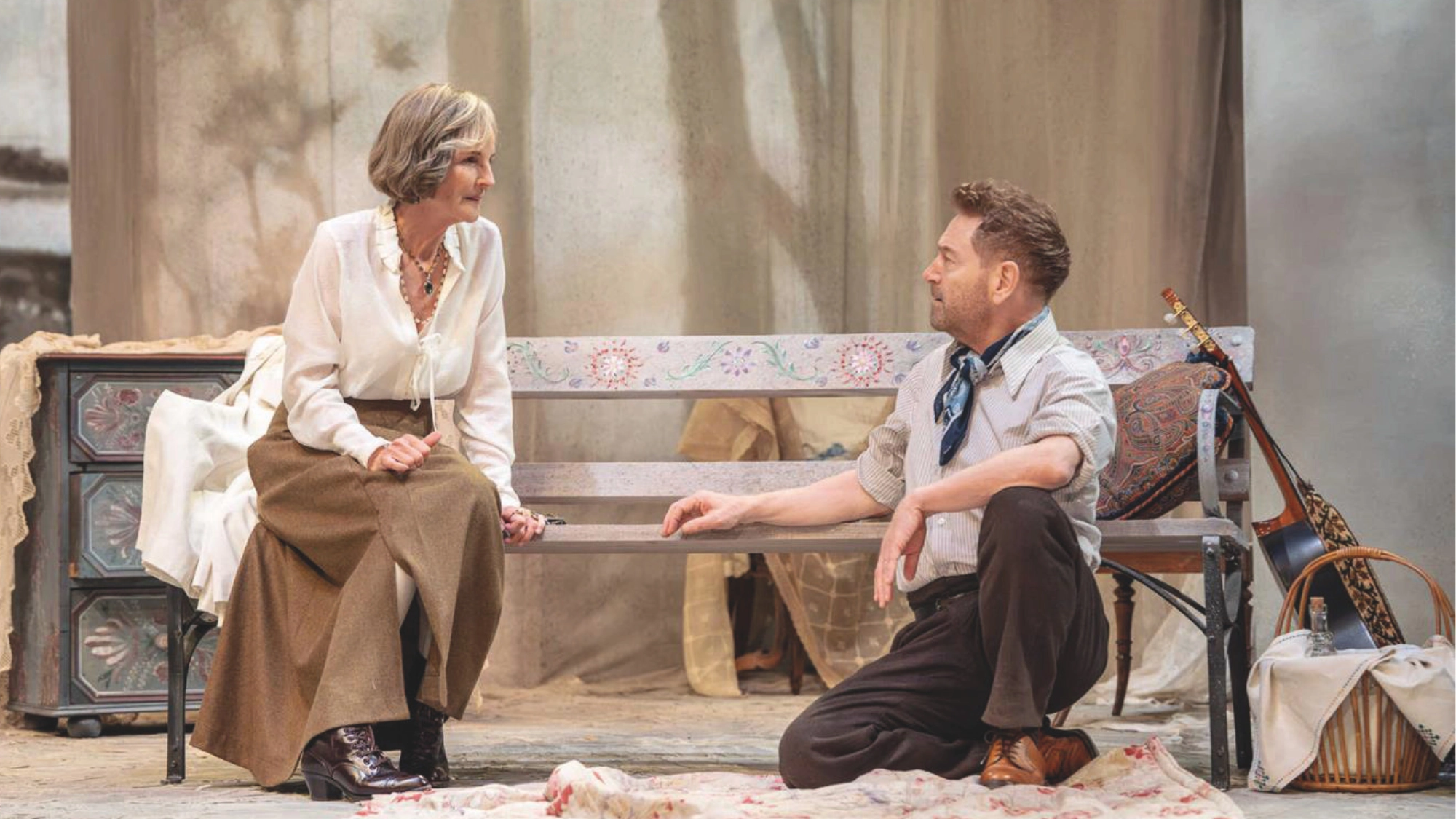
    “You wait 30 years for a Royal Shakespeare Company appearance from Kenneth Branagh and then two turn up at once,” said Claire Allfree in The Telegraph. Having starred as Prospero in “The Tempest” earlier this summer, Branagh is back with an “energetic, charismatic, touching performance” as Lopakhin – the son of a serf who has become a successful businessman – in a new version of “The Cherry Orchard”, adapted by Laura Wade.

    It’s a “star-studded” production: the cast includes the American film stars Helen Hunt and Bill Pullman. And it looks “beguiling”, said Clive Davis in The Times, with an “elegant set design” that “evokes an outpost of privilege facing extinction”. Unfortunately, the evening veers too wildly between “broad comedy and pathos”, while never quite finding a settled tone – or getting to the heart of the play.

    In his final masterpiece – about the owners of a great Russian estate facing up to their financial ruin – Chekhov uses the metaphor of a doomed cherry orchard to “conjure a society on the cusp of seismic change, and a family splintered by inaction and marooned by personal grief”, said Sarah Hemming in the Financial Times. 

    The orchard’s significance is conveyed through pretty prints of cherry blossom that contrast with the gnarled branches that clamber up the set; and the performances are heightened, “as if many of the characters are acting in their own personal drama”, aware that disaster is looming, yet unable or unwilling to meet the “demands of the moment”. The production is full of insight, and painfully truthful moments, but it fails to mine the play’s “heartbreaking depth”, and its impact is dulled by a “curious lack of urgency”.

    Branagh’s Lopakhin is unusually amenable, said Arifa Akbar in The Guardian. When his class rage erupts, it is “arresting” – but then it melts away. Hunt is surprisingly “featureless” as the landowner Ranyevskaya; Pullman brings “charm and comic charisma” to the part of her brother, but it’s not enough to rescue a tonally soft-edged production that lacks a “magnetic centre to hold you”.

    Swan Theatre, Stratford-upon-Avon. Until 29 August


    PODCAST REVIEW

    The Rise and Fall of The Smiths

    I will never forget the “electric jolt” of seeing The Smiths perform “This Charming Man” on their debut appearance on “Top of the Pops” in late 1983, said Patricia Nicol in The Sunday Times. Fans “fell in love instantaneously” with a look and sound that were “subversively different” from the prevailing pop fare. Over the course of four intense years, the Manchester four-piece recorded 73 songs and four studio albums and had 20 consecutive Top 40 hits. “The Rise and Fall of The Smiths”, presented by Steve Lamacq and Elizabeth Alker, tells their story, mainly via archive BBC interviews, over eight snappy episodes (each of which ends with the laconic caveat that “Morrissey disputes some of the recollections featured”). It’s a “warm nostalgia trip for fans and an informative survey for newcomers. I wish there was more.” It’s also a taster for Radio 6 Music’s Indie Forever, a new digital station that’s a “cooler relative of Radio 4 Extra and Radio 3 Unwind”, aimed at listeners who find Radio 6 too focused on the youth market.


    BOOK OF THE WEEK

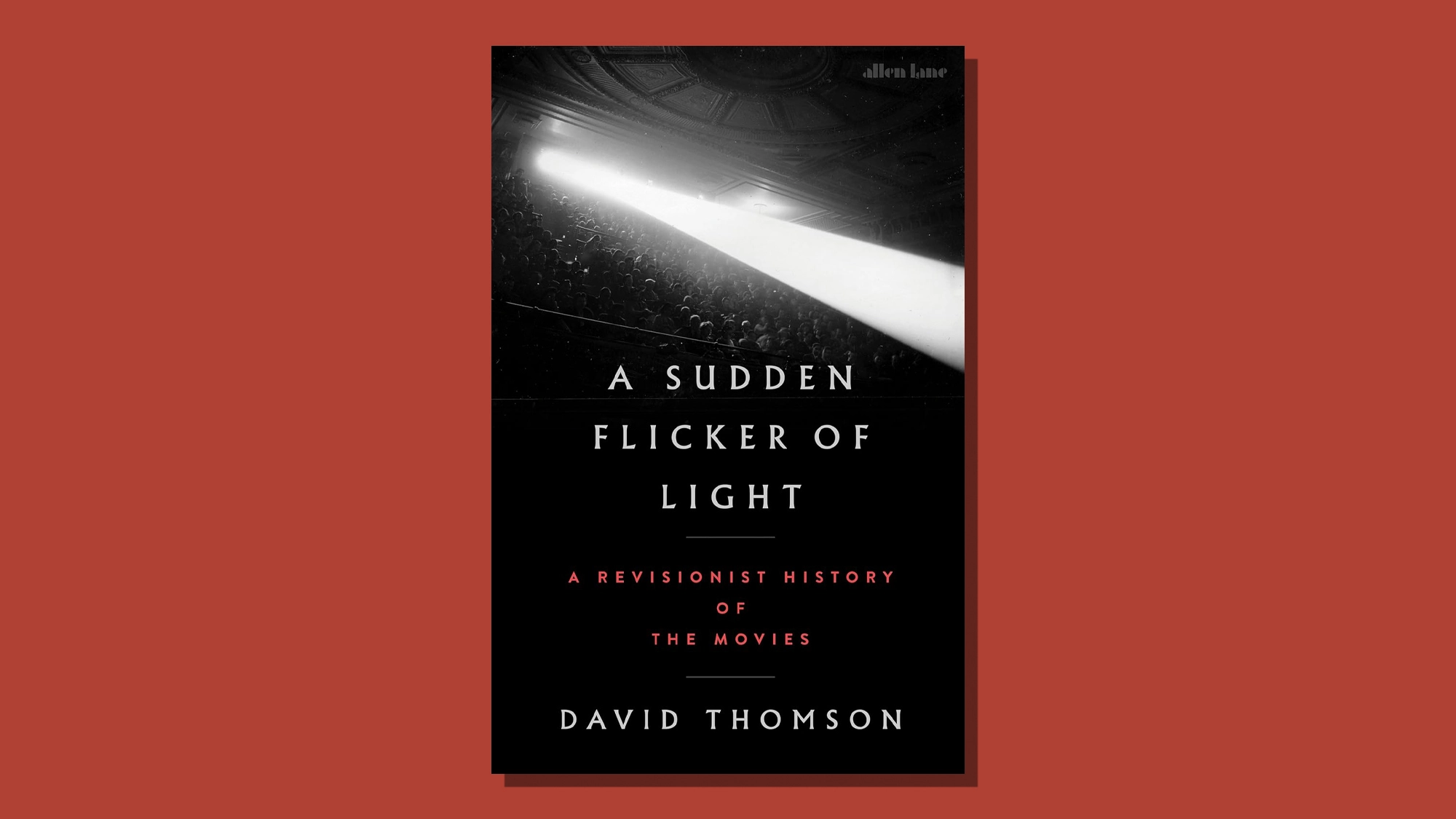
    A Sudden Flicker of Light

    by David Thomson

    For more than 50 years, David Thomson has been “watching and writing about movies and hanging out with movie people”, said Ed Potton in The Times. The author of more than 40 books, including the highly influential “The New Biographical Dictionary of Film” (1975), he is “unique in his field”, being “intellectual, opinionated, informed and funny”. Now, at the age of 85, Thomson has written a book “billed as the capstone of his career”. A history of the movies, “from the Lumière brothers to the Coen brothers”, from “Psycho” to “Pretty Woman” to Jean-Luc Godard, it also covers much else besides: “we get detours to John Keats, Gustav Mahler, Werner Heisenberg and Tracey Emin, none of which feels dilettantish”. Thomson also celebrates the “written word”, and suggests that novels are in many ways superior to films. Written in a style that “veers between conspiratorial and donnish”, this book has the “learning of an encyclopaedia, the wisdom of a novel and the zingers of a screwball comedy”.

    While he remains as obsessed by film as ever, Thomson is increasingly fearful that “movies may be bad for us”, said Mark Glancy in Literary Review. There is, of course, nothing new about claims that they shorten attention spans and flatten our sense of evil. But Thomson suggests such anxieties have been “given new weight and immediacy by the rise of Donald Trump, with his constant demand for our attention and his indifference to morality”. It’s an argument which seems, alas, a bit of a “rabbit hole”. Fortunately, such “wintry and sombre ponderings” don’t take up too much space, said Peter Bradshaw in The Guardian. For the most part, this book is a “straightforwardly rapturous, rhapsodic celebration of the extraordinary adventure of cinema”, written by an author who, despite his advanced age, is as “eccentric, exasperating and absorbing as ever”.


    OBITUARY

    Kevin Keegan  

    Football star who became known as ‘King Kev’

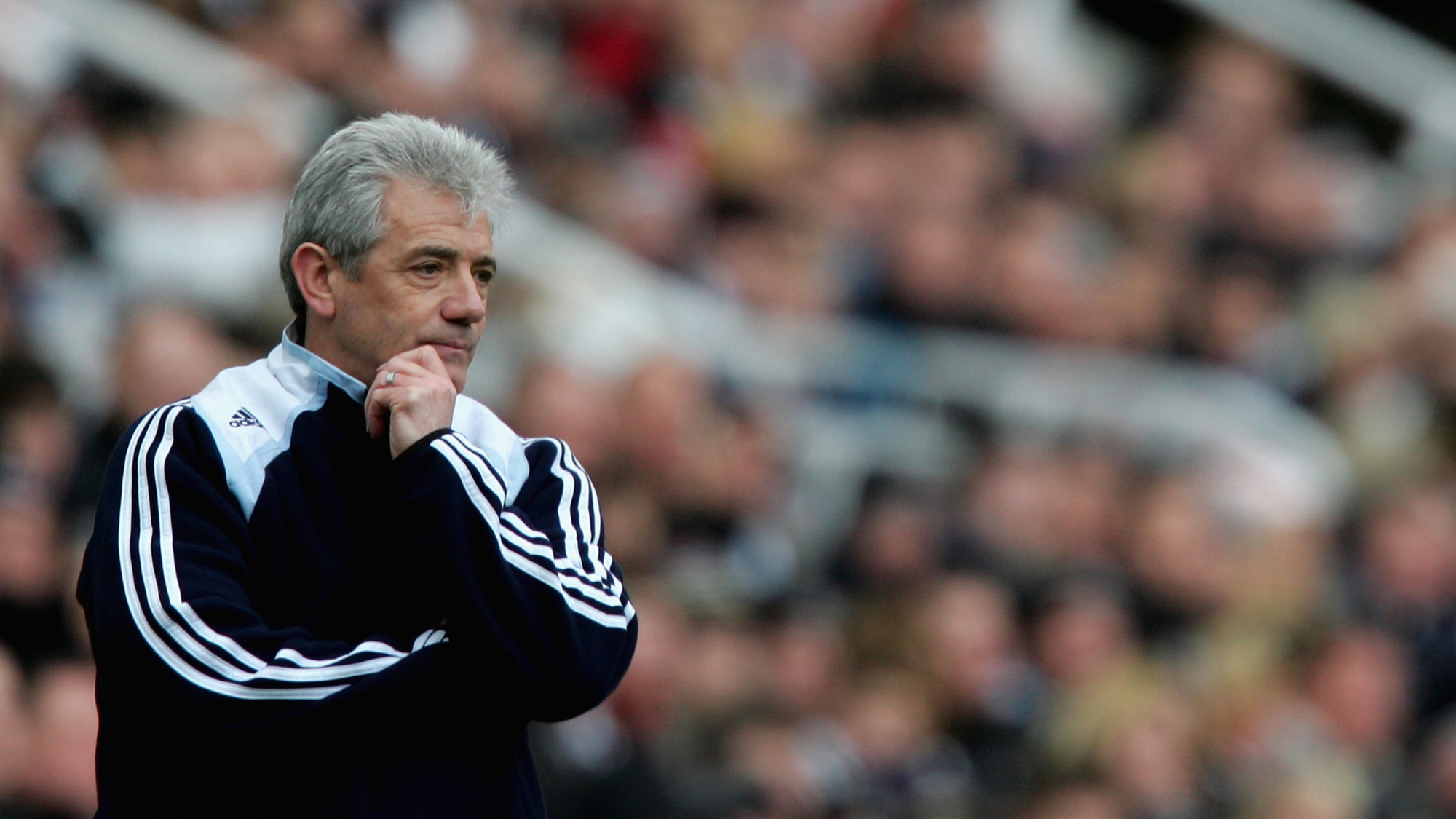
    Kevin Keegan was “not indulging in false modesty” when he wrote in his memoir that “I was the mongrel who made it to Crufts, and that was fine by me”. He was a brilliant player, said The Guardian – a 5ft 8in-tall “bundle of energy” with speed, stamina and a “predator’s opportunism” – but he was not as naturally gifted as some. It was drive and hard work that propelled the diminutive miner’s son from Doncaster to the forefront of English football in the 1970s. Keegan, who has died aged 75, emerged as a star player at Liverpool, scoring 100 goals in 323 appearances, and helping the club to win three First Division titles, the Uefa Cup twice, the FA Cup and the European Cup. At Hamburg, from 1977, he became the only English player to win the Ballon d’Or twice, and helped the side win the Bundesliga. Yet Keegan would become most beloved at Newcastle United. Having dropped down a division to join the Magpies from Southampton in 1982, he was received as a “visiting deity”, said The Telegraph – and, within two seasons, he had helped Newcastle back to the First Division. For the Toon Army, Keegan was “King Kev”.

    One of the more extraordinary moments of his career came when he retired in 1984. Following a testimonial match against his old team Liverpool, Keegan was carried away from the pitch in a helicopter to the cheers of more than 36,000 fans. Another came in 1996, by which time he was Newcastle manager. During a tense premiership race, Manchester United boss Alex Ferguson had claimed that other teams did not try as hard against Newcastle as they did against his side. Keegan, who was prone to emotional outbursts, took the bait. In a live post-match interview, the exhausted manager snapped. Ranting that Ferguson had disrespected his players and gone down in his estimation, he finished with words that would follow him around for years: “I will love it if we beat them! Love it!” If Ferguson had been playing mind games, they worked: Newcastle faltered, and Manchester United won the 1995/96 league by four points.

    Joseph Kevin Keegan was born in Doncaster in 1951, and brought up in a house with no electricity or inside lavatory. His father – a Geordie and a passionate Newcastle fan – bought Kevin his first football boots with the proceeds of a win at the races. At primary school, Keegan played football in a team run by the headteacher, Sister Mary Oliver, whom he cited as a crucial early influence. He said that a line she wrote in his school report – “Kevin’s football must be encouraged” – had imbued him with vital self-belief; and that he had learnt something from her humility too. “She showed me there is no ‘us’ and ‘them’, and that if there is a job to be done you should do it,” he recalled.

    Having left school at 15, he was working at a brass foundry and playing for local teams when he was spotted by a scout, which led to him being signed as an apprentice by fourth division Scunthorpe in 1968. He made his league debut aged 17. Before long, “bigger clubs came knocking”. In 1971, Liverpool signed him for £33,000, on £50 a week. Unusually, Keegan had insisted on negotiating his own terms. At Liverpool, he came under the influence of the great Bill Shankly, and developed an on-pitch partnership with fellow striker John Toshack so intuitive that Granada TV sent a team to explore whether they were telepathic. Keegan made his England debut in 1972, in a World Cup qualifier; in the 1972/73 season, Liverpool won the First Division title, said The Times – their first trophy since 1965/66.

    Later highlights of his six years at Liverpool included the two goals he contributed to the team’s 3-0 victory over Newcastle in the 1974 FA Cup final. A low point came a few months later, when he was targeted by Leeds players (notoriously aggressive at the time), and ended up trading punches with Billy Bremner. Both were sent off and received 11-match bans. During that enforced break, Keegan married his girlfriend Jean, whom he had met on the waltzer at a fair in Doncaster four years earlier, when they were both teenagers; she survives him, along with their two daughters.

    In 1976, he was made England captain; Liverpool won the First Division and he became yet more widely known owing to a celebrated appearance on the TV show “Superstars”. By then, he had decided to leave Liverpool, and the next year he signed for Hamburg, for £500,000 on a reported salary of £122,000 – “six times what he’d been earning at Liverpool”. Before heading to Germany, Keegan went to a hairdresser and emerged with a bubble perm. Jean burst out laughing when she saw it, but his curls kicked off a regrettable trend in 1970s football, and helped make him famous well beyond the world of sport. He struggled at first in Germany, but it was there that his surprising strength and power won him the nickname “Mighty Mouse”. In 1980, he moved to Southampton, where he won the Golden Boot. In November 1981, England qualified for the World Cup – España 82 – for the first time in 12 years. But, “heartbreakingly for Keegan”, said The Times, he suffered a back injury before the tournament. He made just one appearance, as a late substitute in a match against Spain, only to miss a clear chance on goal – “the sort of header I’d scored all my life”. England were eliminated; Keegan’s international career was over.

    Having grown up on tales of Newcastle’s past glories, he said that signing for the Toon in the early 1980s “felt like coming home”. He retired two years later, aged 33. But after seven years in Spain, playing golf and hardly even watching football, he returned to Newcastle as manager. He paid with his own money for the training ground to be renovated, then set about creating an exciting attacking side, deploying techniques he had learnt from Shankly to motivate his players. After Newcastle were promoted in 1993, he used his new leverage to demand the funds to buy star players, including, for a record £15 million, Alan Shearer – who, aged 13, had been a ball boy at St James’ Park for Keegan’s last match as a player. Fans were shocked when he quit in 1997; it turned out that he’d grown disillusioned by boardroom politics. He worked next at Fulham, and on the back of his success there he was made England manager, after the sacking of Glenn Hoddle in 1999. It didn’t go well: he resigned in the dressing room toilets at Wembley Stadium following England’s 1-0 loss to Germany in a World Cup qualifier. In 2008, he made an emotional return to Newcastle, only to leave again a few months later, after a bitter falling out with owner Mike Ashley. Football, he reflected in his autobiography, had given him everything – “except a happy ending”.

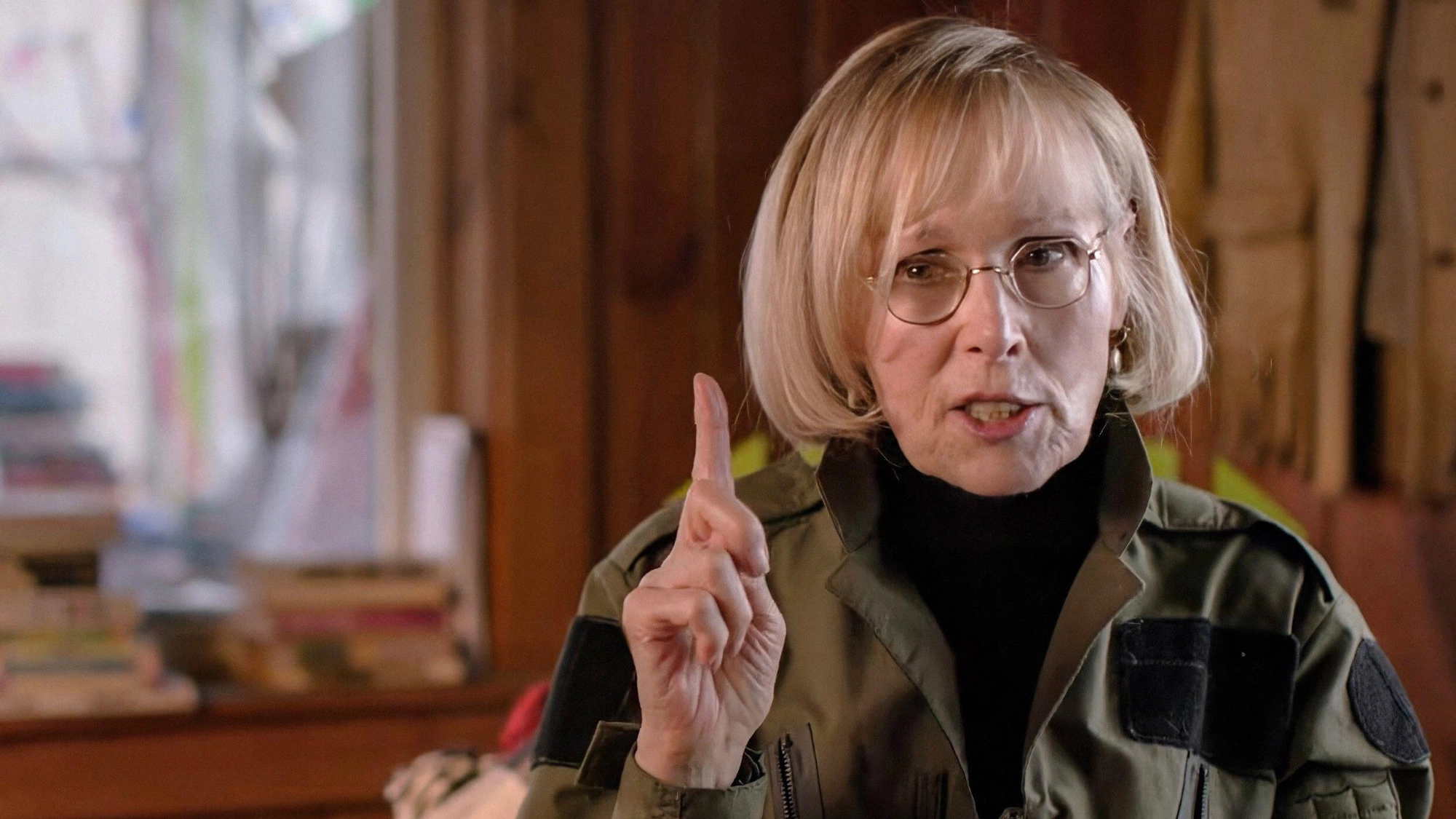


    Image credits, from top: Abramorama / Everett Collection / Alamy; Johan Persson; Allen Lane; Matthew Lewis / Getty Images
     

    Recent editions

    • Evening Review

      Iran’s covert allies?

    • Morning Report

      Peace progress in Gaza?

    • Evening Review

      Abolish the Senate?

    VIEW ALL
    TheWeek
    • About Us
    • Contact Future's experts
    • Terms and Conditions
    • Privacy Policy
    • Cookie Policy
    • Advertise With Us
    • FAQ
    Add as a preferred source on Google Add as a preferred source on Google

    The Week is part of Future US Inc, an international media group and leading digital publisher. Visit our corporate site.

    © Future US, Inc. Full 7th Floor, 130 West 42nd Street, New York, NY 10036.