The Week The Week
flag of US
US
flag of UK
UK
https://cdn.mos.cms.futurecdn.net/flexiimages/jacafc5zvs1692883516.jpg

SUBSCRIBE & SAVE

Less than $3 per week

Sign in
  • View Profile
  • Sign out
  • The Explainer
  • The Week Recommends
  • Newsletters
  • Cartoons
  • From the Magazine
  • The Week Junior
  • Student Offers
  • More
    • Politics
    • World News
    • Business
    • Health
    • Science
    • Food & Drink
    • Travel
    • Culture
    • History
    • Personal Finance
    • Puzzles
    • Photos
    • The Blend
    • All Categories
  • Newsletter sign up Newsletter
  • Sunday Shortlist, from The Week
    A ‘titanic’ display and a ‘gothic thriller’

     
    TV REVIEW

    Possession

    A supernatural ‘dual-timeline mystery’ of a family feud addresses the issue of reparations for slavery  

    “Like many a gothic thriller”, “Possession” (Sky Atlantic) “is set around a creepy old house”, said Barbara Ellen in The Observer. The difference is that this one stands on the site of a former slave plantation in Jamaica. 

    Its owner has died and has cut his only son, Oliver (Jonny Lee Miller), out of his will, and left his £50 million estate to a near stranger – a local named Cudjoe East (Sheldon Shepherd). British lawyer Claudia (Gugu Mbatha-Raw) is sent out by her firm to resolve the situation, partly because she has a Jamaican mother. She assumes that Cudjoe will turn out to be a simple fraudster, but things turn out to be stranger than anticipated. 

    “What follows is a dual-timeline mystery,” said Lucy Mangan in The Guardian. One strand unfolds in the present day; the other takes us back to the 1700s, when the estate was worked by enslaved people under the “increasingly cruel” rule of Oliver’s ancestors. Cudjoe claims to be 292 years old, and one of those people. Images from Claudia’s own nightmares start appearing in real life, and the spirits believed by locals to infuse the land grow increasingly restless. 

    Some may find the resort to the paranormal a cop-out, but ultimately, this is a powerful drama about unadmitted guilt, and whether justice for some crimes is possible. Via the £50 million legacy, the series, which boasts some fine performances, addresses the issue of reparations for slavery, said Anita Singh in The Telegraph. It is a worthy one, so it is a pity that in the midst of this, some of “the horror scenes can come over as unintentionally funny”.


    THEATRE REVIEW

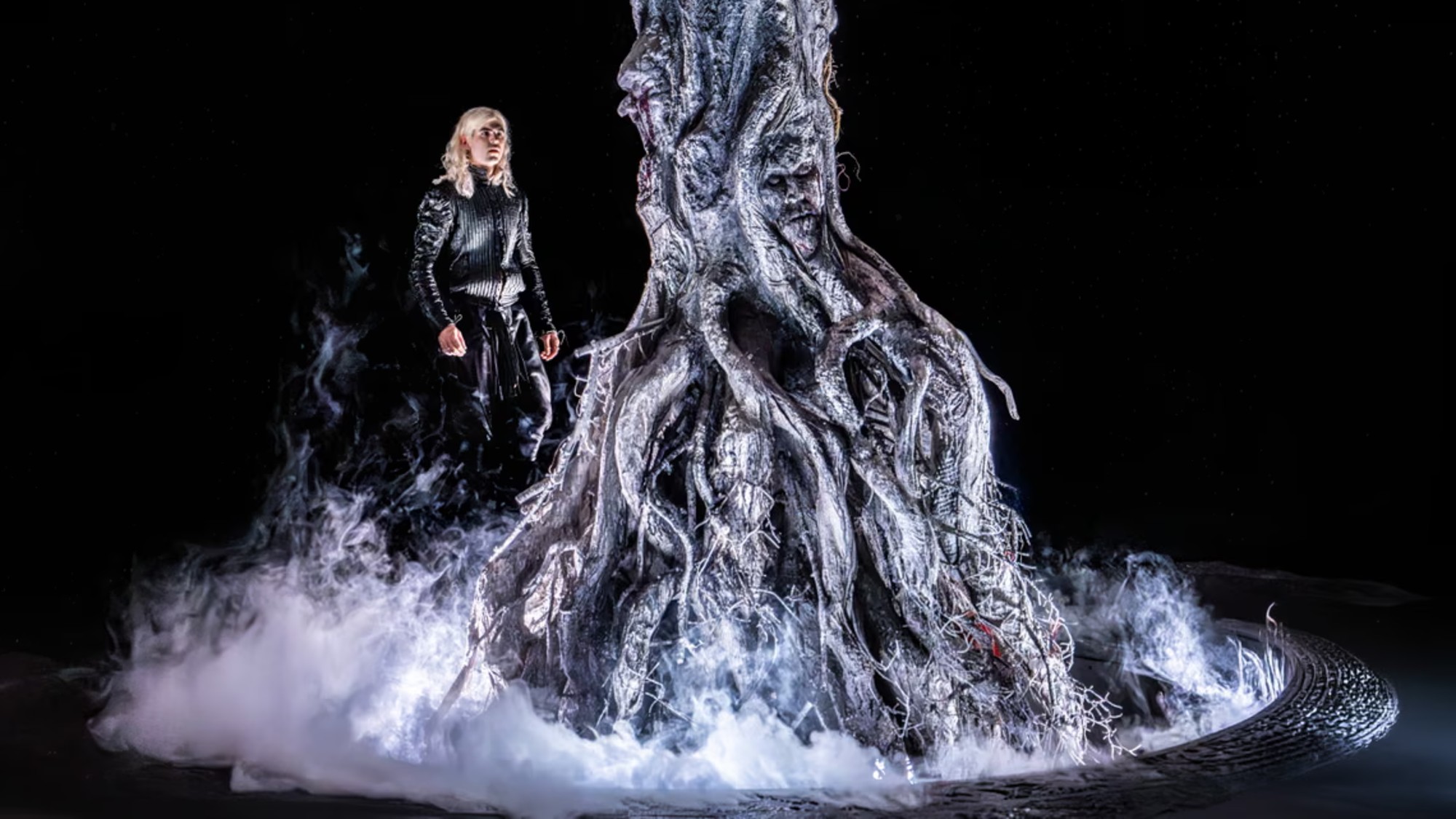
    Game of Thrones: The Mad King

    A ‘soaring, surging spectacle’ with ‘puppeteered dragons’

    “Five years in the making and a decade in the dreaming,” the RSC’s addition to the “Game of Thrones” universe – a prequel set 15 years before George R. R. Martin’s first novel in the series – is a “titanic display” of theatrical magic, said Sarah Crompton on What’s on Stage. 

    Written by Duncan Macmillan and directed by Dominic Cooke, it’s “a triumph; a soaring, surging spectacle and a latter-day history play, both serious and popular”. Presented on a vast, open stage in the shape of a cross, it boasts extraordinary moments of theatrical daring. There is a thrilling opening procession, in which kings and princes ride in on magnificent armoured horses – puppets operated by handlers, “War Horse”-style – and the battles are “sensationally” realised: “sections of armour, weapons, bodies fly across the ground and air with a terrific sense of impetus and weight”. 

    The RSC has “pulled off a coup” with this spellbinding evening, agreed Dominic Cavendish in The Telegraph. The play – which should appeal to both “newbies and devotees” – is a gripping excavation of the “realm-destabilising” backstory to Martin’s saga. Michael Shaeffer is “electrifying” and deeply strange as the mad king Aerys II Targaryen, combining the distracted air of Shakespeare’s Lear with the villainy of Richard III. And the whole drama has a “propulsive energy redolent” of the Bard’s history plays – “only here there are puppeteered dragons too”. 

    Sensitive viewers may be relieved to learn that there’s no chance of a severed head landing in their lap, said Clive Davis in The Times. “The sex, too, has been toned down to PG levels.” That makes sense, if you want to draw in families. But the dilution of the sex and gore, plus relative lack of pace, makes for an evening that is plodding at times, and that “seldom comes close to matching the grim aura” of the TV series. Macmillan’s script is short on poetry, and there is some shouty acting from the supporting cast. You “expect better of the RSC”. It’s admittedly heavy on jousts and battles, said Mark Lawson in The Guardian, but I thoroughly enjoyed it. The RSC is no doubt praying for a big “Matilda”-style commercial transfer; watch this space.

    Royal Shakespeare Theatre, Stratford-upon-Avon. Until 5 September.


    ALBUM REVIEW

    Arun Sood and Angeline Morrison: Donn/Dubh

    This superb album from two of Britain’s most exciting folk musicians, both of Hebridean heritage, is inspired by 10th-century Celtic cantos. It melds “traditional Gaelic texts and tunes with distortion, drone, dream-pop and post-rock”, and its “ambitions unpeel with every tantalising listen” (Guardian).


    BOOK OF THE WEEK

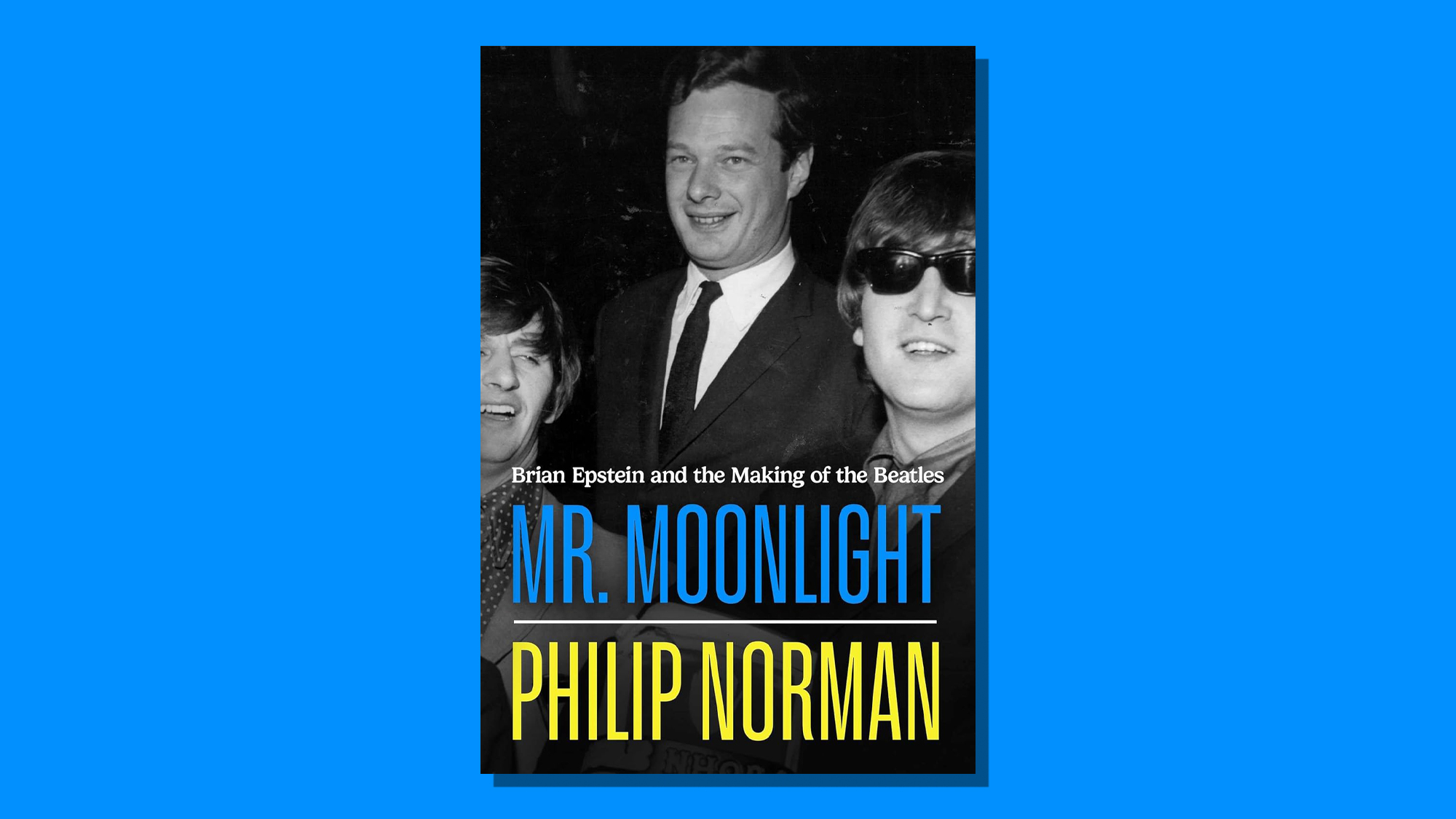
    Mr. Moonlight: Brian Epstein and the Making of the Beatles

    by Philip Norman 

    Brian Epstein was “the visionary who gave the world the Beatles”, said Wesley Stace in The Wall Street Journal. Now, Philip Norman – the “Beatles completist”, who has written books about John Lennon, Paul McCartney and George Harrison – has turned his attention to the Fab Four’s first manager. 

    Epstein was not around at their genesis. He was busy expanding the record department at his family’s music store in Liverpool. But one day in 1961, a customer asked for “My Bonnie”, a single on which a local band had played the backing track. Two weeks later, Epstein put on his polished brogues, and visited the Cavern Club to see what the fuss was about. Swept away, he offered the band his services. He swapped Pete Best on drums for Ringo, dressed them in suits and put them in touch with George Martin. By 1964 they were the biggest band in the world. 

    Three years later, Epstein was dead – killed by an accidental overdose aged 32. Without Epstein, “we may never have heard” of the Fab Four, said Daniel Finkelstein in The Times. The impresario had “top-notch” artistic instincts and real integrity: he loved his “boys”, and took pains to be fair to them in business. He also lusted after them, especially Lennon, and understood their appeal to teenage girls. So they lucked out when he came to them; but while he seemed rich and sophisticated to a group of Liverpool lads playing in a cellar bar, he was not really a big shot. 

    He made them a fortune, but he also lost them money, and before long, he sensed that they were outgrowing him. He fell into a depression, and his reliance on drink and drugs became more pronounced. This is a well-written and “necessary” book, about a complex man – a middle-class Jew and a closeted homosexual, with a difficult insider-outsider status in 1960s Britain.


    OBITUARY

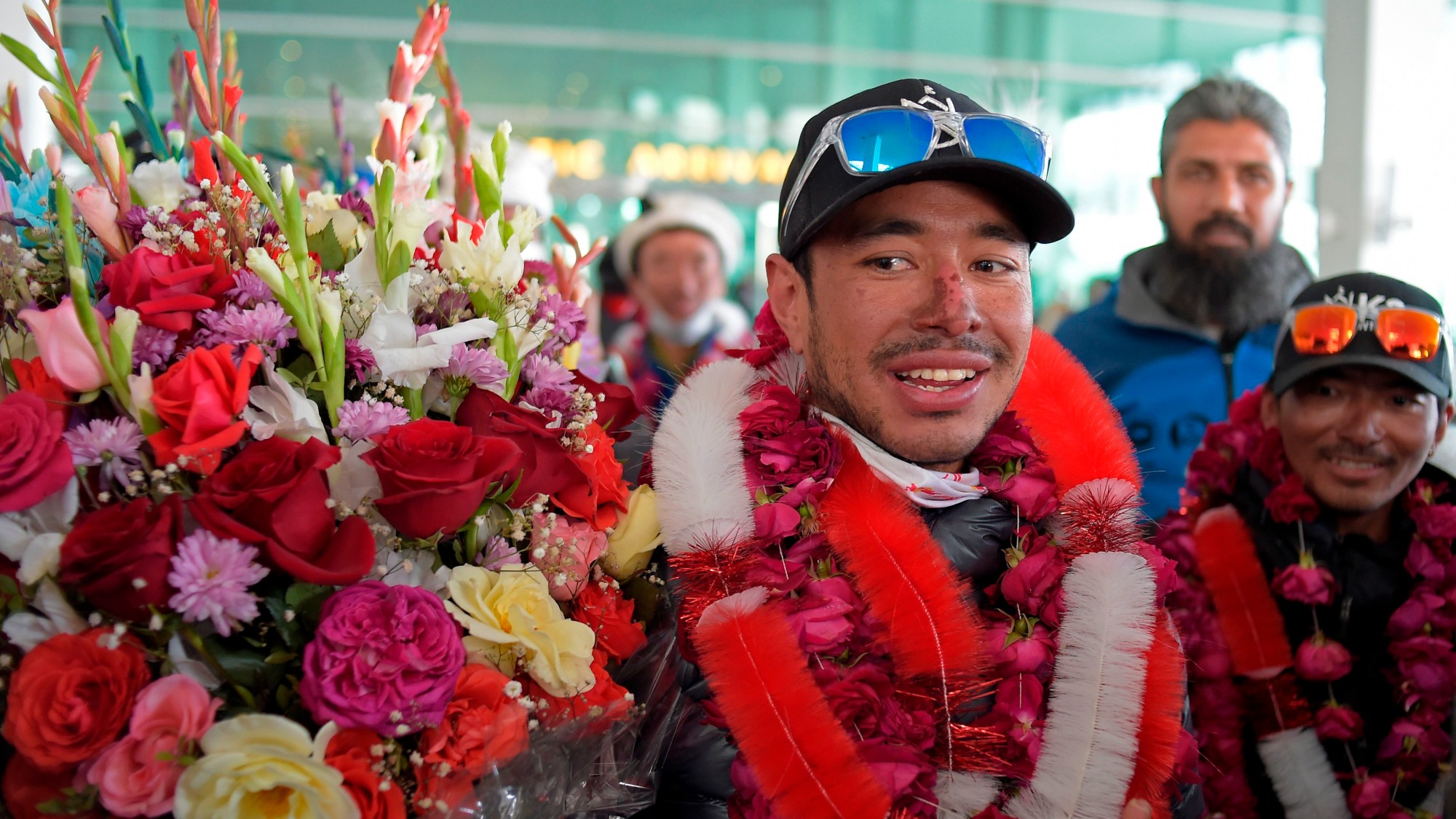
    Nirmal ‘Nims’ Purja

    Record-breaking mountaineer who found fame on Netflix

    Nirmal “Nims” Purja, who was killed last month while climbing in Pakistan, “redefined what was physically possible at high altitude”, said The Telegraph. The Nepali-British mountaineer became famous in 2019, when he scaled the world’s 14 mountains rising over 8,000 metres in six months and six days – smashing the previous record, of seven years. 

    In 2024, Purja, who cited Usain Bolt and Muhammad Ali as inspirations, did it all over again, this time without supplementary oxygen, in another record-breaking time of 29 months. The subject of a hit Netflix documentary in 2021, he won millions of followers online, and lucrative contracts from mountaineering brands. 

    However, questions were raised about his reliance on huge support teams and helicopters to ferry him between base camps to achieve his record-breaking feats, and in 2024, major corporate sponsors dropped him after he was publicly accused of sexually harassing and assaulting two female climbers – allegations he denied. 

    Nirmal Purja was born in a remote mountain village in western Nepal in 1983. His father had served with the Gurkhas and his mother was a farmworker. “We came from a really poor family,” he recalled. “As a kid I remember I didn’t even have flip-flops.” Like his older brothers, he followed in his father’s footsteps, joining the Gurkhas aged 18. He was deployed to Afghanistan in 2007, where he was involved in sweeping vast areas of land for improvised explosive devices. In 2009, he became the first Gurkha to pass Selection for the elite Special Boat Service. 

    It was while he was in the SBS that he discovered his love of high-altitude mountaineering. He trekked to Everest base camp in 2012, and in 2016 he reached the summit for the first time. In 2019, he took a photograph of a long queue snaking to the top that went viral. In the same year he rescued a Malaysian climber on Annapurna. In 2023, he paused to rescue a Nepalese army captain who’d been abandoned by his own party on the South Summit of Everest. 

    Purja’s other achievements included being part of the team that, in 2021, made the first winter summit of K2 – one of the world’s deadliest peaks, where the bodies of several climbers killed by an avalanche in 2008 still lie in a narrow gully known as the Bottleneck. “Passing bodies, you realise some things are beyond planning and skill,” he said. “Sometimes it’s just your day and sometimes it isn’t.” He was killed by an avalanche on Broad Peak, in the Karakoram range, along with nine other climbers. He is survived by his wife Suchi, and their daughter, Himani.


    Image credits, from top: Sky Atlantic; Johan Persson; Simon & Schuster UK / Stephen P. Kelly; Farooq Naeem / AFP / Getty Images
     

    Recent editions

    • Evening Review

      One year of the National Guard in DC

    • Morning Report

      Rough seas for US aircraft carriers

    • Evening Review

      Trump attacks the oil industry

    VIEW ALL
    TheWeek
    • About Us
    • Contact Future's experts
    • Terms and Conditions
    • Privacy Policy
    • Cookie Policy
    • Advertise With Us
    • FAQ
    Add as a preferred source on Google Add as a preferred source on Google

    The Week is part of Future US Inc, an international media group and leading digital publisher. Visit our corporate site.

    © Future US, Inc. Full 7th Floor, 130 West 42nd Street, New York, NY 10036.