The Week The Week
flag of US
US
flag of UK
UK
https://cdn.mos.cms.futurecdn.net/flexiimages/jacafc5zvs1692883516.jpg

SUBSCRIBE & SAVE

Less than $3 per week

Sign in
  • View Profile
  • Sign out
  • The Explainer
  • The Week Recommends
  • Newsletters
  • Cartoons
  • From the Magazine
  • The Week Junior
  • Student Offers
  • More
    • Politics
    • World News
    • Business
    • Health
    • Science
    • Food & Drink
    • Travel
    • Culture
    • History
    • Personal Finance
    • Puzzles
    • Photos
    • The Blend
    • All Categories
  • Newsletter sign up Newsletter
  • Sunday Shortlist, from The Week
    A ‘life-affirming’ mockumentary and a ‘quietly contemplative’ show

     
    EXHIBITION REVIEW

    Portrait of a City

    The exhibition celebrates ‘era-defining photographers’  

    In 1929, the American photographer Berenice Abbott returned to New York after several years in Paris, said Seán O’Hagan in The Observer, and “found her home city in the throes of rapid transformation”.

    In 1928, she had asked: “How can anyone but a photographer hope today to fix for posterity the image of the modern city?” And that is a question that “echoes through” “Portrait of a City: A Century of American Photography”, at Dulwich Picture Gallery. Bringing together works by American photographers from the 1900s to the 1980s, it is in fact “a portrait of several American cities”, from Dorothea Lange’s Depression-era San Francisco, to “the blankly intriguing streets” of Ed Ruscha’s Los Angeles in the 1960s. It is not a complete survey, but it’s nevertheless a fabulous show that “just about adds up to a visual narrative of an American century”.

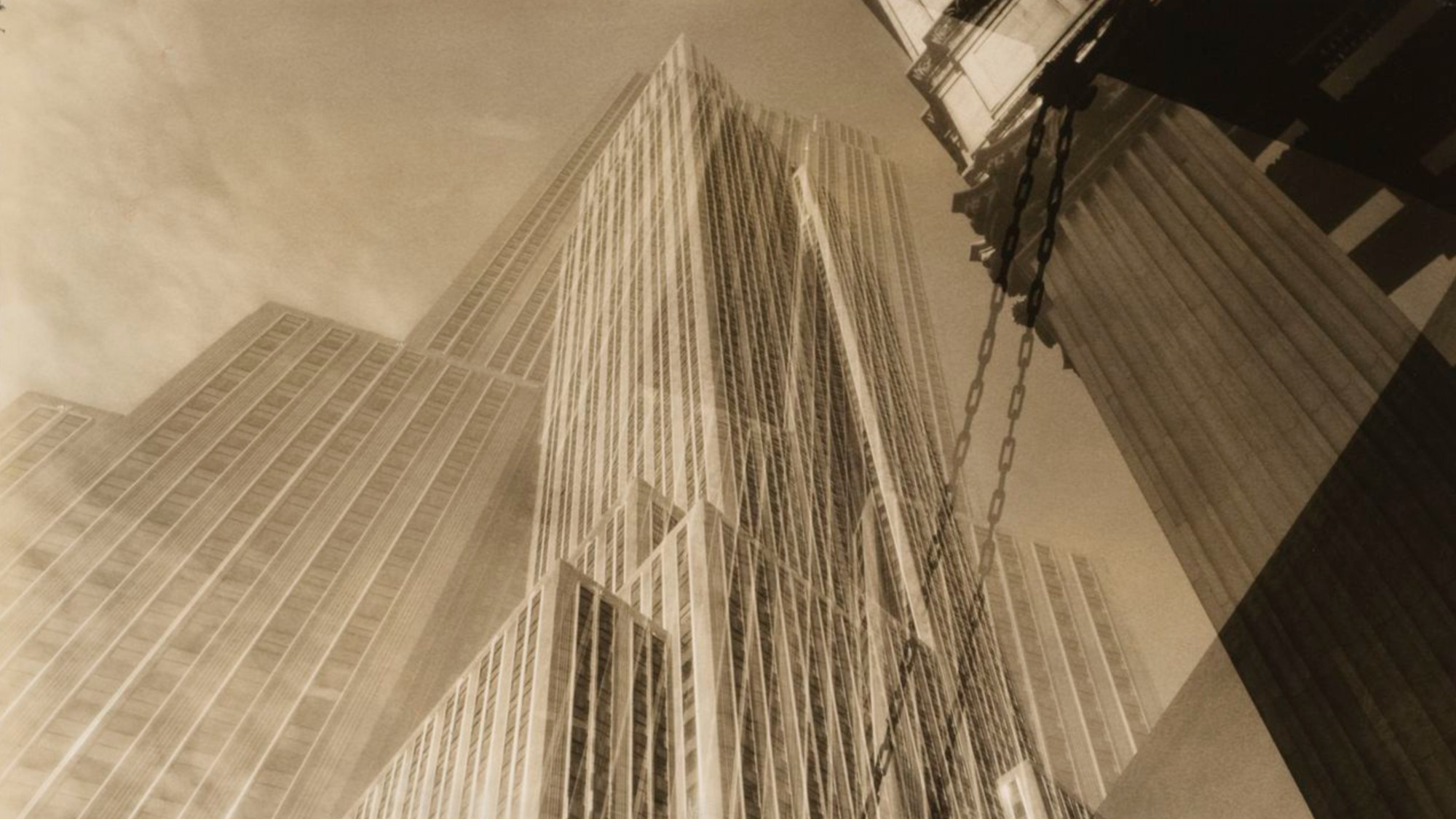
    This “quietly contemplative but gripping show” is made up of works by “era-defining photographers” drawn from the collection of Norway’s Savings Bank Foundation DNB, said Charlotte Jansen in The Guardian – which inevitably limits the curatorial choice. It begins with images of New York and its towering monoliths by the great pioneers Alfred Stieglitz and Edward Steichen, and then just keeps moving “through masterpieces”. Lange’s “Migrant Mother” (1936) is among the examples of early social documentary on show. There is also Lewis Hine’s iron worker on the Empire State Building, circa 1930.

    Many of the photographers in the first half had trained as painters, which shows in their “glorious attentiveness to composition and light”. And while you feel that some were trying to deal with the overwhelming vastness of the new American city by making pieces of it their own, others – such as the street photographer Garry Winogrand – disappear into it.

    Upbeat and “unashamedly nostalgic”, the exhibition is full of striking imagery, said Jackie Wullschläger in the Financial Times: look out, among many other things, for Steichen’s “The Maypole” (1932), which so brilliantly conveys the excitement and vast presence of the Empire State Building, and for the film about Saul Leiter – that “unsung chronicler of mid-century American uncertainty”, who turned his poetic and painterly outsider’s eye on life in the East Village. “‘I may be old-fashioned,’ he said, ‘but I believe there is such a thing as a search for beauty – a delight in the nice things in the world. And I don’t think one should have to apologise for it.’ Bravo to that, and to the spirit of pleasure throughout this show.”

    Dulwich Picture Gallery, London SE21. Until 4 October


    FILM REVIEW

    Lady

    Fleabag star plays a ‘haughty, but troubled’ aristocrat 

    “Those of us pining to see more Sian Clifford since the end of ‘Fleabag’, in which she played Phoebe Waller-Bridge’s fierce sister”, have been rewarded with this “barnstorming” mockumentary comedy, said Peter Bradshaw in The Guardian.

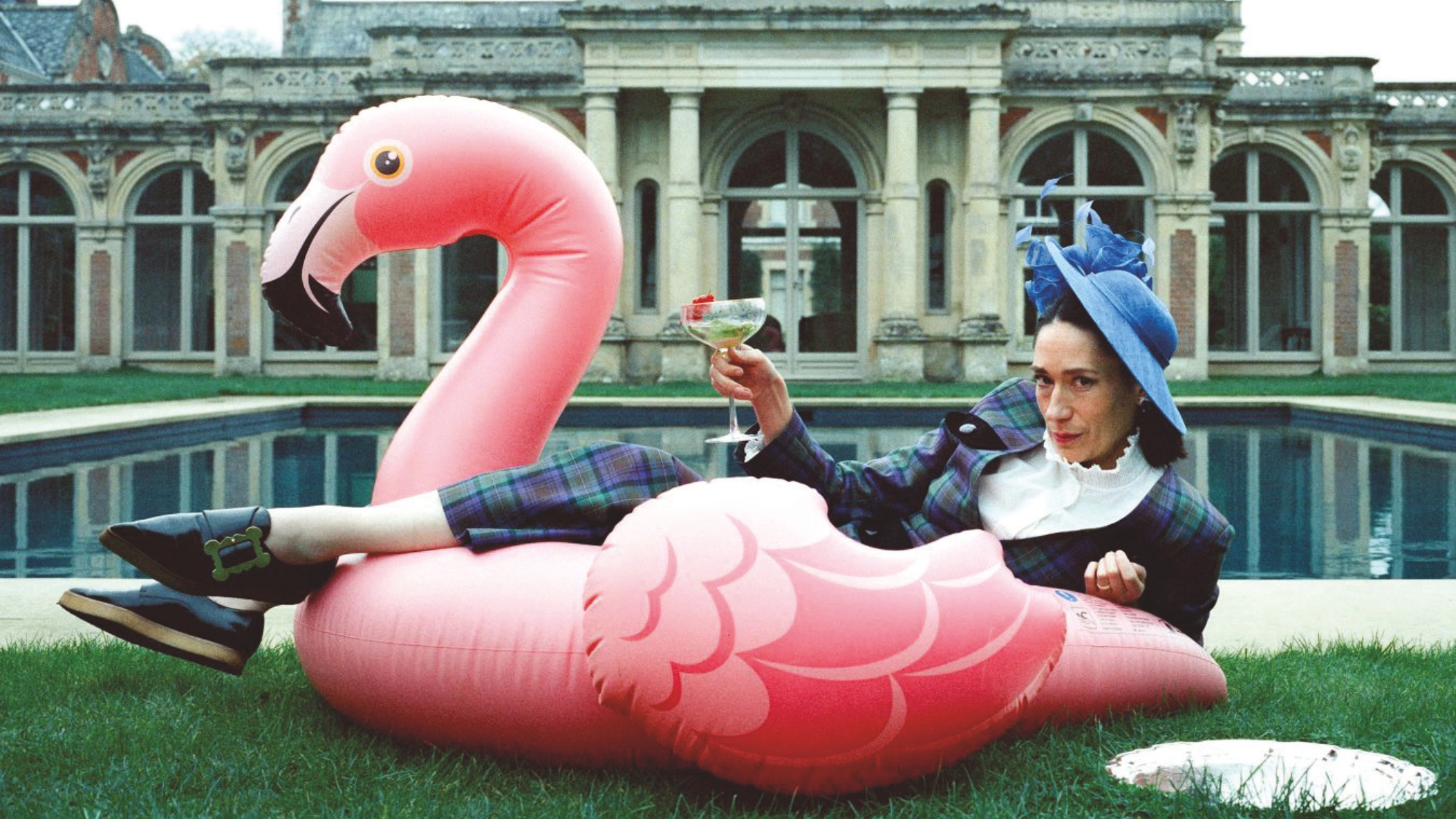
    Clifford plays Lady Isabella, a “haughty, but troubled” aristocrat who lives on a grand country estate (the movie was filmed at Somerleyton Hall in Suffolk), where she hosts an annual children’s talent competition, Stately Stars. Desperate to prove that she has artistic talent of her own, Isabella decides to compete against the youngsters, staging an elaborate multimedia performance, which includes poetry, action art and photographs of her “apparently dead body around the grounds”.

    On hand to witness the mayhem is Sam (Laurie Kynaston), a “pushy, insecure young director” who shows up at the stately home to make a documentary. Funny, poignant and increasingly bizarre, “Lady” plays like a psychedelic “B-side to Saltburn”.

    There is plenty of David Brent in this “frequently hilarious” film, said Kevin Maher in The Times, along with “bits of Alan Partridge and a dash of ‘This Country’”. The twist comes when the action suddenly veers into science fiction, and Isabella begins quite literally to disappear. The metaphor is clear – Isabella has become invisible to her husband, her peers and herself – and at times, her desire to be seen is almost “unbearably poignant”.

    The shifts “from quirkiness to horror to tragedy” aren’t always seamless, said Gayle Sequeira in Sight and Sound, and some of the jokes go on too long. But by the end, the silliness gives way to something “meaningful and life-affirming”. “‘Lady’, much like the aristocrat at its centre, is an odd duck: erratic, but possessed of a tender heart and scrappy spirit.”


    podcast REVIEW

    Stories of Art

    “Art historians have generated some of the most meaningless babble known to man,” said James Marriott in The Times – but they have also come up with some of the very best broadcasting: Kenneth Clark’s “Civilisation”, John Berger’s “Ways of Seeing”, Robert Hughes’ “The Shock of the New”. Two gifted inheritors of that tradition are Waldemar Januszczak and Bendor Grosvenor, whose podcast “Waldy and Bendy’s Adventures in Art” is a joy. And recently it was joined by an equally superb podcast, from art historian James Fox and art critic Alastair Sooke. Their “Stories of Art”, which launched in February, is “fantastic” – and it made me want to rush to an art gallery. The pair know how to tell a story, and their podcast is “deeply researched, authoritative and passionate” – a bit like “The Rest Is History” but for art. Already, there are episodes on everyone from Gentileschi to Kahlo; Holbein to Hockney. “A good way in is their series on Michelangelo.”


    BOOK OF THE WEEK

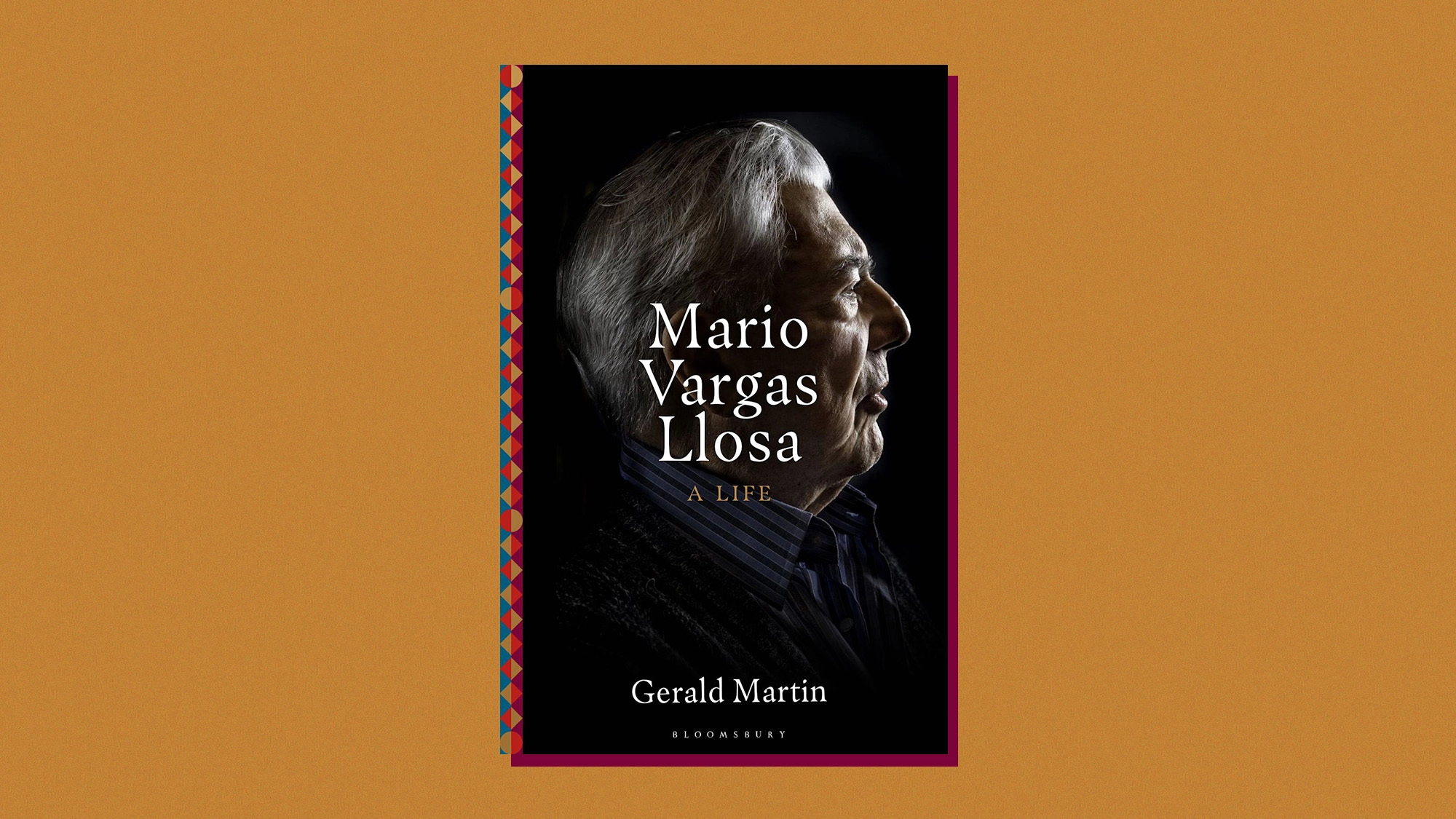
    Mario Vargas Llosa 

    by Gerald Martin

    By the time he won the Literature Nobel in 2010, Mario Vargas Llosa, the Peruvian novelist who died last year aged 89, had come to be regarded as the “Julio Iglesias of contemporary fiction”, said Nicholas Shakespeare in The Spectator.

    For six decades he’d “defined headlines”: a global celebrity, owing not least to his “turbulent private life”, the winner of “numerous literary prizes” (some awarded “for mere famousness”, in the words of a critic). As Gerald Martin puts it in this biography, Llosa was a “literary adventurer, politician, diplomat and warrior” in one.

    Politically, he had shifted from communist student to “reverential supporter of Thatcher and Reagan” – and come close to Peru’s presidency. Personally, he was an iron-willed, selfish man motivated by resentment and revenge.

    It all began with “a whopping lie”, said Maya Jaggi in The New Statesman. Born in 1936, the Nobel laureate spent his first 10 years living with his mother and her snobby family, believing that his father, a merchant seaman, was dead; then, aged 11, he was told that his father was not only alive, but coming to live with them.

    Ernesto Vargas proved to be a tyrant who beat his “spoiled son”. Thus, as Martin puts it, “10 ostensibly idyllic years without a father” were followed by 10 brutal years with one. His subsequent experiences – at a cadet school in Lima, a spell as a reporter on a crime beat – would feed his “brilliant early novels”; later, his decision to elope, aged 19, with his uncle’s sister-in-law inspired his 1977 novel “Aunt Julia and the Scriptwriter”. Portrayed here as a cynical love rat, he dumped Julia to marry his cousin Patricia, 10 years his junior and “practically his sister”.

    Martin believes that his “sadistic and often pornographic” fantasies about his “Lima Lolita” fuelled his 1966 novel “The Green House”. Fifty years on, he abruptly left Patricia for the socialite Isabel Preysler (Iglesias’ ex).
    Martin – also the biographer of Gabriel García Márquez, with whom Llosa spectacularly fell out – has written a “genuinely critical life”, said Pratinav Anil in The Guardian. He “restores the women whom Llosa reduced to literary raw material”, and argues the writer was never really a socialist, so much as beguiled by a socialist he met at college (Lea Barba).

    The book has flaws, said Ian Thomson in Literary Review. There are too many exclamation marks and the writing “can be breathy”. Still, it is a “considerable achievement”: “gossipy, erudite and deeply researched”, it will be the “last word on the man who wanted to be the most famous writer in the Hispanic world since Cervantes”.


    TV REVIEW

    My Brilliant Career 

    Australia’s answer to Pride and Prejudice

    “I’m ashamed to say that I’d never heard of the 1901 novel ‘My Brilliant Career’ by Miles Franklin,” said Anita Singh in The Telegraph. Having watched the new Netflix adaptation, I have now “devoured it in one sitting”.

    Described as Australia’s answer to “Pride and Prejudice”, it tells the story of a young woman “kicking against convention in turn-of-the-century Australia”. Sybylla Melvyn (Philippa Northeast) is an aspiring writer who has grown up running wild on her family’s outback farm. She is sent to live with her well-to-do grandmother (Anna Chancellor), who hopes to teach her how to be a lady and bag a husband.

    Sybylla, who wants nothing more than to be an author, rationalises that she must “fully experience the world before I can write about it”, said Luke Buckmaster in The Guardian. Soon, she encounters a potential suitor, Harry Beecham (Christopher Chung), who in this version is Chinese-Australian and “totally ripped”. Sybylla becomes involved in a love triangle with Harry and an English visitor, Frank.

    The six-part series is “steamier” than the novel, and at times “a tad syrupy”. But it has “pluck and sass”, and Northeast gives an “entertaining, high-voltage performance”.

    The series “takes a very 2020s approach” to early 1900s Australia, said James Jackson in The Times, with a gay subplot, and another involving a young Indigenous horse trainer. It’s easy to make it sound “pretty naff”, but “My Brilliant Career” is “self-aware” – and thanks to Northeast’s “terrific performance”, it is highly enjoyable.


    Image credits, from top: MetFilm / Samuel Abrahams; The Estate of Edward Steichen / SODRAC; Bloomsbury; Netflix
     

    Recent editions

    • Evening Review

      Pivot from Asia?

    • Morning Report

      Trump deportations reach new frontiers

    • Evening Review

      Rising bond yields

    VIEW ALL
    TheWeek
    • About Us
    • Contact Future's experts
    • Terms and Conditions
    • Privacy Policy
    • Cookie Policy
    • Advertise With Us
    • FAQ
    Add as a preferred source on Google Add as a preferred source on Google

    The Week is part of Future US Inc, an international media group and leading digital publisher. Visit our corporate site.

    © Future US, Inc. Full 7th Floor, 130 West 42nd Street, New York, NY 10036.