The Week US
flag of US
US
flag of UK
UK
https://cdn.mos.cms.futurecdn.net/flexiimages/jacafc5zvs1692883516.jpg

SUBSCRIBE & SAVE

Less than $3 per week

Sign in
  • View Profile
  • Sign out
  • The Explainer
  • The Week Recommends
  • Newsletters
  • Cartoons
  • From the Magazine
  • The Week Junior
  • More
    • Politics
    • World News
    • Business
    • Health
    • Science
    • Food & Drink
    • Travel
    • Culture
    • History
    • Personal Finance
    • Puzzles
    • Photos
    • The Blend
    • All Categories
  • Newsletter sign up Newsletter
  • Sunday Shortlist, from The Week
    A ‘quietly riveting’ play and a ‘deeply quotable’ book

     
    Theatre Review

    The Cherry Orchard

    Kristin Scott Thomas is ‘hypnotic’ alongside a ‘brilliant’ Stephen Mangan, in a production packed with elegance and insight

    This stirring production of Anton Chekhov’s final masterpiece features “glorious” performances “across the board and the generations”, said Dominic Cavendish in The Daily Telegraph.

    Kristin Scott Thomas is “hypnotic” as the superficially carefree, inwardly agonised Lyuba Ranevsky, who returns to her failing estate after years of exile in Paris. Stephen Mangan is “brilliant” as the low-born but now wealthy businessman Yermolay Lopakhin. And the excellent supporting cast includes Vinette Robinson as Lyuba’s adopted daughter Varya, and Jeff Rawle as the hard-up Boris Simeonov-Pishchik. This is not quite top-drawer Chekhov: it is not as good as the 2007 production of “The Seagull” that won Scott Thomas an Olivier. But it’s assured and “quietly riveting”.

    In his new adaptation, playwright Conor McPherson “cranks up both the bitter and the sweet as he massages the plot and dialogue for some big laughs”, said Andrzej Lukowski in Time Out. Here, for example, the “old codger” servant Firs (the terrific Karl Johnson) is as “mad as a hatter and swears like a trooper”. And it’s a “storming performance – dare I say a career best – from the perennially underestimated” Mangan. Even while plotting to buy the estate, his Lopakhin remains “bound to these people, forever cowed by them”.

    Mangan is a “wonderful” actor, but I’m afraid he’s miscast as Lopakhin, said Dominic Maxwell in The Times. He delivers plenty of “beaming charm” but there is no grit and precious little sense of inner turmoil. And, while Scott Thomas is convincing, this is the “least outstanding stage performance” I’ve seen of hers. The evening overall is “diverting” but, ultimately, disappointing.

    This is a “handsome and engaging” staging, with some funny moments, said Arifa Akbar in The Guardian. And the individual performances are all effective. But somehow, “you don’t feel much pathos” for the group as a whole, and “the drama never quite enters dark or tragic territory”. There’s elegance and insight here, but insufficient emotion.

    Harold Pinter Theatre, London SW1. Until 9 January


    Film REVIEW

    Case 137

    Director Dominik Moll ‘expertly maps how justice can stall’ in the ‘near-broken system’ of the French police

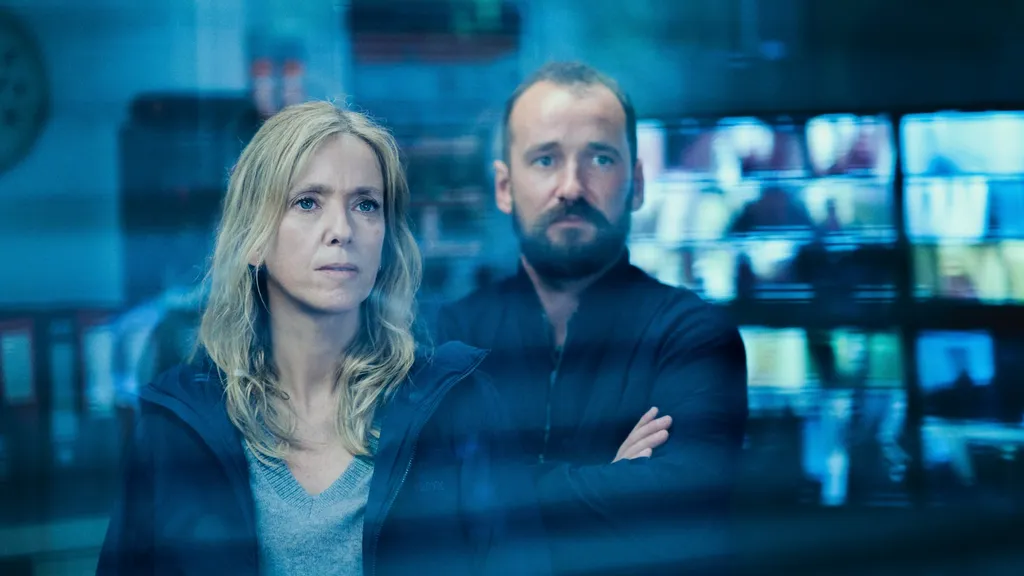
    For his new crime drama, director Dominik Moll found inspiration in the real-life cases of protesters who were badly injured by French police during the 2018 “gilets jaunes” demonstrations, said Peter Bradshaw in The Guardian. Léa Drucker stars as Stéphanie, a conscientious police internal-affairs investigator, whose routine life is upended when she is handed the case of the title – that of a young man who was left with brain damage as after being struck in the face by a rubber bullet during anti-tax protests in Paris.

    Sifting through the evidence, she discovers he is from her home town in the “left behind” northeast, and her mother knows his. She comes up against other complications too, including the resentment of her police officer ex-husband, who thinks she is a traitor to the force. The film is “nowhere near as complex” as Moll’s dark psychological thriller “Harry, He’s Here to Help” (2000), but it is serious and often compelling.

    Moll “expertly maps how justice can stall in a near-broken system”, said Danny Leigh in the Financial Times. Stéphanie initially pursues the case with vigour but soon finds herself caught in an impossible position: loathed by her colleagues but, to a “sceptical world”, just another cop.

    I was gripped by Stéphanie’s painstaking efforts to uncover the truth, said Hadley Freeman in The Times, but what stuck with me were the long conversations she has, with her family and other officers, about the “morality of it all” – the police’s actions, and those of the protesters. Moving and intelligent, “Case 137” makes a “strong argument for less gloss and more reality” in films.


    album REVIEW

    Exaudi: Pocket Universe

    Exaudi are “not only one of Europe’s leading vocal consorts, but one of its outstanding new music ensembles in any format”, said Tim Rutherford-Johnson in Gramophone. This terrific disc showcases four choral pieces commissioned by the group between 2013 and 2019: Andrew Hamilton’s Proclamation of the Republic; Cassandra Miller’s Guide, for which singers are “asked to behave like tape machines” by reproducing, looping, and pitch-shifting sections of music; Leo Chadburn’s Affix Stamp Here; and Geoff Hannan’s title track. There’s “a lot of joy” to be derived from these four substantial, eclectic works, which encompass “swooping folk phrasing, delicate harmonising and exuberant stylistic skill”, said Erica Jeal in The Guardian. The most immediately accessible of them is the Chadburn – it is the “slow movement of this vocal symphony, if you like”. On the title track, “Latin passages of astrophysical discourse by Galileo and Newton tap-dance their way past the ear in irrepressible style: an exuberant end to a virtuosic, slightly bonkers recording”.


    BOOK OF THE WEEK

    The Floating World

    by Ben Eastham

    As a well-respected critic and editor, Ben Eastham “has spent many years at the vanguard of contemporary art”, said Ian Maleney in The Guardian. And in his “neatly done” debut novel, he puts his experience to good use. 

    The narrator, a “somewhat hapless” art-critic-turned-teacher, finds himself in a moral quandary when he’s offered a job working for a “techno-utopian settlement inside a giant dome” on a Greek island. The job is well paid, but the project is funded by the Morel Foundation, an “artwashing spin-off of an arms-manufacturing multinational”. A friend calls it “literally a doomsday bunker for billionaires”. The narrator accepts the role anyway. 

    What follows “isn’t a plotty novel”, said John Self in The Times. It is largely constructed from “diversions”, as the narrator travels to the island and records his encounters and experiences. What it amounts to isn’t quite clear, but Eastham “is deeply quotable, and good at being funny and serious at the same time”. “The Floating World” “hovers somewhere between now-read-on and stop-and-look”, and is always “interesting”.


    OBITUARY

    Eva Marie Saint

    Actress who won an Oscar for her first movie performance

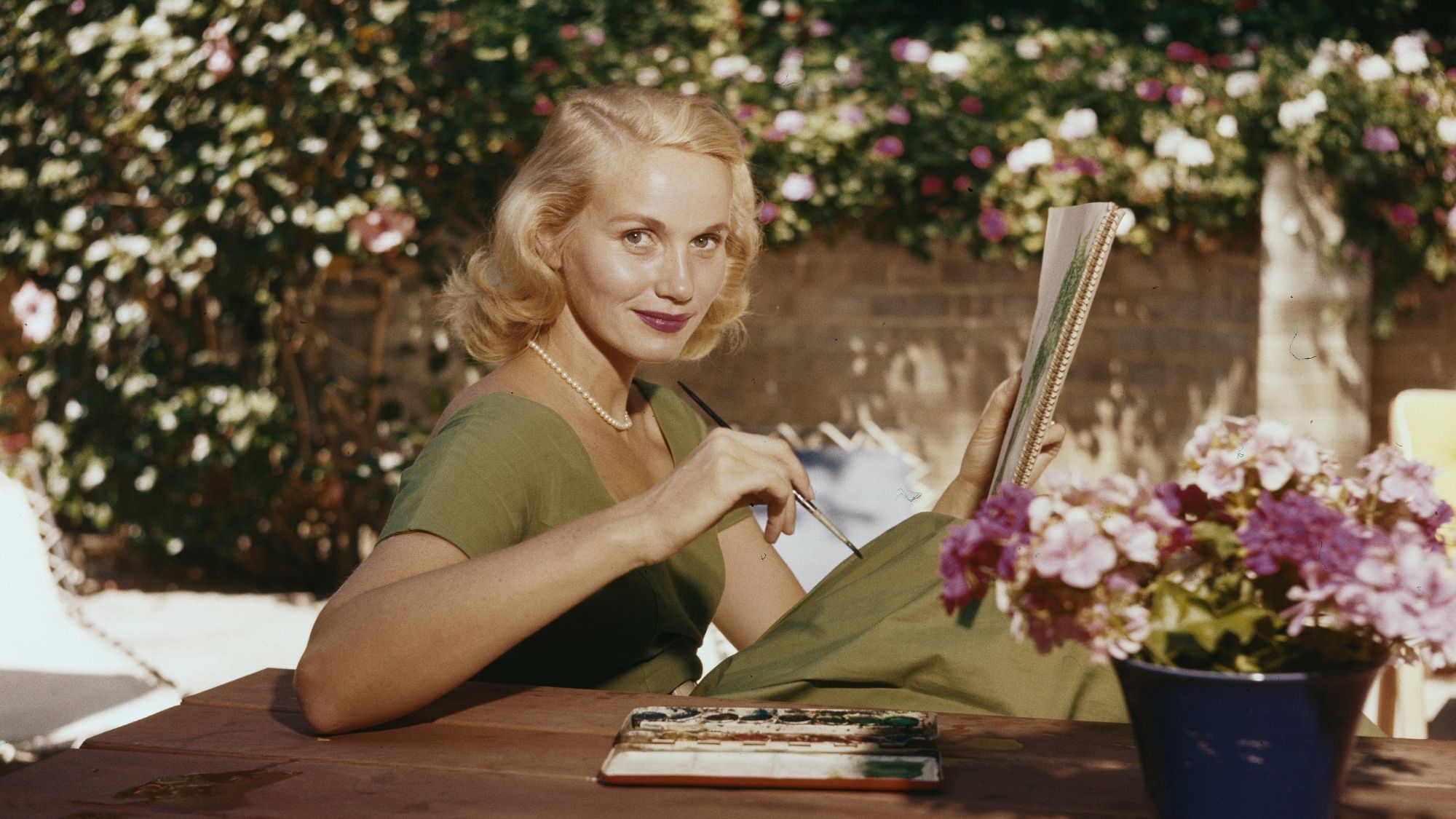
    A “luminous beauty with dramatic depth”, Eva Marie Saint, who has died aged 102, took Hollywood by storm with her first film, said The New York Times. She won an Oscar for her role as the sister of a murdered longshoreman (and Marlon Brando’s love interest) in Elia Kazan’s gritty drama On the Waterfront (1954). That alone would have assured her a place in movie history; five years later, however, she proved “equally convincing as a stylish siren” in another film that is often listed among the best ever made – Alfred Hitchcock’s thriller North by Northwest. After that, she was offered a three-picture deal that her agent said would make her “a superstar”, but she turned it down. She had two children and decided she’d rather be “a working actress with a home life that worked” than spend her life on film sets.

    Eva Marie Saint was born into a Quaker family in 1924 and grew up in upstate New York. Her original plan was to become a teacher, like her mother, said The Daily Telegraph. But at Bowling Green State University in Ohio, she auditioned for a play for a dare, got the part and caught the bug. She trained at the Actors Studio in New York, and had been working on live TV and on stage for eight years when Kazan decided she had what it took to play the ex-convent girl whose delicacy and moral seriousness contrasted with the rough, corrupt world of the New Jersey docks. She would recall Brando as “the finest actor I ever worked with”, said The Times; as well as being a “genius”, he was also a “prince” who had insisted on giving her his coat during chilly location shoots.

    She nearly passed up the chance to star as Eve Kendall, the “ice blonde” who seduces Cary Grant on a train in North by Northwest. “I don’t know, honey, I don’t come in until about page 70,” she told her husband after looking at the script. To play the enigmatic femme fatale, Hitchcock gave her just three instructions: lower her voice, be totally still (no gesturing) and maintain eye contact with Grant. He also had her hair styled into a sleek bob and kitted her out in elegant outfits from Bergdorf Goodman. He turned her, she said, into a “sexy spy lady”.

    Her later films included Otto Preminger’s Exodus (1960), and All Fall Down (1962), in which she starred with the young Warren Beatty. In the 1970s, as big-screen roles dried up, Saint moved back into TV, including a recurring role as Cybill Shepherd’s mother in the hit show Moonlighting from 1986. Her husband of 65 years, TV director Jeffrey Hayden, died in 2016. In 2018, aged 93, she presented an award at the Oscars and was greeted with a prolonged standing ovation. In 2023, she became the oldest living Oscar winner.


    Image credits, from top: Fanny De Gouville; Johan Persson; Fitzcarraldo Editions; Archive Photos / Getty Images
     

    Recent editions

    • Evening Review

      What changes if Netanyahu loses?

    • Morning Report

      Ohio ad splits White House, GOP

    • Evening Review

      A Trump-Putin-Xi confab

    VIEW ALL
    TheWeek
    • About Us
    • Contact Future's experts
    • Terms and Conditions
    • Privacy Policy
    • Cookie Policy
    • Advertise With Us
    • FAQ
    Add as a preferred source on Google Add as a preferred source on Google

    The Week US is part of Future US Inc, an international media group and leading digital publisher. Visit our corporate site.

    © Future US, Inc. Full 7th Floor, 130 West 42nd Street, New York, NY 10036.