The Week US
flag of US
US
flag of UK
UK
https://cdn.mos.cms.futurecdn.net/flexiimages/jacafc5zvs1692883516.jpg

SUBSCRIBE & SAVE

Less than $3 per week

Sign in
  • View Profile
  • Sign out
  • The Explainer
  • The Week Recommends
  • Newsletters
  • Cartoons
  • From the Magazine
  • The Week Junior
  • More
    • Politics
    • World News
    • Business
    • Health
    • Science
    • Food & Drink
    • Travel
    • Culture
    • History
    • Personal Finance
    • Puzzles
    • Photos
    • The Blend
    • All Categories
  • Newsletter sign up Newsletter
  • Sunday Shortlist, from The Week
    Robert Pattinson’s ‘hypnotic’ film and a ‘riveting’ play

     
    Theatre Review

    The Lives of Others 

    Robert Icke’s ‘brooding’ stage adaptation of famous film

    Keira Knightley is the “marquee name” in this much anticipated stage adaptation of the Oscar-winning film about a Stasi officer conducting a covert audio surveillance operation in East Berlin in the 1980s, said Nick Curtis in The Standard. 

    She takes the role of the spied-upon star actress Christa-Maria Sieland – who is “all professional sheen and charm until a devastating scene that Knightley performs with wrenching conviction”. But it would be wrong to characterise Robert Icke’s production as a star vehicle; in fact, it is an ensemble piece that features first-rate performances across the board, and superb lighting, design and music too.

    “Ready to listen? Ready to be an audience?” asks Stasi operative Gerd Wiesler (superbly played by Stephen Dillane) at the start, while the house lights are still up, making us “queasily complicit” in his work, said Marianka Swain on London Theatre. He’s been ordered to listen in on conversations between Sieland, her playwright boyfriend (Luke Thompson of “Bridgerton”), and their artistic friends. An ideological communist, Wiesler believes he is doing vital work to protect the state from subversion but then he discovers his boss has ordered this operation not for political reasons, but for vile personal ones. As in Florian Henckel von Donnersmarck’s 2006 film, his growing disillusionment with the system, and his own cold existence, make for a “sleek and riveting” drama.

    The staging is a “series of beautifully designed prisons: spaces that trap, stifle and ultimately destroy the people who live in them”, said Alice Saville in The Independent. Sliding screens quickly close, leaving the audience with a tiny cinematic close-up.

    Yet at times, said Clive Davis in The Times, it feels as if the characters are “hemmed in” less by the police state than “by a brooding, all-powerful force known as Robert Icke”. The auteur “imposes his aesthetic on every aspect of the evening”; in the end, you’re left “admiring the bravura flourishes rather than being drawn into the story itself”.


    Film REVIEW

    Primetime 

    Disturbing drama about TV host of To Catch a Predator

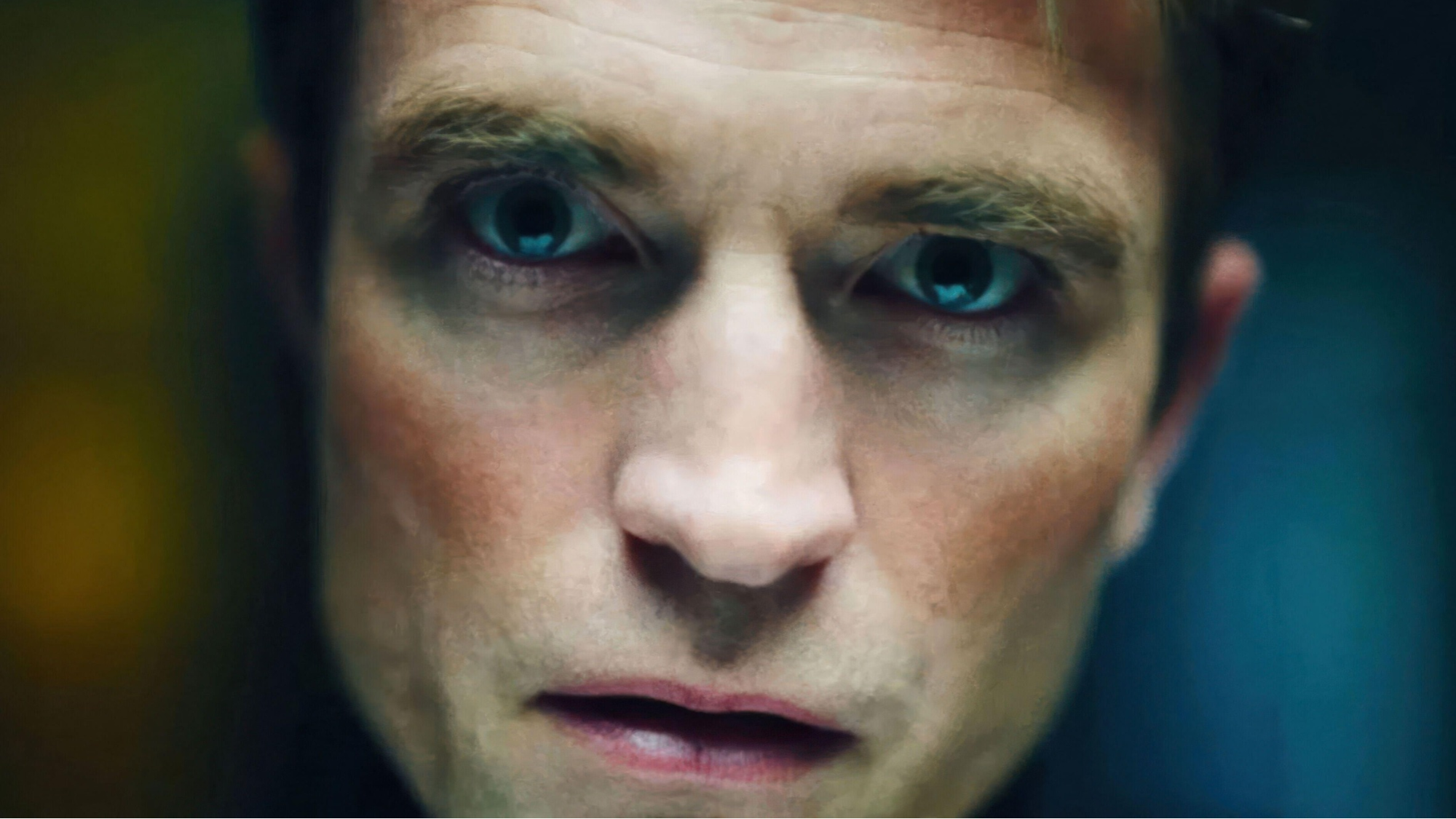
    “If we learn any lesson from the movies this year, let it be this: Robert Pattinson is an absolutely fantastic villain,” said Hadley Freeman in The Times. Following hard on the heels of his excellent turn as the dastardly Antinous in “The Odyssey”, he has delivered a “career-best” performance in “Primetime”, Lance Oppenheim’s dramatisation of the story behind the hit Noughties reality TV show “To Catch a Predator”.

    The show’s researchers would pose as children in online chatrooms, in an effort to flush out paedophiles. They would lure them to a “sting house”, where Chris Hansen, its host, would emerge, triumphantly, camera crew and cops in tow. Hansen (played here by Pattinson) believed the show was “cleansing the world of an ancient evil”; in reality, it was “straightforward entrapment for ratings”, and it eventually spun out of control.

    Pattinson is terrific, “nailing” the presenter’s mannerisms and “furiously self-righteous vibe” in an “absolutely hypnotic performance that you can’t look away from, even when you desperately wish you could”.

    Anyone who watched last year’s “sobering” documentary, “Predators”, about the same events, will know how this story ends, said Louis Chilton in The Independent. That rather drains the tale of tension. But every other element of the film seems to “cohere absolutely” – from the screenplay’s “tar-black comedy” to its “giddy, immersive soundtrack” and “top-level” supporting cast.

    Yet it is never quite clear what “Primetime” is trying to say, said Stephanie Zacharek in Time. If it’s suggesting that, while sexual predators are “unequivocally bad”, the people who make trash TV – particularly a show as “sordid” and manipulative as this – are also “immoral”, that’s a “shaky equivalence” to draw.


    ALBUM REVIEW

    Radie Peat: No Human Tongue Can Tell

    This “extraordinary” solo debut from Radie Peat, the singer in the Irish four-piece band Lankum, is the year’s best folk album. “How staggering for traditional songs to taste so like fresh blood: stunning, brutal and unforgettable”, said The Guardian.


    BOOK OF THE WEEK

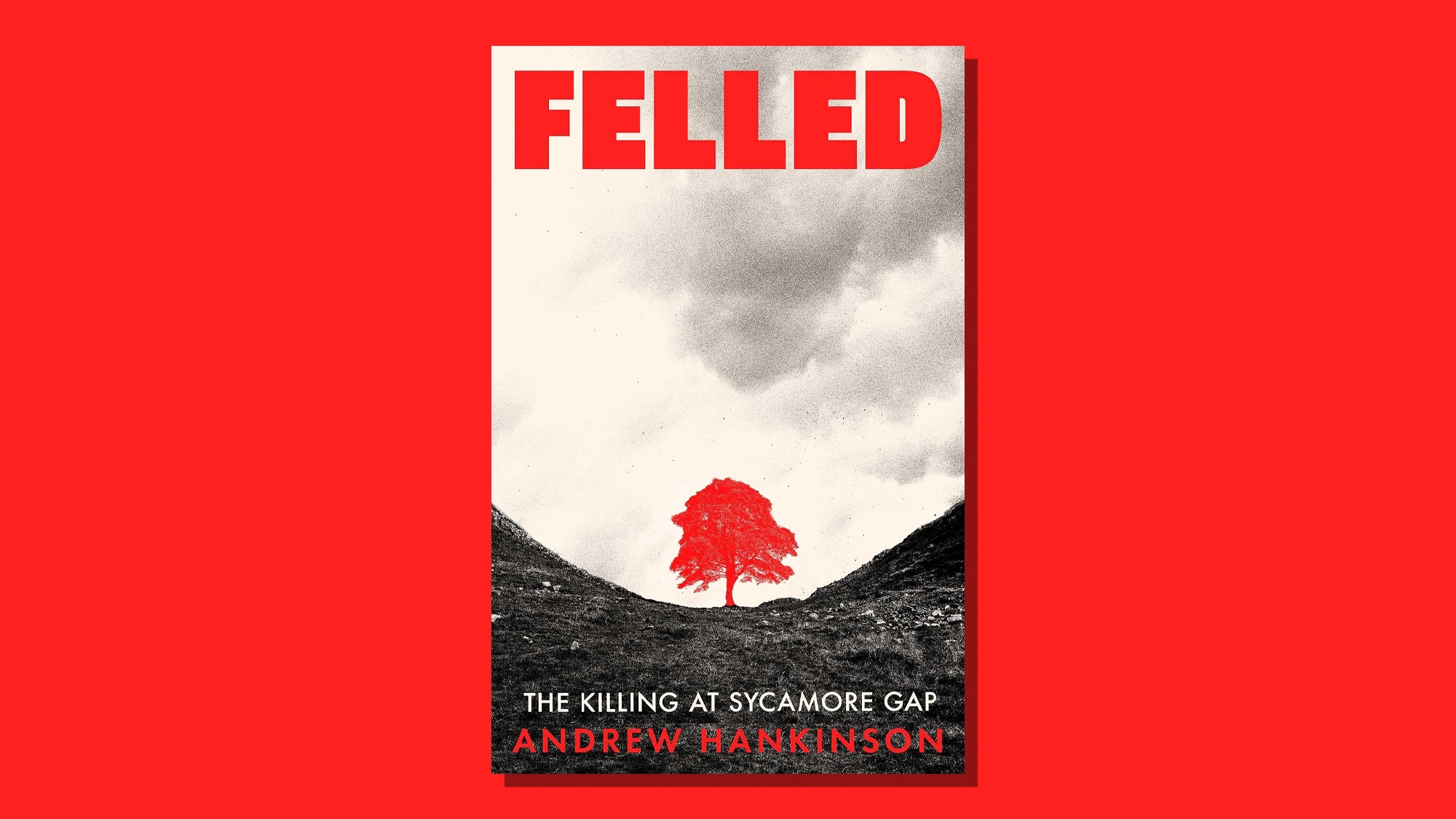
    Felled 

    by Andrew Hankinson

    In the autumn of 2023, Britain became gripped by “the renegade logging of the Sycamore Gap”, said Sarah Ditum in The Times. For a while, it was unclear who had carried out the “senseless felling” of the iconic, much-photographed 150-year-old tree that stood next to Hadrian’s Wall on land owned by the National Trust. But, eventually, the police arrested two Cumbrian friends, Daniel Graham and Adam Carruthers – respectively a “rural odd-job” man and a self-taught mechanic.

    Although the men denied responsibility, the evidence against them was compelling – not least because they’d filmed themselves committing the crime. In 2025, both were found guilty and sentenced to four years and three months in prison. The affair has now been revisited by journalist Andrew Hankinson, who is a “great chronicler of madness”: one of his previous books was a “stark and vivid account” of the last days of “Geordie murderer” Raoul Moat. Combining “straight-up true crime” with elements of memoir and a bracing analysis of the grief and fury the crime unleashed, “Felled” is sharp, insightful and “fascinating”.

    For Hankinson, the story felt personal, said John Sturgis in The Critic: he’d proposed to his wife under that tree. But, while he “starts out outraged by what the pair had done”, he comes to “identify with both men”, seeing them above all as victims. Since their release from prison, they have struggled to find work and Graham, in particular, has had several mental-health crises. While Hankinson’s life has been quite different, he discloses his own struggles, particularly the impact of his father’s death “around the time of the tree felling”. He even calls himself a “shit journalist” – although, in fact, as this “eerie and compelling” book shows, he’s a highly capable writer.

    To this day, it remains unclear what motivated Graham and Carruthers, said Helen Barrett in the Financial Times. Hankinson’s best guess is that “violating the totems others hold dear may be a form of release” for people on the margins of society.

    Yet he implies that, if the act was “senseless”, so too was the “level of national anguish” it inspired. It became a massive news story; the National Trust was invited by the court to submit a victim-impact statement, and pledged to create a “calming, reflective space”, honouring the memory of what it called “the People’s Tree”. As a “baffled” Canadian wrote to Hankinson after he published an article about the trial: “How in Gawd’s name does the UK arrive at the point of losing its collective mind over the loss of a tree?”


    OBITUARY

    Patrick Stewart 

    Classical actor who found fame on the Starship Enterprise

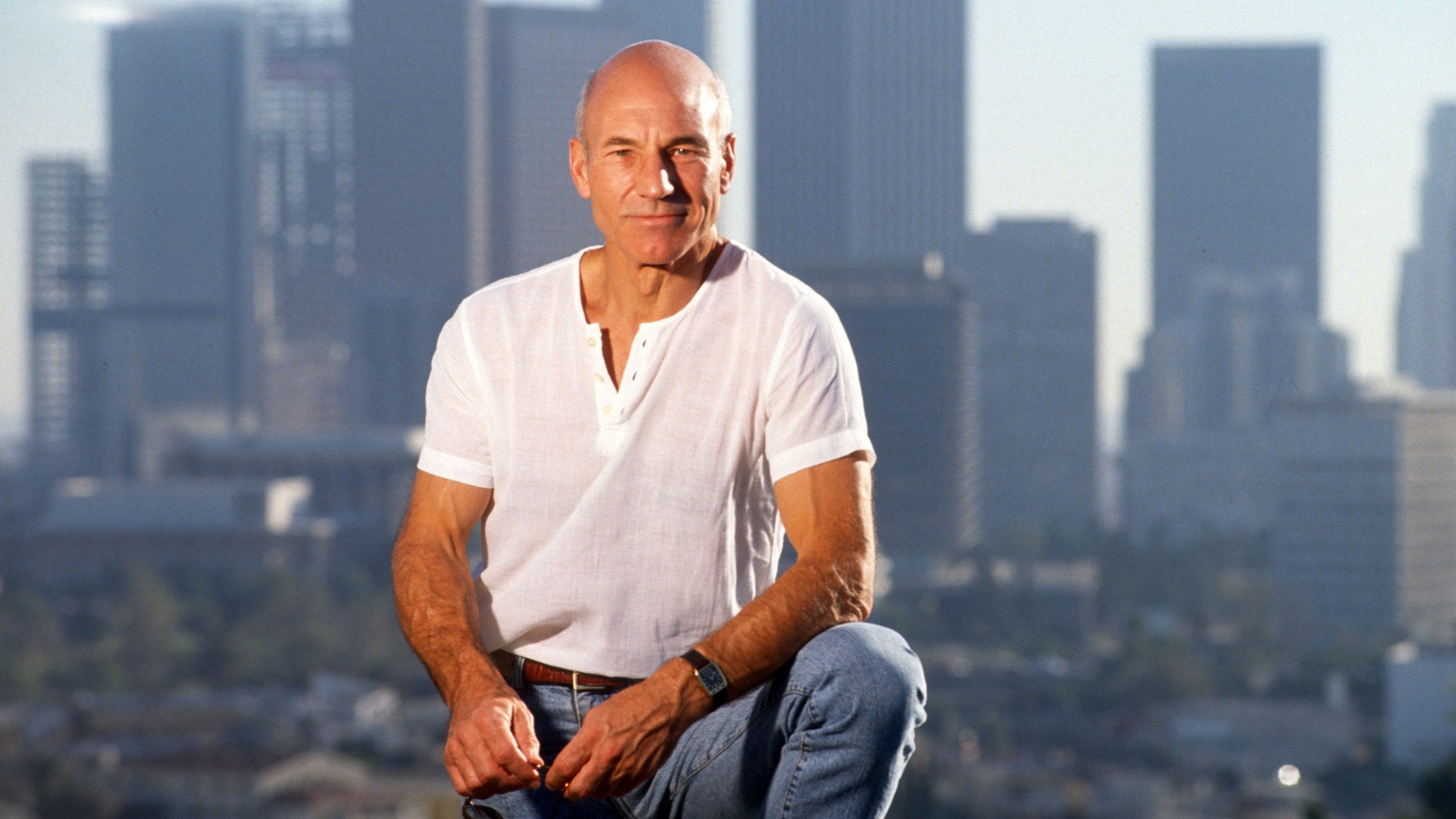
    Patrick Stewart, who has died aged 86, overcame an impoverished and often violent childhood to emerge as one of Britain’s foremost classical actors. Over 20 years, he won acclaim for stage performances at the RSC, the National Theatre and elsewhere. Even so, he was not particularly well known in the UK – and was regarded as a complete unknown outside of it – when in 1987, aged 47, he moved to Los Angeles to take the lead role in a sequel to “Star Trek”. The TV show transformed him, almost overnight, into a Hollywood star, said The New York Times.

    Stewart’s experience on the classical stage served him well in “Star Trek: The Next Generation”, said The Times. His sonorous baritone and commanding presence imbued the character of Jean-Luc Picard with a “calm authority”. He himself observed, that “all those years of playing kings and princes and speaking blank verse … was nothing but a preparation for sitting in the captain’s chair of the Enterprise”. 

    Stewart was born in 1940, and brought up in a one-up, one-down house in Mirfield, West Yorkshire, with no running hot water and a shared outside toilet. He was close to his mother, Gladys, who worked in a mill but, when he was six, his father Alfred came home from the War, and their lives were never the same. A strict disciplinarian, who worked as a labourer and a postman, Alfred was prone to violent, drink-fuelled rages. In later life, Stewart spoke extensively about the domestic abuse he witnessed as a child and his attempts to protect his mother from his father. 

    At his secondary modern school, his English teacher, Cecil Dormand, heard him read and encouraged him to take up acting. Stewart would remain in close touch with Dormand until the latter’s death in 2021. On leaving school at 15, he took a job on a local paper, but was soon let go for spending too much of his time at the local drama society. Not long after, he won a scholarship to the Bristol Old Vic Theatre School. He made his debut in “Treasure Island” in 1959, by which time he had already lost his hair.

    After six years in rep, he joined the RSC, where he worked with other future stars, including Ben Kingsley and Helen Mirren, under director Trevor Nunn. He played the title role in “King John”, and Snout in Peter Brook’s “A Midsummer Night’s Dream”. In 1982, as the king in “Henry IV, Part 1”, he delivered the first lines uttered on stage at the new Barbican Theatre.

    In 1986, Stewart was staying in LA with a friend, an English professor at UCLA, who asked him to perform some readings at a public lecture he was giving on Shakespeare. In the audience was one of the producers of “The Next Generation”, who, right then and there, decided he had found the Enterprise’s next captain. The show’s creator, Gene Roddenberry, wasn’t convinced about casting a “bald, middle-aged Englishman” but “The Next Generation” became a huge hit that ran for seven seasons, with Stewart also going on to appear in four feature-film spin-offs.

    He continued to act on stage on both sides of the Atlantic. He was Othello in a “photonegative” production (with an otherwise all-black cast) in Washington in 1997; he played Claudius to David Tennant’s Hamlet at the RSC in 2008, and he appeared with Ian McKellen in “Waiting for Godot” in the West End in 2009. Away from work, he loved motorsports and football – he was devoted to Huddersfield Town. He was also a great supporter of Huddersfield University, and served for 11 years as its chancellor. He supported various charities, including Refuge, which helps women and children escape domestic abuse. For years, he had tried, with his brothers, to persuade his mother to leave his father. He even bought a house for her to move into. She never did.

    Stewart is survived by his third wife, and two children from his first marriage to dancer and choreographer Sheila Falconer. He admitted that his relationship with his children was “practically non-existent”, something he put down to his intense focus on his career. Asked if he’d portrayed Jean-Luc Picard as the father he never had, he replied: “I think it might have been more the one I wished I was.”

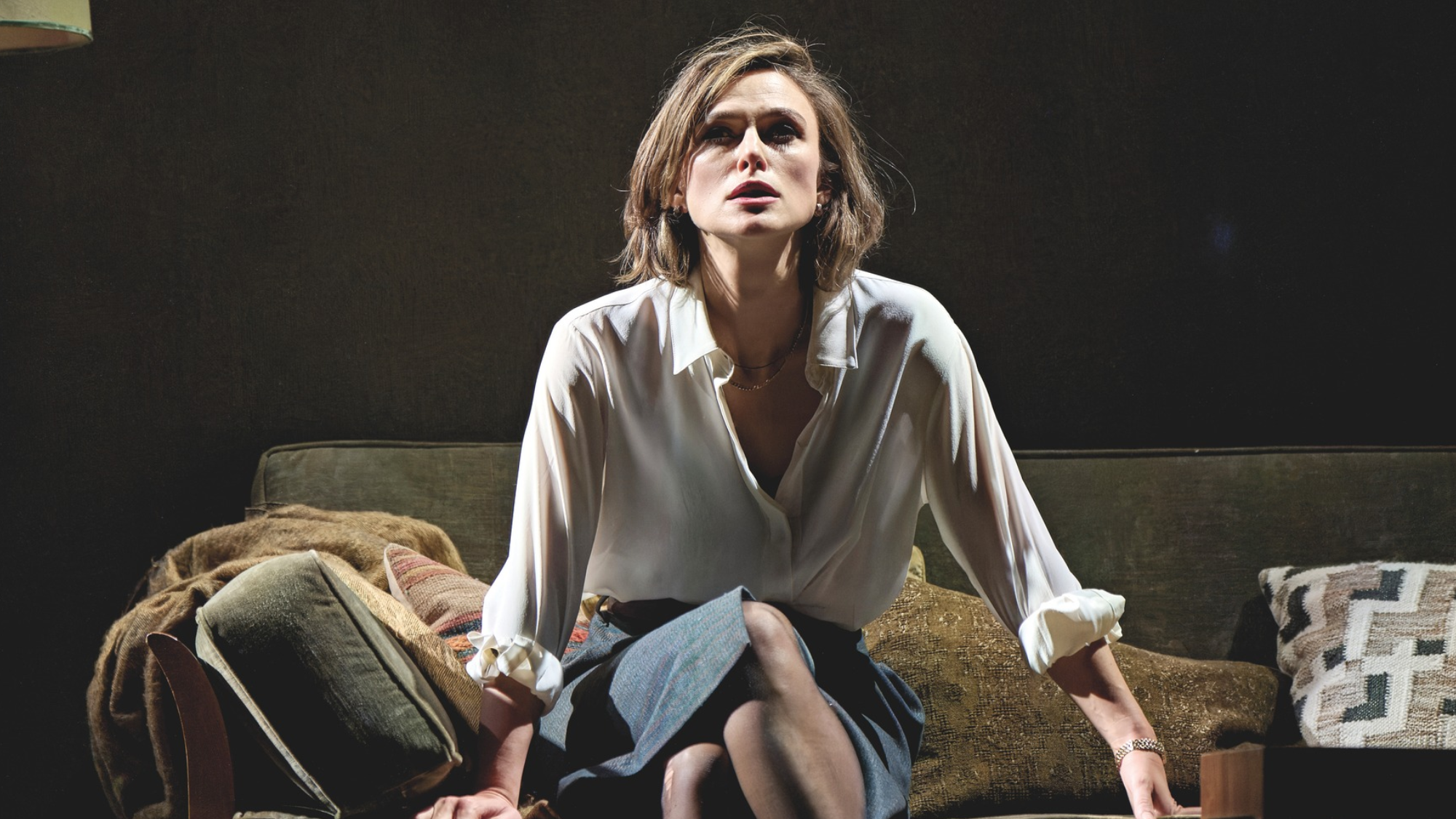


    Image credits, from top: A24, Icki Eneo Arlo / Range Media / Square Peg / Album / Alamy; Manuel Harlan; New Modern Arcade; Paul Harris / Getty
     

    Recent editions

    • Evening Review

      What the midterms mean for Israel

    • Morning Report

      Newsom empties death row

    • Evening Review

      JD Vance pivots

    VIEW ALL
    TheWeek
    • About Us
    • Contact Future's experts
    • Terms and Conditions
    • Privacy Policy
    • Cookie Policy
    • Advertise With Us
    • FAQ
    Add as a preferred source on Google Add as a preferred source on Google

    The Week US is part of Future US Inc, an international media group and leading digital publisher. Visit our corporate site.

    © Future US, Inc. Full 7th Floor, 130 West 42nd Street, New York, NY 10036.