The Week The Week
flag of US
US
flag of UK
UK
https://cdn.mos.cms.futurecdn.net/flexiimages/jacafc5zvs1692883516.jpg

SUBSCRIBE & SAVE

Less than $3 per week

Sign in
  • View Profile
  • Sign out
  • The Explainer
  • The Week Recommends
  • Newsletters
  • Cartoons
  • From the Magazine
  • The Week Junior
  • Student Offers
  • More
    • Politics
    • World News
    • Business
    • Health
    • Science
    • Food & Drink
    • Travel
    • Culture
    • History
    • Personal Finance
    • Puzzles
    • Photos
    • The Blend
    • All Categories
  • Newsletter sign up Newsletter
  • The Week Evening Review
    Deportation data, the Warner Bros. bidding war, and the battle against HIV

     
    In the Spotlight

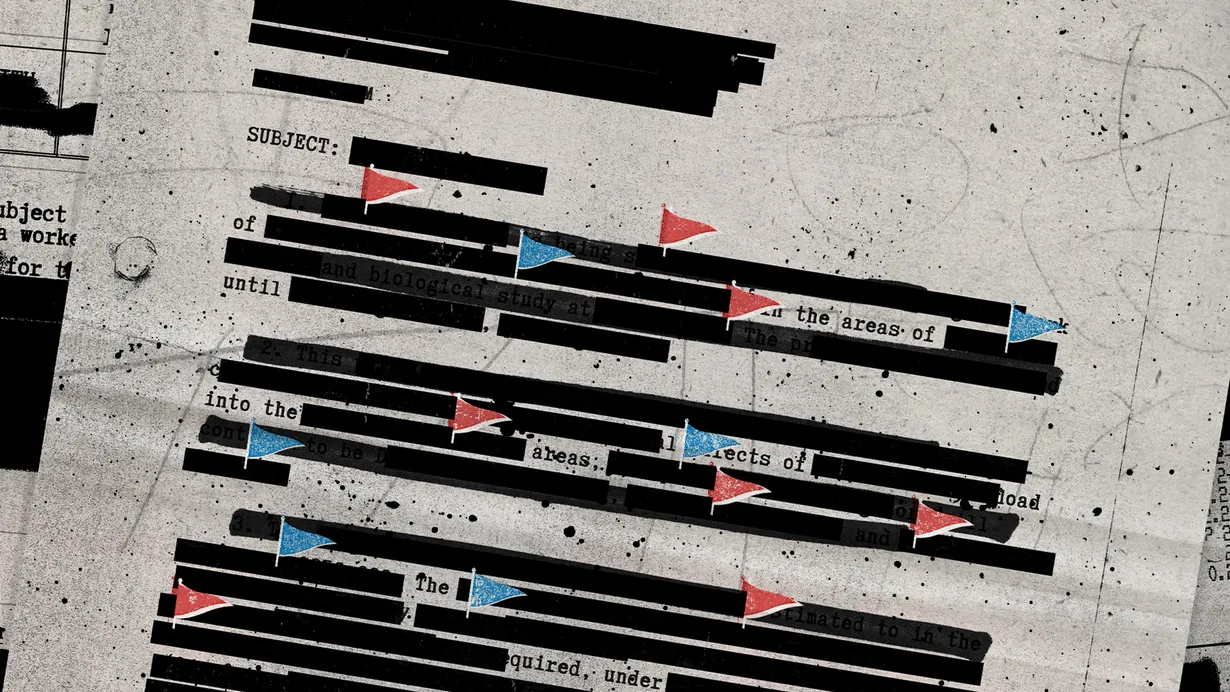
    ICE data contradicts claims about criminal focus

    For years, President Donald Trump has framed immigrants in the U.S. as dangerous threats to American citizens for which the only solution is prison, deportation or some combination thereof. But while he has spent the bulk of his second term making good on his campaign promise of mass immigrant arrests and expulsions, analysis of the data from these operations may seriously challenge the administration’s anti-migrant narrative.

    Skyrocketing arrests but few criminal records
    Although immigration enforcement actions have netted the Trump administration “thousands of arrests,” the Department of Homeland Security’s operations have been “less effective” at detaining migrants with criminal records than “routine operations elsewhere,” said The New York Times. In Immigration and Customs Enforcement operations in Los Angeles, Washington, D.C., Chicago, and across Massachusetts, “half of those arrested had no criminal record, compared with a third of immigrants arrested nationwide.” 

    The Deportation Data Project analyzed “every ICE arrest, detainer request, and book-in to detention between Sept. 1, 2023, and Oct.15, 2025.” Those records showed that only a “very small share” had a violent criminal background. “More than half” of detainees were people with “only civil immigration violations,” said CBS News.

    In Washington, D.C., the president declared a “crime emergency” as justification for his mid-August deployments, said The Washington Post. But from August through mid-October, D.C. saw “more than a sixfold increase” in arrests of immigrants “without any criminal record at all.”

    ‘Arbitrary arrest quotas’
    “Nearly three-quarters” of ICE detainees were booked into federal custody despite having “no prior criminal conviction,” according to “nonpublic” ICE data leaked to the Cato Institute, a libertarian think tank, said The Independent. Cato’s data is “so dumb” and “made up,” said Homeland Security Public Affairs official Tricia McLaughlin on X.

    But the new tranche of statistics from the Deportation Data Project “refutes DHS’ response and vindicates our report’s conclusions,” said Cato’s David J. Bier in an article on the Institute’s website. While ICE, with its newly supercharged budget, could “track down” the nearly half a million immigrants it claims “have criminal convictions and are removable,” the agency instead “prefers to grab easy targets” to meet “arbitrary arrest quotas.”


    Statistic of the day

    32,000: The number of private-sector jobs lost in November — a significant reversal after the 47,000 jobs gained in October, according to ADP. Analysts at The Wall Street Journal had expected a 40,000-job increase last month.


    TODAY’S BIG QUESTION

    How will a Warner Bros. deal affect the industry?

    Bugs Bunny could soon have a new boss. Netflix has announced an agreement to purchase Warner Bros. Discovery’s streaming service and studios, potentially creating a new streaming powerhouse and drastically changing the entertainment landscape. But another player, Paramount Skydance, has also announced a hostile bid for the company. All the while, President Donald Trump is also weighing in on the possible merger that could alter Hollywood for years.

    What did the commentators say?
    Netflix’s potential $83 billion purchase of Warner Bros. Discovery would “reshuffle the entertainment landscape, rounding up classics such as ‘Casablanca’ and beloved HBO series ‘Game of Thrones’ and ‘The Sopranos’ under the streaming service's umbrella,” said USA Today. Beyond an expanded library, combining Netflix with Warner Bros. would also create a consolidated customer base by “adding HBO Max’s nearly 130 million streaming subscribers to Netflix’s 300 million or so.”

    But even as Netflix claims the purchase is a done deal, Paramount’s $108.4 billion competing bid looms. Paramount has “repeatedly argued to the WBD board of directors that keeping Warner Bros. Discovery whole is in the best interest of its shareholders,” said CNBC. Paramount CEO David Ellison, a Trump ally, has long expressed interest in buying Warner Bros. Paramount has “accused Warner of ‘never engaging meaningfully’ with its six various proposals,” said NPR.

    What next?
    The dueling bids have “created a cupboard full of industry stakeholders” who “need to be pondering their next move,” said Forbes. Entertainment players from movie theater operators to various Hollywood unions have weighed in on the issue, as the “expected fallout will be enormous” no matter which company emerges victorious. The potential purchase has also “drawn criticism from bipartisan lawmakers and unions on concerns it could lead to job cuts and higher prices for consumers,“ said Reuters. 

    The president has claimed the Netflix deal “could be a problem” due to antitrust laws. Trump has seemingly expressed interest in Ellison’s Paramount buying Warner Bros., which owns CNN. Affinity Partners, a private equity firm led by Trump’s son-in-law Jared Kushner, is also part of Paramount’s bid, according to an SEC filing. Paramount is “telling WBD shareholders that it has a smoother path to regulatory approval than does Netflix,” said Axios, and Kushner’s “involvement only strengthens that case.”


    QUOTE OF THE DAY

    ‘Maybe I want a workout area where people might get some blood flowing doing some pullups or some step-ups in the airport.’ 

    Transportation Secretary Sean Duffy on how he plans to improve the airport experience for travelers, during a press conference unveiling a $1 billion investment for his “Make Travel Family Friendly Again” campaign at Washington, D.C.’s Reagan International Airport


    the explainer

    The stalled fight against HIV

    A man has been declared HIV-free in a case that “upends our understanding of what’s required” for a cure, said The New Scientist. He was the seventh patient found to be clear of the virus after receiving a stem cell transplant and, significantly, the second of the seven to receive stem cells that were not actually HIV-resistant. And if HIV-resistant cells aren’t necessary to destroy the virus, scientists have greater options in their search for an effective but less risky cure. But even as researchers make these leaps forward in HIV/AIDS treatment, access to both preventive care and medicine for infected patients “remains far from universal,” said The Guardian.

    How close is a cure?
    The signs are increasingly positive. In addition to the stem cell study, a separate study published in Nature “shows a glimmer of hope” for controlling HIV without the current daily regimen of pills, said The Washington Post. A small group of patients were given “experimental immunotherapies” and then taken off their pills, and the majority were able to keep the virus at a “low level for months” afterward.

    The standard daily antiretroviral therapy has had a transformative effect on managing HIV since its nadir in the 1980s. It works by preventing the virus from multiplying in the body. For many people with HIV, their viral load becomes so low as to be undetectable, hugely lowering the risk of them transmitting the virus to somebody else. But although antiretrovirals can keep the disease in check, it’s not a cure.

    How have aid cuts impacted HIV/AIDS treatment?
    Multiple nations are cutting foreign aid funding on which many lower-income countries depend to deliver health services. This has had a “devastating” impact on the fight against the disease and the accessibility of medication, said a UNAIDS report published on Dec. 1, World AIDS Day.

    The cuts made by the U.S., in particular, have “disrupted HIV/AIDS care in many parts of the world,” said NPR. Since President Donald Trump began his second term and took an “America First” stance, his administration has slashed international aid programs. This year was also the first time the U.S. did not formally commemorate World AIDS Day.


    Good day ♟️

    … for chess prodigies. India’s Sarwagya Singh Kushwaha has become the youngest chess player ever to earn an official rating from the governing body FIDE. At the age of 3 years, 7 months and 20 days, he beat the record set last year by another Indian player, Anish Sarkar, who was then 3 years, 8 months and 19 days old.


    Bad day 🎨

    … for art security. Two armed thieves stole 13 artworks — eight by Henri Matisse and five by Candido Portinari — from the Mário de Andrade Library in São Paulo. The robbery is the latest to “rock the art world since the theft of jewels from the Louvre in October,” said The New York Times.


    Picture of the day

    Clearing devastation

    A worker clears debris at a Hachinohe shopping center damaged by a 7.5-magnitude earthquake off the coast of northern Japan yesterday. The quake, which left at least 34 people injured, prompted tsunami alerts, destroyed roads, and left thousands without power in freezing temperatures.
    Jiji Press / AFP / Japan OUT / Getty Images


    Puzzles

    Daily crossword

    Test your general knowledge with The Week's daily crossword, part of our puzzles section, which also includes sudoku and codewords

    Play here


    The Week recommends

    Pingpong mania and the birth of Hamlet in new movies

    It’s the year’s last dying breath, which means holiday rush, travel stress, last-minute gift purchases, and award-worthy films. Two of the latter are appropriately inspired by the turmoil of real events: one, a historical fiction based on Shakespeare’s life, and the other, a fast-paced sports dramedy inspired by the career of an American table tennis player. And another offers a fantastical respite from reality with James Cameron’s return to the lush jungles of Pandora.

    ‘Hamnet’
    No, this title isn’t a clever misspelling. The real William Shakespeare had a son named Hamnet, whose death at the age of 11 inspired the playwright’s masterpiece “Hamlet.” This film, directed by Chloé Zhao (“Nomadland”), focuses on parental grief over the loss of a child and the transformation of tragedy into art. It plays like a “more somber and realistic version of ‘Shakespeare in Love,’” said NPR. “Call it ‘Shakespeare in Grief.’” (in theaters now)

    ‘Avatar: Fire and Ash’
    This movie from James Cameron promises a return to the jungle planet of Pandora. It will introduce the Ash people, or fire-themed Na’vi clan, who are more aggressive than the oceanic Metkayina clan that took center stage in “Avatar: The Way of Water.” (in theaters Dec. 19)

    ‘Marty Supreme’
    Josh Safdie’s film stars Timothée Chalamet (pictured above) as Marty Mauser, a character “loosely inspired by Marty ‘The Needle’ Reisman, a real-life U.S. table tennis champ from the 1950s” with an affinity for “betting, hustling and showmanship stunts,” said The Guardian. The resulting flick is a “farcical race against time,” a “marathon sprint of gonzo calamities and uproar,” and a “sociopath-screwball nightmare.” (in theaters Dec. 25)

    Read more


    Poll watch

    Nearly nine in 10 senior executives (87%) use AI on the job, according to a survey from HR company Dayforce. The poll of 7,000 adults in six countries found that other workers use it far less, with 57% of managers and 27% of employees adopting artificial intelligence in the workplace. 


    INSTANT OPINION

    Today's best commentary

    ‘I lost my friend to cancer. EPA rollbacks make more losses inevitable.’
    Cynthia Palmer at Time
    Stripping the Environmental Protection Agency of the “legal basis for controlling climate pollution would put floods, fires and hurricanes on steroids,” says Cynthia Palmer. Many “chemical disasters last for years or decades and can end in cancers and other serious illnesses.” These “moves would usher in a future of chemical leaks, explosions, fires, melting pipelines and other chemical disasters,” and it takes “only tiny amounts of these super-toxic chemicals to trigger life-altering and sometimes life-ending conditions.”

    ‘The ambition gap is growing’
    Beth Kowitt at Bloomberg
    A new study looking at the “state of female white-collar workers confirms something many women have been feeling in their bones lately: The corporate ladder is not designed for them,” says Beth Kowitt. Women are “still just as motivated and committed to their work as their male counterparts,” but in the “last year, the workplace has become a more hostile place for women, not that it ever particularly embraced them.” It’s “relentless and crazymaking.”

    ‘Two barge failures, one outdated law’
    Colin Grabow at Newsweek
    A barge carrying “almost 200 containers from Florida to Puerto Rico ran aground recently,” and these incidents “expose a deeper and preventable weakness: Vital U.S. supply chains have become overly dependent on slow weather-sensitive barges rather than modern self-propelled ships,” says Colin Grabow. These mishaps are “symptoms of a supply-chain strategy warped by a century-old law that makes the most efficient vessels unaffordable.” America’s supply chains are “too important to be left tethered” to “outdated maritime policy.”


    WORD OF THE DAY

    Coatlicue

    A supercomputer the Mexican government plans to build that’s named after an Aztec goddess representing the source of life. Coatlicue will have a processing capacity seven times greater than that of the current most powerful computer in Latin America and will be public and “for the people,” said President Claudia Sheinbaum.


    Evening Review was written and edited by Will Barker, Theara Coleman, Nadia Croes, Scott Hocker, Anya Jaremko-Greenwold, Justin Klawans, Summer Meza and Rafi Schwartz with illustrations by Stephen Kelly and Julia Wytrazek.

    Image credits, from top: Illustration by Stephen Kelly / Getty Images; Mario Tama / Getty Images; Illustration by Stephen Kelly / Getty Images; FlixPix / A24 / Alamy
     

    Recent editions

    • Morning Report

      Trump’s Paramount concern

    • Evening Review

      Trump’s bubble trouble

    • Morning Report

      Trump inverts US security strategy

    VIEW ALL
    TheWeek
    • About Us
    • Contact Future's experts
    • Terms and Conditions
    • Privacy Policy
    • Cookie Policy
    • Advertise With Us
    • FAQ
    Add as a preferred source on Google

    The Week is part of Future US Inc, an international media group and leading digital publisher. Visit our corporate site.

    © Future US, Inc. Full 7th Floor, 130 West 42nd Street, New York, NY 10036.