The Week The Week
flag of US
US
flag of UK
UK
https://cdn.mos.cms.futurecdn.net/flexiimages/jacafc5zvs1692883516.jpg

SUBSCRIBE & SAVE

Less than $3 per week

Sign in
  • View Profile
  • Sign out
  • The Explainer
  • The Week Recommends
  • Newsletters
  • Cartoons
  • From the Magazine
  • The Week Junior
  • Student Offers
  • More
    • Politics
    • World News
    • Business
    • Health
    • Science
    • Food & Drink
    • Travel
    • Culture
    • History
    • Personal Finance
    • Puzzles
    • Photos
    • The Blend
    • All Categories
  • Newsletter sign up Newsletter
  • The Week Evening Review
    A new Grok probe, dropping homicide rates, and central bank independence

     
    In the Spotlight

    Grok under fire as EU launches deepfake porn probe

    While Elon Musk lauds his proprietary Grok AI bot as a vital tool in the search for “deeper truth and appreciation of beauty,” as he said on X, European regulators are decidedly less optimistic about the tech billionaire’s latest offering. This week, the European Commission opened an official investigation into the chatbot, alleging in a press release that Grok “manipulated sexually explicit images, including content that may amount to child sexual abuse material” and then disseminated that material across the European Union via Musk’s X platform. 

    ‘Collateral damage’
    The newly announced investigation is “likely to escalate a confrontation” between European leaders and the Musk-aligned Trump administration over international digital content moderation, said The New York Times. Grok’s ability to provide users with digitally manipulated sexual imagery is a “violent, unacceptable form of degradation,” said the European Commission’s Henna Virkkunen to the BBC. The investigation seeks to assess whether X has “met its legal obligations” under Europe’s Digital Services Act (DSA) or if it treats the “rights of European citizens” as “collateral damage of its service.”

    Despite pressure from Washington, the EU has “insisted it will enforce its rules” as the body has dealt with the Trump administration on “multiple other fronts,” said Le Monde. The DSA, which undergirds much of the EU’s digital legal framework, is “reviled by Silicon Valley technology companies,” said Bloomberg. The White House, for its part, has “threatened retaliation in the past” and sanctioned Thierry Breton, the former EU commissioner, who “spearheaded the DSA.”

    Broader regulatory push
    EU investigators have “joined a growing list of authorities looking into Grok,” said CNBC. India, Malaysia and the U.K. are also investigating the sexualized imagery. Musk has also been “facing mounting scrutiny” in Europe even before this latest investigation was announced, said The Times. Last month, X was fined nearly $150 million in DSA violations for “deceptive design, advertising transparency and data sharing with outside researchers.” 

    Currently, there’s no deadline for the European Commission to “resolve” its Grok investigation, said NBC News. Should X be found in violation of the DSA, it could then be treated as a “noncompliant” company and fined “up to 6%” of its “global annual turnover,” said Forbes.


    QUOTE OF THE DAY

    ‘From the beginning of his adulthood, if not earlier, Donald was never ever held to account for anything, and he was enabled at every turn.’

    Mary Trump, the president’s niece and a clinical psychologist, on the Daily Beast podcast, about his upbringing, particularly by his father, Fred Trump. “Eventually that creates a monster, and we see that happening with increasing impact,” she added. 


    TODAY’S BIG QUESTION

    Why have homicide rates plummeted in the last year?

    While many American cities are painted as bastions of murder, a new report has revealed that this is not the case. The U.S. logged a more than 20% drop in the homicide rate from 2024 to 2025, marking the largest single-year fall on record.

    What did the commentators say?
    The study, published by the independent Council on Criminal Justice, analyzed crime data from 40 of the largest American cities. The “rate of reported homicides was 21% lower in 2025 than in 2024 in the 35 study cities providing data for that crime, representing 922 fewer homicides,” said the study. When the data is finalized, there’s a “strong possibility that homicides in 2025 will drop to about 4.0 per 100,000 residents,” which would be the “lowest rate ever recorded in law enforcement or public health data going back to 1900.”

    This marks a significant shift from the Covid-era spikes in crime, and “elected officials at all levels, both Democrats and Republicans, have been claiming credit,” said The Associated Press. But even with this data, experts say it’s “too early to tell what’s prompting the change.” 

    President Donald Trump has claimed that his deployment of the National Guard in several cities and Washington, D.C., has drastically reduced crime. But homicide rates began falling during former President Joe Biden’s administration, and there’s “little to justify any claim that Trump is responsible for last year’s drop in crime,” said The New York Times. More cities where the National Guard was not deployed had reduced crime.

    Rather than politics, countries with a “stronger market orientation may experience lower rates of homicide,” said a separate study from the University of Georgia. This concept references how a “nation’s economy functions within a framework of legal rights and freedoms.” Researchers found that a “stronger market orientation could decrease murder rates, with even a one-point shift on a market freedom scale leading to a 22% drop in homicides.”

    What next?
    The drop in homicides could just reflect an up-and-down pattern, as murders had been “steadily dropping since the late 2000s” before the Covid-19 spike, Ernesto López, the study’s lead author, said to CBS News. It’s “possible that these rates reflect a longer-term downward trend punctuated by periods of elevated homicides.”


    Statistic of the day

    1.4 billion: China’s total population in 2025 — 3 million less than 2024, according to the country’s official statistics. This marks the fourth consecutive year in which China’s population fell. The country’s birth rate also fell to 5.63 per 1,000 people — the lowest since China’s 1949 communist revolution.


    the explainer

    The threats to central bank independence 

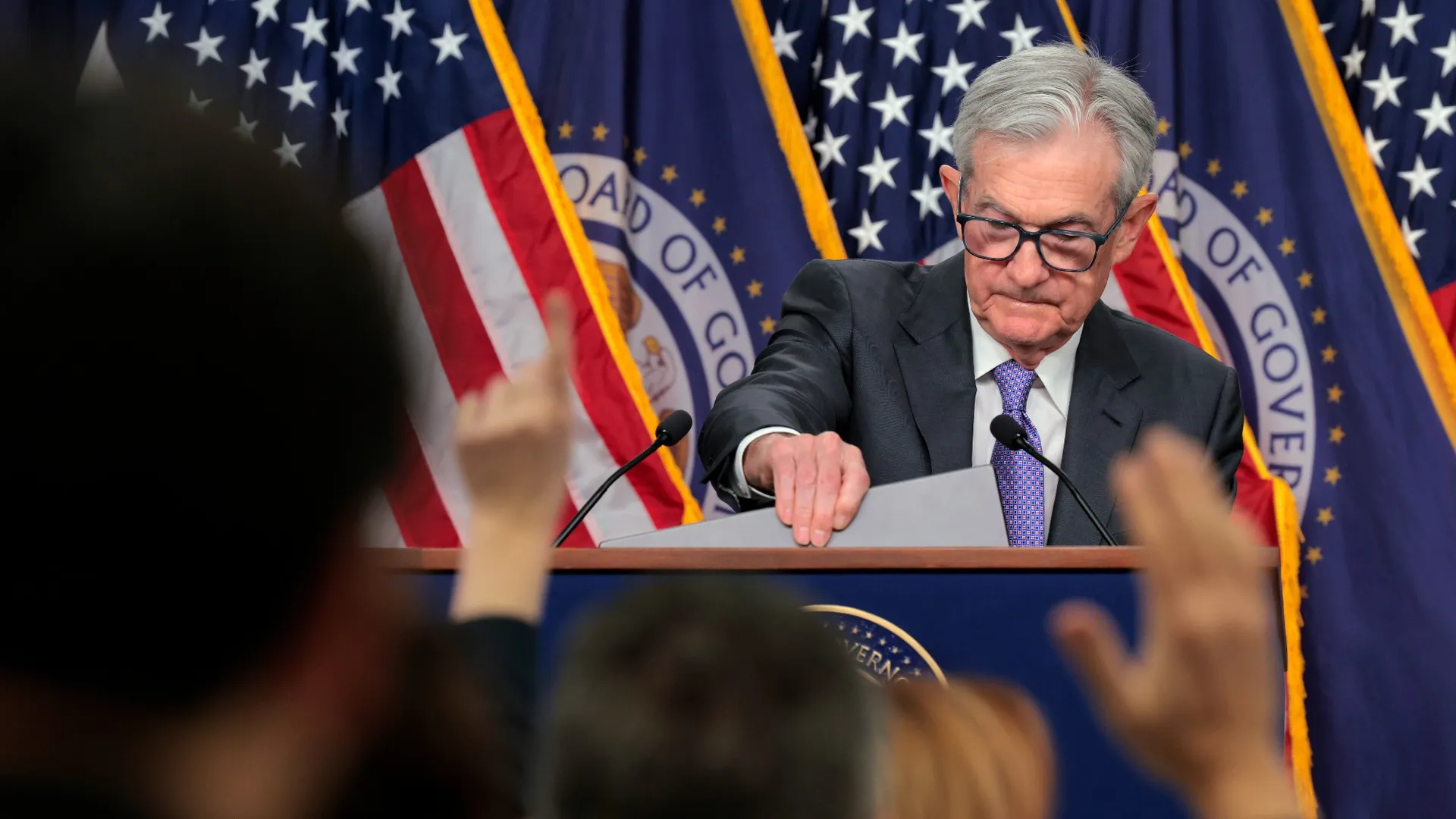
    All eyes were on Federal Reserve Chair Jerome Powell (pictured above) at a news conference today following the bank’s quarterly board meeting, his first public in-person encounter with reporters since the Justice Department started a criminal investigation into him. As President Donald Trump tries to influence the central bank’s policies and force interest rate cuts, the independence of the Fed remains under threat. And central banks beyond the U.S. are also facing challenges as global instability, swelling deficits and high inflation trigger doubts about the long-accepted notion that an independent body is the best vehicle for delivering economic results. 

    Why is independence viewed as important? 
    The modern idea of central-bank independence emerged after World War II. The belief was that politicians are likely to be “tempted by self-defeating monetary policies” in pursuit of short-term electoral goals, said The Economist. So monetary policies that “make everyone better off” in the long run are more attainable and more sustainable if they are “delegated to a conservative central banker.” And since then, central banks have been lauded as a “triumph of applied economics.” As “independence rose, inflation fell,” and “recessions became rarer.” 

    Why is that changing? 
    Recent surges in inflation have damaged public trust in central banks and sparked vocal criticism from politicians. The global financial crisis, a prolonged period of quantitative easing, and the “pressures of climate risk, geopolitical shocks and fiscal activism” are further highlighting the “fundamental” question of whether the “orthodox consensus” has “reached its limits,” said Chatham House. 

    What could go wrong? 
    Trump’s interference with U.S. monetary policy could “lead to financial panic and economic disaster” with consequences worldwide, said Bloomberg. A policy dictated by “short-term political calculations” might lead to lower interest rates but would then spark higher inflation and, ultimately, “increase the cost of credit, discourage private investment” and make it harder to service national debt. 

    But Trump’s “damaging attacks on the Fed shouldn’t obscure its failures,” said Investors’ Chronicle. Independence is one thing, but “technocratic policymakers with limited democratic accountability shouldn’t be beyond censure.”


    Good day 🌿

    … for citizen science. A tiny shrub named Ptilotus senarius that was thought to be extinct for 58 years has been rediscovered in northern Queensland, according to a study in the Australian Journal of Botany. It was identified after horticulturist Aaron Bean uploaded pictures of it to the community-driven identification app iNaturalist.


    Bad day 🐼

    … for panda diplomacy. Twin pandas Xiao Xiao and Lei Lei left Japan’s Ueno Zoo in Tokyo today amid “mounting tensions with China,” said The New York Times. And negotiations over replacement bears stalled after Japan’s prime minister, Sanae Takaichi, said that Tokyo could intervene militarily if China were to attack Taiwan.


    Picture of the day

    Fabulous fungi

    A model walks a Paris runway dotted with giant mushrooms and pink trees. Anna Wintour, Nicole Kidman and Dua Lipa were in the audience in the Grand Palais to see Matthieu Blazy’s haute couture debut collection for Chanel.
    Alexis Jumeau / Abaca Press/ Alamy Live News


    Puzzles

    Daily sudoku

    Challenge yourself with The Week’s daily sudoku, part of our puzzles section, which also includes guess the number

    Play here


    The Week recommends

    The best animated family movies of all time

    Animated family films have been a staple of entertainment culture for nearly a century and offer a rich catalog of adventures, fables, fairy tales and dramas. The very best, including these beloved features, continue to enrich, move and challenge their audiences, both children and adults.

    ‘Fantasia’ (1940)
    One of the most justifiably beloved animated films ever made, “Fantasia” (pictured above) still mesmerizes audiences today. A movie that represented Walt Disney’s “desire that animation be taken as seriously as any other art form,” it remains a kind of “demo reel for some of the most inventive animation in the history of the medium,” said Tim Brayton at Alternate Endings. (Disney+)

    ‘Spirited Away’ (2001)
    Hayao Miyazaki’s film follows a 10-year-old girl, Chihiro (Rumi Hiiragi), who’s plunged into an “Alice in Wonderland”-like underworld when she and her parents take a shortcut on their way to their new home. The movie features “baroque visuals and freewheeling dream-logic narrative,” creating a “dreamlike fairytale that appears both exotic and yet strangely familiar and whose surface eccentricities can’t conceal its very human soul,” said Jasper Sharp at the British Film Institute. (HBO Max)

    ‘WALL-E’ (2008)
    This movie is both hilarious and moving without sacrificing its sharp and often bleak critique of contemporary consumerist society and its pathologies. A “resounding work of commercial art,” this dystopian fantasy “contains a raw emotional center atop of several strains of social commentary, each an exacting reflector designed to rouse its audience out of their cultural apathy,” said Brian Eggert at Deep Focus Review. (Disney+)

    Read more


    Poll watch

    Almost seven in 10 Americans verify unfamiliar online retailers by checking the company’s customer reviews (69%) or confirming secure payment availability (65%). The poll of 1,188 adults found 72% of those over age 54 prioritize payment security compared to only 56% of younger people. 


    INSTANT OPINION

    Today's best commentary

    ‘Close the gaps in our frayed social safety net’
    Shaquille Nelson at The Progressive
    In a country as “wealthy as the United States, it’s a bitter irony that millions of people still fall through the cracks of a social safety net meant to protect them,” says Shaquille Nelson. Welfare programs “exist, but they are fragmented, riddled with arbitrary rules and built around abrupt cutoffs that punish progress.” Closing the gaps in our “social safety nets allows people to thrive rather than merely survive, ensures that ambition is rewarded and strengthens society.”

    ‘Moving beyond supervision: It’s time to rethink juvenile probation’
    Kendra Van de Water and Mona Baishya at The Philadelphia Inquirer
    Most people “hear the phrase ‘juvenile probation’ and think of second chances,” but for “hundreds of thousands across the country, juvenile probation is not freedom — it’s a trap,” say Kendra Van de Water and Mona Baishya. For “many youths, probation is not an opportunity to grow but feels like walking through life with a countdown clock.” It places youth “under a long list of conditions.” The system “claims to be rehabilitative, but the numbers tell a different story.”

    ‘Democrat or Republican, Americans want their national forests kept intact’
    Mike Dombeck, Dale Bosworth, Tom Tidwell and Vicki Christiansen at The Hill
    Forest management decisions “never come without debate, opinions and, more often than not, disagreement,” say Mike Dombeck, Dale Bosworth, Tom Tidwell and Vicki Christiansen. But “regardless of who’s in the White House, one thing has always remained true: Americans value their national forests, and they want to see them protected for the benefits they provide us.” Repealing the Roadless Area Conservation Rule would “not be in the long-term interest of the American people.”


    WORD OF THE DAY

    luften

    From a verb meaning “to air out,” a German cultural norm in which windows are opened at least once a day to let fresh air circulate, regardless of weather or temperature. Now, American social media influencers are promoting luften under the less charming name “house burping.”


    Evening Review was written and edited by Theara Coleman, Nadia Croes, David Faris, Scott Hocker, Justin Klawans, Summer Meza, Chas Newkey-Burden, and Rafi Schwartz, with illustrations by Stephen Kelly and Julia Wytrazek.

    Image credits, from top: Illustration by Stephen Kelly / Getty Images; Talia Sprague / Bloomberg / Getty Images; Chip Somodevilla / Getty Images; Pictorial Press / Alamy
     

    Recent editions

    • Morning Report

      Trump changes tack in Minneapolis

    • Evening Review

      The end of the American era

    • Morning Report

      Trump’s ICE campaign hits a tipping point

    VIEW ALL
    TheWeek
    • About Us
    • Contact Future's experts
    • Terms and Conditions
    • Privacy Policy
    • Cookie Policy
    • Advertise With Us
    • FAQ
    Add as a preferred source on Google

    The Week is part of Future US Inc, an international media group and leading digital publisher. Visit our corporate site.

    © Future US, Inc. Full 7th Floor, 130 West 42nd Street, New York, NY 10036.