The Week The Week
flag of US
US
flag of UK
UK
https://cdn.mos.cms.futurecdn.net/flexiimages/jacafc5zvs1692883516.jpg

SUBSCRIBE & SAVE

Less than $3 per week

Sign in
  • View Profile
  • Sign out
  • The Explainer
  • The Week Recommends
  • Newsletters
  • Cartoons
  • From the Magazine
  • The Week Junior
  • Student Offers
  • More
    • Politics
    • World News
    • Business
    • Health
    • Science
    • Food & Drink
    • Travel
    • Culture
    • History
    • Personal Finance
    • Puzzles
    • Photos
    • The Blend
    • All Categories
  • Newsletter sign up Newsletter
  • The Week Evening Review
    The end of a nuclear treaty, a continuing electoral power grab, and a new Disney leader

     
    TODAY’S BIG QUESTION

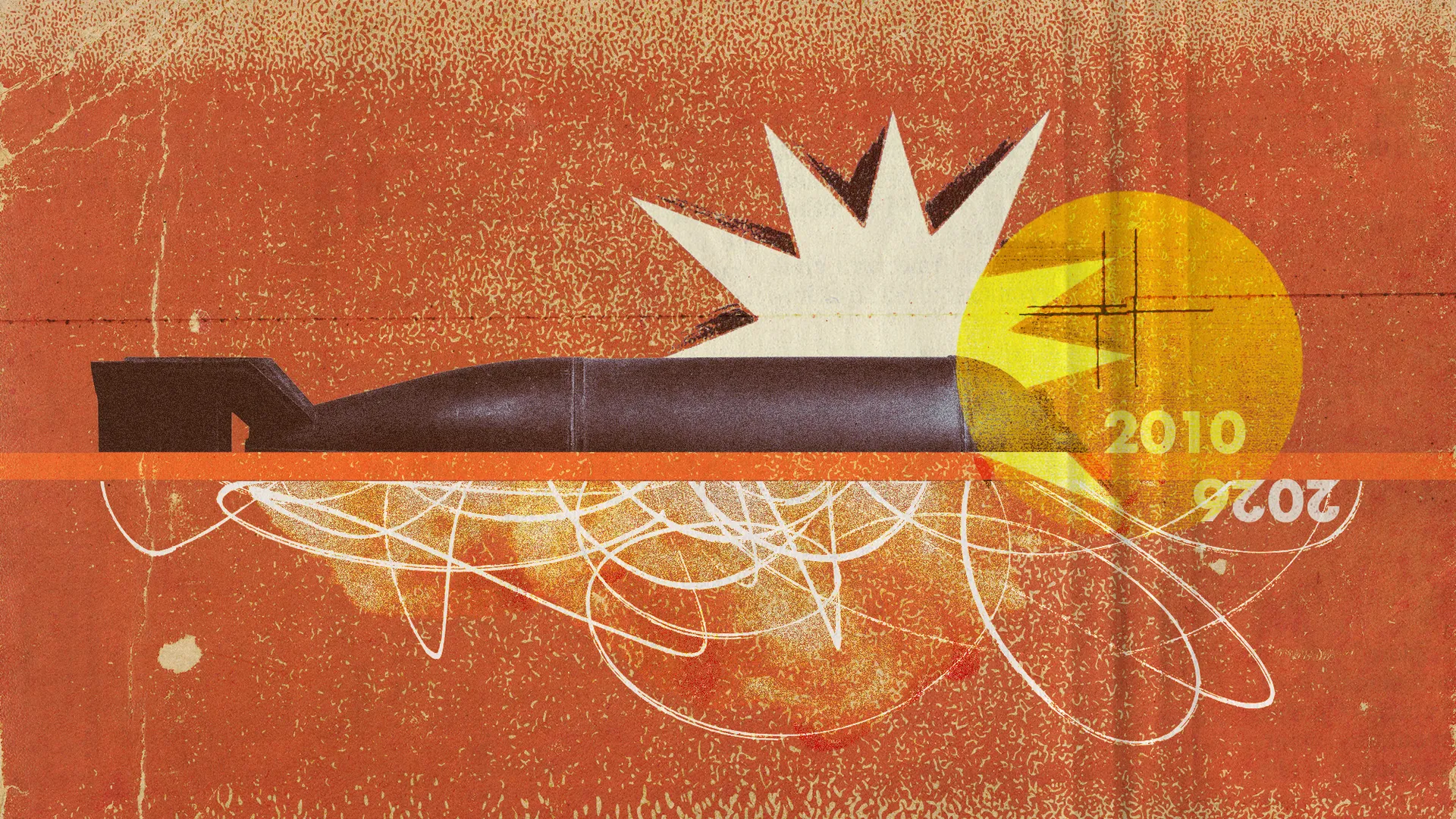
    What happens with the end of the US-Russia nuclear treaty?

    After three decades of checking the global proliferation of nuclear weapons for the U.S. and Russia, the New Strategic Arms Reduction Treaty has come to an end, sparking questions about what might fill the void it leaves behind. The New START Treaty represented years of U.S.-Russian cooperation to stem the tide of weapons of mass destruction, and its expiration today marks the last of such endeavors. 

    What did the commentators say?
    The dissolution of this treaty, which regulated the amount of nuclear-weapon-capable hardware deployed by both nations, comes at an “especially fraught time,” said Politico. Russia and China have been “expanding” their nuclear arsenals recently, and the Defense Department has launched a “series of internal meetings” to prepare for a “post-New START world.” 

    President Donald Trump has “indicated that he would like a new deal” and wants it to “include China,” said Politico. But Chinese officials have “made clear they are not interested,” said The New York Times. 

    The treaty’s end is more than an expiration date as multiple countries begin testing “new types and configurations of nuclear weapons,” said the Times. It should “alarm everyone,” said former Russian President Dmitry Medvedev, one of the original signatories to the 2010 deal. Not only is it a “significant break in more than five decades of bilateral nuclear arms control,” but by signaling a “move away from nuclear restraint,” the lapse ultimately makes the world a “more dangerous place,” said Chatham House. 

    What next?
    The loss of the treaty is not only an end to “numeric limits” of nuclear arms but halts the “predictable flow of notifications, data exchanges, on-site inspections and other transparency mechanisms” that “helped sustain predictability,” said Norwegian Institute for Defense Studies Professor Katarzyna Zysk to The Barents Observer. Absent that regularity, Russia will have to “plan against a U.S. force posture that’s less observed,” leading to a “higher degree of uncertainty.”

    The implicit message of allowing the treaty to lapse will be “received most clearly in Beijing,” said The Diplomat. While China’s nuclear arsenal is relatively small, the treaty’s end signals that “negotiated restraint among major powers is temporary and expendable.” Rather than curbing China’s atomic ambitions, the change reinforces the “case for accelerating it in anticipation of a world without limits.”


    Statistic of the day

    100,000: The approximate number of civilians killed in 23 conflicts over the last 18 months, according to a study by the Geneva Academy of International Humanitarian Law and Human Rights. This includes the deaths of 18,592 children in Gaza and massive casualties in Ukraine and the Democratic Republic of the Congo.


    talking points

    Trump’s plan to ‘nationalize’ US elections

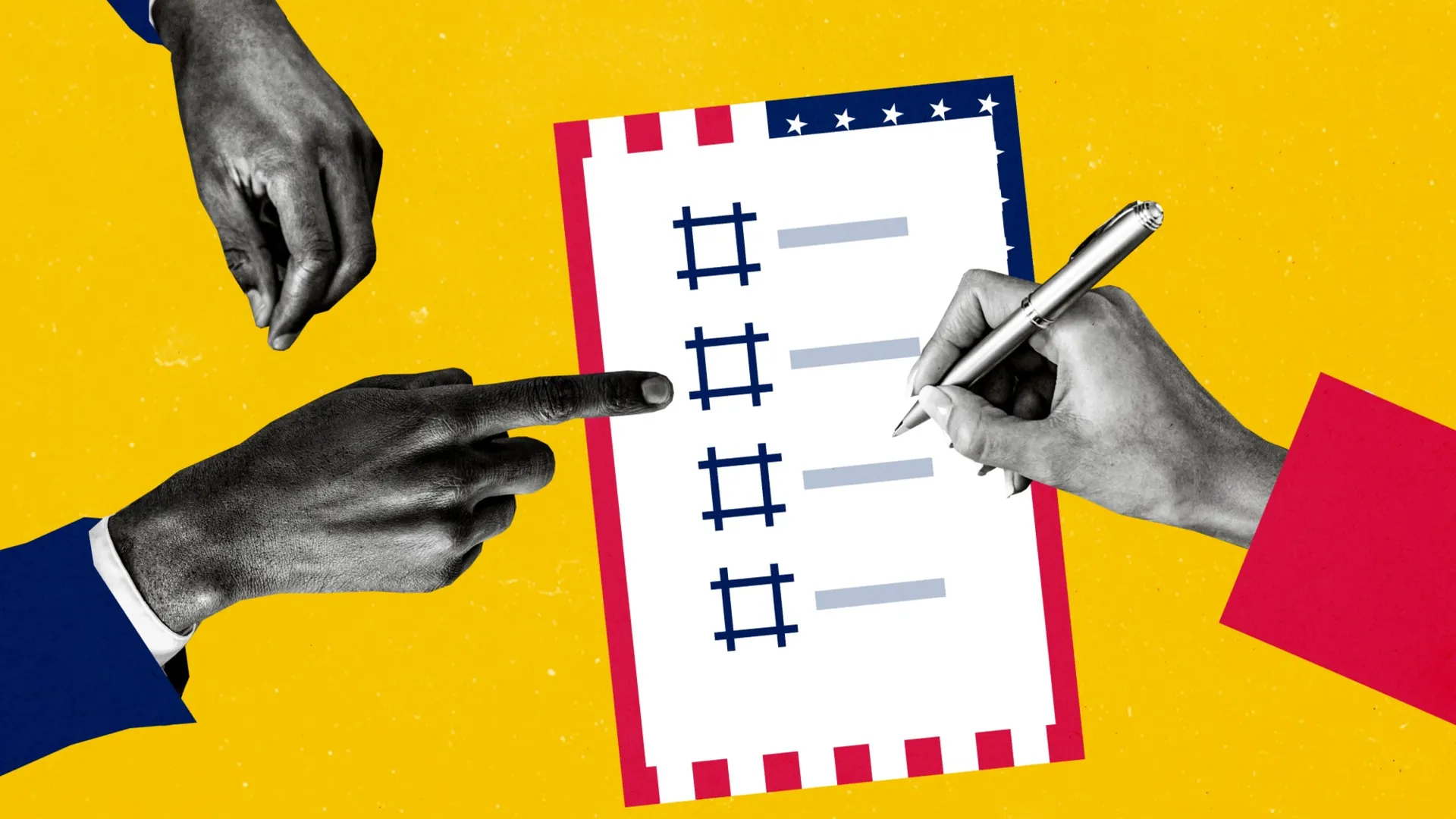
    U.S. elections are run by state governments, but President Donald Trump, still brooding over his loss in 2020, says he wants to “nationalize” American elections. And Democrats and other critics see a looming attempt to rig the voting process.

    Trump has long falsely claimed he won the 2020 election, and the loss remains a sore spot, said NBC News. His suggested solution is that Republicans “ought to nationalize the voting.” But the U.S. Constitution gives states, not the federal government, authority over the “times, places and manner” of federal elections, said USA Today. The president’s proposal is “outlandishly illegal,” said Senate Minority Leader Chuck Schumer (D-N.Y.) on the Senate floor.

    Electoral power grab?
    Trump’s push to nationalize elections is a “radical power grab,” said Steve Benen at MS NOW. Even if his “bonkers conspiracy theories” were somehow true, the Constitution’s requirements make it difficult for Republicans to “simply launch an electoral power-grab at will.” 

    Trump has proven willing to test legal limits, however, and has even “floated the idea of canceling future U.S. elections,” said Benen. Americans concerned about voting rights “don’t have the luxury of simply shrugging with indifference at the president’s latest nonsense.”

    Democrats are already making plans, said Lauren Egan at The Bulwark. Party leaders expect that the “worse Trump’s polling gets, the more aggressively he will look for ways to interfere with the elections.” The White House is already demanding rolls from states to build a voter database, and Democrats are countering with legal efforts to block federal intrusion. 

    Election security
    Elected Republicans may not go along with Trump, said The Washington Examiner. “I’m not in favor of federalizing elections,” said Senate Majority Leader John Thune (R-S.D.) to reporters. It’s “problematic” to claim that state election officials are “not doing our jobs and the federal government has to do it for us,” said Utah Lt. Gov. Deidre Henderson at a conference last week.

    Others do see a federal role. “Democracy suffers” when voters lose confidence in election fairness, Georgia Secretary of State Brad Raffensperger said at The Wall Street Journal. Congress should require voters to use a Real ID to cast a ballot. Voting rights and election security should not be “competing values.”


    QUOTE OF THE DAY

    ‘He’ll say to me sometimes at lunch, “Sir, may we pray?” I’ll say, “Excuse me? We’re having lunch.”’

    Trump, in a speech at the annual National Prayer Breakfast in D.C, about House Speaker Mike Johnson being a “very religious person” who “does not hide it well.” The president also asked Johnson if he knew there were more Bibles sold in the U.S. last year than “anytime in the last 100 years.”


    in the spotlight

    Josh D’Amaro: the theme park guru taking over Disney

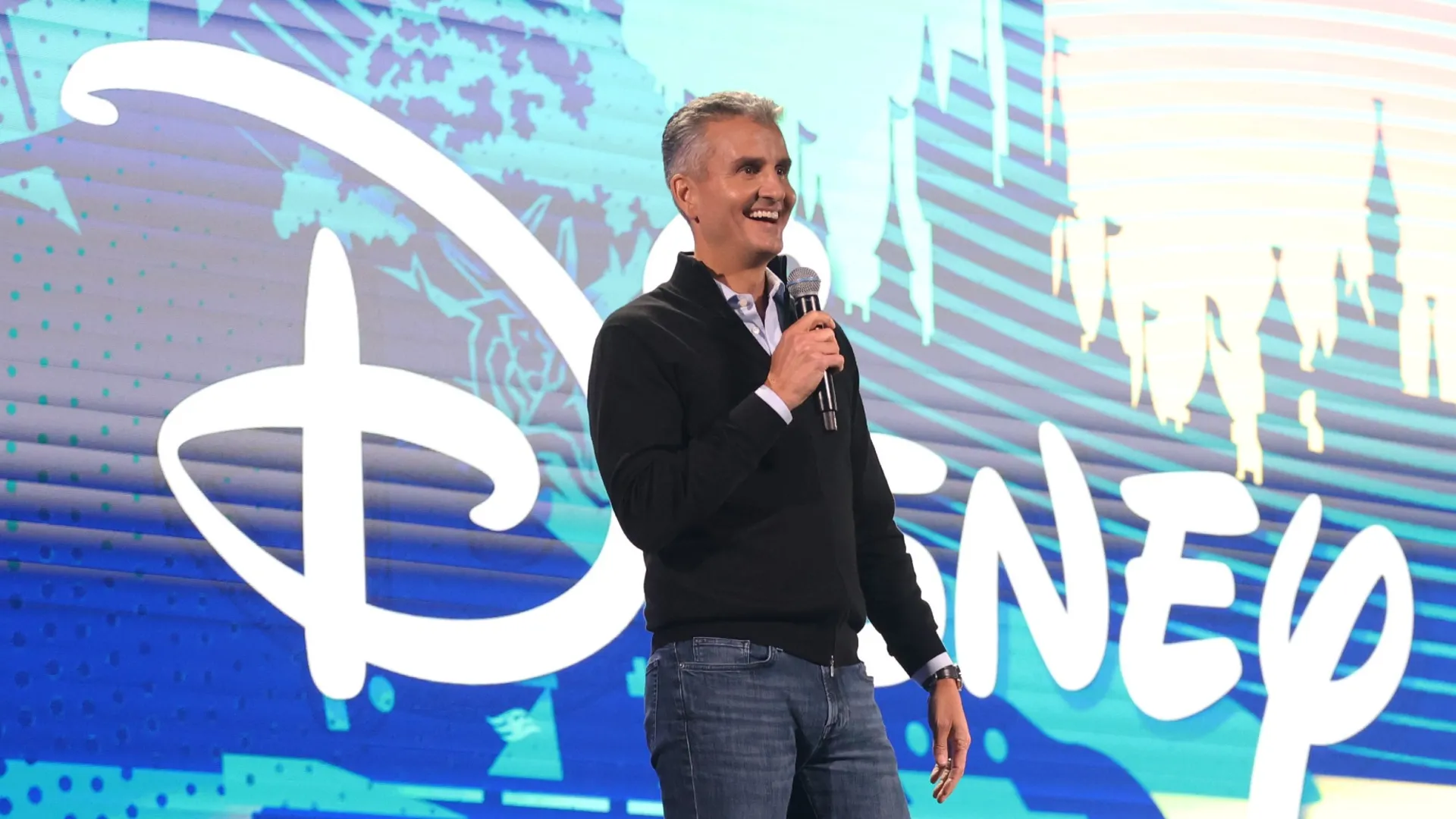
    Disney will soon have a new boss. Josh D’Amaro has been named the next CEO of The Walt Disney Company, replacing the outgoing Bob Iger. A longtime fixture at the Mouse House, D’Amaro has worked for the organization for nearly three decades and has been instrumental in developing the brand’s theme park expansion. 

    Disney beginnings
    The path for D’Amaro, 54, has been a lucky one. In 1998, he “applied cold for a strategy job at Disney and got it,” said The New York Times. D’Amaro “spent more than two decades moving through roles across finance, marketing, strategy and operations before he went on to lead both the Disneyland Resort and the Walt Disney World Resort,” said NBC News. In 2020, he was named chairman of Disney Experiences, which oversees global theme park and resort operations, as well as the cruise line and consumer products.

    Steering the ‘beloved IP’
    There are several questions looming as D’Amaro prepares to take control, namely how he will “lead one of Hollywood’s most dominant entertainment companies,” said Vulture. Despite having significant experience at the company, he has “never made a show or movie himself,” and many in the industry are wondering where he will “steer the company’s beloved IP.” 

    D’Amaro was likely tapped by Disney’s board more for his experience with theme parks than film and TV. His appointment “brings to the fore Disney’s storied history in park-going at a time of massive growth for the division,” said CNBC. The company has committed to investing $60 billion over the next decade in parks, which accounted for 40% of Disney’s total annual revenue last year.

    Despite this growth, D’Amaro is also taking over the company at a time of “colossal industry upheaval, from the collapse of traditional TV to the rise of generative artificial intelligence,” said the Times. Still, he seems to be ready for the challenge. The new CEO is known for his “affection for Disney’s distinct brand of wholesome family entertainment.” He “genuinely loves Disney,” said Roy P. Disney, Walt Disney’s grandnephew, to the Times. “And I love him for that.”


    Good day 🪼

    … for undersea encounters. Scientists exploring the deep sea near Argentina have spotted and filmed a rare giant phantom jellyfish about 820 feet below the surface in the South Atlantic Ocean. The team from the Schmidt Ocean Institute also discovered “28 potential new species, including corals, sea urchins and sea anemones,” said the BBC.


    Bad day 🏦

    … for fascist legacies. An investigation of Swiss bank Credit Suisse’s history has identified 890 previously undisclosed accounts with potential Nazi links. The bank’s involvement during World War II was “more extensive than was previously known,” Neil Barofsky, the attorney overseeing the inquiry, said in a statement submitted before a Senate Judiciary Committee hearing.


    Picture of the day

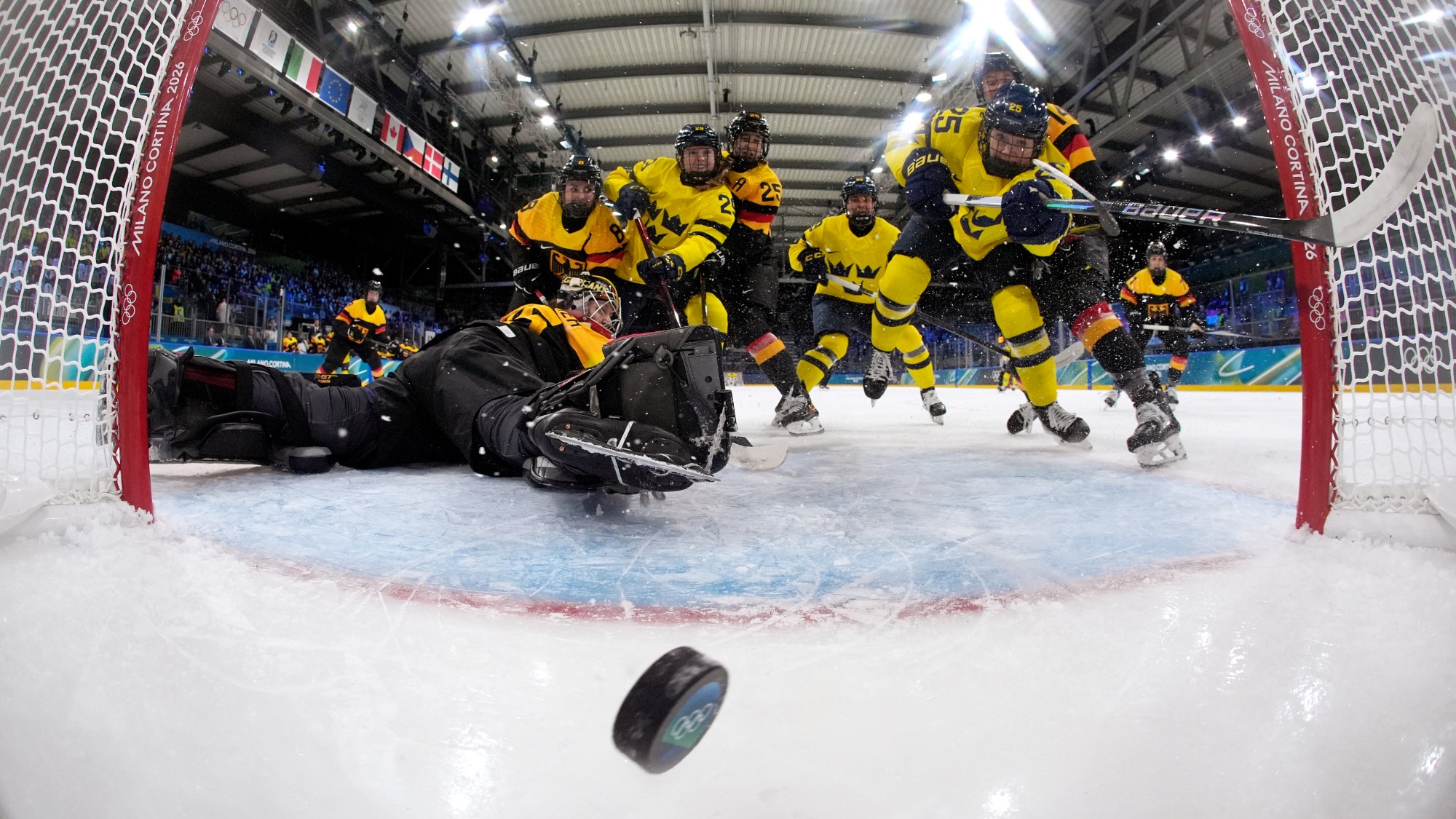
    Back of the net

    Sweden’s Lina Ljungblom scores an equalizer in the first women’s ice hockey match of the Milano Cortina Olympics. Her team beat Germany 4-1 in the preliminary clash ahead of tomorrow’s official opening of the Winter Games.
    Sun Wei / AFP / Pool / Getty Images


    Puzzles

    Daily sudoku

    Challenge yourself with The Week’s daily sudoku, part of our puzzles section, which also includes guess the number

    Play here


    The Week recommends

    Intriguing new work from prize winners 

    February might be the shortest month of the year, but it features plenty of days to add books to your 2026 reading list. There’s a category-defying novel, highly awaited follow-up and posthumously published work from a literary icon.

    ‘Autobiography of Cotton’ 
    Pulitzer Prize-winning author Cristina Rivera Garza is back with another genre-bending book. It’s set in Estación Camarón, a “cotton farming region in northern Mexico,” said The New York Times. The book is a “fusion of fiction and nonfiction that excavates both national and family history,” said The Wall Street Journal. Her novel is one of “restless movement and passionate hope.” (out now, $17, Graywolf Press)

    ‘Heap Earth Upon It’
    The follow-up to Chloe Michelle Howarth’s “Sunburn” has been pitched by its publisher as a “new take on sapphic obsession for fans of ‘All Our Wives Under the Sea.’” Howarth’s highly anticipated sophomore release is an “engrossing chronicle of restlessness and desire,” said Publishers Weekly. (out now, $21, Penguin Random House)

    ‘Language as Liberation: Reflections on the American Canon’
    This nonfiction collection of some of Toni Morrison’s previously unpublished work is a “compilation of lectures for a class she taught at Princeton University on the American literary canon.” Through her “original, often dazzling close readings,” Morrison shows how the “idea of race has been a primal force in the nation’s literature, shaping, disfiguring and sometimes liberating language and the imagination.” (out now, $32, Penguin Random House)

    Read more


    Poll watch

    Almost three-quarters of Americans (72%) think the country’s economy is fair or poor, according to a Pew Research Center survey. The poll of 8,512 adults is split down partisan lines, as 49% of Republicans rate the economy positively compared to 10% of Democrats. 


    INSTANT OPINION

    Today’s best commentary

    ‘It’s time for the world to boycott the US’
    Donald Earl Collins at Al Jazeera
    The U.S. has “over the past year consistently violated international norms and laws,” says Donald Earl Collins. Short of “civil strife, civil war or military action, there’s no other way for the world to disrupt U.S. aggression except through massive economic pressure.” If the world wants the U.S. to “do better by its own people and to act as a better nation-state on the global stage, it must act collectively to boycott and divest from U.S. influence.”

    ‘Social media bans for kids fuel censorship for adults’
    Louise Perry at The Wall Street Journal
    Parents “tell pollsters that they are worried about the effect of social media on their children. Nonetheless, they persist in buying smartphones for them,” says Louise Perry. That’s why there is “increasing appetite for laws banning social media for those under 16.” If parents are “legally obliged to keep their kids off social media, the coordination problem is solved.” But laws “intended to protect children from the horrors of the internet could be used by governments to protect themselves from criticism.”

    ‘Here’s the common thread among college athletes accused of fixing games’
    Mark Mitchell at the Chicago Tribune
    Indictments “accusing a large number of basketball players of throwing college games have predictably triggered indignation,” but they “focus almost entirely on what these athletes did and how it might affect all of college sports while largely ignoring where they came from,” says Mark Mitchell. Many “come from areas with very low rates of economic mobility.” Why do “high-stakes failures — academic, disciplinary and now criminal — occur so persistently among talented young people from the same kinds of places”?


    WORD OF THE DAY

    Coalie

    The cartoon mascot and “spokesperson” for the Trump administration’s so-called American Energy Dominance Agenda to “mine, baby, mine.” With “giant eyes, an open-mouthed grin and yellow boots,” the “combustible lump” is the latest “cute” character dreamed up to make controversial industries “feel less threatening,” said Grist.


    Evening Review was written and edited by Theara Coleman, Nadia Croes,  Scott Hocker, Justin Klawans, Joel Mathis, Summer Meza and Rafi Schwartz, with illustrations by Stephen Kelly and Julia Wytrazek.

    Image credits, from top: Illustration by Julia Wytrazek / Getty Images; Deagreez / Getty Images; Ricardo Moreira / Getty Images; Graywolf Press / Penguin Random House
     

    Recent editions

    • Morning Report

      ICE’s Minnesota legal mess

    • Evening Review

      Xi’s ‘tipping point’

    • Morning Report

      Funding fix triggers ICE showdown

    VIEW ALL
    TheWeek
    • About Us
    • Contact Future's experts
    • Terms and Conditions
    • Privacy Policy
    • Cookie Policy
    • Advertise With Us
    • FAQ
    Add as a preferred source on Google

    The Week is part of Future US Inc, an international media group and leading digital publisher. Visit our corporate site.

    © Future US, Inc. Full 7th Floor, 130 West 42nd Street, New York, NY 10036.