The Week The Week
flag of US
US
flag of UK
UK
https://cdn.mos.cms.futurecdn.net/flexiimages/jacafc5zvs1692883516.jpg

SUBSCRIBE & SAVE

Less than $3 per week

Sign in
  • View Profile
  • Sign out
  • The Explainer
  • The Week Recommends
  • Newsletters
  • Cartoons
  • From the Magazine
  • The Week Junior
  • Student Offers
  • More
    • Politics
    • World News
    • Business
    • Health
    • Science
    • Food & Drink
    • Travel
    • Culture
    • History
    • Personal Finance
    • Puzzles
    • Photos
    • The Blend
    • All Categories
  • Newsletter sign up Newsletter
  • The Week Evening Review
    A deepening MAGA rift, SpaceX’s value to investors, and the mystery bitcoin founder

     
    in the spotlight

    The rift over Iran between Trump and MAGA figures

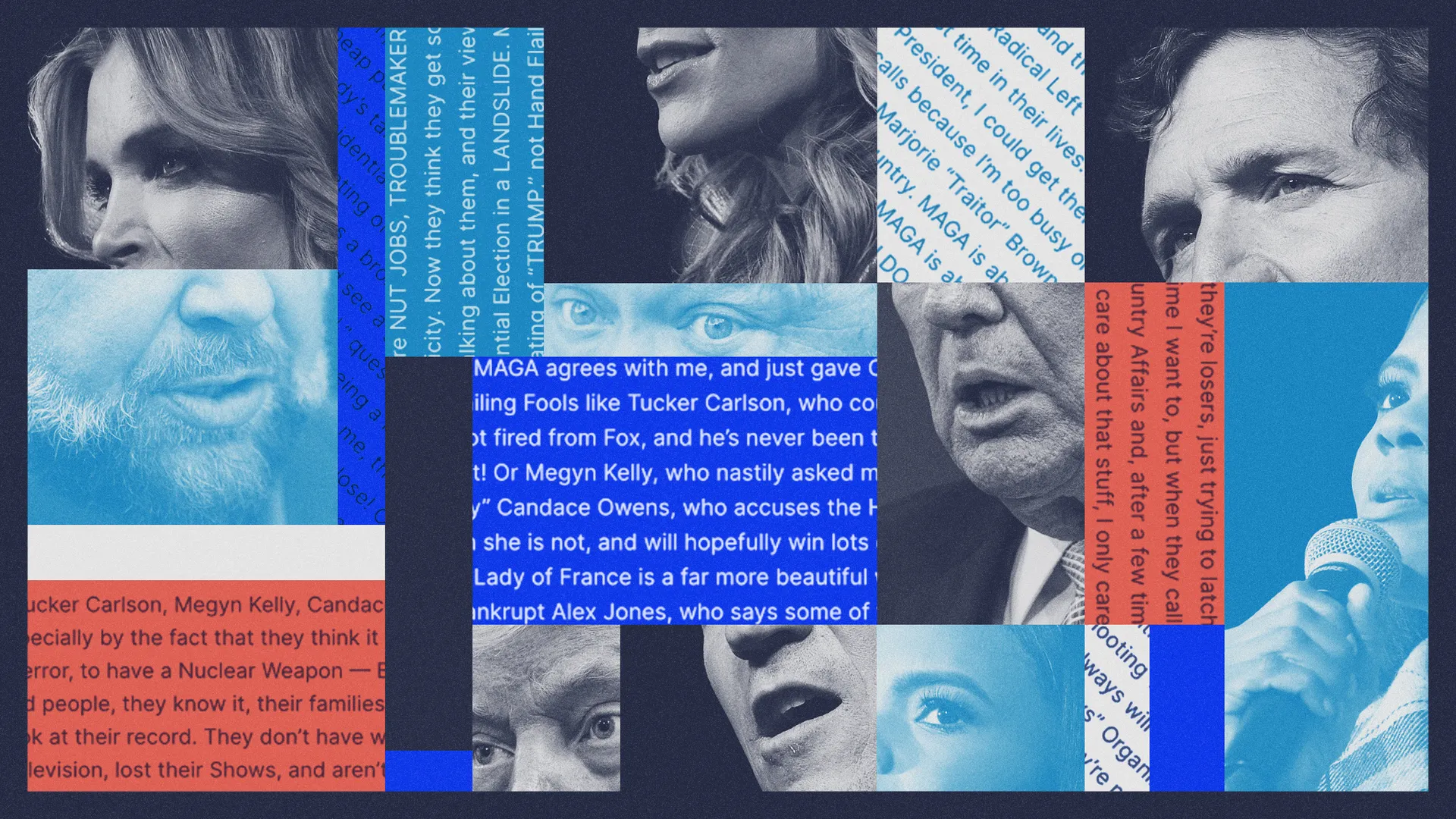
    A chorus of high-profile right-wing figureheads, including Tucker Carlson, Alex Jones and Megyn Kelly, recently criticized President Donald Trump’s ongoing Iran war. Trump responded by denouncing them as “nut jobs” and “troublemakers” in a lengthy social media statement, essentially making them persona non-MAGA. And as the president struggles to contain blowback from his Middle Eastern adventurism, the MAGA fault lines are only growing.

    ‘Biggest break thus far’
    After these notable conservatives denounced the president’s actions, Trump responded with a “blistering” 482-word Truth Social post that insulted them in “starkly personal terms,” said The New York Times. Carlson, Jones, Kelly and former Charlie Kirk collaborator Candace Owens are the “opposite of MAGA,” said Trump. 

    The president has “repeatedly dismissed suggestions” of an alleged “fissure in his MAGA coalition,” said Forbes. But after Trump “threatened to wipe out Iranian civilization,” there’s a “growing schism” in his base over the war, particularly given his campaign pledge of “no new wars,” said NBC News.

    While Carlson in particular has been “highly critical” of the Iran conflict and “somewhat more gently critical of Trump the man, at least publicly,” the “gloves were off” this week “like never before,” said CNN. The result is “perhaps the biggest break thus far” between Trump and a “leading conservative influencer.” 

    ‘Deep anger’ and ‘quick rebukes’
    Trump’s attacks on this batch of newly minted detractors reflect what seems to be a “deep anger at criticism from once-loyal supporters,” said Politico. This opprobrium runs both ways, as the targets of his ire offered “quick rebukes” to Trump’s attacks. “It may be time to put Grandpa up in a home,” said Owens on X. “I’m just so sad that whatever has happened to him has totally changed the man he once was,” said Jones in a video response on the same platform.

    Iran has “emerged as a growing weakness for Trump,” said CNN. While some MAGA supporters are “overwhelmingly on board,” the president’s wider base is “increasingly on a different page.” For Trump, the danger in rebukes by Carlson and other media figures is that it gives Republicans “skeptical of the war license to tilt into outright opposition to him.”


    today’s big question

    Will investors see a return on SpaceX’s IPO?

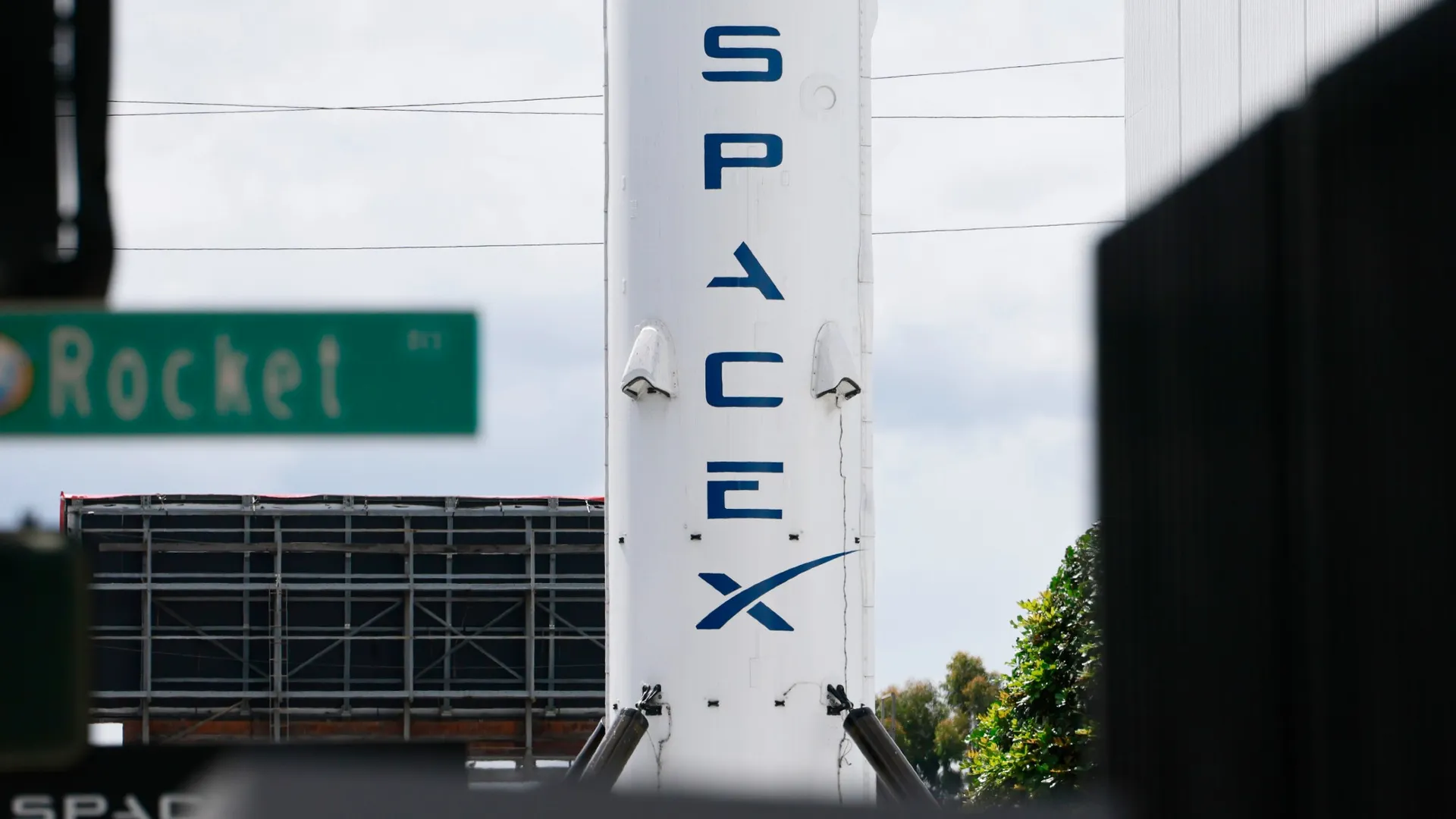
    Elon Musk always does things in a big way. The same is true of his plans to take SpaceX public. But how investors will make out could depend on how much they like him. As Musk works to convince buyers that his rocket company could be valued at as much as $2 trillion, SpaceX is earmarking up to 30% of shares for “nonprofessional, noninstitutional investors” and “banking on the popularity” of the tech billionaire to help it raise as much as $75 billion from the stock offering, said The Guardian. And the so-called “retail” trade by his fans will be a “critical part of this and ​a bigger part than any IPO in history,” Chief Financial Officer Bret Johnsen said to bankers in a meeting on Monday, per Reuters.

    SpaceX now includes xAI, Musk’s artificial intelligence company, along with Starlink, Grok and the X social media platform. Money raised from the IPO would help SpaceX finance “launching artificial intelligence data centers into orbit, creating a colony on the moon and getting humans to Mars,” said The New York Times. But those are “expensive and unproven” technologies that could take “years and billions of dollars to achieve.”

    What did the commentators say?
    IPOs “used to fund growth,” said Brad Badertscher at The Conversation. Going public helped “young cash-strapped” companies like Amazon and Apple get traction, and “much of their dramatic growth” happened afterward. These days, most companies can now “raise billions privately” and, like SpaceX, only go public after they have entrenched themselves in the marketplace.

    The SpaceX IPO could “showcase the free market at its best,” said Matthew Lynn at The Washington Post. The company is “pioneering innovative technologies and generating jobs and wealth.” Bringing along ordinary investors might add to those accomplishments, and giving regular people ownership of stocks gives them a “stake in the free market.” 

    A “bumper crop of mega initial public offerings” is expected over the next year, said Jonathan Levin at Bloomberg. History suggests investors should “tread very, very carefully” when evaluating companies like SpaceX, OpenAI and Anthropic. Mega IPOs have “underperformed the market” on average in recent years. 

    What next?
    SpaceX could “trade like a meme stock” after the IPO, said MarketWatch. Stocks driven by “social media trends” are often prone to “high trading volumes and price volatility.” 


    QUOTE OF THE DAY

    ‘This is from a man whose parents were professionals and probably doesn’t really know any person who works by the hour.’

    Supreme Court Justice Sonia Sotomayor, at a University of Kansas School of Law event, on fellow Justice Brett Kavanaugh describing ICE detainments as “only temporary stops” in the court’s decision allowing indiscriminate immigration-related stops in L.A. The hours lost when someone is detained can make a “difference between a meal for him and his kids that night and maybe just cold supper,” she added.


    Statistic of the day

    3.3%: The percentage by which consumer prices climbed over the 12 months to March, picking up from 2.4% in February to its highest rate in nearly two years, according to the Labor Department. The expected jump is the biggest monthly change since 2022 after Russia invaded Ukraine.


    THE EXPLAINER

    Who’s the mystery bitcoin founder Satoshi Nakamoto?

    After an investigation by The New York Times, a British computer scientist has denied reports that he’s Satoshi Nakamoto, the pseudonymous creator of bitcoin. The Times used biographical details and writing style comparisons to make the case that Adam Back is the cryptocurrency’s enigmatic founder. 

    Who’s Adam Back? 
    London-born Back, 55, has “long been seen as a potential candidate to be Nakamoto,” said The Times. “A pioneer of early digital asset research in the 1990s,” he has a “long-standing background in cryptography, the techniques used to secure and verify digital information.” This includes developing Hashcash, a “proof-of-work system that later influenced bitcoin” and was referenced by Nakamoto in his bitcoin “white paper.” Back dismissed The New York Times’ use of writing analyses to link him to Nakamoto as a “combination of coincidence and similar phrases from people with similar experience and interests.” 

    Why is Nakamoto’s identity a secret? 
    Nakamoto has only ever communicated under the pseudonym and since 2011 has made no public statements, giving the founder a “cult-like status among crypto enthusiasts,” said The Times. This anonymity is very on-brand for bitcoin. If the founder’s identity were known, they could become a leader or figurehead, contradicting the cryptocurrency’s core principle of decentralization. And there’s a security element. Nakamoto is thought to own $78 billion worth of bitcoin, so remaining anonymous lessens the risk of extortion or kidnapping. 

    Has anyone else been suggested? 
    In 2014, Newsweek identified a Japanese American systems engineer called Dorian Nakamoto as the creator of bitcoin — a claim that has “largely been debunked,” said the BBC. The following year, Wired suggested Nakamoto could be a pseudonym for Craig Wright, an Australian computer scientist. Wright asserted that he was indeed Nakamoto, until a U.K. High Court judge ruled that he was not and must not claim to be the bitcoin founder. 

    In 2024, an HBO documentary alleged that Canadian crypto expert Peter Todd was the real Nakamoto — a suggestion that he described as “ludicrous.” It’s also possible that the mysterious founder is not one person but rather a team of developers or cryptographers.


    Good day 🧠

    … for slowing brain aging. A protein called FTL1 has been found to drive brain aging, and lowering it restores memory and neural connections in mice, according to a study published in the journal Nature Aging. The findings could pave the way for treatments targeting FTL1 and counteracting its effects in the brain, said lead author Saul Villeda.


    Bad day 🌊

    … for slowing climate change. A Super El Niño could set in by late summer or early fall this year. The planet is “already warming at an accelerating rate,” and an “intense El Niño would speed that up even faster, at least for a few years,” said CNN. The last Super El Niño occurred in 2015-2016.


    Picture of the day

    The final hours

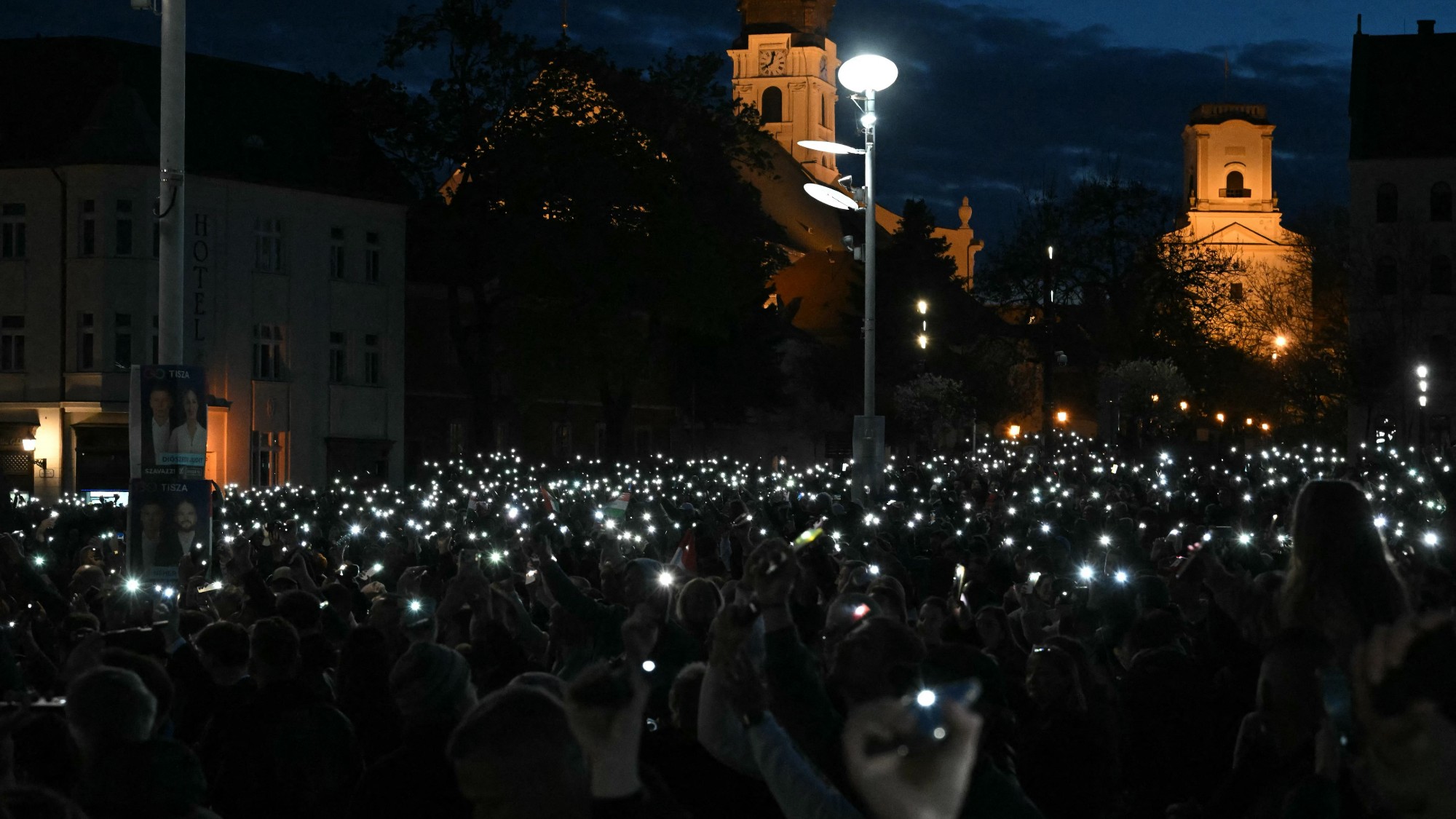
    People light their phones as Hungarian opposition leader, head of the Tisza Party and candidate for prime minister Péter Magyar addresses supporters at a campaign rally in Gyor. He’s ahead in the polls for the country’s election on Sunday and may oust Viktor Orbán after 16 years in power.
    Attila Kisbenedek / AFP / Getty 


    Puzzles

    Daily sudoku

    Challenge yourself with The Week’s daily sudoku, part of our puzzles section, which also includes guess the number

    Play here


    The Week recommends

    The most beautiful public gardens in the world

    Visiting a public garden is one of the best ways to get outside. You feel the sun’s warmth on your skin as you stroll by the trees and flowers in bloom, appreciating every leaf and petal. So give yourself the gift of fresh air and time well spent by taking a trip to one of these splendid gardens.

    Edward James Sculpture Garden, Las Pozas, Mexico
    During the 1960s, “eccentric” British poet and Surrealist art patron Edward James traveled to the Mexican rainforest and created this “otherworldly” sculpture garden, said The New York Times. Every area vies for your attention, and exploring this topsy-turvy landscape feels like “stepping into a dream.”

    Kirstenbosch National Botanical Garden, Cape Town, South Africa
    This trailblazing botanical garden, established in 1913, was the first in the world to focus solely on indigenous plants. A “high priority” is given to plants in the fynbos biome, like “stiff, structured proteas” and “shaggy, flowering ericas,” said The New York Times. Get a bird’s-eye view by taking the Tree Canopy Walkway, a curved bridge that offers “mountain vistas and sweeping forest views.”

    Longwood Gardens, Kennett Square, Pennsylvania
    Conservatories, topiaries, aquatic plants, meadows, dazzling fountains and more await at the spectacular 1,100-acre Longwood Gardens (pictured above). The collection of plants is “incredible,” as is the main conservatory filled with “lush” displays that change seasonally, said USA Today. 

    Read more


    Poll watch

    A majority of Americans (60%) have an unfavorable view of Israel, up from 53% last year, according to a Pew Research Center survey of 3,507 U.S. adults. A nearly identical number (59%) have little or no confidence in Prime Minister Benjamin Netanyahu to do the right thing regarding world affairs — up from 52% last year.


    INSTANT OPINION

    Today’s best commentary

    ‘I’m a WNBA player. Don’t use athletes like me to exclude trans women.’
    Brianna Turner at USA Today
    The IOC recently announced a “binding policy requiring every woman who seeks to compete in the Olympics to undergo sex verification testing,” but the “final hurdle to represent your country should not be proving to a panel of strangers that you are the woman you say you are,” says Brianna Turner. This mandate “ignores established medical and human-rights guidance and rejects the science that says physical appearance, chromosomes or individual traits do not determine athletic performance.”

    ‘New England considers the nuclear option’
    Andrew Fowler at The Wall Street Journal
    A bipartisan coalition of all six New England governors has “reached a conclusion that until recently would have been politically unthinkable: Renewable energy alone can’t deliver the affordable, reliable power the region needs,” says Andrew Fowler. Against “this backdrop, nuclear energy is reemerging as a practical solution.” New England’s nuclear facilities, such as “Connecticut’s Millstone Power Station, help maintain grid stability,” but “regulatory barriers have long limited the development of new nuclear capacity.” That’s “beginning to change.”

    ‘The ethics of using AI in newsrooms: a work in progress’
    Jim Boren at The Seattle Times
    The public is “looking for clear guidance on how newsrooms are using AI to report the news,” but “most news organizations are still developing their policies, and few have fully resolved these complex questions,” says Jim Boren. AI can “free journalists to focus more on investigation, verification and storytelling,” but “most newsrooms draw a firm line: AI should not be used to write stories.” This “reflects a broader concern that AI systems can produce convincing but inaccurate or misleading information.”


    WORD OF THE DAY

    nautilus

    A deep-water cephalopod with an external shell. A 300-million-year-old fossil featured in the Guinness World Records as the remains of the world’s oldest octopus is actually a partly decomposed nautilus, according to a study in the journal Royal Society B: Biological Sciences. In a case of “mistaken identity,” said the researchers, the fossil “hid its true nature through decay.”


    Evening Review was written and edited by Theara Coleman, Nadia Croes, Scott Hocker, Anya Jaremko-Greenwold, Justin Klawans, Joel Mathis, Chas Newkey-Burden and Rafi Schwartz, with illustrations by Stephen Kelly.

    Image credits, from top: Illustration by Stephen P. Kelly / Getty Images / Shutterstock / AP Photo; Mario Tama / Getty Images; Maksim Tkachenko / iStock / Getty Images; Jim. Watson / AFP / Getty Images
     

    Recent editions

    • Morning Report

      Hegseth loses press access battle

    • Evening Review

      Will the US leave NATO?

    • Morning Report

      Iran ceasefire stumbles toward peace talks

    VIEW ALL
    TheWeek
    • About Us
    • Contact Future's experts
    • Terms and Conditions
    • Privacy Policy
    • Cookie Policy
    • Advertise With Us
    • FAQ
    Add as a preferred source on Google Add as a preferred source on Google

    The Week is part of Future US Inc, an international media group and leading digital publisher. Visit our corporate site.

    © Future US, Inc. Full 7th Floor, 130 West 42nd Street, New York, NY 10036.