The Week The Week
flag of US
US
flag of UK
UK
https://cdn.mos.cms.futurecdn.net/flexiimages/jacafc5zvs1692883516.jpg

SUBSCRIBE & SAVE

Less than $3 per week

Sign in
  • View Profile
  • Sign out
  • The Explainer
  • The Week Recommends
  • Newsletters
  • Cartoons
  • From the Magazine
  • The Week Junior
  • Student Offers
  • More
    • Politics
    • World News
    • Business
    • Health
    • Science
    • Food & Drink
    • Travel
    • Culture
    • History
    • Personal Finance
    • Puzzles
    • Photos
    • The Blend
    • All Categories
  • Newsletter sign up Newsletter
  • The Week Evening Review
    Trump’s financial weaponry, Allbirds’ AI pivot, and friction maxxing

     
    TODAY’S BIG QUESTION

    Why is Trump turning to economic warfare in Iran?

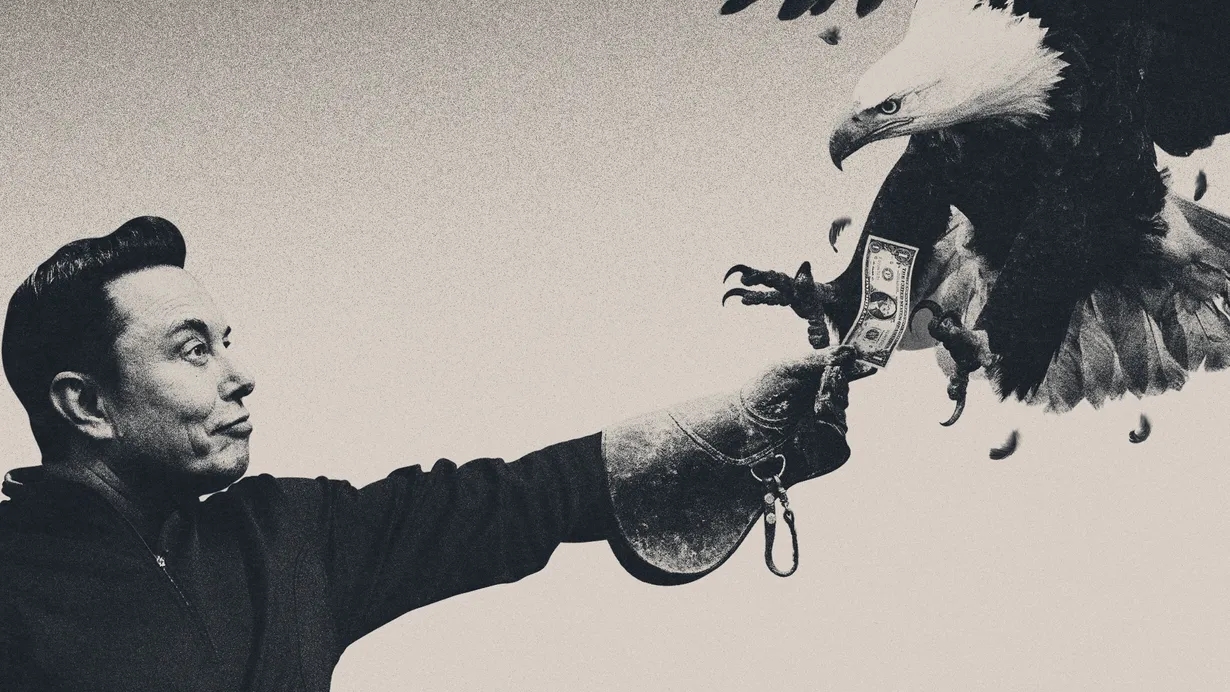
    For weeks, the Trump administration has waged a brutal war on Iran. But now that Iran has successfully shifted the conflict’s nexus to the oil-shipping bottleneck in the Strait of Hormuz, the White House has a new plan to inflict maximum pressure: economic warfare, the “financial equivalent” of a bombing campaign, said Treasury Secretary Scott Bessent at a White House briefing last week. 

    What did the commentators say?
    Blocking Iranian ports and shipping lanes and pivoting from “kinetic to economic warfare” is an attempt to “end the conflict without a new U.S.-Israeli onslaught,” said CNN. Per the White House’s “rationale,” the “ruinous financial and humanitarian consequences” of being unable to ship and sell oil leave Tehran with “no choice but to accept U.S. terms.”

    The administration’s threats stretch beyond Iran to those who would do business with it, including countries that are “buying Iranian oil” or hold Iranian funds in their banks, said Bessent on PBS News. His Treasury Department notified “financial institutions in China, Hong Kong, the UAE and Oman” that they are at risk of secondary sanctions for “allowing Iranian illicit activities to flow through their financial institutions,” said The Associated Press. The “argument being made” to Trump is that even if the Iranians think they can “weather the storm,” any inability to pay their “loyalists” could “pressure Iran to the table.” 

    What next?
    The “damage” caused by economic weapons is already “sparking a response,” with nations that depend on the Strait of Hormuz “making plans to reduce their vulnerability to a future closure,” said the Post. But critics warn that attempts to impose other financial consequences could backfire on the U.S. and its allies. Much of the previous phase of war has “helped Iran’s economy,” said Sen. Elizabeth Warren (D-Mass.), per the AP. 

    The administration could still be making a “sound bet,” said CNN. Iran’s economy has been “shattered by sanctions” and could “suffer critical food shortages, hyperinflation and a banking crisis” that would push Tehran to settle with the Trump administration. Still, this hope may “rest on an assumption” that has “led the U.S. astray in the Middle East” many times in the past.


    QUOTE OF THE DAY

    ‘Our losses are incredible. Many people got killed, all our belongings are gone, all our achievements vanished. This is not easy, but life and survival are stronger.’

    Ali Eid, a 60-year-old high school instructor, to NBC News on returning with his five children to their home in Lebanon’s village of Maarakah, which was mostly reduced to rubble before the Israel-Lebanon ceasefire. He is among 1 million people who were displaced by Israel’s invasion.


    talking points

    Can Allbirds’ pivot from shoes to AI work?

    It was not a joke when the shoe company Allbirds announced last week that it’s pivoting to artificial intelligence. It’s a sign that the AI bubble is about to pop. Or maybe the tech optimists are right, and everything is AI now.

    Allbirds was “once the maker of Silicon Valley’s favorite shoe,” said The New York Times, and was previously valued at $4 billion. But the company earlier this year closed all of its stores and sold its assets for a mere $39 million. 

    Now the brand seeks a fresh start. The business rebranded itself NewBird AI and announced it had received a $50 million influx to buy up advanced computer chips that will let it enter the AI infrastructure business. NewBird’s stock immediately rose nearly 600%.

    ‘Surreal moment’
    Allbirds’ pivot might look like a “cynical (and very possibly doomed) cash grab,” but it could be an “escape hatch” for the company, said Will Gottsegen at The Atlantic. The industry is “creating enormous wealth” and driving the stock market to record highs despite concerns about the broader world economy. The big question is whether the former shoe company’s “lack of experience” in AI will make it “difficult to turn a short-term stock bump into long-term success.”

    “We have seen this movie before,” said Britney Nguyen at MarketWatch. Back in 2017 and 2018, lots of businesses “sought to hop on the blockchain bandwagon.” 

    The pivot is also reminiscent of the 1990s, when companies “could slap a ‘.com’ on their names and watch their stocks fly,” said Emily Peck at Axios. Allbirds’ announcement has created a “surreal moment” in the AI era.

    Feel of a ‘meme stock’
    The shoe company’s “flailing AI embrace” is “not a horrible idea on the surface,” given that it fills a “real business need,” said Nitish Pahwa at Slate. But the AI spending that has “propped up the economy” might not persevere. 

    Indeed, Allbirds’ stock started to drop after the initial surge, said Bloomberg. And the market roller coaster ride gives Allbirds the feel of a “meme stock,” said 50 Park Investments’ Adam Sarhan, in which “emotions take over and logic and reason get thrown out the window.”


    Statistic of the day

    $3 billion: The estimated valuation of OnlyFans as it nears a deal to sell a minority stake in the U.K. platform. An agreement with U.S. private equity firm Architect Capital could be struck as early as next month, according to sources for the Financial Times, despite the recent death of OnlyFans owner Leonid Radvinsky.


    in the spotlight

    Friction maxxing embraces inconvenience

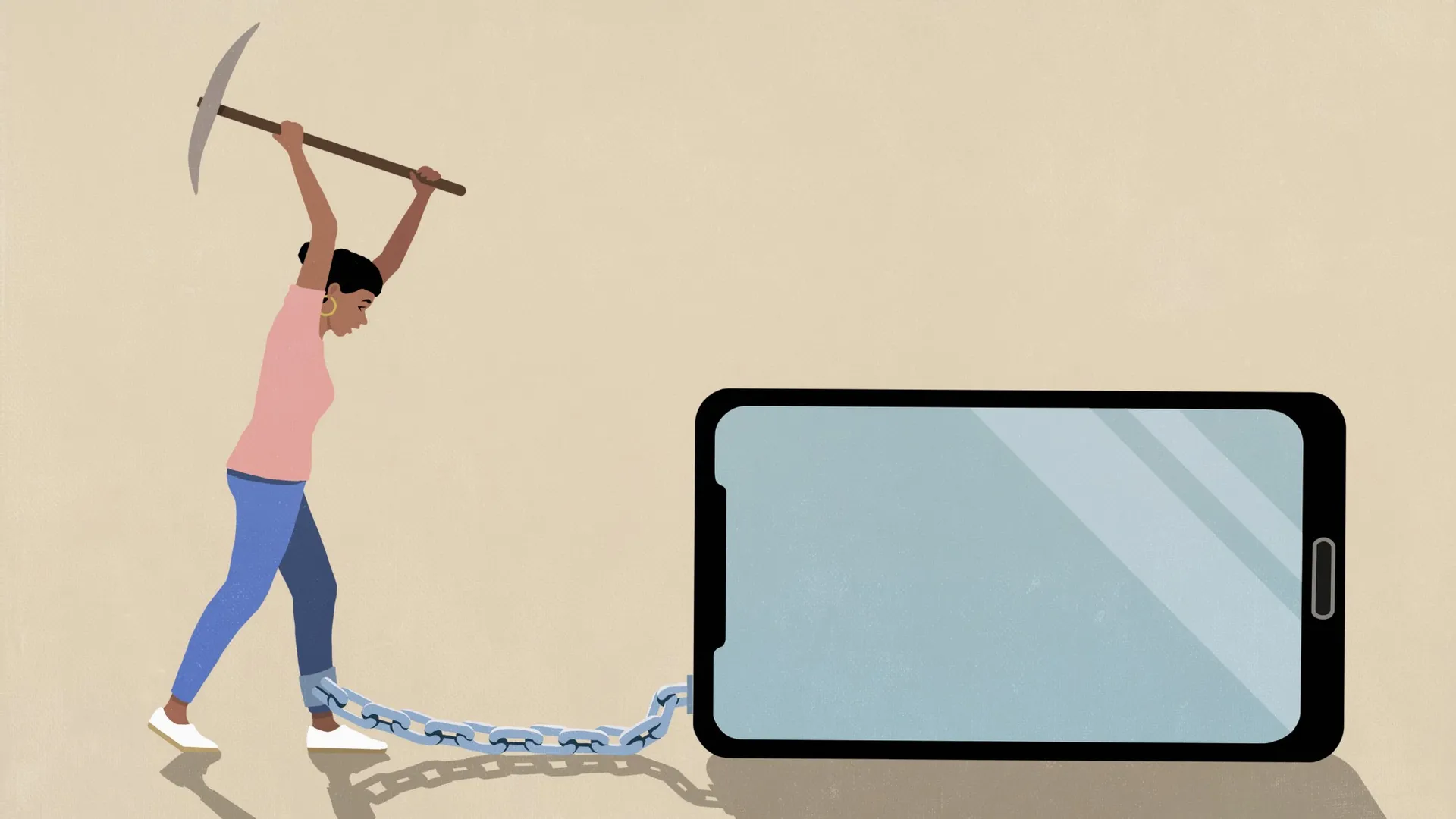
    From ordering groceries online to using AI to write emails, technology is making life exponentially easier. But while that may be appealing, it has also become a crutch, and constantly outsourcing our thinking can be detrimental in the long term, according to experts. A new trend called friction maxxing seeks to reintroduce discordance into our lives.

    ‘Tolerance for inconvenience’
    Tech companies are “making us think of life itself as inconvenient” and that we should be “continuously escaping” from it into “digital padded rooms of predictive algorithms and single-tap commands,” said sociologist ​​Kathryn Jezer-Morton at The Cut. It’s a method that’s “especially evil” because our “love of escaping is one of humanity’s most poetically problematic tendencies, and now it’s being used against us.” 

    Enter friction maxxing, which isn’t “simply a matter of reducing your screen time,” said Jezer-Morton. Rather, it requires “building up tolerance for inconvenience,” avoiding “technologies or escape” and then “reaching toward enjoyment.” 

    A friction-maxxing practice could include navigating by road signs instead of Google Maps or arranging to meet up with friends without sharing your location. Or it could mean eschewing ChatGPT for information that could be gleaned from a book or asking other people. 

    Cognition and meaning
    Many of our decisions about convenience are driven by “short-term emotions,” said Forbes. It feels good to scroll because “you know getting into a challenging book will feel lousy (at least initially).” 

    But despite how easy technology advancements have made simple tasks, “living a frictionless life may not be the best for your cognitive function over time,” said The Washington Post. It’s basically “having a personal trainer lift the weights for you,” said neuroscientist Lila Landowski to the Post.

    And the benefit of friction maxxing isn’t just about boosting cognitive abilities. It helps to create a more meaningful life, said Emily Falk, a professor and the author of “What We Value,” to the Post. 

    Friction-maxxing could “play a valuable role in reorienting yourself away from tech dependency” and back toward “embracing the effort that makes people feel genuinely alive and fulfilled,” said Mashable. Perhaps this is an opportunity, said Jezer-Morton, to “think more clearly than we ever have about what’s interesting and essential about being human.”  


    Good day 👩🏻‍🦰

    … for redheads. Natural selection seems to favor red hair, according to a study in the journal Nature. Harvard academics who studied the genomic sequences of thousands of ancient and modern humans found that the genes for red hair have been multiplied faster than would be expected by chance. But the reasons remain unclear.


    Bad day 📦

    … for sailors. Military family members worried that their deployed loved ones are going hungry overseas have sent packages with snacks and other items. But mail delivery to military ZIP codes across the Middle East has been suspended indefinitely as of this month, and packages in transit “now hang in limbo,” said USA Today.


    Picture of the day

    Double-crossing the finish line

    Kenyan Sharon Lokedi celebrates as she wins the women’s division of the Boston Marathon today for the second straight year. John Korir won the men’s division, also representing Kenya and taking back-to-back titles. More than 30,000 participants ran the 26.2-mile course.
    Charles Krupa / AP Photo 


    Puzzles

    Daily sudoku

    Challenge yourself with The Week’s daily sudoku, part of our puzzles section, which also includes guess the number

    Play here


    The Week recommends

    The best superhero series of all time 

    Critics are sometimes contemptuous of the way superhero entertainment has been embraced by adults, who should presumably be making their way through the Booker Prize long list. But the best of these good-versus-evil narratives can connect one generation to the next, introducing kids to the world’s complexity and keeping grown-ups tethered to childhood wonder.

    ‘Batman’ (1966-68)
    The original ‘Batman’ series (pictured above) is both the first live-action television adaptation of the now-iconic DC Comics character as well as a kind of time capsule that reminds viewers of what the genre can be like when it dispenses with tortured origin stories, brooding anti-heroes and gore. This “Batman” is not only the “most fun” but also the most subversive and truthful ‘Batman’ we can hope to ever witness,” said Jack Bernhardt at The Guardian. (Prime Video)

    ‘Jessica Jones’ (2015-19)
    Arriving just ahead of the #MeToo movement that shook the world, “Jessica Jones” helped give depth and seriousness to the superhero genre that was producing one so-so series after another. Buoyed by a “strong, clear performance” from Krysten Ritter, it’s not an anti-hero narrative but rather a “post-hero story, making it fascinating and unique in a marketplace that doesn’t lack for costumed do-gooders of all types,” said Sam Adams at IndieWire. (Disney+)

    ‘Legion’ (2017-19)
    From “Fargo” creator Noah Hawley, the offbeat “Legion,” loosely located in the “X-Men” universe, remains beloved by critics even if it never quite found a broad audience during its run. A meditation on mental illness, “Legion” is “no ordinary comic-book show. It’s a head trip, and it’s spectacular,” said James Poniewozik at The New York Times. (Disney+)

    Read more


    WORD OF THE DAY

    neoprime

    A new class of defense technology contractors, with AI-powered autonomous systems at their core, that are challenging traditional prime ones. Neoprime contractor Palantir has posted a 22-point summary of CEO Alex Karp’s book “The Technological Republic” on X. The “atomic age is ending,” and a “new era of deterrence built on AI is set to begin,” said the manifesto.


    Poll watch

    A supermajority (86%) of 633 U.S. executives surveyed expect tariffs to remain a “permanent planning assumption” for them, according to a PwC poll. They believe tariffs will last “beyond the current administration,” said Rohit Kumar, a national tax office co-leader at PwC.


    INSTANT OPINION

    Today’s best commentary

    ‘Trump’s presidency is what evil looks like: absurd, frightening, cruel’
    Nesrine Malik at The Guardian
    Trump “defies attempts to make his actions cohere,” says Nesrine Malik. His “lack of vision or ideology is misread as attributes that make him somehow less dangerous than the authoritarians of the past who have become the template for what evil looks like.” But Trump’s “constant self-aggrandizement, his grudges against political adversaries, the fury at being challenged by the press, and the revenge he promises to wreak” are “ways to erase and avoid what’s a permanent terror of humiliation.”

    ‘Why are workers stuck? Not enough employers.’
    Kathryn Anne Edwards at Bloomberg
    What makes recessions “so harmful to workers is the freezing of movement,” says Kathryn Anne Edwards. The “gears of the labor market — gears that are constantly shuffling workers from job to job to unemployment to job again — slow to a crawl.” This is what’s “making today’s labor market so damaging.” The market has been “heading toward a situation like this — with recession-like conditions of slow gears even when the market should be tight — for a while.”

    ‘How American schools can address political polarization’
    Deborah Kenny at Time
    Polarization has become “one of the defining threats to American democracy,” says Deborah Kenny. To “address these issues, some schools have turned to civics content, media literacy and dialogue initiatives.” But these efforts “misunderstand the problem. Polarization is more than a knowledge deficit. It’s a self-government deficit.” Students “should be exposed to competing views and learn to articulate multiple sides of an issue,” and schools “must defend free inquiry, reject dogma and privilege the unencumbered search for truth.”


    Evening Review was written and edited by Theara Coleman, Nadia Croes, Scott Hocker, Anya Jaremko-Greenwold, Justin Klawans, Joel Mathis and Rafi Schwartz, with illustrations by Julia Wytrazek.

    Image credits, from top: Illustration by Julia Wytrazek / Getty Images; Smith Collection / Gado / Getty Images; Malte Mueller / Getty Images; Silver Screen Collection / Getty Images
     

    Recent editions

    • Morning Report

      Strait of Hormuz tumult threatens Iran ceasefire

    • Sunday Shortlist

      A 'sparkling, wise' portrait of two artists

    • Saturday Wrap

      A spiritual showdown

    VIEW ALL
    TheWeek
    • About Us
    • Contact Future's experts
    • Terms and Conditions
    • Privacy Policy
    • Cookie Policy
    • Advertise With Us
    • FAQ
    Add as a preferred source on Google Add as a preferred source on Google

    The Week is part of Future US Inc, an international media group and leading digital publisher. Visit our corporate site.

    © Future US, Inc. Full 7th Floor, 130 West 42nd Street, New York, NY 10036.