The Week The Week
flag of US
US
flag of UK
UK
https://cdn.mos.cms.futurecdn.net/flexiimages/jacafc5zvs1692883516.jpg

SUBSCRIBE & SAVE

Less than $3 per week

Sign in
  • View Profile
  • Sign out
  • The Explainer
  • The Week Recommends
  • Newsletters
  • Cartoons
  • From the Magazine
  • The Week Junior
  • Student Offers
  • More
    • Politics
    • World News
    • Business
    • Health
    • Science
    • Food & Drink
    • Travel
    • Culture
    • History
    • Personal Finance
    • Puzzles
    • Photos
    • The Blend
    • All Categories
  • Newsletter sign up Newsletter
  • The Week Evening Review
    AI company competition, nuclear site risks, and Target’s comeback

     
    TODAY’S BIG QUESTION

    Who will win the AI IPO race?

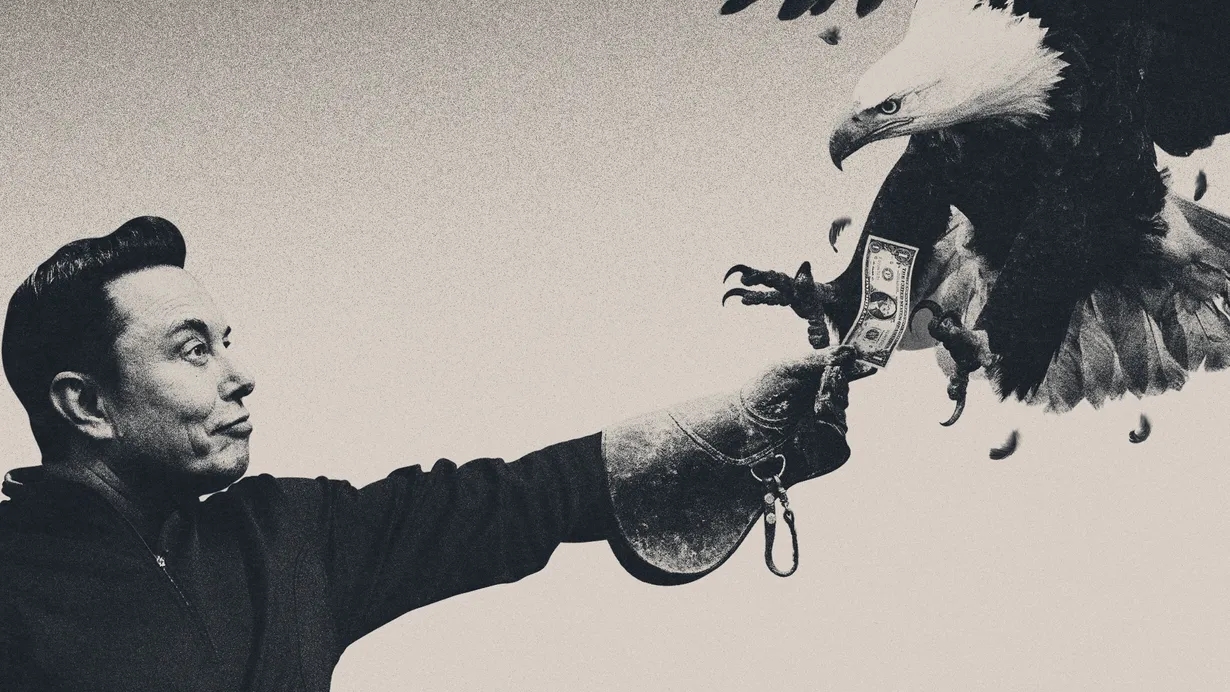
    SpaceX, Anthropic and OpenAI are all preparing initial public offerings, competing for investor cash that could determine who ends up the winner of the artificial intelligence era. The three companies “could make 2026 the biggest year for U.S. IPOs,” said the Financial Times. 

    SpaceX chief Elon Musk departed OpenAI in 2018, followed by Anthropic CEO Dario Amodei in 2020. Now the AI rivals are positioning themselves to “command the deepest pool of capital,” said the Financial Times. All are hoping to “ride a wave of AI enthusiasm” among investors, but stock markets may be less enamored of the sector’s “vast cash burn” than private backers have been.

    What did the commentators say?
    The success of the IPOs depends on whether the AI startups can “keep growing at the ridiculous rates they have achieved so far,” said Parmy Olson at Bloomberg. OpenAI will bring in $280 billion in revenues by 2030, up from about $25 billion now, according to the firm. 

    To achieve that goal, the company’s corporate customers “must plug its technology into a broader array” of uses, including “sales, finance, healthcare, human resources, logistics” and more, said Bloomberg. But many potential business clients are “keeping generative AI at bay” amid questions about whether it’s “reliable enough for use in high-stakes decision-making.” 

    OpenAI’s need for “data centers, chips and cloud capacity” requires it to spend a lot of money, said Beatrice Nolan at Fortune. Its IPO filing will help investors determine if the company can turn a profit sooner rather than later. 

    What next?
    Investors are enthusiastic about AI, but some experts warn that the “novel technology comes with new risks,” said The Wall Street Journal. The markets have “not factored in the cost of the vulnerabilities these systems could create,” said Navrina Singh, the CEO of Credo AI, to the outlet. 

    The IPOs could be derailed by “abundant and cheap” artificial intelligence available from Chinese labs like DeepSeek, said CNBC. There are also “Western challengers” like Nvidia, Cohere, Reflection and Mistral that are “building cheaper, smaller, more efficient alternatives” than Anthropic and OpenAI. By the time their IPOs come to fruition, the “central premise of their valuations may already be gone.”


    QUOTE OF THE DAY

    ‘The hands of time do not turn backward, and the nations and lands of the region will no longer serve as shields for American bases.’

    Iranian Supreme Leader Mojtaba Khamenei, in a social media post the day after the U.S. military launched strikes on southern Iran, warning that peace deal negotiations are at risk. The U.S. will no longer have a “safe place for aggression and military bases in the region,” he added. 


    the explainer

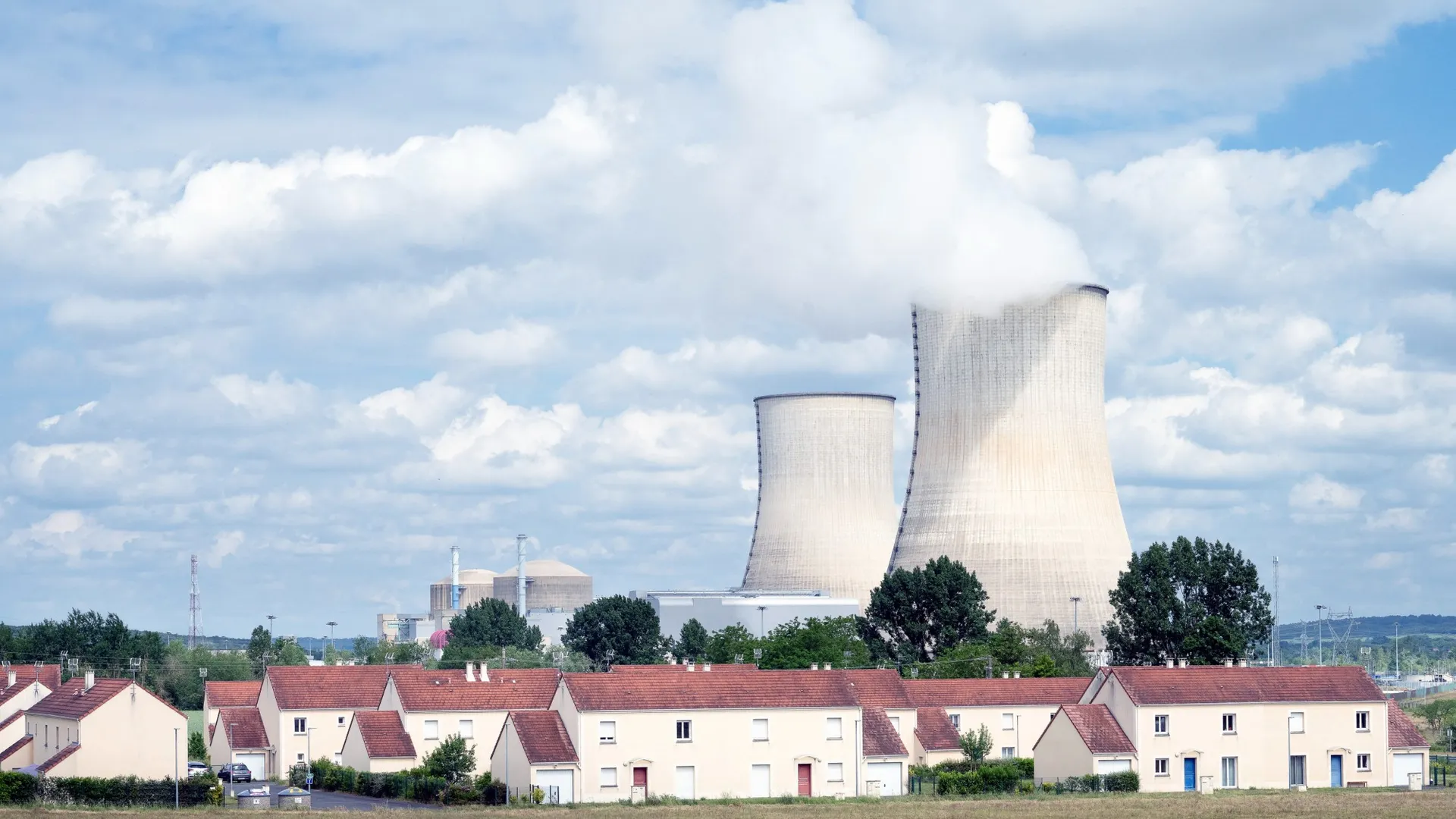
    The threat to nuclear power plants around the world

    The vulnerability of the civilian energy infrastructure was exposed earlier this month when a drone strike on the United Arab Emirates cut off power to a nuclear reactor. It’s the first time a fully operating nuclear power plant has had to rely on backup generators because of a military attack. But reactors in Ukraine and Iran have also been threatened by recent conflicts.

    Why attack nuclear sites?
    Targeting nuclear plants could cripple an enemy’s power grid or force surrender through the psychological terror of threatening a radiological disaster. It could also be used to delay a nation’s ability to enrich nuclear material. And armies could occupy a nuclear plant to seize control of a strategic geographic corridor or prevent defending forces from using the area.

    What does international law say?
    Under the Geneva Conventions, civilian structures, including nuclear power plants, are “protected against attack,” said The Guardian. Still, the treaties also state they can be hit “for such time as they are military objectives.” This is a “loophole” that “aggressor states” have “interpreted widely.” Attacking a nuclear power plant also breaks legal resolutions passed by the U.N. Security Council and the International Atomic Energy Agency’s board of governors.

    What would happen if such a site were hit?
    It wouldn’t necessarily lead to a mushroom cloud or an immediate release of radiation, because modern plants are built with multiple safety systems that can shut down reactors and contain damage. But if the reactor begins to degrade, radioactive material could be released and remain in the environment for years or even decades. It could spread across borders, enter water systems or settle in soil.

    Attacks on nuclear installations “risk undermining the emerging nuclear renaissance” in Western economies as an alternative to fossil fuels, said Bloomberg. Politicians and the public are “highly sensitive to radiation emergencies,” so an incident in one country “tends to dampen enthusiasm” for nuclear power elsewhere.

    Targeting nuclear plants could also be a hugely symbolic moment. Although conventional power plants have been “repeatedly bombed” by Russia during the Ukraine war, said The Guardian, Kyiv’s three functioning nuclear plants have “remained relatively unscathed” because Moscow regards a direct attack on them to be “taboo.”


    Statistic of the day

    44.2: The level that U.S. consumer sentiment has fallen to on this month’s consumer sentiment index, according to the latest survey from the University of Michigan. After landing below the previous record of 49.8 set last month, consumer sentiment has dropped for the third consecutive month to an all-time low.


    in the spotlight

    How Target used style and value to start growing again

    Target is back on target. The big-box retailer known for affordable style has returned to its roots, sparking a turnaround after a multiyear slump.

    The company’s first quarter sales were its “best results in four years,” said CNN. That’s the product of CEO Michael Fiddelke’s move to “win back shoppers with new, buzzy brands” like Pokémon and Parke. Fiddelke took over earlier this year after a “series of strategy mistakes,” including cutting DEI programs and Pride displays, which sparked boycotts by the company’s largely liberal customer base. But now, Target’s “comeback strategy is working.”

    ‘Style and design’
    The company is attempting to get back to what “historically made the chain distinctive,” said Axios. It does best when it’s “truly leading with style and design at an incredible value,” said Fiddelke to reporters. Target is also “executing its largest grocery transition” in more than 10 years, said Retail Touch Points. 

    The company’s quarterly report comes as analysts are watching to see if “surging gasoline prices due to the Iran war” are leading to consumer cutbacks, said The Associated Press. But boycotts and politics have “never been the main issue” behind Target’s slump, said Neil Saunders, of GlobalData Retail, to the wire service. Instead, customers felt Target was “failing on execution,” said the AP.

    ‘We want to be careful’
    The turnaround may “not be as smooth as the latest results imply,” said MarketWatch. Target must pivot from halting the slump to sustaining “full-scale growth,” said Brian Mulberry, of Zacks Investment Management, to the outlet. Though the company has upgraded its sales expectations for 2026, Fiddelke acknowledges the headwinds as consumers pull back from spending. “We want to be careful not to get out over our skis,” he said to reporters.

    Next up are store revamps. Target and other big retailers are “pouring billions of dollars back into their stores” to lure customers even as online sales continue to occupy a bigger share of consumer spending, said The New York Times. Remodeling brick-and-mortar stores, said Fiddelke to the outlet, is part of the strategy for “elevating the Target experience.”


    Good day 📐

    … for geometry solutions. OpenAI has made a breakthrough on a geometry puzzle that has stumped mathematicians for 80 years. The company behind ChatGPT used artificial intelligence to significantly disprove a conjecture made by Hungarian mathematician Paul Erdos in 1946. Maths experts are stunned by the chatbot’s arithmetical accomplishment.


    Bad day 🔬

    … for scientific diplomacy. Grants managers at the National Institutes of Health and the National Aeronautics and Space Administration have placed unprecedented limitations on collaborations between American scientists and foreign researchers. They are privately encouraging grantees “co-authorship with a scholar affiliated with a foreign institution, even if all the work was done in the United States,” said the American Association for the Advancement of Science.


    Picture of the day

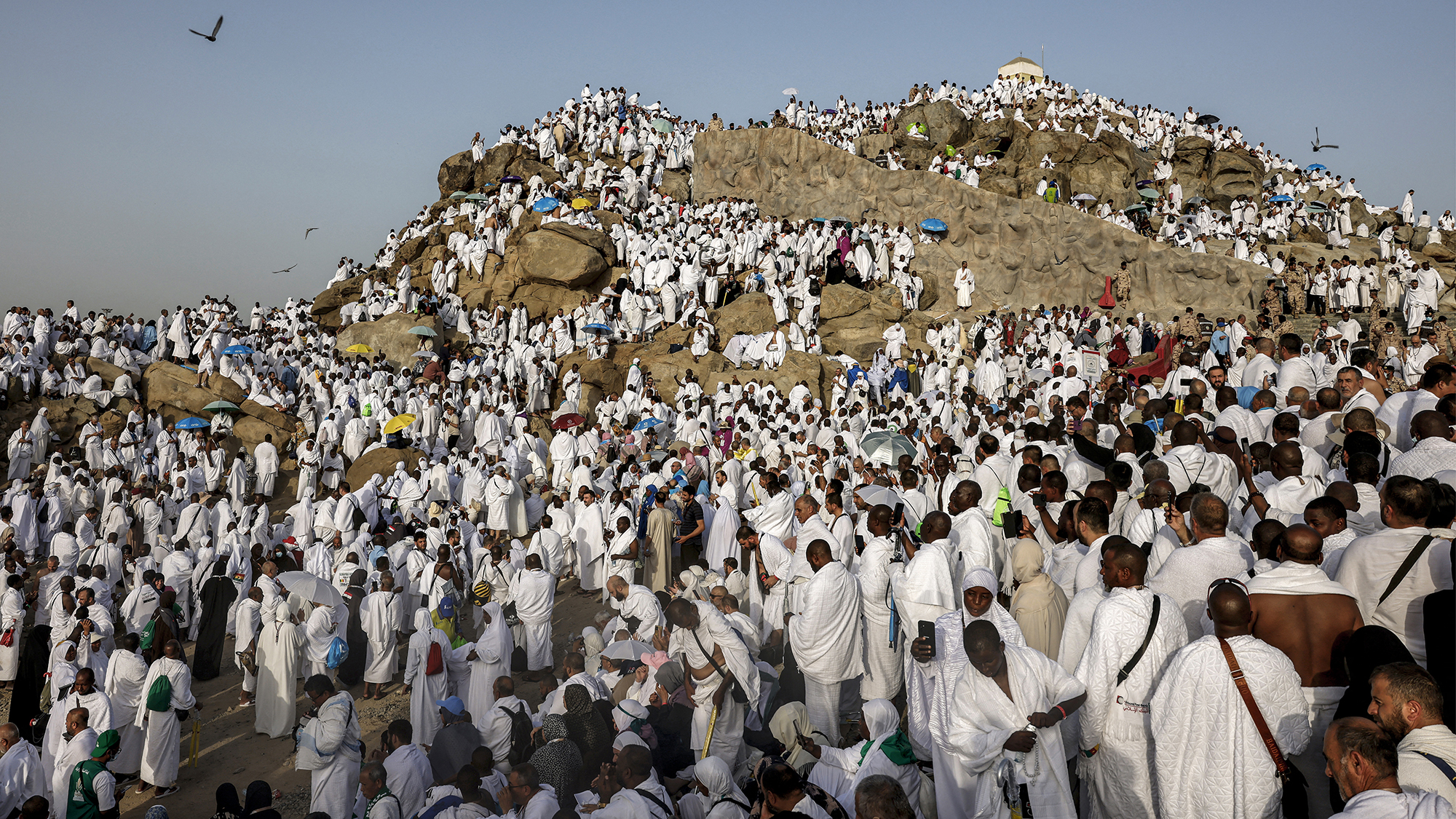
    Desert worship

    Muslim devotees pray on Saudi Arabia’s Mount Arafat, believed to be the site of the prophet Muhammad’s last sermon, during the climax of the annual Hajj pilgrimage. Thousands of pilgrims joined the event, even as punishing desert temperatures soared to 104 degrees Fahrenheit.
    Zain Jaafar / AFP / Getty Images


    Puzzles

    Daily sudoku

    Challenge yourself with The Week’s daily sudoku, part of our puzzles section, which also includes guess the number

    Play here


    The Week recommends

    Tricked-out coolers to splurge on this summer

    Don’t let dehydration derail your summer adventures. Keep plenty of cold beverages and lots of snacks close at hand in one of these decked-out coolers ready for the beach, park, campground or stadium.

    BruMate BruTank 55-quart rolling cooler
    Take the party on the road with the BruTank. It offers a “huge capacity” and “clever compartmental design,” including a removable drink tank with a “handy spigot” for batches of cocktails, said The Strategist. The puncture-resistant wheels are big enough to “handle sand” and rubberized for “extra traction,” and the metal handle makes the cooler “maneuverable in any direction.” There’s room for up to 48 standard or slim cans and 12 upright wine or liquor bottles, with up to seven days of ice retention. (starting at $399, BruMate)

    Igloo KoolTunes
    Yes, that’s music coming from your cooler. Igloo’s KoolTunes comes equipped with built-in speakers and Bluetooth wireless pairing technology, with sound quality that’s “well-rounded,” said Mashable. Coolers and boom boxes are “two summer essentials,” and KoolTunes brings them together for one “fun, functional novelty product.” ($84, Igloo)

    Yeti Hopper M20 backpack soft cooler
    With its waterproof nylon fabric, leakproof liner and closed-cell foam insulation, the Hopper M20 is “tough as nails,” said Wirecutter. This soft cooler is engineered for “strength and durability” and holds up on even the longest days. When “fully loaded” with 36 cans or 22 pounds of ice, the Hopper is “still remarkably easy to carry.” ($325, Yeti)

    Read more


    Poll watch

    Nearly half of U.S. employees with autism (49%) disclose their diagnosis to a manager or supervisor, compared to 44% who disclose it to HR, according to a survey of over 400 currently or recently employed autistic adults for the nonprofit Next for Autism. At the same time, nearly 80% feel their manager trusts them.


    INSTANT OPINION

    Today’s best commentary

    ‘Europe is slowly getting ready to ditch America’
    Luke McGee at Foreign Policy
    In his second term, Trump had a “real opportunity to shape the world in his image and restore the United States’ place as the undisputed leader of the free world,” says Luke McGee. But he has “continued to lash out at allies,” and Europeans are “responding in kind.” Europe “cannot replace the security infrastructure provided by Washington overnight,” but it “can slowly move away from U.S. overreliance by making long-term decisions that return strategic sovereignty to Europe.”

    ‘Long shot’
    Aymann Ismail at Slate
    The “stigma among Black women in particular about owning a firearm” comes from a “lack of awareness but also an apparent systemic effort to keep guns out of the hands of Black and brown people,” says Aymann Ismail. Though “many gun stores and ranges have made recent strides in increasing the diversity of their staff, some ranges can feel intimidating when you don’t see someone who looks like you.” As the “debate gains more traction, much of it still unfolds at the margins.”

    ‘Trump’s monument to nothing now a Memorial Day insult’
    The Boston Globe editorial board
    The “once unbroken vista across the Potomac River leading to Arlington National Cemetery” is now “something of a construction zone, as plans proceed apace for Trump’s triumphal arch on Memorial Circle,” says The Boston Globe editorial board. The arch will “stand in the way of a president more obsessed with monuments than with honoring the fallen service members.” Could there be a “more stark contrast to the row upon row of simple white gravestones”?


    WORD OF THE DAY

    retatrutide

    A next-generation weight-loss drug in development by drugmaker Eli Lilly. A groundbreaking advancement in obesity and Type 2 diabetes pharmacotherapy, this GLP-3 has helped people lose up to 30% of their body weight in a late-stage clinical trial, said the drugmaker. It’s the “largest weight loss I’ve ever seen in any medication trial,” said Susan Spratt, an endocrinologist, to NBC News.


    Evening Review was written and edited by Theara Coleman, Nadia Croes, Catherine Garcia, Scott Hocker, Anya Jaremko-Greenwold, Justin Klawans, Joel Mathis and Chas Newkey-Burden, with illustrations by Stephen Kelly and Julia Wytrazek.

    Image credits, from top: Illustration by Stephen P. Kelly / Getty Images; Jean-François Fort / Hans Lucas / AFP / Getty Images; Michael Nagle / Bloomberg / Getty Images; Illustration by Julia Wytrazek / Getty Images
     

    Recent editions

    • Morning Report

      Pope sides with humanity over AI

    • Sunday Shortlist

      A wish goes wildly awry

    • Saturday Wrap

      Trump, Thucydides, and Taiwan

    VIEW ALL
    TheWeek
    • About Us
    • Contact Future's experts
    • Terms and Conditions
    • Privacy Policy
    • Cookie Policy
    • Advertise With Us
    • FAQ
    Add as a preferred source on Google Add as a preferred source on Google

    The Week is part of Future US Inc, an international media group and leading digital publisher. Visit our corporate site.

    © Future US, Inc. Full 7th Floor, 130 West 42nd Street, New York, NY 10036.