What happened
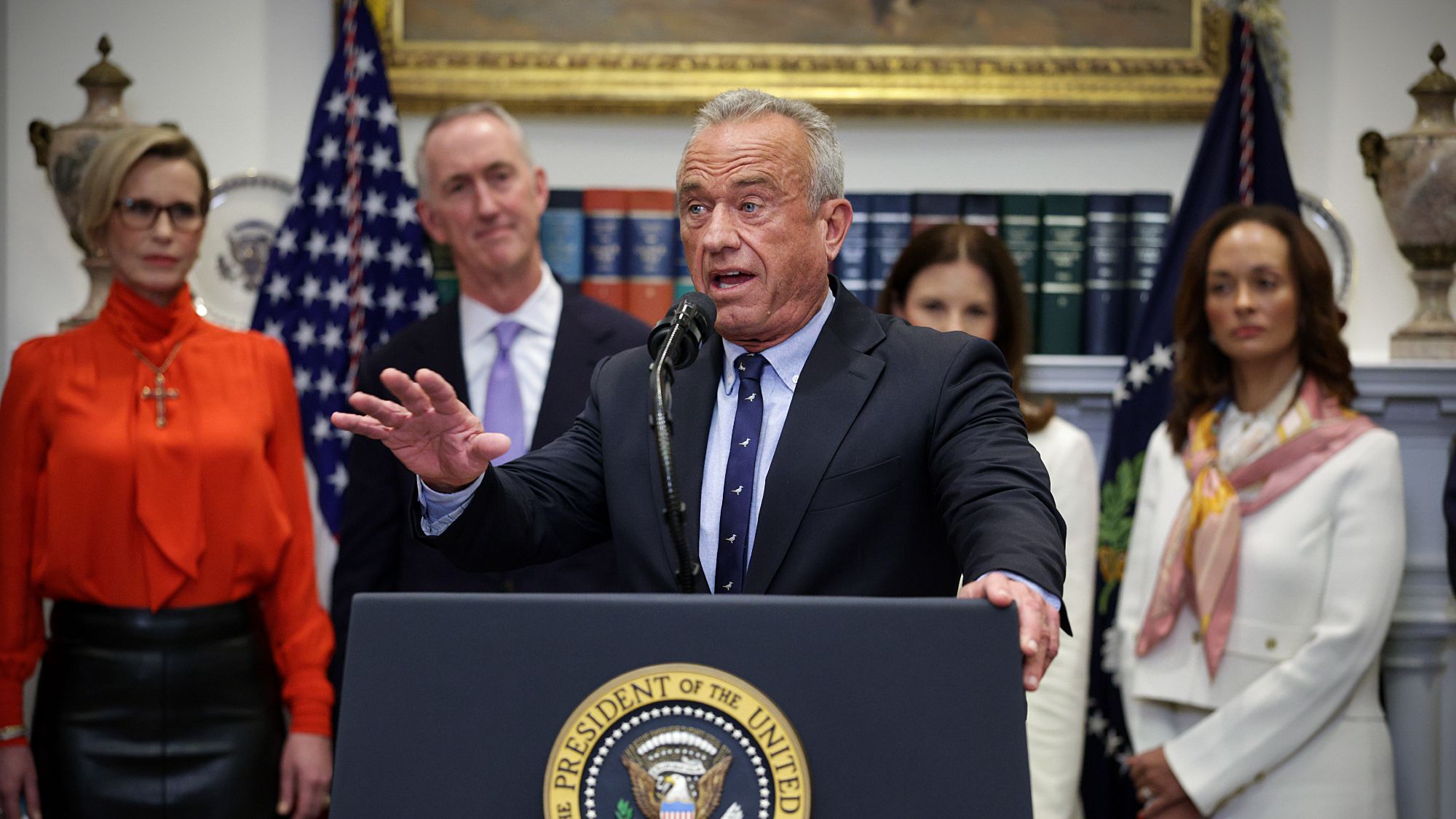
Health Secretary Robert F. Kennedy Jr. yesterday announced that the Centers for Disease Control and Prevention will now recommend that children get vaccinated against 11 communicable diseases, not 17. The decision, made by political appointees at the behest of President Donald Trump, was widely condemned by medical groups. The American Academy of Pediatrics called the abrupt changes “dangerous and unnecessary” and said it will continue recommending all of the vaccinations.
Who said what
The new CDC guidelines, effective immediately, still recommend universal vaccination against the measles, chickenpox, pertussis (whooping cough), polio, tetanus and diphtheria, among other diseases. But they cut protections against flu, rotavirus, hepatitis A, hepatitis B, some forms of meningitis and respiratory syncytial virus (RSV), “the leading cause of hospitalization in American infants,” The New York Times said. Federal health officials and insurance groups said all the vaccines in the previous schedule will remain covered at least through this year.
Kennedy, a longtime prominent vaccine critic, said the new recommendations align the U.S. with an “international consensus” of 20 peer nations. But they are mostly “designed to align the U.S. schedule more closely with that of Denmark,” a largely homogeneous country of 6 million with free national health care, said The Wall Street Journal. Denmark recommends vaccinations against 10 diseases, but “many other developed countries, including Australia, Britain and Canada, have vaccine schedules similar to those the CDC is doing away with.”
What next?
Kennedy has “repeatedly used his authority in government to translate his skepticism about the shots into national guidance,” The Associated Press said. But “states, not the federal government, have the authority to require vaccinations for schoolchildren.” |