The Week The Week
flag of US
US
flag of UK
UK
https://cdn.mos.cms.futurecdn.net/flexiimages/jacafc5zvs1692883516.jpg

SUBSCRIBE & SAVE

Less than $3 per week

Sign in
  • View Profile
  • Sign out
  • The Explainer
  • The Week Recommends
  • Newsletters
  • Cartoons
  • From the Magazine
  • The Week Junior
  • Student Offers
  • More
    • Politics
    • World News
    • Business
    • Health
    • Science
    • Food & Drink
    • Travel
    • Culture
    • History
    • Personal Finance
    • Puzzles
    • Photos
    • The Blend
    • All Categories
  • Newsletter sign up Newsletter
  • Brand Logo
    Paxton win, redistricting brakes and Trump’s health

     
    TODAY’S POLITICs story

    Texas GOP picks Paxton, putting seat, Senate in play

    What happened
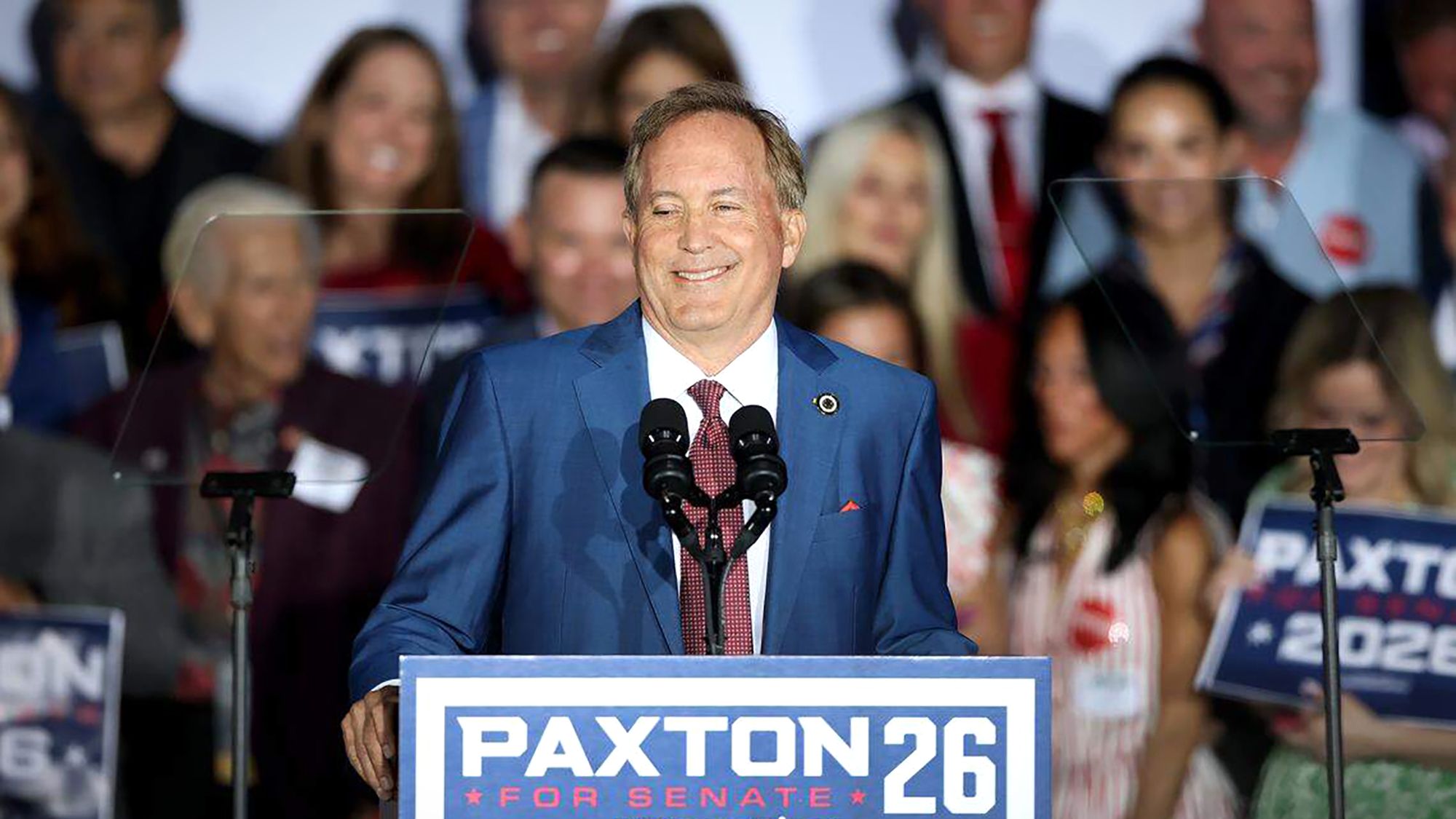
    Texas Attorney General Ken Paxton won yesterday’s Republican Senate primary, unseating Sen. John Cornyn despite being outspent by about $80 million. Boosted by an “eleventh-hour endorsement” from President Donald Trump, Paxton’s crushing 64% to 36% defeat of “one of the most successful politicians in Texas GOP history” was a “political earthquake” that “will reverberate nationally,” The Texas Tribune said. Senate Republicans and political analysts said Paxton’s victory gives Democratic state Rep. James Talarico a fighting chance to win in November.

    In notable Texas Democratic primaries yesterday, former Rep. Colin Allred beat Rep. Julie Johnson, newly elected Rep. Christian Menefee unseated 11-term Rep. Al Green in a newly combined Houston-area district, and former sheriff’s deputy Johnny Garcia defeated sex therapist Maureen Galindo, a controversial candidate funded by a mysterious GOP-backed super PAC. Rep. Chip Roy (R-Texas) lost his bid to succeed Paxton as attorney general. 

    Who said what
    Republicans just nominated “the most corrupt politician in America,” Talarico said last night, in his first ad of the general election. Paxton is “known for his polarizing style, ethical travails and lousy political judgment,” but his “fealty and bombast” won over Trump, The Wall Street Journal said in an editorial. Republicans can now “spend $100 million or more trying to salvage the seat and keep their Senate majority,” which Paxton’s victory put “in play.” Minutes after the race was called, the nonpartisan Cook Political Report shifted its Texas Senate forecast from “likely” to “lean” Republican.

    What next?
    Paxton has faced “allegations of corruption, financial malfeasance and infidelity,” The Washington Post said, but he “still stands a decent chance of winning” in solidly red Texas. 


    TODAY’S ELECTIONS story

    Alabama, South Carolina redistricting blocked

    What happened
    Republican redistricting efforts in Alabama and South Carolina were blocked yesterday, stalling President Donald Trump’s push to eliminate as many Democratic-leaning seats as possible in an unusual mid-decade gerrymandering campaign. South Carolina’s GOP-led state Senate thwarted a plan to cancel an ongoing primary and swap in a new map that would erase the state’s lone Democratic and majority Black district. In Alabama, a panel of federal judges temporarily blocked the state GOP’s proposed map, saying it was “tainted by intentional race-based discrimination.”

    Who said what
    The 12 South Carolina GOP senators who “effectively killed” the Trump-backed gerrymander cited “numerous” concerns, from practical and political to procedural, said The Post and Courier. “Neither my conscience or common sense is going to let me stop an election that’s already underway,” state Sen. Richard Cash (R) said before the vote. The “rebuke from fellow Republicans came as a shock to Trump’s political operation,” Politico said. But “even without the extra seat” or two, “Republicans have an overall edge in the redistricting war.” 

    What next?
    In Alabama, the three-judge panel, which includes two Trump appointees, said the state had to use a court-ordered 2024 map that includes two substantially Black districts. Alabama said it would immediately appeal to the U.S. Supreme Court. 


    TODAY’S TKTK Story

    Trump declares himself healthy after latest exam

    What happened
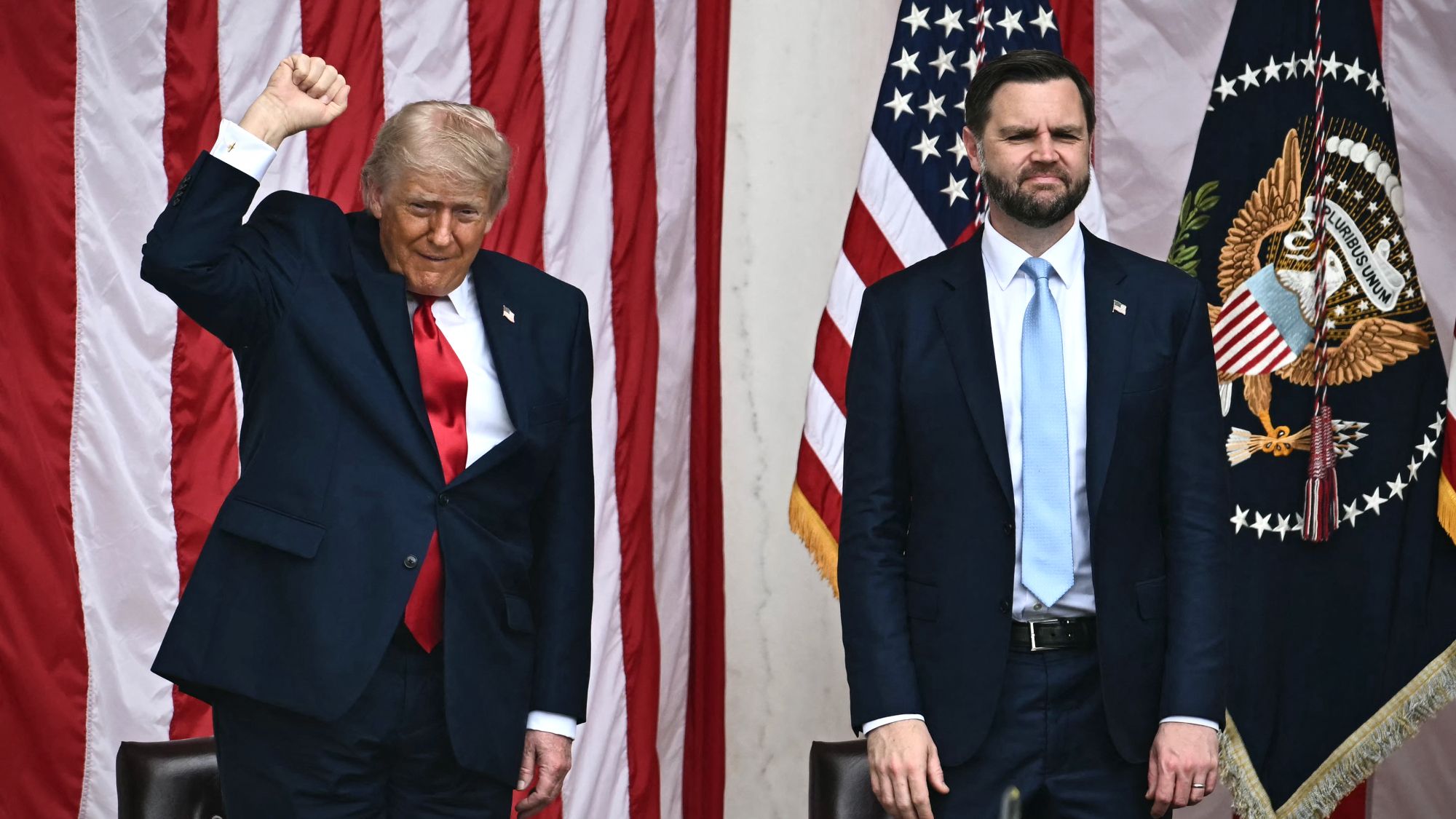
    President Donald Trump yesterday spent more than three hours at Walter Reed Medical Center for his fourth publicly disclosed medical exam since returning to office last year. The White House did not release any details of the exam, but Trump said on social media that “everything checked out PERFECTLY” in his “6 month physical.” Trump turns 80 next month, and his unusually frequent exams put his health “under renewed public scrutiny after he has worked to dismiss concerns over his age and stamina,” The Associated Press said. 

    Who said what
    Trump “frequently casts himself as more energetic and fitter than Joe Biden, his Democratic predecessor who left office last year at age 82,” Reuters said. Trump’s “health and fitness have been central to his political identity,” but “as an aging president, he now receives some of the same questions that dogged Biden — namely, whether he is mentally and physically fit” for the job, The Washington Post said. “Independent doctors” have called the White House’s explanations for Trump’s makeup-covered bruised hands, red neck rash, swollen legs and “occasional sleepiness” at meetings “insufficient.”

    What next?
    It was “not immediately clear whether the White House would release details” from Trump’s clinical exam to “support his claim” of good health, The New York Times said. 


    It’s not all bad

    A new wearable robotic device is boosting the strength of children with spinal muscular atrophy, according to research published in Nature. SMA causes spinal motor neurons to die, and while genetic treatments can slow the disease, they can’t help with muscle loss. After a six-week trial with the knee robot, six children ages 6 to 10 had bigger quadriceps and improved conductivity in their nerves, and could stand from a lower sitting angle.


    Under the radar

    Cuba’s energy crisis sparks solar power expansion

    Cuba is rapidly growing its solar infrastructure due to the U.S. oil blockade. But renewable energy access is unequal across the island, and the country still has a long way to go before it can survive without gas.

    Cuba’s “energy crisis is chronic,” and the Trump administration's blocked fuel shipments have “pushed an already fragile system to the brink,” said El País. After running out of oil this month, the country has been experiencing regular blackouts. The situation is “critical, harsh” and “approaching the contours of a humanitarian emergency,” said Juan Antonio Fernández Palacios, Cuba’s representative to Belgium and the EU, to Jacobin.

    But where one door closes, another opens. Cuba is “currently pulling off one of the fastest solar revolutions on the planet, with help from China,” said CNN. “Imports of Chinese solar panels and batteries have soared over the past year.” 

    Chinese exports of solar equipment to Cuba “skyrocketed from about $5 million in 2023 to $117 million in 2025 and show no sign of stopping,” said The Washington Post. Beijing “pledged last year to help Cuba build more than 92 solar parks by 2028, and more than half of these projects have come online.” 

    The Cuban government announced plans to move completely to renewable energy by 2050. It currently “accounts for some 10% of the island’s electricity, up from 3.6% in 2024,” said The Associated Press. However, “distribution remains limited, and few Cubans can afford such a system.” The “surge may be rapid,” said CNN. But solar power is “not yet available at scale.” 


    On this day

    May 27, 1999

    The International Criminal Tribunal for the former Yugoslavia indicted President Slobodan Milosevic for war crimes during the Kosovo War. Milosevic, the first sitting head of state to be charged by an international court, died in prison in The Hague in 2006 before his trial concluded. The International Criminal Court has since charged Russia’s Vladimir Putin and Israel’s Benjamin Netanyahu, among other leaders.


    TODAY’S newspaperS

    ‘Fight House’

    “Iran seeks deal to ease pain in economy, deny Trump a win,” The Wall Street Journal says on Wednesday’s front page. “Iran threatens strikes after U.S. hits targets near Strait of Hormuz,” The New York Times says. “President erupts at ballroom hurdles,” The Washington Post says. “Fight House lawn” as “octagonal cage” for mixed martial arts rises outside White House, The Philadelphia Inquirer says. In Florida, “rich get richer as poor endure more pain,” The Palm Beach Post says. “Voting abroad method” that was “key for military members” is “quietly axed,” says the San Francisco Chronicle. “Trump deals major blow to legal migration, forcing most green-card seekers to leave U.S.,” the Miami Herald says. “Canadian travelers steer away from U.S.,” says USA Today.

    ► See the newspaper front pages


    Tall tale

    Mud pie

    Students at a Maine high school were accidentally served baked dirt as dessert. The potting soil was being used in a science experiment at Medomak Valley High School, and in a “dash” to serve dinner, it was mistaken for part of the meal, said WMTW. Three students “briefly” put some of the dirt in their mouths before “immediately realizing what it actually was.” School officials apologized and clarified that the incident was “absolutely not a prank.”


    Morning Report was written and edited by Nadia Croes, Catherine Garcia, Scott Hocker, Anya Jaremko-Greenwold, Justin Klawans, Rafi Schwartz, Peter Weber and Kari Wilkin, with illustrations by Stephen Kelly and Julia Wytrazek.

    Image credits, from top: Amanda McCoy / Fort Worth Star-Telegram / Tribune News Service via Getty Images; Bill Clark / CQ-Roll Call Inc. via Getty Images; Kent Nishimura / AFP via Getty Images; Illustration by Stephen P. Kelly / Getty Images
     

    Recent editions

    • Evening Review

      AI IPO race heats up

    • Morning Report

      Pope sides with humanity over AI

    • Sunday Shortlist

      A wish goes wildly awry

    VIEW ALL
    TheWeek
    • About Us
    • Contact Future's experts
    • Terms and Conditions
    • Privacy Policy
    • Cookie Policy
    • Advertise With Us
    • FAQ
    Add as a preferred source on Google Add as a preferred source on Google

    The Week is part of Future US Inc, an international media group and leading digital publisher. Visit our corporate site.

    © Future US, Inc. Full 7th Floor, 130 West 42nd Street, New York, NY 10036.