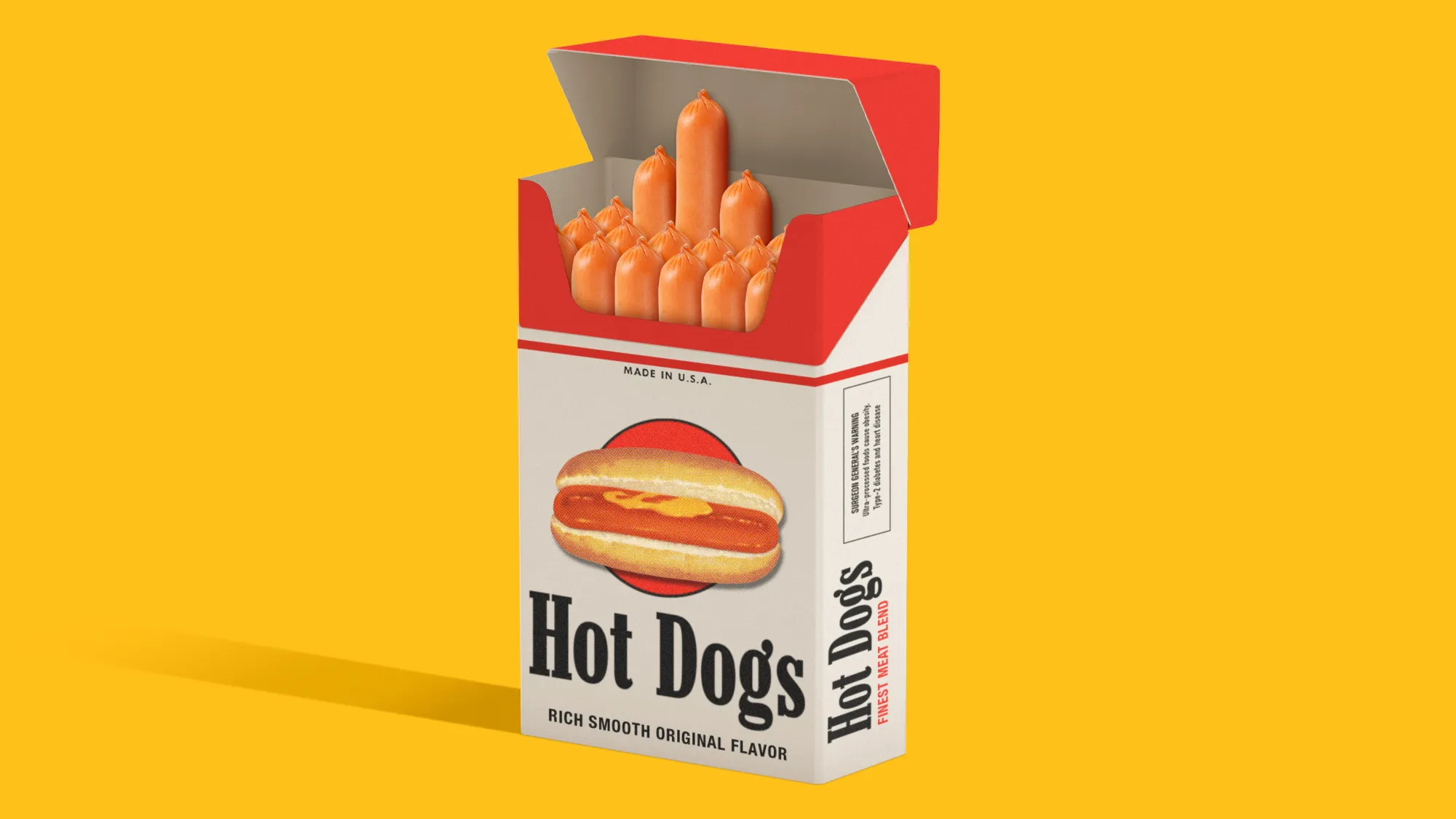
If you’ve ever felt like you couldn’t stop eating your favorite junk food, that’s by design. According to a series of papers published in the American Journal of Public Health, the tobacco industry employed the same tactics it used to sell cigarettes to promote ultraprocessed food.
In the 1980s, U.S. tobacco giants Philip Morris and R.J. Reynolds “made a major entrance into the food industry,” acquiring brands like Del Monte, Kraft, Nabisco and 7Up, said one of the papers. Investing in food and beverage companies was an attempt to diversify and improve their corporate image.
Tobacco companies “spent decades amassing research on how to make cigarettes more addictive with chemical additives,” and according to “internal company records,” they “deliberately applied this knowledge to food manufacturing,” said NPR. Adding sugars and artificial flavorings, additives known to be “hyperpalatable,” activated the same part of the brain as cigarettes or other drugs. And along with changing the composition of the products, they made aggressive marketing the norm.
Big Tobacco eventually “divested from the food system,” but its impact remained, said the papers. Ultraprocessed foods “now account for 70% of packaged foods in the U.S. and 62% of the calories in children’s diets,” said Fast Company. These foods have been linked to obesity, diabetes and cardiovascular disease.
There have been growing calls to regulate the production and sale of ultraprocessed foods, notably as part of the Make America Healthy Again movement. Last summer, for example, federal agencies “began a joint effort to define ultraprocessed food,” said Bloomberg. |