The Week The Week
flag of US
US
flag of UK
UK
https://cdn.mos.cms.futurecdn.net/flexiimages/jacafc5zvs1692883516.jpg

SUBSCRIBE & SAVE

Less than $3 per week

Sign in
  • View Profile
  • Sign out
  • The Explainer
  • The Week Recommends
  • Newsletters
  • Cartoons
  • From the Magazine
  • The Week Junior
  • Student Offers
  • More
    • Politics
    • World News
    • Business
    • Health
    • Science
    • Food & Drink
    • Travel
    • Culture
    • History
    • Personal Finance
    • Puzzles
    • Photos
    • The Blend
    • All Categories
  • Newsletter sign up Newsletter
  • The Week Evening Review
    Campaign donation scrutiny, the measles drug search, and an MLB salary cap

     
    in the spotlight

    GOP, Dems at war over fundraising platforms

    Lawmakers are exploring a new front in the electoral battle between Democrats and Republicans. Both parties have zeroed in on the other’s fundraising operations, with Republicans vowing to intensify their existing investigation into Democrats’ ActBlue online platform after Executive Director Regina Wallace-Jones invoked her Fifth Amendment protections during a Republican-led House hearing last week. In turn, Democrats have increased calls for similar investigations into the GOP’s WinRed platform.

    ‘Profoundly alarming’ allegations
    Democrats on the House Administration, Judiciary, and Oversight Committees last week requested WinRed CEO Ryan Lyk “preserve documents and communications” about WinRed’s fraud prevention, said Politico. Reports that “foreign nationals have used WinRed to donate money to President Donald Trump’s campaign” are “profoundly alarming,” said Democratic Reps. Robert Garcia (Calif.), Joe Morelle (N.Y.) and Jamie Raskin (Md.) in a letter to Lyk.

    This is the “latest salvo in a long-running battle” over online fundraising infrastructures, said Politico. Republicans have spent “over a year looking into ActBlue’s process for vetting foreign political contributions,” said Campaigns and Elections. Conservatives “escalated their probe” in April following a “bombshell New York Times report” that ActBlue’s lawyers had “previously warned Wallace-Jones she may have misled congressional investigators” about ActBlue’s donation vetting practices.

    The GOP’s pursuit of ActBlue is a “coordinated campaign of political retribution,” said Wallace-Jones at The Washington Post. Democrats on the House Administration Committee have meanwhile “sought to draw attention” to Ken Paxton, Texas’ Republican attorney general and Senate nominee, whom they claim has ignored questions about “any similar probes of GOP fundraising practices,” said Roll Call.

    ‘Defrauded in real time’
    “Dozens of political donors” have “begged Paxton’s office in recent years for recourse” against both WinRed and ActBlue, “complaining of thousands of dollars in unauthorized charges,” said San Antonio Express-News. But Paxton “hasn’t publicly taken action.”

    By targeting ActBlue with a lawsuit, Paxton is demonstrating “willful blindness,” said Garcia, Morelle and Raskin in the letter. “Dozens of your constituents are being defrauded in real time.”

    Allegations over both platforms are “putting an otherwise bipartisan effort” for campaign finance reform “at risk,” said NOTUS. With four campaign finance bills “recently approved by the House Administration Committee,” subsequent “progress appears strained” as partisan fighting intensifies.


    the explainer

    Scientists renew measles drug search amid low vaccine rates 

    With many in the Trump administration pushing an anti-vaccine agenda, declining measles vaccination rates have forced scientists to reinvigorate the hunt for a drug that could fight the virus. And researchers seem hopeful that a breakthrough is on the horizon.

    Why are researchers revamping the search?
    For a long time, the quest to create a measles drug was essentially dormant, as the virus had been “kept at bay” in the U.S. for “more than two decades thanks to a remarkably effective vaccine,” said The New York Times. But in 2025, amid anti-vaccine sentiment from the White House, a “series of outbreaks popped up in unvaccinated communities across the country,” marking the worst year for measles in the U.S. since 1991.

    The outbreak led to a “‘very crowded’ hunt for new measles therapeutics that could prevent or treat infections,” said the Times. Currently, if an unvaccinated individual contracts the measles, doctors can “offer ways to manage symptoms, which often include fever, fatigue, cough and a hallmark blotchy rash,” said Science News. But they “can’t fight off the virus itself.”

    How far away is an approved drug?
    There have been several breakthroughs from various scientific groups, and many feel that FDA approval of a measles drug is imminent. At least one antiviral drug, GHP-88310, has recently been shown to “help treat measles, croup and other related viral diseases that cause contagious and life-threatening respiratory infections,” said The Independent. Another company, Saravir, is developing its own measles antibody treatment. 

    Still, an antibody treatment and other measles drugs could be cost-prohibitive. If the drug “makes it through trials,” Saravir “expects the infusions to cost roughly $2,500,” said the Times.

    The success of a drug doesn’t necessarily mean it will become ubiquitous as a measles treatment, in part because of people’s feelings about the disease. One of the “biggest misunderstandings about measles is that it’s ‘not that bad,’” said Kathryn Hastie, a structural virologist at San Diego’s La Jolla Institute for Immunology, to Science News. The virus instead can “cause a range of complications that can severely impact people’s lives, including pneumonia and blindness.”


    QUOTE OF THE DAY

    ‘We are here to play football, and we are here to represent the respectful people of Iran, be it the Iranians inside Iran or the Iranian diaspora.’

    Team Melli coach Amir Ghalenoei to reporters at a prematch news conference on the prospect of protests looming over Iran’s opening match against New Zealand at the FIFA World Cup in Los Angeles. “We are not political people,” he added.


    Statistic of the day

    12,060: The record number of pieces in Lego’s $800 Sagrada Família set commemorating Pope Leo’s visit to the real basilica. The Barcelona landmark has taken 144 years to build and is now the world’s tallest church at 540 feet. The Lego version is 2 feet high and should be much quicker to assemble. 


    talking points

    Will MLB owners risk the 2027 season for a salary cap?

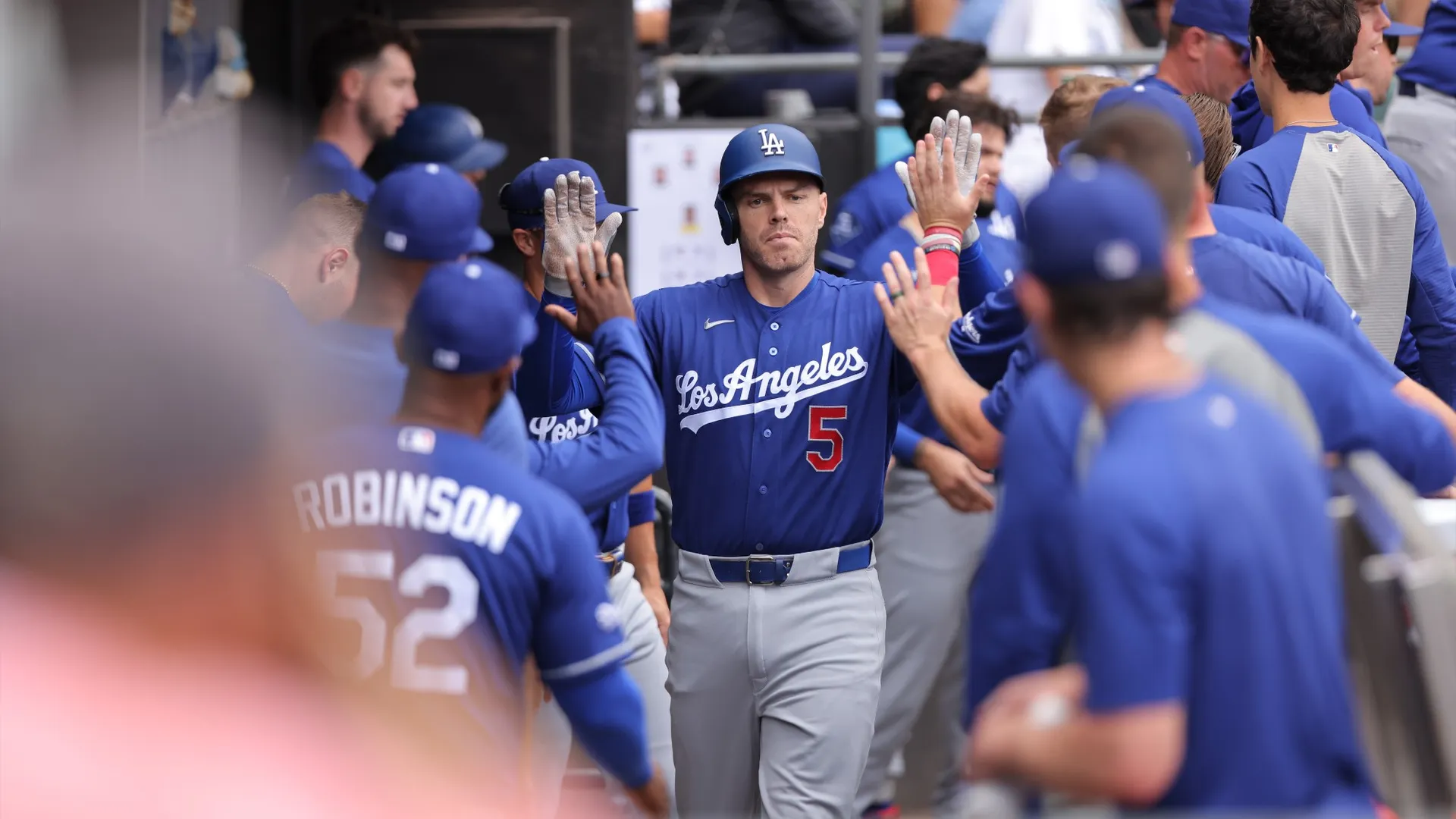
    Major League Baseball remains the only North American professional sport without a ceiling on team spending, largely because of the power of its players’ union. But owners have declared their intent to impose a salary cap, setting them on a collision course with the players, who remain opposed to joining their capped peers in football, hockey and basketball.

    Fans crave a cap
    Owners are emboldened by polls that show fans want a salary cap. But perhaps the highest-profile booster for the owners’ position is Donald Trump. “If you don’t have a salary cap, you don’t have a sport,” said the president earlier this month, per The New York Times. Fellow critics of the current structure note that teams with top-15 payrolls have won all the championships in the 2020s. “The correlation between spending and winning is obvious,” said Andy McCullough at The Athletic.

    The failure of the sport’s luxury tax system to dissuade richer teams from spending lavishly means that “we need a realistic framework that addresses the fans’ concerns about competitive balance,” said MLB Commissioner Rob Manfred, per Fox Sports. Those concerns have been heightened by the free-spending habits of teams like the Los Angeles Dodgers and New York Mets, who hoovered up the most prominent free agents on the market over the past several offseasons, using financial loopholes like deferred salary payments. 

    Owners’ greed
    Baseball’s labor war pits owners and fans against not just the players but most baseball journalists. The push for a salary cap “drives me crazy,” said The Athletic’s Ken Rosenthal on the Foul Territory podcast. Baseball does not “need a salary cap that could cost us games in 2027.” Rosenthal and other salary cap critics point out that wild spending is no guarantee of success and that many clubs operating on a shoestring have found ways to win consistently.

    For others, the salary cap proposal demonstrates pure greed from owners. MLB owners “want a salary cap just because everyone else in their micro-class has one” said Ray Ratto at Defector, and because it “would inflate the value of their franchises.”


    Good day 🎵

    … for music training. Learning a musical instrument may help increase attention spans in children and young adults, according to research by McMaster University in Canada involving 268 people ages 8 to 34. Those with musical training respond faster and stay more focused during lengthy tasks, as music practice exercises concentration in the same way physical activity trains the body.


    Bad day 🎡

    … for Trump’s state fair. Six states plan to opt out of sending a delegation to the 16-day Great American State Fair planned for the nation’s 250th birthday this summer. Maine, Massachusetts, North Carolina and Oregon are not participating, and Pennsylvania and Washington remain uncommitted weeks before the fair is scheduled to open on the National Mall on June 25.


    Picture of the day

    Striking fire

    Smoke and flames rise from Kyiv’s Dormition Cathedral, part of the Unesco-listed Pechersk Lavra monastery complex, following a wave of Russian missile and drone strikes on the Ukrainian capital. It’s “one of Russia’s most serious crimes ​against Christian culture to date,” said Ukrainian President Volodymyr Zelenskyy on social media. 
    Andriy Dubchak / Frontliner / Getty Images


    Puzzles

    Daily sudoku

    Challenge yourself with The Week’s daily sudoku, part of our puzzles section, which also includes guess the number

    Play here


    The Week recommends

    New albums primed for streaming this summer

    If you are getting ready to hit the beach, you may want to bring along some new tunes. Fortunately, there’s a wide selection of new albums from big-name artists to help you herald the arrival of all that glorious sunshine.

    Giveon, ‘Beloved: Act II’
    The new iteration of the eight-time Grammy nominee’s second studio album, “Beloved,” includes “five exclusive bonus songs, offering a deeper look into the artist’s introspective lyrics and captivating baritone,” said the singer’s website. The album’s 19 total songs, which are influenced by Giveon’s former relationship with singer Justine Skye, represent a “rich, immersive soundscape that defies musical standards and solidifies Giveon’s place as a modern icon.” (out now)

    Lido Pimienta, ‘Caribenya’
    Head to a tropical paradise with the fifth studio album from the Colombian Canadian artist. The album “relies on joyous resistance, on the moments of escape on the dance floors and beaches and living rooms of our loved ones as the world burns,” said Glide magazine. The LP’s lead track, “Tóxica,” is out now. (July 17)

    Tricky, ‘Different When It’s Silent’
    The album is something of a homecoming for Tricky, as it was “recorded between the trip-hop innovator’s new home of France and old hometown of Bristol,” said Pitchfork. “I just love making music. I am grateful I have had the chance to live this life and keep creating,” he said in a press release. A single from the album, “Out of Place,” is out now. (July 17)

    Read more


    Poll watch

    More than two in five Americans (42%) feel optimistic about the country’s future, while 41% feel pessimistic, according to an Emerson College survey of 1,200 adults. Compared with a similar question posed by The Roper Organization in 1976, pessimism has increased by 26 points, from 15% to 41%, while optimism remains constant at 42%.


    WORD OF THE DAY

    cosmeticorexia

    A new term using the suffix “-orexia” (from the Greek word for “desire” or “appetite”) coined by academics to describe an unhealthy preoccupation with perfect skin. Girls as young as 8 are showing signs of cosmeticorexia, according to experts, such as obsessively applying cosmetic products and spending hours watching skin care videos on social media.


    INSTANT OPINION

    Today’s best commentary

    ‘Ocasio-Cortez appears to be recreating Obama’s multiracial voter coalition’
    Juan Williams at The Hill
    Turnout is the “key to this year’s midterm fight for control of Congress,” and Rep. Alexandria Ocasio-Cortez (D-N.Y.) is “ringing the bell for people to rush the polls,” says Juan Williams. AOC “looks to be intent on recreating the energy of the last Democrat to build a multiracial coalition of Democratic voters,” as she “echoed Barack Obama’s 2004 appeal to Democrats.” The Democratic Party is “listening to a promising Latin beat mixing with the Black gospel thanks to Ocasio-Cortez.”

    ‘America’s charitable food system is missing a key ingredient’
    Daniel Leckie at Newsweek
    Many households have “turned to the charitable food system for assistance,” says Daniel Leckie. But “protein is missing,” and “many families receive diets built primarily around shelf-stable carbohydrates, which are cheaper.” This “should concern us all. As nutrition insecurity deepens, it fuels a parallel crisis in chronic disease.” As the “need for charitable food support grows, the system will have to evolve if it’s to provide the nutrient most essential for satiety, muscle development, metabolic stability and healthy aging.”

    ‘AI schools like Alpha promise efficiency but can’t replicate the messy process that helps kids learn’
    W. Ian O’Byrne at The Conversation
    AI-powered “educational programs like Alpha School, a growing private network of schools, replace much of the school day with adaptive software that adjusts lessons to each student’s pace and abilities,” says W. Ian O’Byrne, the director of the Initiative for Literacy in a Digital Age. The “pitch is personalized learning,” but the “deeper you look at how children learn, the clearer it becomes that this growing brand of alternative schools might remove the discomfort that often comes with learning, taking away what matters most as kids develop.”


    Evening Review was written and edited by Theara Coleman, Nadia Croes,  Scott Hocker, Anya Jaremko-Greenwold, Justin Klawans and Rafi Schwartz, with illustrations by Julia Wytrazek.

    Image credits, from top: Illustration by Julia Wytrazek / Getty Images; Jan Sonnenmair / Getty Images; Lawrence Brown / MLB / Getty Images; False Idols / Anti Records / Epic Records and Not So Fast / Getty Images
     

    Recent editions

    • Morning Report

      US and Iran agree on framework for peace

    • Sunday Shortlist

      Spielberg’s sci-fi thriller

    • Saturday Wrap

      The chaos at 60 Minutes

    VIEW ALL
    TheWeek
    • About Us
    • Contact Future's experts
    • Terms and Conditions
    • Privacy Policy
    • Cookie Policy
    • Advertise With Us
    • FAQ
    Add as a preferred source on Google Add as a preferred source on Google

    The Week is part of Future US Inc, an international media group and leading digital publisher. Visit our corporate site.

    © Future US, Inc. Full 7th Floor, 130 West 42nd Street, New York, NY 10036.