The Week The Week
flag of US
US
flag of UK
UK
https://cdn.mos.cms.futurecdn.net/flexiimages/jacafc5zvs1692883516.jpg

SUBSCRIBE & SAVE

Less than $3 per week

Sign in
  • View Profile
  • Sign out
  • The Explainer
  • The Week Recommends
  • Newsletters
  • Cartoons
  • From the Magazine
  • The Week Junior
  • Student Offers
  • More
    • Politics
    • World News
    • Business
    • Health
    • Science
    • Food & Drink
    • Travel
    • Culture
    • History
    • Personal Finance
    • Puzzles
    • Photos
    • The Blend
    • All Categories
  • Newsletter sign up Newsletter
  • The Week’s Saturday Wrap
    A purge at CBS News, the mystery of America’s falling murder rate, and Nicolas Cage’s small-screen savior

     
    controversy of the week

    Media: A plot to ‘murder’ 60 Minutes?

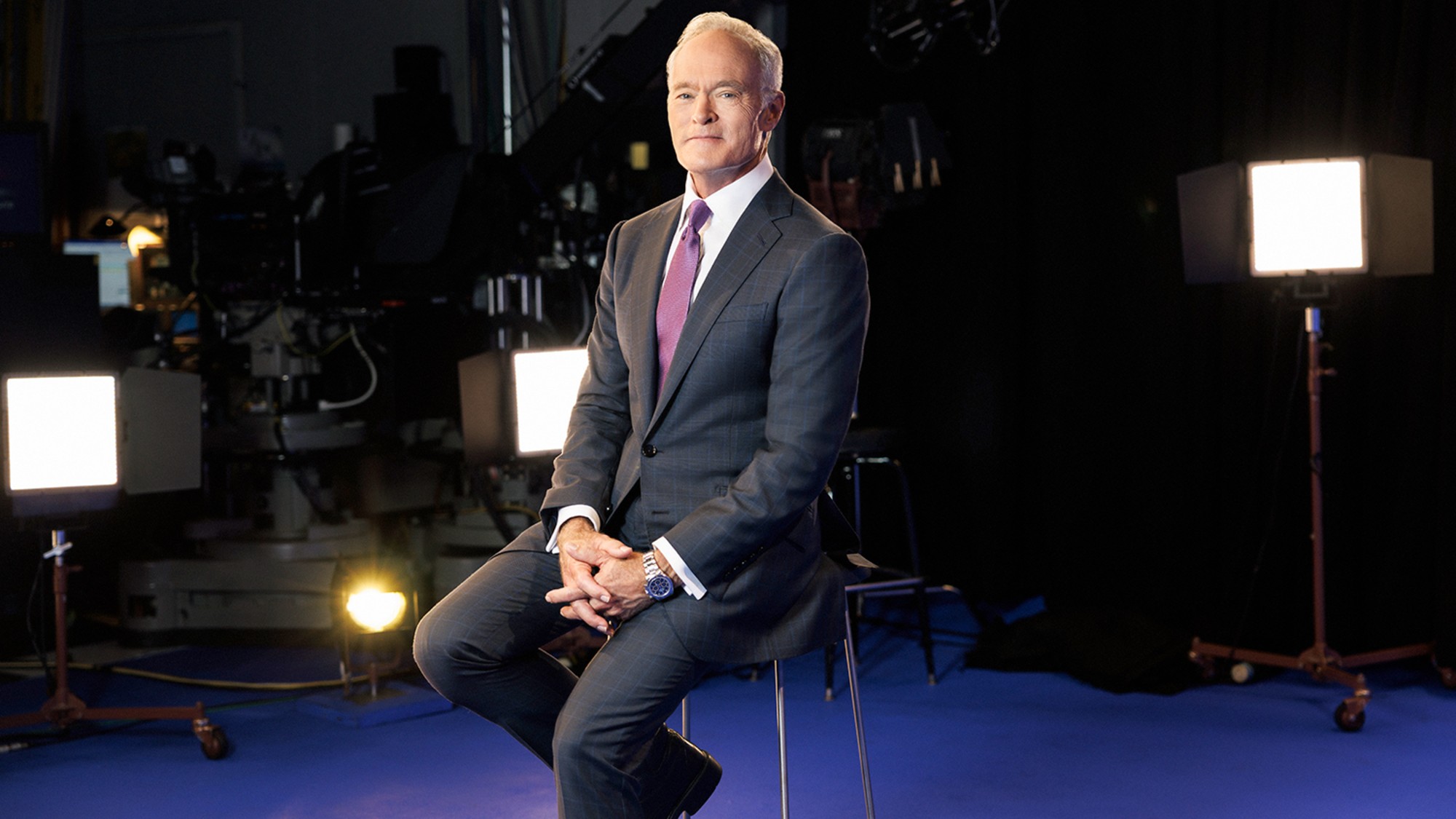
    In this dark moment, “Scott Pelley is the hero we need,” said Jonathan V. Last in The Bulwark. At an all-hands meeting last week with Nick Bilton, new executive producer of 60 Minutes, the veteran CBS correspondent demanded Bilton explain the previous week’s “Black Thursday” massacre, in which correspondents Sharyn Alfonsi and Cecilia Vega were fired along with other senior staff. When Bilton claimed ignorance, Pelley took him “to the woodshed.” He accused Bilton and Bari Weiss — the Free Press founder now running CBS News — of trying to “murder” 60 Minutes as a favor to President Trump, who has a long-standing grudge against the show. Not coincidentally, CBS’s billionaire owners, Larry and David Ellison, need Trump’s approval to complete their takeover of Warner Bros. Discovery, home of CNN and the Warner movie studio. Bilton swiftly fired Pelley, but failed to silence him. Speaking later to The New York Times, Pelley debunked Weiss’ “ludicrous rationalizations” about revamping 60 Minutes for the digital age. (Viewership climbed 9% last season and online views 190%.) More damning, Pelley claimed that in February Weiss pushed him to impart a Trumpian spin to a report on anti-ICE protests in Minneapolis, demanding he make the demonstrators look “more violent,” and inform viewers — falsely — that protester Renée Good was “driving toward” the ICE officer who shot her dead.

    I’m sorry, said Charles C.W. Cooke in National Review, but no “employee can behave like this and expect to remain employed.” Even one who makes $7 million a year. Before last week’s blowup, Weiss and Bilton invited Pelley to clear the air in private. Pelley refused, preferring to humiliate Bilton before the full staff, which he did in deeply personal terms, mocking Bilton’s “slender” credentials and sneering that he “will never be welcome here.” There’s “something unconsciously fitting” about Pelley’s self-martyrdom, said Gerard Baker in The Wall Street Journal. In his “hysterical reaction” to Weiss’ changes to 60 Minutes, the 68-year-old Pelley displayed the pomposity and unreflecting, lefty self-righteousness that made those changes necessary.

    Pelley’s not the only one getting old, said Chris Cillizza in his Substack newsletter. The average 60 Minutes viewer is now 65. The show’s audience is “literally dying off,” just as broadcast TV itself has entered terminal decline. Bilton tried explaining this during Pelley’s “barrage,” likening broadcast TV to “an ice cube that is melting.” In a prior memo to staff, Bilton claimed to have a “notebook full of ideas” of how 60 Minutes can thrive in a post-broadcast world, said Brian Stelter in CNN.com, and maybe he does. But if he and Weiss bungle the execution of those ideas as badly as they’ve bungled the last two weeks, many staff fear they’ll succeed only in “speeding up the melting process.”

    Maybe 60 Minutes will survive in some form, said Rick Wilson in his Substack newsletter. But its days as a beacon of “accountability journalism” effectively ended last year, when Weiss tried to scrap a report on El Salvador’s CECOT prison, then the Trump administration’s preferred destination for migrant deportees. True, David Ellison reached out this week to staff, promising to respect the show’s “editorial independence.” But with an autocrat in the White House, what sane billionaire wants to bankroll the work of asking questions that “make powerful people uncomfortable?” In our 250-year history, 60 Minutes’ “ticking stopwatch was the closest thing American power had to a conscience it could not buy. Until they did.”


    VIEWPOINT

    Trump is acting like he’s not going to leave

    “Yes, Trump is less popular than he used to be. This seems to be causing not hesitation on Trump’s part, but an intensification of his power-grabbing efforts. At some point in an authoritarian takeover, one has to explain why one is taking over power despite or against the wishes of the people. What we are seeing is a president who is going full steam ahead on his centralization of power in a way that should make one doubt he intends to give it up — whether over the next two years, whatever a Democratic Congress tries to do, or in 2028, whatever the people try to do at the polls.”

    William Kristol in The Bulwark


    briefing

    A murder mystery

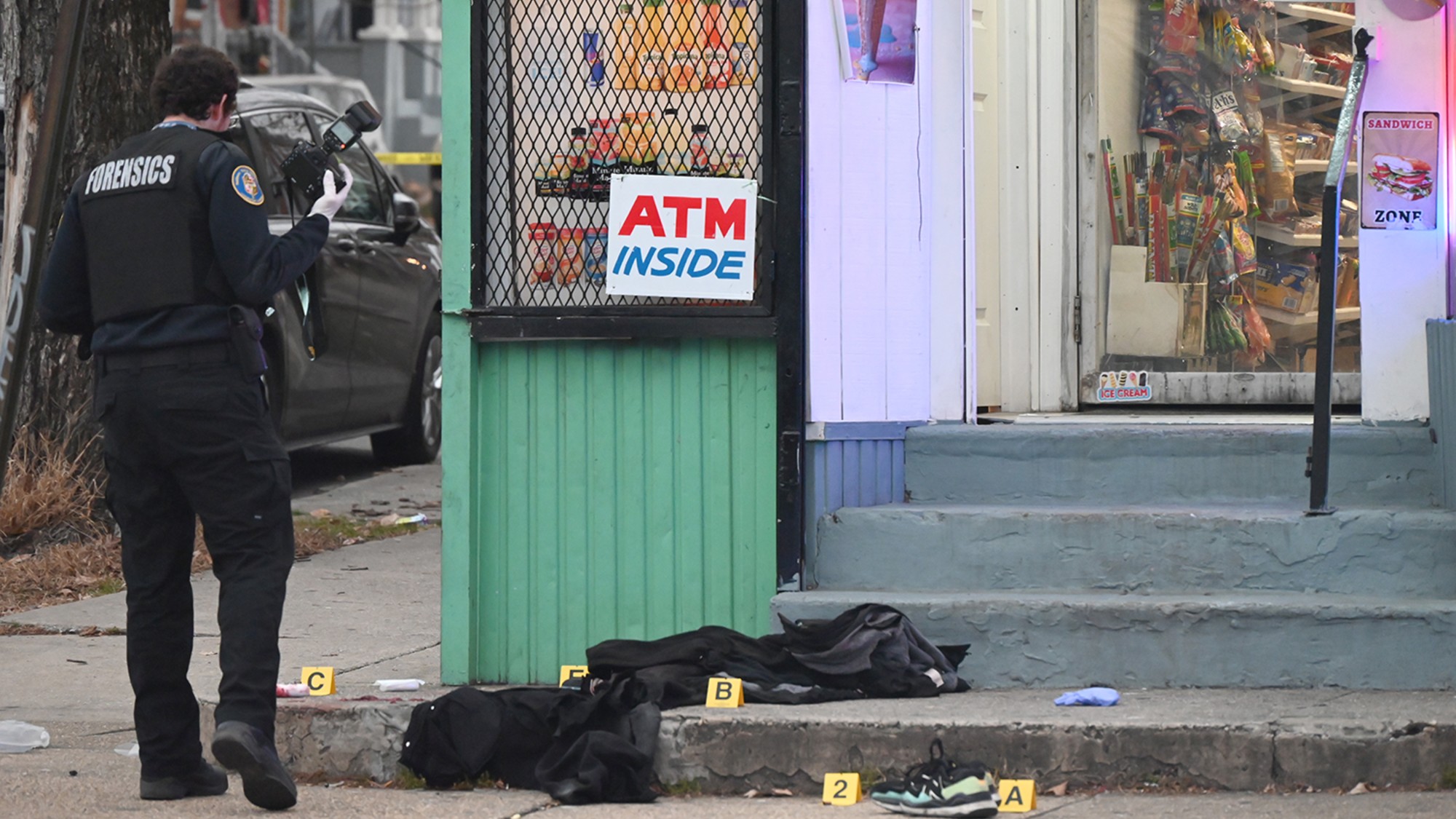
    Homicides have hit historic lows in cities across the nation. Criminologists are trying to puzzle out why.

    What do the statistics show?
    That the U.S. is experiencing the largest and most sustained drop in homicides on record. After spiking sharply at the start of the pandemic, peaking at 6.8 murders per 100,000 people in 2021, the homicide rate started to come down in 2022. Since then, murders have dropped by an average of 16% a year; they fell 21% across 35 large cities from 2024 to 2025, according to the nonpartisan Council on Criminal Justice. Killings declined in cities in blue and red states: Chicago and Baltimore both recorded a 31% drop (to 416 and 133 homicides, respectively), Salt Lake City 27% (to 8), and St. Louis 11% (to 121). If a similar decline is reflected in national data, the homicide rate will drop to 4 per 100,000, the lowest since 1900. Early figures for this year suggest the downward trend is continuing: New York City registered 102 murders from January to May, the lowest number on record for the period and down 21% from the same months in 2025. Such numbers are “absolutely astonishing,” said CCJ president Adam Gelb. “It’s a historic collapse in the homicide rate.” Other violent crimes are also down. From 2019 to 2025, the robbery rate fell 36% in major cities, carjackings 29%, and domestic violence incidents 19%.

    What’s driving this drop? 
    Some of it is a reversal of the pandemic effect. The factors that sent the murder rate soaring 30% in 2020—social disruption, workplace and school closures that put young men on the street, stay-home recommendations that trapped people with abusers— faded as normal life returned. But murders have since dropped well below pre-pandemic levels. The Trump administration has a simple explanation: It says President Trump “turned the tide” by “removing savage criminal illegals” and flooding blue cities with federal agents. Experts give that claim no credibility, noting that murders started dipping years before Trump returned to office. Instead, it seems as though multiple factors are behind the decline, including important shifts in policing.

    How has policing changed? 
    After temporarily retreating from many communities following the May 2020 killing of George Floyd by a Minneapolis police officer, which led to Black Lives Matter protests and calls to defund the police, “cops got back to work,” said former New York Police Department chief Kenneth Corey. They also became “much more focused on gun violence.” Part of that involved zeroing in on the small number of repeat violent offenders responsible for an outsize share of crimes. Advances in DNA technology and the spread of surveillance cameras also helped catch killers. “There’s nowhere in this city where you can walk without being on video,” said Frank Simpson, chief homicide prosecutor in Camden, N.J., which recorded 12 murders last year, down from 67 in 2012. But some experts question the role of law enforcement in the homicide drop, noting murders have fallen as police departments across the nation have lost manpower. Philadelphia, for example, has the fewest officers per capita in 40 years and just posted its lowest annual homicide total—222—since 1966. 

    What else could explain the decline? 
    Crime experts and local leaders point to the $1.9 trillion American Rescue Plan Act (ARPA), which then-president Joe Biden signed in March 2021 to combat the pandemic’s impacts. It sent hundreds of billions of dollars to state and local governments, which in many locales funded community violence intervention (CVI) programs. Indianapolis Mayor Joe Hogsett credits his city’s plunging murder rate in large part to Indy Peace, a CVI program that offers support to gunshot victims and their families in the hope of preventing retaliatory shootings. “It saves lives,” said Hogsett. The federal windfall also went to other community investments that may have made a difference: summer jobs programs for teens, after-school programs, community centers, and mental health services. “I think it has gone unrecognized how incredibly effective it was in stabilizing communities,” Princeton University sociologist Patrick Sharkey says of ARPA. Other changes in American habits could also be curbing violence.

    What kind of changes? 
    A decline in drunkenness —54% of U.S. adults now say they drink alcohol, the lowest in nearly 90 years — has likely helped shrink the number of murders. “You get drunk, you do something stupid,” said Rafael Mangual, a fellow at the conservative Manhattan Institute. Experts also nod to the effects of social media — many young people now socialize online rather than in person — the way the 2020–22 homicide spike took potential killers off the street, and even the possible influence of GLP-1 weight loss drugs, which may diminish impulsive behaviors. But none of these factors can explain the sheer scale of the murder drop, said crime analyst and former CIA agent Jeff Asher, and neither can changes in poverty or the availability of guns. “We didn’t fix any of those things,” Asher said. “So, what you’re left with is a bunch of explanations, none of which explains all of it.”

    How low will the murder rate go? 
    Experts don’t know that either—and point to two factors that could nudge it back up. One is that the Biden stimulus money is running out, and its effect “will wane substantially this year,” said John Roman, a University of Chicago criminal justice researcher. Then there are the steep cuts to community funding by the Trump administration. As part of its offensive against “DEI and cultural Marxism,” it terminated at least 373 grants from the Department of Justice’s Office of Justice Programs last year, wiping out some $500 million in funding for efforts including CVI programs, victim services, and programs to aid ex-offenders. Some experts call that a tragic miscalculation after such historic gains. “Don’t take our foot off the gas,” said criminal justice researcher Jennifer Doleac. “We do have control over our destiny here.”



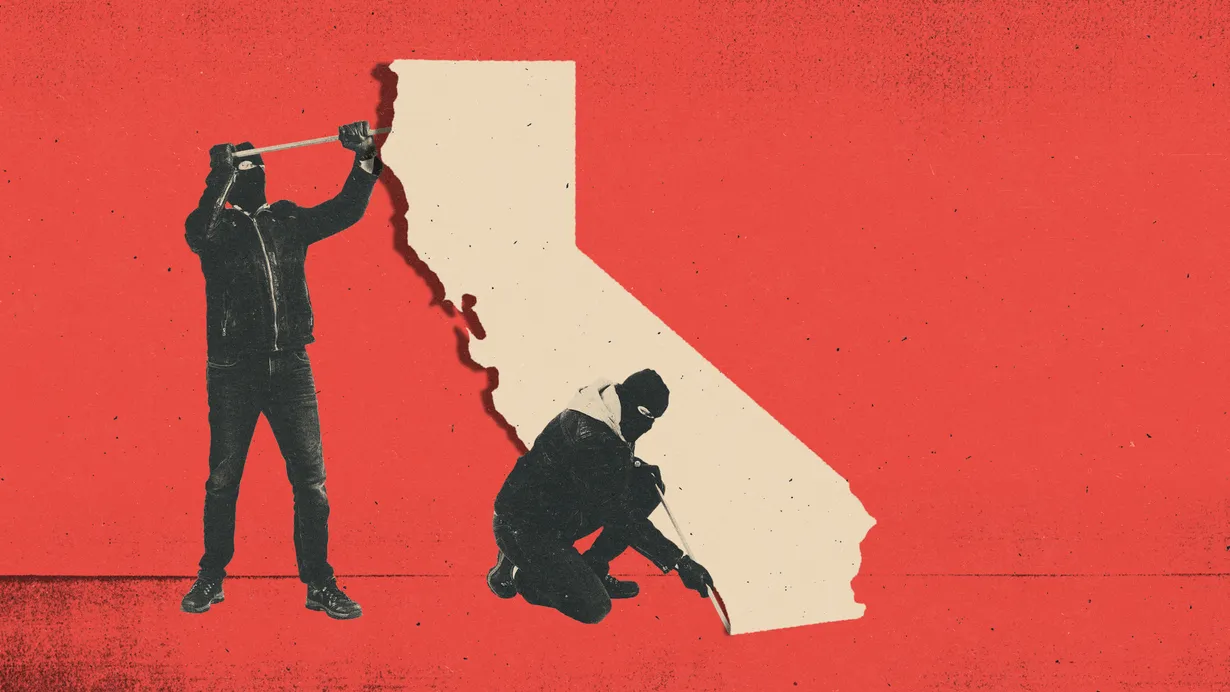
    Only in America

    A North Carolina immigration judge has ordered the deportation of a Honduran asylum seeker who died in 2024. Lawyer Becca O’Neill explained at a hearing that her client, Levi Mendez-Maldonado, was “not alive anymore.” Unmoved, Judge Amy Lee cited Mendez-Maldonado for failure to appear and ordered him deported— evidence, said O’Neill, that the immigration system doesn’t care about “the safety of these individuals or about whether they live or die.”


    It wasn’t all bad

    The Norwegian city of Sandefjord officially reserved a parking spot for a protected seagull that had nested there. The common gull, named Gunhild, nested in the same spot last year and didn’t seem keen to relocate. City officials tried to head off any road rage by removing her nest before any eggs had been laid. But by morning Gunhild had constructed a brand-new nest and laid her eggs, forcing the city to cordon off the spot with traffic cones. “Gunhild has granted herself a shortterm stay,” the city joked online. 


    talking points

    World Cup: An own goal for the U.S.?

    The “planet’s biggest sporting event” kicked off in North America this week, said David Wallace-Wells in The New York Times. So why does “no one” in the U.S., which is co-hosting the World Cup with Mexico and Canada, seem to care? Thousands of tickets remain unsold for the soccer tournament’s first slate of games, and hotels in the 11 U.S. host cities that had counted on a flood of World Cup cash from foreign and domestic fans “are watching it trickle instead.” Some of this can be chalked up to the fact that soccer is still a growing sport here and isn’t in the same league as football or basketball. And it doesn’t help that Team USA has underperformed for years and that “many Americans aren’t exactly feeling the flush of simplistic patriotism these days.” But it seems there’s also “something deeper at work.”

    That something is the “noxious orange cloud” hanging over the tournament, said Paul Waldman in Public Notice. President Trump’s anti-immigration policies have sent “the unmistakable message” that America isn’t open to foreigners—“unless you’re a white Afrikaner.” Soccer lovers who normally follow their national team are staying home out of fear they’ll be turned away by federal agents who’ll be screening visitors’ social media accounts and enforcing Trump’s travel bans. It’s not just fans who are affected: Omar Artan, who would have been the first Somalian to referee a World Cup match, was refused entry to the U.S. after landing at Miami this week. This World Cup could be “the least accessible edition so far,” said Jerry Brewer in The Athletic. Beyond Trump’s border policies, there’s the wild price gouging: Most fans will need tens of thousands of dollars to pay for tickets, transportation, food and drink, and hotels. FIFA’s resale website recently listed four tickets for the final game “with a price tag that would give even Cristiano Ronaldo pause: $2.3 million each.”

    “I sense a familiar panic,” said Will Leitch in The Washington Post. Before every World Cup or Olympics, “people foresee a nightmare” in which the often corrupt and incompetent host government “will botch everything.” Then, the events begin, and everyone stops moaning “and just enjoys the games.” The same will happen here when graying legends like Argentina’s Lionel Messi and Portugal’s Ronaldo and young superstars like France’s Warren Zaïre-Emery and Spain’s Lamine Yamal take the field. Yes, all eyes will be on the U.S. at a moment when we’re not at our “absolute best.” But that has its benefits, too: The World Cup is “so compelling that it can make all that ails it, and you, briefly fall away.”


    people

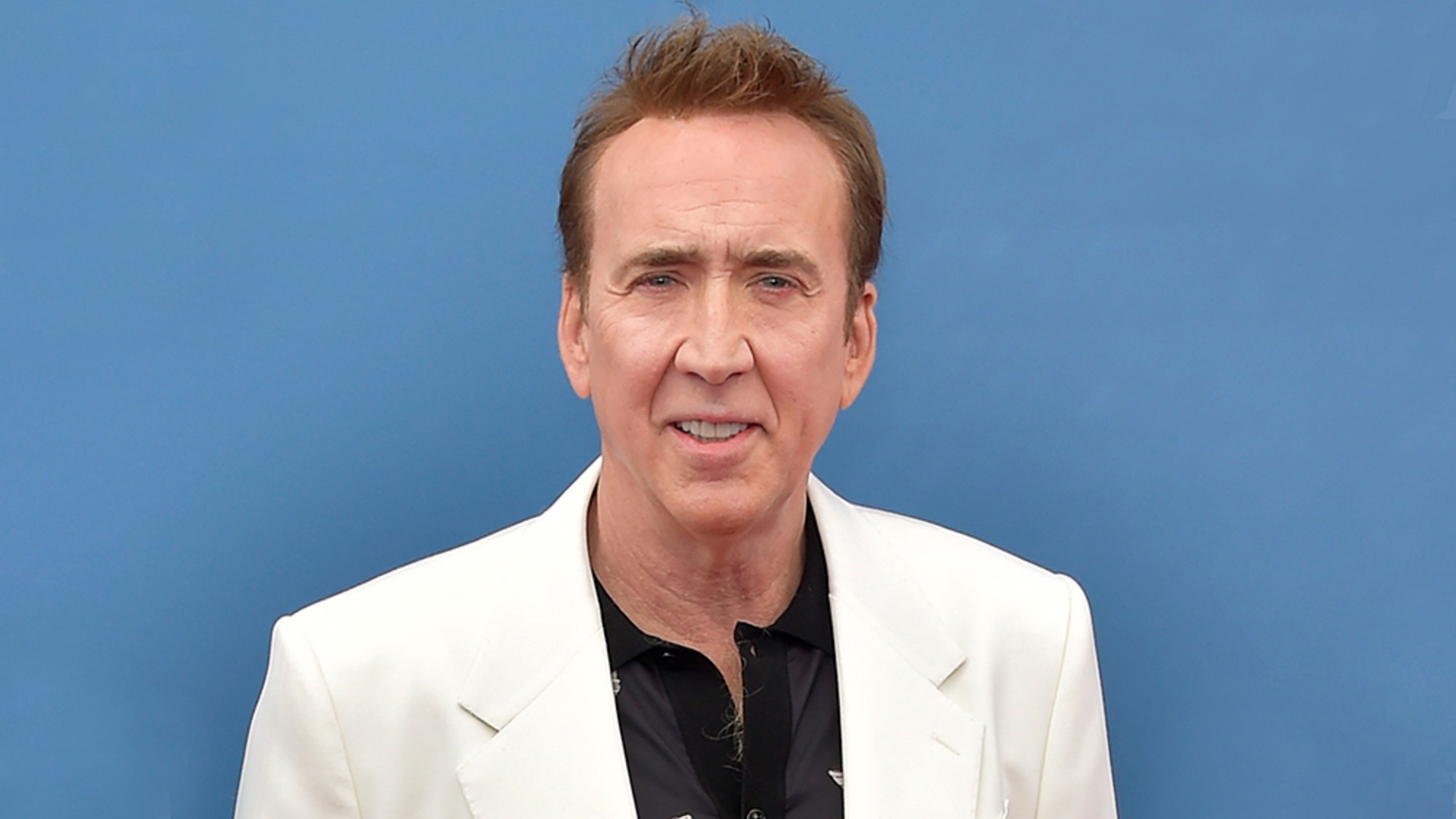
    What TV means to Cage

    Nicolas Cage spent his childhood trying to escape, said David Marchese in The New York Times. The actor, 62, says he didn’t grow up in “the calmest domestic environment,” so he spent a lot of time in the backyard, where no one would check on him. “I started digging a hole. I thought I was going to dig my way to China, and I kept digging and digging. I saw roots and weird bugs, and I kept digging and digging. I would cover the hole with a plank of plywood. Then someone uncovered it and said: ‘Do you see what Nicky’s doing? Oh, my God, look at the size of this hole!’” He also got in trouble for “jumping off ramps on my Huffy bike. Evel Knievel was big back then. I remember at one point I was going to put on a show for the neighborhood and I would jump over beer kegs. I don’t know how I had beer kegs. Then I decided I was going to build a hoop of fire out of cardboard and douse it with kerosene. That was when they took the bike away.” There was one place he could escape and not get told off. “I was all about the Zenith television in my living room. I wanted to get inside that TV, because those little people in that TV were far more interesting than the people in my living room. The TV was the savior of my childhood.”


    Saturday Wrap was written and edited by Theunis Bates, Chris Erikson, Bill Falk, Bruno Maddox, and Tim O’Donnell.

    Image credits, from top: Getty, Reuters, AP, Getty
     

    Recent editions

    • Evening Review

      Climate change threatens the World Cup

    • Morning Report

      Trump picks intel chief after bipartisan revolt

    • Evening Review

      Trump tests election fraud narrative

    VIEW ALL
    TheWeek
    • About Us
    • Contact Future's experts
    • Terms and Conditions
    • Privacy Policy
    • Cookie Policy
    • Advertise With Us
    • FAQ
    Add as a preferred source on Google Add as a preferred source on Google

    The Week is part of Future US Inc, an international media group and leading digital publisher. Visit our corporate site.

    © Future US, Inc. Full 7th Floor, 130 West 42nd Street, New York, NY 10036.