The Week The Week
flag of US
US
flag of UK
UK
https://cdn.mos.cms.futurecdn.net/flexiimages/jacafc5zvs1692883516.jpg

SUBSCRIBE & SAVE

Less than $3 per week

Sign in
  • View Profile
  • Sign out
  • The Explainer
  • The Week Recommends
  • Newsletters
  • Cartoons
  • From the Magazine
  • The Week Junior
  • Student Offers
  • More
    • Politics
    • World News
    • Business
    • Health
    • Science
    • Food & Drink
    • Travel
    • Culture
    • History
    • Personal Finance
    • Puzzles
    • Photos
    • The Blend
    • All Categories
  • Newsletter sign up Newsletter
  • The Week Evening Review
    California voting conspiracies, a Swiss population cap, and aircraft engine prices

     
    talking points

    Are California conspiracy theories GOP midterm prep?

    President Donald Trump is again making baseless accusations of election fraud. This time it’s in California, where right-wing Los Angeles mayoral candidate Spencer Pratt failed to survive this month’s primary election. It’s “not possible” for him to have lost, said the president on Truth Social.

    Trump treats “any Democratic election victory” as “suspicious” even if it happens in “one of the most liberal cities in America,” said The New York Times. His evidence-free assertions of vote-rigging in the California race are an “unusually clear preview of how he could greet any disappointing results for his party” in November.

    Trump’s efforts to take greater control of voting processes have fallen short, said the Times. His SAVE Act requiring voters to provide proof of U.S. citizenship failed to advance in the Senate. But as the Capitol insurrection demonstrated, the president can still “sow substantial chaos.”

    ‘Something to celebrate’
    Trump is attempting to “divide the country and rally his base with conspiracy” to upend elections that do not go his way, said LeBron Antonio Hill at The Sacramento Bee. But California is a “model for voter access and participation” with features like “universal mail-in ballots, early voting and same-day registration” that have led to “record turnout” in elections. That achievement is “something to celebrate, not undermine.”

    California does have a “leaky election system,” said The Wall Street Journal in an editorial. With the Golden State’s “sloth-like pace of counting ballots,” it can take days for results to emerge. Pratt appeared to be in second place in early results, then dropped to third as more votes were counted. And these delayed results are a “disservice to democracy.”

    ‘Cried wolf too many times’
    This debate makes California the “new ground zero for free and fair elections,” said Marc Elias at Democracy Docket. Trump has attacked the state’s voting processes repeatedly over the years, claiming he would have won it if not for fraud. 

    Trump’s claims may “backfire on him in the fall,” said Richard L. Hasen at MS NOW. Pushback against the president’s accusations could “inoculate the public against similar unsupported charges” in the midterms. “The boy has cried wolf too many times.”


    IN THE SPOTLIGHT

    Why Switzerland might cap its population

    Swiss voters will decide on Sunday whether to limit the country’s population to 10 million people. Critics say the anti-immigration measure could upend Switzerland’s economy.

    The referendum has been “likened to a ‘Swiss Brexit,’” said Reuters. The right-wing Swiss People’s Party asserts that migration-driven population growth is increasing “rents and crime” and pushing roads and other local infrastructure “to the limits.” 

    Foreign residents now make up 28% of the population, growing Switzerland’s population from 7.3 million to 9.1 million over the last quarter-century. But opponents in the business community fear this measure would “limit Switzerland’s access to skilled labor and damage relations” with the European Union, said Reuters.

    Rupturing EU relations
    The proposed cap features “two main measures” to curb population growth, said The New Yorker. One imposes “restrictions in the areas of asylum and family reunification” if the population exceeds 9.5 million. The other would terminate the right of EU citizens to “work, study and live” in Switzerland if the population exceeds 10 million, a target that could be reached as soon as 2033. 

    Business leaders say those measures would also damage the Swiss economy. Google parent company Alphabet employs “5,000 foreign workers from 85 countries” in Zurich, said Seeking Alpha. And the pharmaceutical company Roche employs thousands more. The country “cannot meet the need for bright minds on its own,” said Roche CEO Severin Schwan to shareholders earlier this year. 

    The EU is more than a source of workers for Switzerland’s businesses, said Seeking Alpha. It’s also the “biggest export destination” for Swiss products, and that business could dry up if the referendum passes.

    ‘Voters don’t like immigrants’
    The vote reflects a “broader European trend” of right-wing parties “capitalizing on anxieties surrounding immigration, housing and public services,” said The Independent. That’s creating a dilemma for EU governments. Their “rich economies” need workers to create wealth, said Alan Beattie at the Financial Times, but their voters “don’t like immigrants.” Polling shows that “supporters and opponents are neck and neck,” said Swiss news agency SWI, with 52% opposed to the initiative and 45% in support. 


    QUOTE OF THE DAY

    ‘I just sometimes wonder what their preacher is preaching about. The gospels that I preach center the poor.’

    Sen. Raphael Warnock (D-Ga.) to Politico about Republicans after he met with Mike Johnson. The House speaker had requested they privately discuss comments the senator made to The New York Times about Johnson praying before last year’s passage of the GOP megabill.


    Statistic of the day

    $60 million: The cost of Trump’s planned UFC fight on the White House’s South Lawn this Sunday, according to a legal filing in a federal lawsuit against the National Park Service attempting to halt the event. Preparations have required the concerted effort of more than seven federal agencies and hundreds of staff working on-site daily.


    THE EXPLAINER

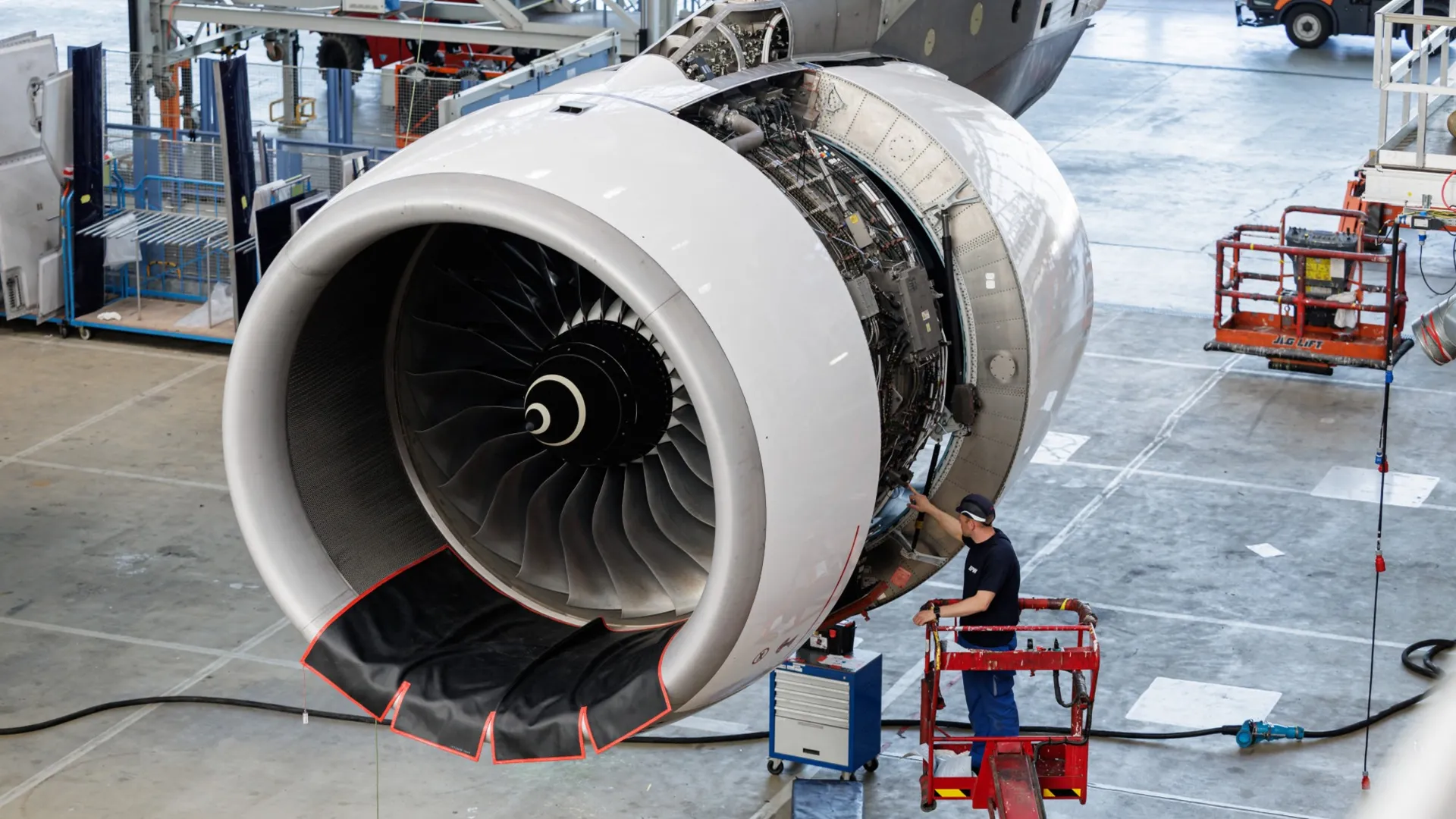
    Aircraft engine prices are the latest bane for airlines

    Another element of aviation is causing trouble for the air travel industry, and this time it’s the airplanes themselves. The companies that manufacture aircraft engines are increasingly coming under fire for alleged price gouging, which airlines say is making it harder to afford new planes. Combined with increased demand from travelers, airlines have found themselves between a rock and a hard place.

    Why are engines more expensive?
    They have “emerged as an acute flashpoint for the industry, both in terms of their performance and lack of availability,” said Bloomberg. Many airplane manufacturers also increasingly rely on “less than a handful of manufacturers, creating quasi-monopolies and dependencies.” 

    Many manufacturers are also turning toward a trend in energy-efficient engines, but this comes with its own problems. Continuing shortages of the industry’s “most fuel-efficient aircraft engines have sent their market values soaring,” said the Financial Times.

    These factors mean that engines have become one of the most expensive elements of building new airplanes. A pair of jet engines now represents up to 80% of the total market value of a new plane, according to aviation finance company Avolon. It represents a marked change from two decades ago, when engines would have only accounted for “20% to 30% of an aircraft’s value,” said the Financial Times.

    How are airlines reacting?
    Airline executives are angry at the inflated cost of engines. Most say they are “being forced to remove engines and take them for maintenance into crowded shops earlier than expected, which is driving up costs,” said CNBC. The increased prices represent a “paradox: Engine makers dazzled carriers with more fuel-efficient options for new planes from Boeing and Airbus,” but now “production shortfalls and disappointing reliability with those engines are becoming costly problems.”

    So far, most engines have “not reached the reliability that airlines need, though there have been improvements,” said CNBC. As airplanes “push the limits, it sometimes comes at the cost of reliability,” said Alexis von Hoensbroech, the CEO of Canadian carrier WestJet, to CNBC. “A lot of the fuel savings are in fact eaten up by unplanned maintenance costs.”


    Good day ⚽

    … for first-time World Cup teams. FIFA’s decision to expand the World Cup finals from 32 to 48 teams has created more pathways for smaller countries to qualify, including first-timers Cape Verde, Curaçao, Jordan and Uzbekistan. These nations have spent years building a footballing infrastructure that punches well above their demographic weight.


    Bad day 🇮🇷

    … for Iranian World Cup fans. Iran’s allocation of tickets for the World Cup has been withdrawn, according to the Football Federation of the Islamic Republic of Iran. The federation was due to receive the standard 8% of stadium capacity for each of its games to distribute to fans.


    Picture of the day

    Blessing with a bang

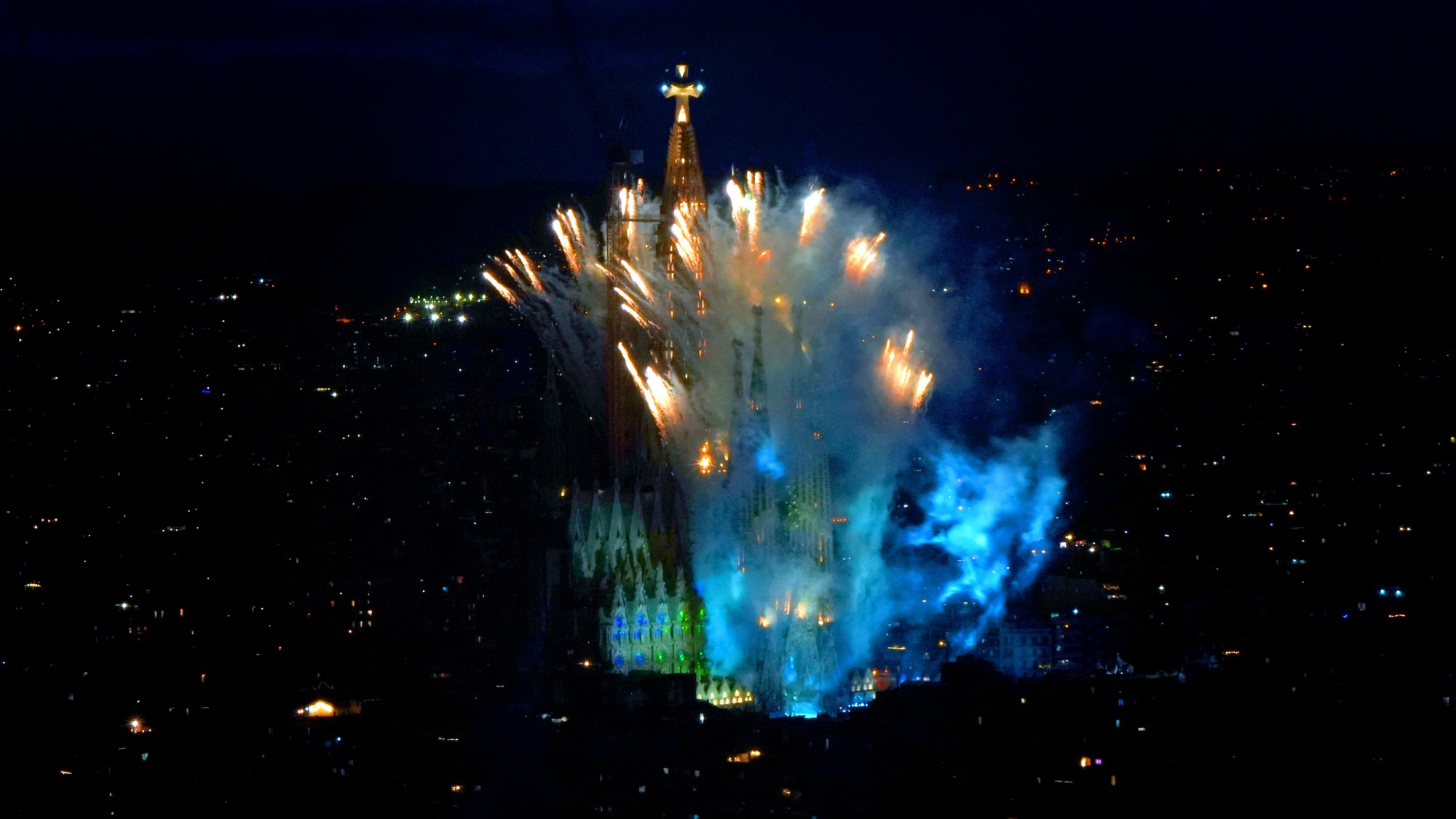
    Fireworks light up the night sky around the Sagrada Familia in Barcelona, Spain, to celebrate Pope Leo’s blessing of the basilica’s Jesus Christ tower. The building of the tower marks a major step toward completion of the basilica, which has been under construction for 144 years. 
    Manaure Quintero / AFP via Getty Images


    Puzzles

    Daily sudoku

    Challenge yourself with The Week’s daily sudoku, part of our puzzles section, which also includes guess the number

    Play here


    The Week recommends

    Engaging museum exhibitions to revel in

    Summers are the perfect time to explore, and that includes museums. These new exhibitions — an examination of American Pop Art, a closer look at the scandalous painting that rocked early 20th-century France, and an immersive celebration of Yoko Ono — are all worth the trek.

    ‘Guggenheim Pop: 1960 to Now’
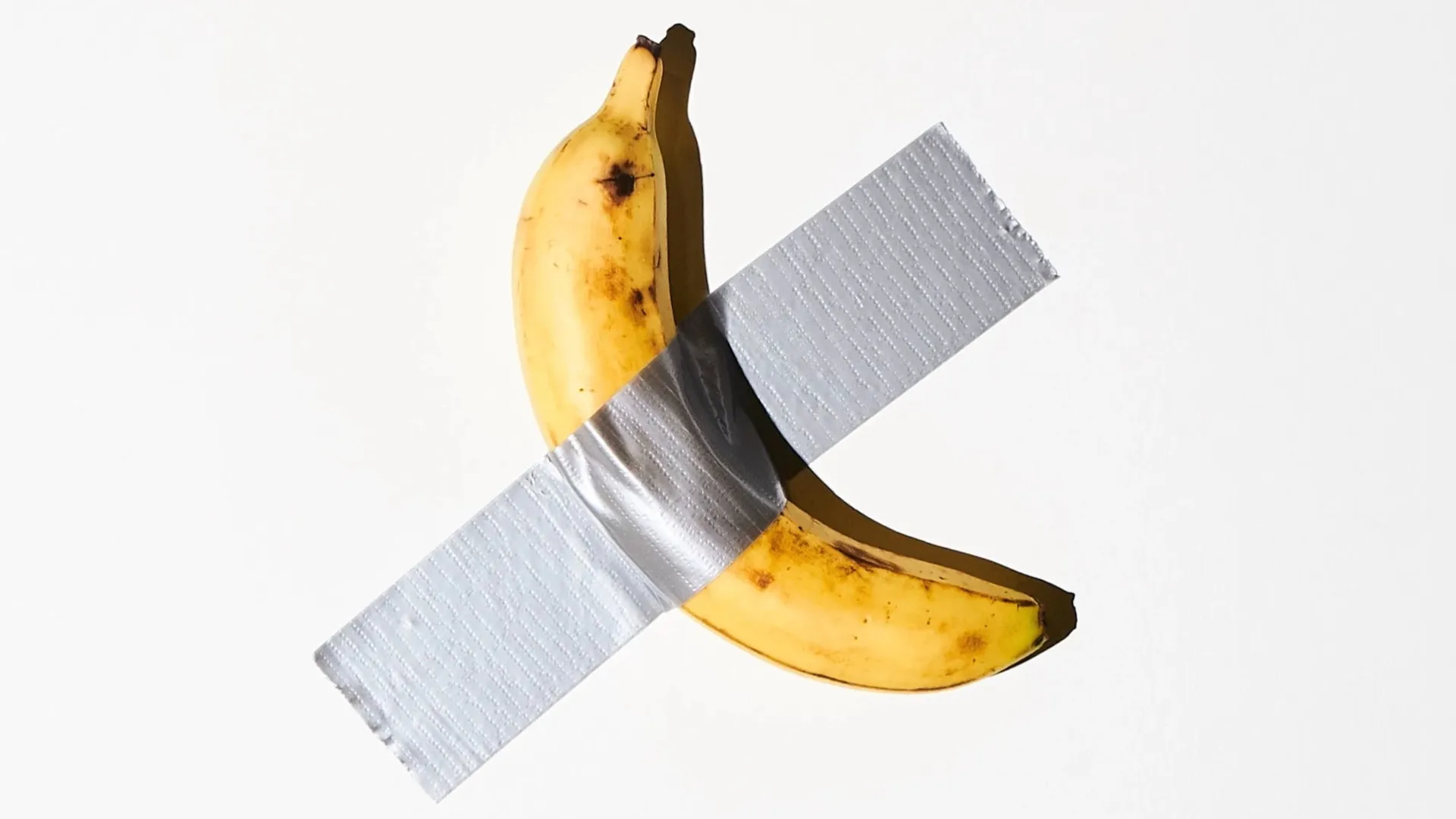
    The evolution of American Pop Art is explored in this exhibition of 29 pioneering and contemporary artists, like Maurizio Cattelan (pictured above), Yayoi Kusama, Roy Lichtenstein and Andy Warhol at The Guggenheim Museum in New York City. By placing historic works alongside recent acquisitions by current artists, the Guggenheim aims to demonstrate how the art form, as a “strategy, continues to inspire, provoke and evolve,” said Lauren Hinkson, the museum’s curator of collections. (through Jan. 10, 2027)

    ‘Matisse’s Femme au chapeau: A Modern Scandal”
    When Henri Matisse debuted “Femme au chapeau (Woman with a Hat)” in 1905, it was a “clanging bell” that announced the “split between Postimpressionism and Fauvism,” the French avant-garde art movement, said Galerie. “Matisse’s Femme au chapeau: A Modern Scandal” at The San Francisco Museum of Modern Art tells the “full story” of how the painting changed the rules. (through Sept. 13, 2026)

    ‘Yoko Ono: Music of the Mind’
    A “cultural reframing” of Yoko Ono’s legacy is underway, and she’s now “widely understood” to be one of the “foundational figures of conceptual and performance art,” said Vogue. “Music of the Mind” at The Broad in Los Angeles features works that “underscore” this, like “Freedom,” a 1970 film addressing women’s liberation, and original typed pages of her 1964 book, “Grapefruit.” (through Oct. 11, 2026)

    Read more


    Poll watch

    Europeans’ trust in the U.S. has fallen to a new low, according to a survey from the European Council on Foreign Relations of 19,481 people in 15 countries. A majority in every nation believes the U.S. will not support them if they come under attack, and only 11% of all respondents see Washington as an ally. 


    INSTANT OPINION

    Today’s best commentary

    ‘The myth of white Argentina still shapes the nation’
    Federico Pita at Al Jazeera
    While a “majority of countries acknowledged the need to address the contemporary consequences of slavery and colonialism,” Argentina’s “rejection of reparations is part of a state-sponsored tradition that has organized the nation, since its independence, based on specific racial hierarchies,” says Federico Pita. The formation of the Argentinian state was “marked by its elites’ explicit project of demographic and cultural whitening.” This “institutional architecture consolidated one of Latin America’s most enduring national narratives — that Argentina is a white and European society.”

    ‘Can the World Cup transcend Donald Trump?’
    Ishaan Tharoor at The New Yorker
    Trump “clearly sees” the 2026 FIFA World Cup as a “source of prestige to boost his flagging presidency,” says Ishaan Tharoor. He’s “dominating the buildup to the World Cup for all the wrong reasons.” It’s “difficult to look beyond the gloom surrounding this World Cup, whether because of the cringe-inducing bonhomie” between Trump and FIFA officials, the “disenchantment of foreign fans,” or the “frustrations of domestic supporters who are angry about exorbitant ticket prices.”

    ‘High-tech seeks skilled tradesman’
    Dina Powell McCormick and Mike Rowe at The Wall Street Journal
    The U.S. has “claimed the lion’s share of the world’s greatest inventions,” but it was “generations of American workers who strung the telegraph wire, laid the railroad tracks, built the interstate highways and buried the fiber,” say Dina Powell McCormick and Mike Rowe. The “artificial intelligence revolution shows that America’s technological progress and skilled workforce are still inseparable.” To “maintain our technological edge, we need to build infrastructure at scale and with great speed.”


    WORD OF THE DAY

    habitability

    A more relatable term than the “environment” for framing climate action, according to French scholars. Environmentalism is associated with people who “like flowers and little birds,” said Baptiste Morizot and Laurent Neyret in their new book, “Liberté, Dignité, Habitabilité,” whereas “habitability” emphasizes the conditions essential for continued human life on Earth.


    Evening Review was written and edited by Theara Coleman, Nadia Croes, Catherine Garcia, Scott Hocker, Anya Jaremko-Greenwold, Justin Klawans and Joel Mathis, with illustrations by Stephen Kelly and Julia Wytrazek.

    Image credits, from top: Illustration by Stephen P. Kelly / Getty Images; Illustration by Julia Wytrazek / Getty Images; Jens Schluter / AFP / Getty Images; Courtesy of Maurizio Cattelan and Perrotin
     

    Recent editions

    • Morning Report

      Iran and US veer toward war as talks stall

    • Evening Review

      Masculinity in the Texas Senate race

    • Morning Report

      Platner primary win sets up key Senate showdown

    VIEW ALL
    TheWeek
    • About Us
    • Contact Future's experts
    • Terms and Conditions
    • Privacy Policy
    • Cookie Policy
    • Advertise With Us
    • FAQ
    Add as a preferred source on Google Add as a preferred source on Google

    The Week is part of Future US Inc, an international media group and leading digital publisher. Visit our corporate site.

    © Future US, Inc. Full 7th Floor, 130 West 42nd Street, New York, NY 10036.