The Week The Week
flag of US
US
flag of UK
UK
https://cdn.mos.cms.futurecdn.net/flexiimages/jacafc5zvs1692883516.jpg

SUBSCRIBE & SAVE

Less than $3 per week

Sign in
  • View Profile
  • Sign out
  • The Explainer
  • The Week Recommends
  • Newsletters
  • Cartoons
  • From the Magazine
  • The Week Junior
  • Student Offers
  • More
    • Politics
    • World News
    • Business
    • Health
    • Science
    • Food & Drink
    • Travel
    • Culture
    • History
    • Personal Finance
    • Puzzles
    • Photos
    • The Blend
    • All Categories
  • Newsletter sign up Newsletter
  • Brand Logo
    Mail-in ballots, McConnell’s whereabouts and SpaceX woes

     
    TODAY’S election story

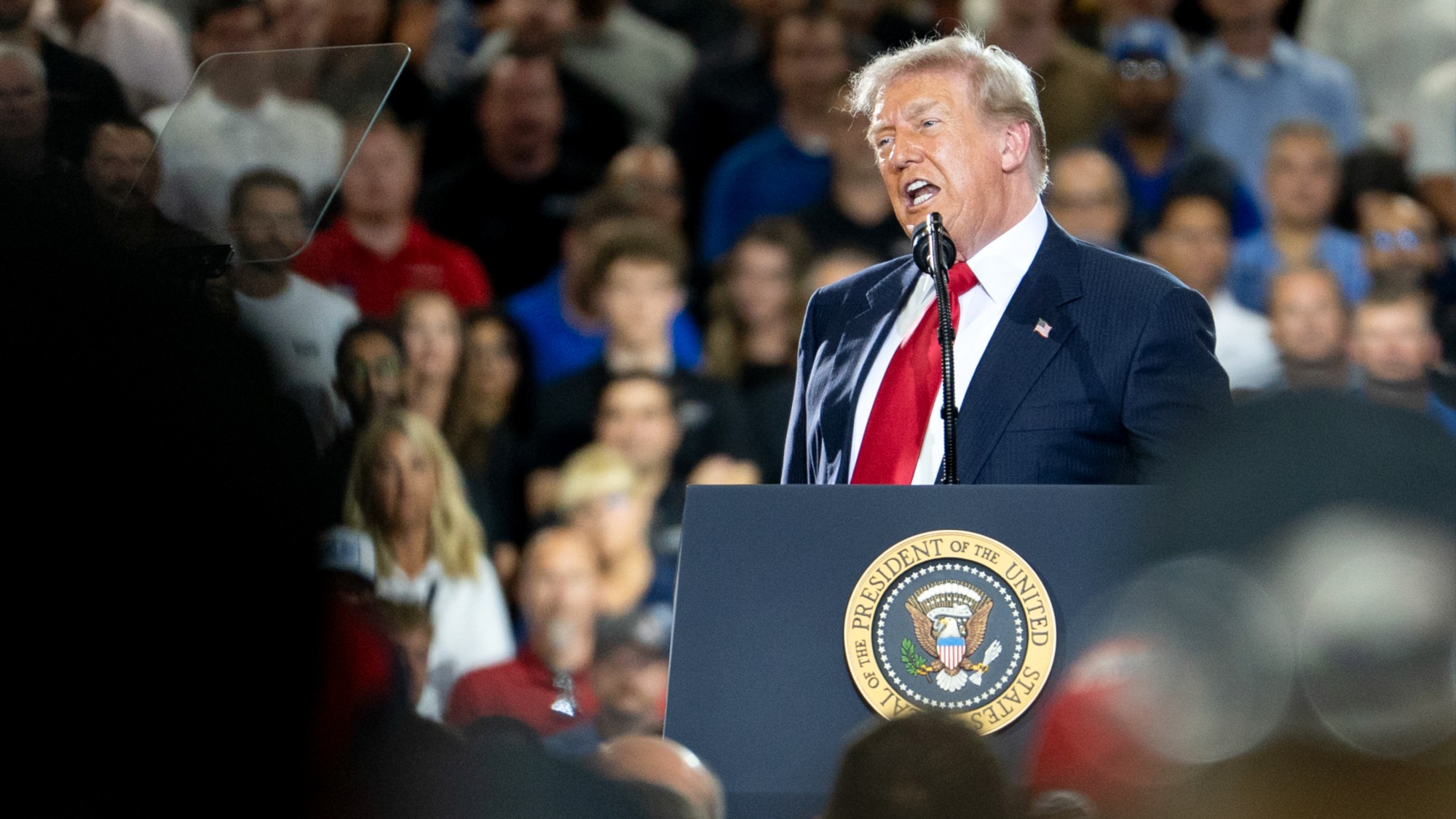
    Trump asks Supreme Court to allow mail-voting curbs

    What happened
    The Justice Department filed an emergency application yesterday asking the Supreme Court to approve President Donald Trump’s executive order imposing new restrictions on voting by mail. 

    The request followed a ruling by a federal appeals court on Saturday that left in place a block on key parts of the March directive, which ordered federal agencies to create voter eligibility lists and restrict U.S. Postal Service delivery of ballots not tied to those lists. More than 20 Democratic attorneys general challenged Trump’s order as an unconstitutional move that could disenfranchise voters. 

    Who said what
    In the emergency application, Solicitor General D. John Sauer argued that the lower court’s “indefensible” ruling prevents the federal government from “promoting election integrity in the upcoming federal elections in November.” The judges on the First U.S. Circuit Court of Appeals said in Saturday’s 2-1 ruling that Trump’s order would “sow confusion” and “threaten disenfranchisement” for many.

    Legal experts question Trump’s order because the “Constitution gives power over elections to states and Congress, not the president,” The Wall Street Journal said. And despite Trump’s claims to the contrary, “independent research has found no evidence of rampant fraud in mail ballots.” SCOTUS “has shown skepticism” of his attempts to restrict mail-in voting before, said The New York Times. Last month, the justices rejected an effort to bar states from counting mailed ballots that are postmarked by Election Day but arrive later. 

    What next?
    The Democratic states that sued to block Trump’s executive order have until August 3 to respond to the government’s appeal. SCOTUS’s decision is “expected soon after,” the Journal said. 


    TODAY’S Senate story

    McConnell not ‘medically cleared’ to resume work

    What happened
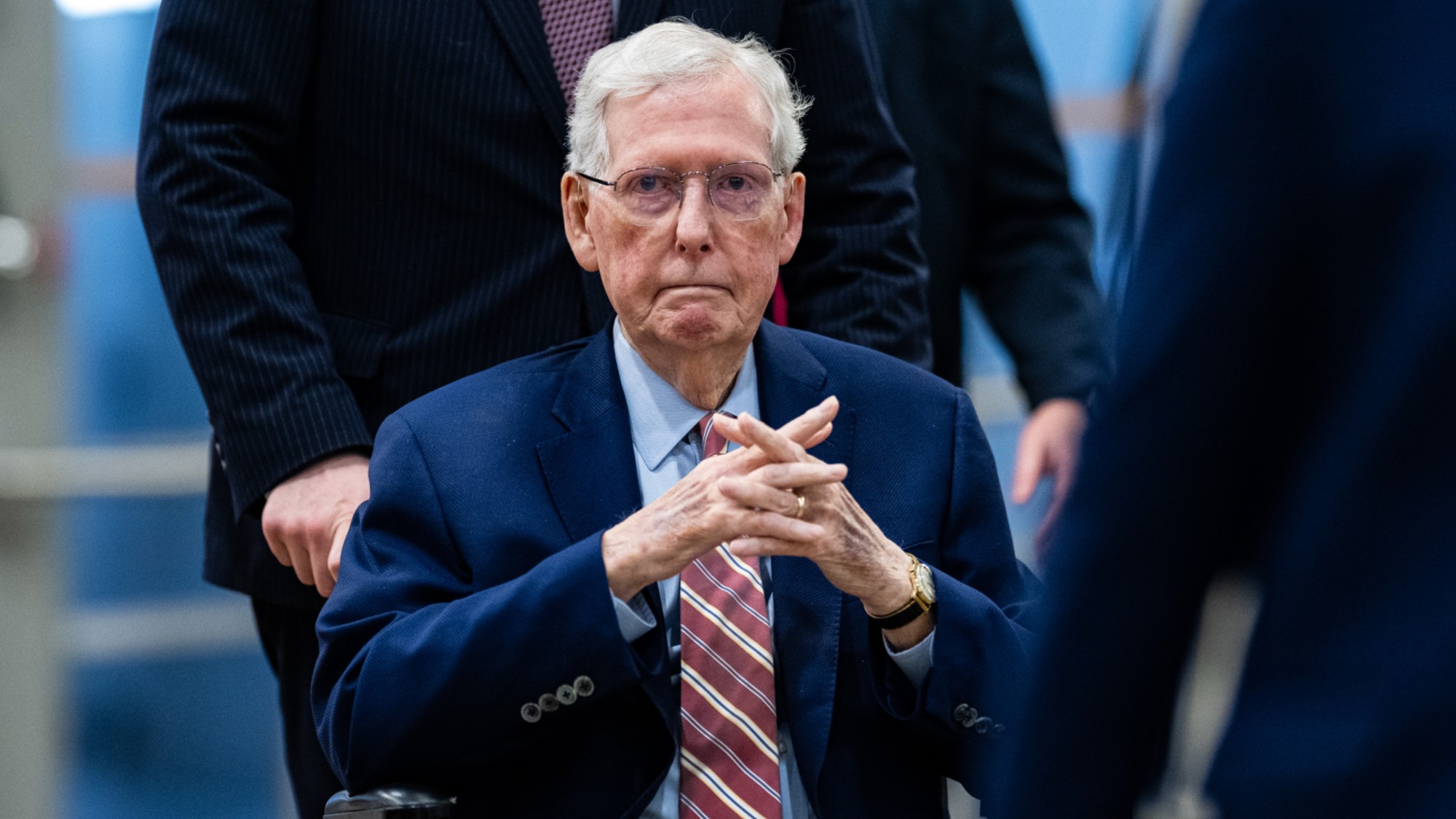
    Sen. Mitch McConnell (R-Ky.) will not return to Washington before lawmakers break for an August recess, his office said in a statement yesterday, six weeks after he was hospitalized following a fall at his home. McConnell, 84, will also miss Saturday’s Fancy Farm political picnic — a “must for politicians in Kentucky” that he has attended each year “for more than four decades,” said The New York Times. 

    Who said what
    McConnell is “not yet medically cleared” to leave the rehab facility where he is undergoing a “strenuous course” of treatment, the office of the attending physician of Congress said in an accompanying statement. McConnell has missed dozens of Senate votes since his June 14 hospitalization. All public communication with the senator has been “via email in written statements, sent by his team,” with “no traces of him on audio or video,” said WLKY. Yesterday’s statement from his office was accompanied by a photo of him “smiling broadly and seated in a chair propped up by a pillow,” said the Times.

    What next?
    McConnell, who has faced a “series of health challenges in recent years,” said Politico, is due to retire when his current term concludes in January. 


    TODAY’S business Story

    Musk’s wealth sinks to $700B as SpaceX shares slide

    What happened
    Elon Musk’s SpaceX has hemorrhaged more than $1.2 trillion in market capital since its record-setting IPO in June, as the market scrutinizes the viability of the company’s Starship rocket. The spacecraft, which SpaceX describes as a “fully reusable transportation system,” has been “marred by reliability concerns and repeated explosions,” The Washington Post said. Following another sharp drop in SpaceX shares yesterday, CEO Musk’s net worth has fallen from an estimated mid-June peak of $1.45 trillion to below $700 billion. 

    Who said what
    SpaceX conducted a “near-perfect” Starship flight test on Friday, MarketWatch said, but it “wasn’t enough to reverse the stock’s steady decline.” The downside of being publicly traded is that “everything will be evaluated and information transmitted through market prices,” Motley Fool senior investment analyst David Meier told the Post. Musk last week posted a tongue-in-cheek acknowledgement on X of his changing fortunes, calling himself a “(Former) Trillionaire.” Even with “just” $700 billion, he remains the wealthiest person in the world “several times over,” Intelligencer said. 

    What next?
    Investors will be watching closely on August 4, when SpaceX releases its first earnings report since its IPO. 


    It’s not all bad

    Rishi Sharma is keeping the memories of World War II combat veterans alive, interviewing 3,000 in the last decade. The 27-year-old is on a “mission” to preserve history by meeting every living vet and sharing their stories on his website, Remember WWII, he said to CBS News. Sharma recently spoke with 100-year-old Nils Mockler of New York, a former Marine intelligence scout, whose first battle was at Iwo Jima. When Mockler thinks about that time, the “hair on my arms still stands up,” he said.


    Under the radar

    Iran war is harming rare wildlife

    As the U.S. and Iran continue to trade blows in the Middle East, the consequences of the intense bombings are threatening Iran’s already “fragile biodiversity,” said The Associated Press. While most of the attention has been on the urban and economic consequences of the war, said Iranian news agency Wana, the country’s animal species are “less visible victims.”

    Historically, Iran has had a “deep connection” with its wildlife and is one of the first countries to form an environmental protection agency, said the AP. But “decades of mismanagement and yearslong drought” have strained conservationist work.

    The onset of war this year has seen U.S. and Israeli strikes on remote military facilities in deserts and mountain ranges cause “habitat degradation,” leading to “water and land pollution, soil contamination” and “destruction of land cover,” said U.S.-based Iranian wildlife expert Jamshid Parchizadeh to The Associated Press. And an animal population driven away from its habitat, like mountain-dwelling Persian leopards and brown bears, “forever leaves that area from fear.”

    Land ecosystems are not the only ones at risk. The “highly contested” Strait of Hormuz is home to the “most diverse” coral population in the region, said CNN. And Greenpeace researchers “regularly detect oil slicks” in the water following attacks on tankers passing through the strait.

    The war has caused "serious environmental degradation in a country reeling from a range of climate-related crises, water stress and air-quality issues,” and Iran’s “fragile” ecosystems now face an uncertain future, said the nonprofit Truthout. But when it comes to “post-conflict reconstruction,” environmental rehabilitation “often doesn’t take priority.”


    On this day

    July 28, 1932

    “White Zombie,” widely considered the first feature-length zombie film, opened in theaters. The film, which stars horror icon Bela Lugosi, was critically panned upon its release, but it has since garnered a larger following. In 2011, when zombie pop culture peaked, the concept was worth more than $5 billion to the U.S. economy, according to NBC News.  


    TODAY’S newspaperS

    ‘Markets guessing’

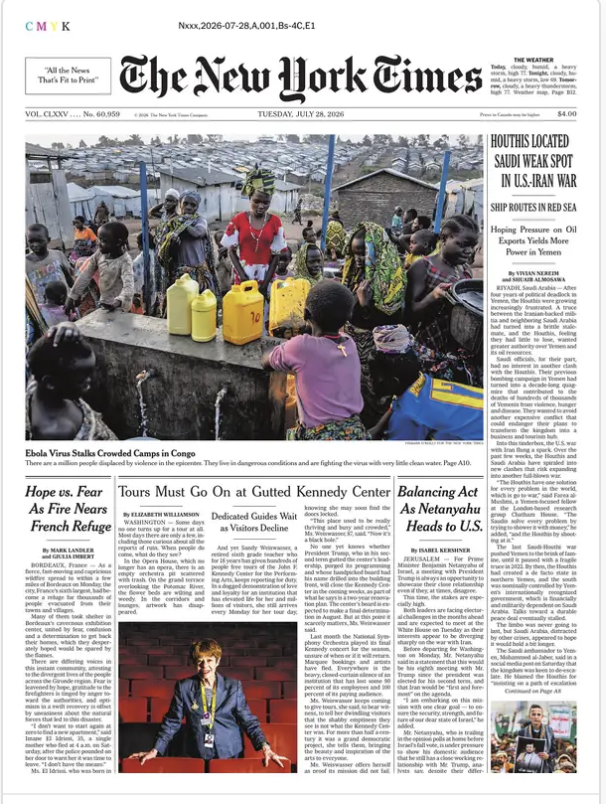
    “Markets guessing on Fed’s direction,” says USA Today on Tuesday’s front page. Relationship between Washington and Jerusalem is a “balancing act as Netanyahu heads to U.S.,” says The New York Times. “Cocaine still flowing despite U.S. strikes” on drug-trafficking boats, says The Washington Post. “Coalition takes aim at Texas data centers,” says the Houston Chronicle.

    ► See the newspaper front pages


    Tall tale

    1NAPROPR1ATE

    A Florida woman is requesting a new license plate after receiving one that reads “SQZ A55.” When Nancy Dello Stritto saw the plate for the first time, her response was, “I don’t think so,” she said to WESH 2. Dello Stritto lives in a Pompano Beach retirement community, and the eyebrow-raising combination of letters and numbers has become a hot topic in the area. When she showed a neighbor and told him she would be stuck with the plate for 10 years, he said, “Good.”


    Morning Report was written and edited by Nadia Croes, Catherine Garcia, Jessica Hullinger, Justin Klawans, Arion McNicoll, Chas Newkey-Burden, Rafi Schwartz, Lea Tran and Kari Wilkin, with illustrations by Stephen Kelly and Julia Wytrazek.

    Image credits, from top: Sarah Rice / Bloomberg / Getty Images; Graeme Sloan / Bloomberg / Getty Images; Ronaldo Schemidt / AFP / Getty Images; Morteza Nikoubazl / NurPhoto / Getty Images 
     

    Recent editions

    • Evening Review

      Trump’s Australian inspiration

    • Morning Report

      Iran war on pause?

    • Sunday Shortlist

      The Odyssey’s epic success

    VIEW ALL
    TheWeek
    • About Us
    • Contact Future's experts
    • Terms and Conditions
    • Privacy Policy
    • Cookie Policy
    • Advertise With Us
    • FAQ
    Add as a preferred source on Google Add as a preferred source on Google

    The Week is part of Future US Inc, an international media group and leading digital publisher. Visit our corporate site.

    © Future US, Inc. Full 7th Floor, 130 West 42nd Street, New York, NY 10036.