The Week The Week
flag of US
US
flag of UK
UK
https://cdn.mos.cms.futurecdn.net/flexiimages/jacafc5zvs1692883516.jpg

SUBSCRIBE & SAVE

Less than $3 per week

Sign in
  • View Profile
  • Sign out
  • The Explainer
  • The Week Recommends
  • Newsletters
  • Cartoons
  • From the Magazine
  • The Week Junior
  • Student Offers
  • More
    • Politics
    • World News
    • Business
    • Health
    • Science
    • Food & Drink
    • Travel
    • Culture
    • History
    • Personal Finance
    • Puzzles
    • Photos
    • The Blend
    • All Categories
  • Newsletter sign up Newsletter
  • Brand Logo
    Vaccine order, Miller deadline and Trump’s catering-cart ruse

     
    TODAY’S PUBLIC HEALTH story

    Trump signs order to limit childhood vaccinations

    What happened
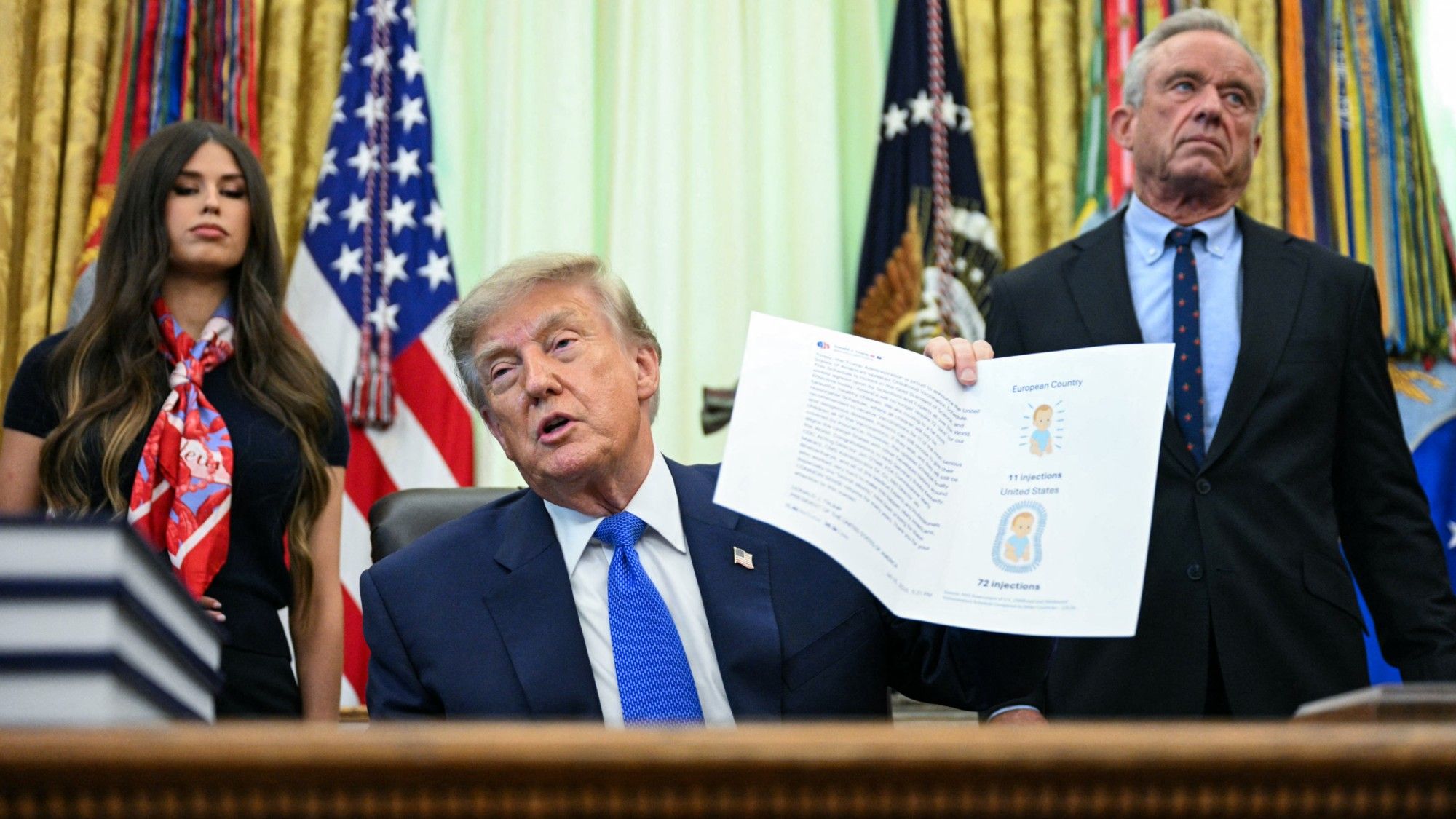
    President Donald Trump yesterday signed an executive order proposing a reduction in routine childhood immunizations to 11, from 17, and pushing for the combined measles, mumps and rubella (MMR) vaccine to be split into three separate single-disease shots administered over several doctor visits. This is Trump’s third attempt to “promote his long-held but discredited theory that childhood shots should be spaced out,” The Associated Press said, and a continuation of his fixation on “connecting autism to vaccines,” even though “scientific consensus and decades of studies have firmly concluded there is no link.”

    Who said what
    “Nothing bad can happen from what we’re doing,” Trump said before signing the order. But pediatricians and public health experts have “long warned” that spreading out vaccinations “will reduce immunization rates and leave children more susceptible to disease,” CNN said.

    Trump’s “renewed focus on vaccines marks a departure” from his administration’s “recent efforts to emphasize less controversial health policies” ahead of November elections, the AP said. “Trump’s own pollsters have warned” that the issue is “unpopular” with voters, Politico said. But the president’s “personal interest” in changing vaccine policy has been “thrown into high gear by his allegiance with Health Secretary Robert F. Kennedy Jr.,” a longtime vaccine skeptic. 

    What next?
    It’s unclear whether Trump’s order “has any legal power,” The New York Times said. Federal immunization recommendations come from the Centers for Disease Control and Prevention and its outside experts, and “only states can require vaccinations for children to enter school or day care.”


    TODAY’S POLITICS story

    GOP’s Miller locked in Ohio race after lapsed deadline

    What happened
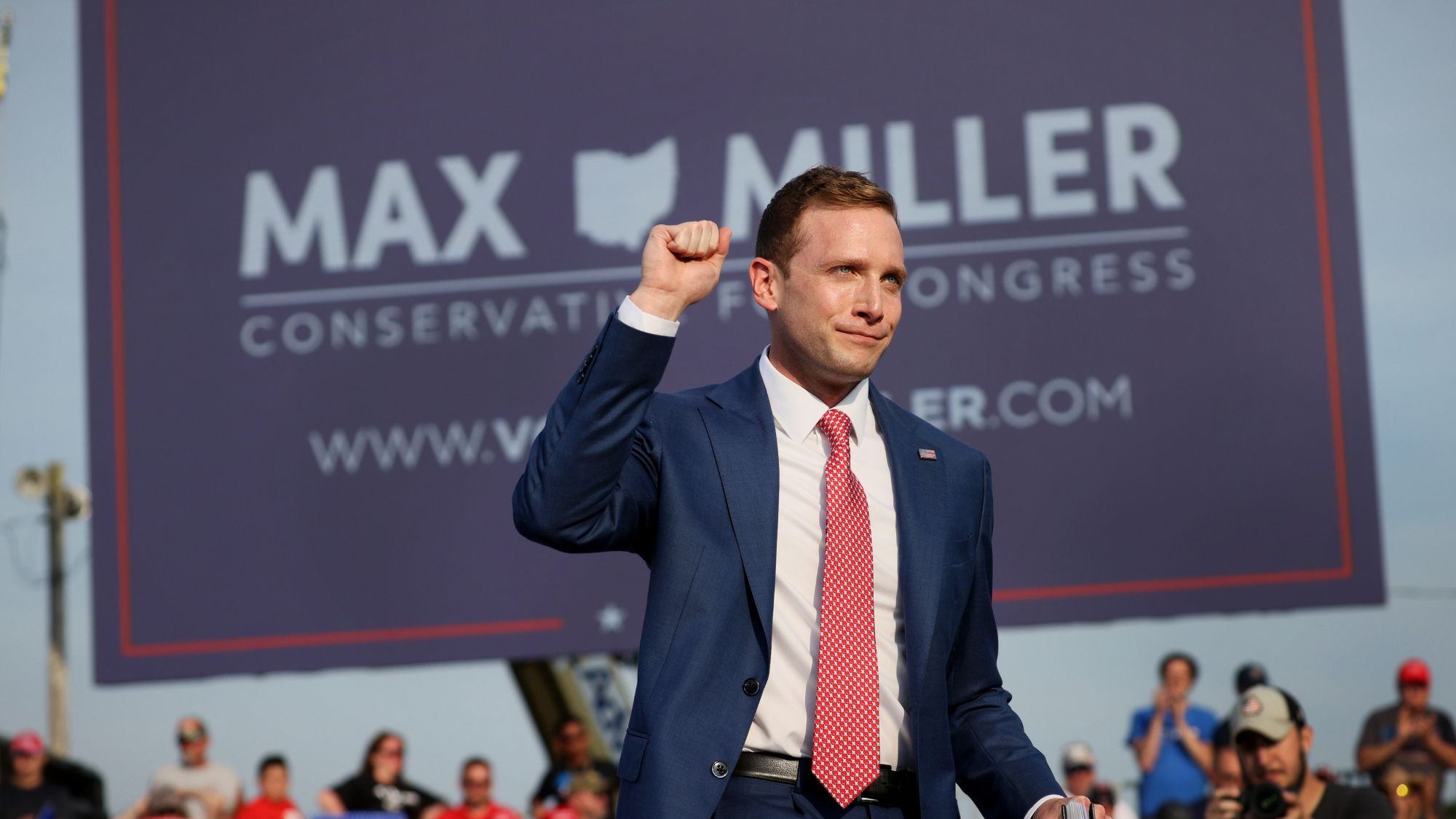
    Rep. Max Miller (R-Ohio) will remain on the ballot in November after yesterday’s state deadline to replace him passed. Allegations that Miller physically and emotionally abused his ex-wife and 2-year-old daughter helped turn what had been a safe Republican district into a competitive race against Democrat Brian Poindexter, a union ironworker. The nonpartisan Cook Political Report yesterday shifted Miller’s 7th Congressional District from “likely Republican” to “toss-up.”

    Who said what
    Republican officials had “led an intense push” to get Miller out of the race, CNN said. But as it became clear he wouldn’t drop out, Politico said, members of President Donald Trump’s political team urged Ohio Republicans “not to wage a public pressure campaign” against him, arguing that such “moot” efforts “would complicate messaging” when “those same leaders would likely later have to defend Miller’s candidacy.”

    What next?
    Local Republican leaders in North Carolina’s 11th District yesterday selected state Rep. Jennifer Balkcom to replace Rep. Chuck Edwards, who dropped his reelection bid last week after the House Ethics Committee urged his censure over troubling conduct toward two female aides. Balkcom “will now have roughly 80 days to crisscross” the mountainous district and raise a “crush of cash” to compete against well-funded Democrat Jamie Ager, said The New York Times. 


    TODAY’S NATIONAL SECURITY Story

    Report: Trump exited plane in cart to thwart Iran threat 

    What happened
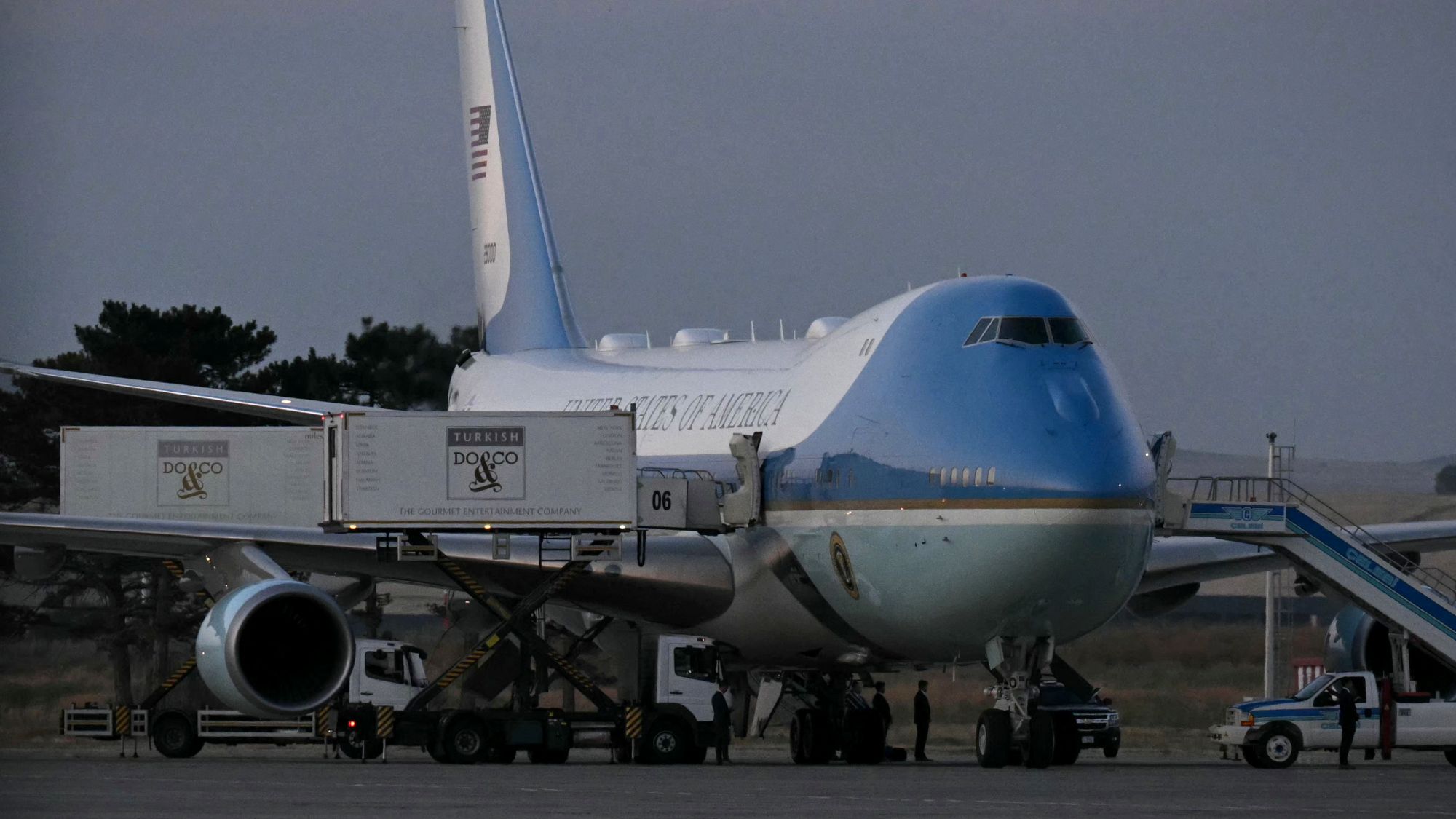
    President Donald Trump left a NATO summit in Turkey last month aboard an alternate military aircraft after publicly boarding Air Force One then secretly exiting on the other side of the plane in an “airport catering truck typically used to load meals and other supplies preflight,” The Washington Post reported yesterday, citing U.S. officials and “corroborating material.” The “elaborate deception to spirit” Trump out of the region was prompted by a “credible” threat “against him and Air Force One from Iran,” The New York Times said. 

    Who said what
    The “furtive operation” was apparently “developed in a matter of hours,” the Times said. Reporters flying with Trump were not told of the deception, “making them unwitting participants in the ruse and leaving them, along with some White House staff members, to serve as unknowing decoys.” The journalists and staffers were also not “made aware of the extent of the threat on Air Force One.” 

    When reporters asked Trump later why they had been advised to keep their window shades closed on the flight to Britain, he said they were “probably on a dangerous flight.” He added that he’s No. 1 on Iran’s hit list, “but if I go, you go, right?”

    What next?
    Asked about the reports, White House Communications Director Steven Cheung said “many enemies of America” have “their sights on” Trump and “we use every tool at our disposal to address those threats.”


    It’s not all bad

    The newest addition to the Toronto Zoo is an endangered pigmy hippo calf born last week. Her arrival “represents the critical role modern accredited zoos play in conservation, scientific collaboration and maintaining healthy populations,” said Toronto Zoo CEO Dolf DeJong. The baby, born to 20-year-old Kindia, was “confidently” moving around Little Hippo Hollow within a few hours of birth. Pygmy hippos are native to West Africa, and about 2,000 to 3,000 live in the wild.


    Under the radar

    A new eye implant can restore vision

    A retinal implant that can restore vision degraded by age has been approved for use in Europe and could soon be available in the U.S. Researchers are also evaluating the applicability of the implant for other eye conditions.

    The PRIMA retinal implant, created by the Science Corporation, can “restore functional central vision” in people with geographic atrophy, an advanced form of macular degeneration, said Stanford Medicine. The implant has shown measurable vision improvement, allowing “those who were considered legally blind to read letters and words.”

    The implant is “about the size of a pinhead and is inserted beneath the retina” and “used alongside glasses with a frame-mounted camera,” said New Scientist. It operates with a brain-computer interface, in which the camera “captures and processes images, then projects the result onto the implant’s chips using near-infrared light.” This method “offers users black-and-white vision and the ability to zoom in on objects,” said Stat News.

    PRIMA has been approved for use and sale in Europe and is set to launch in Germany, Italy and the Netherlands. The implant also “received a Humanitarian Use Device designation from the FDA in March,” said Stat News. The designation “puts the device on track to debut in the United States early next year if it receives agency approval.” 

    Cost could be a barrier, though Science Corporation and “its medical partners in Europe are currently in discussion with healthcare providers over reimbursement,” said TechCrunch. Researchers are also evaluating PRIMA for other retinal conditions like Stargardt disease and retinitis pigmentosa.


    On this day

    August 11, 1942

    Actress Hedy Lamarr and composer George Antheil were granted a U.S. patent for a frequency-hopping communication system. Their invention was developed for wartime purposes but was also a “precursor to modern-day technologies such as Wi-Fi, GPS and Bluetooth,” said the National World War II Museum. Lamarr and Antheil donated their patent to the U.S. Navy.


    TODAY’S newspaperS

    ‘Strong quake’

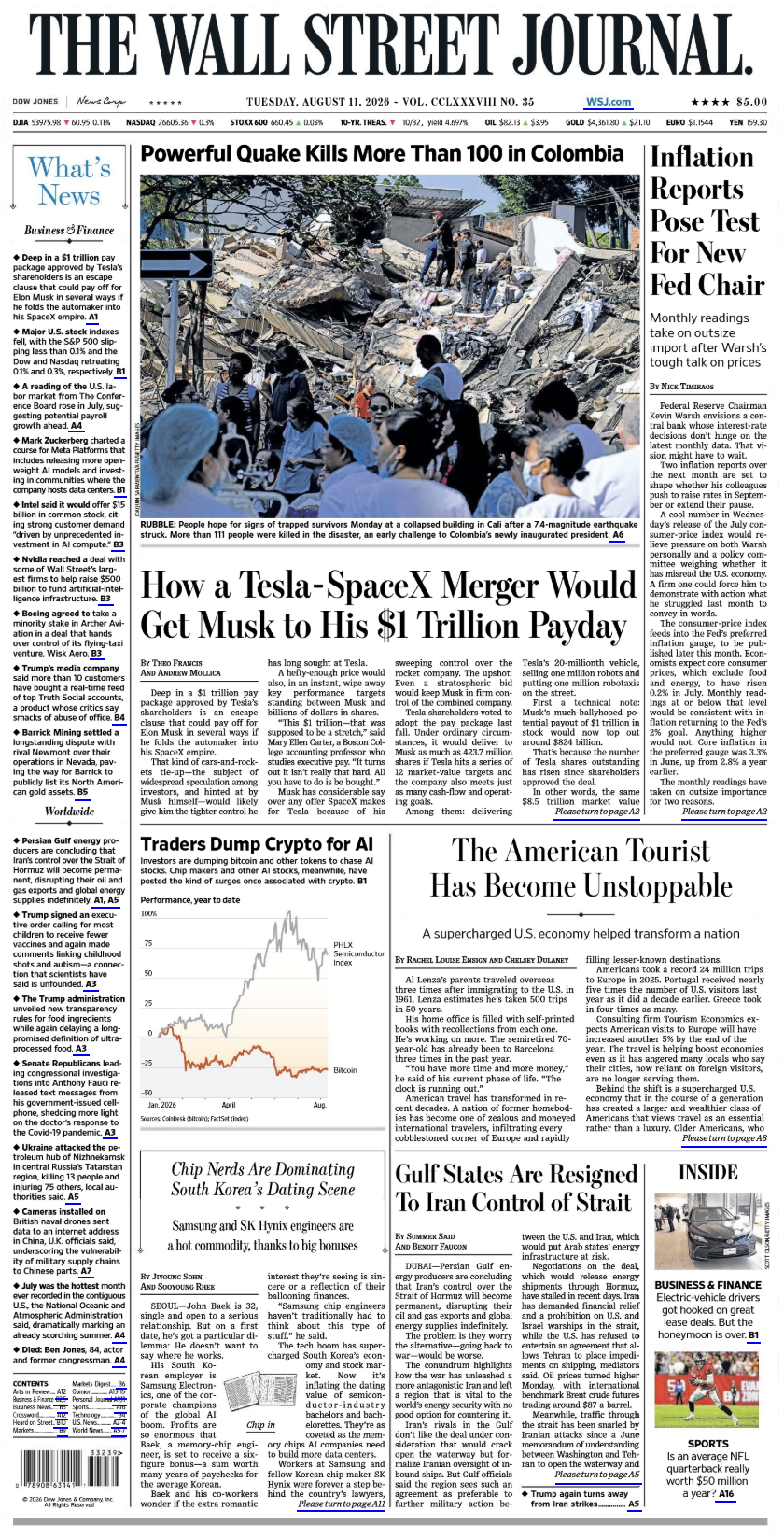
    “Scores dead after strong quake shakes Colombia,” The New York Times says on Tuesday’s front page. “7.4 earthquake kills at least 111,” says The Mercury News. “El Niño could bring highest sea levels ever,” says the Los Angeles Times. “Trump signs order to separate childhood vaccines” for measles, mumps and rubella, citing “debunked beliefs about autism,” The Philadelphia Inquirer says, as “measles cases” climb “ahead of school.” “Upsets, scandals” leave “path to control Congress muddied,” The Washington Post says. “Gulf States are resigned to Iran control of strait,” says The Wall Street Journal.

    ► See the newspaper front pages


    Tall tale

    Rotten luck

    An abandoned Canadian factory reeking of old fermented fish sauce is finally getting cleaned up, 20 years after closing. When the Atlantic Seafood Sauce Company shuttered in St. Mary’s, Newfoundland, 110 tanks containing 3,000 gallons of sauce were left behind. The stench was like the “worst rotted fish you ever smelled in your lifetime, times 100,” volunteer mayor Steve Ryan told The Associated Press. The two-decade impasse over the cleanup ended when Newfoundland and Labrador province agreed to foot most of the bill.


    Morning Report was written and edited by Helen Brown, Nadia Croes, Catherine Garcia, Scott Hocker, Anya Jaremko-Greenwold, Justin Klawans, Rafi Schwartz and Peter Weber, with illustrations by Stephen Kelly and Julia Wytrazek.

    Image credits, from top: Jim Watson / AFP via Getty Images; Scott Olson / Getty Images; Saul Loeb / AFP via Getty Images; Illustration by Julia Wytrazek / Getty Images
     

    Recent editions

    • Evening Review

      Colombia’s new president

    • Morning Report

      Trump gets his attorney general

    • Sunday Shortlist

      A sapphic slasher with soul

    VIEW ALL
    TheWeek
    • About Us
    • Contact Future's experts
    • Terms and Conditions
    • Privacy Policy
    • Cookie Policy
    • Advertise With Us
    • FAQ
    Add as a preferred source on Google Add as a preferred source on Google

    The Week is part of Future US Inc, an international media group and leading digital publisher. Visit our corporate site.

    © Future US, Inc. Full 7th Floor, 130 West 42nd Street, New York, NY 10036.