The Week The Week
flag of US
US
flag of UK
UK
https://cdn.mos.cms.futurecdn.net/flexiimages/jacafc5zvs1692883516.jpg

SUBSCRIBE & SAVE

Less than $3 per week

Sign in
  • View Profile
  • Sign out
  • The Explainer
  • The Week Recommends
  • Newsletters
  • Cartoons
  • From the Magazine
  • The Week Junior
  • More
    • Politics
    • World News
    • Business
    • Health
    • Science
    • Food & Drink
    • Travel
    • Culture
    • History
    • Personal Finance
    • Puzzles
    • Photos
    • The Blend
    • All Categories
  • Newsletter sign up Newsletter
  • Brand Logo
    Fuel inefficiency, Cornell rape case and college sports bill

     
    TODAY’S BUSINESS story

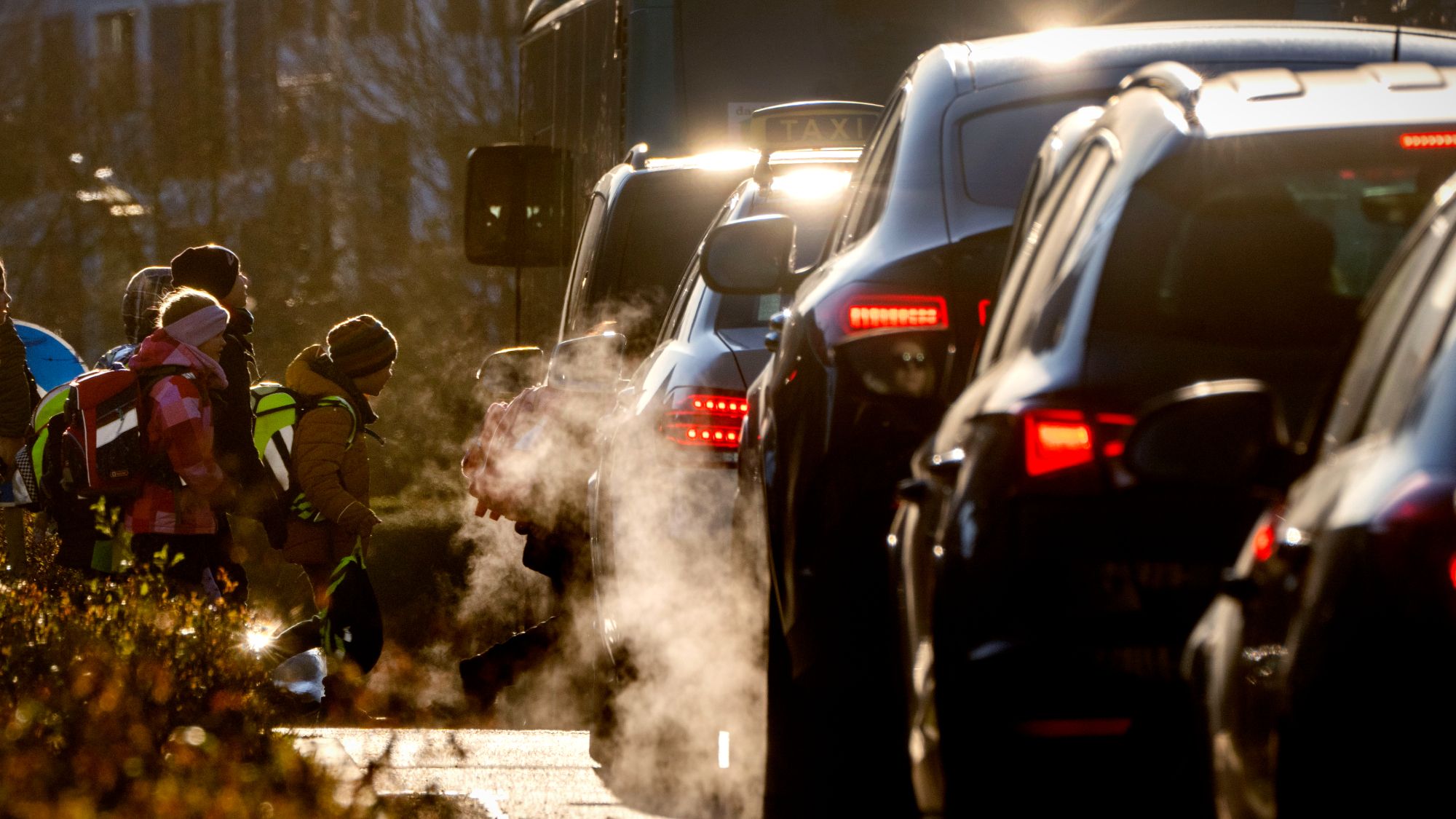
    Trump rolls back auto fuel-efficiency rules

    What happened
    The Trump administration yesterday finalized regulatory steps to significantly weaken fuel-efficiency standards for U.S. automobiles, saying that rolling back requirements that automakers build cleaner cars that use less gas will save $1,289 per vehicle in manufacturing costs. The Biden administration mandated that new cars and light trucks average 50.4 miles per gallon by 2031, but that’s being cut to 34.9 mpg, slightly higher than the 2024 model year average. 

    Who said what
    U.S. automakers welcomed the rollback as a realignment with market realities and the Trump administration touted the move “as a money-saving measure for American auto buyers struggling with affordability,” The Washington Post said. But analysts said “any savings would be hard to notice, especially in the context of high fuel prices and the average new vehicle surpassing $50,000.” 

    Coming after Trump’s dismantling of other regulations limiting fossil fuels and air pollution, the weakening of fuel efficiency standards “marked the final step in a remarkable retreat from U.S. attempts to counter China’s dominance of electric vehicles,” The New York Times said. “Many parts of the world” are “adopting EVs much faster than the United States,” said Jessica Caldwell, head of insights at Edmunds, and U.S. automakers can’t “just turn their backs on the technology” without hurting their own competitiveness.

    What next?
    The new rules, “expected to take effect around early December,” means automakers won’t need to “add expensive emissions equipment to reduce fuel consumption ​or build more EVs,” Reuters said. But they’re already “largely toothless,” the Times said. Congressional Republicans last year “also eliminated fines for any automakers that don’t meet the standards.”


    TODAY’S CRIME story

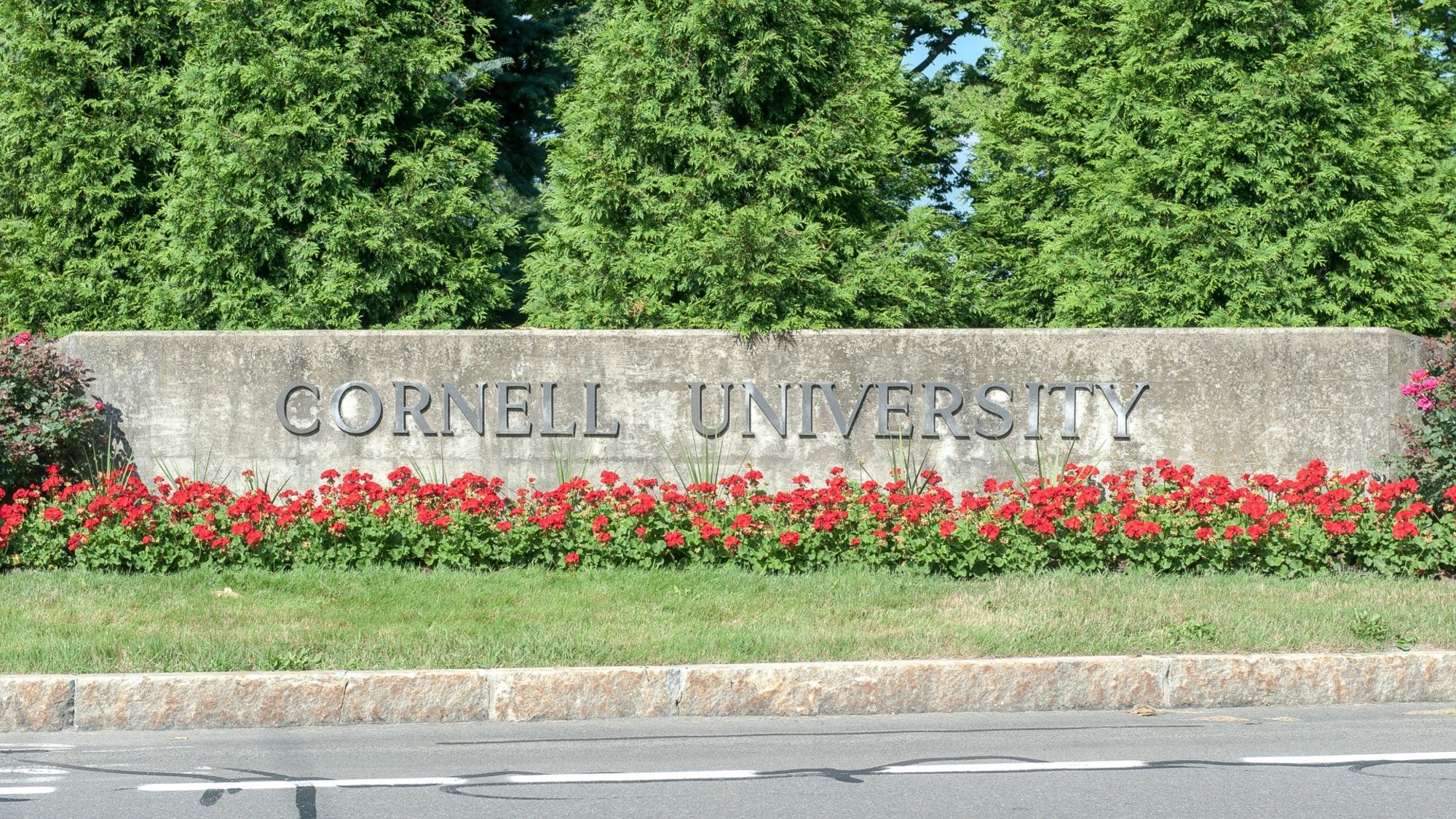
    Cornell gang rape case reopened after lawsuit

    What happened
    Prosecutors in Ithaca, New York, yesterday announced the reopening of an investigation into an alleged 2024 gang rape at Cornell University. The decision to send the case to a grand jury came two weeks after a former student filed a lawsuit against Cornell, the Chi Phi fraternity, seven Chi Phi members she said assaulted her, and others.

    Who said what
    The lawsuit “contains harrowing details of the alleged assaults, as well as a screenshot of a lewd Snapchat conversation in which one fraternity member appears to invite many others to join in,” The New York Times said. It “sparked anger” in Ithaca and beyond over how Cornell and local prosecutors “handled the woman’s initial allegations.” Cornell said it supported reopening the case and defended its handling of the allegations.

    Tompkins County District Attorney Matthew Van Houten told ABC News that his office didn’t “independently investigate” the allegations. But he said the woman’s initial statement, given to campus police, “described her participation in drug use and sexual conduct as voluntary, conscious and consensual.” The woman’s lawyer said the 2024 statement was not materially different than the lawsuit’s allegations.

    What next?
    A grand jury “will review the case to see if any charges are warranted,” considering the “testimony of the former student” and “any new evidence raised by the allegations of the civil complaint,” CNN said. 


    TODAY’S SPORTS Story

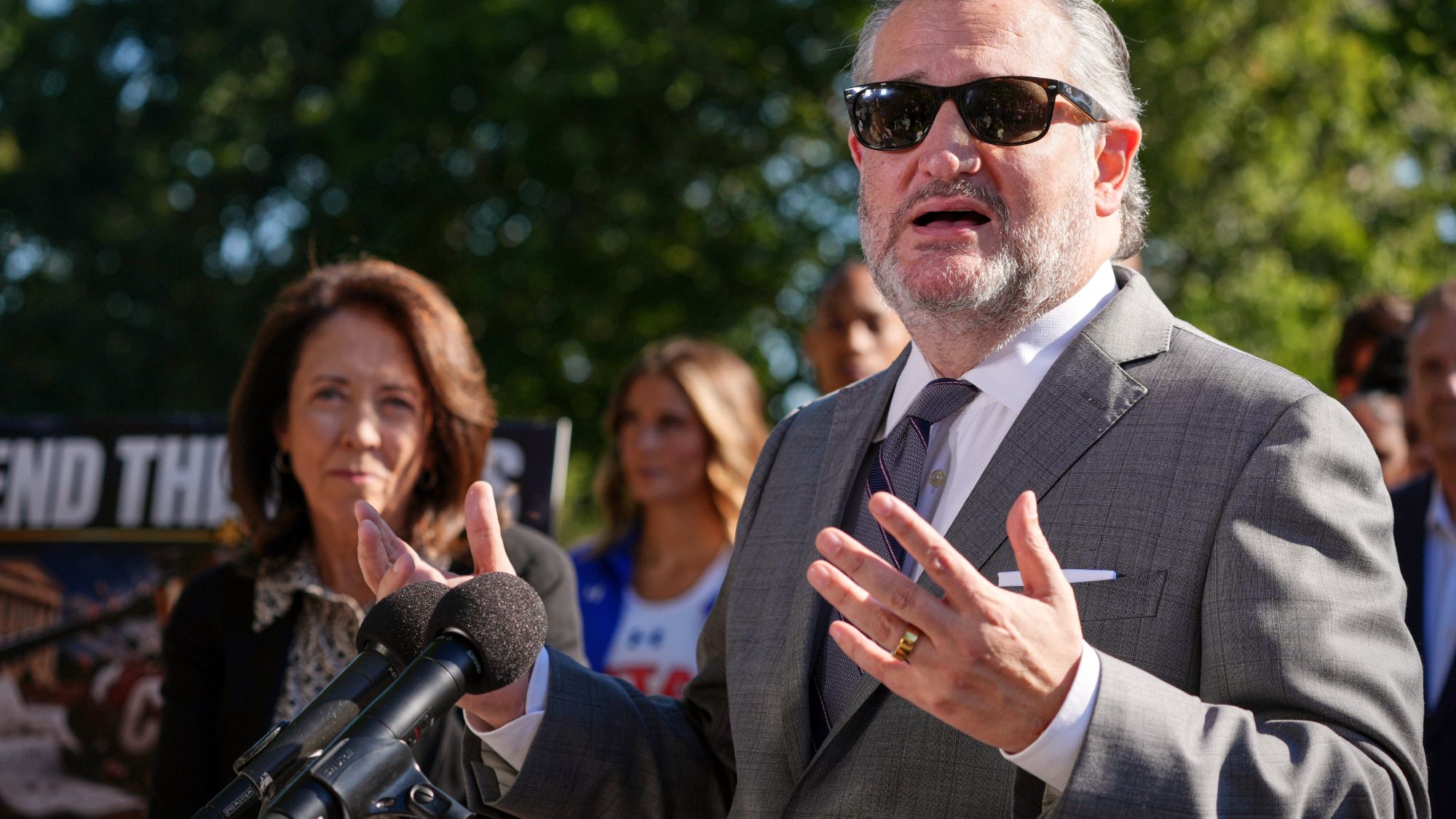
    Senate passes bipartisan bill to regulate college sports

    What happened
    The Senate yesterday approved sweeping bipartisan legislation aimed at bringing stability to college sports by codifying a series of rulings and agreements, notably a landmark 2025 settlement that allowed colleges to directly pay players for their name, image and likeness. The Protect Student Sports Act, which passed 77-22, sets national caps on total compensation for student athletes, limits them to one penalty-free transfer and fixes their eligibility at five years, among other changes. It would “give the NCAA new authority over those rules and limited antitrust protections to enforce them,” The Associated Press said. 

    Who said what
    The bill’s backers argue it will “curtail constant litigation and uncertainty across college sports” and “rein in the runaway costs for colleges,” said the AP. Critics say it tips power to the NCAA and “doesn’t do enough to protect athletes or curtail the enormous sums of money flowing to coaches, colleges and conferences.” Resistance to the legislation “was no match for the major sports conferences, state schools, big-name coaches and other powerful interest groups that got behind it,” The New York Times said.

    What next?
    Last night’s vote was a “major legislative victory shared by members of both parties and President Donald Trump, who wants to sign the package as soon as possible,” Politico said. But its prospects in the House are “murky.”


    It’s not all bad

    A group of teen environmentalists in California has set a Guinness World Record for the most racquet-sport balls recycled in a single day. At a community event, the Another Bounce group collected nearly 22,000 balls, mostly for pickleball and tennis, weighing 2,675 pounds. The balls were trucked off to a special recycling facility, where they will be turned into new balls or sustainable materials.


    Under the radar

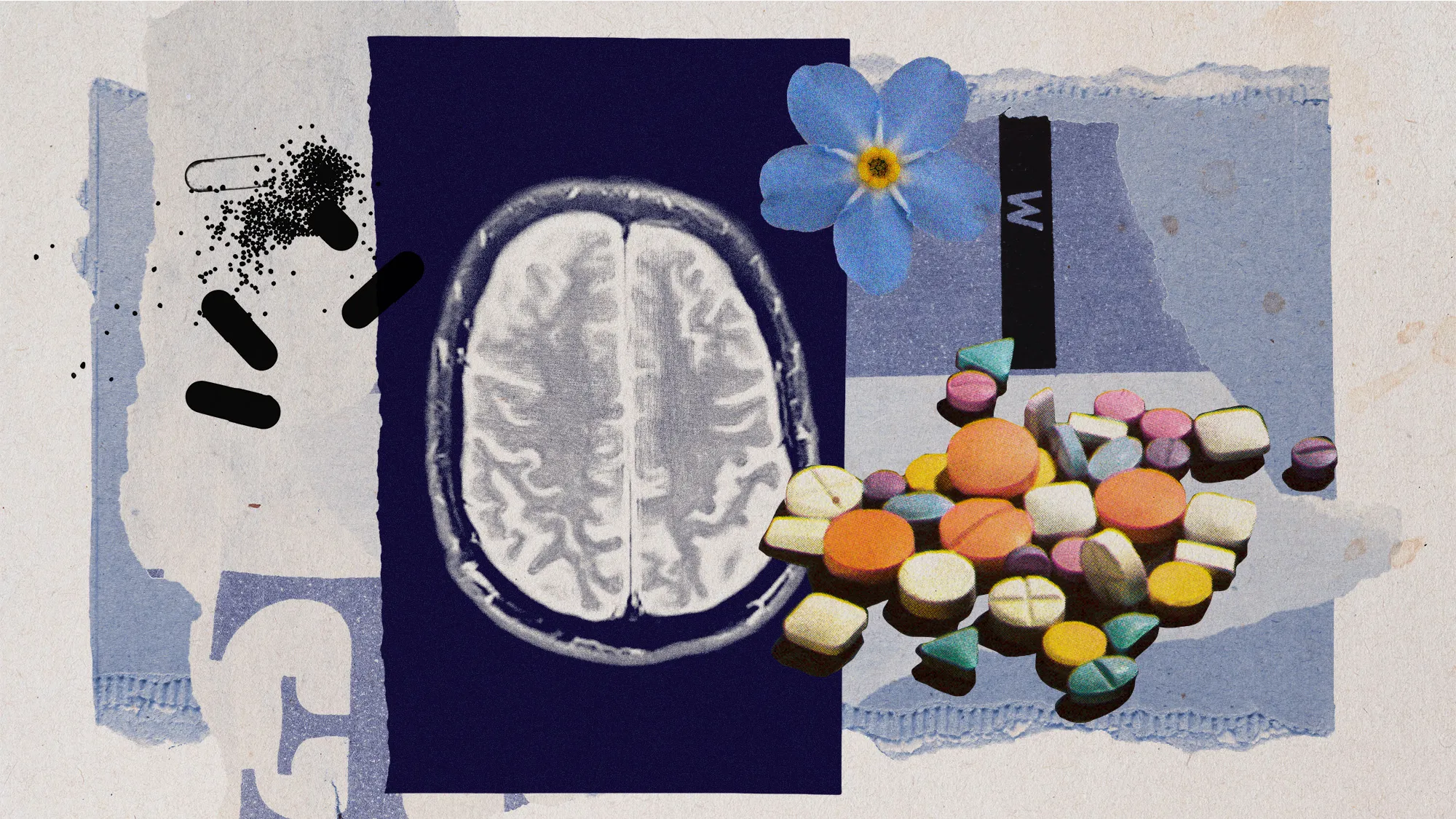
    Alzheimer’s no longer seen as untreatable

    Dementia research has reached a major milestone: Alzheimer’s disease is no longer untreatable, according to a landmark global report. The growing range of treatment options marks a shift from seeking a cure to focusing on slowing the disease or avoiding it altogether.

    The Alzheimer’s research field is “witnessing a period of remarkable scientific momentum,” said the 2026 World Alzheimer Report, which is coauthored by Alzheimer's Disease International and health journalist Paul Gallagher. The ADI is a global federation of dementia associations associated with the World Health Organization.

    Hundreds of clinical trials are investigating “medicines, diagnostics, lifestyle interventions, digital technologies, rehabilitation programs” and new care models for the disease, said the report. During the past five years alone, novel drugs such as donanemab (brand name Kisunla) and lecanemab (brand name Leqembi) have been shown to “modestly slow decline in early Alzheimer’s,” said ScienceAlert, and growing evidence suggests “some dementia cases could potentially be delayed or prevented through risk reduction.”

    There are also drugs that “millions of people are taking right now for other reasons” that might help with Alzheimer’s disease, with GLP-1s being “the big ones,” said Vox. The link between the popular weight-loss drugs and dementia is still “sort of theoretical,” but the Alzheimer’s Association is “putting $100 million behind some research projects” to investigate the possibility. Years from now, when “millions of people are now on these GLP-1 drugs,” we may “start to see Alzheimer’s less often,” Vox said. That’s “another reason to be optimistic” that the “future for this disease is looking brighter.”


    On this day

    September 24, 1941

    Nazi forces occupying Ukraine begin rounding up thousands of Kyiv-area Jews, beginning the Babi Yar massacre. Using Soviet sabotage as a pretext, the Nazis shot and killed 33,771 Ukrainians, mostly Jews, over two days in the Babi Yar ravine outside Kyiv. 


    TODAY’S newspaperS

    ‘On your dime’

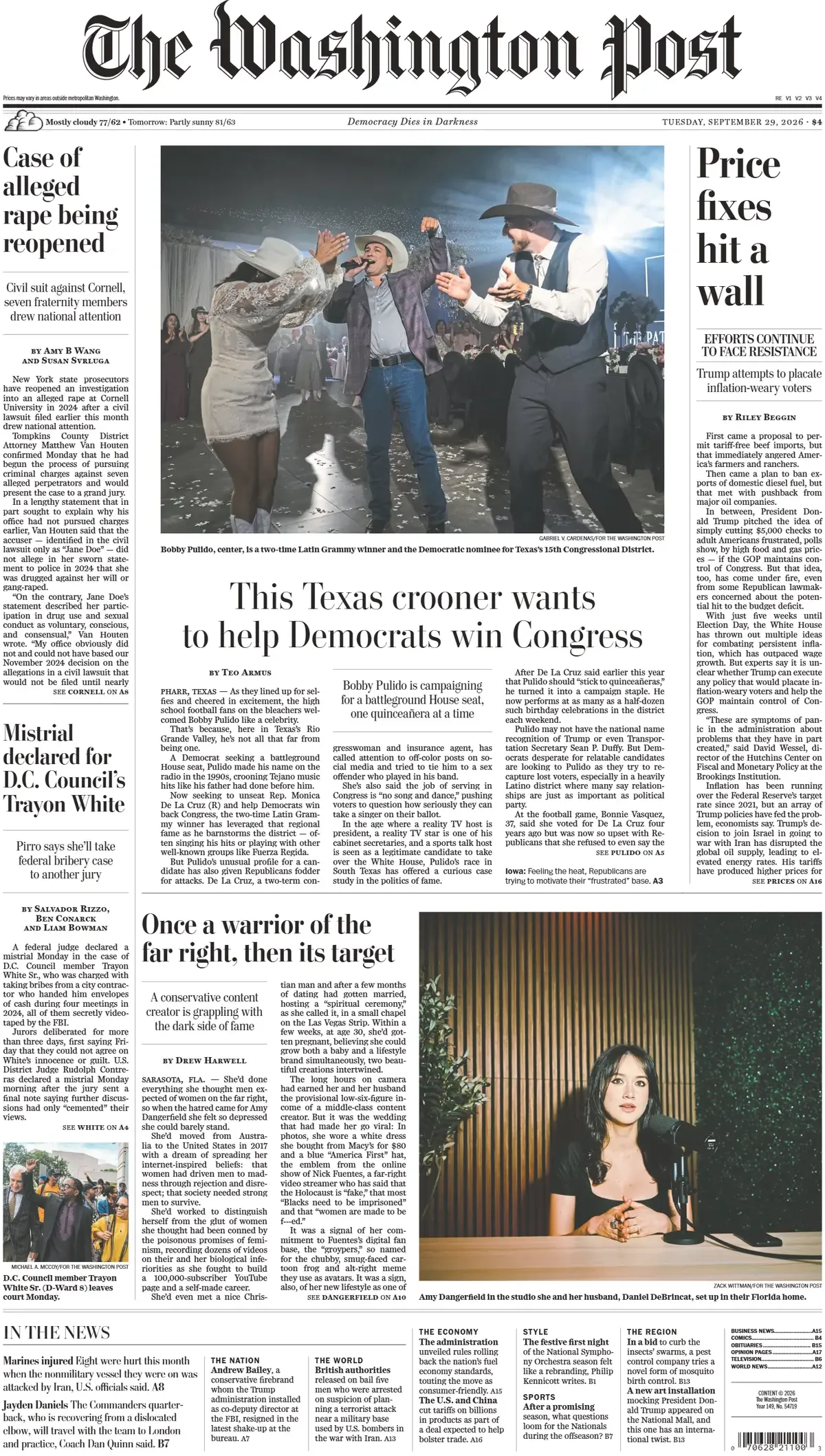
    “With his economic approval at 27%, Trump is trying to aid U.S. consumers,” The Philadelphia Inquirer says on Tuesday’s front page. “Price fixes hit a wall,” says The Washington Post. “On your dime, Trump reuses campaign ad,” says The New York Times. “New U.S. fuel rules are a blow to climate goals,” says the Los Angeles Times. “Mideast oil exports rebound as Iran’s grip on strait eases,” The Wall Street Journal says. Governor “suspends Georgia’s gas tax,” The Atlanta Journal-Constitution says. “Fight for voting rights ramps up” across South, says USA Today. Pennsylvania “measles outbreak hits nearly 900 cases,” says The Minnesota Star Tribune. SpaceX Starship’s “massive launch” sends it into orbit of Earth, says the Austin American-Statesman.

    ► See the newspaper front pages


    Tall tale

    Art from the cart

    A former 7-Eleven in Seattle has been transformed into an “Inconvenience Store” featuring brilliantly annoying items such as pretangled USB cords. The interactive art exhibit features “abstracted interpretations” of objects you would normally find at an American convenience store, the exhibit’s creators said on social media. The shop, created by artists Lilia Deering and Mary Anne Carter, also features a “landline iPhone” that, when answered, only plays “Vertigo” by U2.


    Morning Report was written and edited by Nadia Croes, Catherine Garcia, Scott Hocker, Anya Jaremko-Greenwold, Justin Klawans, Rafi Schwartz, Peter Weber and Kari Wilkin, with illustrations by Stephen Kelly and Julia Wytrazek.

    Image credits, from top: Michael Probst, file / AP Photo; Photographer Name / Getty Images; Mariam Zuhaib / AP Photo; Illustration by Julia Wytrazek / Getty Images
     

    Recent editions

    • Evening Review

      Russia steps up ‘shadow war’ with Europe

    • Morning Report

      UK foils suspected plot to bomb US base

    • Sunday Shortlist

      Robert Pattinson’s TV justice

    VIEW ALL
    TheWeek
    • About Us
    • Contact Future's experts
    • Terms and Conditions
    • Privacy Policy
    • Cookie Policy
    • Advertise With Us
    • FAQ
    Add as a preferred source on Google Add as a preferred source on Google

    The Week is part of Future US Inc, an international media group and leading digital publisher. Visit our corporate site.

    © Future US, Inc. Full 7th Floor, 130 West 42nd Street, New York, NY 10036.