The Week The Week
flag of US
US
flag of UK
UK
https://cdn.mos.cms.futurecdn.net/flexiimages/jacafc5zvs1692883516.jpg

SUBSCRIBE & SAVE

Less than $3 per week

Sign in
  • View Profile
  • Sign out
  • The Explainer
  • The Week Recommends
  • Newsletters
  • Cartoons
  • From the Magazine
  • The Week Junior
  • Student Offers
  • More
    • Politics
    • World News
    • Business
    • Health
    • Science
    • Food & Drink
    • Travel
    • Culture
    • History
    • Personal Finance
    • Puzzles
    • Photos
    • The Blend
    • All Categories
  • Newsletter sign up Newsletter
  • The Week’s Saturday Wrap
    An impasse with Iran, taking on tech moguls, and boom times for true crime

     
    controversy of the week

    Deadlock with Iran: Who will blink first?

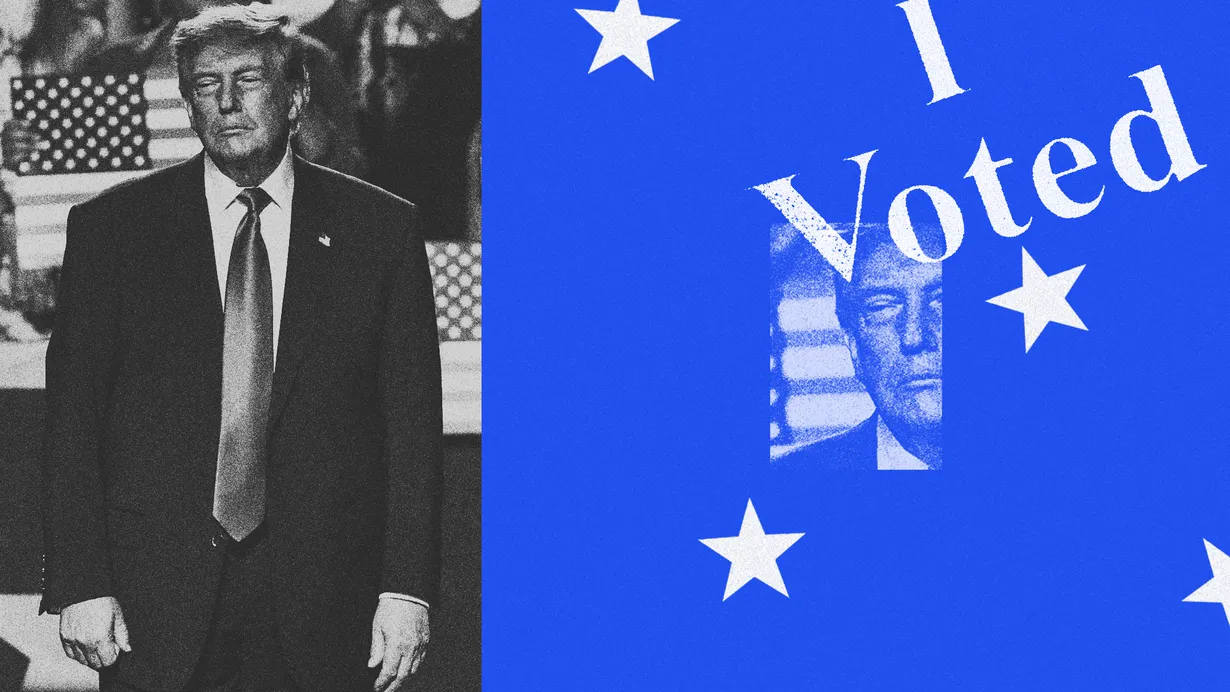
    The war with Iran has hit a “toxic stalemate,” said Janna Brancolini in the Daily Beast. American officials poured cold water this week on a proposal from Tehran to end the two-month conflict, under which the U.S. would end its naval blockade of Iranian ports and Iran would reopen the Strait of Hormuz, a crucial oil-shipping route whose closure is choking the global economy. The regime’s nuclear program, meanwhile, would be discussed at a later date. A U.S. official said the nuclear punt was a nonstarter because it “would deny Trump a victory,” and in a 4 a.m. social media post—accompanied by an image of Trump as a gun-toting action hero and the caption “NO MORE MR. NICE GUY”—the president made his feelings clear on Tehran’s offer. “They better get smart soon!” he wrote, saying the regime’s only hope is to go “nonnuclear.” For now, Trump is set on “an extended blockade of Iran,” said Alexander Ward in The Wall Street Journal. He’s decided his other options, walking away or resuming bombing, carry more risk than targeting “the regime’s coffers in a high-risk bid to compel a nuclear capitulation Tehran has long refused.”

    “Time is on America’s side,” said Mark Dubowitz and Miad Maleki in the New York Post. While U.S. motorists grumble about gas topping $4.20 a gallon, the remnants of Iran’s regime are battling triple-digit inflation, mass unemployment, a currency in “free fall,” and a U.S. blockade that has them “bleeding cash.” Worse, said Amit Segal in The Free Press, Iran is now “drowning in its own oil.” Within a few weeks, Iran will run out of storage for the crude it pumps out of the ground, leaving the regime no option but to halt production and see extraction systems clog up, a “death sentence” for its oil industry. 

    Don’t underestimate “Iran’s pain threshold,” said Ben Geman in Axios. The country has alternate storage facilities, including a fleet of floating crude carriers, and continues to sneak tankers past the U.S. Navy. And experts say the regime has other revenue sources, including oil exported overland, “to keep its troops paid and its position in Iran secure.” Iran believes it can hold out for at least another two or three months, said Ali Vaez in The New Yorker, and that “the American timeline” is more like two to three weeks. With Trump’s approval rating hitting a record low of 34% in a new Reuters poll, the regime thinks cost-of-living pressures will force him to back down and save Republicans from a wipeout in the midterms. Trump also doesn’t want the war to dominate his mid-May visit with Chinese President Xi Jinping, let alone for jet-fuel shortages to ruin this summer’s World Cup, which the U.S. is co-hosting with Mexico and Canada.

    Trump might still be able to reach a deal with Iran, said Katrin Bennhold in The New York Times, but it won’t be as good as the Obama-era pact he ripped up in 2018. That deal barred Iran from enriching uranium above 3.67% purity; its current stockpile is at 60% and with further processing could be used to build 100 nuclear bombs. And Tehran now has better cards to play than during the negotiations for the 2015 deal, including control of the Strait of Hormuz. For future talks to have any chance, Trump will “have to abandon his ‘I win, you lose’ approach to diplomacy,” said Trudy Rubin in The Philadelphia Inquirer. As gas prices climb higher, perhaps he’ll accept a compromise that lets both Iran and the U.S. save face. But based on everything we’ve learned about our president, “this hope requires a suspension of disbelief.”


    VIEWPOINT

    The big problem with AI moguls 

    “Regulating AI will require standing up to a class of plutocrats more fanatically opposed to public accountability than any in history. Suggest we slow the march to Singularity, and the tech lords will peg you as a literal or figurative devil. They’ve invested too much cash in their digital Second Coming to think otherwise. Taming the tech lords won’t be a battle on the scale of Armageddon. But the stakes will surely be higher than we’re able right now to know. Democrats, and indeed all humankind, should prepare for a long and bitter fight, because this enemy is at least as crazy as it is rich—and it’s really, really rich.”

    Timothy Noah in The New Republic


    briefing

    Murder, Inc.

    The true-crime industry is booming. But there’s a cost to repackaging tragedy as entertainment.

    How big is true crime?
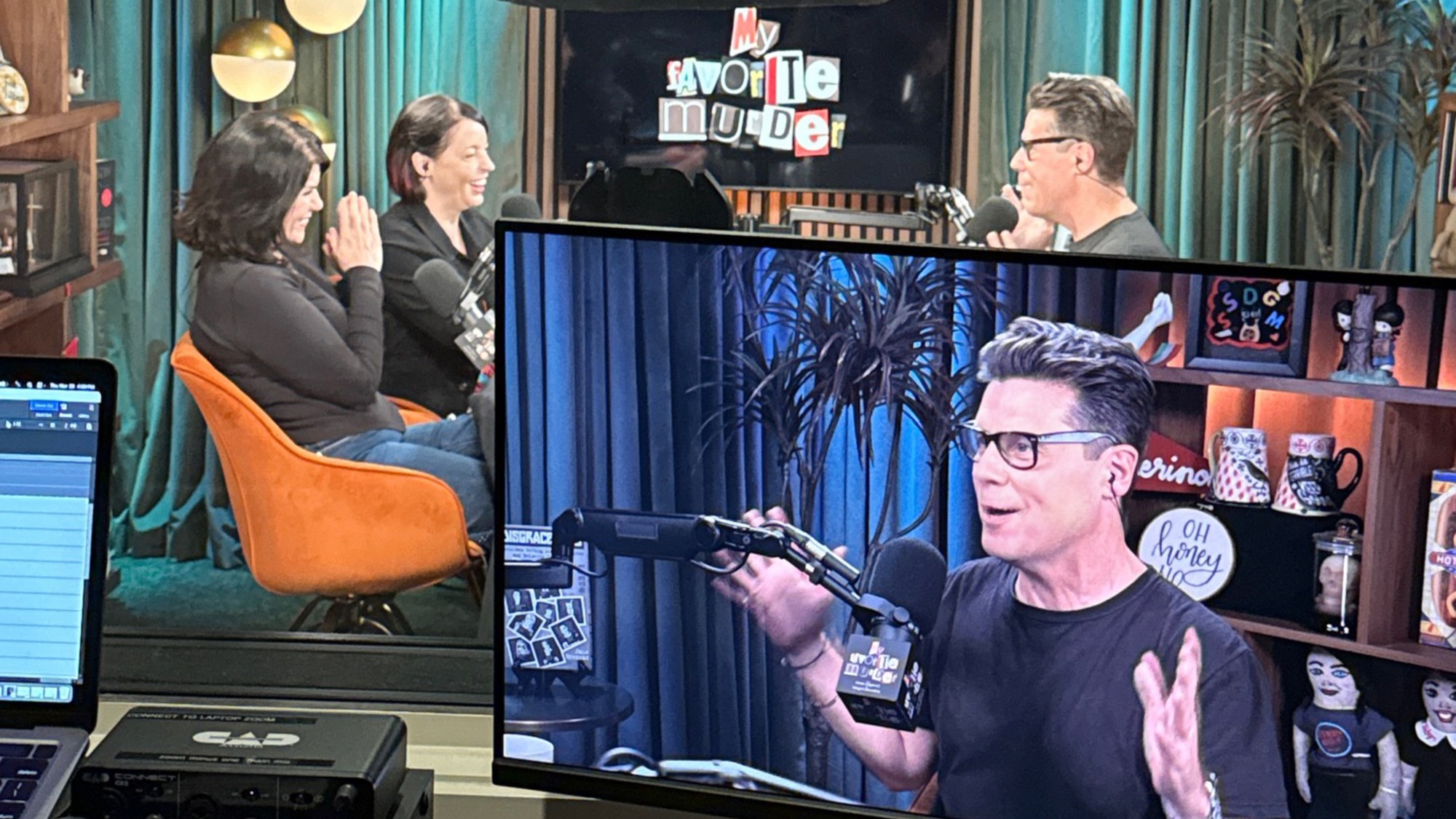
    It’s a nationwide obsession. According to a recent study by Edison Research, some 230 million Americans, or about 67% of the population, consume true-crime content: documentaries, podcasts, YouTube videos, and books that delve into real-life murders, scams, and scandals. The genre’s popularity can be seen in last year’s top-5 most-watched documentary TV shows on Netflix. Four had a true-crime theme and the No. 1 series, American Murder: Gabby Petito, had more than 60 million views. On podcast charts, series such as Crime Junkie and the audio version of NBC’s Dateline routinely sit among the most downloaded shows. This demand for crime-related content has led media giants to heap cash on top producers: In 2022, Amazon paid more than $100 million for exclusive distribution rights to the hit podcast My Favorite Murder. For the loved ones of some of the victims covered in the shows, it’s traumatizing to see their real-life pain replayed for profit and entertainment. “I’m so tired of murder victims being used as cash cows,” said Charlie Shunick, whose 21-year-old sister Mickey was kidnapped and murdered in Lafayette, La., in 2012. 

    How did the genre become so popular?
    True-crime stories have long been a subject of public fascination, from the penny dreadfuls of Victorian England to the murderheavy newsmagazine shows launched in the 1980s and ’90s, such as Dateline and CBS’s 48 Hours. But it was an NPR podcast, Serial, that ushered in the modern true-crime craze. For the first season in 2014, host Sarah Koenig delved into the 1999 murder of Baltimore high schooler Hae Min Lee, finding weaknesses in the case that led to the conviction of her ex-boyfriend, Adnan Syed. He was freed in 2022. That Serial season was downloaded more than 300 million times, and its success spawned thousands of copycats and a vast community of true-crime fans. “Everybody loves a whodunnit,” explains criminologist Scott Bonn.

    Who are true crime’s biggest fans? 
    They tend to be white and female. Women make up 62% of listeners to true-crime podcasts and an oversize share of truecrime TV watchers. Some social scientists say women may be drawn to the genre because, in an often violently misogynist society, they want to pick up on survival skills. “If you are more fearful, you are more interested in knowing more about how these situations can occur,” said psychologist Dean Fido. Others say it’s simple human nature to be fascinated with taboo subjects like murder and rape—just as it’s natural to rubberneck at a car crash. But critics argue that true crime gives Americans a misleading picture of real crime. Serial killers, a favorite of the genre, are exceptionally rare. And true-crime creators disproportionately focus on white female victims such as Petito, 22. Her 2021 murder in Wyoming Bridger– Teton National Forest received extensive media coverage, unlike the more than 700 Indigenous women who had disappeared in the park over the previous decade.

    What happens when a crime is spotlighted? 
    Sometimes, coverage results in a breakthrough. The case of 19-year-old Kristin Smart, who was murdered in her California Polytechnic State University dorm room in 1996, went cold until 2019 when Christopher Lambert, then a Cal Poly student, started a podcast, Your Own Backyard. Listeners sent in tips, and in 2022 former Cal Poly student Paul Flores was convicted of Smart’s murder. True crime can also reveal miscarriages of justice: Investigative podcast In the Dark helped free Curtis Flowers, a Black man from Mississippi who faced execution after being tried six times for the same crime. But critics say those shows are outliers, and that most of the genre is pure exploitation. Family members of the 17 young men murdered by Jeffrey Dahmer were outraged by Netflix’s hit Monster: The Jeffrey Dahmer Story, saying the streamer not only failed to consult them but also glamorized the serial killer. “We’re all one traumatic event away from the worst day of your life being reduced to your neighbor’s favorite binge show,” said Eric Perry, a cousin of Dahmer victim Errol Lindsey. 

    Are there other problems with the genre?
    Independent sleuths can interfere with active investigations. After the suspected February kidnapping of Nancy Guthrie, the 84-year-old mother of Today co-host Savannah Guthrie, hordes of true crime livestreamers set up camp outside Nancy’s Tucson home. Police had to deploy extra patrols to manage the vloggers, one of whom had a pizza delivered to the crime scene. Those streamers typically don’t adhere to the journalistic standards of mainstream reporters. Pima County Sheriff Chris Nanos had to publicly refute allegations made by some streamers that members of Guthrie’s family were involved in Nancy’s disappearance, calling the claims “wrong” and “cruel.” Meanwhile, some psychologists warn that hardcore fans can become desensitized to violence. My Favorite Murder listeners, who call themselves “Murderinos,” can buy T-shirts featuring the hosts’ catchphrases, including “Stay sexy. Don’t get murdered.”

    Can such shows keep our attention? 
    There are some signs the industry is stagnating. While true-crime podcasts today account for 15% of all new podcasts released, that share is down 20% from 2022, according to industry journalist Frank Racioppi. And today’s most-listened-to truecrime podcasts are largely the same ones as those four years ago. But few experts think our fascination with true crime will fade anytime soon, because it runs so deep. Dr. Michael Mantell, former chief psychologist for the San Diego Police Department, notes that prehistoric humans painted “true crime” images of people killing one another on cave walls. “This is not something that’s new,” he said. “It didn’t start with Ted Bundy. This began 30,000 years ago.”




    Only in America

    Harvard students are protesting a proposal to curb grade inflation, calling it “racially harmful.” A recent study found that A’s now make up 60% of all course grades, up from 24% in 2005. The proposal would “cap” A grades at 20% per course, but a student petition asserts that the very concept of assigning grades on the basis of performance creates “a system of ranking and sorting that mirrors and reinforces existing racial and socioeconomic hierarchies.”


    It wasn’t all bad

    Jailynn Dickerson recently surprised her grandmother with the gift of a lifetime: Her old house. The white ranch in Canton, Ill., with a garden of irises and roses, was where Dickerson lived for several years after her parents divorced. But her grandmother, Susan Rilea, was forced to sell it after the cost of repairs became too much. When Dickerson, 21, saw it listed again, however, she made an offer that got accepted. She plans to host a family gathering in July. “We’re going to all be back home,” Dickerson said.


    talking points

    Ukraine: Fighting back, without the U.S.

    “Strange as it sounds, it’s uplifting to visit Ukraine these days,” said David Ignatius in The Washington Post. That’s because “the good guys are winning—or at least holding their own.” Ukrainian troops pushed back a ferocious Russian offensive last fall, and their cities survived a frigid winter despite a Russian blitz on energy infrastructure. Now it’s spring, the power is still on, a $106 billion loan from the EU has been approved, and Ukraine is outpacing Russia despite being outgunned. The country’s military said it killed or wounded some 35,000 Russian troops in March, the highest monthly toll of a four-year war in which Russia has suffered more than 1.2 million casualties. That battlefield success has been powered by Ukraine’s homegrown drone industry. Its drones account for about 90% of all Russian casualties and are hitting targets deep behind enemy lines, including oil export facilities near St. Petersburg. In Russia, President Vladimir Putin “is facing a spring of discontent,” said Nathan Hodge in CNN.com. Ordinary Russians are frustrated with the sanctions-battered economy, “rolling digital blackouts” intended to curb dissent, and the war’s rising death toll.

    Kyiv has achieved all this without President Trump, said Phillips Payson O’Brien in The Atlantic. For more than a year, Ukrainian officials held out hopes they could win him over, even after Trump publicly berated President Volodymyr Zelensky in the White House, repeatedly lavished praise on Putin, restricted military aid—first out of spite, then out of a need for weapons to strike Iran—and tilted peace negotiations in favor of the Russian invaders. “But now Kyiv appears to have given up on the U.S.” It is striking new diplomatic and military partnerships, sharing its hardwon expertise in drone warfare with Saudi Arabia, the United Arab Emirates, and other Gulf nations targeted by Iran, and with European nations threatened by Russia. “Writing the U.S. off as a friend might once have been a sign of doom for Ukraine. It isn’t anymore.”

    Other American allies are following Kyiv’s example, said David French in The New York Times. In Europe and Canada, governments are racing to achieve greater military and financial independence from the U.S. They have woken up to the dangers of relying on a superpower protector whose leader has slammed them with sanctions, toyed with leaving NATO, and threatened to annex their territory. America may still be the world’s most powerful nation. But “the moral and strategic heart of the defense of liberal democracy” no longer beats in Washington. “It’s in Kyiv.” 


    people

    Theron’s legacy of trauma

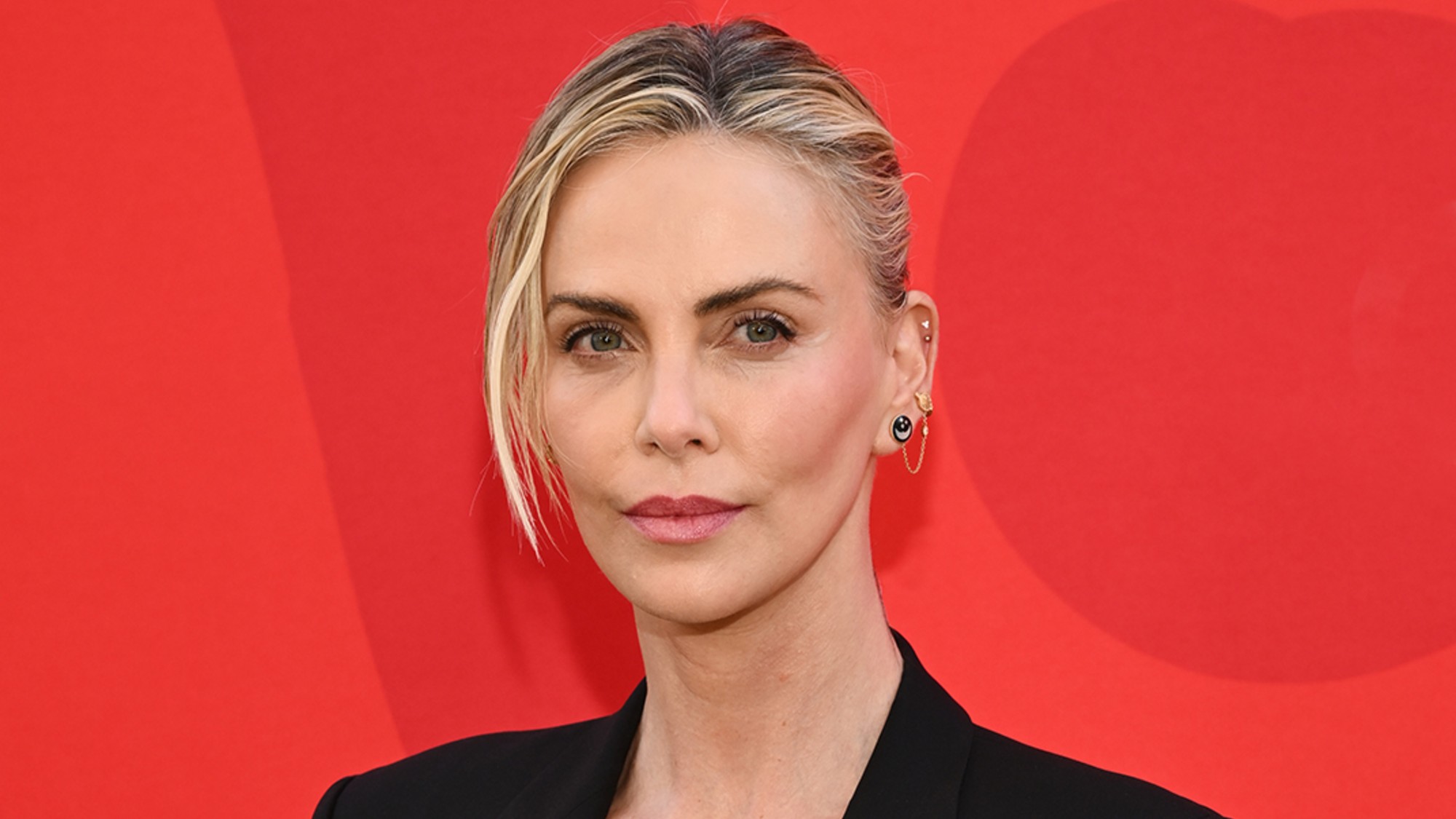
    Charlize Theron was shaped by brutality, said Lulu Garcia-Navarro in The New York Times Magazine. Growing up in South Africa in the 1980s, “you couldn’t avoid violence and turmoil,” says the actress, 50. Her hometown saw violent uprisings against apartheid and vicious state repression. “I saw things I shouldn’t have seen at a very young age. I saw a man burn inside a car on the side of the road.” Violence permeated her own home. Her father was a “full-blown drunk,” and a “scary” one. “He didn’t hit me, but there was a lot of verbal abuse, a lot of threatening language that just became normal.” Her mother spent years thinking about ways to extricate herself and Charlize. Then, when Theron was 15, her father tore into the driveway after a drinking session and “I just knew something bad was going to happen.” Theron and her mom tried to barricade the front door, but he began shooting through it, “making it very clear that he was going to kill us.” When he gained entry, Theron’s mother pulled her own gun and shot him dead. “The next morning she sent me to school. She was just like, We’re going to move on. Not necessarily the healthiest thing, but it worked for us.” Now a campaigner against domestic violence, Theron says “these things should be talked about because it makes other people not feel alone. I’m not haunted by this stuff anymore.”


    Saturday Wrap was written and edited by Theunis Bates, Chris Erikson, Bill Falk, Bruno Maddox, Tim O’Donnell, and Hallie Stiller.

    Image credits, from top: Getty, Facebook, Getty (2)
     

    Recent editions

    • Evening Review

      The DOJ’s crumbling credibility

    • Morning Report

      Congress ends record-long DHS shutdown

    • Evening Review

      Tech backlash in schools

    VIEW ALL
    TheWeek
    • About Us
    • Contact Future's experts
    • Terms and Conditions
    • Privacy Policy
    • Cookie Policy
    • Advertise With Us
    • FAQ
    Add as a preferred source on Google Add as a preferred source on Google

    The Week is part of Future US Inc, an international media group and leading digital publisher. Visit our corporate site.

    © Future US, Inc. Full 7th Floor, 130 West 42nd Street, New York, NY 10036.