The Week The Week
flag of US
US
flag of UK
UK
https://cdn.mos.cms.futurecdn.net/flexiimages/jacafc5zvs1692883516.jpg

SUBSCRIBE & SAVE

Less than $3 per week

Sign in
  • View Profile
  • Sign out
  • The Explainer
  • The Week Recommends
  • Newsletters
  • Cartoons
  • From the Magazine
  • The Week Junior
  • Student Offers
  • More
    • Politics
    • World News
    • Business
    • Health
    • Science
    • Food & Drink
    • Travel
    • Culture
    • History
    • Personal Finance
    • Puzzles
    • Photos
    • The Blend
    • All Categories
  • Newsletter sign up Newsletter
  • The Week’s Saturday Wrap
    The GOP’s midterm anxiety, America’s rising hunger, and the Pentagon’s death toll revision

     
    controversy of the week

    Midterms: Will a summer of campaigning save Republicans?

    Members of Congress are leaving Washington for their summer recess, said Calen Razor in Politico, but the break will be anything but relaxing for GOP lawmakers. With less than 100 days left before the midterm elections, and with Democratic candidates up by an average of 6.1 percentage points in the generic ballot, Republicans must now spend five anxious and “potentially grueling” weeks at home in their districts. They’ll try to somehow persuade voters not to punish them in November for the high cost of living, an unpopular war in Iran, and the failures and excesses of President Trump—whose approval rating has flatlined below 40%, and who is loudly and regularly attacking Senate Republicans for failing to pass his “SAVE America Act” package of voting restrictions. Parties in power usually lose seats in the midterms, said Liz Goodwin and Ben Binday in The Washington Post, and November was going to be “tough no matter what” for Republicans, given Trump’s sagging poll numbers. But with the Iran war heating up again, pushing gas prices back above $4, some GOP pollsters are “raising the alarm” about the widening enthusiasm gap between the two parties’ voters. While Democrats are champing at the bit, Republicans are “listless and demotivated,” with about 1 in 5 “reliable Republican base voters” saying they may stay home on Election Day, or even vote Democrat. 

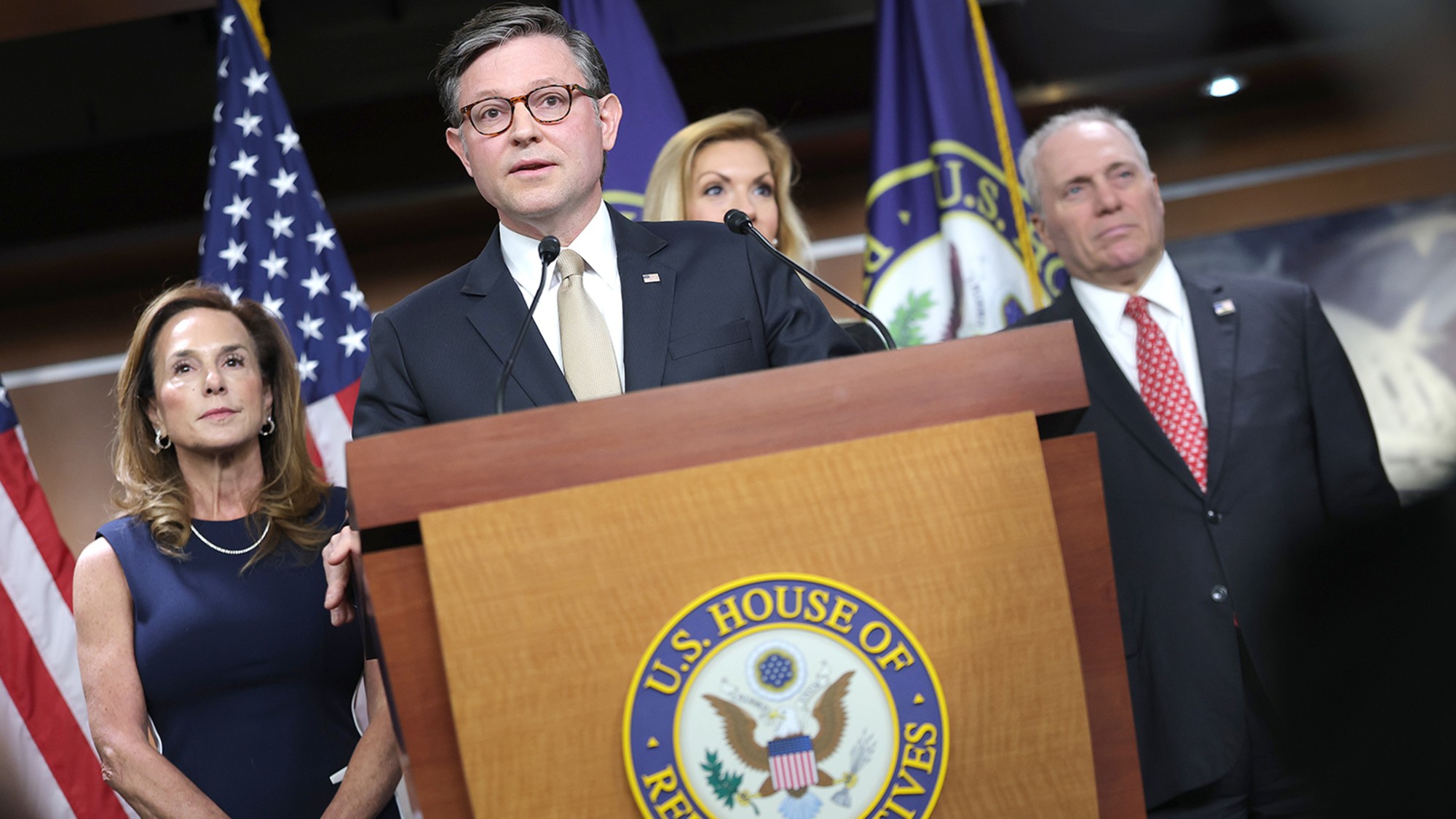
    Republicans should be doomed, said Chris Stein in The Guardian, but Democrats have their “own woes.” For starters, the party is broke. While the Republican National Committee has nearly $130 million in cash, most of it from wealthy donors, the Democratic National Committee is $2 million in debt. If the midterms were held today, Democrats would be favored to at least win back the House, said Julia Mueller in The Hill. The latest forecast from Decision Desk HQ suggests they’ll win a 15-seat advantage in the chamber and send House Speaker Mike Johnson’s caucus back into the minority. But that’s down 10 seats from early July, and it doesn’t help that Democrats are now attacking one another in a “bitter” public argument over the party’s future. 

    That debate has been a “gift” to Republicans, said Mona Charen in The Bulwark. Earlier this year, the GOP had “nothing to run on” and seemed headed for a deserved drubbing in November. But candidates aligned with the Democratic Socialists of America then scored a succession of Democratic primary wins, in New York and Colorado. The DSA’s platform calls for abolishing prisons, borders, and the presidency, while pushing sky-high taxes to fund a worker’s paradise of “free everything”—a set of policies seemingly designed to repel swing voters. The DSA’s rise has given the GOP its “midterm message,” said Ed Kilgore in New York. Republicans can and will now frame the midterms as a “vast ideological struggle” against Radical Socialism, with Trump and the GOP, for all their flaws, as the “safer bet.” 

    Much may hinge on the “final wild card” of the season, said Hans Nichols in Axios: Michigan’s Aug. 4 Senate Democratic primary between centrist Rep. Haley Stevens and “progressive insurgent” Abdul El-Sayed. A leftist Muslim with a habit of “equivocating about terrorism” may not be able to win in a Midwest swing state, said Nick Catoggio in The Dispatch. But will this “new red scare” really make the electorate as a whole forget 21 months of rising prices, ICE killings, weaponized government, and “lascivious corruption”? Socialism may be an “albatross” around Democrats’ necks, but “it’s likely less of one than Trump is for Republicans.”


    VIEWPOINT

    Trumpism’s triumph

    “Once upon a time I imagined that America’s institutions possessed some magical quality, like civic antibodies, which would cause them to resist Trumpism. I thought the Republican Party would rather lose an election than submit to Trump. I thought the conservative movement would rather move into the wilderness than bend itself to Trump. I thought the business community would rather alienate Trump than engage in cronyism. I thought the media establishment would embrace dissident status rather than pantomime the illusion of normalcy. In each case I was incorrect. Trump knew how weak American institutions were and I did not.” 

    Jonathan V. Last in The Bulwark


    briefing

    Cutting the food safety net

    Republicans tightened access to SNAP benefits. Millions more Americans are now going hungry.

    How big a problem is hunger in the U.S.? 
    The nonpartisan Urban Institute reports that nearly 1 in 4 adults last year experienced household food insecurity, defined as not having enough to eat or knowing where the next meal may come from. That’s up from 1 in 5 in 2020. (The Trump administration stopped collecting data on food insecurity in 2025, saying the information was used to “fearmonger.”) For nearly 40 million low-income Americans, the Supplemental Nutrition Assistance Program—commonly known as food stamps—serves as a lifeline. The 62-year-old program gives recipients an average of $187 a month to spend on groceries. Qualifying households must have an annual income below 130% of the poverty line, which this year is $15,960 for a single person and $38,680 for a family of five. Nearly 80% of households receiving SNAP benefits have members who are over 60, disabled, or under 18. But more than 4 million people—including at least 776,000 children—have been dropped from the program’s rolls over the past year, largely because of changes to SNAP included in the One Big Beautiful Bill (OBBB) passed by the Republican-led Congress last summer. With grocery prices up by nearly a third since 2020, a growing number of Americans are now struggling to put food on the table. “I go to sleep thinking about what are we going to [eat],” said Dee McDonald, a 65-year-old cancer survivor raising three grandsons in Mesa, Ariz., and who last year lost her SNAP benefits. “I’m exhausted.” 

    What did the OBBB do? 
    To reduce SNAP’s costs by $187 billion over the next decade, the package tightened eligibility requirements and shifted more financial responsibility to state governments. States became responsible for 75% of SNAP’s administrative costs, up from 50%. The OBBB also mandated states cover up to 15% of SNAP benefits if their error rate—mistakes that lead to under- or overpayment of benefits—exceeds 6%. Error rates nationally sit above 10%, and only nine states are below that threshold; those above will face billions of dollars in new costs unless they can bring their error rates down. The OBBB also removed work exemptions from groups including adults ages 54 to 64, veterans, and parents of teenagers, all of whom must now prove they spend at least 20 hours a week working or volunteering to get benefits. Refugees were made almost completely ineligible. 

    What’s the justification for those cuts? 
    The Republicans who passed the OBBB say the program had become bloated and strayed from its goal of helping society’s most vulnerable; they also saw SNAP cuts as a means to finance the law’s tax reductions. SNAP has expanded substantially in recent years: The number of recipients has more than doubled since the early 2000s, and the Biden administration lifted average benefits by more than 25% during the pandemic. Agriculture Secretary Brooke Rollins said the recent drop in SNAP enrollees is a result of a better economy, which means “people don’t need food stamps,” and measures in the OBBB that removed “fraudulent” claimants. 

    Is there much fraud in the program? 
    While error rates seem high, that’s mostly due to unintentional mistakes—often made by caseworkers—in calculating how much an applicant should receive based on their income and expenses. And most recipients are not avoiding work to claim benefits: 89% of SNAP households with children and a working-age, nondisabled adult have at least one working member. But the OBBB is making it harder for them to get on SNAP. States are scrambling to find ways to lower error rates: more paperwork to prove eligibility, phone interviews, and AI-run wage checks. That extra workload is swamping state SNAP agencies, many of which were already understaffed. In Massachusetts, over 80% of calls to the agency that administers SNAP are now being dropped; disconnections happen automatically when there aren’t enough agents to answer. Arizona has dropped nearly half of all state SNAP recipients, including Tiffany Hudson, a single mother of two who had been receiving $600 a month in food assistance to supplement her earnings as a part-time caretaker. After her benefits were cut off, she was told to provide more documentation, including a written statement that a monetary birthday gift from her father was not a recurring payment. “We’ve been going to food banks every week,” Hudson said. “We’re eating less.” 

    Can charities make up the difference? 
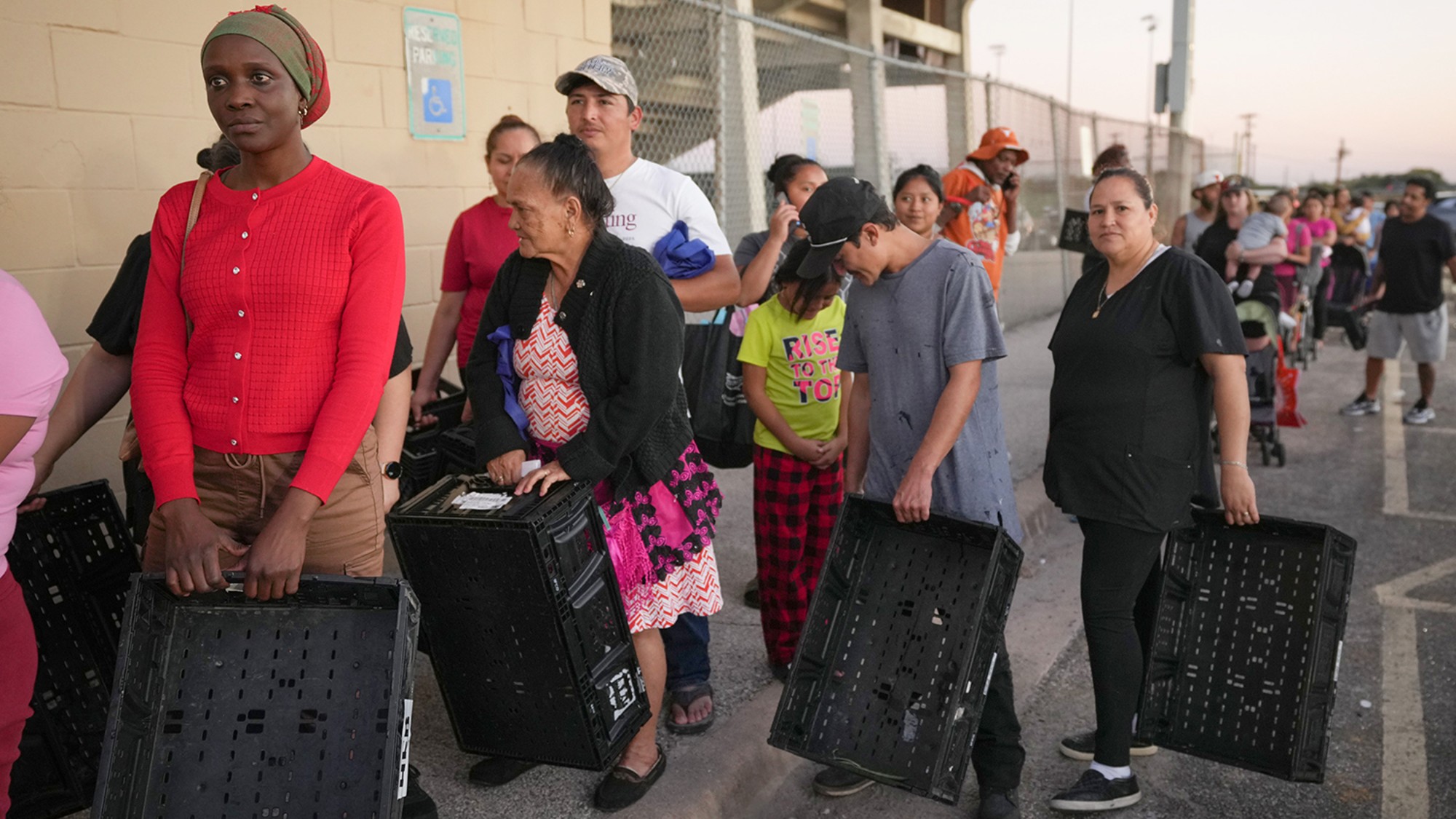
    They’re trying, amid a surge in demand. A New York Fed report in February revealed that nearly 16% of Americans now rely at least partly on donated food. Sometimes “people are sitting in a 2-to-3-mile line the night before a distribution starts,” said Amy Breitmann, director of a food bank in Augusta, Ga. Beth Fiorenza’s food bank in Phoenix has been receiving more than 200 people a day—up from 150 to 175—about 40% of them newcomers. “Charities do not have the capacity to make up for the shortfall,” said Harvard health policy professor Sara Bleich. “For every meal that food banks provide, SNAP provides nine.” 

    Are there more changes ahead? 
    An appropriations bill recently passed by the House would cut $141 million for fruit and vegetable benefits from the Special Supplemental Nutrition Program for Women, Infants and Children, or WIC. The program, in which nearly 5.4 million children and pregnant and postpartum women are enrolled, has historically enjoyed bipartisan support, and the bill’s Republican backers argue the cuts won’t limit access. But Trump’s own 2027 budget proposal, submitted in April, would reduce WIC’s monthly fruit and vegetable allowance for children under 5 from $26 to $10. “They just don’t care what they’re cutting,” said Myriah Hamilton, 35, a Philadelphia-area mother who receives WIC for her infant son and is struggling with the rising cost of food. “How much more do you think I can bear?”



    Only in America

    A Colorado woman’s health insurance claims are being denied because her name is too long. The trouble began when Carrie Ann Weinberger Morneault switched Medicare Advantage insurers last year. The new insurer truncated her name to comply with Medicare’s character limit, creating a mismatch with her Social Security records. Weinberger Morneault said she’s now considering changing her name to something shorter, but feels “I shouldn’t have to.”


    talking points

    Iran war: Are U.S. casualties being covered up?

    The Trump administration has found a novel way to limit the U.S. death toll in the Iran war, said Jack Crosbie in Rolling Stone: Claim that “some deaths don’t count.” Last week, the names of four service members killed by Iranian strikes in midJuly suddenly vanished from the Pentagon’s official list of war dead, lowering the total from 18 to 14. U.S. officials gave differing explanations for the change, from benign “temporary data disruptions” to the claim that the troops killed in Jordan and Iraq didn’t actually die in the war with Iran since “Operation Epic Fury” technically stopped when President Trump struck a temporary ceasefire with Tehran in April. Never mind that neither side ever ceased firing. After Senate Democrats and veterans groups protested the disappearance, the names of the four service members reappeared on the Pentagon website—but under a different category for “Overseas Operations,” which includes only those killed and injured since July 7, when fighting fully reignited. 

    This is only the latest attempt by the administration to obscure the human cost of its unpopular war, said Edith Olmsted in The New Republic. In March, Defense Secretary Pete Hegseth dismissed an Iranian drone strike on a tactical operations center in Kuwait as a “squirter,” and the Pentagon said just five troops were seriously wounded. In fact, dozens of soldiers suffered injuries “including burns, shrapnel wounds, and brain trauma.” And when the Pentagon restored the four dead soldiers to its online database, it also quietly upped the number of wounded personnel by more than 140— pushing total U.S. casualties in the war above 600. Trump last week tried to put a positive spin on the casualty count, said Joe Lancaster in Reason, favorably comparing in an online post the conflict’s “4 months, 18 dead” with the thousands of Americans killed in multiyear wars in Korea, Vietnam, Iraq, and Afghanistan. That may be true, but “American soldiers are still dead as a direct result of the conflict he helped instigate.” 

    This is predictable behavior from Trump, said David A. Graham in The Atlantic. He “has frequently treated the military as a political prop” and, according to his first-term chief of staff John Kelly, called U.S. troops who died in wars “suckers” and “losers.” Trump and Hegseth seemed to think that the American public are suckers as well, and thought their accounting tricks would prevent Iran war deaths from becoming a political liability. But that plan backfired and has succeeded only in drawing attention to the 18 dead Americans. “The administration sought to hide the war with Iran; instead, it showed the painful and growing costs.”


    people

    Why Nolan is happy to be a Luddite

    Christopher Nolan doesn’t own a smartphone, said Robbie Collin in The Telegraph (U.K.), and he has no desire to get one anytime soon. “You guys have all become pod people,” the director of The Odyssey, 56, says with a laugh. Why is he so anti-phone? “Partly because I know I’d become horribly addicted. I’d spend all my time looking things up.” But his aversion is also about his work. “I find I’m only able to advance my thinking on projects in those pockets of time where everybody usually jumps on their phone. Waiting for a train, in an airport, for somebody to turn up for dinner.” As much as he detests phones, his greatest tech foe these days is artificial intelligence. Nolan shuns AI in his films—he used a mix of puppetry, animatronics, and computer graphics to bring The Odyssey’s cyclops to life—and is delighted that some younger cinemagoers and a growing number of Gen Z directors are “utterly rejecting it. I’ve ­­never seen a more rapid wholesale dismissal of a supposedly foundational jump in technology.” He cites his own four children, all in their late teens and early 20s and all digital natives. “Their judgment of AI ‘slop’ has been immediate and harsh. They see it for what it is very quickly—and it’s much easier for them to identify it, because it grew out of an online world they know really well.” 


    Saturday Wrap was written and edited by Theunis Bates, Bill Falk, Bruno Maddox, Tim O’Donnell, and Hallie Stiller.

    Image credits, from top:  Getty; Getty; Getty; Getty
     

    Recent editions

    • Evening Review

      Iran’s covert allies?

    • Morning Report

      Peace progress in Gaza?

    • Evening Review

      Abolish the Senate?

    VIEW ALL
    TheWeek
    • About Us
    • Contact Future's experts
    • Terms and Conditions
    • Privacy Policy
    • Cookie Policy
    • Advertise With Us
    • FAQ
    Add as a preferred source on Google Add as a preferred source on Google

    The Week is part of Future US Inc, an international media group and leading digital publisher. Visit our corporate site.

    © Future US, Inc. Full 7th Floor, 130 West 42nd Street, New York, NY 10036.