The Week The Week
flag of US
US
flag of UK
UK
https://cdn.mos.cms.futurecdn.net/flexiimages/jacafc5zvs1692883516.jpg

SUBSCRIBE & SAVE

Less than $3 per week

Sign in
  • View Profile
  • Sign out
  • The Explainer
  • The Week Recommends
  • Newsletters
  • Cartoons
  • From the Magazine
  • The Week Junior
  • Student Offers
  • More
    • Politics
    • World News
    • Business
    • Health
    • Science
    • Food & Drink
    • Travel
    • Culture
    • History
    • Personal Finance
    • Puzzles
    • Photos
    • The Blend
    • All Categories
  • Newsletter sign up Newsletter
  • The Week Evening Review
    Russia and China boost Iran, drones in schools, and Trump’s TACO moments

     
    TODAY’S BIG QUESTION

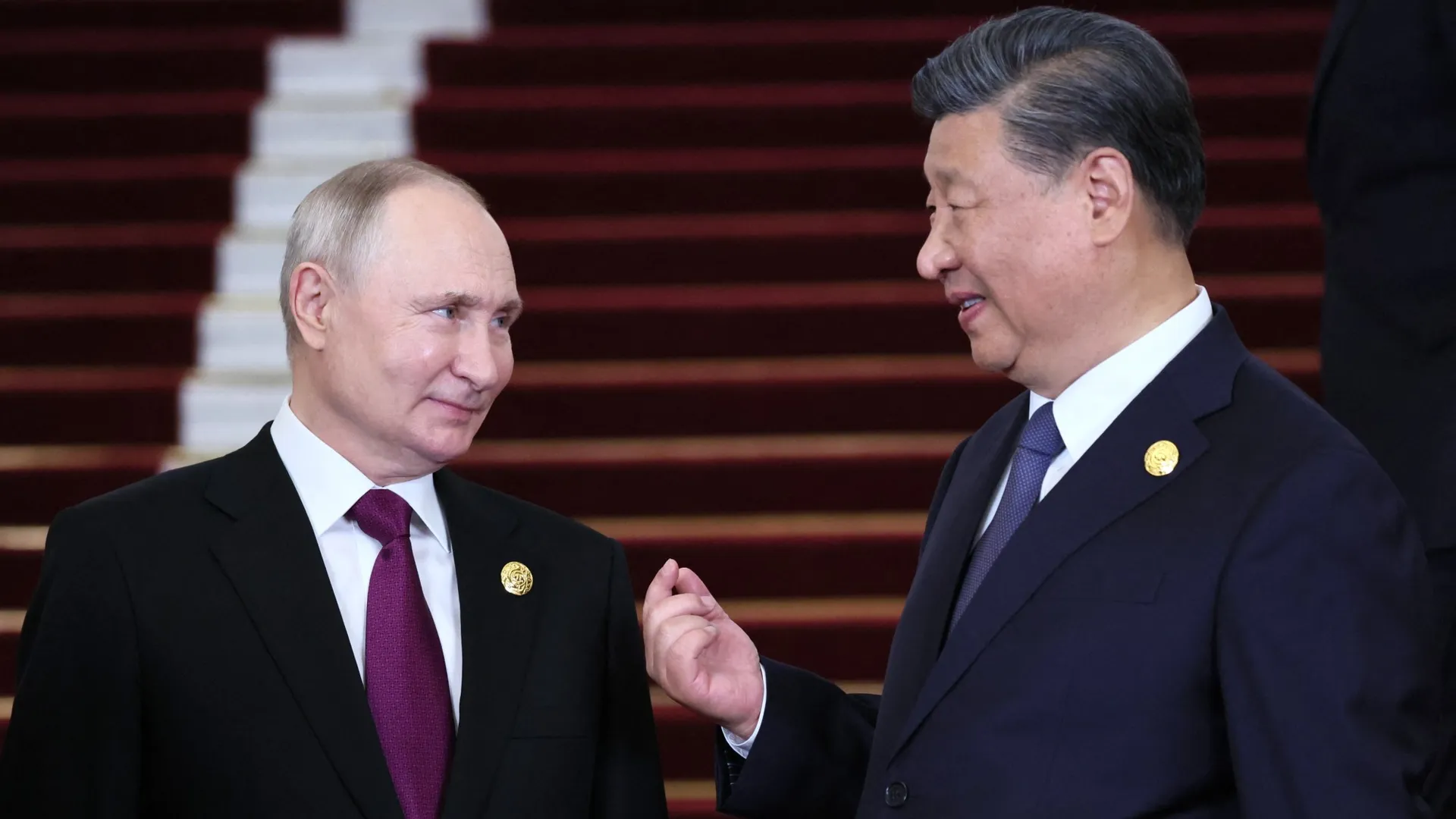
    Are Russia and China helping Iran against the US?

    The recent Iranian strikes on CIA facilities have led U.S. intelligence officials to believe that unprecedented intelligence cooperation is taking place between Russia and Iran, with China providing support. The U.S. is investigating how Iran was able to accurately target multiple covert facilities in Saudi Arabia and other allied countries in March. Relatively few countries possess both the capabilities and motivation to provide Tehran with such highly sensitive data, according to former CIA officials, per Reuters.

    What did the commentators say?
    Moscow and Beijing have “coordinated closely throughout the crisis,” said Jasim Al-Azzawi at Middle East Monitor, jointly convening U.N. sessions and “declining to abandon Tehran diplomatically even as they withheld direct military support.” But Iran’s attacks on CIA sites suggest Russia “might be playing a more active role,” said Al Jazeera. It’s certainly a “realistic theory” given that the attacks were “far more advanced” than anything Iran has ventured before, said Nicole Grajewski, of the Center for International Research at Sciences Po Paris, to the outlet.

    Russia also offered to provide Iran with “unjammable drones and training on how to use them against American troops in the Gulf,” according to a secret document seen by The Economist and estimated by the outlet to have been from the first six weeks of the war. For Russia, the economic benefits of helping to prolong the war are obvious: More countries are buying Russian oil while the Strait of Hormuz remains unstable, said Radio Free Europe. China may also see “diplomatic gains.” 

    The war has “accelerated three of China’s long-held goals,” said Fareed Zakaria at The Washington Post: a Middle East “less dependent on America, a world more dependent on critical Chinese technology, and a reputation for Beijing as a serious and steady world power.”

    What next?
    The U.S. is “surging forces, medics and weaponry to the Middle East” to give President Donald Trump “more muscular military options,” said The Wall Street Journal. But any escalation will be complicated by the support of China and Russia. With China supplying vital “technological and military support,” said Nadia Helmy at Modern Diplomacy, Iran is a regional power that’s “difficult to deter without significant cost.”


    TALKING POINTS

    Pepper-spraying drones combat school shooters

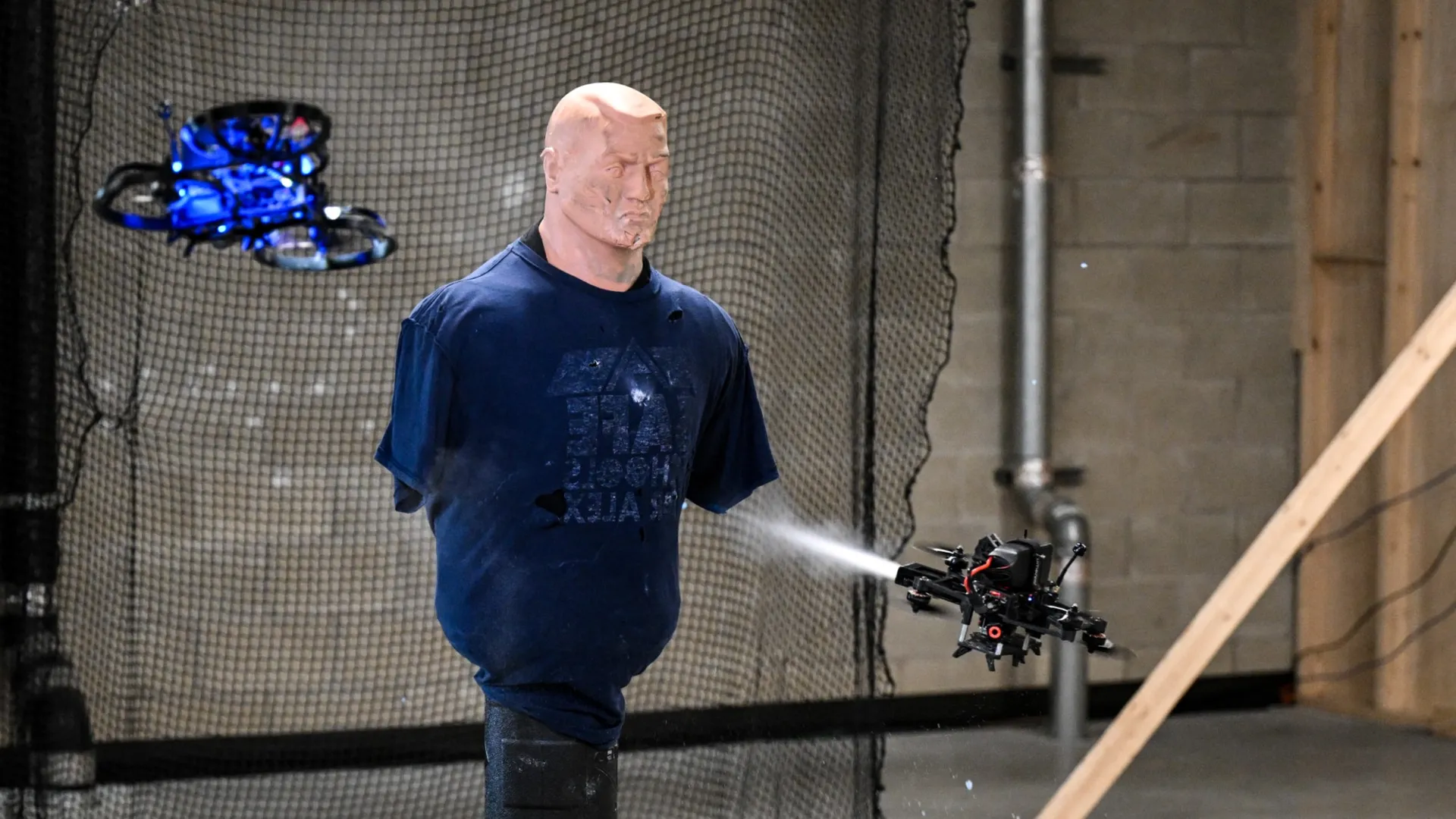
    One company in Austin, Texas, claims to have found a new solution to school shooters. Mithril Defense is designing pepper-spraying drones it says can respond to an active shooter within seconds, inspired by the Ukrainian military’s successful drone program. But some feel adding this technology into schools might bring more problems than solutions.

    ‘It gives another set of eyes and ears’
    The drone program, called Campus Guardian Angel, provides an “elite, onsite safety response capability that works alongside school safety teams, confronting any active shooter threat,” said Mithril’s website. The drones are flown remotely and can reportedly arrive at a shooter’s location in 15 seconds. They “unload pepper rounds and are capable of hitting the shooter at a speed of up to 70 mph,” said The Independent.

    The machines, currently being provided to schools in Colorado, Florida and Georgia, are “flown by several of the top drone pilots in the world, and are supported by an elite team of former military operators, law enforcement and first responders,” Justin Marston, the CEO of Mithril, told The Independent. 

    Law enforcement has lauded the use of these drones. “It gives another set of eyes and ears of the campus that I can’t see all the time,” Deputy Trevor Autrey, the school resource officer at Deltona High School in Deltona, Florida, told WPTV West Palm Beach. 

    ‘Some really serious reservations’
    Others say the drone program could cause additional safety issues. The drones “might accidentally target a fleeing student instead of a shooter” or “remote pilots, in a split-second decision, might mistake a law enforcement officer for a shooter,” Curtis Lavarello, the head of the advocacy firm School Safety Advocacy Council, said to The Washington Post.

    “I have some really serious reservations about the deployment of drones in schools,” Lavarello told the Post. Some experts have argued that “low-tech measures, like simply locking external doors, are just as effective,” said the outlet. 

    “These drones aren’t patrolling; they just pop up when needed. So that’s part of the problem,” Tony Montalto, whose daughter died in the 2018 Marjory Stoneman Douglas High School shooting, told WPTV. “We need to focus” on “prevention” rather than “reaction.” 


    Statistic of the day

    $17.99: The monthly price to lease an iPhone 17 through a new program Apple has launched with payment platform Klarna. The initiative attempts to make phones, Macs and other products “feel more affordable at a time when electronics prices are climbing and consumers are holding onto devices longer,” said CNN.


    QUOTE OF THE DAY

    ‘It’s not often in life that you get to see this type of dream come true right before your eyes.’

    Women’s Pro Baseball League co-founder Keith Stein to NBC News, on the league opening its inaugural season this weekend after years of planning. The Los Angeles Queens will play the New York Heights tomorrow.


    IN THE SPOTLIGHT

    The TACO moments of Trump’s second term

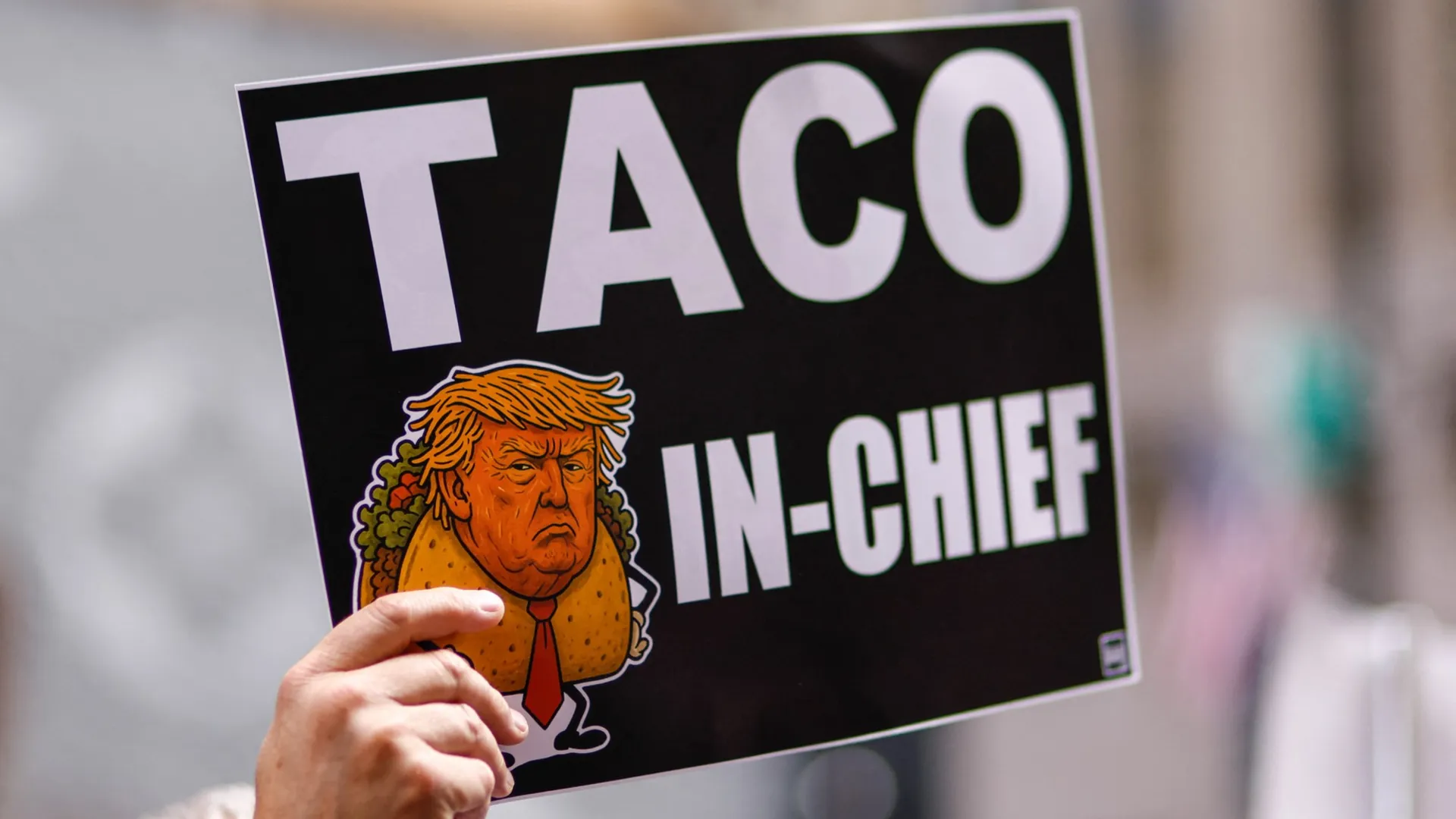
    It isn’t often we can trace a widely-used turn of phrase to a single, inspired genesis. With the mocking “TACO” appellation, we can. Coined in May 2025 by Financial Times columnist Robert Armstrong, the acronym points to President Donald Trump’s inclination to “Always Chicken Out” on his threats and proclamations. Here are some of his biggest TACO moments to date.

    ‘Liberation Day’ tariffs
    The effects of Trump’s 2025 attempt to “remake the global trading system” by “erecting the largest tariff wall around the U.S. economy” in a century are “well-documented,” said Bloomberg. “Markets crumbled and then recovered when Trump delayed and scaled back his original duties” multiple times in the ensuing weeks.

    Ultimately, the administration “threatened far more tariffs” than Trump has “carried through on,” said NBC News. Trump’s trade strategy since his Liberation Day tariff rollout has been “rushed and improvisational,” said the Council on Foreign Relations. 

    Immigration raids at farms and hotels
    “Changes are coming!” Trump said in a June 2025 post on Truth Social that acknowledged “our very aggressive policy on immigration is taking very good, long-time workers away” from key industries. The waffling commitment to his mass deportation raids was an “echo of Trump’s back-and-forth rhetoric on tariffs,” said The Detroit Free Press.

    It was a “rare concession” from Trump that his policies were “hurting American farmers and hospitality businesses,” said The New York Times — “industries and constituencies that he does not want to lose.” The message from Trump’s shifting tactics is “clear,” said The Daily Beast. The president’s “commitment to his own anti-immigration agenda cannot withstand pressure from his supporters” to protect “their bottom line.”

    Threatening to end Iranian ‘civilization’
    In “one of the more bizarre days in U.S. diplomatic history,” Trump’s April threat to Iran that a “whole civilization will die tonight” ended with the president “proclaiming a two-week ceasefire” to the U.S.-led war, said The Washington Post. Trump also announced the start of negotiations based on Tehran’s “10-point proposal,” which was full of “conditions that should be utterly unacceptable to any U.S. administration.” Trump can now “pretend that his bloodcurdling threats coerced Iran into giving up,” when he has “so far given up more than the mullahs did.”

    Read more


    Good day 🪨

    … for alone time. Some Stonehenge visitors will get the chance to spend 20 minutes alone in the inner stone circle of the prehistoric monument. English Heritage, which manages the site, is running a prize draw that will allow winners to get up close and personal with a part of the monument that is usually cordoned off and thronging with tourists.


    Bad day 🗺️

    … for geographical knowledge. A U.S. State Department presentation at a global conference in Brazil featured a map of Africa that mislabeled every country. The errors caused a “stir among attendees who took screenshots and posted them online,” said Reuters. The map contained an “artificial intelligence watermark that signals it was made with OpenAI tools.”


    Picture of the day

    Beat the heat

    People cool off at a water park amid hot weather in Nanjing, China. Temperatures are soaring to 97 degrees this week, and brutal heat waves across several regions have forced authorities to open heat-relief areas, install water-misting devices and outfit outdoor city workers with air-conditioned uniforms.
    CN-STR / AFP / China OUT / Getty Images


    Puzzles

    Daily sudoku

    Challenge yourself with The Week’s daily sudoku, part of our puzzles section, which also includes guess the number

    Play here


    The Week recommends

    August’s books are perfect hot-weather transporters

    Summer is simmering to its end soon, but we still have all of August and much of September to tackle that summer reading. No matter what kind of book you’re looking for, this month has a lot to offer.

    ‘Etna’
    Paul Yoon’s story of a former military dog “attempting a treacherous journey home” during the aftermath of a war “rarely moves in expected ways,” said Library Journal. The author’s “fabulist shading” positions the story at a “nexus of grim reality and hopeful fairy tale, enlivening and devastating readers in equal measure” as they watch the dog “reckon with the all-too-human conclusion that one can’t go home again.” (Aug. 4, $28, Simon and Schuster)

    ‘Take What You Can’
    This touching novel by Naima Coster about the lifelong friendship between Val and Milly follows the pair from when they met in 2004 as the only Black students in a French study-abroad program, to a decade later when they are both mothers. Writing with “sensitivity, candor and insight,” Coster “compellingly tracks the ups and downs of longstanding friendship, motherhood and daughterhood, marriage and career,” said Kirkus Reviews. (Aug. 4, $30, Pamela Dorman Books)

    ‘A Tender Age’
    In Chang-Rae Lee’s seventh novel, a man “looks back on the small wounds and larger traumas of his youth,” said Kirkus Reviews. Jeon-Gi, the narrator, recalls life as a 10-year-old boy in 1976 New York City, a “pivotal time for this son of Korean immigrants.” “A Tender Age” is a “melancholy, emotionally rich story of preadolescent struggles.” (Aug. 11, $30, Riverhead Books)

    Read more


    Poll watch

    A quarter of young Africans believe USAID cuts could positively impact their countries by forcing local leaders to take more responsibility for solving issues, according to an African Youth Survey of nearly 5,000 18- to 24-year-olds across 16 countries. However, 46% fear the cuts will be damaging.


    INSTANT OPINION

    Today’s best commentary

    ‘Why is it so hard to ban child marriage?’
    Sarah Jones at Intelligencer
    Child marriage is a “fringe practice, even within the most conservative religious and cultural communities, but it is also more common than many Americans realize,” says Sarah Jones. Children “who marry are more likely to drop out of high school and face higher rates of poverty,” yet “lawmakers have dragged their feet.” Many “Republican lawmakers continue to see marriage as a solution to illicit sex or an underage pregnancy — and a way to enforce traditional values.”

    ‘The banality of evil in the Border Patrol’s secret anti-immigrant slur’
    Gustavo Arellano at the Los Angeles Times
    For “half a century, Border Patrol workers have used the onomatopoeic word” ‘tonk,’ referring to the “sound of someone getting hit, as slang for undocumented immigrants,” says Gustavo Arellano. The word is “workplace lingo showing that the banality of evil that’s la migra on its best days has transformed into something far uglier.” The “slur is so vile — predicated on violence by law enforcement, unlike ethnic jabs that insult food or culture — that it has never crossed over into mainstream English.”

    ‘How trying to make sense of the Nolan Wells tragedy led to rampant misinformation’
    Keisha N. Blain at MS NOW
    In a “striking example of how misinformation can spread during a developing news story, a viral Facebook post claimed that Nolan Wells, the Black Mississippi teenager whose death after visiting a Gulf Coast island with a group of white friends remains under investigation, was related to the legendary journalist and anti-lynching activist Ida B. Wells,” says Keisha N. Blain. For “many reasons, including ones related to race, history and geography, discussions about his death are especially susceptible to misinformation.”


    WORD OF THE DAY

    haul-out

    An aquatic mammal behavior in which animals leave the water to rest, molt or breed on shore. “Neil the Seal” has become a viral star in Tasmania for his regular haul-outs into the island’s coastal communities, but his last four have come at a cost: AUS$45,674 for damage and safety measures, according to the state’s environmental department.


    Evening Review was written and edited by Theara Coleman, Nadia Croes, Scott Hocker, Anya Jaremko-Greenwold, Justin Klawans, Summer Meza, Rafi Schwartz and Jamie Timson.

    Image credits, from top: Sergei Savostyanov / Pool / AFP / Getty Images; Ronaldo Schemidt / AFP / Getty Images; Kena Betancur / AFP / Getty Images; Simon & Schuster / Penguin Random House
     

    Recent editions

    • Morning Report

      Peace progress in Gaza?

    • Evening Review

      Abolish the Senate?

    • Morning Report

      Fauci under fire

    VIEW ALL
    TheWeek
    • About Us
    • Contact Future's experts
    • Terms and Conditions
    • Privacy Policy
    • Cookie Policy
    • Advertise With Us
    • FAQ
    Add as a preferred source on Google Add as a preferred source on Google

    The Week is part of Future US Inc, an international media group and leading digital publisher. Visit our corporate site.

    © Future US, Inc. Full 7th Floor, 130 West 42nd Street, New York, NY 10036.