Artificial intelligence is transforming the publishing industry. What does that mean for human authors?
How widespread is AI use in publishing?
It’s almost impossible to gauge how many authors are using tools like ChatGPT. But it appears that generative AI, which can churn out a novel-length work with a few simple prompts, is driving a boom in book publishing. More than 4 million books were released in the U.S. in 2025, up a whopping 33% from the previous year. That jump was largely due to a spike in new self-published works, which rocketed 39% year on year to 3.5 million. While it is easier than ever to self-publish, research suggests many of those books were not written by humans. A National Bureau of Economic Research study found that about half the books published in 2025 and sold on Amazon contained AI-generated text, up from 23% in 2023. (ChatGPT was released in late 2022.) AI writing is most common in popular genres such as romance fiction, which tends toward formulaic plots, and in nonfiction, where major news events can trigger a flood of AI books within hours. Online influencers “have been spreading the word for some time: Use AI to write a book. If it sells, it’s free money,” said tech journalist Kashmir Hill, who recently discovered an AI-generated, error-riddled biography of herself on Amazon. The “author” of Hill’s biography published nine other books the same week. But AI writing is not just confined to the self-publishing world: In recent months, at least two major publishing houses have withdrawn books over suspicions of AI use.
Which books were pulled?
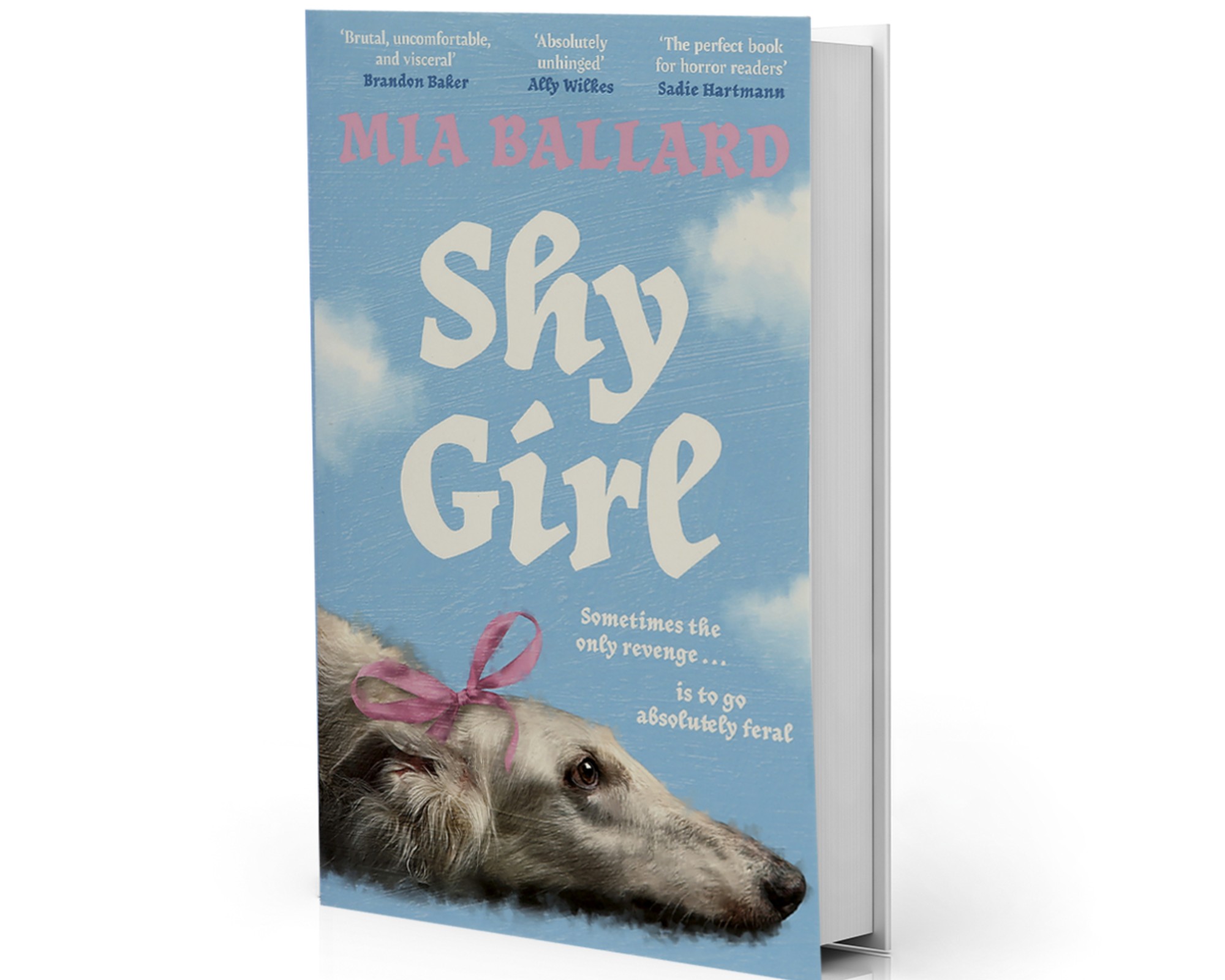
Most recently, the hotly anticipated debut novel from Nigerian-born Jerry Falade. Fourteen publishers bid for the U.S. rights to Call Me, I’ll Hide the Body; Falade, a grad student at Southern Methodist University, signed with a Macmillan imprint for more than $2 million. But the deal collapsed last month after Falade’s agents told the publisher they could no longer support the “stunningly good” crime novel because of AI concerns. Falade says he used AI only for research “and not for writing the book itself” and argues the deal’s cancellation was racially motivated. A few months earlier, Hachette nixed the U.S. release of Mia Ballard’s horror novel Shy Girl over suspicions it was largely AI-generated. After the book was published in the U.K., readers pointed to linguistic tells of AI, including word repetition (“sharp” or “sharply” appears 159 times in 247 pages); the grouping of adjectives, phrases, and ideas into threes; and the frequency of “something x, something y” sentence construction, such as, “In his hands is a cake, gleaming, its pink frosting too smooth, like plastic dipped in sugar, like something that belongs on a screen.” Ballard claims that an acquaintance who edited the book used AI, not her. “Everyone liked” the book, one publishing exec told the Financial Times. “After Shy Girl, every editor is nervous.”
Are publishers trying to weed out AI?
Most publishers require writers to affirm that their work is “original,” which is increasingly being interpreted as a ban on AI-created text and images. That’s a sensible safeguard because AI-generated works are not protected by copyright, the foundation of the $140 billion global publishing industry. But publishing houses are loath to entirely bar authors from using AI, because there are other ways it can usefully be deployed, such as to check grammar and conduct research—although there are risks in handing that latter job to a chatbot.
What kind of risks?
Media entrepreneur Steven Rosenbaum used AI tools to research and organize The Future of Truth, a nonfiction book about how AI reshapes reality. In May, The New York Times revealed the book contained numerous fabricated and misattributed quotations dreamed up by AI. Rosenbaum said that if the episode “serves as a warning about the risks of AI-assisted research and verification, that is why I wrote the book.” To avoid such embarrassments, a growing number of publishers are turning to AI detectors: software that promises to scan a text and accurately reveal how much of it was likely AI-generated.
Does the technology work?
That depends on whom you ask. One popular detector, GPTZero, claims to be 99% accurate. Pangram, another favored detector, claims a false positive rate of only 1 in 10,000. But critics argue that AI detectors are deeply flawed. After his sci-fi manuscript was rejected by numerous publishers, Antonio Bricio, an engineering consultant and aspiring author, ran the text through the AI detector Originality.ai. The program was 100% certain he’d used AI, but when he deleted just a few sentences, it declared the manuscript to be 100% human. “What if publishers or agents start running these AI tools on everybody?” asks Bricio. Thriller writer Andrea Bartz— a lead plaintiff in a copyright lawsuit against Anthropic that secured a $1.5 billion settlement for authors over the firm’s use of pirated books to train its models—was enraged when a detector labeled her writing as 82% AI-generated. “I guess that’s what happens when your books were stolen to program AI,” said fellow novelist Rene Denfeld, whose own work was also flagged as AI.
What do readers think of AI books?
Most want books “to come from the author’s brain and heart and not a computer that’s robbed the writer’s brain,” said author Laura Taylor Namey. And that argument is supported by the fact that book charts are still dominated by human authors. But the flood of AI works is making it harder for flesh-and-blood writers like Jess Michaels to grab attention and make a living in an increasingly crowded market. A historical romance author, Michaels has released 117 novels since 1999— most of them self-published—and has notched 10 USA Today best sellers. But she has recently seen sales drop so drastically, and the number of AI-powered imitators rise so rapidly, that she’s considering giving up publishing. “You’re talking about directly pirating my work, putting it into an engine so that you can produce a ‘Jess Michaels–type book,’ and then glutting the market with it,” she said. “I cannot tell you how soul-crushing it is.”