The Week The Week
flag of US
US
flag of UK
UK
https://cdn.mos.cms.futurecdn.net/flexiimages/jacafc5zvs1692883516.jpg

SUBSCRIBE & SAVE

Less than $3 per week

Sign in
  • View Profile
  • Sign out
  • The Explainer
  • The Week Recommends
  • Newsletters
  • Cartoons
  • From the Magazine
  • The Week Junior
  • More
    • Politics
    • World News
    • Business
    • Health
    • Science
    • Food & Drink
    • Travel
    • Culture
    • History
    • Personal Finance
    • Puzzles
    • Photos
    • The Blend
    • All Categories
  • Newsletter sign up Newsletter
  • The Week’s Saturday Wrap
    The GOP’s midterm convention, how young men are falling behind, and Zoe Kazan’s Hollywood history

     
    controversy of the week

    Midterms: Did ‘Trumpapalooza’ help the GOP?

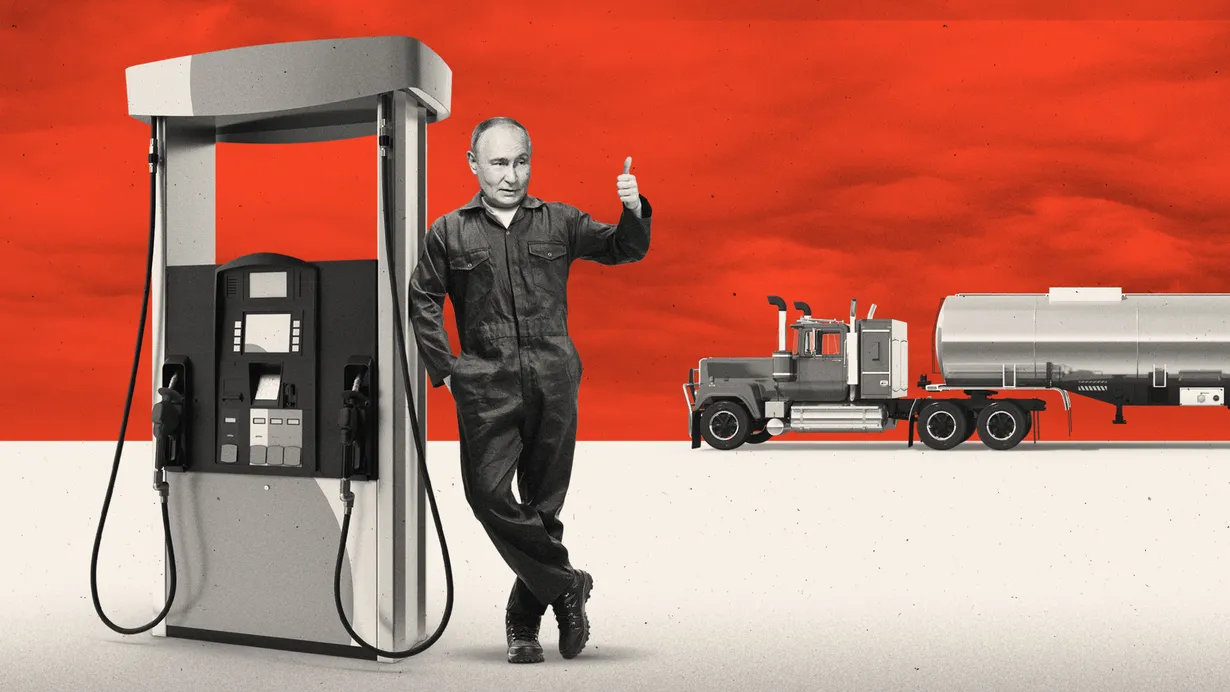
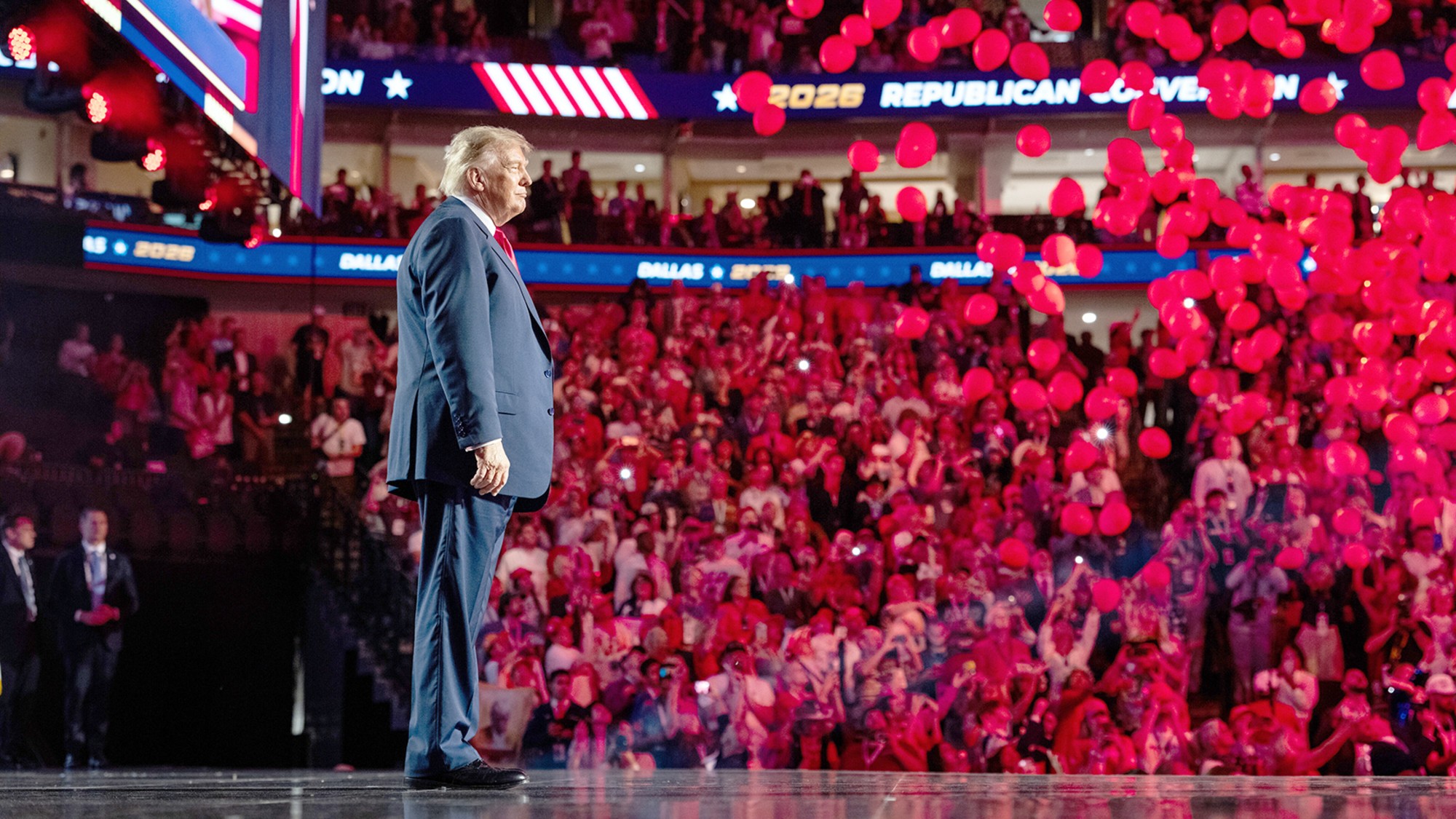
    The music was loud, the flags were everywhere, and the “sense of panic” was inescapable, said Nikki McCann Ramirez in Rolling Stone. With Election Day less than two months away, and polls showing Republicans in danger of losing both the House and Senate, the GOP last week held its first-ever midterm convention in Dallas. The MAGA luminaries addressing “Trumpapalooza” barely mentioned soaring gas prices or the quagmire in Iran, the related catastrophes that have dragged Trump’s approval rating down into the mid-30s. Instead, they gushed over Trump’s leadership; warned of an America overrun by Islamists, “killer migrants,” and trans athletes if “evil” Democrats win, and left it to Trump himself, addressing both nights of the event, to rally the MAGA faithful. But “the cult of Trump is waning,” said Jamelle Bouie in The New York Times. Speaking to thousands of unfilled seats—many left empty by swing-state candidates who skipped the event—Trump had attendees pledge allegiance to him personally, “the greatest president in the history of the United States,” and promise to “cheat like hell” in November. In what is surely one of our Republic’s lowest moments, Trump promised a $5,000 “dividend check” to every American, if Republicans win the midterms. “Far from juicing turnout” for the GOP, Trumpapalooza may have just “reminded the voting public” of why they need to elect Democrats.

    Trump did make some questionable choices, said David M. Drucker in Bloomberg. He mocked voters’ affordability anxieties. He ridiculed Texas Attorney General Ken Paxton, now trailing Democrat James Talarico in the race for Texas’ open Senate seat, saying, “I don’t really like the way he looks.” But Trump may have accomplished his main goal: to have his die-hard supporters “pretend that I’m on the ballot.” Still, Republicans’ bigger problem is the president’s “evaporating support among GOP regulars who have never been Trump’s biggest fans.” Perhaps the promise of a “$5,000 payoff” will motivate some, but the fact that “Trump was compelled to resort to this sort of dubious measure is revealing.”

    “No one is falling” for Trump’s dividend “gimmick,” said The Washington Post in an editorial. Congress would need to approve the payout, and not even the GOP’s Trumpified House delegation wants any part of a vote-buying scheme that would turbocharge inflation and add another $1.2 trillion to the $40 trillion national debt. Trump’s “$5,000-check promise may be the moment he finally underestimated his audience,” said Jonathan Chait in The Atlantic. Does he really think voters have forgotten the DOGE “refund” checks that were supposedly in the mail? Or the “tariff rebate” checks he also promised? Trump’s free-money “ruse,” like the rest of his shtick, has “worn thin.”

    “Republicans’ best hope,” said Dana Milbank in The Washington Sun, is that most voters weren’t paying attention. The convention’s first night coincided with the NFL’s season opener, and while 25 million Americans tuned in to see the Seahawks beat the Patriots, only 3 million chose to watch Trump rhapsodize about his gilded ballroom. Viewership didn’t improve on night two, when Vice President JD Vance delighted the crowd by telling a protester with a Mexican flag to “get your ass” to Mexico. Vance’s Trumpy zinger underscored the predicament for a party that renounced all ideological commitments to become a “cult of personality.” When Trump leaves the scene, and a midterm drubbing would mark the beginning of his end, there may be nothing left but a “hollow shell.”


    VIEWPOINT

    It’s essential to call out ‘liars’ and ‘clowns’

    “It is important to call things what they are. Trump is a habitual liar who has made his political career on the support of people, often dumb and mostly angry, who enjoy being lied to. JD Vance is a schmuck, a spineless yes-man without honor or integrity who will do and say whatever shameful and humiliating thing must be done or said as he inches, wormlike, toward what he imagines to be real power. Trump is surrounded by a team of cretins, incompetents, nepotism beneficiaries, drunks, degenerates, and sundry clueless clowns. Their political goal is tyranny and the displacement of the American constitutional order by a Trump-fronted Mafia state.”

    Kevin D. Williamson in The Dispatch  


    briefing

    The problem with men

    Many boys and young men are floundering in school, work, and relationships. What’s gone wrong?

    How are boys and men struggling? 
    Young men are falling behind women in nearly every area of life. In academic performance, boys lag well behind girls in elementary school, high school, and college, where female undergraduates now outnumber their male peers roughly 2 to 1. That ratio was about even in the early 1980s. Most men have seen their real wages fall over the past four decades, and a growing share of young men are dropping out of the workforce. They have fewer friends than women and are three times as likely to suffer “deaths of despair” from alcohol or drugs, or by suicide. In a post-#MeToo world where the word “masculinity” is frequently preceded by “toxic,” experts say young men often encounter two competing narratives: one from the Right telling them to become a hyper-macho caricature, modeled by President Trump and manosphere influencers, and another from the Left implying they should keep quiet because they’re so privileged. “This is not a zero-sum game,” said New York University business professor Scott Galloway. “Women still face huge challenges, but we can also acknowledge our young men are struggling.”

    When does the trouble start?  
    At a very young age. Boys enter kindergarten behind girls in terms of academic preparedness and in behavioral skills, such as the ability to socialize and regulate emotions. That gender gap continues throughout school: Girls score better on reading and writing tests— they are almost a full grade ahead of boys by ninth grade—and earn higher GPAs. Boys, meanwhile, are roughly twice as likely to be diagnosed with ADHD and twice as likely to be suspended; they also drop out at higher rates than their female classmates. Researchers believe some of this disparity could be a result of the increasing emphasis on academics and testing in the earliest years of education, which may make the learning experience harder for boys, who mature later than girls. Educators and policymakers have also spent several decades focused on correcting historical gender inequalities that held back girls. But some experts worry that educational excellence itself is now “coded” as female, discouraging boys. 

    What happens after school? 
    The decline of traditionally male-dominated industries such as manufacturing have hit men’s pay and employment potential. Inflation-adjusted wages for men dropped 3% from 1979 to 2019, while those of women—who earn 81 cents for every dollar earned by men—rose nearly 29%. And of the 1.2 million new jobs added between February 2024 and February 2026, about two-thirds went to women. That pattern is likely to be replicated in future jobs reports as sectors with large shares of women workers, such as health care and social services, continue to expand while male-heavy sectors like construction and tech either shrink or stagnate. Faced with these difficulties, a growing number of young men are simply giving up on employment. Today, nearly 1 in 9 prime-age men are neither working nor looking for work, and about 1 in 5 men ages 25 to 34 still live with their parents, compared with 1 in 10 women in that demographic.

    Does this affect men’s mental health? 
    It’s causing a crisis of loneliness. Men ages 18 to 30 spent 18% more time alone in 2023 than in 2019—an average of 6.6 nonsleeping hours—according to time-use surveys by the Bureau of Labor Statistics. That’s 22% more alone time than same-age women. “The more that you’re sitting on the couch,” said Gary Barker, head of progressive gender-equality group Equimundo, “your social network gets narrower and then you don’t have the social capital or the skills to step into a job.” In an Equimundo poll, almost two-thirds of men ages 18 to 30 said nobody knew them well; a quarter hadn’t seen anyone outside their home in the past week. Dan and Joana Moreno of Miami have seen this crisis play out in their family. Their daughter finished business school and got engaged in 2024; that year, their three adult sons were all single and still living at home. Middle son Daniel, 27, dropped out of college in 2019. “Nothing is really stopping me,” he said. “It’s just myself, standing in my own way.” 

    Where does that aimlessness lead?  
    Experts believe it’s to blame for a sharp increase in the suicide rate among men ages 25 to 34, which climbed 30% from 2010 to 2023. Social isolation, said psychologist Matthew Nock, means men are “less likely to reach out for care [and] less well connected to others.” Feelings of isolation and a lack of purpose are also pushing young men toward the manosphere, a loose network of online communities and misogynist influencers such as the hugely popular Andrew Tate—who with his brother, Tristan, is fighting extradition to the U.K. on charges of rape and sex trafficking—that promote male dominance and blame men’s woes on a “feminized” society. “These spaces are really taking advantage of those insecurities and a need for validation,” said Kalliopi Mingeirou of U.N. Women. 

    Can young men get back on track? 
    Many experts note that the gender gap in academic achievement can be addressed, as shown by the fact that girls have caught up in math with boys in recent years. “So we could help boys catch up in reading,” said Sean Reardon, a professor at the Stanford Graduate School of Education. “We just haven’t organized society and schools yet to do that.” Richard Reeves, head of the nonpartisan American Institute for Boys and Men, argues for boys to start kindergarten at age 6 rather than 5, so they’re better cognitively matched with girls, and for more men to be encouraged to enter more-heavily female professions, such as nursing and teaching. “It is not that men have fewer opportunities,” he said. “It is that they are not taking them.” Reeves adds that it’s in all of society’s interest to help lift up boys and young men. “A world of floundering men,” he says, “is unlikely to be a world of flourishing women.”


    Only in America

    Christian missionaries expelled from Burning Man say the desert festival’s commitment to “radical inclusion” is a sham. The group, Shift the Atmosphere, claims it was evicted for evangelizing, but a festival spokesperson says members violated a rule requiring consent before filming attendees. Neighbors also complained about the group’s loud Christian dance music. “We had to tell them, ‘Hey, the volume’s too high,’” said Jenae Gerstmann of nearby Camp F---ing Magical. “You got to keep it down.”


    talking points

    Sept. 11: How the war on terrorism changed America

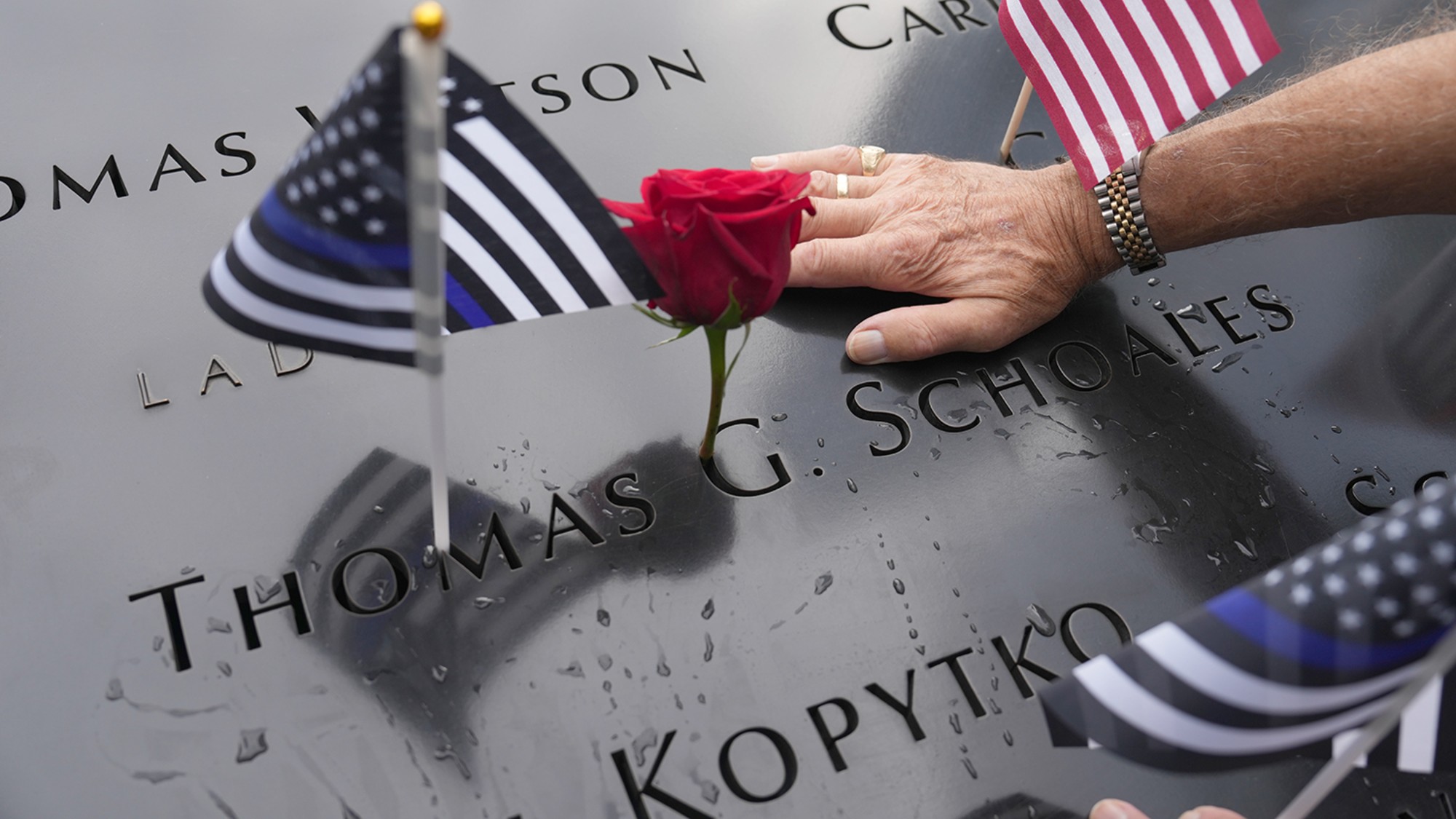
    It was a “nearly cloudless” morning in Manhattan, said The New York Times in an editorial, when a previously unfathomable terrorist attack changed America forever. By sunset on Sept. 11, 2001, the World Trade Center—an iconic symbol of America’s soaring global ambitions—had been reduced to twisted steel and rubble after hijackers flew commercial airliners into its twin towers. Nearly 3,000 people died in New York City and at the Pentagon in Washington, and the entire nation fretted over when the next attack would come and what form it might take. The shock of 9/11 was “so traumatic that it seemed to call for different rules,” and the Bush administration launched a sweeping global “war on terror” that included the brutal torture of terrorist suspects in overseas CIA prisons. By the end of the “long, bloody” wars that unfolded in Afghanistan and Iraq over the subsequent decades, $8 trillion had been spent and 900,000 lives had been lost. Other costs, including the damage to the U.S.’s social compact and global standing, are harder to measure. Incredibly, the mistakes of a quarter century ago are now being repeated by the Trump administration, in its “self-defeating war of choice” in Iran.

    In the immediate aftermath of 9/11, there were actually “signs of hope,” said Jonathan Lemire in The Atlantic. Rescue workers from red and blue states alike rushed to New York City to help. Donations poured in from rich liberal enclaves and small rural communities. American flags were “seemingly everywhere.” Less than a year after the “bitterly contested” presidential election between George W. Bush and Al Gore, the country “felt unified” for the first time in decades. But in the months that followed, the nation’s trauma and collective grief “morphed into something uglier, hardier, and less focused,” said Jill Filipovic in Slate. The U.S.’s first military response was reasonable—an invasion of Afghanistan to hunt Osama bin Laden, the mastermind of the attacks, who was being shielded by the Taliban. But then the Bush administration sold a war in Iraq to “grieving and credulous” Americans with “faulty intelligence and flat-out lies.” There were no “weapons of mass destruction,” and while Saddam Hussein was a “brutal dictator,” the war that deposed him “sent shock waves of violence undulating through the Middle East for decades.”

    Today, the expert consensus says the war on terror “was never winnable,” said Robin Wright in The New Yorker. Despite major victories, including the daring 2011 raid in which U.S. special operations forces killed bin Laden, “neither the groups nor the threats they pose have disappeared.” Islamic extremism continues, and al Qaida is again active in an Afghanistan controlled by the Taliban. Actually, the truth about the war on terror is “more complex,” said Daniel Foster in National Review. “The more defensible verdict is that the United States muddled through the post-9/11 era,” figuring out how to fight a “very different” kind of war with new intelligence apparatuses, legal architectures, and geopolitical strategies. Though it made mistakes, the counterterrorism apparatus constructed after 9/11 has succeeded in its primary mission—killing and capturing terrorist leaders and preventing a comparable mass-casualty attack.

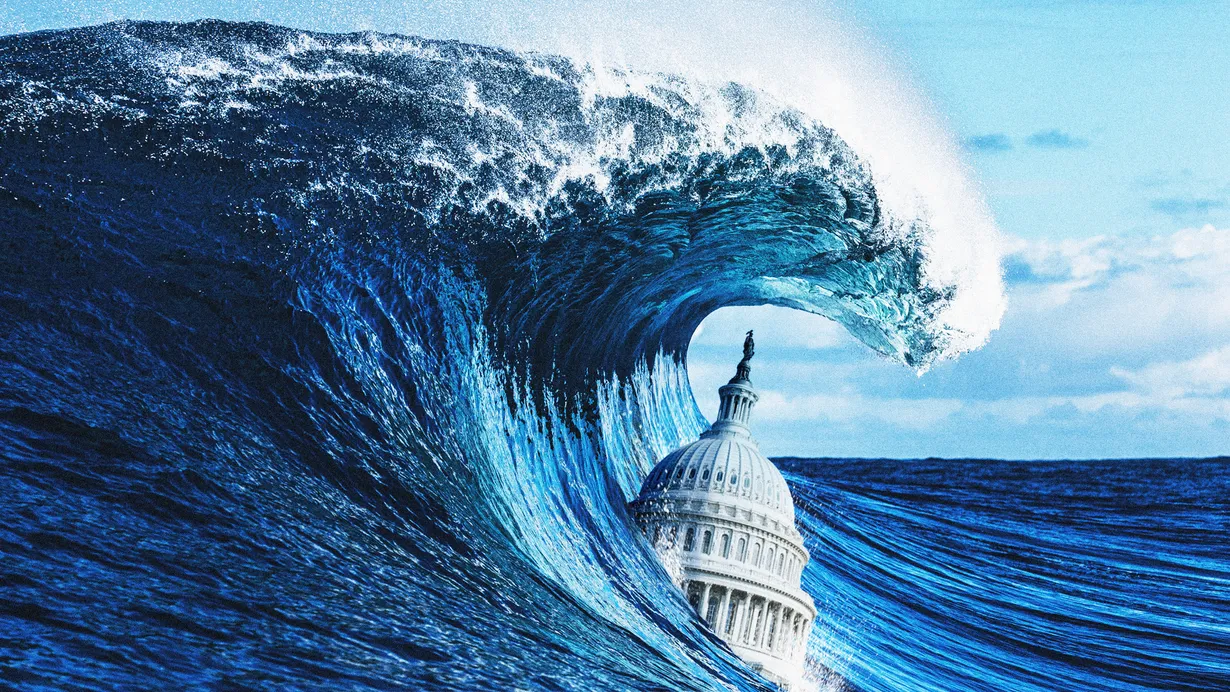
    But by focusing on Islamic terrorism and the Mideast for decades, said John Bussey in The Wall Street Journal, the U.S. became “distracted” from “bigger threats to its economy and global leadership.” Our leaders did not respond to “shifting global forces,” including the rise of China as a rival economic superpower and increasing hostility from Vladimir Putin’s Russia. The massive loss of manufacturing jobs to China fueled American nativism and isolationism, and led to the rise of Donald Trump. Meanwhile, the U.S. was becoming a police state, said Warren P. Strobel in The Washington Post. The White House was granted “broad new powers” in the wake of the attacks, including a secret warrantless electronic surveillance program. The Department of Homeland Security was created, along with the TSA and ICE. The Obama administration ordered warrantless drone strikes and secretly seized reporters’ phone records. Under President Trump, the erosion of once-entrenched civil liberties has grown exponentially, as he has taken those vast powers and turned them against immigrants, political opponents, protesters, journalists, and the news media. 

    “Welcome to the worst-case scenario,” said Radley Balko in The New York Times. President Trump is “using the post-9/11 counterterrorism powers for his own ends,” carrying out extrajudicial executions of suspected drug dealers in the Caribbean, declaring nonexistent “national emergencies,” and targeting political enemies as if they were terrorists or traitors. Congress has “all but abdicated its authority,” and courts have “largely acquiesced” to the executive power grab. Twenty five years after 9/11, the sobering lesson is that the greatest threat to our democracy and to our freedoms “has always been authoritarianism—and always will be.”

     
     
    people

    Kazan’s complicated inheritance

    Zoe Kazan has spent decades reckoning with her grandfather’s legacy, said Allison P. Davis in New York. The actress and screenwriter, 43, is the granddaughter of Elia Kazan, the acclaimed director of On the Waterfront and East of Eden. But to many in Hollywood he remains a villain for his 1952 testimony to the House Un-American Activities Committee, in which he named eight artists who, like him, had been Communist Party members in the 1930s. His former friends ended up being blacklisted for years. Growing up, Kazan says she knew her papou (Greek for “grandfather”) as “a very loving and present person.” But in 1999, when she was in middle school, she got a glimpse of how the outside world viewed him. That year, Elia received an honorary Oscar; protesters outside the ceremony waved signs reading “Kazan: Snitch.” Afterward, “a lot of schoolkids were like, ‘Do you defend what your grandfather did?’ I felt incredibly protective toward him because he was my grandpa.” Today, she understands why, as a Greek immigrant, he may have felt compelled to defend his Americanness by denouncing others. But Zoe—who has written a new adaptation of East of Eden for Netflix—is no longer reflexively defensive of Elia, who died in 2003. “Moving through two Trump administrations, my tolerance for his choices has gone down, but my empathy for him has remained.”


    Saturday Wrap was written and edited by Theunis Bates, Bill Falk, Bruno Maddox, Scott Meslow, and Rebecca Nathanson.

    Image credits, from top: Haiyun Jiang/The New York Times, Getty (3).
     

    Recent editions

    • Evening Review

      Texas Republicans’ widening rift

    • Morning Report

      RFK Jr pivots back to vaccines

    • Evening Review

      Will you get $5K from Trump?

    VIEW ALL
    TheWeek
    • About Us
    • Contact Future's experts
    • Terms and Conditions
    • Privacy Policy
    • Cookie Policy
    • Advertise With Us
    • FAQ
    Add as a preferred source on Google Add as a preferred source on Google

    The Week is part of Future US Inc, an international media group and leading digital publisher. Visit our corporate site.

    © Future US, Inc. Full 7th Floor, 130 West 42nd Street, New York, NY 10036.