The feminist icon who led the women’s movement
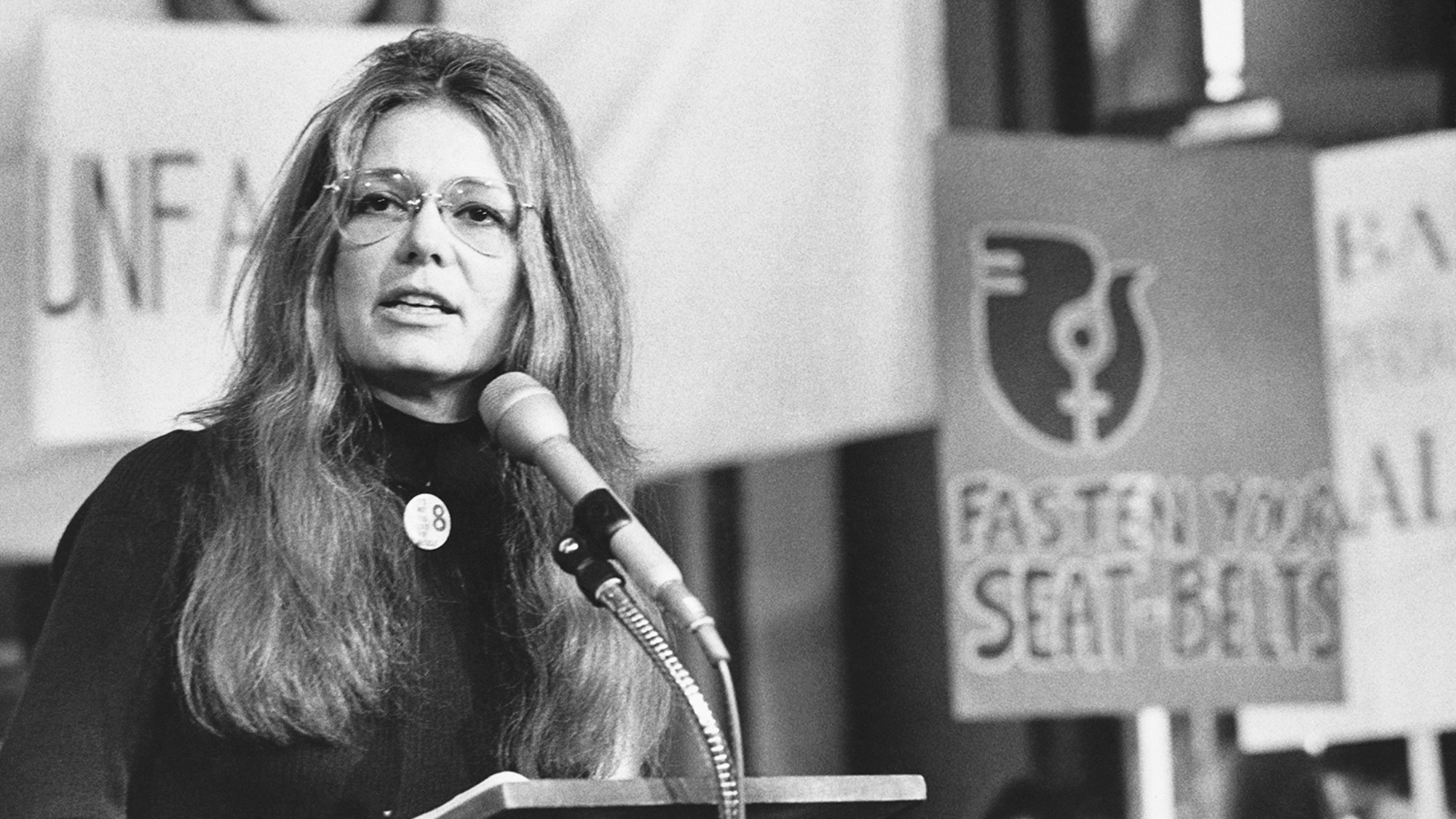
The personification of liberal feminism, Gloria Steinem galvanized the movement for equal rights and taught millions of women to advocate for themselves at work and at home. Instantly recognizable in her aviator glasses and her curtain of streaked hair, she spoke, wrote, and lobbied, helping create rape crisis centers, women’s shelters, and the National Women’s Political Caucus. An introvert who feared public speaking, she occupied the national spotlight for over half a century. In 1971, she co-founded Ms., the first magazine entirely owned and run by women, bringing feminism to a national audience at a time when a woman could not get a credit card in her own name. “When we started, there was not even a term for sexual harassment,” she often said. “It was just called life.”
Born in Ohio, Steinem grew up poor, the daughter of a nomadic antique dealer father and an ex-journalist mother who spent time in psychiatric hospitals. When she was 10, her father left and her older sister went off to college, leaving her to care for her ailing mother. She had little time for school, but she read voraciously and graduated magna cum laude from Smith College. Still, she “lived in fear of hitting the skids at any moment” and turning into her mother, said The New York Times. After college, she broke off an engagement, had a secret abortion, and fled to India, walking across the country with followers of Gandhi. After returning in 1958, she became a journalist and won plaudits for an exposé she wrote about the sexism endured by Playboy bunnies—having gone undercover as a bunny for the story. Soon she had a political column in New York, and she joined the anti-war movement. But it wasn’t until she was 35, and attended a 1969 speak-out about illegal abortions, that she began to focus on women’s rights.
Steinem became “the first famous feminist of the celebrity era, forging a public persona halfway between Madonna and Joan of Arc,” said The Guardian. She organized consciousness-raising sessions, led protests, gave speeches, wrote essays, and fundraised. All the while, she also gained attention for her short skirts and for dating a string of famous men. In 1970, she testified before Congress in support of the Equal Rights Amendment. She faced countless critics, led by conservative activist Phyllis Schlafly. A rift even developed between Steinem and The Feminine Mystique author Betty Friedan, who felt Steinem was too focused on social liberation rather than changing laws. While the movement tried to resist hierarchy, the media unofficially anointed Steinem the spokeswoman of feminism. She “was the perfect popularizer,” said New York, making “spiky, roiling, uncomfortable, often messy ideas around gender, race, class, equality, and liberation sound smooth and snappy, attractive and funny.”
Steinem occasionally alienated her supporters, as when she defended President Clinton against sexual harassment allegations in 1998, yet she always “remained a lodestar for women’s rights activists,” said The Washington Post. Proudly child-free, she rejected the institution of marriage, insisting she couldn’t “mate in captivity”— though she did eventually marry British environmentalist David Bale to help him get a visa. Editor of Ms. for decades and the author of a dozen books, she continued lecturing into her 90s. “I feel proud,” she said in 2022. “And I feel mad as hell we are still dealing with the same issues.”