The Week US
flag of US
US
flag of UK
UK
https://cdn.mos.cms.futurecdn.net/flexiimages/jacafc5zvs1692883516.jpg

SUBSCRIBE & SAVE

Less than $3 per week

Sign in
  • View Profile
  • Sign out
  • The Explainer
  • The Week Recommends
  • Newsletters
  • Cartoons
  • From the Magazine
  • The Week Junior
  • More
    • Politics
    • World News
    • Business
    • Health
    • Science
    • Food & Drink
    • Travel
    • Culture
    • History
    • Personal Finance
    • Puzzles
    • Photos
    • The Blend
    • All Categories
  • Newsletter sign up Newsletter
  • The Week Evening Review
    Ramaswamy’s cruel ad, Saudi Arabia’s dilemma, and women’s heart health

     
    in the spotlight

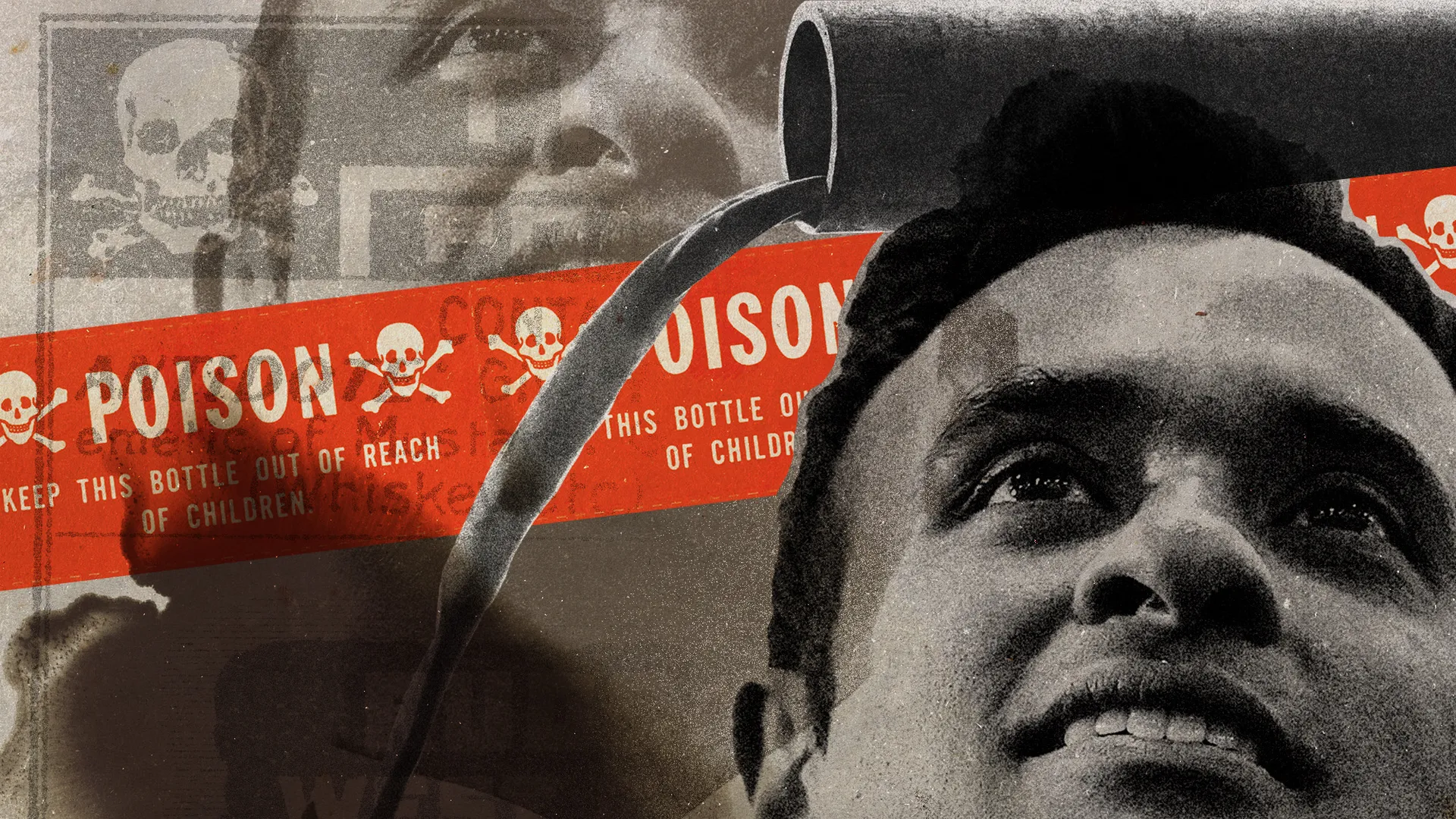
    GOP gambles on cruelty as a campaign strategy

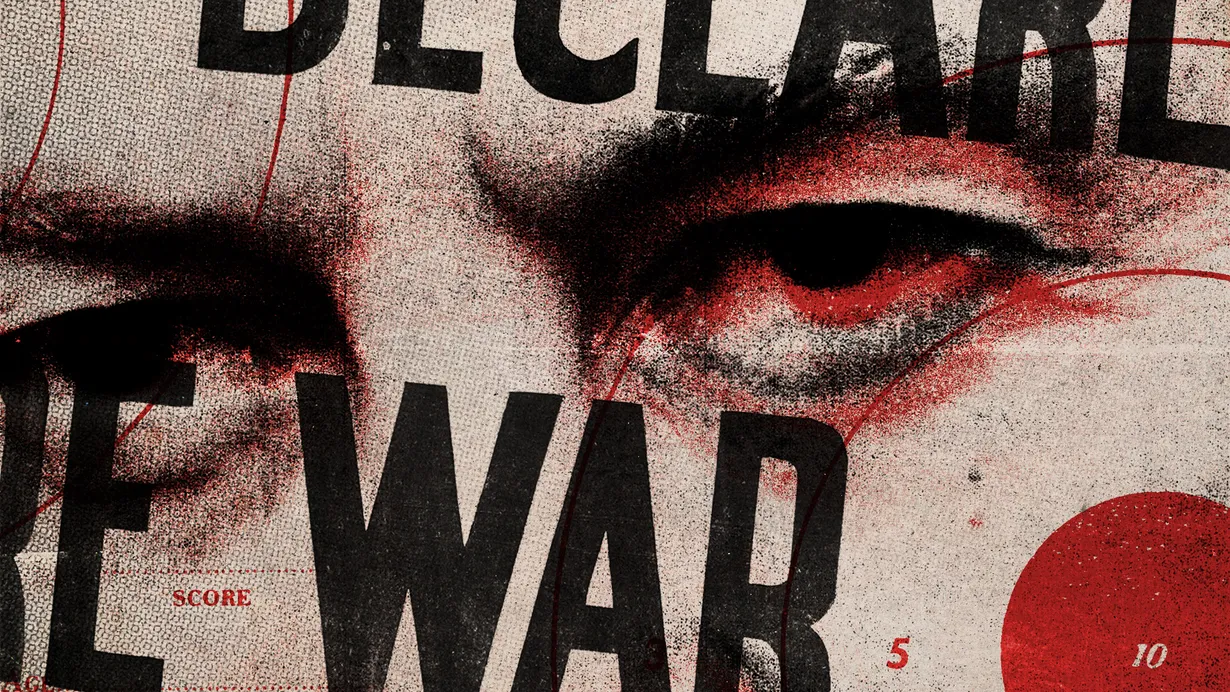
    There’s a “decency we should expect out of our public officials,” said former President Barack Obama at a recent campaign rally, condemning Republican Ohio gubernatorial candidate Vivek Ramaswamy’s attack ad against Democrat Amy Acton. The commercial shows there’s “no line he will not cross, no low he will not sink to.” But while Obama’s comments were directed at Ramaswamy specifically, they come as the GOP grapples with a surging strain of Trumpian malice among arguably less adept candidates, to the chagrin of some in their own party.

    ‘Ethical degradation’
    Ramaswamy’s may be the “most disgusting ad in American political history,” said Michelle Goldberg at The New York Times. But it has opened a “kind of proxy debate on the right” about whether the party should “reclaim some baseline morality” or pursue its “current smashmouth course.” 

    The controversy affords conservatives space to “reckon with the ethical degradation of Trumpism” without “quite admitting that that’s what they are doing,” said Goldberg. With “no ideas to run on” and minimal accomplishments to tout, GOP candidates “seem to have hatched a plan,” said Rex Huppke at USA Today: “Let’s just be the most wretched versions of ourselves,” and “see how things shake out.”

    It’s “undoubtedly the case” that Trump enjoys “some special sauce” that makes him a “formidable general election candidate,” said Jamelle Bouie at the Times. But without candidates who also enjoy that innate talent, Republicans are struggling to “mimic Trump’s particular style of politics” as successfully.

    GOP ‘litmus test’
    Trump is “reminding us on a daily basis that cruelty is the point,” said Charlie Sykes on his To the Contrary podcast. “That seems to be spreading.” In American politics, “bullies” do tend to prosper “for a bit,” said Times columnist David French to Sykes. But they then experience a “serious backlash.”

    Ramaswamy’s ad has become a “litmus test” for “how deep” into MAGA’s “post-truth nihilism” someone might sink,” said Rolling Stone. Republican discomfort with Trumpian insolence misses the “greater point” of the “political movement” that led to its creation: The “conservative project’s greatest strength is its moral flexibility.” By that metric, the party’s future is “still firmly in Trump’s hands.”


    QUOTE OF THE DAY

    ‘We are prepared, but we do not want any war with Europe. As for them, if anyone wants one, let them prepare.’

    Vladimir Putin at a press conference in Moscow after a phone call with Finnish President Alexander Stubb and Norwegian Prime Minister Jonas Gahr Store. “If things go too far, there will be no winners at all,” he added. “Let no one forget that.”


    today’s big question

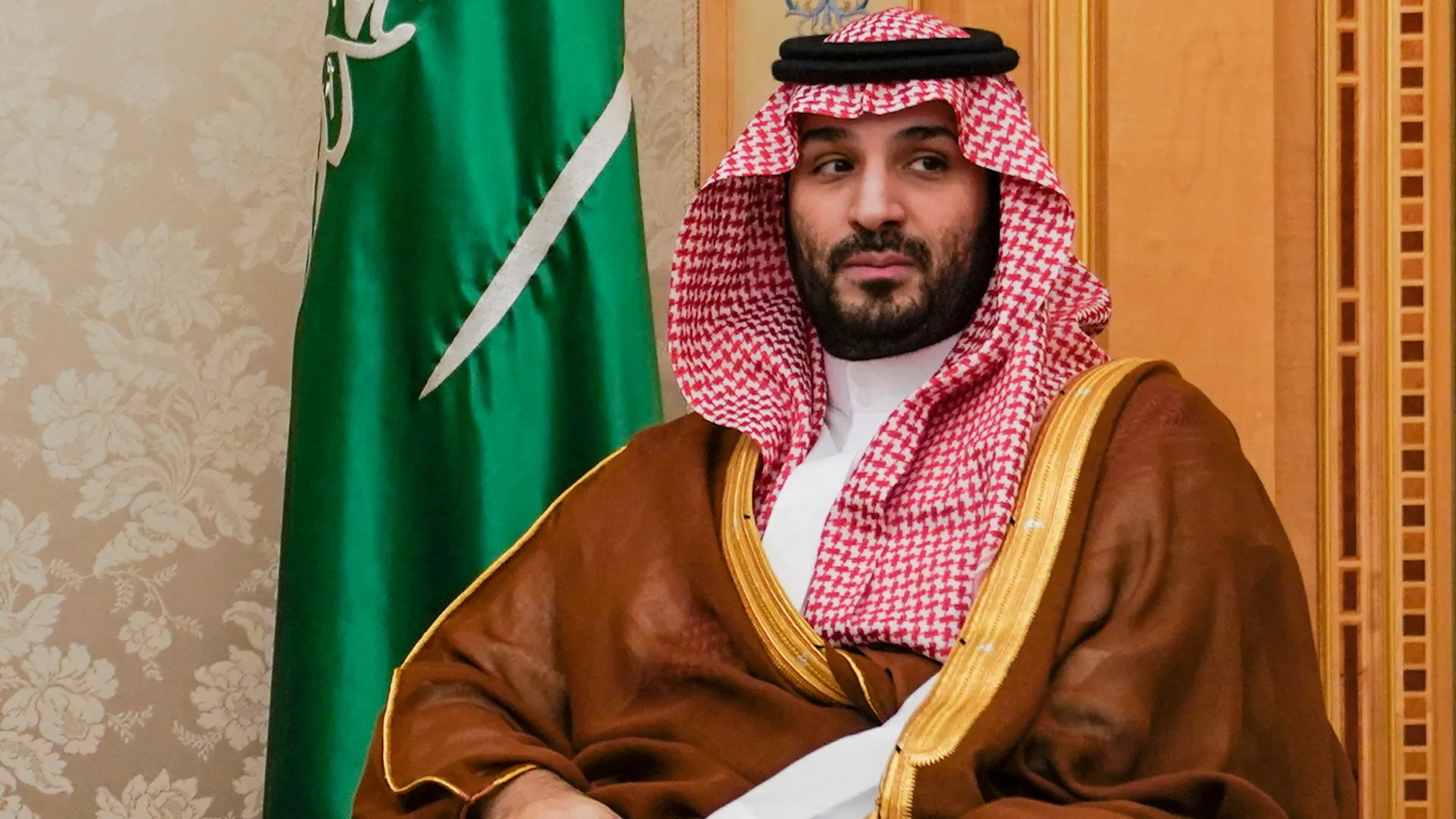
    Is Saudi Arabia losing its luster?

    The deadly missile attack by Houthi rebels on Riyadh’s international airport earlier this month has “exposed vulnerabilities” in Saudi Arabia’s defenses that have “heaped pressure” on its royal family, said The Observer. This assault on the heart of Saudi power has “shattered the kingdom’s effort to establish its reputation as a secure global investment hub” and “diversify away from a dependence on oil.”

    What did the commentators say?
    Crown Prince Mohammed bin Salman’s bold Saudi Vision 2030 aims to turn his oil-rich country into a hub for tourism, international events and multinational enterprises. But Iran’s attacks on U.S. allies in the Gulf have already “dealt a blow” to that plan, said Agence France-Presse. And with the Houthi attacks on Saudi soil, it “now faces an existential hurdle.”

    The attacks led to the cancellation of a series of major events and summits, most notably the Future Investment Initiative, nicknamed Davos in the Desert, which forms the centrepiece of the Saudi diversification drive. And the kingdom’s scheduled hosting of football’s Asian Cup in January and February is “being questioned,” said Rob Draper at The Guardian.

    Recent events “highlight the profound dilemma” facing the crown prince, who “must juggle immediate security imperatives and long-term economic interests,” said The Washington Post. For Saudi Arabia’s “economic transformation to succeed, it needs to welcome global talent, investment and tourists.” But “you can’t do that when people can’t land in your country safely,” said Kristen Smith Diwan, of the Arab Gulf States Institute think tank, to the outlet.

    What next?
    Even before the war against Iran began in February, some international investors and Wall Street firms were “questioning whether there was enough money to be made in Saudi Arabia,” said Bloomberg. Analysts now fear the “fallout from the war will hurt the kingdom’s attractiveness” further.

    Saudi Arabia can “reduce its exposure” in the short term through “diplomacy and a serious Yemeni political process,” said Amine Ayoub, of the Middle East Forum think tank, at Ynet Global. “But a ceasefire cannot endure if it leaves the country’s power struggle unresolved.”


    Statistic of the day

    $150 billion: The approximate amount of market value Intel lost today, with a 30% drop putting the chipmaker on pace for its worst day since 1974. Fourth-quarter sales will be $15 billion to $16 billion — below market projections of $17 billion to $18 billion, according to the company.


    THE EXPLAINER

    New framework reveals stages of women’s heart health

    Heart disease poses a significant threat to women, but research into the issue has been lacking for years. Now, four medical societies have published a shared framework and clinical guidance to help doctors identify and treat cardiovascular risk throughout a woman’s life.

    What did the group outline?
    The American Heart Association, American Academy of Pediatrics, American College of Obstetricians and Gynecologists, and the Society for Maternal-Fetal Medicine have created a system to help redefine heart health. The group outlines four “Female Life Stages” during which hormones could affect women: perimenarche (ages 8 to 15), regular ovarian cycling (ages 15 to 44), perimenopause (ages 45 to 51) and postmenopause (age 51 and older). Pregnancy at any life stage is also included. Three manuscripts published in the AHA’s flagship journal, Circulation, include guidelines for navigating these stages.

    The coalition asserts that because “female-specific biology” affects girls’ and women’s hearts “throughout their lives,” it requires “connected, holistic care starting in adolescence” to reflect “transitions not found in the male models,” said Stat. What happens in adolescence and young adulthood “impacts your life for decades to come,” said Sadiya Khan, a professor of cardiovascular epidemiology at Northwestern University, to the outlet. Keeping the various aspects of women’s healthcare “all connected and not siloed,” even though that’s “typically how we have approached care,” will require an “integrative approach.”

    Why was a new framework needed?
    Heart disease is already the number-one killer of women globally, and both heart disease and stroke are “projected to rise significantly in women over the next two decades,” said NBC News. Still, very little is known about how female biology affects heart health. 

    Scientists were “not required to include women in clinical trials on heart disease until 1993,” and today, “fewer women are still included in the trials than men,” said NBC News. Women’s healthcare is also “often uniquely fragmented across different specialties” throughout their lifetime.

    Ultimately, girls and women “represent half the population,” and “every clinician, every specialty and every health system” has a role to play in their well-being, said Khan at Time. Women can “do much to protect their health,” but they should not have to “connect the dots in their care alone.”


    Good day 🗞️

    … for iconic magazine revivals. Life magazine, a legend of American photojournalism, is coming back as a quarterly print publication next month. Model and entrepreneur Karlie Kloss is backing the magazine, which will also have a website alongside “short-form video, documentary films and events,” said The New York Times. 


    Bad day 🦉

    … for city wildlife survival. The roof of a water tower in Manhattan’s Upper West Side has been removed, creating a hazard for a family of barn owls living inside, along with a backlash from neighborhood residents. The birds are believed to be the “first documented instance of barn owls nesting in Manhattan,” said The Associated Press.


    Picture of the day

    Dearly departed

    A man tends to graves at a cemetery in the Philippine city of Antipolo ahead of All Saints’ Day and All Souls’ Day on Sunday and Monday, respectively. Millions of people nationwide travel to their hometowns for the annual Undas that pay tribute to ancestors through prayers and offerings.
    Ryan Eduard Benaid / ZUMA Press Wire / Shutterstock


    Puzzles

    Daily sudoku

    Challenge yourself with The Week’s daily sudoku, part of our puzzles section, which also includes guess the number

    Play here


    The Week recommends

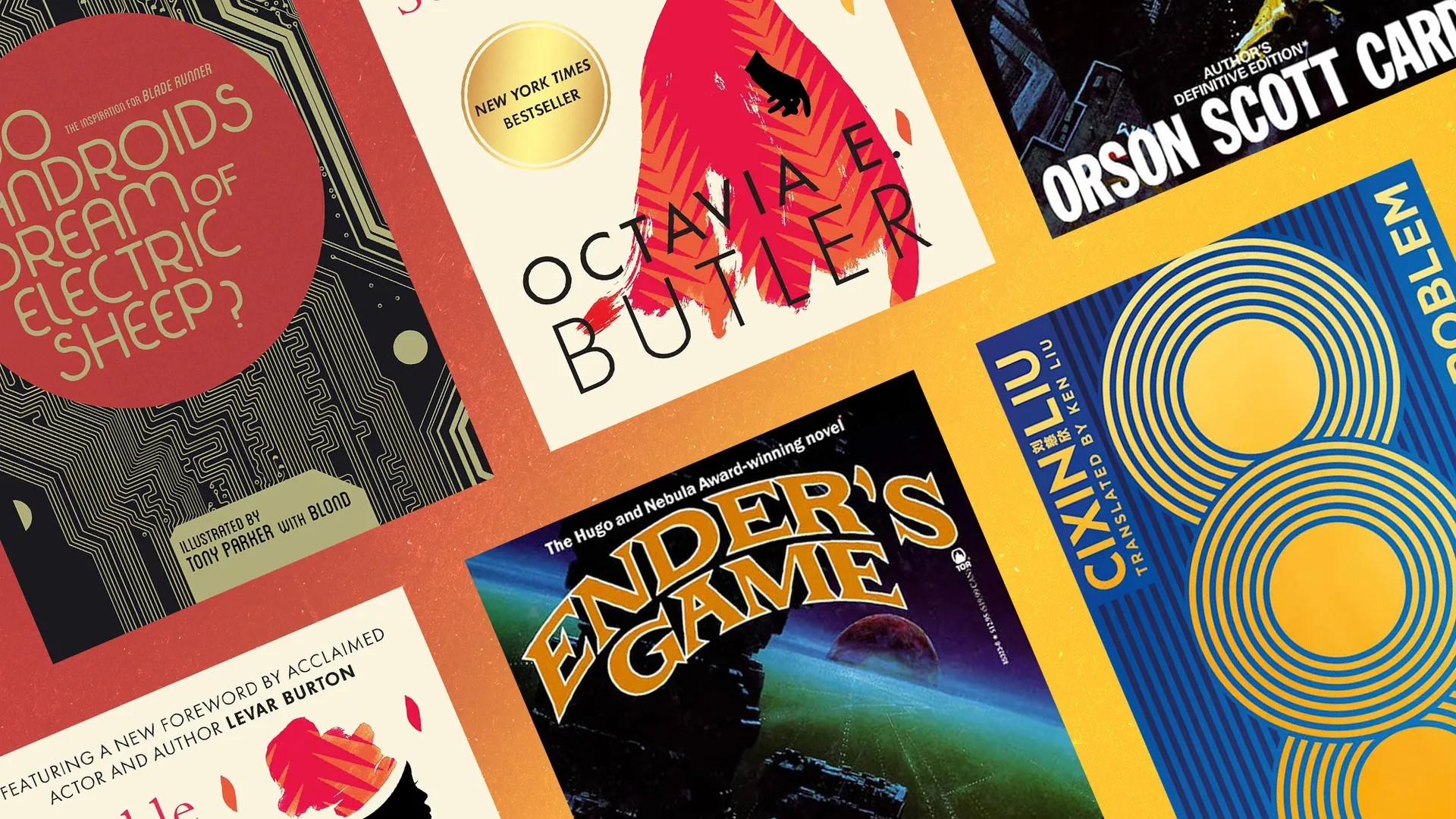
    The best science-fiction books of all time 

    Science fiction’s greatest books peer into the future and ask readers to imagine life beyond our own — for both better and worse. These are the essential works by visionary authors.

    ‘Do Androids Dream of Electric Sheep?’ (1968)
    Set in 2021, after a world war that wiped out millions, Philip K. Dick’s darkly prescient novel inspired the blockbuster film “Blade Runner.” It follows bounty hunter Rick Deckard as he hunts rogue androids hiding among Earth’s humans. “Do Androids Dream of Electric Sheep?” is a “weighty foray” into what makes us human and will “linger with you for a long time,” said Esquire. ($18, Penguin Random House)

    ‘Ender’s Game’ (1985)
    Orson Scott Card’s “Ender” series, a gateway into the genre, has captivated many burgeoning science-fiction fans. The first book, “Ender’s Game,” is a “high-stakes, militaristic twist on sci-fi,” said Reader’s Digest. The series will appeal to those who “enjoy reading historical fiction and novels about war.” ($20, Macmillan)

    ‘Parable of the Sower’ (1993)
    Octavia E. Butler’s “Parable of the Sower” follows teenage prophet Lauren Oya Olamina as she navigates creating a new religion in an eerily familiar postapocalyptic California of 2024. This first half of a duology feels like a “plea to America, echoing through time and begging us to remember principles we are all weaker for having forgotten,” said The New York Times. ($24, Seven Stories Press)

    ‘The Three-Body Problem’ (2006)
    Cixin Liu’s Hugo Award-winning “Remembrance of Earth’s Past” trilogy starts with “The Three-Body Problem,” a thrilling tale of extraterrestrial contact set against China’s Cultural Revolution. The book marks the rise of an author who has become “every bit as canonical” as other famous novelists of the genre, said Esquire. ($19, Macmillan)


    Poll watch

    Less than three in 10 Americans (29%) are engaged, committed and emotionally connected at work — the first time in 15 years below 30%, according to a Gallup survey of 21,648 adults. And 18% are actively disengaged. The decline in engagement is most pronounced among remote workers. 


    INSTANT OPINION

    Today’s best commentary

    ‘Is this the end for Trump’s princelings? Or just the start? 
    Noah Shachtman at The New York Times
    A coterie of “top officials, their children and their gaggle of hangers-on” move through the world “like princelings,” says Noah Shachtman. Political power, or “even just proximity to it,” is generating wealth to a “degree unknown in modern American history.” The “rise of the princelings” is part of a “new strain of American capitalism” that turns the “entanglements we used to regard as conflicts of interest” into “core operating principles” and then “markets that coziness” for further gain.

    ‘What Orson Welles’ “War of the Worlds” broadcast tells us 88 years later’ 
    William Hazelgrove at The Hill
    Halloween is here, and so is the 88th anniversary of Orson Welles’ broadcast of H.G. Wells’ “The War of the Worlds,” says William Hazelgrove. It was the “first ‘fake news’ broadcast.” The thought that a 23-year-old could “cause coast-to-coast panic” with a radio broadcast about invading Martians “does seem absurd to our 21st-century sensibilities.” But a few years back, when there were “drones in the skies” over the U.S., social media “lit up with aliens and Martians invading.”

    ‘The sad truth about your favorite Halloween candy’ 
    Megan McArdle at The Washington Post
    “Have my tastes grown more sophisticated,” or has Halloween candy “changed”? says Megan McArdle. It seems to be the latter. Companies now “shrink the product, cheap out on ingredients and stuff our candy with preservatives” because “they can.” We could “rejigger our modern supply chains,” delivering fresh food instead of “engineering it for eternity.” But this would “make food more expensive,” and that would “anger a lot of people.” Often, “we aren’t willing to pay for what we want.”


    WORD OF THE DAY

    aneuploidy

    A genetic disorder in which there’s an abnormal number of chromosomes in a cell. Researchers at Japan’s Chiba University have discovered a protein that helps to keep chromosomes organized inside egg cells that may soon be able to slow the loss of fertility caused by aneuploidy in older women.


    Evening Review was written and edited by Theara Coleman, Nadia Croes, Scott Hocker, Anya Jaremko-Greenwold, Justin Klawans and Rafi Schwartz, with illustrations by Julia Wytrazek.

    Image credits, from top: Illustration by Julia Wytrazek / Getty Images; Nathan Howard / Pool / AFP / Getty Images; KoldoyChris / Getty Images; Tor Books / Grand Central Publishing / Bloomsbury Publishing / BOOM! Studios
     

    Recent editions

    • Morning Report

      Alaska’s Senate race lurches into chaos

    • Morning Report

      Brazil’s Bolsonaro flees to US, claims victory

    • Evening Review

      Musk prepares for war

    VIEW ALL
    TheWeek
    • About Us
    • Contact Future's experts
    • Terms and Conditions
    • Privacy Policy
    • Cookie Policy
    • Advertise With Us
    • FAQ
    Add as a preferred source on Google Add as a preferred source on Google

    The Week US is part of Future US Inc, an international media group and leading digital publisher. Visit our corporate site.

    © Future US, Inc. Full 7th Floor, 130 West 42nd Street, New York, NY 10036.