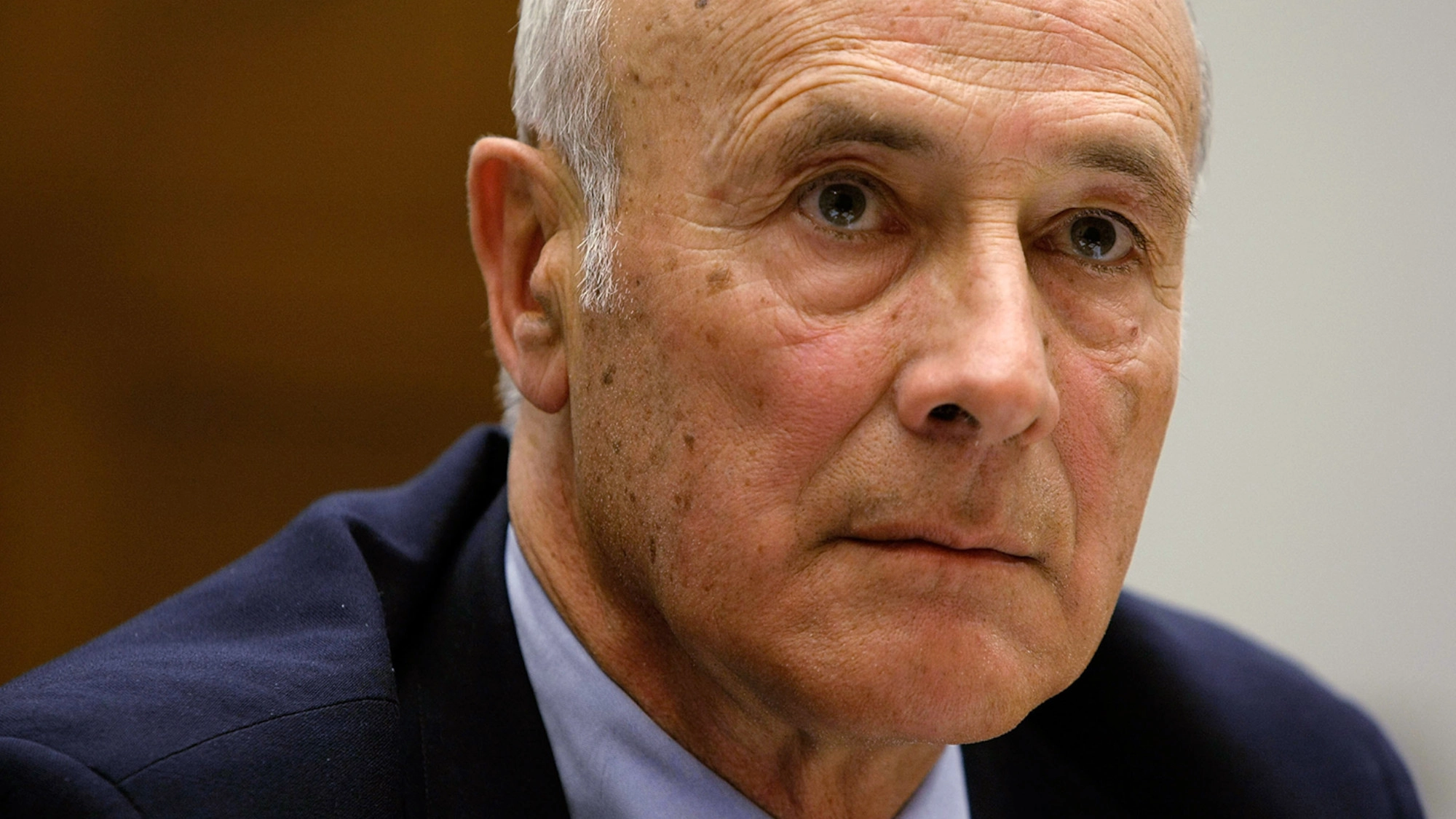
The political scientist who coined the term ‘soft power’
Joseph Nye believed that what helped the world helped America. A leading architect of U.S. foreign policy for six decades, he outlined this vision in one of the most enduring books in political science, 1990’s Bound to Lead: The Changing Nature of American Power. Writing just before the collapse of the Soviet Union, Nye proposed that the U.S. had an advantage that its adversaries lacked, something he called “soft power.” In addition to the stick of military force and the carrot of direct payments, the U.S. could also exert influence through humanitarian aid, the example of trustworthy institutions, and the promotion of human rights and democracy. Even cultural cachet was part of soft power, as the popularity of Hollywood movies and rock songs spread goodwill toward America. Nye spent his academic life advocating for the U.S. to use these tools. “When the Berlin Wall went down,” he said this month, “it didn’t go down under a barrage of artillery. It went down under hammers and bulldozers wielded by people whose minds had been changed by the Voice of America and the BBC.”
The son of a bond trader, Nye was born in South Orange, N.J., and grew up on a farm before attending Princeton, said The Washington Post. There “he briefly considered studying for the ministry—until he read the Bible all the way through.” He refocused his studies on economics, history, and political science and won a Rhodes Scholarship to Oxford. He earned a doctorate from Harvard in 1964 and joined its faculty soon after. In the 1970s, he served in the State Department in the Carter administration and co-wrote Power and Interdependence, which argued that international organizations such as the United Nations and the World Trade Organization would grow in importance. When a British historian wrote a best-seller claiming that American decline was imminent, said The New York Times, “Nye did not accept that bleak conclusion” and countered with Bound to Lead.
Nye toggled between government and academia, said the Financial Times, serving in the Carter and Clinton administrations and then for a decade as dean of Harvard’s Kennedy School of Government, “a conveyor belt of leaders and policymakers.” Under President Clinton, he chaired the National Intelligence Council, working to halt nuclear proliferation and shore up the alliance with Japan. “Nye acknowledged the limitations of soft power alone,” said Agence France-Presse, and later renamed his cause “smart power”: the balance of military strength, economic muscle, and soft power. By the time the Obama administration came to office, Nye’s vision of American strength had been the prevailing wisdom for decades.
When President Trump began wielding a “bombastic, mercurial, and sometimes ruthless side of U.S. power,” Nye was dismayed, said Foreign Policy. He warned in Trump’s first term that such a bullying approach would weaken the country. When Trump in his second term canceled U.S. foreign aid programs and transformed VOA into a propaganda mouthpiece, Nye felt that the administration was effectively destroying the prosperous, democracy-promoting postwar order he had stood for and worked for. In the weeks before his death, he warned that the consequence would be the ceding of a U.S.-led world to one dominated by China. “Trump clearly does not understand soft power,” he wrote, but China does—and it “stands ready to fill the vacuum.” |