The Week The Week
flag of US
US
flag of UK
UK
https://cdn.mos.cms.futurecdn.net/flexiimages/jacafc5zvs1692883516.jpg

SUBSCRIBE & SAVE

Less than $3 per week

Sign in
  • View Profile
  • Sign out
  • The Explainer
  • The Week Recommends
  • Newsletters
  • Cartoons
  • From the Magazine
  • The Week Junior
  • Student Offers
  • More
    • Politics
    • World News
    • Business
    • Health
    • Science
    • Food & Drink
    • Travel
    • Culture
    • History
    • Personal Finance
    • Puzzles
    • Photos
    • The Blend
    • All Categories
  • Newsletter sign up Newsletter
  • The Week’s Sunday Shortlist
    A feel-good Animal Farm, a cranky cephalopod, and a ‘fantastic’ fresh look at Lewis and Clark

     
    FILM REVIEW

    Animal Farm

    “Woe to the student who tries watching this toon instead of doing the reading,” said Peter Debruge in Variety. George Orwell’s 1945 anti-totalitarian parable has been turned into a bright, antic computer-animated movie, and the original story’s message gets largely lost “amid all the pratfalls and fart jokes.” Key aspects of the source material remain intact, as the movie’s talking animals chase a cruel human owner off their farm and briefly declare the equality of all their species before a despotic pig faction seizes control. Alas, starting with the addition of a cute piglet as an audience surrogate, the movie proves “far too disorderly to substitute for the book.” While its message won’t satisfy Orwell purists, “the film still takes a political stance,” said Wendy Ide at Screen Daily.

    Instead of targeting Stalinism, it “takes aim at greed, rapacious consumerism, and corporate malfeasance.” It also sneaks in a few Trumpian flourishes in the speeches made by Napoleon, the dictatorial pig voiced by Seth Rogen. Compared with the book, this version “permits us a little more hope,” leaving us believing that the piglet Lucky and his generation could resurrect the animals’ ideals. To me, “the misjudgments of the film are so legion that it’s hard to know where to start,” said Tim Robey in The Telegraph (U.K.). “Perhaps the bouncy musical montages,” the “hideous” character design, or the distracting presence of additional human villains. “Orwell may have loathed capitalism just as much as communism, but he’d have hated this film even more.”


    tv review

    Remarkably Bright Creatures

    Readers found it easy enough to enjoy a novel narrated by an octopus, making Shelby Van Pelt’s 2022 debut a word-of-mouth hit. But can a cephalopod narrate a movie? Marcellus, a cranky octopus who sounds a lot like Alfred Molina, acquits himself nicely in this heartwarming adaptation, which also features Sally Field as Tova, the elderly after-hours cleaning lady at the aquarium where Marcellus lives. Once Marcellus takes an interest in Tova and the young man she’s training, hope emerges that a mystery or two can be solved and the holes in the humans’ hearts can be repaired. Lewis Pullman co-stars. 
    Friday, May 8, Netflix


    FOOD & DRINK

    Wine: Sauvignon blanc

    With winter and its heavy reds behind us, it’s time for something “a little lighter, fresher, and full of life,” said Lauren Buzzeo in Food & Wine. “Enter sauvignon blanc, the unofficial ambassador of springtime sipping.” With its “vibrant acidity, energetic citrus and tropical flavors, and irresistible versatility,” sauvignon blanc is “tailor-made” for enjoying with fresh seafood or bright salads, and you don’t have to spend a fortune to find a great one.

    2025 Matua Marlborough ($12)
    This “consistently delicious” New Zealand wine “bursts with lime, green melon, and a signature grassy note.”

    2024 Domaine Paul Buisse Touraine ($14)
    Produced in the Loire Valley, this picnic-friendly sauvignon blanc is a “classic expression,” delivering “lively acidity and bright citrus.”

    2024 Grounded by Joseph Phelps ($15)
    This California “crowd-pleaser” mingles flavors of white peach, pomelo pith, lime zest, and fresh grass. Natural acidity “keeps the finish fresh.”


    BOOK OF THE WEEK

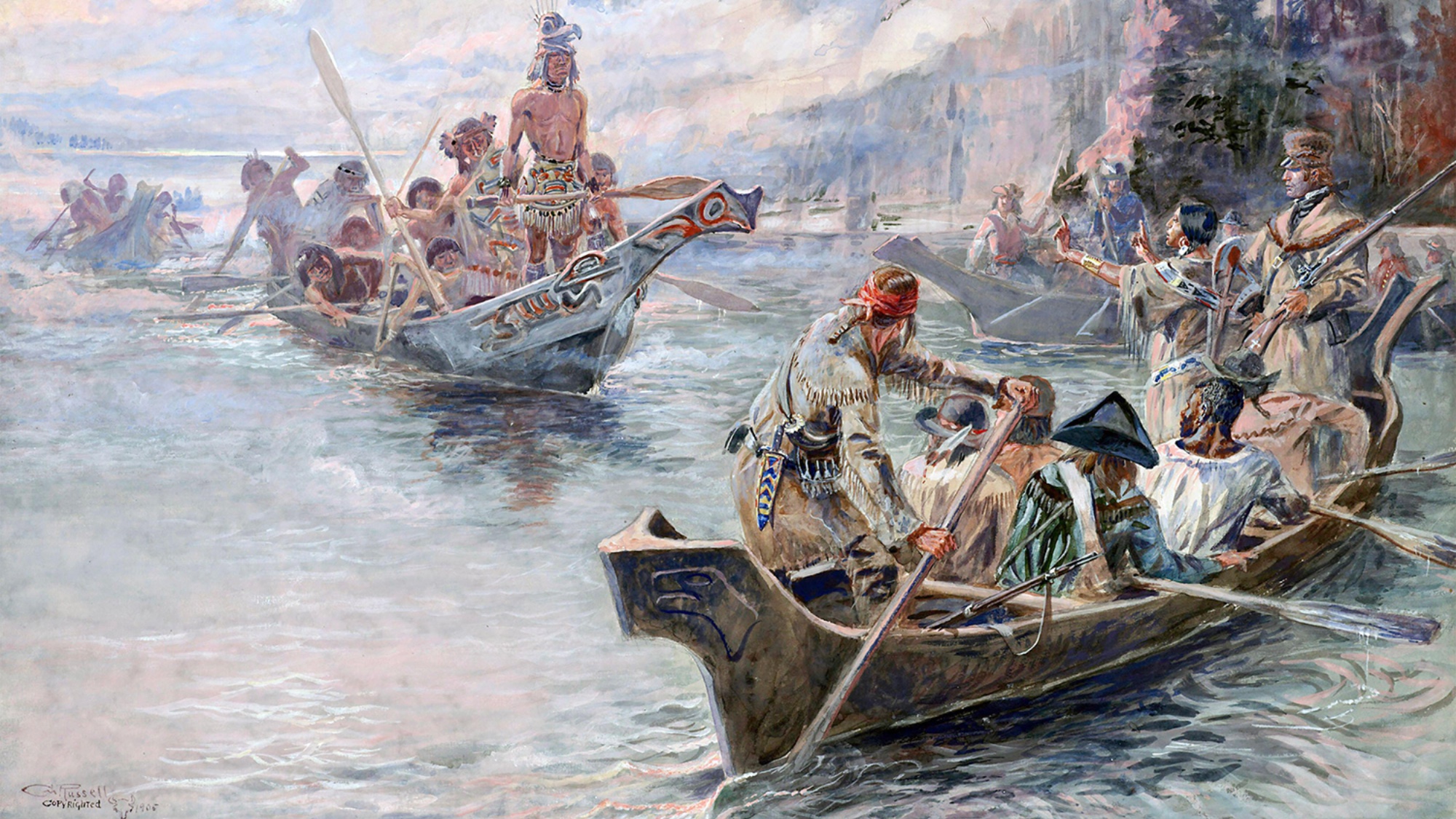
    The Vast Enterprise: A New History of Lewis & Clark

    by Craig Fehrman

    “Do we really need another book about the Lewis and Clark expedition?” asked Andrea Wulf in The New York Times. The answer, after reading Craig Fehrman’s new page-turner, is “an emphatic yes.” One reason for its novelty is that, in revisiting Meriwether Lewis and William Clark’s westward trek into the newly purchased Louisiana Territory, Fehrman has shifted focus away from the famous pair, widening the scope to include other members of the so-called Corps of Discovery as well as several Native Americans the 33 men met en route. The result is “a richly woven tapestry of voices” that “reframes this well-known story, revealing it as more complex, and profoundly human.” Because certain members portrayed didn’t leave expansive journals, Fehrman sometimes has to rely on conjecture or push his imaginative reconstruction too far. But that’s a minor complaint. Fehrman’s multifaceted account is “a fantastic achievement.”

    More than 220 years on, “the Lewis and Clark expedition still intrigues,” said Karin Altenberg in The Wall Street Journal. Tasked by President Thomas Jefferson, who had been long obsessed with exploring the West, Lewis and Clark’s team journeyed from St. Louis to the Pacific Ocean and back, with most of the 8,000-mile journey on the Missouri and Columbia rivers. Some members of the party had joined out of patriotic spirit, some for money, and others, including the kidnapped Shoshone teenager Sacagawea, had no choice. “Lewis and Clark had to make sure this diverse, multilingual crew jelled, all the way to the Pacific and back,” and it’s a testament all parties’ desire for peace that the expedition’s many interactions with Indigenous tribes resulted in only one violent death. “Immensely engaging,” The Vast Enterprise gives a well-known story “fresh breadth.”

    “This is vivid, character-based history,” said Chris Vognar in The Boston Globe. The chapters rotate between the viewpoints of principal players, among them soldier John Ordway, Lakota and Arikara leaders, Jefferson, and, yes, Lewis and Clark. Fehrman also fleshes out two participants often treated as footnotes. York, an enslaved servant to Clark, was awarded a degree of autonomy during the journey, while Sacagawea, the enslaved wife of interpretor Toussaint Charboneau, is shown to be a valuable collaborator and becomes “a three-dimensional character with her own hopes, dreams, and regrets.” Shuffling between these figures “pays enormous dividends, as Fehrman weaves a tale that uses human stories to go beyond hard facts and calcified myths.” The result is “a ripping good read.”


    OBITUARY

    Dave Mason

    The Traffic member who wrote ‘Feelin’ Alright?’

    Dave Mason once called himself “the Forrest Gump of rock.” The English musician strummed the acoustic guitar intro on Jimi Hendrix’s “All Along the Watchtower,” blew an Indian shehnai on the Rolling Stones’ “Street Fighting Man,” taught slide guitar licks to George Harrison, and recorded with Paul McCartney. As a guitarist, he toured with both Derek and the Dominos and Fleetwood Mac. Mason was best known, though, as a co-founder of Traffic and the writer of 1967’s “Hole in My Shoe” and 1968’s “Feelin’ Alright?” which was covered by more than two dozen artists including Joe Cocker, the Jackson 5, and Huey Lewis. Bounced from the group, he went solo, scoring a 1977 hit with the soft-rock “We Just Disagree.” That he wasn’t a big star suited him just fine, he said in 2020. “I never wanted to be. I just wanted to write great music, make some money, and have fun.”

    Mason grew up in Worcester, England, where his parents ran a candy store. He sang in the school choir as a child, said Rolling Stone, but “his love of music was sparked by the Big Bang of rock ’n’ roll.” He began playing professionally at 16 and toured the U.K. and Germany before being recruited by keyboardist Steve Winwood to form Traffic in 1967. The band honed a sound marrying “the baroque British fantasies of early Pink Floyd with the melodicism of the Beatles.” His tenure proved “fraught,” said The New York Times. Only 19, he “felt overwhelmed by the spotlight” and quit after one album. The other band members, who needed more songs for a followup, asked him to return, and he rejoined. But then Winwood fired him after the second album’s release, a move Mason attributed to jealousy. 

    To reinvent himself, he moved to Los Angeles, said The Telegraph (U.K.), and put out an “acclaimed solo album,” Alone Together, in 1970. He toured with Delaney & Bonnie, formed a short-lived duo with Mama Cass Elliot, played on George Harrison’s landmark album All Things Must Pass, and went platinum with his 1977 album Let It Flow. His “career was often turbulent,” marked by record company lawsuits and a battle with drug addiction. But he toured until well into his 70s, when he was sidelined by poor health. “I’ve been through four earthquakes, three marriages, two bankruptcies, one major hurricane, and I’ve survived the music business,” he said in 1996. “That’s a pretty good record.”


    Sunday Shortlist was written and edited by Susan Caskie, Ryan Devlin, Chris Erikson, Chris Mitchell, and Matt Prigge.

    Image credits, from top:  Angel/Everett, Netflix, Getty (2)
     

    Recent editions

    • Saturday Wrap

      A stalemate in the Gulf

    • Evening Review

      The DOJ’s crumbling credibility

    • Morning Report

      Congress ends record-long DHS shutdown

    VIEW ALL
    TheWeek
    • About Us
    • Contact Future's experts
    • Terms and Conditions
    • Privacy Policy
    • Cookie Policy
    • Advertise With Us
    • FAQ
    Add as a preferred source on Google Add as a preferred source on Google

    The Week is part of Future US Inc, an international media group and leading digital publisher. Visit our corporate site.

    © Future US, Inc. Full 7th Floor, 130 West 42nd Street, New York, NY 10036.