The Week The Week
flag of US
US
flag of UK
UK
https://cdn.mos.cms.futurecdn.net/flexiimages/jacafc5zvs1692883516.jpg

SUBSCRIBE & SAVE

Less than $3 per week

Sign in
  • View Profile
  • Sign out
  • The Explainer
  • The Week Recommends
  • Newsletters
  • Cartoons
  • From the Magazine
  • The Week Junior
  • Student Offers
  • More
    • Politics
    • World News
    • Business
    • Health
    • Science
    • Food & Drink
    • Travel
    • Culture
    • History
    • Personal Finance
    • Puzzles
    • Photos
    • The Blend
    • All Categories
  • Newsletter sign up Newsletter
  • The Week’s Sunday Shortlist
    Christopher Nolan’s epic controversy, a Big Bang Theory spinoff, and America’s old-age problem

     
    FILM REVIEW

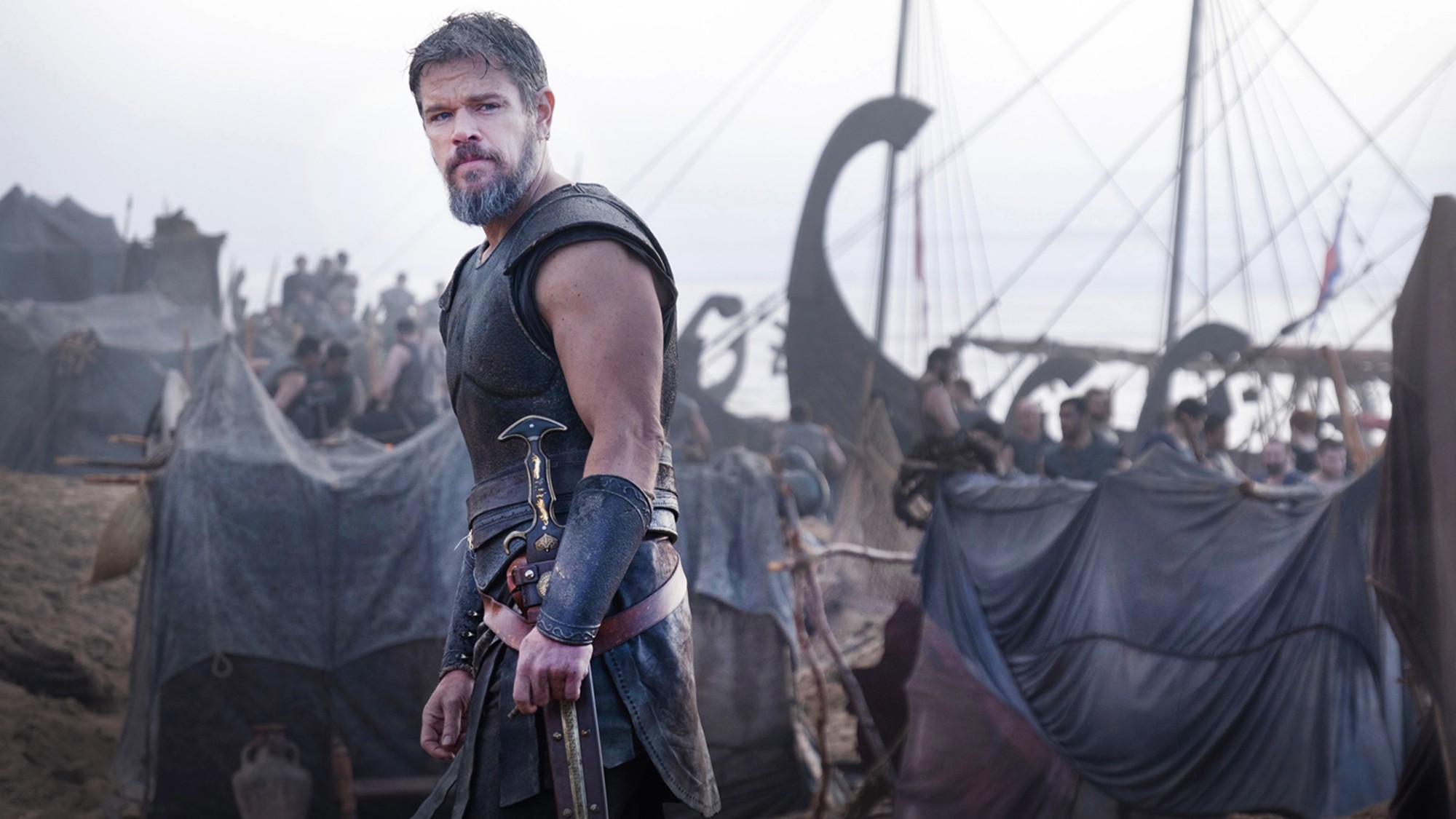
    The Odyssey: Homer vs. the haters

    The execs at Universal Studios must be “a tad nervous,” said Jordan Ruimy in World of Reel. With Christopher Nolan’s $250 million adaptation of The Odyssey due to open in theaters on the weekend of July 17, Universal barred critics from publishing reviews until the final day before theatrical release as controversy over Nolan’s casting choices continued to stir up loud attacks from online commenters. Since January, right-wing culture warriors, led by Elon Musk, have alleged that the film pushes a “woke” agenda, primarily because Nolan chose a Black actress, Lupita Nyong’o, to play Helen of Troy and cast trans actor Elliot Page as a soldier. And the attacks didn’t stop when critics praised the movie in their initial social media reactions. In fact, Universal blocked comments on its websites after a trailer for The Odyssey racked up more than 700,000 thumbs-downs on YouTube, making it the second-most-disliked trailer ever, behind only 2025’s Snow White, whose haters disliked seeing Latina actress Rachel Zegler as the lead.

    In my reading of the tea leaves, said Miles Klee in Wired, “there’s no reason to suspect that anyone at Universal is sweating right now.” Yes, the studio’s review strategy was unusual, but mostly because mainstream critics were given a chance to see and comment on Nolan’s star-packed film before the social media influencers who are relied upon these days to build audience excitement for most new movies. The bulk of the abbreviated early reactions, including from IndieWire and The Guardian, have been rapturous, and ticket pre-sales point toward a $80 million to $100 million opening weekend for the director’s follow-up to 2023’s Oppenheimer, a Best Picture winner. Nolan himself seems unfazed that his take on a landmark cultural artifact is stirring backlash from at least one corner. “Remember,” he said last week, “I spent 10 years of my life dealing with Batman.” The only question now, said Matt McGloin in Cosmic Book News, is whether all those “angry thumbs” translate into empty seats or whether the anti-Odyssey mob “goes down as the loudest minority in movie marketing history.”


    tv review

    Stuart Fails to Save the Universe

    The expansion of The Big Bang Theory’s universe continues with this outlandishly funny spin-off series centered on Kevin Sussman’s character, comic-book-store owner Stuart Bloom. When Stuart breaks a machine built by Sheldon and Leonard, he triggers a multiverse apocalypse and attempts to undo the damage by venturing into sundry bizarro alternate dimensions, engaging in battles, suffering humiliation, and generally winging it with the help of his girlfriend, Denise; his geologist buddy, Bert; and quantum physicist Barry. Lauren Lapkus, Brian Posehn, and John Ross Bowie co-star.
    Thursday, July 23, HBO Max


    FOOD & DRINK

    Wine: Discovering Mexico

    “Mexican winemakers are entering a new era,” said Sam Stone in Bon Appétit. In a country whose first winery opened in 1597, it’s the descendants of 1970s and 1990s commercial pioneers that are finding new heights, treating the country’s ongoing lack of rules about winemaking as an “irresistible invitation” to experiment. Below, three imports worth seeking out.

    2024 Casa Jipi Nebbiolo ($32)
    “A prime example of how complex Mexican nebbiolo can be,” this “deeply drinkable” wine balances flavors of “brash berries” and “tantalizing smoke.”

    2021 Bodegas Henri Lurton Chenin Blanc ($25)
    In this Valle de San Vicente wine, “aromas of fresh-blossomed white flowers anchor intriguing notes of pear, peach, and guava.”

    2022 Octagono Blanco ($33)
    In this skin-contact white wine, made from the macabeo grape and aged in clay amphorae, “a gentle musk” meets “bright salinity” and “intense notes of Meyer lemon.”


    BOOK OF THE WEEK

    Gerontocracy in America: How the Old Are Hoarding Power and Wealth

    by Samuel Moyn

    “It is a safe bet that the AARP will not be promoting Gerontocracy in America to its 38 million members,” said Alexander Zaitchik in The New Republic. The explosive growth of America’s over-65 population over the past several decades so alarms author Samuel Moyn that his dark prognosis of its consequences “casts a shadow on the very medical advances that enabled it.” The U.S. will soon be home for the first time to as many people over 65 as under 18. Meanwhile, those seniors are six times more likely to vote than 18-to-34-year-olds, and they tend to put their own interests first. Moyn, a Yale law professor, proposes a series of policies aimed at trimming back elder Americans’ political and financial clout. Unfortunately, compared with other variables affecting our politics, age “turns out to hold little explanatory power,” and many seniors are struggling themselves.

    “Despite the sometimes acerbic tone of his book, Moyn’s aim isn’t to stick it to the old,” said Joshua Rothman in The New Yorker. Among his suggestions for rebalancing a system that seems to favor the old is to expand entitlements for seniors so that they don’t feel they must cling to housing and jobs to secure a comfortable final chapter in life. But Moyn does want the power of younger voters amplified. Currently, the median age for members of Congress is over 60 and the median age of voters in primaries is 65. To shift the balance toward youth, Moyn offers a range of potential remedies, including making voting a requirement, as Australia does, and even allowing young people to vote twice: once for themselves and a second time for fellow citizens who haven’t yet hit legal voting age.

    When he focuses on the elderly’s domination of politics, “Moyn has a point,” said The Economist. There remains no good mechanism for getting rid of lawmakers such as former senator Dianne Feinstein, who was struggling to fulfill the basic demands of her job when she died in office at 90. But Moyn favors mandatory retirement ages in all professions, a policy that may make sense in academia, where some tenured professors hang onto their posts long after their productivity spirals, but less so in other fields, where employers tend to keep paying only those who remain top performers. Also, for a book that claims to stand for youth and progress, American Gerontocracy “often seems oddly conservative,” said Noah Berlatsky in Washington Monthly. Moyn is so certain that concentrated power in the hands of the elderly is unnatural that he’s willing to curtail seniors’ individual rights to restore what he sees as society’s natural order. Because of such radicalism, his is “not a book that will age well.”


    OBITUARY

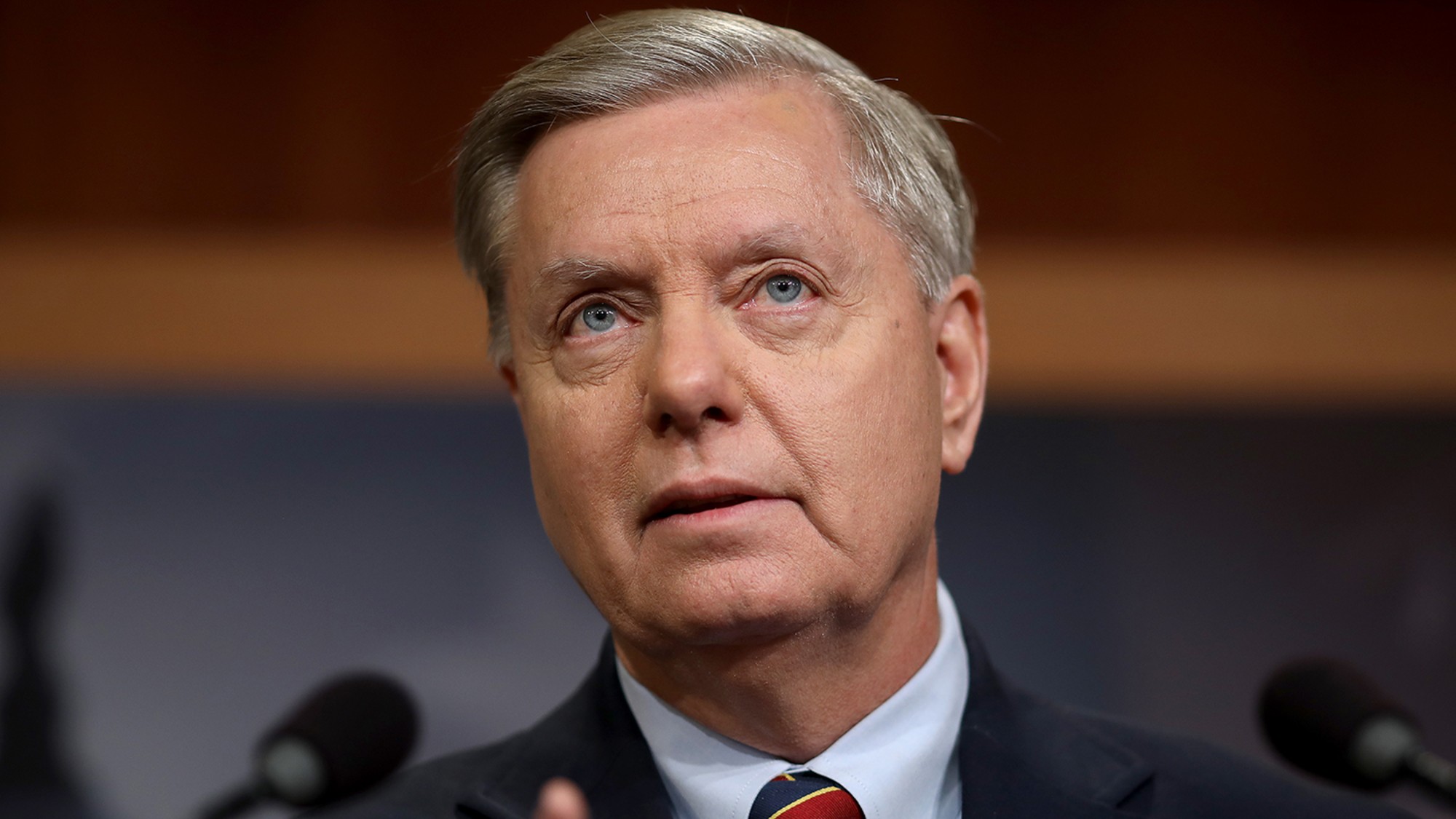
    Lindsey Graham

    The Senate hawk who embraced Trump

    Few modern-day senators can claim to have wielded the influence that Lindsey Graham did. A prominent Republican voice in Congress for more than three decades, Graham was one of its most consistent foreign policy hawks, supporting the wars in Iraq, Afghanistan, and Iran and lobbying strenuously on behalf of Israel and Ukraine. Popular among Republican and Democratic lawmakers alike for his amiability and wit, Graham was seen for most of his career as a consummate politician, willing to reach across the aisle for ambitious policy goals. But his final decade was largely defined by his pivot to Donald Trump. Abandoning his earlier criticism of Trump as a “race-baiting, xenophobic religious bigot,” Graham made up with him just months after the 2016 presidential election, helping cement a MAGA takeover of the Republican Party. On that point, Graham was unapologetic. “This is the party of Donald Trump,” he said earlier this year. “There’s no room in this party to destroy his agenda.”

    Lindsey Olin Graham was born in Central, S.C., a small town where his parents ran a pool hall. He later joked that he “learned everything he really needed to know about politics there,” said The Washington Post. His family lived in a room at the back of the bar, and as a youngster he sneaked beer and cigarettes between hunting and fishing trips. A mediocre student, Graham was the first in his family to attend college, earning a law degree from the University of South Carolina. When his parents died 15 months apart, Graham, then 22, assumed responsibility for his 13-year-old sister Darline, traveling home from college on weekends to care for her. After graduating, he joined the Air Force as a lawyer and rose to become the branch’s chief prosecutor in Europe.

    Returning to South Carolina in 1989, Graham served one term in the statehouse before entering national politics in 1994’s “Republican Revolution,” said The Guardian (U.K.). His profile rose in 1998, when he filed the first impeachment papers against President Bill Clinton, and when longtime senator Strom Thurmond retired in 2002, Graham ran unopposed in the Republican primary to succeed him. As a senator, Graham took “stoutly Republican” views on issues such as gun control, gay marriage, and reproductive rights, and his hawkishness on foreign policy allied him with colleagues Joe Lieberman and John McCain. The trio were dubbed the “Three Amigos,” often traveling abroad together, and Graham—who never married—once described McCain as his partner in a non-romantic “political marriage.”

    Graham also had “something of an independent streak,” said The New York Times. He joined with Democrats to try to pass a climate bill, attempted a doomed overhaul of immigration that caused Rush Limbaugh to deride him as “Lindsey Grahamnesty,” and was one of the few GOP votes for a 2022 gun control law. He was the only Republican on the Senate Judiciary Committee to vote to confirm justices Sonia Sotomayor and Elena Kagan, saying they were qualified even if he disagreed with them.

    Still, Graham’s greatest legacy may be transforming himself, “famously and awkwardly,” into a vocal champion of Trump, said The Atlantic. Soon after Trump’s inauguration, Graham cozied up, becoming a regular golfing buddy and confirming a record-breaking number of conservative judges during Trump’s first term. The reversal strained his friendship with McCain, a frequent target of Trump’s mockery. Though Graham famously said “enough is enough” in a speech after the Jan. 6 insurrection, he was back at Mar-a-Lago within weeks. Once Trump was re-elected in 2024, Graham pressed for a U.S. attack on Iran and used his position as chair of the Senate Budget Committee to get Trump’s “big, beautiful bill” passed through the back door, using the reconciliation process. Though some peers denounced him as a hypocrite, Graham believed his loyalty to the president allowed him to make a difference. “I worry more about the policy stuff,” he said. “And I have more influence than I’ve ever had.”



    Sunday Shortlist was written and edited by Susan Caskie, Ryan Devlin, Scott Meslow, Chris Mitchell, and Matt Prigge.

    Image credits, from top: Universal/Everett, HBO, Getty (2)
     

    Recent editions

    • Saturday Wrap

      Who’s to blame for Platner?

    • Evening Review

      The forced collapse of clean energy

    • Morning Report

      Smoky skies

    VIEW ALL
    TheWeek
    • About Us
    • Contact Future's experts
    • Terms and Conditions
    • Privacy Policy
    • Cookie Policy
    • Advertise With Us
    • FAQ
    Add as a preferred source on Google Add as a preferred source on Google

    The Week is part of Future US Inc, an international media group and leading digital publisher. Visit our corporate site.

    © Future US, Inc. Full 7th Floor, 130 West 42nd Street, New York, NY 10036.